

2 chapters freeNo account needed.
Opens chapter 2 in the player · no sign-up needed
The work aims to define wealth and argue that acquiring it requires a society built on honesty.
Inside the book
- Free nowno account · 2 chapters
- —Introduction3 min
- 2Chapter 236 min
- Premium13 chapters · every book, 7 days free
- 3Chapter 337 min
- 4Chapter 454 min
- 5Chapter 553 min
- 6Chapter 655 min
- 7Book 1, Essay 1: The Roots of Honour33 min
- 8Book 1, Essay 2: The Veins of Wealth26 min
- 9Book 1, Essay 3: "Qui Judicatis Terram."38 min
- 10Book 1, Essay 4 — Part 1 of 6: Ad Valorem53 min
- 11Chapter 1151 min
- 12Chapter 1252 min
- 13Chapter 1351 min
- 14Chapter 1451 min
- 15Chapter 1554 min
The opening
Chapter 2
Among the various characteristics of the age in which we live, as compared with other ages of this not yet very experienced world, one of the most notable appears to me to be the just and wholesome contempt in which we hold poverty. I repeat, the just and wholesome contempt; though I see that some of my hearers look surprised at the expression. I assure them, I use it in sincerity; and I should not have ventured to ask you to listen to me this evening, unless I had entertained a profound respect for wealth—true wealth, that is to say; for, of course, we ought to respect neither wealth nor anything else that is false of its kind: and the distinction between real and false wealth is one of the points on which I shall have a few words presently to say to you. But true wealth I hold, as I said, in great honour; and sympathize, for the most part, with that extraordinary feeling of the present age which publicly pays this honour to riches. I cannot, however, help noticing how extraordinary it is, and how this epoch of ours differs from all bygone epochs in having no philosophical nor religious worshippers of the ragged godship of poverty.
In the classical ages, not only there were people who voluntarily lived in tubs, and who used gravely to maintain the superiority of tub-life to town-life, but the Greeks and Latins seem to have looked on these eccentric, and I do not scruple to say, absurd people, with as much respect as we do upon large capitalists and landed proprietors; so that really, in those days, no one could be described as purse proud, but only as empty-purse proud. And no less distinct than the honour which those curious Greek people pay to their conceited poor, is the disrespectful manner in which they speak of the rich; so that one cannot listen long either to them, or to the Roman writers who imitated them, without finding oneself entangled in all sorts of plausible absurdities; hard upon being convinced of the uselessness of collecting that heavy yellow substance which we call gold, and led generally to doubt all the most established maxims of political economy. Nor are matters much better in the middle ages.
For the Greeks and Romans contented themselves with mocking at rich people, and constructing merry dialogues between Charon and Diogenes or Menippus, in which the ferryman and the cynic rejoiced together as they saw kings and rich men coming down to the shore of Acheron, in lamenting and lamentable crowds, casting their crowns into the dark waters, and searching, sometimes in vain, for the last coin out of all their treasures that could ever be of use to them. But these Pagan views of the matter were indulgent, compared with those which were held in the middle ages, when wealth seems to have been looked upon by the best men not only as contemptible, but as criminal. The purse round the neck is, then, one of the principal signs of condemnation in the pictured Inferno; and the Spirit of Poverty is reverenced with subjection of heart, and faithfulness of affection, like that of a loyal knight for his lady, or a loyal subject for his queen. And truly, it requires some boldness to quit ourselves of these feelings, and to confess their partiality or their error, which, nevertheless, we are certainly bound to do.
For wealth is simply one of the greatest powers which can be entrusted to human hands: a power, not indeed to be envied, because it seldom makes us happy; but still less to be abdicated or despised; while, in these days, and in this country, it has become a power all the more notable, in that the possessions of a rich man are not represented, as they used to be, by wedges of gold or coffers of jewels, but by masses of men variously employed, over whose bodies and minds the wealth, according to its direction, exercises harmful or helpful influence, and becomes, in that alternative, Mammon either of Unrighteousness or of Righteousness.
Now, it seemed to me that since, in the name you have given to this great gathering of British pictures, you recognise them as Treasures—that is, I suppose, as part and parcel of the real wealth of the country—you might not be uninterested in tracing certain commercial questions connected with this particular form of wealth. Most persons express themselves as surprised at its quantity; not having known before to what an extent good art had been accumulated in England: and it will, therefore, I should think, be held a worthy subject of consideration, what are the political interests involved in such accumulations; what kind of labour they represent, and how this labour may in general be applied and economized, so as to produce the richest results.
Now, you must have patience with me, if in approaching the specialty of this subject, I dwell a little on certain points of general political science already known or established: for though thus, as I believe, established, some which I shall have occasion to rest arguments on are not yet by any means universally accepted; and therefore, though I will not lose time in any detailed defence of them, it is necessary that I should distinctly tell you in what form I receive, and wish to argue from them; and this the more, because there may perhaps be a part of my audience who have not interested themselves in political economy, as it bears on ordinary fields of labour, but may yet wish to hear in what way its principles can be applied to Art. I shall, therefore, take leave to trespass on your patience with a few elementary statements in the outset, and with, the expression of some general principles, here and there, in the course of our particular inquiry.
To begin, then, with one of these necessary truisms: all economy, whether of states, households, or individuals, may be defined to be the art of managing labour. The world is so regulated by the laws of Providence, that a man's labour, well applied, is always amply sufficient to provide him during his life with all things needful to him, and not only with those, but with many pleasant objects of luxury; and yet farther, to procure him large intervals of healthful rest and serviceable leisure. And a nation's labour, well applied, is in like manner, amply sufficient to provide its whole population with good food and comfortable habitation; and not with those only, but with good education besides, and objects of luxury, art treasures, such as these you have around you now. But by those same laws of Nature and Providence, if the labour of the nation or of the individual be misapplied, and much more if it be insufficient,—if the nation or man be indolent and unwise,—suffering and want result, exactly in proportion to the indolence and improvidence,—to the refusal of labour, or to the misapplication of it. Wherever you see want, or misery, or degradation, in this world about you, there, be sure, either industry has been wanting, or industry has been in error. It is not accident, it is not Heaven-commanded calamity, it is not the original and inevitable evil of man's nature, which fill your streets with lamentation, and your graves with prey. It is only that, when there should have been providence, there has been waste; when there should have been labour, there has been lasciviousness; and, wilfulness, when there should have been subordination.
Proverbs xiii. 23: "Much food is in the tillage of the poor: but there is that is destroyed for want of judgment."
Now, we have warped the word "economy" in our English: language into a meaning which it has no business whatever to bear. In our use of it, it constantly signifies merely sparing or saving; economy of money means saving money—economy of time, sparing time, and so on. But that is a wholly barbarous use of the word—barbarous in a double sense, for it is not English, and it is bad Greek; barbarous in a treble sense, for it is not English, it is bad Greek, and it is worse sense. Economy no more means saving money than it means spending money. It means, the administration of a house; its stewardship; spending or saving, that is, whether money or time, or anything else, to the best possible advantage. In the simplest and clearest definition of it, economy, whether public or private, means the wise management of labour; and it means this mainly in three senses: namely, first, applying your labour rationally; secondly, preserving its produce carefully; lastly, distributing its produce seasonably.
I say first, applying your labour rationally; that is, so as to obtain the most precious things you can, and the most lasting things, by it: not growing oats in land where you can grow wheat, nor putting fine embroidery on a stuff that will not wear. Secondly, preserving its produce carefully; that is to say, laying up your wheat wisely in storehouses for the time of famine, and keeping your embroidery watchfully from the moth: and lastly, distributing its produce seasonably; that is to say, being able to carry your corn at once to the place where the people are hungry, and your embroideries to the places where they are gay, so fulfilling in all ways the Wise Man's description, whether of the queenly housewife or queenly nation. "She riseth while it is yet night, and giveth meat to her household, and a portion to her maidens. She maketh herself coverings of tapestry, her clothing is silk and purple. Strength and honour are in her clothing, and she shall rejoice in time to come."
Now, you will observe that in this description of the perfect economist, or mistress of a household, there is a studied expression of the balanced division of her care between the two great objects of utility and splendour; in her right hand, food and flax, for life and clothing; in her left hand, the purple and the needlework, for honour and for beauty. All perfect housewifery or national economy is known by these two divisions; wherever either is wanting, the economy is imperfect. If the motive of pomp prevails, and the care of the national economist is directed only to the accumulation of gold, and of pictures, and of silk and marble, you know at once that the time must soon come when all these treasures shall be scattered and blasted in national ruin.
If, on the contrary, the element of utility prevails, and the nation disdains to occupy itself in any wise with the arts of beauty or delight, not only a certain quantity of its energy calculated for exercise in those arts alone must be entirely wasted, which is bad economy, but also the passions connected with the utilities of property become morbidly strong, and a mean lust of accumulation merely for the sake of accumulation, or even of labour merely for the sake of labour, will banish at last the serenity and the morality of life, as completely, and perhaps more ignobly, than even the lavishness of pride and the lightness of pleasure. And similarly, and much more visibly, in private and household economy, you may judge always of its perfectness by its fair balance between the use and the pleasure of its possessions.
You will see the wise cottager's garden trimly divided between its well-set vegetables, and its fragrant flowers; you will see the good housewife taking pride in her pretty table-cloth, and her glittering shelves, no less than in her well-dressed dish, and her full storeroom; the care in her countenance will alternate with gaiety, and though you will reverence her in her seriousness, you will know her best by her smile.
Now, as you will have anticipated, I am going to address you, on this and our succeeding evening, chiefly on the subject of that economy which relates rather to the garden than the farm-yard. I shall ask you to consider with me the kind of laws by which we shall best distribute the beds of our national garden, and raise in it the sweetest succession of trees pleasant to the sight, and (in no forbidden sense) to be desired to make us wise. But, before proceeding to open this specialty of our subject, let me pause for a few moments to plead with you for the acceptance of that principle of government or authority which must be at the root of all economy, whether for use or for pleasure. I said, a few minutes ago, that a nation's labour, well applied, was amply sufficient to provide its whole population with good food, comfortable clothing, and pleasant luxury. But the good, instant, and constant application is everything. We must not, when our strong hands are thrown out of work, look wildly about for want of something to do with them. If ever we feel that want, it is a sign that all our household is out of order.
Fancy a farmer's wife, to whom one or two of her servants should come at twelve o'clock at noon, crying that they had got nothing to do; that they did not know what to do next: and fancy still farther, the said farmer's wife looking hopelessly about her rooms and yard, they being all the while considerably in disorder, not knowing where to set the spare hand-maidens to work, and at last complaining bitterly that she had been obliged to give them their dinner for nothing. That's the type of the kind of political economy we practise too often in England.
Would you not at once assert of such a mistress that she knew nothing of her duties? and would you not be certain, if the household were rightly managed, the mistress would be only too glad at any moment to have the help of any number of spare hands; that she would know in an instant what to set them to;—in an instant what part of to-morrow's work might be most serviceably forwarded, what part of next month's work most wisely provided for, or what new task of some profitable kind undertaken? and when the evening came, and she dismissed her servants to their recreation or their rest, or gathered them to the reading round the work-table, under the eaves in the sunset, would you not be sure to find that none of them had been overtasked by her, just because none had been left idle; that everything had been accomplished because all had been employed; that the kindness of the mistress had aided her presence of mind, and the slight labour had been entrusted to the weak, and the formidable to the strong; and that as none had been dishonoured by inactivity so none had been broken by toil?
Now, the precise counterpart of such a household would be seen in a nation in which political economy was rightly understood. You complain of the difficulty of finding work for your men. Depend upon it, the real difficulty rather is to find men for your work. The serious question for you is not how many you have to feed, but how much you have to do; it is our inactivity, not our hunger, that ruins us: let us never fear that our servants should have a good appetite—our wealth is in their strength, not in their starvation. Look around this island of yours, and see what you have to do in it. The sea roars against your harbourless cliffs—you have to build the breakwater, and dig the port of refuge; the unclean pestilence ravins in your streets—you have to bring the full stream from the hills, and to send the free winds through the thoroughfare; the famine blanches your lips and eats away your flesh—you have to dig the moor and dry the marsh, to bid the morass give forth instead of engulphing, and to wring the honey and oil out of the rock.
These things, and thousands such, we have to do, and shall have to do constantly, on this great farm of ours; for do not suppose that it is anything else than that. Precisely the same laws of economy which apply to the cultivation of a farm or an estate apply to the cultivation of a province or of an island. Whatever rebuke you would address to the improvident master of an ill-managed patrimony, precisely that rebuke we should address to ourselves, so far as we leave our population in idleness and our country in disorder. What would you say to the lord of an estate who complained to you of his poverty and disabilities, and, when you pointed out to him that his land was half of it overrun with weeds, and that his fences were all in ruin, and that his cattle-sheds were roofless, and his labourers lying under the hedges faint for want of food, he answered to you that it would ruin him to weed his land or to roof his sheds—that those were too costly operations for him to undertake, and that he knew not how to feed his labourers nor pay them?
Would you not instantly answer, that instead of ruining him to weed his fields, it would save him; that his inactivity was his destruction, and that to set his labourers to work was to feed them? Now, you may add acre to acre, and estate to estate, as far as you like, but you will never reach a compass of ground which shall escape from the authority of these simple laws. The principles which are right in the administration of a few fields, are right also in the administration of a great country from horizon to horizon: idleness does not cease to be ruinous because it is extensive, nor labour to be productive because it is universal.
Nay, but you reply, there is one vast difference between the nation's economy and the private man's: the farmer has full authority over his labourers; he can direct them to do what is needed to be done, whether they like it or not; and he can turn them away if they refuse to work, or impede others in their working, or are disobedient, or quarrelsome. There is this great difference; it is precisely this difference on which I wish to fix your attention, for it is precisely this difference which you have to do away with. We know the necessity of authority in farm, or in fleet, or in army; but we commonly refuse to admit it in the body of the nation. Let us consider this point a little.
In the various awkward and unfortunate efforts which the French have made at the development of a social system, they have at least stated one true principle, that of fraternity or brotherhood. Do not be alarmed; they got all wrong in their experiments, because they quite forgot that this fact of fraternity implied another fact quite as important—that of paternity or fatherhood. That is to say, if they were to regard the nation as one family, the condition of unity in that family consisted no less in their having a head, or a father, than in their being faithful and affectionate members, or brothers. But we must not forget this, for we have long confessed it with our lips, though we refuse to confess it in our lives. For half an hour every Sunday we expect a man in a black gown, supposed to be telling us truth, to address us as brethren, though we should be shocked at the notion of any brotherhood existing among us out of church. And we can hardly read a few sentences on any political subject without running a chance of crossing the phrase "paternal government," though we should be utterly horror-struck at the idea of governments claiming anything like a father's authority over us.
Now, I believe those two formal phrases are in both instances perfectly binding and accurate, and that the image of the farm and its servants which I have hitherto used, as expressing a wholesome national organization, fails only of doing so, not because it is too domestic, but because it is not domestic enough; because the real type of a well-organized nation must be presented, not by a farm cultivated by servants who wrought for hire, and might be turned away if they refused to labour, but by a farm in which the master was a father, and in which all the servants were sons; which implied, therefore, in all its regulations, not merely the order of expediency, but the bonds of affection and responsibilities of relationship; and in which all acts and services were not only to be sweetened by brotherly concord, but to be enforced by fatherly authority.
See note 1st, in Addenda [p. 86].
Observe, I do not mean in the least that we ought to place such an authority in the hands of any one person, or of any class or body of persons. But I do mean to say that as an individual who conducts himself wisely must make laws for himself which at some time or other may appear irksome or injurious, but which, precisely at the time they appear most irksome, it is most necessary he should obey, so a nation which means to conduct itself wisely, must establish authority over itself, vested either in kings, councils, or laws, which it must resolve to obey, even at times when the law or authority appears irksome to the body of the people, or injurious to certain masses of it. And this kind of national law has hitherto been only judicial; contented, that is, with an endeavour to prevent and punish violence and crime: but, as we advance in our social knowledge; we shall endeavour to make our government paternal as well as judicial; that is, to establish such laws and authorities as may at once direct us in our occupations, protect us against our follies, and visit us in our distresses: a government which shall repress dishonesty, as now it punishes theft; which shall show how the discipline of the masses may be brought to aid the toils of peace, as discipline of the masses has hitherto knit the sinews of battle; a government which shall have its soldiers of the ploughshare as well as its soldiers of the sword, and which shall distribute more proudly its golden crosses of industry—golden as the glow of the harvest, than now it grants its bronze crosses of honour—bronzed with the crimson of blood.
I have not, of course, time to insist on the nature or details of government of this kind; only I wish to plead for your several and future consideration of this one truth, that the notion of Discipline and Interference lies at the very root of all human progress or power; that the "Let alone" principle is, in all things which man has to do with, the principle of death; that it is ruin to him, certain and total, if he lets his land alone—if he lets his fellow-men alone—if he lets his own soul alone. That his whole life, on the contrary, must, if it is healthy life, be continually one of ploughing and pruning, rebuking and helping, governing and punishing; and that therefore it is only in the concession of some great principle of restraint and interference in national action that he can ever hope to find the secret of protection against national degradation. I believe that the masses have a right to claim education from their government; but only so far as they acknowledge the duty of yielding obedience to their government. I believe they have a right to claim employment from their governours; but only so far as they yield to the governour the direction and discipline of their labour; and it is only so far as they grant to the men whom they may set over them the father's authority to check the childishnesses of national fancy, and direct the waywardnesses of national energy, that they have a right to ask that none of their distresses should be unrelieved, none of their weaknesses unwatched; and that no grief, nor nakedness, nor peril should exist for them, against which the father's hand was not outstretched, or the father's shield uplifted.
Compare Wordsworth's Essay on the Poor-Law Amendment Bill. I quote one important passage:—"But, if it be not safe to touch the abstract question of man's right in a social state to help himself even in the last extremity, may we not still contend for the duty of a Christian government, standing in loco parentis towards all its subjects, to make such effectual provision that no one shall be in danger of perishing either through the neglect or harshness of its legislation? Or, waiving this, is it not indisputable that the claim of the State to the allegiance, involves the protection of the subject? And, as all rights in one party impose a correlative duty upon another, it follows that the right of the State to require the services of its members, even to the jeoparding of their lives in the common defence, establishes a right in the people (not to be gainsaid by utilitarians and economists) to public support when, from any cause, they may be unable to support themselves."—(See note 2nd in Addenda [p. 90]).
Now, I have pressed this upon you at more length than is needful or proportioned to our present purposes of inquiry, because I would not for the first time speak to you on this subject of political economy without clearly stating what I believe to be its first grand principle. But its bearing on the matter in hand is chiefly to prevent you from at once too violently dissenting from me when what I may state to you as advisable economy in art appears to imply too much restraint or interference with the freedom of the patron or artist. We are a little apt, though, on the whole a prudent nation, to act too immediately on our impulses, even in matters merely commercial; much more in those involving continual appeals to our fancies. How far, therefore, the proposed systems or restraints may be advisable, it is for you to judge; only I pray you not to be offended with them merely because they are systems and restraints.
Do you at all recollect that interesting passage of Carlyle, in which he compares, in this country and at this day, the understood and commercial value of man and horse; and in which he wonders that the horse, with its inferior brains and its awkward hoofiness, instead of handiness, should be always worth so many tens or scores of pounds in the market, while the man, so far from always commanding his price in the market, would often be thought to confer a service on the community by simply killing himself out of their way? Well, Carlyle does not answer his own question, because he supposes we shall at once see the answer. The value of the horse consists simply in the fact of your being able to put a bridle on him. The value of the man consists precisely in the same thing. If you can bridle him, or which is better, if he can bridle himself, he will be a valuable creature directly. Otherwise, in a commercial point of view, his value is either nothing, or accidental only.
Only, of course, the proper bridle of man is not a leathern one: what kind of texture it is rightly made of, we find from that command, "Be ye not as the horse or as the mule which have no understanding, whose mouths must be held in with bit and bridle." You are not to be without the reins, indeed, but they are to be of another kind; "I will guide thee with mine Eye." So the bridle of man is to be the Eye of God; and if he rejects that guidance, then the next best for him is the horse's and the mule's, which have no understanding; and if he rejects that, and takes the bit fairly in his teeth, then there is nothing left for him than the blood that comes out of the city, up to the horsebridles.
Quitting, however, at last these general and serious laws of government—or rather bringing them down to our own business in hand—we have to consider three points of discipline in that particular branch of human labour which is concerned, not with procuring of food, but the expression of emotion; we have to consider respecting art: first, how to apply our labour to it; then, how to accumulate or preserve the results of labour; and then, how to distribute them. But since in art the labour which we have to employ is the labour of a particular class of men—men who have special genius for the business, we have not only to consider how to apply the labour, but first of all, how to produce the labourer; and thus the question in this particular case becomes fourfold: first, how to get your man of genius; then, how to employ your man of genius; then, how to accumulate and preserve his work in the greatest quantity; and lastly, how to distribute his work to the best national advantage. Let us take up these questions in succession.
I. DISCOVERY.—How are we to get our men of genius: that is to say, by what means may we produce among us, at any given time, the greatest quantity of effective art-intellect? A wide question, you say, involving an account of all the best means of art education. Yes, but I do not mean to go into the consideration of those; I want only to state the few principles which lie at the foundation of the matter. Of these, the first is that you have always to find your artist, not to make him; you can't manufacture him, any more than you can manufacture gold. You can find him, and refine him: you dig him out as he lies nugget-fashion in the mountain-stream; you bring him home; and you make him into current coin, or household plate, but not one grain of him can you originally produce. A certain quantity of art-intellect is born annually in every nation, greater or less according to the nature and cultivation of the nation or race of men; but a perfectly fixed quantity annually, not increaseable by one grain.
You may lose it, or you may gather it; you may let it lie loose in the ravine, and buried in the sands, or you may make kings' thrones of it, and overlay temple gates with it, as you choose: but the best you can do with it is always merely sifting, melting, hammering, purifying—never creating. And there is another thing notable about this artistical gold; not only is it limited in quantity, but in use. You need not make thrones or golden gates with it unless you like, but assuredly you can't do anything else with it. You can't make knives of it, nor armour, nor railroads. The gold won't cut you, and it won't carry you; put it to a mechanical use, and you destroy it at once. It is quite true that in the greatest artists, their proper artistical faculty is united with every other; and you may make use of the other faculties, and let the artistical one lie dormant. For aught I know, there may be two or three Leonardo da Vincis employed at this moment in your harbours and railroads: but you are not employing their Leonardesque or golden faculty there, you are only oppressing and destroying it.
And the artistical gift in average men is not joined with others; your born painter, if you don't make a painter of him, won't be a first-rate merchant, or lawyer; at all events, whatever he turns out, his own special gift is unemployed by you; and in no wise helps him in that other business. So here you have a certain quantity of a particular sort of intelligence, produced for you annually by providential laws, which you can only make use of by setting it to its own proper work, and which any attempt to use otherwise involves the dead loss of so much human energy. Well, then, supposing we wish to employ it, how is it to be best discovered and refined? It is easily enough discovered. To wish to employ it is to discover it.
All that you need is, a school of trial in every important town, in which those idle farmers' lads whom their masters never can keep out of mischief, and those stupid tailors' 'prentices who are always stitching the sleeves in wrong way upwards, may have a try at this other trade; only this school of trial must not be entirely regulated by formal laws of art education, but must ultimately be the workshop of a good master painter, who will try the lads with one kind of art and another, till he finds out what they are fit for. Next, after your trial school, you want your easy and secure employment, which is the matter of chief importance. For, even on the present system, the boys who have really intense art capacity, generally make painters of themselves; but then, the best half of their early energy is lost in the battle of life. Before a good painter can get employment, his mind has always been embittered, and his genius distorted. A common mind usually stoops, in plastic chill, to whatever is asked of it, and scrapes or daubs its way complacently into public favour. But your great men quarrel with you, and you revenge yourselves by starving them for the first half of their lives.
Precisely in the degree in which any painter possesses original genius, is at present the increase of moral certainty that during his early years he will have a hard battle to fight; and that just at the time when his conceptions ought to be full and happy, his temper gentle, and his hopes enthusiastic—just at that most critical period, his heart is full of anxieties and household cares; he is chilled by disappointments, and vexed by injustice; he becomes obstinate in his errors, no less than in his virtues, and the arrows of his aims are blunted, as the reeds of his trust are broken.
See note 3rd, in Addenda [p. 95].
See note 4th, in Addenda [p. 101].
What we mainly want, therefore, is a means of sufficient and unagitated employment: not holding out great prizes for which young painters are to scramble; but furnishing all with adequate support, and opportunity to display such power as they possess without rejection or mortification. I need not say that the best field of labour of this kind would be presented by the constant progress of public works involving various decoration; and we will presently examine what kind of public works may thus, advantageously for the nation, be in constant progress. But a more important matter even than this of steady employment, is the kind of criticism with which you, the public, receive the works of the young men submitted to you. You may do much harm by indiscreet praise and by indiscreet blame; but remember, the chief harm is always done by blame. It stands to reason that a young man's work cannot be perfect. It must be more or less ignorant; it must be more or less feeble; it is likely that it may be more or less experimental, and if experimental, here and there mistaken.
If, therefore, you allow yourself to launch out into sudden barking at the first faults you see, the probability is that you are abusing the youth for some defect naturally and inevitably belonging to that stage of his progress; and that you might just as rationally find fault with a child for not being as prudent as a privy councillor, or with a kitten for not being as grave as a cat. But there is one fault which you may be quite sure is unnecessary, and therefore a real and blameable fault: that is haste, involving negligence. Whenever you see that a young man's work is either bold or slovenly, then you may attack it firmly; sure of being right. If his work is bold, it is insolent; repress his insolence: if it is slovenly, it is indolent; spur his indolence. So long as he works in that dashing or impetuous way, the best hope for him is in your contempt: and it is only by the fact of his seeming not to seek your approbation that you may conjecture he deserves it.
But if he does deserve it, be sure that you give it him, else you not only run a chance of driving him from the right road by want of encouragement, but you deprive yourselves of the happiest privilege you will ever have of rewarding his labour. For it is only the young who can receive much reward from men's praise: the old, when they are great, get too far beyond and above you to care what you think of them. You may urge them then with sympathy, and surround them then with acclamation; but they will doubt your pleasure, and despise your praise. You might have cheered them in their race through the asphodel meadows of their youth; you might have brought the proud, bright scarlet into their faces, if you had but cried once to them "Well done," as they dashed up to the first goal of their early ambition. But now, their pleasure is in memory, and their ambition is in heaven. They can be kind to you, but you never more can be kind to them. You may be fed with the fruit and fullness of their old age, but you were as the nipping blight to them in their blossoming, and your praise is only as the warm winds of autumn to the dying branches.
There is one thought still, the saddest of all, bearing on this withholding of early help. It is possible, in some noble natures, that the warmth and the affections of childhood may remain unchilled, though unanswered; and that the old man's heart may still be capable of gladness, when the long-withheld sympathy is given at last. But in these noble natures it nearly always happens, that the chief motive of earthly ambition has not been to give delight to themselves, but to their parents. Every noble youth looks back, as to the chiefest joy which this world's honour ever gave him, to the moment when first he saw his father's eyes flash with pride, and his mother turn away her head lest he should take her tears for tears of sorrow. Even the lover's joy, when some worthiness of his is acknowledged before his mistress, is not so great as that, for it is not so pure—the desire to exalt himself in her eyes mixes with that of giving her delight; but he does not need to exalt himself in his parents' eyes: it is with the pure hope of giving them pleasure that he comes to tell them what he has done, or what has been said of him; and therefore he has a purer pleasure of his own. And this purest and best of rewards you keep from him if you can: you feed him in his tender youth with ashes and dishonour; and then you come to him, obsequious, but too late, with your sharp laurel crown, the dew all dried from off its leaves; and you thrust it into his languid hand, and he looks at you wistfully. What shall he do with it? What can he do, but go and lay it on his mother's grave?
Thus, then, you see that you have to provide for your young men: first, the searching or discovering school; then the calm employment; then the justice of praise: one thing more you have to do for them in preparing them for full service—namely, to make, in the noble sense of the word, gentlemen of them; that is to say, to take care that their minds receive such training, that in all they paint they shall see and feel the noblest things. I am sorry to say, that of all parts of an artist's education this is the most neglected among us; and that even where the natural taste and feeling of the youth have been pure and true, where there was the right stuff in him to make a gentleman of, you may too frequently discern some jarring rents in his mind, and elements of degradation in his treatment of subject, owing to want of gentle training, and of the liberal influence of literature. This is quite visible in our greatest artists, even in men like Turner and Gainsborough; while in the common grade of our second-rate painters the evil attains a pitch which is far too sadly manifest to need my dwelling upon it. Now, no branch of art economy is more important than that of making the intellect at your disposal pure as well as powerful; so that it may always gather for you the sweetest and fairest things. The same quantity of labour from the same man's hand, will, according as you have trained him, produce a lovely and useful work, or a base and hurtful one, and depend upon it, whatever value it may possess, by reason of the painter's skill, its chief and final value, to any nation, depends upon its being able to exalt and refine, as well as to please; and that the picture which most truly deserves the name of an art-treasure, is that which has been painted by a good man.
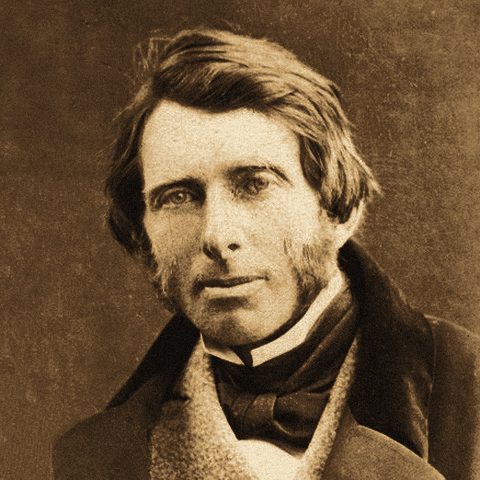
About the author
John Ruskin
1819 London – 1900 Coniston · English writer and art critic
John Ruskin was an English polymath – a writer, lecturer, art historian, art critic, draughtsman and philanthropist of the Victorian era. He wrote on subjects as varied as art, architecture, political economy, education, museology, geology, botany, ornithology, literature, history, and myth.
- 1819Born, London
- 1860Unto This Last, and Other Essays on Political Economy
- 1860Modern Painters, Volume 1 (of 5)
- 1860Modern Painters, Volume 3
- 1860Modern Painters, Volume 4
- 1860Modern Painters, Volume 5
- 1900Died, Coniston
More by John Ruskin
Keep going with Ruskin


If you like Unto This Last, and Other Essays on Political Economy
More like this


Start with chapter 2
2 chapters free right now — no account. Your place follows you to iPhone and Android.