

2 chapters freeNo account needed.
Opens “Letter 14: Denmark Hill, 1st February, 1872” in the player · no sign-up needed
Fors Clavigera: Letters to the Workmen and Labourers of Great Britain was the name given by John Ruskin to a series of letters addressed to British workmen during the 1870s. They were published in the form of pamphlets.
Inside the book
- Free nowno account · 2 chapters
- —Introduction24 min
- 2Letter 14: Denmark Hill, 1st February, 187228 min
- Premium10 chapters · every book, 7 days free
- 3Letter 15: Denmark Hill, 1st March, 187229 min
- 4Letter 16: Denmark Hill, 15th March, 187224 min
- 5Letter 17: Florence, 1st May, 187225 min
- 6Letter 18: Pisa, 29th April, 187225 min
- 7Letter 19: Verona, 18th June, 187221 min
- 8Letter 20: Venice, 3rd July, 187229 min
- 9Letter 21: Dulwich, 10th August, 187233 min
- 10Letter 22: Brantwood, 19th September, 187239 min
- 11Letter 23: Brantwood, October 24th, 187233 min
- 12Letter 24: Corpus Christi Coll., November 7th, 187238 min
The opening
Letter 14: Denmark Hill, 1st February, 1872
Denmark Hill, 1st February, 1872.
My Friends,
In going steadily over our ground again, roughly broken last year, you see that, after endeavouring, as I did last month, to make you see somewhat more clearly the absurdity of fighting for a Holy Republic before you are sure of having got so much as a single saint to make it of, I have now to illustrate farther the admission made in page 8 of my first Letter, that even the most courteous and perfect Monarchy cannot make an unsaintly life into a saintly one, nor constitute thieving, for instance, an absolutely praiseworthy profession, however glorious or delightful. It is indeed more difficult to show this in the course of past history than any other moral truth whatsoever. For, without doubt or exception, thieving has not only hitherto been the most respected of professions, but the most healthy, cheerful, and in the practical outcome of it, though not in theory, even the honestest, followed by men.
Putting the higher traditional and romantic ideals, such as that of our Robin Hood, and the Scottish Red Robin, for the time, aside, and keeping to meagre historical facts, could any of you help giving your heartiest sympathy to Master Francis Drake, setting out in his little Paschal Lamb to seek his fortune on the Spanish seas, and coming home, on that happy Sunday morning, to the unspeakable delight of the Cornish congregation? Would you like to efface the stories of Edward III., and his lion's whelp, from English history; and do you wish that instead of pillaging the northern half of France, as you read of them in the passages quoted in my fourth Letter, and fighting the Battle of Creçy to get home again, they had stayed at home all the time; and practised, shall we say, upon the flute, as I find my moral friends think Frederick of Prussia should have done? Or would you have chosen that your Prince Harry should never have played that set with his French tennis-balls, which won him Harfleur, and Rouen, and Orleans, and other such counters, which we might have kept, to this day perhaps, in our pockets, but for the wood maid of Domremy?
Are you ready, even now, in the height of your morality, to give back India to the Brahmins and their cows, and Australia to her aborigines and their apes? You are ready? Well, my Christian friends, it does one's heart good to hear it, providing only you are quite sure you know what you are about. "Let him that stole steal no more; but rather let him labour." You are verily willing to accept that alternative? I inquire anxiously, because I see that your Under Secretary of State for India, Mr. Grant Duff, proposes to you, in his speech at Elgin, not at all as the first object of your lives to be honest; but, as the first, to be rich, and the second to be intelligent: now when you have all become rich and intelligent, how do you mean to live? Mr. Grant Duff, of course, means by being rich that you are each to have two powdered footmen; but then who are to be the footmen, now that we mustn't have blacks? And granting you all the intelligence in the world on the most important subjects,—the spots in the sun, or the nodes of the moon, as aforesaid,—will that help you to get your dinner, unless you steal it in the old fashion?
The subject is indeed discussed with closer definition than by Mr. Grant Duff, by Mr. William Riddle, C.E., the authority I quoted to you for taking property "under control." You had better perhaps be put in complete possession of his views, as stated by himself in the 'Republican,' of December last; the rather, as that periodical has not had, according to Mr. Riddle, hitherto a world-wide circulation:--
"THE SIMPLE AND ONLY REMEDY FOR THE WANTS OF NATIONS."
"It is with great grief that I hear that your periodical finds but a limited sale. I ask you to insert a few words from me, which may strike some of your readers as being important. These are all in all. What all nations want, Sir, are—1, Shelter; 2, Food; 3, Clothes; 4, Warmth; 5, Cleanliness; 6, Health; 7, Love; 8, Beauty. These are only to be got in one way. I will state it. 1.—An International Congress must make a number of steam engines, or use those now made, and taking all property under its control (I fearlessly state it) must roll off iron and glass for buildings to shelter hundreds of millions of people. 2.—Must, by such engines, make steam apparatus to plough immense plains of wheat, where steam has elbow-room abroad; must make engines to grind it on an enormous scale, first fetching it in flat-bottomed ships, made of simple form, larger than the Great Eastern, and of simple form of plates, machine fastened; must bake it by machine ovens commensurate. 3.—Machine looms must work unattended night and day, rolling off textile yarns and fabrics, and machines must make clothes, just as envelopes are knocked off. 4.—Machinery must do laundress work, iron and mangling; and, in a word, our labour must give place to machinery, laid down in gigantic factories on common-sense principles by an International leverage. This is the education you must inculcate. Then man will be at last emancipated. All else is utter bosh, and I will prove it so when and wherever I can get the means to lecture.
"Wm. Riddle, C.E.
"South Lambeth, Nov. 2."
Unfortunately, till those means can be obtained, (may it be soon), it remains unriddled to us on what principles of "international leverage" the love and beauty are to be provided. But the point I wish you mainly to notice is, that for this general emancipation, and elbow-room for men and steam, you are still required to find "immense plains of wheat abroad." Is it not probable that these immense plains may belong to somebody "abroad" already? And if not, instead of bringing home their produce in flat-bottomed ships, why not establish, on the plains themselves, your own flat-bottomed—I beg pardon,—flat-bellied, persons, instead of living here in glass cases, which surely, even at the British Museum, cannot be associated in your minds with the perfect manifestation of love and beauty? It is true that love is to be measured, in your perfected political economy, by rectangular area, as you will find on reference to the ingenious treatise of Mr. W. Stanley Jevons, M.A., Professor of Logic and Political Economy in Owens College, Manchester, who informs you, among other interesting facts, that pleasure and pain "are the ultimate objects of the calculus of economy," and that a feeling, whether of pleasure or pain, may be regarded as having two dimensions—namely, in duration and intensity, so that the feeling, say of a minute, "may be represented by a rectangle whose base corresponds to the duration of a minute, and whose height is proportioned to the intensity." The collective area of the series of rectangles will mark the "aggregate of feeling generated."
But the Professor appears unconscious that there is a third dimension of pleasure and pain to be considered, besides their duration and intensity; and that this third dimension is to some persons, the most important of all—namely, their quality. It is possible to die of a rose in aromatic pain; and, on the contrary, for flies and rats, even pleasure may be the reverse of aromatic. There is swine's pleasure, and dove's; villain's pleasure, and gentleman's, to be arranged, the Professor will find, by higher analysis, in eternally dissimilar rectangles.
My friends, the follies of Modern Liberalism, many and great though they be, are practically summed in this denial or neglect of the quality and intrinsic value of things. Its rectangular beatitudes, and spherical benevolences,—theology of universal indulgence, and jurisprudence which will hang no rogues, mean, one and all of them, in the root, incapacity of discerning, or refusal to discern, worth and unworth in anything, and least of all in man; whereas Nature and Heaven command you, at your peril, to discern worth from unworth in everything, and most of all in man. Your main problem is that ancient and trite one, "Who is best man?" and the Fates forgive much,—forgive the wildest, fiercest, cruellest experiments,—if fairly made for the determination of that. Theft and blood-guiltiness are not pleasing in their sight; yet the favouring powers of the spiritual and material world will confirm to you your stolen goods; and their noblest voices applaud the lifting of your spear, and rehearse the sculpture of your shield, if only your robbing and slaying have been in fair arbitrament of that question, "Who is best man?" But if you refuse such inquiry, and maintain every man for his neighbour's match, --if you give vote to the simple, and liberty to the vile, the powers of those spiritual and material worlds in due time present you inevitably with the same problem, soluble now only wrong side upwards; and your robbing and slaying must be done then to find out "Who is worst man?" Which, in so wide an order of merit, is, indeed, not easy; but a complete Tammany Ring, and lowest circle in the Inferno of Worst, you are sure to find, and to be governed by.
And you may note that the wars of men, in this winnowing or sifting function, separate themselves into three distinct stages. In healthy times of early national development, the best men go out to battle, and divide the spoil; in rare generosity, perhaps, giving as much to those who tarry by the stuff, as to those who have followed to the field. In the second, and more ingenious stage, which is the one we have reached now in England and America, the best men still go out to battle, and get themselves killed,—or, at all events, well withdrawn from public affairs,—and the worst stop at home, manage the government, and make money out of the commissariat. (See Section 124 of 'Munera Pulveris,' and my note there on the last American War.) Then the third and last stage, immediately preceding the dissolution of any nation, is when its best men (such as they are)—stop at home too!—and pay other people to fight for them. And this last stage, not wholly reached in England yet, is, however, within near prospect; at least, if we may again on this point refer to, and trust, the anticipations of Mr. Grant Duff, 'who racks his brains, without success, to think of any probable combination of European events in which the assistance of our English force would be half so useful to our allies as money.'
Next month I will give you some farther account of the operations in favour of their Italian allies in the fourteenth century, effected by the White company under Sir John Hawkwood;—(they first crossed the Alps with a German captain, however,)—not at all consisting in disbursements of money; but such, on the contrary, as to obtain for them--(as you read in my first Letter) the reputation, with good Italian judges, of being the best thieves known at the time. It is in many ways important for you to understand the origin and various tendencies of mercenary warfare; the essential power of which, in Christendom, dates, singularly enough, from the struggle of the free burghers of Italy with a Tory gentleman, a friend of Frederick II. of Germany; the quarrel, of which you shall hear the prettiest parts, being one of the most dramatic and vital passages of mediæval history. Afterwards we shall be able to examine, more intelligently, the prospects in store for us according to the—I trust not too painfully racked,—brains of our Under Secretary of State.
But I am tired to-day of following modern thought in these unexpectedly attenuated conditions; and I believe you will also be glad to rest, with me, by reading a few words of true history of such life as, in here and there a hollow of the rocks of Europe, just persons have sometimes lived, untracked by the hounds of war. And in laying them before you, I begin to give these letters the completed character I intend for them; first, as it may seem to me needful, commenting on what is passing at the time, with reference always to the principles and plans of economy I have to set before you; and then collecting out of past literature, and in occasional frontispieces or woodcuts, out of past art, what may confirm or illustrate things that are for ever true: choosing the pieces of the series so that, both in art and literature, they may become to you in the strictest sense, educational, and familiarise you with the look and manner of fine work.
I want you, accordingly, now to read attentively some pieces of agricultural economy, out of Marmontel's 'Contes Moraux,'—(we too grandly translate the title into 'Moral Tales,' for the French word Moeurs does not in accuracy correspond to our Morals); and I think it first desirable that you should know something about Marmontel himself. He was a French gentleman of the old school; not noble, nor, in French sense, even "gentilhomme;" but a peasant's son, who made his way into Parisian society by gentleness, wit, and a dainty and candid literary power. He became one of the humblest, yet honestest, placed scholars at the court of Louis XV., and wrote pretty, yet wise, sentimental stories, in finished French, which I must render as I can in broken English; but, however rudely translated, the sayings and thoughts in them deserve your extreme attention, for in their fine, tremulous way, like the blossoming heads of grass in May, they are perfect. For introduction then, you shall have, to-day, his own description of his native place, Bort, in central south France, and of the circumstances of his child-life. You must take it without further preamble—my pages running short.
"Bort, situated on the river Dordogne, between Auvergne and the province of Limoges, is a frightful place enough, seen by the traveller descending suddenly on it; lying, as it does, at the bottom of a precipice, and looking as if the storm torrents would sweep it away, or as if, some day, it must be crushed under a chain of volcanic rocks, some planted like towers on the height which commands the town, and others already overhanging, or half uprooted: but, once in the valley, and with the eye free to wander there, Bort becomes full of smiles. Above the town, on a green island which the river embraces with equal streams, there is a thicket peopled with birds, and animated also with the motion and noise of a mill. On each side of the river are orchards and fields, cultivated with laborious care. Below the village the valley opens, on one side of the river, into a broad, flat meadow, watered by springs; on the other, into sloping fields, crowned by a belt of hills whose soft slope contrasts with the opposing rocks, and is divided, farther on, by a torrent which rolls and leaps through the forest, and falls into the Dordogne in one of the most beautiful cataracts on the Continent. Near that spot is situated the little farm of St. Thomas, where I used to read Virgil under the blossoming trees that surrounded our bee-hives, and where I made delicious lunches of their honey. On the other side of the town, above the mill, and on the slope to the river, was the enclosure where, on fête days, my father took me to gather grapes from the vines he had himself planted, or cherries, plums, and apples, from the trees he had grafted.
"But what in my memory is the chief charm of my native place is the impression of the affection which my family had for me, and with which my soul was penetrated in earliest infancy. If there is any goodness in my character, it is to these sweet emotions, and the perpetual happiness of loving and being loved that I believe it is owing. What a gift does Heaven bestow on us in the virtue of parents!
"I owed much also to a certain gentleness of manners which reigned then in my native town; and truly the sweet and simple life that one led there must have had a strange attraction, for nothing was more unusual than that the children of Bort should ever go away from it. In their youth they were well educated, and in the neighbouring colleges their colony distinguished itself; but they came back to their homes as a swarm of bees comes back to the hive with its spoil.
"I learned to read in a little convent where the nuns were friends of my mother. Thence I passed to the school of a priest of the town, who gratuitously, and for his own pleasure, devoted himself to the instruction of children; he was the only son of a shoemaker, one of the honestest fellows in the world; and this churchman was a true model of filial piety. I can yet remember, as if I had seen it but a moment since, the air of quiet courtesy and mutual regard which the old man and his son maintained to each other; the one never losing sight of the dignity of the priesthood, nor the other of the sanctity of the paternal character."
I interrupt my translation for a moment to ask you to notice how this finished scholar applies his words. A vulgar writer would most probably have said "the sanctity of the priesthood" and "the dignity of the paternal character." But it is quite possible that a priest may not be a saint, yet (admitting the theory of priesthood at all) his authority and office are not, therefore, invalidated. On the other hand, a father may be entirely inferior to his son, incapable of advising him, and, if he be wise, claiming no strict authority over him. But the relation between the two is always sacred.
"The Abbé Vaissère" (that was his name), "after he had fulfilled his duty at the church, divided the rest of his time between reading, and the lessons he gave to us. In fine weather, a little walk, and sometimes for exercise a game at mall in the meadow, were his only amusements. For all society he had two friends, people of esteem in our town. They lived together in the most peaceful intimacy, seeing each other every day, and every day with the same pleasure in their meeting; and for fulfilment of good fortune, they died within a very little while of each other. I have scarcely ever seen an example of so sweet and constant equality in the course of human life.
"At this school I had a comrade, who was from my infancy an object of emulation to me. His deliberate and rational bearing, his industry in study, the care he took of his books, on which I never saw a stain; his fair hair always so well combed, his dress always fresh in its simplicity, his linen always white, were to me a constantly visible example; and it is rare that a child inspires another child with such esteem as I had for him. His father was a labourer in a neighbouring village, and well known to mine. I used to walk with his son to see him in his home. How he used to receive us, the white-haired old man,—the good cream! the good brown bread that he gave us! and what happy presages did he not please himself in making for my future life, because of my respect for his old age. Twenty years afterwards, his son and I met at Paris; I recognized in him the same character of prudence and kindness which I had known in him at school, and it has been to me no slight pleasure to name one of his children at baptism.
"When I was eleven years old, just past, my master judged me fit to enter the fourth class of students; and my father consented, though unwillingly, to take me to the College of Mauriac. His reluctance was wise. I must justify it by giving some account of our household.
"I was the eldest of many children; my father, a little rigid, but entirely good under his severe manner, loved his wife to idolatry; and well he might! I have never been able to understand how, with the simple education of our little convent at Bort, she had attained so much pleasantness in wit, so much elevation in heart, and a sentiment of propriety so just, pure, and subtle. My good Bishop of Limoges has often spoken to me since, at Paris, with most tender interest, of the letters that my mother wrote in recommending me to him.
"My father revered her as much as he loved; and blamed her only for her too great tenderness for me: but my grandmother loved me no less. I think I see her yet—the good little old woman! the bright nature that she had! the gentle gaiety! Economist of the house, she presided over its management, and was an example to us all of filial tenderness, for she had also her own mother and her husband's mother to take care of. I am now dating far back, being just able to remember my great-grandmother drinking her little cup of wine at the corner of the hearth; but, during the whole of my childhood, my grandmother and her three sisters lived with us, and among all these women, and a swarm of children, my father stood alone, their support. With little means enough, all could live. Order, economy, and labour,—a little commerce, but above all things, frugality" (Note again the good scholar's accuracy of language: "Economy" the right arrangement of things, "Frugality" the careful and fitting use of them)—"these maintained us all in comfort. The little garden produced vegetables enough for the need of the house; the orchard gave us fruit, and our quinces, apples, and pears, preserved in the honey of our bees, made, during the winter, for the children and old women, the most exquisite breakfasts."
I interrupt again to explain to you, once for all, a chief principle with me in translation. Marmontel says, "for the children and good old women." Were I quoting the French I would give his exact words, but in translating I miss the word "good," of which I know you are not likely to see the application at the moment. You would not see why the old women should be called good, when the question is only what they had for breakfast. Marmontel means that if they had been bad old women they would have wanted gin and bitters for breakfast, instead of honey-candied quinces; but I can't always stop to tell you Marmontel's meaning, or other people's, and therefore if I think it not likely to strike you, and the word weakens the sentence in the direction I want you to follow, I omit it in translating, as I do also entire sentences, here and there; but never, as aforesaid, in actual quotation.
"The flock of the fold of St. Thomas, clothed, with its wool, now the women, and now the children; my aunt spun it, and spun also the hemp which made our under-dress; the children of our neighbours came to beat it with us in the evening by lamp-light, (our own walnut trees giving us the oil,) and formed a ravishing picture. The harvest of our little farm assured our subsistence; the wax and honey of our bees, of which one of my aunts took extreme care, were a revenue, with little capital. The oil of our fresh walnuts had flavour and smell, which we liked better than those of the oil-olive, and our cakes of buck-wheat, hot, with the sweet butter of Mont Dor, were for us the most inviting of feasts. By the fireside, in the evening, while we heard the pot boiling with sweet chestnuts in it, our grandmother would roast a quince under the ashes and divide it among us children. The most sober of women made us all gourmands. Thus, in a household, where nothing was ever lost, very little expense supplied all our further wants; the dead wood of the neighbouring forests was in abundance, the fresh mountain butter and most delicate cheese cost little; even wine was not dear, and my father used it soberly."
That is as much, I suppose, as you will care for at once. Insipid enough, you think?—or perhaps, in one way, too sapid; one's soul and affections mixed up so curiously with quince-marmalade? It is true, the French have a trick of doing that; but why not take it the other way, and say, one's quince-marmalade mixed up with affection? We adulterate our affections in England, now-a-days, with a yellower, harder, baser thing than that; and there would surely be no harm in our confectioners putting a little soul into their sugar,—if they put in nothing worse?
But as to the simplicity—or, shall we say, wateriness,—of the style, I can answer you more confidently. Milkiness would be a better word, only one does not use it of styles. This writing of Marmontel's is different from the writing you are accustomed to, in that there is never an exaggerating phrase in it—never a needlessly strained or metaphorical word, and never a misapplied one. Nothing is said pithily, to show the author's power, diffusely, to show his observation, nor quaintly, to show his fancy. He is not thinking of himself as an author at all; but of himself as a boy. He is not remembering his native valley as a subject for fine writing, but as a beloved real place, about which he may be garrulous, perhaps, but not rhetorical. But is it, or was it, or could it ever be, a real place, indeed?—you will ask next. Yes, real in the severest sense; with realities that are to last for ever, when this London and Manchester life of yours shall have become a horrible, and, but on evidence, incredible, romance of the past.
Real, but only partially seen; still more partially told. The rightnesses only perceived; the felicities only remembered; the landscape seen as if spring lasted always; the trees in blossom or fruitage evermore: no shedding of leaf: of winter, nothing remembered but its fireside.
Yet not untrue. The landscape is indeed there, and the life, seen through glass that dims them, but not distorts; and which is only dim to Evil.
But now supply, with your own undimmed insight, and better knowledge of human nature; or invent, with imaginative malice, what evil you think necessary to make the picture true. Still—make the worst of it you will—it cannot but remain somewhat incredible to you, like the pastoral scene in a pantomime, more than a piece of history.
Well; but the pastoral scene in a pantomime itself,—tell me,—is it meant to be a bright or a gloomy part of your Christmas spectacle? Do you mean it to exhibit, by contrast, the blessedness of your own life in the streets outside; or, for one fond and foolish half-hour, to recall the "ravishing picture" of days long lost? "The sheep-fold of St. Thomas," (you have at least, in him, an incredulous saint, and fit patron of a Republic at once holy and enlightened), the green island full of singing birds, the cascade in the forest, the vines on the steep river-shore;—the little Marmontel reading his Virgil in the shade, with murmur of bees round him in the sunshine;—the fair-haired comrade, so gentle, so reasonable, and, marvel of marvels, beloved for being exemplary! Is all this incredible to you in its good or in its evil? Those children rolling on the heaps of black and slimy ground, mixed with brickbats and broken plates and bottles, in the midst of Preston or Wigan, as edified travellers behold them when the station is blocked, and the train stops anywhere outside,—the children themselves, black, and in rags evermore, and the only water near them either boiling, or gathered in unctuous pools, covered with rancid clots of scum, in the lowest holes of the earth-heaps,—why do you not paint these for pastime? Are they not what your machine gods have produced for you? The mighty iron arms are visibly there at work;—no St. Thomas can be incredulous about the existence of gods such as they,—day and night at work—omnipotent, if not resplendent. Why do you not rejoice in these; appoint a new Christmas for these, in memory of the Nativity of Boilers, and put their realms of black bliss into new Arcadias of pantomime—the harlequin, mask all over? Tell me, my practical friends.
Believe me, faithfully yours,
JOHN RUSKIN.
NOTES AND CORRESPONDENCE.
I must in future reserve a page, at the end of these Letters, partly for any chance word of correspondence; partly to give account of what I am doing, (when it becomes worth relating,) with the interest of the St. George's Fund.
To-day I wish only to invite the reader's attention to the notice, which is sent out with each volume of the revised series of my works, that I mean to sell my own books at a price from which there shall be no abatement—namely, 18s. the plain volumes, and 27s. 6d. the illustrated ones; and that my publisher, Mr. G. Allen, Sunnyside, Orpington, Kent, will supply them at that price without abatement, carriage paid, to any person in town or country, on remittance of the price of the number of volumes required.
This absolute refusal of credit or abatement is only the carrying out of a part of my general method of political economy; and I adopt this system of sale, because I think authors ought not to be too proud to sell their own books, any more than painters to sell their own pictures.
I intend the retail dealer to charge twenty shillings for the plain volumes, and thirty shillings for the others. If he declines offering them for that percentage, it is for the public to judge how much he gets usually.
FORS CLAVIGERA.
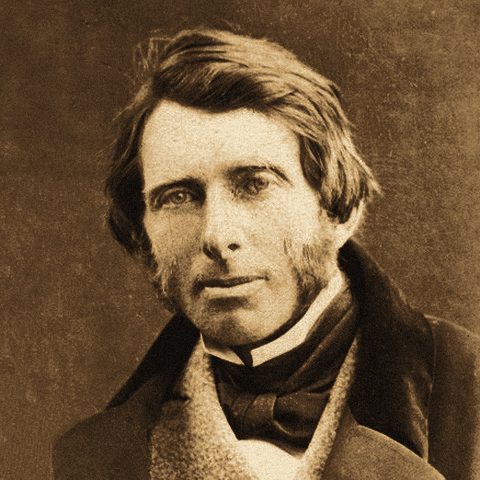
About the author
John Ruskin
1819 London – 1900 Coniston · English writer and art critic
John Ruskin was an English polymath – a writer, lecturer, art historian, art critic, draughtsman and philanthropist of the Victorian era. He wrote on subjects as varied as art, architecture, political economy, education, museology, geology, botany, ornithology, literature, history, and myth.
- 1819Born, London
- 1860Unto This Last, and Other Essays on Political Economy
- 1860Modern Painters, Volume 1 (of 5)
- 1860Modern Painters, Volume 3
- 1860Modern Painters, Volume 4
- 1871Fors Clavigera, Volume 2
- 1900Died, Coniston
More by John Ruskin
Keep going with Ruskin


If you like Fors Clavigera, Volume 2
More like this


Start with “Letter 14: Denmark Hill, 1st February, 1872”
2 chapters free right now — no account. Your place follows you to iPhone and Android.