

2 chapters freeNo account needed.
Opens letter 62 in the player · no sign-up needed
Fors Clavigera: Letters to the Workmen and Labourers of Great Britain was the name given by John Ruskin to a series of letters addressed to British workmen during the 1870s. They were published in the form of pamphlets.
Inside the book
- Free nowno account · 2 chapters
- —Introduction54 min
- 2Letter 6256 min
- Premium10 chapters · every book, 7 days free
- 3Letter 6344 min
- 4Letter 6446 min
- 5Letter 6540 min
- 6Letter 66: Brantwood, 14th May, 187648 min
- 7Letter 6757 min
- 8Letter 6847 min
- 9Letter 6954 min
- 10Letter 7036 min
- 11Letter 71: Venice, 4th October, 187656 min
- 12Letter 72: Venice, 9th November, 1876, 7 morning27 min
The opening
Letter 62
There were more, and more harmful misprints in last 'Fors' than usual, owing to my having driven my printers to despair, after they had made all the haste they could, by late dubitation concerning the relative ages of Shem, Ham, and Japheth, which forced me to cut out a sentence about them, and displace corrected type. But I must submit to all and sundry such chances of error, for, to prevent them, would involve a complete final reading of the whole, with one's eye and mind on the look-out for letters and stops all along, for which I rarely allow myself time, and which, had I a month to spare, would yet be a piece of work ill spent, in merely catching three t's instead of two in a "lettter." The name of the Welsh valley is wrong, too; but I won't venture on correction of that, which I feel to be hopeless; the reader must, however, be kind enough to transfer the 'and,' now the sixth word in the upper line of the note at page 38, and make it the fourth word, instead; to put a note of interrogation at the end of clause in the fourth line of page 35, and to insert an s, changing 'death' into 'deaths' in the third line of page 27;—the death in Sheffield being that commended to the Episcopic attention of York, and that in London to the Episcopic attention of London.
And this commendation, the reader will I hope perceive to be made in sequel to much former talk concerning Bishops, Soldiers, Lawyers, and Squires;—which, perhaps, he imagined me to have spoken jestingly; or it may be, in witlessness; or it may be, in voluble incipient insanity. Admitting myself in no small degree open to such suspicion, I am now about to re-word some matters which madness would gambol from; and I beg the reader to observe that any former gambolling on my part, awkward or untimely as it may have seemed, has been quite as serious, and intentionally progressive, as Morgiana's dance round the captain of the Forty Thieves.
If, then, the reader will look at the analysis of Episcopacy in 'Sesame and Lilies,' the first volume of all my works; next at the chapter on Episcopacy in 'Time and Tide;' and lastly, refer to what he can gather in the past series of 'Fors,' he will find the united gist of all to be, that Bishops cannot take, much less give, account of men's souls unless they first take and give account of their bodies: and that, therefore, all existing poverty and crime in their dioceses, discoverable by human observation, must be, when they are Bishops indeed, clearly known to, and describable by them, or their subordinates. Of whom the number, and discipline in St. George's Company, if by God's grace it ever take the form I intend, will be founded on the institution of the same by the first Bishop, or more correctly Archbishop, whom the Christian church professes to obey. For what can possibly be the use of printing the Ten Commandments which he delivered, in gold,—framing them above the cathedral altar,—pronouncing them in a prelatically sonorous voice,—and arranging the responsive supplications of the audience to the tune of an organ of the best manufacture, if the commanding Bishops institute no inquiry whatever into the physical power of—say this starving shoemaker in Seven Dials,—to obey such a command as 'thou shalt not covet' in the article of meat; or of his son to honour in any available measure either the father or mother, of whom the one has departed to seek her separate living, and the other is lying dead with his head in the fireplace.
Therefore, as I have just said, our Bishops in St. George's Company will be constituted in order founded on that appointed by the first Bishop of Israel, namely, that their Primate, or Supreme Watchman, shall appoint under him "out of all the people, able men, such as fear God, men of truth, hating covetousness, and place such over them to be rulers (or, at the least, observers) of thousands, rulers of hundreds, rulers of fifties, and rulers of tens;" and that of these episcopic centurions, captains of fifty, and captains of ten, there will be required clear account of the individual persons they are set over;—even a baby being considered as a decimal quantity not to be left out of their account by the decimal Bishops,—in which episcopacy, however, it is not improbable that a queenly power may be associated, with Norman caps for mitres, and for symbol of authority, instead of the crosier, (or crook, for disentangling lost sheep of souls from among the brambles,) the broom, for sweeping diligently till they find lost silver of souls among the dust.
You think I jest, still, do you? Anything but that; only if I took off the Harlequin's mask for a moment, you would say I was simply mad. Be it so, however, for this time.
I simply and most utterly mean, that, so far as my best judgment can reach, the present Bishops of the English Church, (with only one exception, known to me,—the Bishop of Natal,) have forfeited and fallen from their Bishoprics by transgression; and betrayal of their Lord, first by simony, and secondly, and chiefly, by lying for God with one mouth, and contending for their own personal interests as a professional body, as if these were the cause of Christ. And that in the assembly and Church of future England, there must be, (and shall be so far as this present body of believers in God and His law now called together in the name of St. Michael and St. George are concerned,) set up and consecrated other Bishops; and under them, lower ministering officers and true "Dogs of the Lord," who, with stricter inquisition than ever Dominican, shall take knowledge—not of creeds, but of every man's way and means of life; and shall be either able to avouch his conduct as honourable and just, or bound to impeach it as shameful and iniquitous, and this down to minute details;—above all, or before all, particulars of revenue, every companion, retainer, or associate in the Company's work being bound to keep such accounts that the position of his affairs may be completely known to the Bishops at any moment: and all bankruptcies or treacheries in money matters thus rendered impossible. Not that direct inquisition will be often necessary; for when the true nature of Theft, with the other particulars of the Moral Law, are rightly taught in our schools, grown-up men will no more think of stealing in business than in burglary. It is merely through the quite bestial ignorance of the Moral Law in which the English Bishops have contentedly allowed their flocks to be brought up, that any of the modern English conditions of trade are possible.
Of course, for such work, I must be able to find what Jethro of Midian assumes could be found at once in Israel, these "men of truth, hating covetousness," and all my friends laugh me to scorn for thinking to find any such.
Naturally, in a Christian country, it will be difficult enough; but I know there are still that kind of people among Midianites, Caffres, Red Indians, and the destitute, afflicted, and tormented, in dens and caves of the earth, where God has kept them safe from missionaries:—and, as I above said, even out of the rotten mob of money-begotten traitors calling itself a 'people' in England, I do believe I shall be able to extricate, by slow degrees, some faithful and true persons, hating covetousness, and fearing God.
And you will please to observe that this hate and fear are flat opposites one to the other; so that if a man fear or reverence God, he must hate covetousness; and if he fear or reverence covetousness, he must hate God; and there is no intermediate way whatsoever. Nor is it possible for any man, wilfully rich, to be a God-fearing person; but only for those who are involuntarily rich, and are making all the haste they prudently and piously can, to be poor; for money is a strange kind of seed; scattered, it is poison; but set, it is bread: so that a man whom God has appointed to be a sower must bear as lightly as he may the burden of gold and of possessions, till he find the proper places to sow them in. But persons desiring to be rich, and accumulating riches, always hate God, and never fear Him; the idol they do fear—(for many of them are sincerely religious) is an imaginary, or mind-sculptured God of their own making, to their own liking; a God who allows usury, delights in strife and contention, and is very particular about everybody's going to his synagogues on Sunday.
Indeed, when Adam Smith formally, in the name of the philosophers of Scotland and England, set up this opposite God, on the hill of cursing against blessing, Ebal against Gerizim; and declared that all men 'naturally' desired their neighbours' goods; and that in the name of Covetousness, all the nations of the earth should be blessed,—it is true, that the half-bred and half-witted Scotchman had not gift enough in him to carve so much as his own calf's head on a whinstone with his own hand; much less to produce a well molten and forged piece of gold, for old Scottish faith to break its tables of ten commandments at sight of. But, in leaving to every artless and ignorant boor among us the power of breeding, in imagination, each his own particular calf, and placidly worshipping that privately fatted animal; or, perhaps,—made out of the purest fat of it in molten Tallow instead of molten Gold,—images, which may be in any inventive moment, misshapen anew to his mind, Economical Theology has granted its disciples more perfect and fitting privilege.
From all taint or compliance with such idolatry, the Companions of St. George have vowed to withdraw themselves; writing, and signing their submission to, the First and great Commandment, so called by Christ,—and the Second which is like unto it.
And since on these two hang all the Law and the Prophets, in signing these two promises they virtually vow obedience to all the Law of which Christ then spoke; and belief of all the Prophets of which Christ then spoke. What that law is; who those prophets are;—whether they only prophesied 'until John,' or whether St. Paul's command to all Christians living, "Follow after charity, and desire spiritual gifts, but rather that ye may prophesy,"—is an important little commandment following the two great ones, I cannot tell you in a single letter, even if I altogether knew myself. Partly I do know;—and can teach you, if you will work. No one can teach you anything worth learning but through manual labour; the very bread of life can only be got out of the chaff of it by "rubbing it in your hands."
You vow, then, that you will at least strive to keep both of these commandments—as far as, what some would call the corruption, but what in honest people is the weakness, of flesh, permits. If you cannot watch an hour, because you don't love Christ enough to care about His agony, that is your weakness; but if you first sell Him, and then kiss Him, that is your corruption. I don't know if I can keep either you or myself awake; but at least we may put a stop to our selling and kissing. Be sure that you are serving Christ, till you are tired and can do no more, for that time: and then, even if you have not breath enough left to say "Master, Master" with,—He will not mind.
Begin therefore 'to-day,'—(which you may, in passing, note to be your present leader's signal-word or watch-word),—to do good work for Him—whether you live or die,—(see first promise asked of you, Letter II., page 21, explained in Letter VII., page 19, etc.,)—and see that every stroke of this work—be it weak or strong, shall therefore be done in love of God and your neighbour, and in hatred of covetousness. Which that you may hate accurately, wisely, and well, it is needful that you should thoroughly know, when you see it, or feel it. What covetousness is, therefore, let me beg you at once clearly to understand, by meditating on these following definitions.
Avarice means the desire to collect money, not goods. A 'miser' or 'miserable person' desires to collect goods only for the sake of turning them into money. If you can read French or German, read Molière's l'Avare, and then get Gotthelf's 'Bernese Stories,' and read 'Schnitzfritz,' with great care.
Avarice is a quite natural passion, and, within due limits, healthy. The addition of coin to coin, and of cipher to cipher, is a quite proper pleasure of human life, under due rule; the two stories I ask you to read are examples of its disease; which arises mainly in strong and stupid minds, when by evil fortune they have never been led to think or feel.
Frugality. The disposition to save or spare what we have got, without any desire to gain more. It is constantly, of course, associated with avarice; but quite as frequently with generosity, and is often merely an extreme degree of housewifely habit. Study the character of Alison Wilson in 'Old Mortality.'
Covetousness. The desire of possessing more than we have, of any good thing whatsoever of which we have already enough for our uses, (adding house to house, and field to field). It is much connected with pride; but more with restlessness of mind and desire of novelty; much seen in children who tire of their toys and want new ones. The pleasure in having things 'for one's very own' is a very subtle element in it. When I gave away my Loire series of Turner drawings to Oxford, I thought I was rational enough to enjoy them as much in the University gallery as in my own study. But not at all! I find I can't bear to look at them in the gallery, because they are 'mine' no more.
Now, you observe, that your creed of St. George says you believe in the nobleness of human nature—that is to say, that all our natural instincts are honourable. Only it is not always easy to say which of them are natural and which not.
For instance, Adam Smith says that it is 'natural' for every person to covet his neighbour's goods, and want to change his own for them; wherein is the origin of Trade, and Universal Salvation.
But God says, 'Thou shalt not covet thy neighbour's goods;' and God, who made you, does in that written law express to you His knowledge of your inner heart, and instruct you in the medicine for it. Therefore on due consideration, you will find assuredly it is quite unnatural in you to covet your neighbour's goods.
Consider, first, of the most precious, the wife. It is natural for you to think your own the best and prettiest of women; not at all to want to change her for somebody else's wife. If you like somebody else's better than yours, and this somebody else likes yours better than his, and you both want to change, you are both in a non-natural condition, and entirely out of the sphere of happy human love.
Again. It is natural for you to think your own house and garden the nicest house and garden that ever were. If, as should always be, they were your father's before you, and he and you have both taken proper care of them, they are a treasure to you which no money could buy,—the leaving them is always pain,—the return to them, a new thrill and wakening to life. They are a home and place of root to you, as if you were founded on the ground like its walls, or grew into it like its flowers. You would no more willingly transplant yourself elsewhere than the espalier pear-tree of your own graffing would pull itself out by the roots to climb another trellis. That is the natural mind of a man. "Thou shalt not covet thy neighbour's house." You are in an entirely non-natural state if you do, and, properly speaking, never had a house in your life.
"Nor his man-servant, nor his maid-servant." It is a 'natural' thing for masters to get proud of those who serve them; and a 'natural' thing for servants to get proud of the masters they serve. (You see above how Bacon connects the love of the master with the love of the country.) Nay, if the service has been true, if the master has indeed asked for what was good for himself, and the servant has done what was good for his master, they cannot choose but like each other; to have a new servant, or a new master, would be a mere horror to both of them. I have got two Davids, and a Kate, that I wouldn't change for anybody else's servants in the world; and I believe the only quarrel they have with me is that I don't give them enough to do for me:—this very morning, I must stop writing, presently, to find the stoutest of the Davids some business, or he will be miserable all day.
"Nor his ox, nor his ass." If you have petted both of your own, properly, from calf and foal, neither these, nor anything else of yours, will you desire to change for "anything that is his." Do you really think I would change my pen for your's, or my inkstand, or my arm-chair, or my Gainsborough little girl, or my Turner pass of St. Gothard? I would see you—— very uncomfortable—first. And that is the natural state of a human being who has taken anything like proper pains to make himself comfortable in God's good world, and get some of the right good, and true wealth of it.
For, you observe farther, the commandment is only that thou shalt not covet thy neighbour's goods. It does not say that you are not to covet any goods. How could you covet your neighbour's, if both your neighbour and you were forbidden to have any? Very far the contrary; in the first piece of genealogic geography I have given you to learn, the first descriptive sentence of the land of Havilah is,—"where there is gold;" and it goes on to say, "And the gold of that land is of the best: there is bdellium, and the onyx stone." In the Vulgate, 'dellium' and 'lapis onichinus.' In the Septuagint, 'anthrax,' and the 'prase-stone.'
Now, my evangelical friends, here is this book which you call "Word of God," and idolatrously print for your little children's reading and your own, as if your eternal lives depended on every word of it. And here, of the very beginning of the world—and the beginning of property—it professes to tell you something. But what? Have you the smallest idea what 'dellium' is? Might it not as well be bellium, or gellium, or pellium, or mellium, for all you know about it? Or do you know what an onyx is? or an anthrax? or a prase? Is not the whole verse pure and absolute gibberish and gabble to you; and do you expect God will thank you for talking gibberish and gabble to your children, and telling them—that is His Word? Partly, however, the verse is only senseless to you, because you have never had the sense to look at the stones which God has made. But in still greater measure, it is necessarily senseless, because it is not the word of God, but an imperfectly written tradition, which, however, being a most venerable and precious tradition, you do well to make your children read, provided also you take pains to explain to them so much sense as there is in it, and yourselves do reverently obey so much law as there is in it. Towards which intelligence and obedience, we will now take a step or two farther from the point of pause in last Fors.
Remember that the three sons of Noah are, respectively,
Shem, the father of the Imaginative and Contemplative races. Japheth,,,,,,,,, Practical and Constructive. Ham,,,,,,,,, Carnal and Destructive.
The sons of Shem are the perceivers of Splendour;—they see what is best in visible things, and reach forward to the invisible.
The sons of Japheth are the perceivers of Justice and Duty; and deal securely with all that is under their hand.
The sons of Ham are the perceivers of Evil or Nakedness; and are slaves therefore for ever—'servants of servants': when in power, therefore, either helpless or tyrannous.
It is best to remember among the nations descending from the three great sires, the Persians, as the sons of Shem; Greeks, as the sons of Japheth; Assyrians, as the sons of Ham. The Jewish captivity to the Assyrian then takes its perfect meaning.
This month, therefore, take the first descendant of Ham—Cush; and learn the following verses of Gen. x.:—
"And Cush begat Nimrod; he began to be a mighty one in the earth.
"He was a mighty hunter before the Lord.
"And the beginning of his kingdom was Babel in the land of Shinar.
"Out of that land went forth Asshur, and builded Nineveh."
These verses will become in future a centre of thought to you, whereupon you may gather, as on one root-germ, what you farther learn of the influence of hunting on the minds of men; and of the sources of Assyrian power, and causes of the Assyrian ruin in Birs Nemroud, out of which you have had those hunting-pieces brought to the narrow passage in the British Museum.
For further subject of thought, this month, read of Carey's Dante, the 31st canto of the 'Inferno,' with extreme care; and for your current writing lesson, copy these lines of Italics, which I have printed in as close resemblance as I can to the Italics of the Aldine edition of 1502.
P ero che come in su la cerchia tonda Monte reggion di torri si corona, Cosi la proda che'l pozzo circonda T orregiavan di mezza la persona Gli orribili giganti; cui minaccia Giove del cielo anchora, quando tona.
The putting of the capital letters that begin the stanza, outside, is a remaining habit of the scribes who wrote for the illuminator, and indicated the letter to be enlarged with ornament at the side of the text.
Of these larger capitals, the A given in last Fors, is of a Byzantine Greek school, in which though there is much quiet grace, there is no elasticity or force in the lines. They are always languid, and without spring or evidence of nervous force in the hand. They are not, therefore, perfect models for English writers, though they are useful as exercises in tranquillity of line: and I chose for that and many more reasons, that letter and sentence for our first exercise. But my letter B is to be given from the Northern Schools; and will have spring and power in it, which you cannot at once hope to imitate in a complete letter; and must be prepared for by copying a mere incipient fragment or flourish of ornamental line.
This line has been drawn for you, very leisurely indeed, by one of the gentlest of the animals living on our English south downs,—and yet, quietly done as it is, being the result of wholly consistent energy, it is a line which a Byzantine Greek would never have produced in writing, nor even in architecture, except when he was imitating an Ionian one.
You are to draw a horizontal line through the point in the centre of this figure. Then measure the breadth of the six coils on each side, counting from the centre backwards and forwards.
Then draw a vertical line through centre, and measure the breadths above and below. Then draw the complete curve lightly through these fixed points—alter it to your mind—and then paint over it the determined line, with any dark colour and a camel's hair brush.
The difficulty is to draw it so that there shall not be the smallest portion of it which is not approaching the inner curve, and narrowing the intermediate space. And you will find no trick of compasses will draw it. Choose any number of centres you like, and still I defy you to draw the curve mechanically; it can be done only as I have done it myself, with the free hand, correcting it and correcting till I got it right.
When you have succeeded, to any moderate extent, in doing this, your hand will have begun to receive the power of executing a serene and dignified flourish instead of a vulgar 'dash.' And you may also begin to understand that the word 'flourish' itself, as applied to writing, means the springing of its lines into floral exuberance,—therefore, strong procession and growth, which must be in a spiral line, for the stems of plants are always spirals. (See 'Proserpina,' Number IV.); and that this bursting out into foliage, in calm swiftness, is a totally different action from the impudent and useless sweeps and loops of vulgar writing.
Further. As your eyes get accustomed to the freely drawn, unmechanical, immeasurable line, you will be able, if you care about architecture, to know a Greek Ionic volute from a vulgar day-labourer's copy of it—done with compasses and calculations. And you will know how the volute of the throne of Lippi's Madonna, (though that is studied from the concave side of the shell) shows him to have been Etruscan-bred; and you will begin to see what his power was; and to laugh at the books of our miserable modern builders, filled with elaborate devices for drawing volutes with bits of circles:—the wretches might as well try to draw the lips of Sir Joshua's Circe,—or the smile in her cat's triangular eyes, in that manner. Only in Eleutheria of soul and body, shall any human creature draw so much as one rightly bending line.
Any human creature, I say. Little freedom, either of body or soul, had the poor architect who drew this our first model line for us; and yet and yet, simple as his life and labours may be, it will take our best wits to understand them. I find myself, at present, without any startpoint for attempt to understand them. I found the downs near Arundel, being out on them in a sunny day just after Christmas, sprinkled all over with their pretty white shells, (none larger than a sixpence, my drawing being increased as about seven to one, in line, or fifty to one, square,) and all empty, unless perchance some spectral remnant of their dead masters remain inside;—and I can't answer a single question I ask myself about them. I see they most of them have six whirls, or whorls. Had they six when they were young? have they never more when they are old? Certainly some shells have periodical passion of progress—and variously decorative stops and rests; but these little white continuities down to this woful time of their Christmas emptiness, seem to have deduced their spiral caves in peace.
But it's of no use to waste time in 'thinking.' I shall go and ask some pupil of my dear old friend Dr. Gray at the British Museum, and rejoice myself with a glance at the volutes of the Erectheium—fair home of Athenian thought.
NOTES AND CORRESPONDENCE.
I. I am surprised to find that my Index to Vols. I. and II. of Fors does not contain the important article 'Pockets'; and that I cannot therefore, without too much trouble, refer to the place where I have said that the Companions of St. George are all to have glass pockets; so that the absolute contents of them may be known of all men. But, indeed, this society of ours is, I believe, to be distinguished from other close brotherhoods that have been, or that are, chiefly in this, that it will have no secrets, and that its position, designs, successes, and failures, may at any moment be known to whomsoever they may concern.
More especially the affairs of the Master and of the Marshals, when we become magnificent enough to have any, must be clearly known, seeing that these are to be the managers of public revenue. For although, as we shall in future see, they will be held more qualified for such high position by contentment in poverty than responsibility of wealth; and, if the society is wise, be chosen always from among men of advanced age, whose previous lives have been recognized as utterly without stain of dishonesty in management of their private business,—the complete publication of their accounts, private as well as public, from the day they enter on the management of the Company's funds, will be a most wholesome check on the glosses with which self-interest, in the minds even of the honestest people, sometimes may colour or confuse their actions over property on a large scale; besides being examples to the accountants of other public institutions.
For instance, I am myself a Fellow of the Horticultural Society; and, glancing the other day at its revenue accounts for 1874, observed that out of an expenditure of eleven thousand odd pounds, one thousand nine hundred and sixty-two went to pay interest on debts, eleven hundred and ninety to its 'salaries'—two hundred to its botanical adviser, a hundred and fifty to its botanical professor, a hundred and twenty-six to its fruit committee, a hundred and twenty to its floral committee, four hundred and twenty to its band, nine hundred and ten to its rates and taxes, a hundred and eighty-five to its lawyers, four hundred and thirty-nine to its printers, and three pounds fifteen shillings to its foreign importations' account, (being interest on Cooper's loan): whereupon I wrote to the secretary expressing some dissatisfaction with the proportion borne by this last item to the others, and asking for some further particulars respecting the 'salaries'; but was informed that none could be had. Whereas, whether wisely or foolishly directed, the expenditure of the St. George's Company will be always open, in all particulars, to the criticism not only of the Companions, but of the outside public. And Fors has so arranged matters that I cannot at all, for my own part, invite such criticism to-day with feelings of gratified vanity; my own immediate position (as I generally stated in last letter) being not in the least creditable to my sagacity, nor likely to induce a large measure of public confidence in me as the Company's Master. Nor are even the affairs of the Company itself, in my estimate, very brilliant, our collected subscriptions for the reform of the world amounting, as will be seen, in five years, only to some seven hundred and odd pounds. However, the Company and its Master may perhaps yet see better days.
First, then, for the account of my proceedings in the Company's affairs. Our eight thousand Consols giving us £240 a year, I have appointed a Curator to the Sheffield Museum, namely, Mr. Henry Swan, an old pupil of mine in the Working Men's College in London; and known to me since as an estimable and trustworthy person, with a salary of forty pounds a year, and residence. He is obliged at present to live in the lower rooms of the little house which is to be the nucleus of the museum:—as soon as we can afford it, a curator's house must be built outside of it.
I have advanced, as aforesaid, a hundred pounds of purchase-money, and fifty for current expenses; and paid, besides, the lawyers' bills for the transfer, amounting to £48 16s. 7d.; these, with some needful comments on them, will be published in next Fors; I have not room for them in this.
I have been advised of several mistakes in my subscribers' list, so I reprint it below, with the initials attached to the numbers, and the entire sum, (as far as I can find out,) hitherto subscribed by each; and I beg of my subscribers at once to correct me in all errors.
The names marked with stars are those of Companions. The numbers 10, 17, 36, 43, and 48 I find have been inaccurately initialled, and are left blank for correction.
LIST OF SUBSCRIPTIONS
£ s. d. 1. D. L.* 24 0 0 2. R. T.* 80 0 0 3. T. K. 5 0 0 4. C. S. 75 0 0 5. A. R. 20 0 0 6. J. M.* 4 4 0 7. P. S. 45 0 0 8. D. A. 20 0 0 9. A. B. 25 0 0 10. 1 1 0 11. G. S.* 2 2 0 12. J. S. 4 0 0 13. B. A. 9 0 0 14. A. P. 13 10 0 15. W. P. 5 0 0 16. A. H.*. 25 0 0 17. 1 1 0 18. F. E. 10 0 0 19. J. S. 25 0 0 20. — D. 2 0 0 21. C. W. 10 10 0 22. S. B.*. 2 0 0 23. E. G. 6 1 0 24. — L. 1 1 0 25. S. W. 55 0 0 26. B. B.*. 2 3 4 27. J. W. 1 1 0 28. E. F. 50 0 0 29. L. L. 1 5 0 30. A. A. 0 2 6 31. T. D. 5 0 0 32. M. G. 3 3 0 33. J. F. 40 0 0 34. W. S. 10 0 0 35. H. S. 9 0 0 36. 1 1 0 37. A. H. 10 0 0 38. S. S. 1 0 0 39. H. W. 50 0 0 40. J. F. 8 0 0 41. J. T. 5 0 0 42. J. O. 25 0 0 43. 1 1 0 44. A. C. 1 0 0 45. J. G. 5 0 0 46. T. M. 5 5 0 47. J. B.*. 2 11 0 48. 1 1 0 49. J. D. 0 5 0 50. G. 15 15 0 51. F. B. 1 1 0 52. C. B. 6 0 0 53. H. L. 10 0 0 54. A. G. 0 10 0 -------------- £741 14 10
II. Affairs of the Master.
When I instituted the Company by giving the tenth of my available property to it, I had, roughly, seventy thousand pounds in money or land, and thirty thousand in pictures and books. The pictures and books I do not consider mine, but merely in my present keeping, for the country, or the persons I may leave them to. Of the seventy thousand in substance, I gave away fourteen thousand in that year of the Company's establishment, (see above, Letter XLIX., p. 2,) and have since lost fifteen thousand by a relation whom I tried to support in business. As also, during my battle with the booksellers, I have been hitherto losing considerably by my books, (last year, for instance, paying three hundred and ninety-eight pounds to my assistant, Mr. Burgess, alone, for plates and woodcutting, and making a profit, on the whole year's sales, of fifty pounds), and have been living much beyond my income besides, my seventy thousand is reduced to certainly not more than thirty; and it is very clear that I am too enthusiastically carrying out my own principles, and making more haste to be poor than is prudent, at my present date of possible life, for, at my current rate of expenditure, the cell at Assisi, above contemplated as advisably a pious mortification of my luxury, would soon become a necessary refuge for my 'holy poverty.' The battle with the booksellers, however, is now nearly won; and the publishing accounts will soon show better balance: what changes in my mode of living may, nevertheless, be soon either exemplary or necessary will be better understood after I have given account of it for a year.
Here are my opening expenses, then, from 1st January to 20th, and in each following Fors they will be given from 20th to 20th of the month. I content myself, being pressed for space in this number, with giving merely the sums of cheques drawn; somewhat lengthy gossiping explanation of items being also needed, which will come in due place. The four first large sums are, of course, payments of Christmas accounts.
£ s. d. £ s. d. Balance in Bank, 1st Jan. 1876 1344 17 9 Paid by cheque: Jan. 1. Jackson, (outdoor Steward, Brantwood) 50 0 0 1. Kate Smith, (indoor Stewardess, Brantwood) 160 0 0 1. David Downes, (Steward in London) 115 0 0 1. David Fudge, (Coachman in London) 60 0 0 1. Secretary, 1st quarter, 1876 25 0 0 4. Frederick Crawley, in charge of school-rooms at Oxford 10 0 0 6. Self, pocket-money 20 0 0 17. Arthur Burgess, assistant engraver 27 10 0 20. New carriage 190 0 0 20. Gift to Carshalton, for care of spring 110 0 0 20. Madame Nozzoli, charities at Florence 10 0 0 20. Mrs. Wonnacott, charities at Abingdon 3 10 0 20. William Ward, for two copies of Turner 21 0 0 20. Charles Murray, for rubbings of brasses, and copy of Filippo Lippi 15 0 0 --------- 817 0 0 ---------- Balance Jan. 20 527 17 9
III. I am gradually rising into greater indignation against the baseness and conceit of the modern scientific mob, than even against the mere money-seekers. The following fragment of a letter from a Companion bears notably on this matter:—
"The only earnest folks I know are cold-hearted 'Freethinkers,' and not very earnest either. My church-going friends are not earnest, except about their form of sound words. But I get on best with them. They are warmer, and would be what I wish, were circumstances not so dead set against it. My 'Freethinking' acquaintances say that with Carlyle the last of the great dreamers who have impeded the advance of science will pass away, and that, in fact, he is dead already, for nobody minds him. I don't heed such words now as I used to do. Had I lived when Socrates was condemned, I would have felt hope extinguished; yet Jesus came long after him, and I will not fear that God will fail to send His great and good men, any more than that the sun will forget to rise.
"My Freethinking friends sneer even at the mention of any God; and their talk of methods of reformation that infer any wisdom above their own has long since sickened me. One Sunday evening last year, I accompanied one of them to what they call the 'Eclectic Hall' here, to hear a Mrs. Law speak. There were from two to three hundred present,—few women—almost all toil-worn looking men. Mrs. Law, the lecturess—a stout, coarse-looking lady, or woman who might have been a lady—based her address on another by Mr. Gladstone, M.P. One thing she said will give you an idea of the spirit of her lecture, which was full of sadness to me, because highly appreciated by her audience: 'Jesus tells you,' she shouted, '"Blessed are the poor, for theirs is the kingdom of Heaven," but I tell you, Blessed are the rich, for theirs is no myth-world, but this substantial one with its tangible, satisfying joys.'
"I got one of them to read the October Letter—and then Volumes I. and IV. of Fors. Another young fellow, a Londoner, read them too, and then at leisure moments there was a talk over them for some days. But, with the exception of the first referred to, they talked pitifully enough. Your incidental remark about destroying the new town of Edinburgh, and other items of dubious sort, blinded them to any good, and it was a blessing when something else came athwart their vacant minds, and they ceased to remember you."
IV. I am grateful for the following note on the name 'Sheffield':—
"Leeds, 29th Dec, 1875.
"Sir,—The town, in all probability, took its name from the river 'Sheaf,' which flows into the Don.
"Doncaster is a case in point out of hundreds of others. It may be that the river has been named in recent times, but it is unlikely; for as a rule a river always has some name by which it is known before any settlements are made on its banks."
V. I must now request my reader's attention somewhat gravely to the questions in debate between my correspondents at Wakefield; not that these are in themselves of any importance, but they are of extreme importance in their general issue. In the first place, observe the extreme difficulty of writing history. You shall have one impertinent coxcomb after another in these days, writing constitutional Histories of England and the like, and telling you all the relationships and all the motives of Kings and Queens a thousand years dead; and here is question respecting the immediate ancestor of a living lady, which does not appear at once or easily determinable; and which I do not therefore pursue;—here again is question respecting the connection of her husband with the cases of bribery reported in the subjoined evidence on the Wakefield election petition, also indeterminable;—here are farther two or three questions respecting the treatment of his workmen, respecting which the evidence is entirely conflicting; and finally, here is the chapel on Wakefield bridge pulled down, a model of it built in its place, and the entire front of the historical building carried away to decorate a private boathouse; and I, quite as knowing in architecture as most people, am cheated into some very careful and quite useless work, and even into many false conclusions, by the sculpture of the sham front, decayed and broken enough in thirty years to look older than sculpture of 500 years B.C. would, or does, in pure air.
Observe, in the second place, how petulant and eager people are, the moment a single word touches themselves, while universal abuses may be set before them enough to bring all the stones in heaven but what serve for the thunder, down about their ears,—and they will go on talking about Shakspeare and the musical glasses undisturbed, to the end of their lives; but let a single word glance at their own windows, or knock at their own doors, and—instantly—'If Mr. Ruskin is what I think him, he will retract,' etc. etc. But, alas! Mr. Ruskin is not the least what Mrs. Green thinks him,—does not in the smallest degree care for a lady's "Fie's," and, publishing the following letters and newspaper extracts for the general reader's satisfaction and E. L.'s justification, very contentedly, for his part, ends the discussion, though of course Fors shall be open to any further communication, if not too long, which either Mrs. Green or her husband may desire to have inserted.
In the following letter I have left all the passages containing due apology, while I have removed some which contained matter of further debate, if not offence, thereby much weakening the whole.
"Dear Mr. Ruskin,—I have been away from home, and have only recently seen Mrs. Green's letter in the Fors of last month.
"I am sorry to have vexed her; I did not think that you would print the passages referring to her husband in the form in which they stood.
"When you said that you would assume my permission to print passages from the letter, I supposed that they would be those relating to the general life of Wakefield. All that I have written is essentially true, but I do not wish to hold any controversy on the matter, for if I defended myself publicly I should have to wound still further the feelings of one who is no doubt a devoted wife.
"It is for your satisfaction alone that I write these lines. I have been inaccurate on two points, on which I wrote too hastily, from hearsay, gleaned on brief visits to Wakefield. Mr. Green has not a Scotch estate, only occasional shooting, and he is not concerned in the forges that stand near the bridge, as I was wrongly informed.
"I did not say, though I may have led your readers to infer it, that the so-called 'American devil' was his. I knew, or rather was told, that it belonged to Whithams, who have the largest foundry. He (Mr. Green) does not forge iron, it seems; he makes it into machines. He can hardly be classed as an engineer; he is a machine-maker. If he is not an 'iron lord,' on what is his wealth based?
"Robin the Pedlar is no myth. I often heard him mentioned, when a girl, as being Mrs. Green's father. I dare say that Mrs. Edward Green never heard of him. She came into the family in its genteeler days; but there are old people in Wakefield who remember all about him. I send by this post a Wakefield paper containing some speeches highly illustrative of the town of which Mr. Green is the hero and model." (These I do not think it necessary to publish.) "Party feeling still runs high at Wakefield, and when the next election occurs, Mrs. Green expects to find big yellow bills on the gate-pillars of Heath Common, 'Professor Ruskin on Ned Green,' and she is naturally angry.
"Of course he is not the sole offender. This case occurred to me because he is the most prominent type of the modern successful men who are to inaugurate a new era in the town's history. It is the blind leader of the blind in the downward way that things are going. Everybody wants to get rich like him; everybody who has greed and competence pushes to the front. The town council promise them that they will make of Wakefield a second Bradford. Meanwhile they squabble about their duties, the streets are filthy, smallpox breeds there, and they set up a hospital in a tent. It catches fire, and nurse and patients are burnt together. I think that was eight or nine years since. Possibly arrangements are better now.
"You say truly that quickly acquired fortunes must be ill acquired, but you must live on my level to realize fully how the prospect and possibility of such gains are disorganizing middle-class life. English people do not lift their families along with them, as we reproach the 'clannish' Scotch with doing.
"Ignorant pride on the one hand, envy on the other, breed hate between those who should be a mutual stay. As classes are estranged, so are families.
"In conclusion, I must again say that I shall always feel regret at having pained Mrs. Green, but what I have said is true in all essentials.
"He is the hero of the men who are changing Wakefield so rapidly. I liked it better thirty years since, when, if it was poor, it was clean and honest.
"I am, dear Mr. Ruskin, yours truly, "E. L."
I print the following first portion (about the fourth part) of a column and a half of the evidence on the Wakefield election petition, sent me by my correspondent; though I do not suppose it to indicate anything more than compliance on Mr. Green's part with the ordinary customs of English electioneering.
"The trial of the petition against the return of Mr. Green, the Conservative member for Wakefield, was resumed this morning before Mr. Justice Grove. Mr. Hawkins, Q.C., and Mr. Chandos Leigh again appeared for the petitioners, and Mr. C. Russell, Q.C., and Mr. Forbes for the respondent. There was again a crowded attendance.
John Thompson, a tailor, and a voter in the Northgate Ward, said that about half-past six o'clock, on Sunday, the 1st February—the day before the polling—'Councillor Joe' (Mr. J. Howden) called at his house and solicited his vote for Mr. Green. Witness said he did not think that he could give it, but if he did he must 'have something.' Mr. Howden said, 'If it's worth anything I'll let you know.' About half-past one o'clock on the polling day witness again saw him. Mr. Howden said, 'If you vote for Green, I'll send you 10s. for your day's wage.' Witness said, 'No;' and they parted.
Cross-examined: Witness did not say to Mr. Howden that he had already been offered a couple of pounds. He was a strong Radical. Mr. Howden was at witness's house several times, but he only saw him once. He (witness) voted about half-past two in the afternoon.
Elizabeth Thompson, wife of the last witness, said that on the Saturday and Sunday before the polling day Mr. J. Howden called to solicit her husband's vote, and he said, 'If he votes for Green, I'll see that he is paid.' On the Monday, when Mr. Howden called, he said, 'If your husband votes for Green I'll give him 5s. out of my own pocket, and see that he is 'tipped' in the committee room.' Later in the day, her husband was at home when Howden called, and they left the house together.
Henry Blades, a blacksmith's striker, and a voter in the Westgate ward, said that on the day of the election Mr. Ough gave him £2 in the Finisher Off public-house, on condition that he voted for Mr. Green. Witness voted in the course of the day.
Cross-examined: Witness, since he received his subpœna, had met Mr. Gill, the respondent's solicitor, and others, at the Bull Hotel, and put his name to a paper, of the nature of which he was ignorant.
Mr. Russell: Was it not a statement, made by yourself, and taken down in writing, to the effect that you had never received any bribe or offer of a bribe?
Witness: I don't know. They asked me to sign the paper, and I signed it. I was not sober.
Re-examined by Mr. Hawkins: Witness was sent for to the Bull. He received there, after making his statement, two glasses of beer, and 5s. in money—the latter from Mr. Ough.
Henry Lodge said that on the afternoon of the election he was in Farrar's beerhouse, in Westgate. Blade was there 'fresh,' and taking three half-sovereigns from his pocket, he threw them on the table, and said, 'That's the sort to have.'
James Meeghan, an Irish labourer, said that he was a voter for the borough, and on the polling day was canvassed by Mr. Kay for the Conservatives. He met Mr. Kay in the polling booth, and received from him 10s. Before voting, witness said to Mr. Kay that he was a poor man and could not afford to lose his day's wage. Mr. Kay said, 'I can't give you a bribe—that's against the law; but as you have had to pay your mates for doing your work, you shall have something.' In the polling station Mr. Kay held a half-sovereign in his hand, behind him, and witness took it.
Cross-examined: Mr. Kay offered witness the 10s. out of his own pocket.
Mr. Russell (to the Judge): What this man says is quite true. Mr. Kay does not deny that he gave him half a sovereign for his loss of time.
Patrick M'Hugh, an Irish labourer, and a voter in the Northgate Ward, said that on the polling day he visited the Conservative Committee-room at the Zetland School, and saw Mr. Tom Howden. Mr. Howden said, 'Are you going to vote?' Witness replied, 'I suppose so;' and Mr. Howden said, 'Come this way and I'll show you how.' Witness was taken into a back room, and there Mr. Howden said, 'Well, how much?' Witness said, 'Three,' and Mr. Howden took them out of his pocket (three sovereigns), and said, 'See there.' Witness took the money and voted. He had, since receiving his subpœna, been away from Wakefield.
Cross-examined: Witness had visited Harrogate—staying a week there to take the waters—(laughter),—and afterwards Thirsk. He paid his own expenses and travelled alone, having been recommended by a doctor to go away for the benefit of his health.
Mr. Russell: Who was the doctor?
Witness: Mr. Unthank—(great laughter);—Mr. Unthank being a chemist, and a prominent Liberal. He said that if I could go, and was strong enough, a bit of an out would do me good. (Laughter.) The £3 that I received at the election supported me while I was away.
James Wright, a police officer of the borough of Wakefield, said that on the polling day he was acting as door-keeper at the Zetland Street polling station, and observed Mr. Priestly hand some money to one who presented himself as a voter. Witness followed the voter into the booth, and pointed him out to his superior officer. The man voted, and then left. Mr. Priestly was busily employed during the polling hours in conducting voters from the Conservative committee-room to the polling station.
Cross-examined: At half-past three Priestly was 'fresh' in drink, and it was found necessary to keep him out of the polling station. He was in Mr. Green's employment. Witness could not say what amount of money passed; but some one in the crowd, who also saw the transaction, said to Priestly, 'You are doing it too brown.' (Laughter.)"
The letters next following are from an entirely honest engineer workman, a Companion of St. George.
"Dear Master,—I read Mrs. Green's letter in the November Fors two or three days ago, and yesterday I adopted the hint in it to inquire amongst the workmen. I asked one working beside me, who I knew came from Yorkshire, if he ever worked in Wakefield, and, curiously enough, he belongs there, and was apprenticed in a workshop close to Mr. Green's. He says he knows the place well, and that certainly when he was there, 'At six o'clock, or some approximate hour,' the firm of Green and Son, 'issued its counter-order' with a horrible noise; and not only at six o'clock, but also after meals.
"He also tells me that the wages of a working engineer in the workshop of Green and Son average 22s. a week, and I know that here, in London, they average 38s. a week, and Wakefield is close to coal and iron, while London is not. It may be, as I once heard it, urged that the workmen in London are superior as workmen to those in the provinces; but my experience, which has been considerable in London and the provinces as a working engineer, enables me to assert that this is not the case. Also it may be urged that low wages prevail in the provinces, but in Glasgow I got 30s. a week two years ago, and this week meant fifty-one hours, while in Wakefield a week's work means fifty-four hours.
"Since Mr. Green derives no pecuniary benefit from Wakefield, it is evident from the above that the London and Glasgow engineers are very ingenious persons indeed, if they contrive to get pecuniary benefit from the cities in which they issue their 'counter-order.'
"Moreover, my fellow-workman tells me that there is a system of piece-work carried on in the workshop of Green and Son, which is extended to the apprentices, so that the boys are set to think, not how to learn to work properly, but how to learn to get hold of the greatest number of shillings they can in a week. In the man the desire for more money is tempered with forethought: he knows that if he earns more than a certain amount the price of his job will be cut down; but the boy does not consider this, and his price, to use the language of the workshop, is cut down accordingly.
"Mrs. Green in her letter says Mr. Green never had a forge. This means that he never had a place which exclusively turned out forgings. But connected with Mrs. Green's establishment, my fellow-workman tells me, are forges, as indeed there are in every engineering work I have seen. Besides, there is constantly carried on a process of moulding 'pig iron' at Mr. Green's place, which requires the most intense heat, and to which the workmen are exposed, as they are at the forge Mrs. Green speaks of. (In your lectures to the students at Oxford in 1870, you say that work requiring the use of fire must be reduced to its minimum, and speak of its effects in Greek. I know some of its evil effects on the blacksmiths, but I wonder if it is desirable for me to know the meaning of the Greek language you use on that occasion.) (Yes; but you need not be in any hurry about it.)
"It would seem, then, that Mr. Green stays at Heath Hall, and cultivates an ideal refinement in art, while he is instrumental in causing two or three hundred men and boys in Wakefield, from whom he derives no pecuniary benefit, to cultivate there the fine art of music in the shriek and roar of machines all day, to cultivate a trader's eagerness for bargaining, instead of a wish to do good work, and to cultivate an acquaintance with the sort of work which, over ten years constant experience in it tells me, is the most effective in this country for qualifying themselves and others for admission to the Ophthalmic, Orthopedic, and other institutions mentioned by your correspondent, E. L.
"Last week I had intelligence of the death of a young engineer friend of mine. A boiler burst while he was standing by, and shot him a distance of 60 yards, killing him instantly.
"Dear Master, if I have made a mistake in troubling you with these notes on Mrs. Green's letter, I am sorry, but I could not resist the impulse to write to you after what I learned from my fellow-workman. I believe the facts are reliable, and at any rate I can give the workman's name who furnished them, if it is wanted."
"Dear Master,—Since I wrote to you last I chanced on another workman, who has worked in Green's shop. He tells me it is known among the workmen as 'The Port in a Storm.'
"My first informant also, unasked, wrote to Wakefield for further information. He showed me the letter in reply, which says that Green's whistle (it is also called a 'buzzard') was not stopped till force was applied.
"'The Port in a Storm' means that only when assailed by the fierce storm of hunger do the workmen think of applying for work at Green's place; that is, when they can't get work anywhere else in the neighbourhood."
These letters appear to me entirely to justify the impression under which E. L. wrote; but of course I shall be most happy if Mr. Green will furnish me with more accurate indication of the persons who have made Wakefield the horrible spectacle that it is. For although many of my discreet friends cry out upon me for allowing 'personalities,' it is my firm conviction that only by justly personal direction of blame can any abuse be vigorously dealt with. And, as I will answer for the sincerity and impartiality of attack, so I trust to make it always finally accurate in aim and in limitation.
FORS CLAVIGERA.
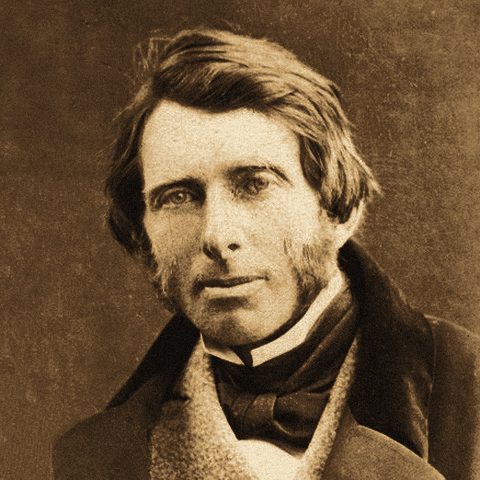
About the author
John Ruskin
1819 London – 1900 Coniston · English writer and art critic
John Ruskin was an English polymath – a writer, lecturer, art historian, art critic, draughtsman and philanthropist of the Victorian era. He wrote on subjects as varied as art, architecture, political economy, education, museology, geology, botany, ornithology, literature, history, and myth.
- 1819Born, London
- 1860Unto This Last, and Other Essays on Political Economy
- 1860Modern Painters, Volume 1 (of 5)
- 1860Modern Painters, Volume 3
- 1860Modern Painters, Volume 4
- 1871Fors Clavigera, Volume 6
- 1900Died, Coniston
More by John Ruskin
Keep going with Ruskin


If you like Fors Clavigera, Volume 6
More like this


Start with letter 62
2 chapters free right now — no account. Your place follows you to iPhone and Android.