

2 chapters freeNo account needed.
Opens “Of the Turnerian Picturesque” in the player · no sign-up needed
Ruskin argues that recent painters emerging from the tradition of the picturesque are superior in the art of landscape to the old masters.
Inside the book
- Free nowno account · 2 chapters
- —Introduction4 min
- 1Of the Turnerian Picturesque29 min
- Premium22 chapters · every book, 7 days free
- 2Of Turnerian Topography33 min
- 3Of Turnerian Light45 min
- 4Of Turnerian Mystery:—First, as Essential24 min
- 5Of Turnerian Mystery:—Secondly, Wilful30 min
- 6The Firmament13 min
- 7The Dry Land21 min
- 8Of the Materials of Mountains:—First, Compact Crysta...27 min
- 9Of the Materials of Mountains:—Secondly, Slaty Cryst...14 min
- 10Of the Materials of Mountains:—Thirdly, Slaty Coherents10 min
- 11Of the Materials of Mountains:—Fourthly, Compact Coh...21 min
- 12On the Sculpture of Mountains:—First, the Lateral Ra...35 min
- 13Of the Sculpture of Mountains:—Secondly, the Central...27 min
- 14Resulting Forms:—First, Aiguilles34 min
- 15Resulting Forms:—Secondly, Crests43 min
- 17Chapter 16, part 131 min
- 18Chapter 16, part 232 min
- 19Chapter 17, part 134 min
- 20Chapter 17, part 234 min
- 18Resulting Forms:—Fifthly, Stones29 min
- 19The Mountain Gloom53 min
- 20Part 1 of 2: The Mountain Glory39 min
- 24Chapter 2042 min
The opening
Of the Turnerian Picturesque
Of The Turnerian Picturesque.
Section 1. THE work which we proposed to ourselves, towards the close of the last volume, as first to be undertaken in this, was the examination of those peculiarities of system in which Turner either stood alone, even in the modern school, or was a distinguished representative of modern, as opposed to ancient practice.
And the most interesting of these subjects of inquiry, with which, therefore, it may be best to begin, is the precise form under which he has admitted into his work the modern feeling of the picturesque, which, so far as it consists in a delight in ruin, is perhaps the most suspicious and questionable of all the characters distinctively belonging to our temper, and art.
It is especially so, because it never appears, even in the slightest measure, until the days of the decline of art in the seventeenth century. The love of neatness and precision, as opposed to all disorder, maintains itself down to Raphael's childhood without the slightest interference of any other feeling; and it is not until Claude's time, and owing in great part to his influence, that the new feeling distinctly establishes itself.
Plate +18+ shows the kind of modification which Claude used to make on the towers and backgrounds of Ghirlandajo; the old Florentine giving his idea of Pisa, with its leaning tower, with the utmost neatness and precision, and handsome youth riding over neat bridges on beautiful horses; Claude reducing the delicate towers and walls to unintelligible ruin, the well built bridge to a rugged stone one, the handsome rider to a weary traveller, and the perfectly drawn leafage to confusion of copse-wood or forest.
How far he was right in doing this; or how far the moderns are right in carrying the principle to greater excess, and seeking always for poverty-stricken rusticity or pensive ruin, we must now endeavor to ascertain.
The essence of picturesque character has been already defined to be a sublimity not inherent in the nature of the thing, but caused by something external to it; as the ruggedness of a cottage roof possesses something of a mountain aspect, not belonging to the cottage as such. And this sublimity may be either in mere external ruggedness, and other visible character, or it may lie deeper, in an expression of sorrow and old age, attributes which are both sublime; not a dominant expression, but one mingled with such familiar and common characters as prevent the object from becoming perfectly pathetic in its sorrow, or perfectly venerable in its age.
Section 2. For instance, I cannot find words to express the intense pleasure I have always in first finding myself, after some prolonged stay in England, at the foot of the old tower of Calais church. The large neglect, the noble unsightliness of it; the record of its years written so visibly, yet without sign of weakness or decay; its stern wasteness and gloom, eaten away by the Channel winds, and overgrown with the bitter sea grasses; its slates and tiles all shaken and rent, and yet not falling; its desert of brickwork full of bolts, and holes, and ugly fissures, and yet strong, like a bare brown rock; its carelessness of what any one thinks or feels about it, putting forth no claim, having no beauty nor desirableness, pride nor grace; yet neither asking for pity; not, as ruins are, useless and piteous, feebly or fondly garrulous of better days; but useful still, going through its own daily work,—as some old fisherman beaten grey by storm, yet drawing his daily nets: so it stands, with no complaint about its past youth, in blanched and meagre massiveness and serviceableness, gathering human souls together underneath it; the sound of its bells for prayer still rolling through its rents; and the grey peak of it seen far across the sea, principal of the three that rise above the waste of surfy sand and hillocked shore,—the lighthouse for life, and the belfry for labor, and this for patience and praise.
Section 3. I cannot tell the half of the strange pleasures and thoughts that come about me at the sight of that old tower; for, in some sort, it is the epitome of all that makes the Continent of Europe interesting, as opposed to new countries; and, above all, it completely expresses that agedness in the midst of active life which binds the old and the new into harmony. We, in England, have our new street, our new inn, our green shaven lawn, and our piece of ruin emergent from it,—a mere specimen of the middle ages put on a bit of velvet carpet to be shown, which, but for its size, might as well be on the museum shelf at once, under cover. But, on the Continent, the links are unbroken between the past and present, and in such use as they can serve for, the grey-headed wrecks are suffered to stay with men; while, in unbroken line, the generations of spared buildings are seen succeeding each in its place. And thus in its largeness, in its permitted evidence of slow decline, in its poverty, in its absence of all pretence, of all show and care for outside aspect, that Calais tower has an infinite of symbolism in it, all the more striking because usually seen in contrast with English scenes expressive of feelings the exact reverse of these.
Section 4. And I am sorry to say that the opposition is most distinct in that noble carelessness as to what people think of it. Once, on coming from the Continent, almost the first inscription I saw in my native English was this:
+"TO LET, A GENTEEL HOUSE, UP THIS ROAD."+
And it struck me forcibly, for I had not come across the idea of gentility, among the upper limestones of the Alps, for seven months; nor do I think that the Continental nations in general have the idea. They would have advertised a "pretty" house or a "large" one, or a "convenient" one; but they could not, by any use of the terms afforded by their several languages, have got at the English "genteel." Consider, a little, all the meanness that there is in that epithet, and then see, when next you cross the Channel, how scornful of it that Calais spire will look.
Section 5. Of which spire the largeness and age are also opposed exactly to the chief appearances of modern England, as one feels them on first returning to it; that marvellous smallness both of houses and scenery, so that a ploughman in the valley has his head on a level with the tops of all the hills in the neighborhood; and a house is organized into complete establishment,—parlor, kitchen, and all, with a knocker to its door, and a garret window to its roof, and a bow to its second story, on a scale of twelve feet wide by fifteen high, so that three such at least would go into the granary of an ordinary Swiss cottage: and also our serenity of perfection, our peace of conceit, everything being done that vulgar minds can conceive as wanting to be done; the spirit of well-principled housemaids everywhere, exerting itself for perpetual propriety and renovation, so that nothing is old, but only "old-fashioned," and contemporary, as it were, in date and impressiveness only with last year's bonnets.
Abroad, a building of the eighth or tenth century stands ruinous in the open street; the children play round it, the peasants heap their corn in it, the buildings of yesterday nestle about it, and fit their new stones into its rents, and tremble in sympathy as it trembles. No one wonders at it, or thinks of it as separate, and of another time; we feel the ancient world to be a real thing, and one with the new: antiquity is no dream; it is rather the children playing about the old stones that are the dream. But all is continuous; and the words, "from generation to generation," understandable there. Whereas here we have a living present, consisting merely of what is "fashionable" and "old-fashioned;" and a past, of which there are no vestiges; a past which peasant or citizen can no more conceive; all equally far away; Queen Elizabeth as old as Queen Boadicea, and both incredible. At Verona we look out of Can Grande's window to his tomb; and if he does not stand beside us, we feel only that he is in the grave instead of the chamber,—not that he is old, but that he might have been beside us last night. But in England the dead are dead to purpose.
One cannot believe they ever were alive, or anything else than what they are now—names in school-books.
Section 6. Then that spirit of trimness. The smooth paving-stones; the scraped, hard, even, rutless roads; the neat gates and plates, and essence of border and order, and spikiness and spruceness. Abroad, a country-house has some confession of human weakness and human fates about it. There are the old grand gates still, which the mob pressed sore against at the Revolution, and the strained hinges have never gone so well since; and the broken greyhound on the pillar—still broken—better so; but the long avenue is gracefully pale with fresh green, and the courtyard bright with orange-trees; the garden is a little run to waste—since Mademoiselle was married nobody cares much about it; and one range of apartments is shut up—nobody goes into them since Madame died. But with us, let who will be married or die, we neglect nothing. All is polished and precise again next morning; and whether people are happy or miserable, poor or prosperous, still we sweep the stairs of a Saturday.
Section 7. Now, I have insisted long on this English character, because I want the reader to understand thoroughly the opposite element of the noble picturesque; its expression, namely, of suffering, of poverty, or decay, nobly endured by unpretending strength of heart. Nor only unpretending, but unconscious. If there be visible pensiveness in the building, as in a ruined abbey, it becomes, or claims to become, beautiful; but the picturesqueness is in the unconscious suffering,—the look that an old laborer has, not knowing that there is anything pathetic in his grey hair, and withered arms, and sunburnt breast; and thus there are the two extremes, the consciousness of pathos in the confessed ruin, which may or may not be beautiful, according to the kind of it; and the entire denial of all human calamity and care, in the swept proprieties and neatness of English modernism: and, between these, there is the unconscious confession of the facts of distress and decay, in by-words; the world's hard work being gone through all the while, and no pity asked for, nor contempt feared. And this is the expression of that Calais spire, and of all picturesque things, in so far as they have mental or human expression at all.
Section 8. I say, in so far as they have mental expression, because their merely outward delightfulness—that which makes them pleasant in painting, or, in the literal sense, picturesque—is their actual variety of color and form. A broken stone has necessarily more various forms in it than a whole one; a bent roof has more various curves in it than a straight one; every excrescence or cleft involves some additional complexity of light and shade, and every stain of moss on eaves or wall adds to the delightfulness of color. Hence, in a completely picturesque object, as an old cottage or mill, there are introduced, by various circumstances not essential to it, but, on the whole, generally somewhat detrimental to it as cottage or mill, such elements of sublimity—complex light and shade, varied color, undulatory form, and so on—as can generally be found only in noble natural objects, woods, rocks, or mountains. This sublimity, belonging in a parasitical manner to the building, renders it, in the usual sense of the word, "picturesque."
Section 9. Now, if this outward sublimity be sought for by the painter, without any regard for the real nature of the thing, and without any comprehension of the pathos of character hidden beneath, it forms the low school of the surface-picturesque; that which fills ordinary drawing-books and scrap-books, and employs, perhaps, the most popular living landscape painters of France, England, and Germany. But if these same outward characters be sought for in subordination to the inner character of the object, every source of pleasurableness being refused which is incompatible with that, while perfect sympathy is felt at the same time with the object as to all that it tells of itself in those sorrowful by-words, we have the school of true or noble picturesque; still distinguished from the school of pure beauty and sublimity, because, in its subjects, the pathos and sublimity are all by the way, as in Calais old spire,—not inherent, as in a lovely tree or mountain; while it is distinguished still more from the schools of the lower picturesque by its tender sympathy, and its refusal of all sources of pleasure inconsistent with the perfect nature of the thing to be studied.
Section 10. The reader will only be convinced of the broad scope of this law by careful thought, and comparison of picture with picture; but a single example will make the principle of it clear to him.
On the whole, the first master of the lower picturesque, among our living artists, is Clarkson Stanfield; his range of art being, indeed, limited by his pursuit of this character. I take, therefore, a windmill, forming the principal subject in his drawing of Brittany, near Dol (engraved in the Coast Scenery), Fig. 1, Plate +19+, and beside it I place a windmill, which forms also the principal subject in Turner's study of the Lock, in the Liber Studiorum. At first sight I dare say the reader may like Stanfield's best; and there is, indeed, a great deal more in it to attract liking. Its roof is nearly as interesting in its ruggedness as a piece of the stony peak of a mountain, with a châlet built on its side; and it is exquisitely varied in swell and curve. Turner's roof, on the contrary, is a plain, ugly gable,—a windmill roof, and nothing more. Stanfield's sails are twisted into most effective wrecks, as beautiful as pine bridges over Alpine streams; only they do not look as if they had ever been serviceable windmill sails; they are bent about in cross and awkward ways, as if they were warped or cramped; and their timbers look heavier than necessary.
Turner's sails have no beauty about them like that of Alpine bridges; but they have the exact switchy sway of the sail that is always straining against the wind; and the timbers form clearly the lightest possible framework for the canvas,—thus showing the essence of windmill sail. Then the clay wall of Stanfield's mill is as beautiful as a piece of chalk cliff, all worn into furrows by the rain, coated with mosses, and rooted to the ground by a heap of crumbled stone, embroidered with grass and creeping plants. But this is not a serviceable state for a windmill to be in. The essence of a windmill, as distinguished from all other mills, is, that it should turn round, and be a spinning thing, ready always to face the wind; as light, therefore, as possible, and as vibratory; so that it is in no wise good for it to approximate itself to the nature of chalk cliffs.
Now observe how completely Turner has chosen his mill so as to mark this great fact of windmill nature; how high he has set it; how slenderly he has supported it; how he has built it all of wood; how he has bent the lower planks so as to give the idea of the building lapping over the pivot on which it rests inside; and how, finally, he has insisted on the great leverage of the beam behind it, while Stanfield's lever looks more like a prop than a thing to turn the roof with. And he has done all this fearlessly, though none of these elements of form are pleasant ones in themselves, but tend, on the whole, to give a somewhat mean and spider-like look to the principal feature in his picture; and then, finally, because he could not get the windmill dissected, and show us the real heart and centre of the whole, behold, he has put a pair of old millstones, lying outside, at the bottom of it. These—the first cause and motive of all the fabric—laid at its foundation; and beside them the cart which is to fulfil the end of the fabric's being, and take home the sacks of flour.
Section 11. So far of what each painter chooses to draw. But do not fail also to consider the spirit in which it is drawn. Observe, that though all this ruin has befallen Stanfield's mill, Stanfield is not in the least sorry for it. On the contrary, he is delighted, and evidently thinks it the most fortunate thing possible. The owner is ruined, doubtless, or dead; but his mill forms an admirable object in our view of Brittany. So far from being grieved about it, we will make it our principal light;—if it were a fruit-tree in spring-blossom, instead of a desolate mill, we could not make it whiter or brighter; we illume our whole picture with it, and exult over its every rent as a special treasure and possession.
Not so Turner. His mill is still serviceable; but, for all that, he feels somewhat pensive about it. It is a poor property, and evidently the owner of it has enough to do to get his own bread out from between its stones. Moreover, there is a dim type of all melancholy human labor in it,—catching the free winds, and setting them to turn grindstones. It is poor work for the winds; better, indeed, than drowning sailors or tearing down forests, but not their proper work of marshalling the clouds, and bearing the wholesome rains to the place where they are ordered to fall, and fanning the flowers and leaves when they are faint with heat. Turning round a couple of stones, for the mere pulverization of human food, is not noble work for the winds. So, also, of all low labor to which one sets human souls. It is better than no labor; and, in a still higher degree, better than destructive wandering of imagination; but yet, that grinding in the darkness, for mere food's sake, must be melancholy work enough for many a living creature. All men have felt it so; and this grinding at the mill, whether it be breeze or soul that is set to it, we cannot much rejoice in. Turner has no joy of his mill. It shall be dark against the sky, yet proud, and on the hill-top; not ashamed of its labor, and brightened from beyond, the golden clouds stooping over it, and the calm summer sun going down behind, far away, to his rest.
Section 12. Now in all this observe how the higher condition of art (for I suppose the reader will feel, with me, that Turner's is the highest) depends upon largeness of sympathy. It is mainly because the one painter has communion of heart with his subject, and the other only casts his eyes upon it feelinglessly, that the work of the one is greater than that of the other. And, as we think farther over the matter, we shall see that this is indeed the eminent cause of the difference between the lower picturesque and the higher. For, in a certain sense, the lower picturesque ideal is eminently a heartless one: the lover of it seems to go forth into the world in a temper as merciless as its rocks. All other men feel some regret at the sight of disorder and ruin. He alone delights in both; it matters not of what. Fallen cottage—desolate villa—deserted village—blasted heath—mouldering castle—to him, so that they do but show jagged angles of stone and timber, all are sights equally joyful. Poverty, and darkness, and guilt, bring in their several contributions to his treasury of pleasant thoughts.
The shattered window, opening into black and ghastly rents of wall, the foul rag or straw wisp stopping them, the dangerous roof, decrepit floor and stair, ragged misery or wasting age of the inhabitants,—all these conduce, each in due measure, to the fulness of his satisfaction. What is it to him that the old man has passed his seventy years in helpless darkness and untaught waste of soul? The old man has at last accomplished his destiny, and filled the corner of a sketch, where something of an unshapely nature was wanting. What is it to him that the people fester in that feverish misery in the low quarter of the town, by the river? Nay, it is much to him. What else were they made for? what could they have done better? The black timbers, and the green water, and the soaking wrecks of boats, and the torn remnants of clothes hung out to dry in the sun;—truly the fever-struck creatures, whose lives have been given for the production of these materials of effect, have not died in vain.
Section 13. Yet, for all this, I do not say the lover of the lower picturesque is a monster in human form. He is by no means this, though truly we might at first think so, if we came across him unawares, and had not met with any such sort of person before. Generally speaking, he is kind-hearted, innocent of evil, but not broad in thought; somewhat selfish, and incapable of acute sympathy with others; gifted at the same time with strong artistic instincts and capacities for the enjoyment of varied form, and light, and shade, in pursuit of which enjoyment his life is passed, as the lives of other men are, for the most part, in the pursuit of what they also like,—be it honor, or money, or indolent pleasure,—very irrespective of the poor people living by the stagnant canal. And, in some sort, the hunter of the picturesque is better than many of these; inasmuch as he is simple-minded and capable of unostentatious and economical delights, which, if not very helpful to other people, are at all events utterly uninjurious, even to the victims or subjects of his picturesque fancies; while to many others his work is entertaining and useful.
And, more than all this, even that delight which he seems to take in misery is not altogether unvirtuous.
Through all his enjoyment there runs a certain under current of tragical passion,—a real vein of human sympathy;—it lies at the root of all those strange morbid hauntings of his; a sad excitement, such as other people feel at a tragedy, only less in degree, just enough, indeed, to give a deeper tone to his pleasure, and to make him choose for his subject the broken stones of a cottage wall, rather than of a roadside bank, the picturesque beauty of form in each being supposed precisely the same: and, together with this slight tragical feeling, there is also a humble and romantic sympathy; a vague desire, in his own mind, to live in cottages rather than in palaces; a joy in humble things, a contentment and delight in makeshifts, a secret persuasion (in many respects a true one) that there is in these ruined cottages a happiness often quite as great as in kings' palaces, and a virtue and nearness to God infinitely greater and holier than can commonly be found in any other kind of place; so that the misery in which he exults is not, as he sees it, misery, but nobleness,—"poor, and sick in body, and beloved by the Gods." And thus, being nowise sure that these things can be mended at all, and very sure that he knows not how to mend them, and also that the strange pleasure he feels in them must have some good reason in the nature of things, he yields to his destiny, enjoys his dark canal without scruple, and mourns over every improvement in the town, and every movement made by its sanitary commissioners, as a miser would over a planned robbery of his chest; in all this being not only innocent, but even respectable and admirable, compared with the kind of person who has no pleasure in sights of this kind, but only in fair façades, trim gardens, and park palings, and who would thrust all poverty and misery out of his way, collecting it into back alleys, or sweeping it finally out of the world, so that the street might give wider play for his chariot wheels, and the breeze less offence to his nobility.
Section 14. Therefore, even the love for the lower picturesque ought to be cultivated with care, wherever it exists; not with any special view to artistic, but to merely humane, education. It will never really or seriously interfere with practical benevolence; on the contrary, it will constantly lead, if associated with other benevolent principles, to a truer sympathy with the poor, and better understanding of the right ways of helping them; and, in the present stage of civilization, it is the most important element of character, not directly moral, which can be cultivated in youth; since it is mainly for the want of this feeling that we destroy so many ancient monuments, in order to erect "handsome" streets and shops instead, which might just as well have been erected elsewhere, and whose effect on our minds, so far as they have any, is to increase every disposition to frivolity, expense, and display.
These, and such other considerations not directly connected with our subject, I shall, perhaps, be able to press farther at the close of my work; meantime, we turn to the immediate question, of the distinction between the lower and higher picturesque, and the artists who pursue them.
Section 15. It is evident, from what has been advanced, that there is no definite bar of separation between the two; but that the dignity of the picturesque increases from lower to higher, in exact proportion to the sympathy of the artist with his subject. And in like manner his own greatness depends (other things being equal) on the extent of this sympathy. If he rests content with narrow enjoyment of outward forms, and light sensations of luxurious tragedy, and so goes on multiplying his sketches of mere picturesque material, he necessarily settles down into the ordinary "clever" artist, very good and respectable, maintaining himself by his sketching and painting in an honorable way, as by any other daily business, and in due time passing away from the world without having, on the whole, done much for it. Such has been the necessary, not very lamentable, destiny of a large number of men in these days, whose gifts urged them to the practice of art, but who possessing no breadth of mind, nor having met with masters capable of concentrating what gifts they had towards nobler use, almost perforce remained in their small picturesque circle; getting more and more narrowed in range of sympathy as they fell more and more into the habit of contemplating the one particular class of subjects that pleased them, and recomposing them by rules of art.
I need not give instances of this class, we have very few painters who belong to any other; I only pause for a moment to except from it a man too often confounded with the draughtsmen of the lower picturesque;—a very great man, who, though partly by chance, and partly by choice, limited in range of subject, possessed for that subject the profoundest and noblest sympathy—Samuel Prout. His renderings of the character of old buildings, such as that spire of Calais, are as perfect and as heartfelt as I can conceive possible; nor do I suppose that any one else will ever hereafter equal them. His early works show that he possessed a grasp of mind which could have entered into almost any kind of landscape subject; that it was only chance—I do not know if altogether evil chance—which fettered him to stones; and that in reality he is to be numbered among the true masters of the nobler picturesque.
Section 16. Of these, also, the ranks rise in worthiness, according to their sympathy. In the noblest of them, that sympathy seems quite unlimited; they enter with their whole heart into all nature; their love of grace and beauty keeps them from delighting too much in shattered stones and stunted trees, their kindness and compassion from dwelling by choice on any kind of misery, their perfect humility from avoiding simplicity of subject when it comes in their way, and their grasp of the highest thoughts from seeking a lower sublimity in cottage walls and penthouse roofs. And, whether it be home of English village thatched with straw and walled with clay, or of Italian city vaulted with gold and roofed with marble; whether it be stagnant stream under ragged willow, or glancing fountain between arcades of laurel, all to them will bring equal power of happiness, and equal field for thought.
Section 17. Turner is the only artist who hitherto has furnished the entire type of this perfection. The attainment of it in all respects is, of course, impossible to man; but the complete type of such a mind has once been seen in him, and, I think, existed also in Tintoret; though, as far as I know, Tintoret has not left any work which indicates sympathy with the humor of the world. Paul Veronese, on the other hand, had sympathy with its humor, but not with its deepest tragedy or horror. Rubens wants the feeling for grace and mystery. And so, as we pass through the list of great painters, we shall find in each of them some local narrowness. Now, I do not, of course, mean to say that Turner has accomplished all to which his sympathy prompted him; necessarily, the very breadth of effort involved, in some directions, manifest failure; but he has shown, in casual incidents, and by-ways, a range of feeling which no other painter, as far as I know, can equal.
He cannot, for instance, draw children at play as well as Mulready; but just glean out of his works the evidence of his sympathy with children;—look at the girl putting her bonnet on the dog, in the foreground of the Richmond, Yorkshire; the juvenile tricks and "marine dabblers" of the Liber Studiorum; the boys scrambling after their kites in the woods of the Greta and Buckfastleigh; and the notable and most pathetic drawing of the Kirkby Lonsdale churchyard, with the schoolboys making a fortress of their larger books on the tombstone, to bombard with the more projectile volumes; and passing from these to the intense horror and pathos of the Rizpah, consider for yourself whether there was ever any other painter who could strike such an octave. Whether there has been or not, in other walks of art, this power of sympathy is unquestionably in landscape unrivalled; and it will be one of our pleasantest future tasks to analyze in his various drawing the character it always gives; a character, indeed, more or less marked in all good work whatever, but to which, being preeminent in him, I shall always hereafter give the name of the "Turnerian Picturesque."
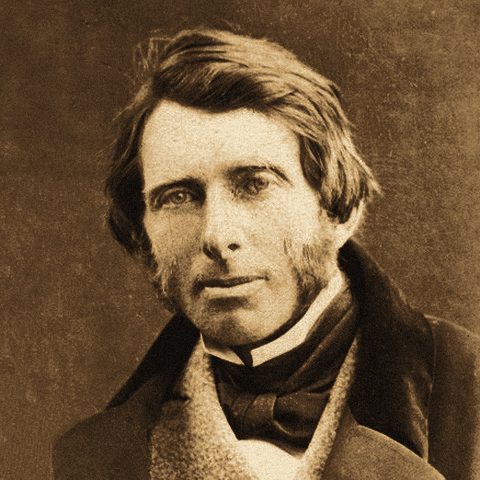
About the author
John Ruskin
1819 London – 1900 Coniston · English writer and art critic
John Ruskin was an English polymath – a writer, lecturer, art historian, art critic, draughtsman and philanthropist of the Victorian era. He wrote on subjects as varied as art, architecture, political economy, education, museology, geology, botany, ornithology, literature, history, and myth.
- 1819Born, London
- 1860Unto This Last, and Other Essays on Political Economy
- 1860Modern Painters, Volume 1 (of 5)
- 1860Modern Painters, Volume 3
- 1860Modern Painters, Volume 4
- 1860Modern Painters, Volume 5
- 1900Died, Coniston
More by John Ruskin
Keep going with Ruskin


If you like Modern Painters, Volume 4
More like this


Start with “Of the Turnerian Picturesque”
2 chapters free right now — no account. Your place follows you to iPhone and Android.