

2 chapters freeNo account needed.
Opens “Motives to the present work—Reception of the Author'...” in the player · no sign-up needed
The Biographia Literaria ('literary biography') is a critical autobiography by Samuel Taylor Coleridge, published in 1817 in two volumes.
Inside the book
- Free nowno account · 2 chapters
- —Introduction5 min
- 1Motives to the present work—Reception of the Author'...28 min
- Premium28 chapters · every book, 7 days free
- 2Supposed irritability of men of genius brought to th...20 min
- 3The Author's obligations to critics, and the probabl...23 min
- 4The Lyrical Ballads with the Preface—Mr20 min
- 5On the law of Association—Its history traced from Ar...14 min
- 6That Hartley's system, as far as it differs from tha...13 min
- 7Of the necessary consequences of the Hartleian Theor...13 min
- 8The system of Dualism introduced by Des Cartes—Refin...9 min
- 9Is Philosophy possible as a science, and what are it...22 min
- 11Chapter 10, part 137 min
- 12Chapter 10, part 238 min
- 11An affectionate exhortation to those who in early li...14 min
- 12A chapter of requests and premonitions concerning th...56 min
- 13On the imagination, or esemplastic power14 min
- 14Occasion of the Lyrical Ballads, and the objects ori...15 min
- 15The specific symptoms of poetic power elucidated in...13 min
- 16Striking points of difference between the Poets of t...9 min
- 17Examination of the tenets peculiar to Mr25 min
- 18Language of metrical composition, why and wherein es...42 min
- 19Continuation—Concerning the real object which, it is...13 min
- 20The former subject continued—The neutral style, or t...11 min
- 21Remarks on the present mode of conducting critical j...17 min
- 24Chapter 22, part 130 min
- 25Chapter 22, part 233 min
- 26Letter 130 min
- 27Letter 234 min
- 28Letter 327 min
- 23Quid quod praefatione praemunierim libellum, qua con...49 min
- 24Conclusion28 min
The opening
Motives to the present work—Reception of the Author'...
Motives to the present work—Reception of the Author's first publication—Discipline of his taste at school—Effect of contemporary writers on youthful minds—Bowles's Sonnets—Comparison between the poets before and since Pope.
It has been my lot to have had my name introduced both in conversation, and in print, more frequently than I find it easy to explain, whether I consider the fewness, unimportance, and limited circulation of my writings, or the retirement and distance, in which I have lived, both from the literary and political world. Most often it has been connected with some charge which I could not acknowledge, or some principle which I had never entertained. Nevertheless, had I had no other motive or incitement, the reader would not have been troubled with this exculpation. What my additional purposes were, will be seen in the following pages. It will be found, that the least of what I have written concerns myself personally. I have used the narration chiefly for the purpose of giving a continuity to the work, in part for the sake of the miscellaneous reflections suggested to me by particular events, but still more as introductory to a statement of my principles in Politics, Religion, and Philosophy, and an application of the rules, deduced from philosophical principles, to poetry and criticism. But of the objects, which I proposed to myself, it was not the least important to effect, as far as possible, a settlement of the long continued controversy concerning the true nature of poetic diction; and at the same time to define with the utmost impartiality the real poetic character of the poet, by whose writings this controversy was first kindled, and has been since fuelled and fanned.
In the spring of 1796, when I had but little passed the verge of manhood, I published a small volume of juvenile poems. They were received with a degree of favour, which, young as I was, I well know was bestowed on them not so much for any positive merit, as because they were considered buds of hope, and promises of better works to come. The critics of that day, the most flattering, equally with the severest, concurred in objecting to them obscurity, a general turgidness of diction, and a profusion of new coined double epithets. The first is the fault which a writer is the least able to detect in his own compositions: and my mind was not then sufficiently disciplined to receive the authority of others, as a substitute for my own conviction. Satisfied that the thoughts, such as they were, could not have been expressed otherwise, or at least more perspicuously, I forgot to inquire, whether the thoughts themselves did not demand a degree of attention unsuitable to the nature and objects of poetry. This remark however applies chiefly, though not exclusively, to the Religious Musings.
The remainder of the charge I admitted to its full extent, and not without sincere acknowledgments both to my private and public censors for their friendly admonitions. In the after editions, I pruned the double epithets with no sparing hand, and used my best efforts to tame the swell and glitter both of thought and diction; though in truth, these parasite plants of youthful poetry had insinuated themselves into my longer poems with such intricacy of union, that I was often obliged to omit disentangling the weed, from the fear of snapping the flower. From that period to the date of the present work I have published nothing, with my name, which could by any possibility have come before the board of anonymous criticism. Even the three or four poems, printed with the works of a friend, as far as they were censured at all, were charged with the same or similar defects, (though I am persuaded not with equal justice),—with an excess of ornament, in addition to strained and elaborate diction.
I must be permitted to add, that, even at the early period of my juvenile poems, I saw and admitted the superiority of an austerer and more natural style, with an insight not less clear, than I at present possess. My judgment was stronger than were my powers of realizing its dictates; and the faults of my language, though indeed partly owing to a wrong choice of subjects, and the desire of giving a poetic colouring to abstract and metaphysical truths, in which a new world then seemed to open upon me, did yet, in part likewise, originate in unfeigned diffidence of my own comparative talent.—During several years of my youth and early manhood, I reverenced those who had re-introduced the manly simplicity of the Greek, and of our own elder poets, with such enthusiasm as made the hope seem presumptuous of writing successfully in the same style. Perhaps a similar process has happened to others; but my earliest poems were marked by an ease and simplicity, which I have studied, perhaps with inferior success, to impress on my later compositions.
At school, (Christ's Hospital,) I enjoyed the inestimable advantage of a very sensible, though at the same time, a very severe master, the Reverend James Bowyer. He early moulded my taste to the preference of Demosthenes to Cicero, of Homer and Theocritus to Virgil, and again of Virgil to Ovid. He habituated me to compare Lucretius, (in such extracts as I then read,) Terence, and above all the chaster poems of Catullus, not only with the Roman poets of the, so called, silver and brazen ages; but with even those of the Augustan aera: and on grounds of plain sense and universal logic to see and assert the superiority of the former in the truth and nativeness both of their thoughts and diction. At the same time that we were studying the Greek tragic poets, he made us read Shakespeare and Milton as lessons: and they were the lessons too, which required most time and trouble to bring up, so as to escape his censure. I learned from him, that poetry, even that of the loftiest and, seemingly, that of the wildest odes, had a logic of its own, as severe as that of science; and more difficult, because more subtle, more complex, and dependent on more, and more fugitive causes. In the truly great poets, he would say, there is a reason assignable, not only for every word, but for the position of every word; and I well remember that, availing himself of the synonymes to the Homer of Didymus, he made us attempt to show, with regard to each, why it would not have answered the same purpose; and wherein consisted the peculiar fitness of the word in the original text.
In our own English compositions, (at least for the last three years of our school education,) he showed no mercy to phrase, metaphor, or image, unsupported by a sound sense, or where the same sense might have been conveyed with equal force and dignity in plainer words. Lute, harp, and lyre, Muse, Muses, and inspirations, Pegasus, Parnassus, and Hippocrene were all an abomination to him. In fancy I can almost hear him now, exclaiming "Harp? Harp? Lyre? Pen and ink, boy, you mean! Muse, boy, Muse? Your nurse's daughter, you mean! Pierian spring? Oh aye! the cloister-pump, I suppose!" Nay certain introductions, similes, and examples, were placed by name on a list of interdiction. Among the similes, there was, I remember, that of the manchineel fruit, as suiting equally well with too many subjects; in which however it yielded the palm at once to the example of Alexander and Clytus, which was equally good and apt, whatever might be the theme. Was it ambition? Alexander and Clytus!—Flattery? Alexander and Clytus!—anger—drunkenness—pride—friendship—ingratitude—late repentance? Still, still Alexander and Clytus! At length, the praises of agriculture having been exemplified in the sagacious observation that, had Alexander been holding the plough, he would not have run his friend Clytus through with a spear, this tried, and serviceable old friend was banished by public edict in saecula saeculorum. I have sometimes ventured to think, that a list of this kind, or an index expurgatorius of certain well-known and ever-returning phrases, both introductory, and transitional, including a large assortment of modest egoisms, and flattering illeisms, and the like, might be hung up in our Law-courts, and both Houses of Parliament, with great advantage to the public, as an important saving of national time, an incalculable relief to his Majesty's ministers, but above all, as insuring the thanks of country attornies, and their clients, who have private bills to carry through the House.
Be this as it may, there was one custom of our master's, which I cannot pass over in silence, because I think it imitable and worthy of imitation. He would often permit our exercises, under some pretext of want of time, to accumulate, till each lad had four or five to be looked over. Then placing the whole number abreast on his desk, he would ask the writer, why this or that sentence might not have found as appropriate a place under this or that other thesis: and if no satisfying answer could be returned, and two faults of the same kind were found in one exercise, the irrevocable verdict followed, the exercise was torn up, and another on the same subject to be produced, in addition to the tasks of the day. The reader will, I trust, excuse this tribute of recollection to a man, whose severities, even now, not seldom furnish the dreams, by which the blind fancy would fain interpret to the mind the painful sensations of distempered sleep; but neither lessen nor dim the deep sense of my moral and intellectual obligations. He sent us to the University excellent Latin and Greek scholars, and tolerable Hebraists. Yet our classical knowledge was the least of the good gifts, which we derived from his zealous and conscientious tutorage. He is now gone to his final reward, full of years, and full of honours, even of those honours, which were dearest to his heart, as gratefully bestowed by that school, and still binding him to the interests of that school, in which he had been himself educated, and to which during his whole life he was a dedicated thing.
From causes, which this is not the place to investigate, no models of past times, however perfect, can have the same vivid effect on the youthful mind, as the productions of contemporary genius. The discipline, my mind had undergone, Ne falleretur rotundo sono et versuum cursu, cincinnis, et floribus; sed ut inspiceret quidnam subesset, quae, sedes, quod firmamentum, quis fundus verbis; an figures essent mera ornatura et orationis fucus; vel sanguinis e materiae ipsius corde effluentis rubor quidam nativus et incalescentia genuina;—removed all obstacles to the appreciation of excellence in style without diminishing my delight. That I was thus prepared for the perusal of Mr. Bowles's sonnets and earlier poems, at once increased their influence, and my enthusiasm. The great works of past ages seem to a young man things of another race, in respect to which his faculties must remain passive and submiss, even as to the stars and mountains. But the writings of a contemporary, perhaps not many years older than himself, surrounded by the same circumstances, and disciplined by the same manners, possess a reality for him, and inspire an actual friendship as of a man for a man. His very admiration is the wind which fans and feeds his hope. The poems themselves assume the properties of flesh and blood. To recite, to extol, to contend for them is but the payment of a debt due to one, who exists to receive it.
There are indeed modes of teaching which have produced, and are producing, youths of a very different stamp; modes of teaching, in comparison with which we have been called on to despise our great public schools, and universities,
in whose halls are hung Armoury of the invincible knights of old--
modes, by which children are to be metamorphosed into prodigies. And prodigies with a vengeance have I known thus produced; prodigies of self-conceit, shallowness, arrogance, and infidelity! Instead of storing the memory, during the period when the memory is the predominant faculty, with facts for the after exercise of the judgment; and instead of awakening by the noblest models the fond and unmixed love and admiration, which is the natural and graceful temper of early youth; these nurslings of improved pedagogy are taught to dispute and decide; to suspect all but their own and their lecturer's wisdom; and to hold nothing sacred from their contempt, but their own contemptible arrogance; boy-graduates in all the technicals, and in all the dirty passions and impudence of anonymous criticism. To such dispositions alone can the admonition of Pliny be requisite, Neque enim debet operibus ejus obesse, quod vivit. An si inter eos, quos nunquam vidimus, floruisset, non solum libros ejus, verum etiam imagines conquireremus, ejusdem nunc honor prasentis, et gratia quasi satietate languescet? At hoc pravum, malignumque est, non admirari hominem admiratione dignissimum, quia videre, complecti, nec laudare tantum, verum etiam amare contingit.
I had just entered on my seventeenth year, when the sonnets of Mr. Bowles, twenty in number, and just then published in a quarto pamphlet, were first made known and presented to me, by a schoolfellow who had quitted us for the University, and who, during the whole time that he was in our first form (or in our school language a Grecian,) had been my patron and protector. I refer to Dr. Middleton, the truly learned, and every way excellent Bishop of Calcutta:
qui laudibus amplis Ingenium celebrare meum, calamumque solebat, Calcar agens animo validum. Non omnia terra Obruta; vivit amor, vivit dolor; ora negatur Dulcia conspicere; at fiere et meminisse relictum est.
It was a double pleasure to me, and still remains a tender recollection, that I should have received from a friend so revered the first knowledge of a poet, by whose works, year after year, I was so enthusiastically delighted and inspired. My earliest acquaintances will not have forgotten the undisciplined eagerness and impetuous zeal, with which I laboured to make proselytes, not only of my companions, but of all with whom I conversed, of whatever rank, and in whatever place. As my school finances did not permit me to purchase copies, I made, within less than a year and a half, more than forty transcriptions, as the best presents I could offer to those, who had in any way won my regard. And with almost equal delight did I receive the three or four following publications of the same author.
Though I have seen and known enough of mankind to be well aware, that I shall perhaps stand alone in my creed, and that it will be well, if I subject myself to no worse charge than that of singularity; I am not therefore deterred from avowing, that I regard, and ever have regarded the obligations of intellect among the most sacred of the claims of gratitude. A valuable thought, or a particular train of thoughts, gives me additional pleasure, when I can safely refer and attribute it to the conversation or correspondence of another. My obligations to Mr. Bowles were indeed important, and for radical good. At a very premature age, even before my fifteenth year, I had bewildered myself in metaphysics, and in theological controversy. Nothing else pleased me. History, and particular facts, lost all interest in my mind. Poetry--(though for a school-boy of that age, I was above par in English versification, and had already produced two or three compositions which, I may venture to say, without reference to my age, were somewhat above mediocrity, and which had gained me more credit than the sound, good sense of my old master was at all pleased with,)—poetry itself, yea, novels and romances, became insipid to me. In my friendless wanderings on our leave-days, (for I was an orphan, and had scarcely any connections in London,) highly was I delighted, if any passenger, especially if he were dressed in black, would enter into conversation with me. For I soon found the means of directing it to my favourite subjects
Of providence, fore-knowledge, will, and fate, Fixed fate, free will, fore-knowledge absolute, And found no end in wandering mazes lost.
This preposterous pursuit was, beyond doubt, injurious both to my natural powers, and to the progress of my education. It would perhaps have been destructive, had it been continued; but from this I was auspiciously withdrawn, partly indeed by an accidental introduction to an amiable family, chiefly however, by the genial influence of a style of poetry, so tender and yet so manly, so natural and real, and yet so dignified and harmonious, as the sonnets and other early poems of Mr. Bowles. Well would it have been for me, perhaps, had I never relapsed into the same mental disease; if I had continued to pluck the flower and reap the harvest from the cultivated surface, instead of delving in the unwholesome quicksilver mines of metaphysic lore. And if in after time I have sought a refuge from bodily pain and mismanaged sensibility in abstruse researches, which exercised the strength and subtilty of the understanding without awakening the feelings of the heart; still there was a long and blessed interval, during which my natural faculties were allowed to expand, and my original tendencies to develop themselves;—my fancy, and the love of nature, and the sense of beauty in forms and sounds.
The second advantage, which I owe to my early perusal, and admiration of these poems, (to which let me add,) though known to me at a somewhat later period, the Lewesdon Hill of Mr. Crowe bears more immediately on my present subject. Among those with whom I conversed, there were, of course, very many who had formed their taste, and their notions of poetry, from the writings of Pope and his followers; or to speak more generally, in that school of French poetry, condensed and invigorated by English understanding, which had predominated from the last century. I was not blind to the merits of this school, yet, as from inexperience of the world, and consequent want of sympathy with the general subjects of these poems, they gave me little pleasure, I doubtless undervalued the kind, and with the presumption of youth withheld from its masters the legitimate name of poets.
I saw that the excellence of this kind consisted in just and acute observations on men and manners in an artificial state of society, as its matter and substance; and in the logic of wit, conveyed in smooth and strong epigrammatic couplets, as its form: that even when the subject was addressed to the fancy, or the intellect, as in the Rape of the Lock, or the Essay on Man; nay, when it was a consecutive narration, as in that astonishing product of matchless talent and ingenuity Pope's Translation of the Iliad; still a point was looked for at the end of each second line, and the whole was, as it were, a sorites, or, if I may exchange a logical for a grammatical metaphor, a conjunction disjunctive, of epigrams. Meantime the matter and diction seemed to me characterized not so much by poetic thoughts, as by thoughts translated into the language of poetry.
On this last point, I had occasion to render my own thoughts gradually more and more plain to myself, by frequent amicable disputes concerning Darwin's Botanic Garden, which, for some years, was greatly extolled, not only by the reading public in general, but even by those, whose genius and natural robustness of understanding enabled them afterwards to act foremost in dissipating these "painted mists" that occasionally rise from the marshes at the foot of Parnassus. During my first Cambridge vacation, I assisted a friend in a contribution for a literary society in Devonshire: and in this I remember to have compared Darwin's work to the Russian palace of ice, glittering, cold and transitory. In the same essay too, I assigned sundry reasons, chiefly drawn from a comparison of passages in the Latin poets with the original Greek, from which they were borrowed, for the preference of Collins's odes to those of Gray; and of the simile in Shakespeare
How like a younker or a prodigal The scarfed bark puts from her native bay, Hugg'd and embraced by the strumpet wind! How like the prodigal doth she return, With over-weather'd ribs and ragged sails, Lean, rent, and beggar'd by the strumpet wind! (Merch. of Ven. Act II. sc. 6.)
to the imitation in the Bard;
Fair laughs the morn, and soft the zephyr blows While proudly riding o'er the azure realm In gallant trim the gilded vessel goes, Youth at the prow and pleasure at the helm; Regardless of the sweeping whirlwind's sway, That hush'd in grim repose, expects it's evening prey.
(in which, by the bye, the words "realm" and "sway" are rhymes dearly purchased)—I preferred the original on the ground, that in the imitation it depended wholly on the compositor's putting, or not putting, a small capital, both in this, and in many other passages of the same poet, whether the words should be personifications, or mere abstractions. I mention this, because, in referring various lines in Gray to their original in Shakespeare and Milton, and in the clear perception how completely all the propriety was lost in the transfer, I was, at that early period, led to a conjecture, which, many years afterwards was recalled to me from the same thought having been started in conversation, but far more ably, and developed more fully, by Mr. Wordsworth;—namely, that this style of poetry, which I have characterized above, as translations of prose thoughts into poetic language, had been kept up by, if it did not wholly arise from, the custom of writing Latin verses, and the great importance attached to these exercises, in our public schools. Whatever might have been the case in the fifteenth century, when the use of the Latin tongue was so general among learned men, that Erasmus is said to have forgotten his native language; yet in the present day it is not to be supposed, that a youth can think in Latin, or that he can have any other reliance on the force or fitness of his phrases, but the authority of the writer from whom he has adopted them. Consequently he must first prepare his thoughts, and then pick out, from Virgil, Horace, Ovid, or perhaps more compendiously from his Gradus, halves and quarters of lines, in which to embody them.
I never object to a certain degree of disputatiousness in a young man from the age of seventeen to that of four or five and twenty, provided I find him always arguing on one side of the question. The controversies, occasioned by my unfeigned zeal for the honour of a favourite contemporary, then known to me only by his works, were of great advantage in the formation and establishment of my taste and critical opinions. In my defence of the lines running into each other, instead of closing at each couplet; and of natural language, neither bookish, nor vulgar, neither redolent of the lamp, nor of the kennel, such as I will remember thee; instead of the same thought tricked up in the rag-fair finery of,
------thy image on her wing Before my fancy's eye shall memory bring,--
I had continually to adduce the metre and diction of the Greek poets, from Homer to Theocritus inclusively; and still more of our elder English poets, from Chaucer to Milton. Nor was this all. But as it was my constant reply to authorities brought against me from later poets of great name, that no authority could avail in opposition to Truth, Nature, Logic, and the Laws of Universal Grammar; actuated too by my former passion for metaphysical investigations; I laboured at a solid foundation, on which permanently to ground my opinions, in the component faculties of the human mind itself, and their comparative dignity and importance. According to the faculty or source, from which the pleasure given by any poem or passage was derived, I estimated the merit of such poem or passage.
As the result of all my reading and meditation, I abstracted two critical aphorisms, deeming them to comprise the conditions and criteria of poetic style;—first, that not the poem which we have read, but that to which we return, with the greatest pleasure, possesses the genuine power, and claims the name of essential poetry;—secondly, that whatever lines can be translated into other words of the same language, without diminution of their significance, either in sense or association, or in any worthy feeling, are so far vicious in their diction. Be it however observed, that I excluded from the list of worthy feelings, the pleasure derived from mere novelty in the reader, and the desire of exciting wonderment at his powers in the author. Oftentimes since then, in pursuing French tragedies, I have fancied two marks of admiration at the end of each line, as hieroglyphics of the author's own admiration at his own cleverness. Our genuine admiration of a great poet is a continuous undercurrent of feeling! it is everywhere present, but seldom anywhere as a separate excitement.
I was wont boldly to affirm, that it would be scarcely more difficult to push a stone out from the Pyramids with the bare hand, than to alter a word, or the position of a word, in Milton or Shakespeare, (in their most important works at least,) without making the poet say something else, or something worse, than he does say. One great distinction, I appeared to myself to see plainly between even the characteristic faults of our elder poets, and the false beauty of the moderns. In the former, from Donne to Cowley, we find the most fantastic out-of-the-way thoughts, but in the most pure and genuine mother English, in the latter the most obvious thoughts, in language the most fantastic and arbitrary. Our faulty elder poets sacrificed the passion and passionate flow of poetry to the subtleties of intellect and to the stars of wit; the moderns to the glare and glitter of a perpetual, yet broken and heterogeneous imagery, or rather to an amphibious something, made up, half of image, and half of abstract meaning. The one sacrificed the heart to the head; the other both heart and head to point and drapery.
The reader must make himself acquainted with the general style of composition that was at that time deemed poetry, in order to understand and account for the effect produced on me by the Sonnets, the Monody at Matlock, and the Hope, of Mr. Bowles; for it is peculiar to original genius to become less and less striking, in proportion to its success in improving the taste and judgment of its contemporaries. The poems of West, indeed, had the merit of chaste and manly diction; but they were cold, and, if I may so express it, only dead-coloured; while in the best of Warton's there is a stiffness, which too often gives them the appearance of imitations from the Greek. Whatever relation, therefore, of cause or impulse Percy's collection of Ballads may bear to the most popular poems of the present day; yet in a more sustained and elevated style, of the then living poets, Cowper and Bowles were, to the best of my knowledge, the first who combined natural thoughts with natural diction; the first who reconciled the heart with the head.
It is true, as I have before mentioned, that from diffidence in my own powers, I for a short time adopted a laborious and florid diction, which I myself deemed, if not absolutely vicious, yet of very inferior worth. Gradually, however, my practice conformed to my better judgment; and the compositions of my twenty-fourth and twenty-fifth years--(for example, the shorter blank verse poems, the lines, which now form the middle and conclusion of the poem entitled the Destiny of Nations, and the tragedy of Remorse)—are not more below my present ideal in respect of the general tissue of the style than those of the latest date. Their faults were at least a remnant of the former leaven, and among the many who have done me the honour of putting my poems in the same class with those of my betters, the one or two, who have pretended to bring examples of affected simplicity from my volume, have been able to adduce but one instance, and that out of a copy of verses half ludicrous, half splenetic, which I intended, and had myself characterized, as sermoni propiora.
Every reform, however necessary, will by weak minds be carried to an excess, which will itself need reforming. The reader will excuse me for noticing, that I myself was the first to expose risu honesto the three sins of poetry, one or the other of which is the most likely to beset a young writer. So long ago as the publication of the second number of the Monthly Magazine, under the name of Nehemiah Higginbottom, I contributed three sonnets, the first of which had for its object to excite a good-natured laugh at the spirit of doleful egotism, and at the recurrence of favourite phrases, with the double defect of being at once trite and licentious;—the second was on low creeping language and thoughts, under the pretence of simplicity; the third, the phrases of which were borrowed entirely from my own poems, on the indiscriminate use of elaborate and swelling language and imagery. The reader will find them in the note below, and will I trust regard them as reprinted for biographical purposes alone, and not for their poetic merits. So general at that time, and so decided was the opinion concerning the characteristic vices of my style, that a celebrated physician (now, alas! no more) speaking of me in other respects with his usual kindness, to a gentleman, who was about to meet me at a dinner party, could not however resist giving him a hint not to mention 'The house that Jack built' in my presence, for "that I was as sore as a boil about that sonnet;" he not knowing that I was myself the author of it.
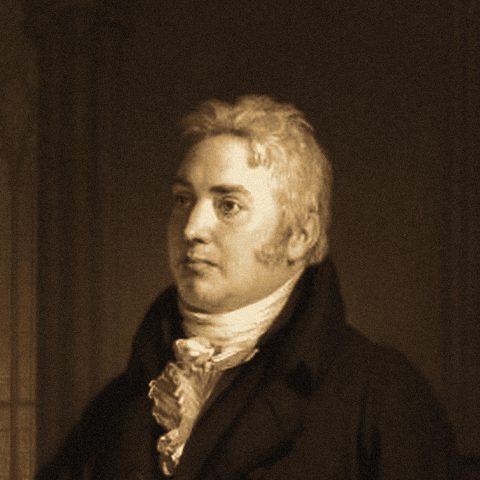
About the author
Samuel Taylor Coleridge
1772 Ottery St Mary – 1834 London · English poet, literary critic and philosopher
Samuel Taylor Coleridge was an English poet, literary critic, philosopher, and theologian who was a founder of the Romantic Movement in England and a member of the Lake Poets with his friend William Wordsworth. He also shared volumes and collaborated with Charles Lamb, Robert Southey, and Charles Lloyd.
- 1772Born, Ottery St Mary
- 1798The Rime of the Ancient Mariner
- 1834Died, London
If you like Biographia Literaria
More like this


Start with “Motives to the present work—Reception of the Author'...”
2 chapters free right now — no account. Your place follows you to iPhone and Android.