

2 chapters freeNo account needed.
Opens “Part 1, Chapter 1: Intuition and Expression” in the player · no sign-up needed
Croce identifies art with intuition and intuition with expression, separating aesthetic activity from logical, practical and moral activity and rejecting theories that ground beauty in pleasure or physical qualities.
Inside the book
- Free nowno account · 2 chapters
- —Introduction26 min
- 2Part 1, Chapter 1: Intuition and Expression22 min
- Premium22 chapters · every book, 7 days free
- 3Part 1, Chapter 2: Intuition and Art19 min
- 4Part 1, Chapter 3: Art and Philosophy21 min
- 5Chapter 514 min
- 6Part 1, Chapter 5: Analogous Errors in Historic and Logic15 min
- 7Part 1, Chapter 6: Theoretic and Practical Activity14 min
- 8Chapter 812 min
- 9Part 1, Chapter 8: Exclusion of Other Spiritual Forms11 min
- 10Chapter 1014 min
- 11Chapter 1115 min
- 12Part 1, Chapter 11: Critique of Aesthetic Hedonism9 min
- 13Chapter 1313 min
- 14Chapter 1420 min
- 15Chapter 1514 min
- 16Chapter 1614 min
- 17Part 1, Chapter 16: Taste and the Reproduction of Art20 min
- 18Part 1, Chapter 17: The History of Literature and Art23 min
- 19Part 1, Chapter 18: Conclusion:24 min
- 20Part 2, Chapter 1: Aesthetic Ideas in Graeco-Roman Antiquity15 min
- 21Chapter 218 min
- 22Chapter 2256 min
- 23Chapter 2356 min
- 24Chapter 2457 min
The opening
Part 1, Chapter 1: Intuition and Expression
Intuitive knowledge.
Human knowledge has two forms: it is either intuitive knowledge or logical knowledge; knowledge obtained through the imagination or knowledge obtained through the intellect; knowledge of the individual or knowledge of the universal; of individual things or of the relations between them: it is, in fact, productive either of images or of concepts.
In ordinary life, constant appeal is made to intuitive knowledge. It is said to be impossible to give expression to certain truths; that they are not demonstrable by syllogisms; that they must be learnt intuitively. The politician finds fault with the abstract reasoner, who is without a lively knowledge of actual conditions; the pedagogue insists upon the necessity of developing the intuitive faculty in the pupil before everything else; the critic in judging a work of art makes it a point of honour to set aside theory and abstractions, and to judge it by direct intuition; the practical man professes to live rather by intuition than by reason.
But this ample acknowledgment, granted to intuitive knowledge in ordinary life, does not meet with an equal and adequate acknowledgment in the field of theory and of philosophy. There exists a very ancient science of intellective knowledge, admitted by all without discussion, namely, Logic; but a science of intuitive knowledge is timidly and with difficulty admitted by but a few. Logical knowledge has appropriated the lion's share; and if she does not quite slay and devour her companion, yet yields to her with difficulty the humble little place of maidservant or doorkeeper. What, it says, is intuitive knowledge without the light of intellective knowledge? It is a servant without a master; and though a master find a servant useful, the master is a necessity to the servant, since he enables him to gain his livelihood. Intuition is blind; Intellect lends her eyes.
Its independence in respect to intellective knowledge.
Now, the first point to be firmly fixed in the mind is that intuitive knowledge has no need of a master, nor to lean upon any one; she does not need to borrow the eyes of others, for she has most excellent eyes of her own. Doubtless it is possible to find concepts mingled with intuitions. But in many other intuitions there is no trace of such a mixture, which proves that it is not necessary. The impression of a moonlight scene by a painter; the outline of a country drawn by a cartographer; a musical motive, tender or energetic; the words of a sighing lyric, or those with which we ask, command and lament in ordinary life, may well all be intuitive facts without a shadow of intellective relation. But, think what one may of these instances, and admitting further that one may maintain that the greater part of the intuitions of civilized man are impregnated with concepts, there yet remains to be observed something more important and more conclusive. Those concepts which are found mingled and fused with the intuitions, are no longer concepts, in so far as they are really mingled and fused, for they have lost all independence and autonomy.
They have been concepts, but they have now become simple elements of intuition. The philosophical maxims placed in the mouth of a personage of tragedy or of comedy, perform there the function, not of concepts, but of characteristics of such personage; in the same way as the red in a painted figure does not there represent the red colour of the physicists, but is a characteristic element of the portrait. The whole it is that determines the quality of the parts. A work of art may be full of philosophical concepts; it may contain them in greater abundance and they may be there even more profound than in a philosophical dissertation, which in its turn may be rich to overflowing with descriptions and intuitions. But, notwithstanding all these concepts it may contain, the result of the work of art is an intuition; and notwithstanding all those intuitions, the result of the philosophical dissertation is a concept. The Promessi Sposi contains copious ethical observations and distinctions, but it does not for that reason lose in its total effect its character of simple story, of intuition.
In like manner the anecdotes and satirical effusions which may be found in the works of a philosopher like Schopenhauer, do not remove from those works their character of intellective treatises. The difference between a scientific work and a work of art, that is, between an intellective fact and an intuitive fact lies in the result, in the diverse effect aimed at by their respective authors. This it is that determines and rules over the several parts of each.
Intuition and perception.
But to admit the independence of intuition as regards concept does not suffice to give a true and precise idea of intuition. Another error arises among those who recognize this, or who, at any rate, do not make intuition explicitly dependent upon the intellect. This error obscures and confounds the real nature of intuition. By intuition is frequently understood the perception or knowledge of actual reality, the apprehension of something as real.
Certainly perception is intuition: the perception of the room in which I am writing, of the ink-bottle and paper that are before me, of the pen I am using, of the objects that I touch and make use of as instruments of my person, which, if it write, therefore exists;—these are all intuitions. But the image that is now passing through my brain of a me writing in another room, in another town, with different paper, pen and ink, is also an intuition. This means that the distinction between reality and non-reality is extraneous, secondary, to the true nature of intuition. If we assume the existence of a human mind which should have intuitions for the first time, it would seem that it could have intuitions of effective reality only, that is to say, that it could have perceptions of nothing but the real. But if the knowledge of reality be based upon the distinction between real images and unreal images, and if this distinction does not originally exist, these intuitions would in truth not be intuitions either of the real or of the unreal, but pure intuitions. Where all is real, nothing is real. The child, with its difficulty of distinguishing true from false, history from fable, which are all one to childhood, can furnish us with a sort of very vague and only remotely approximate idea of this ingenuous state. Intuition is the indifferentiated unity of the perception of the real and of the simple image of the possible. In our intuitions we do not oppose ourselves to external reality as empirical beings, but we simply objectify our impressions, whatever they be.
Intuition and the concepts of space and time.
Those, therefore, who look upon intuition as sensation formed and arranged simply according to the categories of space and time, would seem to approximate more nearly to the truth. Space and time (they say) are the forms of intuition; to have intuitions is to place in space and in temporal sequence. Intuitive activity would then consist in this double and concurrent function of spatiality and temporality. But for these two categories must be repeated what was said of intellectual distinctions, found mingled with intuitions. We have intuitions without space and without time: a tint of sky and a tint of sentiment, an Ah! of pain and an effort of will, objectified in consciousness. These are intuitions, which we possess, and with their making, space and time have nothing to do. In some intuitions, spatiality may be found without temporality, in others, this without that; and even where both are found, they are perceived by posterior reflexion: they can be fused with the intuition in like manner with all its other elements: that is, they are in it materialiter and not formaliter, as ingredients and not as essentials.
Who, without a similar act of interruptive reflexion, is conscious of temporal sequence while listening to a story or a piece of music? That which intuition reveals in a work of art is not space and time, but character, individual physiognomy. Several attempts may be noted in modern philosophy, which confirm the view here exposed. Space and time, far from being very simple and primitive functions, are shown to be intellectual constructions of great complexity. And further, even in some of those who do not altogether deny to space and time the quality of forming or of categories and functions, one may observe the attempt to unify and to understand them in a different manner from that generally maintained in respect of these categories. Some reduce intuition to the unique category of spatiality, maintaining that time also can only be conceived in terms of space. Others abandon the three dimensions of space as not philosophically necessary, and conceive the function of spatiality as void of every particular spatial determination. But what could such a spatial function be, that should control even time?
May it not be a residuum of criticisms and of negations from which arises merely the necessity to posit a generic intuitive activity? And is not this last truly determined, when one unique function is attributed to it, not spatializing nor temporalizing, but characterizing? Or, better, when this is conceived as itself a category or function, which gives knowledge of things in their concretion and individuality?
Intuition and sensation.
Having thus freed intuitive knowledge from any suggestion of intellectualism and from every posterior and external adjunct, we must now make clear and determine its limits from another side and from a different kind of invasion and confusion. On the other side, and before the inferior boundary, is sensation, formless matter, which the spirit can never apprehend in itself, in so far as it is mere matter. This it can only possess with form and in form, but postulates its concept as, precisely, a limit. Matter, in its abstraction, is mechanism, passivity; it is what the spirit of man experiences, but does not produce. Without it no human knowledge and activity is possible; but mere matter produces animality, whatever is brutal and impulsive in man, not the spiritual dominion, which is humanity. How often do we strive to understand clearly what is passing within us? We do catch a glimpse of something, but this does not appear to the mind as objectified and formed. In such moments it is, that we best perceive the profound difference between matter and form. These are not two acts of ours, face to face with one another; but we assault and carry off the one that is outside us, while that within us tends to absorb and make its own that without. Matter, attacked and conquered by form, gives place to concrete form. It is the matter, the content, that differentiates one of our intuitions from another: form is constant: it is spiritual activity, while matter is changeable. Without matter, however, our spiritual activity would not leave its abstraction to become concrete and real, this or that spiritual content, this or that definite intuition.
It is a curious fact, characteristic of our times, that this very form, this very activity of the spirit, which is essentially ourselves, is so easily ignored or denied. Some confound the spiritual activity of man with the metaphorical and mythological activity of so-called nature, which is mechanism and has no resemblance to human activity, save when we imagine, with Aesop, that arbores loquuntur non tantum ferae. Some even affirm that they have never observed in themselves this "miraculous" activity, as though there were no difference, or only one of quantity, between sweating and thinking, feeling cold and the energy of the will. Others, certainly with greater reason, desire to unify activity and mechanism in a more general concept, though admitting that they are specifically distinct. Let us, however, refrain for the moment from examining if such a unification be possible, and in what sense, but admitting that the attempt may be made, it is clear that to unify two concepts in a third implies a difference between the two first. And here it is this difference that is of importance and we set it in relief.
Intuition and association.
Intuition has often been confounded with simple sensation. But, since this confusion is too shocking to good sense, it has more frequently been attenuated or concealed with a phraseology which seems to wish to confuse and to distinguish them at the same time. Thus, it has been asserted that intuition is sensation, but not so much simple sensation as association of sensations. The equivoque arises precisely from the word "association." Association is understood, either as memory, mnemonic association, conscious recollection, and in that case is evident the absurdity of wishing to join together in memory elements which are not intuified, distinguished, possessed in some way by the spirit and produced by consciousness: or it is understood as association of unconscious elements. In this case we remain in the world of sensation and of nature. Further, if with certain associationists we speak of an association which is neither memory nor flux of sensations, but is a productive association (formative, constructive, distinguishing); then we admit the thing itself and deny only its name. In truth, productive association is no longer association in the sense of the sensualists, but synthesis, that is to say, spiritual activity. Synthesis may be called association; but with the concept of productivity is already posited the distinction between passivity and activity, between sensation and intuition.
Intuition and representation.
Other psychologists are disposed to distinguish from sensation something which is sensation no longer, but is not yet intellective concept: the representation or image. What is the difference between their representation or image, and our intuitive knowledge? The greatest, and none at all. "Representation," too, is a very equivocal word. If by representation be understood something detached and standing out from the psychic base of the sensations, then representation is intuition. If, on the other hand, it be conceived as a complex sensation, a return is made to simple sensation, which does not change its quality according to its richness or poverty, operating alike in a rudimentary or in a developed organism full of traces of past sensations. Nor is the equivoque remedied by defining representation as a psychic product of secondary order in relation to sensation, which should occupy the first place. What does secondary order mean here? Does it mean a qualitative, a formal difference? If so, we agree: representation is elaboration of sensation, it is intuition. Or does it mean greater complexity and complication, a quantitative, material difference? In that case intuition would be again confused with simple sensation.
Intuition and expression.
And yet there is a sure method of distinguishing true intuition, true representation, from that which is inferior to it: the spiritual fact from the mechanical, passive, natural fact. Every true intuition or representation is, also, expression. That which does not objectify itself in expression is not intuition or representation, but sensation and naturality. The spirit does not obtain intuitions, otherwise than by making, forming, expressing. He who separates intuition from expression never succeeds in reuniting them.
Intuitive activity possesses intuitions to the extent that it expresses them.—Should this expression seem at first paradoxical, that is chiefly because, as a general rule, a too restricted meaning is given to the word "expression." It is generally thought of as restricted to verbal expression. But there exist also non-verbal expressions, such as those of line, colour, and sound; to all of these must be extended our affirmation. The intuition and expression together of a painter are pictorial; those of a poet are verbal. But be it pictorial, or verbal, or musical, or whatever else it be called, to no intuition can expression be wanting, because it is an inseparable part of intuition. How can we possess a true intuition of a geometrical figure, unless we possess so accurate an image of it as to be able to trace it immediately upon paper or on a slate? How can we have an intuition of the contour of a region, for example, of the island of Sicily, if we are not able to draw it as it is in all its meanderings? Every one can experience the internal illumination which follows upon his success in formulating to himself his impressions and sentiments, but only so far as he is able to formulate them. Sentiments or impressions, then, pass by means of words from the obscure region of the soul into the clarity of the contemplative spirit. In this cognitive process it is impossible to distinguish intuition from expression. The one is produced with the other at the same instant, because they are not two, but one.
Illusions as to their difference.
The principal reason which makes our theme appear paradoxical as we maintain it, is the illusion or prejudice that we possess a more complete intuition of reality than we really do. One often hears people say that they have in their minds many important thoughts, but that they are not able to express them. In truth, if they really had them, they would have coined them into beautiful, ringing words, and thus expressed them. If these thoughts seem to vanish or to become scarce and poor in the act of expressing them, either they did not exist or they really were scarce and poor. People think that all of us ordinary men imagine and have intuitions of countries, figures and scenes, like painters; of bodies, like sculptors; save that painters and sculptors know how to paint and to sculpture those images, while we possess them only within our souls. They believe that anyone could have imagined a Madonna of Raphael; but that Raphael was Raphael owing to his technical ability in putting the Madonna upon the canvas. Nothing can be more false than this view. The world of which as a rule we have intuitions, is a small thing.
It consists of little expressions which gradually become greater and more ample with the increasing spiritual concentration of certain moments. These are the sort of words which we speak within ourselves, the judgments that we tacitly express: "Here is a man, here is a horse, this is heavy, this is hard, this pleases me," etc. It is a medley of light and colour, which could not pictorially attain to any more sincere expression than a haphazard splash of colours, from among which would with difficulty stand out a few special, distinctive traits. This and nothing else is what we possess in our ordinary life; this is the basis of our ordinary action. It is the index of a book. The labels tied to things take the place of the things themselves. This index and labels (which are themselves expressions) suffice for our small needs and small actions. From time to time we pass from the index to the book, from the label to the thing, or from the slight to the greater intuitions, and from these to the greatest and most lofty. This passage is sometimes far from being easy.
It has been observed by those who have best studied the psychology of artists, that when, after having given a rapid glance at anyone, they attempt to obtain a true intuition of him, in order, for example, to paint his portrait, then this ordinary vision, that seemed so precise, so lively, reveals itself as little better than nothing. What remains is found to be at the most some superficial trait, which would not even suffice for a caricature. The person to be painted stands before the artist like a world to discover. Michael Angelo said, "one paints, not with one's hands, but with one's brain." Leonardo shocked the prior of the convent delle Grazie by standing for days together opposite the "Last Supper" without touching it with the brush. He remarked of this attitude "that men of the most lofty genius, when they are doing the least work, are then the most active, seeking invention with their minds." The painter is a painter, because he sees what others only feel or catch a glimpse of, but do not see.
We think we see a smile, but in reality we have only a vague impression of it, we do not perceive all the characteristic traits from which it results, as the painter perceives them after his internal meditations, which thus enable him to fix them on the canvas. Even in the case of our intimate friend, who is with us every day and at all hours, we do not possess intuitively more than, at the most, certain traits of his physiognomy, which enable us to distinguish him from others. The illusion is less easy as regards musical expression; because it would seem strange to everyone to say that the composer had added or attached notes to the motive, which is already in the mind of him who is not the composer. As if Beethoven's Ninth Symphony were not his own intuition and his own intuition the Ninth Symphony. Thus, just as he who is deceived as to his material wealth is confuted by arithmetic, which states its exact amount, so is he confuted who nourishes delusions as to the wealth of his own thoughts and images. He is brought back to reality, when he is obliged to cross the Bridge of Asses of expression.
We say to the former, count; to the latter, speak, here is a pencil, draw, express yourself.
We have each of us, as a matter of fact, a little of the poet, of the sculptor, of the musician, of the painter, of the prose writer: but how little, as compared with those who are so called, precisely because of the lofty degree in which they possess the most universal dispositions and energies of human nature! How little does a painter possess of the intuitions of a poet! How little does one painter possess those of another painter! Nevertheless, that little is all our actual patrimony of intuitions or representations. Beyond these are only impressions, sensations, feelings, impulses, emotions, or whatever else one may term what is outside the spirit, not assimilated by man, postulated for the convenience of exposition, but effectively inexistent, if existence be also a spiritual fact.
Identity of intuition and expression.
We may then add this to the verbal variants descriptive of intuition, noted at the beginning: intuitive knowledge is expressive knowledge, independent and autonomous in respect to intellectual function; indifferent to discriminations, posterior and empirical, to reality and to unreality, to formations and perceptions of space and time, even when posterior: intuition or representation is distinguished as form from what is felt and suffered, from the flux or wave of sensation, or from psychic material; and this form this taking possession of, is expression. To have an intuition is to express. It is nothing else! (nothing more, but nothing less) than to express.
About the author
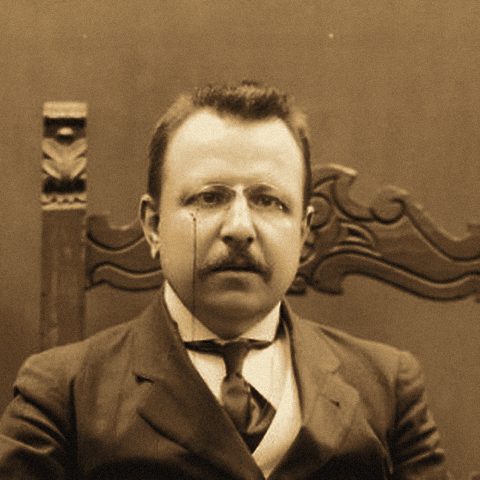
Benedetto Croce
1866 Pescasseroli – 1952 Naples · Italian philosopher
Benedetto Croce was an Italian idealist philosopher, historian, and politician who wrote on numerous topics, including philosophy, history, historiography, and aesthetics. A political liberal in most regards, he formulated a distinction between liberalism and "liberism".
If you like Aesthetic as Science of Expression and General Linguistic
More like this


Start with “Part 1, Chapter 1: Intuition and Expression”
2 chapters free right now — no account. Your place follows you to iPhone and Android.