

2 chapters freeNo account needed.
Opens chapter 2 in the player · no sign-up needed
Freud revised the book at least eight times and, in the third edition, added an extensive section which treated dream symbolism very literally, following the influence of Wilhelm Stekel.
Inside the book
- Free nowno account · 2 chapters
- —Preface to the Second Edition41 min
- 2Chapter 215 min
- Premium54 chapters · every book, 7 days free
- 3Chapter 36 min
- 4Chapter 412 min
- 5Chapter 542 min
- 6Chapter 643 min
- 7Chapter 743 min
- 8Chapter 846 min
- 9Chapter 939 min
- 10Chapter 1039 min
- 11Chapter 111 min
- 12Chapter 121 min
- 13Chapter 1321 min
- 14Chapter 143 min
- 15Chapter 152 min
- 16Chapter 165 min
- 17Chapter 178 min
- 18Chapter 1851 min
- 19Chapter 1954 min
- 20Chapter 201 min
- 21Chapter 211 min
- 22Chapter 221 min
- 23Chapter 2319 min
- 24Chapter 2410 min
- 25Chapter 2525 min
- 26Chapter 2625 min
- 27Chapter 2716 min
- 28Chapter 281 min
- 29Chapter 2946 min
- 30Chapter 3048 min
- 31Chapter 313 min
- 32Chapter 321 min
- 33Chapter 3314 min
- 34Chapter 343 min
- 35Chapter 353 min
- 36Chapter 367 min
- 37Chapter 376 min
- 38Chapter 385 min
- 39Chapter 399 min
- 40Chapter 401 min
- 41Chapter 411 min
- 42Chapter 422 min
- 43Chapter 431 min
- 44Chapter 443 min
- 45Chapter 456 min
- 46Chapter 466 min
- 47Chapter 4712 min
- 48Chapter 482 min
- 49Chapter 491 min
- 50Chapter 5011 min
- 51Chapter 5112 min
- 52Chapter 5250 min
- 53Chapter 5350 min
- 54Chapter 5450 min
- 55Chapter 5551 min
- 56Chapter 561 h 02 m
The opening
Chapter 2
The External Sensory Stimuli.—The younger Strümpell, son of the philosopher whose writings on the subject have already more than once served us as a guide in the problem of dreams, has, as is well known, reported his observations on a patient who was afflicted with general anæsthesia of the skin and with paralysis of several of the higher sensory organs. This man merged into sleep when his few remaining sensory paths from the outer world were shut off. When we wish to sleep we are wont to strive for a situation resembling the one in Strümpell's experiment. We close the most important sensory paths, the eyes, and we endeavour to keep away from the other senses every stimulus and every change of the stimuli acting upon them. We then fall asleep, although we are never perfectly successful in our preparations. We can neither keep the stimuli away from the sensory organs altogether, nor can we fully extinguish the irritability of the sensory organs. That we may at any time be awakened by stronger stimuli should prove to us "that the mind has remained in constant communication with the material world even during sleep." The sensory stimuli which reach us during sleep may easily become the source of dreams.
There are a great many stimuli of such nature, ranging from those that are unavoidable, being brought on by the sleeping state or at least occasionally induced by it, to the accidental waking stimuli which are adapted or calculated to put an end to sleep. Thus a strong light may force itself into the eyes, a noise may become perceptible, or some odoriferous matter may irritate the mucous membrane of the nose. In the spontaneous movements of sleep we may lay bare parts of the body and thus expose them to a sensation of cold, or through change of position we may produce sensations of pressure and touch. A fly may bite us, or a slight accident at night may simultaneously attack more than one sense. Observers have called attention to a whole series of dreams in which the stimulus verified on waking, and a part of the dream content corresponded to such a degree that the stimulus could be recognised as the source of the dream.
I shall here cite a number of such dreams collected by Jessen (p. 527), traceable to more or less accidental objective sensory stimuli. "Every indistinctly perceived noise gives rise to corresponding dream pictures; the rolling of thunder takes us into the thick of battle, the crowing of a cock may be transformed into human shrieks of terror, and the creaking of a door may conjure up dreams of burglars breaking into the house. When one of our blankets slips off at night we may dream that we are walking about naked or falling into the water. If we lie diagonally across the bed with our feet extending beyond the edge, we may dream of standing on the brink of a terrifying precipice, or of falling from a steep height. Should our head accidentally get under the pillow we may then imagine a big rock hanging over us and about to crush us under its weight. Accumulation of semen produces voluptuous dreams, and local pain the idea of suffering ill treatment, of hostile attacks, or of accidental bodily injuries."
"Meier (Versuch einer Erklärung des Nachtwandelns, Halle, 1758, p. 33), once dreamed of being assaulted by several persons who threw him flat on the ground and drove a stake into the ground between his big and second toes. While imagining this in his dream he suddenly awoke and felt a blade of straw sticking between his toes. The same author, according to Hemmings (Von den Traumen und Nachtwandeln, Weimar, 1784, p. 258) dreamed on another occasion that he was being hanged when his shirt was pinned somewhat tight around his neck. Hauffbauer dreamed in his youth of having fallen from a high wall and found upon waking that the bedstead had come apart, and that he had actually fallen to the floor... Gregory relates that he once applied a hot-water bottle to his feet, and dreamed of taking a trip to the summit of Mount Ætna, where he found the heat on the ground almost unbearable. After having applied a blistering plaster to his head, a second man dreamed of being scalped by Indians; a third, whose shirt was damp, dreamed of being dragged through a stream. An attack of gout caused the patient to believe that he was in the hands of the Inquisition, and suffering pains of torture (Macnish)."
The argument based upon the resemblance between stimulus and dream content is reinforced if through a systematic induction of stimuli we succeed in producing dreams corresponding to the stimuli. According to Macnish such experiments have already been made by Giron de Buzareingues. "He left his knee exposed and dreamed of travelling in a mail coach at night. He remarked in this connection that travellers would well know how cold the knees become in a coach at night. Another time he left the back of his head uncovered, and dreamed of taking part in a religious ceremony in the open air. In the country where he lived it was customary to keep the head always covered except on such occasions."
Maury reports new observations on dreams produced in himself. (A number of other attempts produced no results.)
1. He was tickled with a feather on his lips and on the tip of his nose. He dreamed of awful torture, viz. that a mask of pitch was stuck to his face and then forcibly torn off, taking the skin with it.
2. Scissors were sharpened on pincers. He heard bells ringing, then sounds of alarm which took him back to the June days of 1848.
3. Cologne water was put on his nose. He found himself in Cairo in the shop of John Maria Farina. This was followed by mad adventures which he was unable to reproduce.
4. His neck was lightly pinched. He dreamed that a blistering plaster was put on him, and thought of a doctor who treated him in his childhood.
5. A hot iron was brought near his face. He dreamed that chauffeurs broke into the house and forced the occupants to give up their money by sticking their feet into burning coals. The Duchess of Abrantés, whose secretary he imagined himself in the dream, then entered.
6. A drop of water was let fall on his forehead. He imagined himself in Italy perspiring heavily and drinking white wine of Orvieto.
7. When a burning candle was repeatedly focussed on him through red paper, he dreamed of the weather, of heat, and of a storm at sea which he once experienced in the English Channel.
D'Hervey, Weygandt, and others have made other attempts to produce dreams experimentally.
Many have observed the striking skill of the dream in interweaving into its structure sudden impressions from the outer world in such a manner as to present a gradually prepared and initiated catastrophe (Hildebrandt). "In former years," this author relates, "I occasionally made use of an alarm clock in order to wake regularly at a certain hour in the morning. It probably happened hundreds of times that the sound of this instrument fitted into an apparently very long and connected dream, as if the entire dream had been especially designed for it, as if it found in this sound its appropriate and logically indispensable point, its inevitable issue."
I shall cite three of these alarm-clock dreams for another purpose.
Volkelt (p. 68) relates: "A composer once dreamed that he was teaching school, and was just explaining something to his pupils. He had almost finished when he turned to one of the boys with the question: 'Did you understand me?' The boy cried out like one possessed 'Ya.' Annoyed at this, he reprimanded him for shouting. But now the entire class was screaming 'Orya,' then 'Euryo,' and finally 'Feueryo.' He was now aroused by an actual alarm of fire in the street."
Garnier (Traité des Facultés de l'Âme, 1865), reported by Radestock, relates that Napoleon I., while sleeping in a carriage, was awakened from a dream by an explosion which brought back to him the crossing of the Tagliamento and the bombarding of the Austrians, so that he started up crying, "We are undermined!"
The following dream of Maury has become celebrated. He was sick, and remained in bed; his mother sat beside him. He then dreamed of the reign of terror at the time of the Revolution. He took part in terrible scenes of murder, and finally he himself was summoned before the Tribunal. There he saw Robespierre, Marat, Fouquier-Tinville, and all the sorry heroes of that cruel epoch; he had to give an account of himself, and, after all sort of incidents which did not fix themselves in his memory, he was sentenced to death. Accompanied by an enormous crowd, he was led to the place of execution. He mounted the scaffold, the executioner tied him to the board, it tipped, and the knife of the guillotine fell. He felt his head severed from the trunk, and awakened in terrible anxiety, only to find that the top piece of the bed had fallen down, and had actually struck his cervical vertebra in the same manner as the knife of a guillotine.
This dream gave rise to an interesting discussion introduced by Le Lorrain and Egger in the Revue Philosophique. The question was whether, and how, it was possible for the dreamer to crowd together an amount of dream content apparently so large in the short space of time elapsing between the perception of the waking stimulus and the awakening.
Examples of this nature make it appear that the objective stimuli during sleep are the most firmly established of all the dream sources; indeed, it is the only stimulus which plays any part in the layman's knowledge. If we ask an educated person, who is, however, unacquainted with the literature of dreams, how dreams originate, he is sure to answer by referring to a case familiar to him in which a dream has been explained after waking by a recognised objective stimulus. Scientific investigation cannot, however, stop here, but is incited to further research by the observation that the stimulus influencing the senses during sleep does not appear in the dream at all in its true form, but is replaced by some other presentation which is in some way related to it. But the relation existing between the stimulus and the result of the dream is, according to Maury, "une affinité quelconque mais qui n'est pas unique et exclusive" (p. 72). If we read, e.g., three of Hildebrandt's "Alarm Clock Dreams," we will then have to inquire why the same stimulus evoked so many different results, and why just these results and no others.
(P. 37). "I am taking a walk on a beautiful spring morning. I saunter through the green fields to a neighbouring village, where I see the natives going to church in great numbers, wearing their holiday attire and carrying their hymn-books under their arms. I remember that it is Sunday, and that the morning service will soon begin. I decide to attend it, but as I am somewhat overheated I also decide to cool off in the cemetery surrounding the church. While reading the various epitaphs, I hear the sexton ascend the tower and see the small village bell in the cupola which is about to give signal for the beginning of the devotions. For another short while it hangs motionless, then it begins to swing, and suddenly its notes resound so clearly and penetratingly that my sleep comes to an end. But the sound of bells comes from the alarm clock."
"A second combination. It is a clear day, the streets are covered with deep snow. I have promised to take part in a sleigh-ride, but have had to wait for some time before it was announced that the sleigh is in front of my house. The preparations for getting into the sleigh are now made. I put on my furs and adjust my muff, and at last I am in my place. But the departure is still delayed, until the reins give the impatient horses the perceptible sign. They start, and the sleigh bells, now forcibly shaken, begin their familiar janizary music with a force that instantly tears the gossamer of my dream. Again it is only the shrill sound of my alarm clock."
Still a third example. "I see the kitchen-maid walk along the corridor to the dining-room with several dozen plates piled up. The porcelain column in her arms seems to me to be in danger of losing its equilibrium. 'Take care,' I exclaim, 'you will drop the whole pile.' The usual retort is naturally not wanting—that she is used to such things. Meanwhile I continue to follow her with my worried glance, and behold! at the door-step the fragile dishes fall, tumble, and roll across the floor in hundreds of pieces. But I soon notice that the noise continuing endlessly is not really a rattling but a true ringing, and with this ringing the dreamer now becomes aware that the alarm clock has done its duty."
The question why the dreaming mind misjudges the nature of the objective sensory stimulus has been answered by Strümpell, and almost identically by Wundt, to the effect that the reaction of the mind to the attacking stimuli in sleep is determined by the formation of illusions. A sensory impression is recognised by us and correctly interpreted, i.e. it is classed with the memory group to which it belongs according to all previous experience, if the impression is strong, clear, and long enough, and if we have the necessary time at our disposal for this reflection. If these conditions are not fulfilled, we mistake the objects which give rise to the impression, and on its basis we form an illusion. "If one takes a walk in an open field and perceives indistinctly a distant object, it may happen that he will at first take it for a horse." On closer inspection the image of a cow resting may obtrude itself, and the presentation may finally resolve itself with certainty into a group of people sitting. The impressions which the mind receives during sleep through outer stimuli are of a similar indistinct nature; they give rise to illusions because the impression evokes a greater or lesser number of memory pictures through which the impression receives its psychic value. In which of the many spheres of memory to be taken into consideration the corresponding pictures are aroused, and which of the possible association connections thereby come into force, this, even according to Strümpell, remains indeterminable, and is left, as it were, to the caprice of the psychic life.
We may here take our choice. We may admit that the laws of the dream formation cannot really be traced any further, and therefore refrain from asking whether or not the interpretation of the illusion evoked by the sensory impression depends upon still other conditions; or we may suppose that the objective sensory stimulus encroaching upon sleep plays only a modest part as a dream source, and that other factors determine the choice of the memory picture to be evoked. Indeed, on carefully examining Maury's experimentally produced dreams, which I have purposely reported in detail, one is apt to think that the experiment really explains the origin of only one of the dream elements, and that the rest of the dream content appears in fact too independent, too much determined in detail, to be explained by the one demand, viz. that it must agree with the element experimentally introduced. Indeed one even begins to doubt the illusion theory, and the power of the objective impression to form the dream, when one learns that this impression at times experiences the most peculiar and far-fetched interpretations during the sleeping state. Thus B. M. Simon tells of a dream in which he saw persons of gigantic stature seated at a table, and heard distinctly the awful rattling produced by the impact of their jaws while chewing. On waking he heard the clacking of the hoofs of a horse galloping past his window. If the noise of the horse's hoofs had recalled ideas from the memory sphere of "Gulliver's Travels," the sojourn with the giants of Brobdingnag and the virtuous horse-creatures—as I should perhaps interpret it without any assistance on the author's part—should not the choice of a memory sphere so uncommon for the stimulus have some further illumination from other motives?
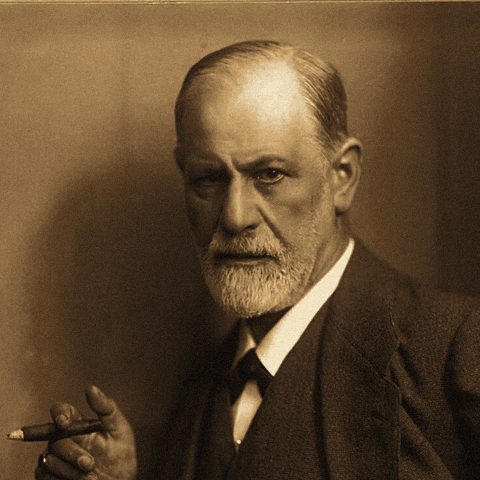
About the author
Sigmund Freud
1856 Příbor – 1939 London · Austrian psychiatrist and founder of psychoanalysis
Sigmund Freud was an Austrian neurologist and the founder of psychoanalysis, a clinical method for evaluating and treating pathologies arising from conflicts in the psyche through dialogue between patient and psychoanalyst, and the distinctive theory of mind and human agency it posits.
- 1856Born, Příbor
- 1900The Interpretation of Dreams
- 1901Psychopathology of Everyday Life
- 1913Totem and Taboo
- 1916A General Introduction to Psychoanalysis
- 1920Beyond the Pleasure Principle
- 1939Died, London
More by Sigmund Freud
Keep going with Freud


If you like The Interpretation of Dreams
More like this


Start with chapter 2
2 chapters free right now — no account. Your place follows you to iPhone and Android.