

2 chapters freeNo account needed.
Opens “Part 1 of 4: Primitive Man” in the player · no sign-up needed
Elements of Folk Psychology is a work by the German psychologist Wilhelm Wundt, a founder of experimental psychology, here in English translation.
Inside the book
- Free nowno account · 2 chapters
- —Preface39 min
- 1Part 1 of 4: Primitive Man54 min
- Premium18 chapters · every book, 7 days free
- 3Chapter 1, part 152 min
- 4Chapter 1, part 254 min
- 5Chapter 1, part 355 min
- 2Part 1 of 6: The Totemic Age57 min
- 7Chapter 2, part 157 min
- 8Chapter 2, part 256 min
- 9Chapter 2, part 356 min
- 10Chapter 2, part 455 min
- 11Chapter 2, part 559 min
- 3Part 1 of 7: The Age Of Heroes And Gods56 min
- 13Chapter 3, part 154 min
- 14Chapter 3, part 255 min
- 15Chapter 3, part 356 min
- 16Chapter 3, part 455 min
- 17Chapter 3, part 556 min
- 18Chapter 3, part 61 h 00 m
- 4Part 1 of 2: The Development To Humanity53 min
- 20Chapter 454 min
The opening
Part 1 of 4: Primitive Man
Primitive Man
1. THE DISCOVERY OF PRIMITIVE MAN.
Who is the primitive man? Where is he to be found? What are his characteristics? These are the important questions which here at once confront us. But they are questions to which, strangely enough, the answer has, up to very recent times, been sought, not in the facts of experience, history, or ethnology, but purely by the path of speculation. At the outset the search was not, for the most part, based on investigations of primitive culture itself, but took as its starting-point contemporary culture and present-day man. It was primarily by means of an abstract opposition of culture to nature that philosophy, and even anthropology, constructed natural man. The endeavour was not to find or to observe, but to invent him. It was simply by antithesis to cultural man that the image of natural man took shape; the latter is one who lacks all the attainments of culture. This is the negative criterion by means of which the philosophy of the Enlightenment, with its conceited estimate of cultural achievements, formed its idea of primitive man. Primitive man is the savage; the savage, however, is essentially an animal equipped with a few human qualities, with language and a fragment of reason just sufficient to enable him to advance beyond his deplorable condition. Man in his natural state, says Thomas Hobbes, is toward man as a wolf. He lives with his fellow-beings as an animal among animals, in a struggle for survival. It is the contrast of wild nature with peaceful culture, of ordered State with unorganized herd or horde, that underlies this conception.
But this antithesis between the concepts of culture and of nature, as objectively considered, is not the only factor here operative; even more influential is the contrast between the subjective moods aroused by the actual world and by the realm disclosed by imagination or reason. Hence it is that the repelling picture of primitive man is modified as soon as the mood changes. To an age that is satiated with culture and feels the traditional forms of life to be a burdensome constraint, the state of nature becomes an ideal once realized in a bygone world. In contrast to the wild creature of Thomas Hobbes and his contemporaries, we have the natural man of Jean Jacques Rousseau. The state of nature is a state of peace, where men, united in love, lead a life that is unfettered and free from want.
Alongside of these constructions of the character of natural man, however, there early appeared a different method of investigation, whose aim it was to adhere more closely to empirical facts. Why should we not regard those of our human institutions which still appear to be a direct result of natural conditions as having existed in the earliest period of our race? Marriage and the family, for example, are among such permanent cultural institutions, the one as the natural union of the sexes, the other as its necessary result. If marriage and family existed from the beginning, then all culture has grown out of the extension of these primitive associations. The family first developed into the patriarchal joint family; from this the village community arose, and then, through the union of several village communities, the State. The theory of a natural development of society from the family was first elaborated by Aristotle, but it goes back in its fundamental idea to legend and myth. Peoples frequently trace their origin to an original pair of ancestors. From a single marriage union is derived the single tribe, and then, through a further extension of this idea, the whole of mankind. The legend of an original ancestral pair, however, is not to be found beyond the limits of the monogamous family. Thus, it is apparently a projection of monogamous marriage into the past, into the beginnings of a race, a tribe, or of mankind. Wherever, therefore, monogamous marriage is not firmly established, legend accounts for the origin of men and peoples in various other ways. It thinks of them as coming forth from stones, from the earth, or from caverns; it regards animals as their ancestors, etc. Even the Greek legend of Deukalion and Pyrrha contains a survival of such an earlier view, combined with the legend of an original ancestral pair. Deukalion and Pyrrha throw stones behind them, from which there springs a new race of men.
The thought of an original family, thus, represents simply a projection of the present-day family into an inaccessible past. Clearly, therefore, it is to be regarded as only an hypothesis or, rather, a fiction. Without the support which it received from the Biblical legend, it could scarcely have maintained itself almost down to the present, as it did in the patriarchal theory of the original state of man to which it gave rise. The Aristotelian theory of the gradual origin of more comprehensive organizations, terminating in the State, is no less a fiction; the social communities existing side by side in the period of Greece were arbitrarily represented as having emerged successively in the course of history. Quite naturally, therefore, this philosophical hypothesis, in common with the corresponding legend of the original family, presupposes primitive man to have possessed the same characteristics as the man of to-day. Thus, it gives no answer at all to the question concerning the nature of this primitive man.
When, therefore, modern anthropology made the first attempt to answer this question on the basis of empirical facts, it was but natural to assume that the characteristics of original man were not to be learned from a study of existing peoples, nor, indeed, from history, but that the data for the solution of the problem were of a prehistoric nature, to be found particularly in those human remains and those products of man's activity that have been preserved in the strata of the earth's crust. What we no longer find on the earth, so it was held, we must seek under the earth. And thus, about six decades ago, prehistoric anthropology began to gather material, and this has gradually grown to a considerable bulk. Upon the completion of this task, however, it appeared, as might, of course, have been expected, that psychology could gain but little in this way. The only source from which it might derive information lay in the exhumed objects of art.
Then, however, the very disappointing discovery was made that, as regards implements of stone, drawings on the walls of caves which he inhabited, and pictures cut into horn or bone, the artistic achievements of the man of diluvial times did not differ essentially from those of the present-day savage. In so far as physical characteristics are concerned, however, the discovered remains of bones seemed to point to certain differences. While these differences, of course, were incapable of establishing any direct psychological conclusions, the fact that the measurements of the skeletal parts more closely resembled those of animals, and, in particular, that the measurements of the interior of the skull were smaller than those of the savages of our own time, offered indirect evidence of a lower development. Because of the close relation of cranial capacity to size of brain, moreover, a lower degree of intelligence was also indicated. Nevertheless, the remains that have been brought to light have not as yet led to any indubitable conclusions.
There have been fairly numerous discoveries pointing to races that resemble the lower tribes among contemporary peoples, and but a few cases in which uncertainty is possible, and concerning which, therefore, there exists a conflict of opinions. A typical instance is the history of one of the first discoveries made in Europe of the remains of a prehistoric man. It was in 1856, in German territory, that there was discovered, in a grotto or cave in the Neander valley, near Duesseldorf, a very remarkable skull, though only, of course, the bones of the cranium and not the facial bones. All were at once agreed that these were the remains of a very primitive man. This was indicated particularly by characteristics which are still to be found, though scarcely in so pronounced a form, among certain lower races of men. Of special significance were the strongly developed, prominent bone-elevations above the eye-sockets. Some of the investigators believed that the long-sought 'homo primigenius' had perhaps at last been discovered. It was generally agreed that the form of the skull resembled most closely that of the modern Australian.
In more recent years, however, anthropologists have developed somewhat more exact methods of measurement and of the reconstruction of a skeleton from parts only incompletely given. When Hermann Klaatsch, equipped with this knowledge, carried out such a reconstruction of the Neanderthal skull, he came upon the surprising fact that its capacity was somewhat greater than that of the present-day Australian. Little as this tells us concerning the actual intelligence of these primitive men, it nevertheless clearly indicates how uncertain the conclusions of prehistoric anthropology still are. A number of other recent discoveries in Germany, France, and elsewhere, have proved that several prehistoric races of men once lived in Europe. Some of these, no doubt, date back far beyond the last glacial period, and perhaps even beyond the period preceding this, for we now know that several glacial periods here succeeded one another. Nevertheless, no important divergencies from still existent races of men have been found.
This, of course, does not imply that no differences exist; it means merely that none has as yet been positively detected, and that therefore the anatomy of prehistoric man can give us no information concerning the psychological aspect of the question regarding the nature of primitive man.
Considerably more light is thrown on this question when we examine the products of human activity, such as implements, weapons, and works of art. Traces of man, in the form of objects hammered out of flint and shaped into clubs, chisels, knives, and daggers, capable of serving as implements of daily use no less than as weapons, are to be found as far back as the first diluvian epoch, and, in their crudest forms, perhaps even as early as the tertiary period. The more polished objects of similar form belong to a later age. Still more remarkable are the works of art—in particular, the cave pictures of prehistoric animals, such as the cave bear and the mammoth. Nevertheless, none of these achievements is of such a nature as to afford positive evidence of a culture essentially different from, or lower than, that of the primitive man of to-day. Two outstanding facts, especially, make a comparison difficult. On the one hand, wood plays an important rôle in the life of modern primitive man, being used for the construction of tools, weapons, and, in part, also of baskets and vessels.
But the utensils of wood that may have existed in prehistoric times could not have withstood the destructive forces of decomposition and decay. All such utensils, therefore, that prehistoric man may have possessed have been lost. Thus, for example, it will be difficult ever to ascertain whether or not he was familiar with the bow and arrow, since the arrow, as well as the bow, was originally made of wood. Secondly, there is at the present time no primitive tribe, however much shut off from its more remote environment, into which barter, which is nowhere entirely absent, may not introduce some objects representing a higher form of civilization, particularly metals and metal implements. If, however, we bear in mind that, in the one case, products have suffered destruction and that, in the other, articles have been introduced from without, the impression made by prehistoric utensils and products of art—aside from certain doubtful remains dating back beyond the diluvial epoch—is not essentially different from that made by the analogous products of the Negritos of the Philippines or the inland tribes of Ceylon.
Though the material of which the implements are constructed differs, the knives, hammers, and axes in both instances possess the usual form. Thus, the wooden knife which the Veddah of Ceylon still carves out of bamboo is formed precisely like some of the stone knives of the diluvial period. We find a similar correspondence when we examine the traces of dwellings and decorations that have been preserved, as well as certain remains that throw light upon customs. The oldest prehistoric people of Europe dwelt in caves, just as the primitive man of the tropics does to-day in the rainy season. In a rock cavern near Le Moustier, in France, there was discovered a skeleton whose crouching position points to a mode of burial still prevalent among primitive peoples, and one which is doubtless always a fairly positive indication of a belief in demons such as arises in connection with the impression made by death. The dead person is bound in the position that will best prevent his return. Thus, all these prehistoric remains suggest a culture similar to that of primitive tribes of to-day.
But, just because they reveal conditions not essentially different from those of the present, these remains make another important contribution to our knowledge of primitive man. They indicate the great stability of primitive culture in general, and render it probable that, unless there are special conditions making for change, such as migrations and racial fusions, the stability increases in proportion to the antiquity. Though this may at first glance seem surprising, it becomes intelligible when we consider that isolation from his surroundings is an important characteristic of primitive man. Having very little contact with other peoples, he is in no wise impelled to change the modes of action to which his environment has led him from immemorial times.
Thus, the correspondence of the prehistoric with that which is to-day primitive indicates a high degree of permanence on the part of primitive culture. But, even apart from this consideration, it is apparent that we must really seek primitive man in the inhabited world of the present, since it is here alone that we can gain a relatively accurate knowledge of his characteristics. Our information concerning primitive man, therefore, must be derived from ethnology. We must not seek him under the earth, but on the earth. Just where, however, is he to be found? For decades the natives of Australia were believed to represent a perfect example of primitive culture. And, as a matter of fact, their material culture and some of their mythological ideas still seem to be of a very primitive character. Because of the conjecture that it was here dealing with a relatively primitive type of man, modern anthropology has for two decades applied itself with great partiality to the study of Australian tribes.
English and German investigators have given us many works, some of them excellent, treating of the continent of Australia, which appears almost as unique with respect to its population as in its flora and its fauna. From these investigations, however, which are reported particularly in the volume by Howitt published in 1900, in the works of Spencer and Gillen, and, finally, in those of Strehlow, a German missionary, it is apparent that the Australian culture is anything but primitive: it represents, rather, a stage of development already somewhat advanced. In certain respects, indeed, it may contain very primitive elements, such as are not to be found even among tribes that are, on the whole, on a lower level. Australian culture, however, possesses an enormously complex social organization, and this places it above that which may be called primitive. In its present form, it presupposes a development of probably thousands of years. Assuredly, therefore, the Australian should not be included in a chapter on primitive man. He will rather claim our attention in the next chapter, as a well-defined type of the totemic age.
Indeed, he is beginning, in part, to lose even the characteristics of this age, mainly, no doubt as a result of racial fusion, whose influence is here also in evidence.
Although the races of Australia are unquestionably not primitive, as was formerly believed and is still held in certain quarters, there are other parts of the earth which, in all probability, really harbour men who are primitive in that relative sense of the term which alone, of course, we are justified in using. If one were to connect the discovery of this primitive man with any single name, the honour would belong to a German traveller and investigator, George Schweinfurth. He was the first to discover a really primitive tribe—that is, one which remained practically untouched by external cultural influences. When Schweinfurth, sailing up the Upper Nile in 1870, listened to the narratives of the Nubian sailors in charge of his boat, he repeatedly heard accounts of a nation of dwarfs, of people two feet tall (so the exaggerated reports went), living in the impenetrable forests beyond the great lakes which constitute the source of the Nile. Schweinfurth was at once reminded of the old legends regarding pygmies. Such legends are mentioned even by Homer and are introduced also into the writings of Herodotus and of Aristotle. Aristotle, indeed, expressly says that these dwarf peoples of Central Africa exist in reality, and not merely in tales. When Schweinfurth arrived in the country of the Monbuttus, he was actually fortunate enough to gain sight of these pygmies. It is true, they did not exactly correspond to the fantastic descriptions of the sailors—descriptions such as are current here and there even to-day. The sailors represented the pygmies as having long beards, reaching to the earth, and gigantic heads; in short, they imputed to them the characteristics of the dwarf gnome, who appears also in German folk-lore. In reality, it was found that the pygmies are, indeed, small—far below the average normal size of man—but that they are of excellent proportions, have small heads, and almost beardless faces.
Subsequent to Schweinfurth's discovery, similar tribes were found in various parts of the earth. Emin Pasha, together with his companion Stuhlmann, had the good fortune to be able to observe the pygmies of the Congo more closely even than had been possible for Schweinfurth. In the Negritos of the Philippines a similar dwarf people was discovered. They also are of small stature, and, according to their own belief and that of the neighbouring Malays, are the original inhabitants of their forests. Besides these, there are the inland tribes of the Malay Peninsula, the Semangs and Senoi, and, finally, the Veddahs of Ceylon, studied particularly by the cousins Paul and Fritz Sarasin. All of the peoples just mentioned live in forests and have probably been isolated from civilization for thousands of years. The Bushmen of South Africa, of whom we have long known, also belong to this group, although they have not to the same extent been free from the influence of surrounding peoples. In all these cases we have to do with tribes which at one time probably occupied wider territories, but which have now been crowded back into the forest or wilderness. In addition to these tribes, furthermore, there are remnants of peoples in Hindustan, in Celebes, Sumatra, the Sunda Islands, etc. Concerning these, however, we as yet have little knowledge. In some respects, doubtless, the inhabitants of the Andaman Islands should also be here included, although they cannot, on the whole, be regarded as primitive in the strict sense of the word. This is precluded by their external culture, and especially by their legends, the latter of which point to the influence of Asiatic culture.
Observations of these relatively most primitive tribes—and this is especially worth noting---show them to be remarkably similar. If we read a description of the characteristics, habits, and customs of the Negritos of the Philippines and then pass on to the Malaccans, to the Semangs and Senoi, or, further, to the Veddahs of Ceylon, we constantly meet with almost the same phenomena, there being but slight differences depending on the specific character of the natural environment. We are thus in possession of data that are now observable. The statements and conclusions which these enable us to make are more than mere speculations with regard to the past; and they are more than inferences drawn from the silent fragments of the bones and from a few of the art products of primitive man. According as the phenomena are simpler in character and require fewer antecedent conditions for their explanation, may we be confident that we are really dealing with primitive conditions. This in itself implies that the criteria of primitive culture are essentially psychological in nature, and that racial characteristics and original tribal relationships are probably negligible so far as this question is concerned. A culture would be absolutely primitive if no antecedent mental development whatsoever could be presupposed. Such an absolute concept can never be realized in experience, here any more than elsewhere. We shall, therefore, call that man primitive in the relative sense of the term—our only remaining alternative—whose culture approximates most nearly to the lowest mental achievements conceivable within the limits of universal human characteristics. The most convenient measure of these achievements, and the one lying nearest at hand, is that afforded by external culture, as expressed in dress, habitation, and food, in self-made implements, weapons, and other productions serving to satisfy the most urgent needs of life.
2. THE CULTURE OF PRIMITIVE MAN IN ITS EXTERNAL EXPRESSIONS.
Following the above-mentioned criteria as to what may be regarded as primitive, the question concerning the external culture of primitive man may, in general, be briefly answered. Of dress there are only meagre beginnings: about the loins a cord of bast, to which twigs of trees are attached to cover the genitals—that is generally all, unless, through secret barter with neighbouring peoples, cotton goods, leather, and the like, have been imported. As regards personal decoration, conditions are much the same. On the next stage of development, the totemic, there is, as we shall later see, a desire for lavish decoration, especially as regards the adornment of the body by painting and tatooing. Little of this, however, is to be found among primitive tribes, and that which exists has probably been introduced from without. Some examples of such decoration are the scanty tatooing in single lines, the painting of the face with several red and white dots, and the wooden plug bored through the bridge of the nose. The Negritos of the Philippines bore holes through their lips for the insertion of a row of blades of grass. Other decorations found are necklaces and bracelets, fillets, combs, hair ornaments made of twigs and flowers, and the like.
What is true of his dress holds also of the dwelling of primitive man. Everything indicates that the first permanent dwelling was the cave. Natural caves in the hillsides, or, less frequently, artificially constructed hollows in the sand, are the places of refuge that primitive man seeks when the rainy season of the tropics drives him to shelter. During the dry season, no shelter at all is necessary; he makes his bed under a tree, or climbs the tree to gain protection from wild animals. Only in the open country, under the compulsion of wind and rain, does he construct a wind-break of branches and leaves after the pattern supplied by nature in the leafy shelter of the forest. When the supports of this screen are inclined toward one another and set up in a circle, the result is the original hut.
Closely connected with the real dwelling of primitive man, the cave, are two further phenomena that date back to earliest culture. As his constant companion, primitive man has a single animal, the dog, doubtless the earliest of domestic animals. Of all domestic animals this is the one that has remained most faithful to man down to the present time. The inhabitant of the modern city still keeps a dog if he owns any domestic animal at all, and as early as primitive times the dog was man's faithful companion. The origin of this first domestic animal remains obscure. The popular notion would seem to be that man felt the need of such a companion, and therefore domesticated the dog. But if one calls to mind the dogs that run wild in the streets of Constantinople, or the dog's nearest relative, the wolf, one can scarcely believe that men ever had a strong desire to make friends of these animals. According to another widely current view, it was man's need of the dog as a helper in the chase that led to its domestication.
But this also is one of those rationalistic hypotheses based on the presupposition that man always acts in accordance with a preconceived plan, and thus knew in advance that the dog would prove a superior domestic animal, and one especially adapted to assist in the chase. Since the dog possessed these characteristics only after its domestication, they could not have been known until this had occurred, and the hypothesis is clearly untenable. How, then, did the dog and man come together in the earliest beginnings of society? The answer to this question, I believe, is to be found in the cave, the original place of shelter from rain and storm. Not only was the cave a refuge for man, but it was equally so for animals, and especially for the dog. Thus it brought its dwellers into companionship. Furthermore, the kindling of the fire, once man had learned the art, may have attracted the animal to its warmth. After the dog had thus become the companion of man, it accompanied him in his activities, including that of the chase. Here, of course, the nature of the carnivorous animal asserted itself; as man hunted, so also did the animal.
The dog's training, therefore, did not at all consist in being taught to chase the game. It did this of itself, as may be observed in the case of dogs that are not specifically hunting dogs. The training consisted rather in breaking the dog of the habit of devouring the captured game. This was accomplished only through a consciously directed effort on the part of man, an effort to which he was driven by his own needs. Thus, it is the cave that accounts for the origin of the first domestic animal, and also, probably, for the first attempt at training an animal. But there is still another gain for the beginnings of culture that may probably be attributed to the cave in its capacity of a permanent habitation. Among primitive peoples, some of whom are already advanced beyond the level here in question, it is especially in caves that artistic productions may be found. These consist of crude drawings of animals and, less frequently, of men. Among the Bushmen, such cave pictures are frequently preserved from destruction for a considerable period of time.
Natural man, roaming at will through the forests, has neither time nor opportunity to exercise his imagination except upon relatively small objects or upon the adornment of his own body. But the semi-darkness of the cave tends, as do few other places, to stimulate the reproductive imagination. Undisturbed by external influences, and with brightnesses and colours enhanced by the darkness, the memory images of things seen in the open, particularly those of the animals of the primeval forest, rise to consciousness and impel the lonely and unoccupied inhabitant to project them upon the wall. Such activity is favoured by the fact, verifiable by personal introspection, that memory images are much more vivid in darkness and semi-darkness than in the light of day. Thus, it was in the cave, the first dwelling-place of man, that the transition was made, perhaps for the first time, from the beginnings of a graphic art, serving the purposes of adornment or magic, to an art unfettered except by memory. It was an art of memory in a twofold sense: it patterned its objects after the memory of things actually observed, and it sought to preserve to memory that which it created.
From the consideration of dress and habitation we turn to that of food. Primitive man was not bound to fixed hours for his meals. Among civilized peoples, so close a connection has grown up between meals and definite hours of the day that the German word for meal, Mahlzeit, reminds us of this regularity by twice repeating the word for time---for Mahl also means time. Primitive man knew nothing of the sort. If he found food and was hungry, he ate; if he found none, he went hungry. Sometimes, moreover, in order to provide for the future, he gorged to such an extent as to injure his health. As concerns the food itself, there is an old theory which has led to misconceptions concerning primitive man. He was a hunter, we are told; the chase supplied him with food; only incidentally and occasionally did he enjoy parts of plants or fruits that he had gathered or accidentally discovered. It is scarcely correct, however, to assume that systematic hunting was practised by primitive man. Doubtless he did engage in this occupation. Yet this furnished him with only an incidental part of his food supply—apart with which, living as he did from hand to mouth, he satisfied only his momentary needs.
It was with plant food, if at all, that he made provision for the future. Here may be found also the first traces of a division of labour: woman gathered the plant food—roots, bulbs, and berries—while man occasionally found it necessary to hunt. Plant food being capable of longer preservation, it was woman who first learned to economize and to make provision for the future. In part, indeed, the influence of these cultural beginnings persists even to-day. Moreover, just as mixed food, part plant and part animal, is by far the most common to-day, so also was it the original diet of man. The proportion, however, varied more than in later times, according as the external conditions of life were propitious or otherwise. Of this the Bushmen afford a striking illustration. Fifty years ago they were still by preference huntsmen. Armed with their bows, they dared to hunt the elephant and the giraffe.
But after the surrounding peoples of South Africa—the Hottentots, Betschuans, and Herero—came into the possession of firearms, which the Bushman scornfully rejects, the game was, in part, exterminated, and to-day the Bushmen, crowded back into rocky wastes, derive but a small part of their living from the chase. They gather bulbs, roots, and other parts of plants, such as can be rendered edible by boiling or roasting. Their animal food, moreover, is no longer wild game, but consists, for the most part, of small animals found while gathering the plant food—frogs, lizards, worms, and even insects. Hunting, therefore, was never more than one of the customary means of providing food; and primitive man, especially, was a gatherer rather than a hunter. The word 'gatherer' implies also that he took from nature only what it directly offered, and that he was familiar neither with agriculture nor with the raising of animals. In procuring his food, moreover, he was aided by a knowledge, often surprising, of the properties of the objects gathered.
This knowledge, probably gained as a result of many disastrous experiences in his search for food, enabled primitive man to utilize even such roots and fruits as are not wholesome in their raw state, either because they are not edible until prepared by means of fire, or because they are poisonous. Primitive man learned to overcome the injurious effects of many of these plants. By reducing them to small pieces, washing them in a solution of lye, and heating them, he converted them into palatable food. The bulbs and roots were secured from beneath the surface of the ground by means of the most primitive of all agricultural implements and the progenitor of all succeeding ones, the digging-stick. This is a wooden stick, with a pointed end that has been hardened by fire.
Connected with the removal of poison, by means of water and fire, from parts of plants that are otherwise edible, is still another primitive discovery—the utilization of the poisons themselves. Only when the arrow is smeared with plant poisons does the bow become a real weapon. In itself the arrow wound is not sufficient to kill either game or enemy; the arrow must be poisoned if the wound is to cause death or even temporary disability. The Veddahs and the inland tribes of Malacca therefore use the juice of the upas-tree mixed with that of strychnos-trees. The best known of these arrow poisons, curare, used in South America and especially in Guiana, is likewise prepared from the juice of strychnos-trees.
This brings us to the weapons of primitive man. In this connection it is highly important to note that all of the primitive peoples mentioned above are familiar with the use of bow and arrow, but we must also bear in mind that this is practically their only weapon. Contrary to what archæological excavations would suggest concerning the earliest age of peoples, primitive culture, in respect to implements and weapons, depended only to a small extent upon the working of stone. We might better speak of this period as an age of wood. Wood is not only decidedly easier to manipulate than stone, but it is always more easily obtainable in shapes suitable for constructive purposes. Possibly even the arrow-head was originally always made of wood, as it sometimes is even to-day. Only in later times was the wood replaced by a sharpened stone or by iron acquired through barter.
It is not difficult to see how wood, in the forms which it possesses by nature, came to be fashioned into clubs, axes, and digging-sticks, and how bones, horns, shells, and the like were converted into tools and objects of adornment. But how did primitive man acquire bow and arrow? The general belief seems to be that this weapon was invented by some resourceful mind of an early age. But an inventor, in the proper sense of the word, must know in advance what he wishes to invent. The man, therefore, who constructed the bow and arrow for the first time must already have had some previous idea of it. To effect a combination of existing implements, or to improve them in useful ways, is a comparatively easy matter. But no one can manufacture implements if he possesses nothing over and above material that is in itself somehow suitable for the purpose. The most primitive implements, therefore, such as the digging-stick, the club, and the hammer, are all products of nature, at most changed slightly by man as their use requires. But this is obviously not true of bow and arrow.
We may, perhaps, find a suggestion for the solution of our problem in a hunting weapon which, though belonging, of course, to the later totemic culture, is in principle simpler than the bow and arrow—the boomerang of the Australians. The word is probably familiar to all, but the nature of the weapon is not so well known, especially its peculiarly characteristic form by virtue of which, if it fails to strike its object, it flies back to the one who hurled it. The boomerang, which possesses this useful characteristic, is, in the first place, a bent wooden missile, pointed at both ends. That this curved form has a greater range and strikes truer to aim than a straight spear, the Australian, of course, first learned from experience. The boomerang, however, will not return if it is very symmetrically constructed; on the contrary, it then falls to the ground, where it remains. Now it appears that the two halves of this missile are asymmetrical. One of the halves is twisted spirally, so that the weapon, if thrown forward obliquely, will, in accordance with the laws of ballistics, describe a curve that returns upon itself. This asymmetry, likewise, was discovered accidentally.
In this case, the discovery was all the more likely, for primitive weapons were never fashioned with exactitude. That this asymmetry serves a useful purpose, therefore, was first revealed by experience. As a result, however, primitive man began to copy as faithfully as possible those implements which most perfectly exhibited this characteristic. Thus, this missile is not a weapon that required exceptional inventive ability, though, of course, it demanded certain powers of observation. The characteristics, accordingly, that insured the survival of the boomerang were discovered accidentally and then fixed through an attentive regard to those qualities that had once been found advantageous. Now, can we conceive of the origin of bow and arrow in an analogous way? Surely this weapon also was not devised in all its parts at a single time. The man of nature, pressing his way through the dense underbrush of the forest and experiencing in person the hard blows of branches that he has bent back, gains a lively impression of the elastic power of bent wood.
How easily the attention is forced to the observation that this effect increases when the wood is bent out of its natural shape, appears strikingly in the case of a kind of bow found in Asia and the Asiatic islands. The bow is here constructed out of a piece of wood bent by nature, not in such a way, however, that the natural curve of the wood forms the curve of the bow, but contrariwise. Thus arises a reflexive bow, whose elastic power is, of course, considerably increased. In order that such a bow may be bent back more easily, some people of a more advanced culture construct it out of several layers of wood, horn, sinew, or the like. Having first observed the powerful impulsive force which a rod gains through being bent, it was a simple matter to render this force permanently available by bending the rod back and binding its ends together with a cord of bast, or, if bamboo was used, with strips torn from the bamboo itself. Thus originated the common form of the bow. Next, it was, of course, easy to observe that the bowstring thus contrived would communicate a powerful impetus to a lighter piece of wood placed against it.
In addition to the bow, we then have the arrow, which is hurled into the distance by the combined propelling power of the bow and its string. But at this point a new factor appeared, clearly indicating that several motives generally co-operated in the case of such so-called primitive inventions. In these inventions nature itself played no less a part than did the inventive genius of the individual. The arrow but rarely consists merely of a piece of wood one of whose ends is somehow pointed or provided with a stone head, or, at a later period, with an iron head. As is well known, the other end is feathered, either with genuine bird feathers or, as in the case of the pygmies of Central Africa, with an imitation of bird feathers made of palm-leaves. The feathers are usually supposed to have been added to insure the accurate flight of the arrow. And this accuracy is, indeed, the resultant effect. As in the case of the boomerang, however, we must again raise the question: How did man come to foresee this effect, of whose mechanical conditions he had, of course, not the slightest knowledge?
The solution of this problem probably lies in the fact of an association of the discharged arrow with a flying bird that pierces the air by the movement of its feathers. Thus, in the arrow, man copied the mode of movement of the bird. He certainly did not copy it, however, with the thought that he was causing movement in a mechanical way. We must bear in mind that for primitive man the image of a thing is in reality always equivalent to the thing itself. Just as he believes that his spirit resides in his picture, with the result that he is frequently seized with fright when a painter draws his likeness and carries it away with him, so also does the feathered arrow become for him a bird. In his opinion, the qualities of the bird are transferred by force of magic to the arrow. In this case, indeed, the magical motive is in harmony with the mechanical effect.
Nature directly supplies primitive man not only with the patterns of his implements and weapons, but also with those of the vessels which he uses. Of the primitive tribes none is familiar, at the outset, with pottery. In its stead, suitable natural objects are utilized for storing what is gathered. The Negritos of the Philippines, for example, employ coconut shells. The inland tribes of the Malay Peninsula use bamboo, whose varying thicknesses, and, particularly, whose internodes enable it to be converted into the desired vessels by cutting the stem at the upper end of an internode and immediately below it, thus securing a vessel with a bottom. Wherever primitive peoples cut vessels out of wood, as occurs among the Veddahs and the Bushmen, we may be sure that this represents a comparatively late acquirement, following upon a knowledge of metals and the use of stone implements. Primitive man possesses no vessels for cooking purposes. He prepares his food directly in the fire or in hot ashes.
We are now confronted by a final and an especially interesting question of primitive culture, that of the acquisition of fire. This acquisition made a deep impression on the human mind, and one whose effects long survived in legend. The totemic age, as we shall see, is replete with legends of beneficent animals which brought fire to man. In the heroic age, the fire-bringing animal is displaced by the fire-bringing hero. We may call to mind Prometheus, who brought fire from heaven, and by so doing drew upon himself the vengeance of the gods. Nevertheless, the question concerning the original production of fire is a very simple one. As in the case of very many utensils and tools, we must look to natural conditions that present themselves in the course of experience. Man did not invent the art of kindling fire; it would be nearer the truth to say that he found it, inasmuch as he discovered it while making his utensils. In this connection, particularly, it is highly important to note that the first age, if we would designate it by its tools, was not an age of stone but an age of wood.
We have already referred to the way in which bamboo was worked up into vessels for the storing of fruits and liquids. With a sharp sliver of bamboo, a bamboo-stem is sawed into pieces in order that its parts may be utilized. If this sawing occurs during dry weather, the wood is pulverized and the heated sawdust finally becomes ignited. As soon as it begins to glow, the worker blows upon it and the fire flames up. This mode of kindling fire has been called that of sawing, and is probably the oldest in origin. After fire was thus accidentally produced, it became possible to kindle it at will, and this developed into a skilful art. At a later stage, however, there came the further need of drilling holes into wood. This gave rise to a second method of kindling fire, that of drilling. A piece of wood is bored through with a sharpened stick of hard wood, and the same results occur as in the case of the sawing. The method of drilling is the more effective; it produces fire more quickly. Nevertheless, both methods are laborious and tedious, and we cannot blame the savage for regarding as a magician the European who before his very eyes lights a match by friction.
Because of the difficulty in producing fire, its preservation plays an important rôle in the life of the savage. When he changes his dwelling-place, his first consideration, as a rule, is to take with him some live fire so that he will not be obliged to kindle it anew.
In conclusion, we may supplement these sketches of external culture by mention of a feature that is particularly characteristic of the relation of primitive man to his environment. Primitive man lives in close association with his fellow-tribesmen, but he secludes himself from other tribes of the neighbourhood. He is led to do so because they threaten his means of subsistence; indeed, he himself may fall a prey to them, as do the Pygmies of Central Africa to the anthropophagic customs of the Monbuttus. And yet, primitive man early feels the need of such useful articles as he cannot himself produce but with which he has, in some accidental manner, become acquainted. This gives rise to what is generally called 'secret barter.' An illuminating example of this occurs in the records of the Sarasin cousins as relating to the Veddahs. The Veddah goes by night to the house of a neighbouring Singhalese smith and there deposits what he has to offer in barter, such as captured game, ivory, etc. With this he places a representation of an arrow-head, made of palm-leaves. The next night he returns and finds real arrows of iron which the smith has laid out in exchange for the proffered goods. It might be thought that such a system of barter would imply an excessive measure of confidence. The smith, however, knows that, should he take away that which was brought to him without delivering the arrows, he would himself be struck by an arrow shot from some sheltered ambush. Thus, many things, especially iron, materials for clothing, and articles of adornment, come into the possession of primitive man through secret barter, raising his external culture to a somewhat higher level.
A retrospective survey of this culture brings to notice especially the fact that the concept 'primitive' is never valid, as applied to man, except in a relative sense. Of an absolutely primitive man we know nothing at all. Moreover, the knowledge of such a being could hardly render explicable his further development, since he would really belong to the animal level and therefore to the prehuman stage of existence. Primitive man is relatively primitive, for, while he does possess certain beginnings of culture, these are in no respect more than mere beginnings, all of which are borrowed from nature and from the direct means of assistance which it offers. It is precisely these elementary acquisitions, however, that already differentiate primitive man from the animal. He has the beginnings of a dwelling and of dress, even though he does no more in either case than merely to utilize the means which nature offers, or than partly to imitate and partly to combine these means, as he does in the case of the leafy wind-break and of the weapons which doubtless represent the highest achievement of this age—namely, the bow and arrow.
But these are all beginnings which already contain within themselves the possibilities of higher achievements. The development of the hut out of the wind-break, of the lance out of the staff and the arrow, of the woven basket out of the coconut or the gourd, severally represent easy steps in the advance from nature to culture. Next there comes the preparation of food by means of fire. This is closely connected with the discovery of the art of kindling fire, which, in its turn, was partly an accidental discovery connected with the manufacture of primitive tools out of wood and partly a real invention. Thus, the manufacture of tools, on the one hand, and the kindling of fire, which was connected with it, on the other, are the two primary features which from early times on distinguished primitive man from animals. Furthermore, there is the bow and arrow, which is the first real weapon and differs markedly from all other implements. Its construction also was dependent upon the assistance of nature. The fact that this was the only weapon of primitive society throws an important light on the nature of the latter.
The bow and arrow continued to be used for a long time afterwards—indeed, even down to the appearance of firearms; it served not only as a weapon of warfare but also as an implement for hunting. With it alone, however, no organized strife or warfare of any sort is possible. While, therefore, it is true that the archer appears on the earliest monuments of cultural peoples, it is only as the fellow-combatant of the warrior who is armed with shield and lance. With lance and shield it is possible to fight in closed ranks. The archer must fight single-handed. Primitive man, therefore, does not engage in tribal wars; he is familiar only with the strife of individual with individual. In fact, wherever the bow and arrow is used exclusively, open warfare is impossible. With it, primitive man slays his enemy from behind a sheltering bush. It is thus that the Veddah of nature serves the cultural Veddah, or the Singhalese who has deceived him in secret barter, or even the fellow-tribesman who steals his wife. Just as secret barter is carried on in concealment, so also is warfare. This, however, indicates that the bow and arrow was originally intended for hunting and not for warfare.
From this consideration alone it is evident that primitive life was not a war of all against all, as it was described by Thomas Hobbes. On the contrary, there doubtless existed a state of peace, interrupted only occasionally by the strife of individual with individual—a strife that resulted from a conflict of interests, such as occurred even during this early period.
3. THE ORIGIN OF MARRIAGE AND THE FAMILY.
That the origin of marriage and the family really constitutes a problem, long failed to be recognized. Because of the natural relations of the sexes it was supposed that man lived in a state of marriage from the very beginning. Furthermore, the monogamous marriage of the present was projected back into an indefinite past, where it found final termination in the idea of a primal pair of ancestors. But, even apart from this mythological belief, there were also positive grounds for supposing an original state of monogamy. Do not many animals live in monogamous union? In addition to nest-building birds, monogamy prevails particularly among mammals, and, of the latter, among those that have the closest physical relationship to man. We might cite the gorilla, the primate that most resembles man, and probably also the chimpanzee, although in this case we lack positive proof. Why, then, should not man have carried over monogamous marriage from his animal state into his primitive culture? This theory, therefore, was regarded as almost self-evident until after the middle of the last century. But in 1861, a Swiss jurist and antiquarian, J.
Bachofen, published a remarkable work on "Mother-right." In this book Bachofen attempted to prove the falsity of the doctrine—previously almost uncontested—that monogamy was the original form of marriage, and to refute the view, regarded as equally self-evident, that within this marriage union man held the supremacy—in brief, the patriarchal theory. Bachofen started with a discussion of the Lycians as described by Herodotus. According to this writer, the kinship of the children, among the Lycians, was determined by the mother, not by the father. The sons and daughters belonged to the family of the mother, and descent was traced through her instead of through the father. Bachofen found similar indications among other peoples also. He called attention, for example, to Tacitus's reports in the Germania of some of the German tribes in which a son stands closer to the brother of his mother than he does to his father. Similar statements occur in Cæsar's Bellum Gallicum concerning the Britons. Bachofen collected other examples of the same nature, and also especially emphasized certain elements in myth and legend that seemed to indicate a like ascendancy of woman in early times.
In his opinion, legend is esteemed too lightly if, as occurred in his day, it is regarded as entirely meaningless. Of course, legend is not history; yet it gives a picture, even though in fanciful terms, of the real conditions of earlier times. On the basis of these detached observations, Bachofen at once constructed a general theory. Preceding the patriarchal period of paternal rule, there was maternal rule, gynecocracy. In earliest times the mother was the head of the family. In romantic colours Bachofen pictures the era in which the fair sex guided the destinies of humanity. Later, man, with his rougher nature but greater intelligence, displaced her and seized the dominion for himself. Bachofen then asks, How did it come about that, in spite of this natural superiority of man, woman ruled the family earlier than he? To this he gives an extremely prosaic and realistic reply, contrasting sharply with his romantic ideas in connection with the dominance of woman. We must find a clue, he believes, in those cases of our own day in which mothers still determine the name, descent, etc., of their children. This happens when the children are born out of wedlock.
Under such conditions, the child does not know its father, nor does, perhaps, even the mother. To understand the origin of maternal descent, therefore, we must suppose that children were universally born out of wedlock. Thus, prior to the ascendancy of woman, there existed a state of agamy, in which there was no marriage but only a promiscuous relation of the sexes. We thus have, as it were, a picture whose outlines are determined by contrast with the family of civilized peoples, and which reminds us of Hobbes's account of the earliest political relations, there being in both cases an entire absence of order. But it is precisely in this fact, Bachofen believes, that we have a clue to the origin of gynecocracy if only we bear in mind the actual characteristics of woman. Woman's nature is such that this universal promiscuity of the sexes must have become repulsive, first of all, to her. Turning away all other men, she accepted but a single one. In so doing, woman proved herself the champion of chastity and morals which she has since remained. To her, and not to man, is due the honour of having founded the monogamous family.
At the outset she was also its natural preserver and guardian. The children were counted to her kin; her kin determined descent; and, in Bachofen's view, this condition, which arose out of causes of a universal nature, long prevailed throughout the world generally. But why was it not maintained? It was not possible, so runs the answer, because, though woman alone was psychically fitted to establish it—man could never have instituted monogamy—she was not equally fitted to render it permanent. Woman is not born to rule. In intelligence, as well as in physical strength, she is inferior to man. Altogether, therefore, there are three periods of development: agamy or promiscuity, followed by female supremacy or mother-right, and, finally, by the dominance of man, or father-right.
These hypotheses of Bachofen created much dispute in succeeding years. Some of the facts could not be denied from the standpoint of the antiquarian. Nevertheless, the supposition of the universality of an early mother-right was quite rightly questioned, and its origin out of the completely unrestrained condition of the horde was even more vigorously contested. And so the theory of the Swiss jurist, which was based essentially on philologic-antiquarian arguments, gradually fell into the background, until, in the seventies of the nineteenth century, it suddenly seemed to find important corroboration and a new basis from an entirely different quarter. It was ethnology that supplied the new facts, and these were again derived from a study of Australia, that field of ethnological observation which was generally regarded as more particularly exemplifying primitive culture. Bachofen believed to have demonstrated that maternal descent was originally a universal custom, even in the case of those who are now cultural peoples. Ethnology revealed the fact that this system of kinship is still very prevalent in Australia.
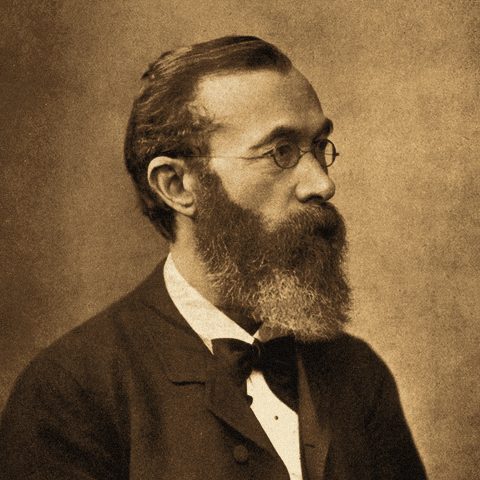
About the author
Wilhelm Max Wundt
1832 Neckarau – 1920 Leipzig · German physician, physiologist, philosopher and professor
Wilhelm Maximilian Wundt was a German physiologist, philosopher, professor, and one of the fathers of modern psychology. Wundt, who distinguished psychology as a science from philosophy and biology, was the first person to call himself a psychologist.
If you like Elements of Folk Psychology
More like this


Start with “Part 1 of 4: Primitive Man”
2 chapters free right now — no account. Your place follows you to iPhone and Android.