

Chapter 1 freeNo account needed.
Opens “Introduction” in the player · no sign-up needed
Freud explores how individuals experience a sense of power and security when part of a group, while simultaneously losing conscious control and becoming susceptible to emotional contagion.
Inside the book
- Free nowno account · 1 chapter
- 1Introduction4 min
- Premium11 chapters · every book, 7 days free
- 2Le Bon's Description of the Group Mind19 min
- 3Other Accounts of Collective Mental Life11 min
- 4Suggestion and Libido9 min
- 5Two Artificial Groups: The Church and the Army11 min
- 6Further Problems and Lines of Work8 min
- 7Identification12 min
- 8Being in Love and Hypnosis11 min
- 9The Herd Instinct10 min
- 10The Group and the Primal Horde11 min
- 11A Differentiating Grade in the Ego10 min
- 12Postscript20 min
The opening
Introduction
The contrast between Individual Psychology and Social or Group Psychology, which at a first glance may seem to be full of significance, loses a great deal of its sharpness when it is examined more closely. It is true that Individual Psychology is concerned with the individual man and explores the paths by which he seeks to find satisfaction for his instincts; but only rarely and under certain exceptional conditions is Individual Psychology in a position to disregard the relations of this individual to others. In the individual's mental life someone else is invariably involved, as a model, as an object, as a helper, as an opponent, and so from the very first Individual Psychology is at the same time Social Psychology as well—in this extended but entirely justifiable sense of the words.
The relations of an individual to his parents and to his brothers and sisters, to the object of his love, and to his physician—in fact all the relations which have hitherto been the chief subject of psycho-analytic research—may claim to be considered as social phenomena; and in this respect they may be contrasted with certain other processes, described by us as 'narcissistic', in which the satisfaction of the instincts is partially or totally withdrawn from the influence of other people. The contrast between social and narcissistic—Bleuler would perhaps call them 'autistic'—mental acts therefore falls wholly within the domain of Individual Psychology, and is not well calculated to differentiate it from a Social or Group Psychology.
The individual in the relations which have already been mentioned—to his parents and to his brothers and sisters, to the person he is in love with, to his friend, and to his physician—comes under the influence of only a single person, or of a very small number of persons, each one of whom has become enormously important to him. Now in speaking of Social or Group Psychology it has become usual to leave these relations on one side and to isolate as the subject of inquiry the influencing of an individual by a large number of people simultaneously, people with whom he is connected by something, though otherwise they may in many respects be strangers to him. Group Psychology is therefore concerned with the individual man as a member of a race, of a nation, of a caste, of a profession, of an institution, or as a component part of a crowd of people who have been organised into a group at some particular time for some definite purpose. When once natural continuity has been severed in this way, it is easy to regard the phenomena that appear under these special conditions as being expressions of a special instinct that is not further reducible, the social instinct ('herd instinct', 'group mind'), which does not come to light in any other situations. But we may perhaps venture to object that it seems difficult to attribute to the factor of number a significance so great as to make it capable by itself or arousing in our mental life a new instinct that is otherwise not brought into play. Our expectation is therefore directed towards two other possibilities: that the social instinct may not be a primitive one and insusceptible of dissection, and that it may be possible to discover the beginnings of its development in a narrower circle, such as that of the family.
Although Group Psychology is only in its infancy, it embraces an immense number of separate issues and offers to investigators countless problems which have hitherto not even been properly distinguished from one another. The mere classification of the different forms of group formation and the description of the mental phenomena produced by them require a great expenditure of observation and exposition, and have already given rise to a copious literature. Anyone who compares the narrow dimensions of this little book with the extent of Group Psychology will at once be able to guess that only a few points chosen from the whole material are to be dealt with here. And they will in fact only be a few questions with which the depth-psychology of psycho-analysis is specially concerned.
About the author
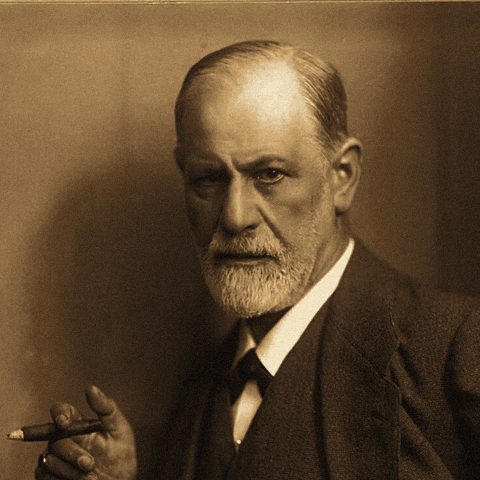
Sigmund Freud
1856 Příbor – 1939 London · Austrian psychiatrist and founder of psychoanalysis
Sigmund Freud was an Austrian neurologist and the founder of psychoanalysis, a clinical method for evaluating and treating pathologies arising from conflicts in the psyche through dialogue between patient and psychoanalyst, and the distinctive theory of mind and human agency it posits.
- 1856Born, Příbor
- 1900The Interpretation of Dreams
- 1901Psychopathology of Everyday Life
- 1913Totem and Taboo
- 1916A General Introduction to Psychoanalysis
- 1921Group Psychology and The Analysis of The Ego
- 1939Died, London
More by Sigmund Freud
Keep going with Freud


If you like Group Psychology and The Analysis of The Ego
More like this


Start with “Introduction”
First chapter free right now — no account. Your place follows you to iPhone and Android.