

2 chapters freeNo account needed.
Opens “Chapter 1, part 1” in the player · no sign-up needed
Creative Evolution is a 1907 book by French philosopher Henri Bergson. Its English translation appeared in 1911.
Inside the book
- Free nowno account · 2 chapters
- —Introduction14 min
- 2Chapter 1, part 155 min
- Premium12 chapters · every book, 7 days free
- 3Chapter 1, part 256 min
- 4Chapter 1, part 356 min
- 5Chapter 2, part 151 min
- 2Part 2 of 3: The letter kills the spirit51 min
- 7Chapter 2, part 252 min
- 8Chapter 3, part 149 min
- 9Chapter 3, part 250 min
- 10Chapter 3, part 351 min
- 11Chapter 4, part 143 min
- 12Chapter 4, part 245 min
- 13Chapter 4, part 343 min
- 14Chapter 4, part 444 min
The opening
Chapter 1, part 1
The Evolution Of Life—Mechanism And Teleology
The existence of which we are most assured and which we know best is unquestionably our own, for of every other object we have notions which may be considered external and superficial, whereas, of ourselves, our perception is internal and profound. What, then, do we find? In this privileged case, what is the precise meaning of the word "exist"? Let us recall here briefly the conclusions of an earlier work.
I find, first of all, that I pass from state to state. I am warm or cold, I am merry or sad, I work or I do nothing, I look at what is around me or I think of something else. Sensations, feelings, volitions, ideas—such are the changes into which my existence is divided and which color it in turns. I change, then, without ceasing. But this is not saying enough. Change is far more radical than we are at first inclined to suppose.
For I speak of each of my states as if it formed a block and were a separate whole. I say indeed that I change, but the change seems to me to reside in the passage from one state to the next: of each state, taken separately, I am apt to think that it remains the same during all the time that it prevails. Nevertheless, a slight effort of attention would reveal to me that there is no feeling, no idea, no volition which is not undergoing change every moment: if a mental state ceased to vary, its duration would cease to flow. Let us take the most stable of internal states, the visual perception of a motionless external object. The object may remain the same, I may look at it from the same side, at the same angle, in the same light; nevertheless the vision I now have of it differs from that which I have just had, even if only because the one is an instant older than the other. My memory is there, which conveys something of the past into the present. My mental state, as it advances on the road of time, is continually swelling with the duration which it accumulates: it goes on increasing—rolling upon itself, as a snowball on the snow. Still more is this the case with states more deeply internal, such as sensations, feelings, desires, etc., which do not correspond, like a simple visual perception, to an unvarying external object. But it is expedient to disregard this uninterrupted change, and to notice it only when it becomes sufficient to impress a new attitude on the body, a new direction on the attention. Then, and then only, we find that our state has changed. The truth is that we change without ceasing, and that the state itself is nothing but change.
This amounts to saying that there is no essential difference between passing from one state to another and persisting in the same state. If the state which "remains the same" is more varied than we think, on the other hand the passing from one state to another resembles, more than we imagine, a single state being prolonged; the transition is continuous. But, just because we close our eyes to the unceasing variation of every psychical state, we are obliged, when the change has become so considerable as to force itself on our attention, to speak as if a new state were placed alongside the previous one. Of this new state we assume that it remains unvarying in its turn, and so on endlessly. The apparent discontinuity of the psychical life is then due to our attention being fixed on it by a series of separate acts: actually there is only a gentle slope; but in following the broken line of our acts of attention, we think we perceive separate steps. True, our psychic life is full of the unforeseen. A thousand incidents arise, which seem to be cut off from those which precede them, and to be disconnected from those which follow. Discontinuous though they appear, however, in point of fact they stand out against the continuity of a background on which they are designed, and to which indeed they owe the intervals that separate them; they are the beats of the drum which break forth here and there in the symphony. Our attention fixes on them because they interest it more, but each of them is borne by the fluid mass of our whole psychical existence. Each is only the best illuminated point of a moving zone which comprises all that we feel or think or will—all, in short, that we are at any given moment. It is this entire zone which in reality makes up our state. Now, states thus defined cannot be regarded as distinct elements. They continue each other in an endless flow.
But, as our attention has distinguished and separated them artificially, it is obliged next to reunite them by an artificial bond. It imagines, therefore, a formless ego, indifferent and unchangeable, on which it threads the psychic states which it has set up as independent entities. Instead of a flux of fleeting shades merging into each other, it perceives distinct and, so to speak, solid colors, set side by side like the beads of a necklace; it must perforce then suppose a thread, also itself solid, to hold the beads together. But if this colorless substratum is perpetually colored by that which covers it, it is for us, in its indeterminateness, as if it did not exist, since we only perceive what is colored, or, in other words, psychic states. As a matter of fact, this substratum has no reality; it is merely a symbol intended to recall unceasingly to our consciousness the artificial character of the process by which the attention places clean-cut states side by side, where actually there is a continuity which unfolds. If our existence were composed of separate states with an impassive ego to unite them, for us there would be no duration. For an ego which does not change does not endure, and a psychic state which remains the same so long as it is not replaced by the following state does not endure either. Vain, therefore, is the attempt to range such states beside each other on the ego supposed to sustain them: never can these solids strung upon a solid make up that duration which flows. What we actually obtain in this way is an artificial imitation of the internal life, a static equivalent which will lend itself better to the requirements of logic and language, just because we have eliminated from it the element of real time. But, as regards the psychical life unfolding beneath the symbols which conceal it, we readily perceive that time is just the stuff it is made of.
There is, moreover, no stuff more resistant nor more substantial. For our duration is not merely one instant replacing another; if it were, there would never be anything but the present—no prolonging of the past into the actual, no evolution, no concrete duration. Duration is the continuous progress of the past which gnaws into the future and which swells as it advances. And as the past grows without ceasing, so also there is no limit to its preservation. Memory, as we have tried to prove, is not a faculty of putting away recollections in a drawer, or of inscribing them in a register. There is no register, no drawer; there is not even, properly speaking, a faculty, for a faculty works intermittently, when it will or when it can, whilst the piling up of the past upon the past goes on without relaxation. In reality, the past is preserved by itself, automatically. In its entirety, probably, it follows us at every instant; all that we have felt, thought and willed from our earliest infancy is there, leaning over the present which is about to join it, pressing against the portals of consciousness that would fain leave it outside.
The cerebral mechanism is arranged just so as to drive back into the unconscious almost the whole of this past, and to admit beyond the threshold only that which can cast light on the present situation or further the action now being prepared—in short, only that which can give useful work. At the most, a few superfluous recollections may succeed in smuggling themselves through the half-open door. These memories, messengers from the unconscious, remind us of what we are dragging behind us unawares. But, even though we may have no distinct idea of it, we feel vaguely that our past remains present to us. What are we, in fact, what is our character, if not the condensation of the history that we have lived from our birth—nay, even before our birth, since we bring with us prenatal dispositions? Doubtless we think with only a small part of our past, but it is with our entire past, including the original bent of our soul, that we desire, will and act. Our past, then, as a whole, is made manifest to us in its impulse; it is felt in the form of tendency, although a small part of it only is known in the form of idea.
From this survival of the past it follows that consciousness cannot go through the same state twice. The circumstances may still be the same, but they will act no longer on the same person, since they find him at a new moment of his history. Our personality, which is being built up each instant with its accumulated experience, changes without ceasing. By changing, it prevents any state, although superficially identical with another, from ever repeating it in its very depth. That is why our duration is irreversible. We could not live over again a single moment, for we should have to begin by effacing the memory of all that had followed. Even could we erase this memory from our intellect, we could not from our will.
Thus our personality shoots, grows and ripens without ceasing. Each of its moments is something new added to what was before. We may go further: it is not only something new, but something unforeseeable. Doubtless, my present state is explained by what was in me and by what was acting on me a moment ago. In analyzing it I should find no other elements. But even a superhuman intelligence would not have been able to foresee the simple indivisible form which gives to these purely abstract elements their concrete organization. For to foresee consists of projecting into the future what has been perceived in the past, or of imagining for a later time a new grouping, in a new order, of elements already perceived. But that which has never been perceived, and which is at the same time simple, is necessarily unforeseeable. Now such is the case with each of our states, regarded as a moment in a history that is gradually unfolding: it is simple, and it cannot have been already perceived, since it concentrates in its indivisibility all that has been perceived and what the present is adding to it besides. It is an original moment of a no less original history.
The finished portrait is explained by the features of the model, by the nature of the artist, by the colors spread out on the palette; but, even with the knowledge of what explains it, no one, not even the artist, could have foreseen exactly what the portrait would be, for to predict it would have been to produce it before it was produced—an absurd hypothesis which is its own refutation. Even so with regard to the moments of our life, of which we are the artisans. Each of them is a kind of creation. And just as the talent of the painter is formed or deformed—in any case, is modified—under the very influence of the works he produces, so each of our states, at the moment of its issue, modifies our personality, being indeed the new form that we are just assuming. It is then right to say that what we do depends on what we are; but it is necessary to add also that we are, to a certain extent, what we do, and that we are creating ourselves continually. This creation of self by self is the more complete, the more one reasons on what one does.
For reason does not proceed in such matters as in geometry, where impersonal premisses are given once for all, and an impersonal conclusion must perforce be drawn. Here, on the contrary, the same reasons may dictate to different persons, or to the same person at different moments, acts profoundly different, although equally reasonable. The truth is that they are not quite the same reasons, since they are not those of the same person, nor of the same moment. That is why we cannot deal with them in the abstract, from outside, as in geometry, nor solve for another the problems by which he is faced in life. Each must solve them from within, on his own account. But we need not go more deeply into this. We are seeking only the precise meaning that our consciousness gives to this word "exist," and we find that, for a conscious being, to exist is to change, to change is to mature, to mature is to go on creating oneself endlessly. Should the same be said of existence in general?
A material object, of whatever kind, presents opposite characters to those which we have just been describing. Either it remains as it is, or else, if it changes under the influence of an external force, our idea of this change is that of a displacement of parts which themselves do not change. If these parts took to changing, we should split them up in their turn. We should thus descend to the molecules of which the fragments are made, to the atoms that make up the molecules, to the corpuscles that generate the atoms, to the "imponderable" within which the corpuscle is perhaps a mere vortex. In short, we should push the division or analysis as far as necessary. But we should stop only before the unchangeable.
Now, we say that a composite object changes by the displacement of its parts. But when a part has left its position, there is nothing to prevent its return to it. A group of elements which has gone through a state can therefore always find its way back to that state, if not by itself, at least by means of an external cause able to restore everything to its place. This amounts to saying that any state of the group may be repeated as often as desired, and consequently that the group does not grow old. It has no history.
Thus nothing is created therein, neither form nor matter. What the group will be is already present in what it is, provided "what it is" includes all the points of the universe with which it is related. A superhuman intellect could calculate, for any moment of time, the position of any point of the system in space. And as there is nothing more in the form of the whole than the arrangement of its parts, the future forms of the system are theoretically visible in its present configuration.
All our belief in objects, all our operations on the systems that science isolates, rest in fact on the idea that time does not bite into them. We have touched on this question in an earlier work, and shall return to it in the course of the present study. For the moment, we will confine ourselves to pointing out that the abstract time t attributed by science to a material object or to an isolated system consists only in a certain number of simultaneities or more generally of correspondences, and that this number remains the same, whatever be the nature of the intervals between the correspondences. With these intervals we are never concerned when dealing with inert matter; or, if they are considered, it is in order to count therein fresh correspondences, between which again we shall not care what happens. Common sense, which is occupied with detached objects, and also science, which considers isolated systems, are concerned only with the ends of the intervals and not with the intervals themselves. Therefore the flow of time might assume an infinite rapidity, the entire past, present, and future of material objects or of isolated systems might be spread out all at once in space, without there being anything to change either in the formulae of the scientist or even in the language of common sense. The number t would always stand for the same thing; it would still count the same number of correspondences between the states of the objects or systems and the points of the line, ready drawn, which would be then the "course of time."
Yet succession is an undeniable fact, even in the material world. Though our reasoning on isolated systems may imply that their history, past, present, and future, might be instantaneously unfurled like a fan, this history, in point of fact, unfolds itself gradually, as if it occupied a duration like our own. If I want to mix a glass of sugar and water, I must, willy nilly, wait until the sugar melts. This little fact is big with meaning. For here the time I have to wait is not that mathematical time which would apply equally well to the entire history of the material world, even if that history were spread out instantaneously in space. It coincides with my impatience, that is to say, with a certain portion of my own duration, which I cannot protract or contract as I like. It is no longer something thought, it is something lived. It is no longer a relation, it is an absolute. What else can this mean than that the glass of water, the sugar, and the process of the sugar's melting in the water are abstractions, and that the Whole within which they have been cut out by my senses and understanding progresses, it may be in the manner of a consciousness?
Certainly, the operation by which science isolates and closes a system is not altogether artificial. If it had no objective foundation, we could not explain why it is clearly indicated in some cases and impossible in others. We shall see that matter has a tendency to constitute isolable systems, that can be treated geometrically. In fact, we shall define matter by just this tendency. But it is only a tendency. Matter does not go to the end, and the isolation is never complete. If science does go to the end and isolate completely, it is for convenience of study; it is understood that the so-called isolated system remains subject to certain external influences. Science merely leaves these alone, either because it finds them slight enough to be negligible, or because it intends to take them into account later on. It is none the less true that these influences are so many threads which bind up the system to another more extensive, and to this a third which includes both, and so on to the system most objectively isolated and most independent of all, the solar system complete. But, even here, the isolation is not absolute. Our sun radiates heat and light beyond the farthest planet. And, on the other hand, it moves in a certain fixed direction, drawing with it the planets and their satellites. The thread attaching it to the rest of the universe is doubtless very tenuous. Nevertheless it is along this thread that is transmitted down to the smallest particle of the world in which we live the duration immanent to the whole of the universe.
The universe endures. The more we study the nature of time, the more we shall comprehend that duration means invention, the creation of forms, the continual elaboration of the absolutely new. The systems marked off by science endure only because they are bound up inseparably with the rest of the universe. It is true that in the universe itself two opposite movements are to be distinguished, as we shall see later on, "descent" and "ascent." The first only unwinds a roll ready prepared. In principle, it might be accomplished almost instantaneously, like releasing a spring. But the ascending movement, which corresponds to an inner work of ripening or creating, endures essentially, and imposes its rhythm on the first, which is inseparable from it.
There is no reason, therefore, why a duration, and so a form of existence like our own, should not be attributed to the systems that science isolates, provided such systems are reintegrated into the Whole. But they must be so reintegrated. The same is even more obviously true of the objects cut out by our perception. The distinct outlines which we see in an object, and which give it its individuality, are only the design of a certain kind of influence that we might exert on a certain point of space: it is the plan of our eventual actions that is sent back to our eyes, as though by a mirror, when we see the surfaces and edges of things. Suppress this action, and with it consequently those main directions which by perception are traced out for it in the entanglement of the real, and the individuality of the body is reabsorbed in the universal interaction which, without doubt, is reality itself.
Now, we have considered material objects generally. Are there not some objects privileged? The bodies we perceive are, so to speak, cut out of the stuff of nature by our perception, and the scissors follow, in some way, the marking of lines along which action might be taken. But the body which is to perform this action, the body which marks out upon matter the design of its eventual actions even before they are actual, the body that has only to point its sensory organs on the flow of the real in order to make that flow crystallize into definite forms and thus to create all the other bodies—in short, the living body—is this a body as others are?
Doubtless it, also, consists in a portion of extension bound up with the rest of extension, an intimate part of the Whole, subject to the same physical and chemical laws that govern any and every portion of matter. But, while the subdivision of matter into separate bodies is relative to our perception, while the building up of closed-off systems of material points is relative to our science, the living body has been separated and closed off by nature herself. It is composed of unlike parts that complete each other. It performs diverse functions that involve each other. It is an individual, and of no other object, not even of the crystal, can this be said, for a crystal has neither difference of parts nor diversity of functions. No doubt, it is hard to decide, even in the organized world, what is individual and what is not. The difficulty is great, even in the animal kingdom; with plants it is almost insurmountable. This difficulty is, moreover, due to profound causes, on which we shall dwell later. We shall see that individuality admits of any number of degrees, and that it is not fully realized anywhere, even in man.
But that is no reason for thinking it is not a characteristic property of life. The biologist who proceeds as a geometrician is too ready to take advantage here of our inability to give a precise and general definition of individuality. A perfect definition applies only to a completed reality; now, vital properties are never entirely realized, though always on the way to become so; they are not so much states as tendencies. And a tendency achieves all that it aims at only if it is not thwarted by another tendency. How, then, could this occur in the domain of life, where, as we shall show, the interaction of antagonistic tendencies is always implied? In particular, it may be said of individuality that, while the tendency to individuate is everywhere present in the organized world, it is everywhere opposed by the tendency towards reproduction. For the individuality to be perfect, it would be necessary that no detached part of the organism could live separately. But then reproduction would be impossible. For what is reproduction, but the building up of a new organism with a detached fragment of the old? Individuality therefore harbors its enemy at home.
Its very need of perpetuating itself in time condemns it never to be complete in space. The biologist must take due account of both tendencies in every instance, and it is therefore useless to ask him for a definition of individuality that shall fit all cases and work automatically.
But too often one reasons about the things of life in the same way as about the conditions of crude matter. Nowhere is the confusion so evident as in discussions about individuality. We are shown the stumps of a Lumbriculus, each regenerating its head and living thence-forward as an independent individual; a hydra whose pieces become so many fresh hydras; a sea-urchin's egg whose fragments develop complete embryos: where then, we are asked, was the individuality of the egg, the hydra, the worm?—But, because there are several individuals now, it does not follow that there was not a single individual just before. No doubt, when I have seen several drawers fall from a chest, I have no longer the right to say that the article was all of one piece. But the fact is that there can be nothing more in the present of the chest of drawers than there was in its past, and if it is made up of several different pieces now, it was so from the date of its manufacture.
Generally speaking, unorganized bodies, which are what we have need of in order that we may act, and on which we have modelled our fashion of thinking, are regulated by this simple law: the present contains nothing more than the past, and what is found in the effect was already in the cause. But suppose that the distinctive feature of the organized body is that it grows and changes without ceasing, as indeed the most superficial observation testifies, there would be nothing astonishing in the fact that it was one in the first instance, and afterwards many. The reproduction of unicellular organisms consists in just this—the living being divides into two halves, of which each is a complete individual. True, in the more complex animals, nature localizes in the almost independent sexual cells the power of producing the whole anew. But something of this power may remain diffused in the rest of the organism, as the facts of regeneration prove, and it is conceivable that in certain privileged cases the faculty may persist integrally in a latent condition and manifest itself on the first opportunity.
In truth, that I may have the right to speak of individuality, it is not necessary that the organism should be without the power to divide into fragments that are able to live. It is sufficient that it should have presented a certain systematization of parts before the division, and that the same systematization tend to be reproduced in each separate portion afterwards. Now, that is precisely what we observe in the organic world. We may conclude, then, that individuality is never perfect, and that it is often difficult, sometimes impossible, to tell what is an individual, and what is not, but that life nevertheless manifests a search for individuality, as if it strove to constitute systems naturally isolated, naturally closed.
By this is a living being distinguished from all that our perception or our science isolates or closes artificially. It would therefore be wrong to compare it to an object. Should we wish to find a term of comparison in the inorganic world, it is not to a determinate material object, but much rather to the totality of the material universe that we ought to compare the living organism. It is true that the comparison would not be worth much, for a living being is observable, whilst the whole of the universe is constructed or reconstructed by thought. But at least our attention would thus have been called to the essential character of organization. Like the universe as a whole, like each conscious being taken separately, the organism which lives is a thing that endures. Its past, in its entirety, is prolonged into its present, and abides there, actual and acting. How otherwise could we understand that it passes through distinct and well-marked phases, that it changes its age—in short, that it has a history? If I consider my body in particular, I find that, like my consciousness, it matures little by little from infancy to old age; like myself, it grows old.
Indeed, maturity and old age are, properly speaking, attributes only of my body; it is only metaphorically that I apply the same names to the corresponding changes of my conscious self. Now, if I pass from the top to the bottom of the scale of living beings, from one of the most to one of the least differentiated, from the multicellular organism of man to the unicellular organism of the Infusorian, I find, even in this simple cell, the same process of growing old. The Infusorian is exhausted at the end of a certain number of divisions, and though it may be possible, by modifying the environment, to put off the moment when a rejuvenation by conjugation becomes necessary, this cannot be indefinitely postponed. It is true that between these two extreme cases, in which the organism is completely individualized, there might be found a multitude of others in which the individuality is less well marked, and in which, although there is doubtless an ageing somewhere, one cannot say exactly what it is that grows old. Once more, there is no universal biological law which applies precisely and automatically to every living thing.
There are only directions in which life throws out species in general. Each particular species, in the very act by which it is constituted, affirms its independence, follows its caprice, deviates more or less from the straight line, sometimes even remounts the slope and seems to turn its back on its original direction. It is easy enough to argue that a tree never grows old, since the tips of its branches are always equally young, always equally capable of engendering new trees by budding. But in such an organism—which is, after all, a society rather than an individual—something ages, if only the leaves and the interior of the trunk. And each cell, considered separately, evolves in a specific way. Wherever anything lives, there is, open somewhere, a register in which time is being inscribed.
This, it will be said, is only a metaphor.—It is of the very essence of mechanism, in fact, to consider as metaphorical every expression which attributes to time an effective action and a reality of its own. In vain does immediate experience show us that the very basis of our conscious existence is memory, that is to say, the prolongation of the past into the present, or, in a word, duration, acting and irreversible. In vain does reason prove to us that the more we get away from the objects cut out and the systems isolated by common sense and by science and the deeper we dig beneath them, the more we have to do with a reality which changes as a whole in its inmost states, as if an accumulative memory of the past made it impossible to go back again. The mechanistic instinct of the mind is stronger than reason, stronger than immediate experience. The metaphysician that we each carry unconsciously within us, and the presence of which is explained, as we shall see later on, by the very place that man occupies amongst the living beings, has its fixed requirements, its ready-made explanations, its irreducible propositions: all unite in denying concrete duration. Change must be reducible to an arrangement or rearrangement of parts; the irreversibility of time must be an appearance relative to our ignorance; the impossibility of turning back must be only the inability of man to put things in place again. So growing old can be nothing more than the gradual gain or loss of certain substances, perhaps both together. Time is assumed to have just as much reality for a living being as for an hour-glass, in which the top part empties while the lower fills, and all goes where it was before when you turn the glass upside down.
True, biologists are not agreed on what is gained and what is lost between the day of birth and the day of death. There are those who hold to the continual growth in the volume of protoplasm from the birth of the cell right on to its death. More probable and more profound is the theory according to which the diminution bears on the quantity of nutritive substance contained in that "inner environment" in which the organism is being renewed, and the increase on the quantity of unexcreted residual substances which, accumulating in the body, finally "crust it over." Must we however—with an eminent bacteriologist—declare any explanation of growing old insufficient that does not take account of phagocytosis? We do not feel qualified to settle the question. But the fact that the two theories agree in affirming the constant accumulation or loss of a certain kind of matter, even though they have little in common as to what is gained and lost, shows pretty well that the frame of the explanation has been furnished a priori. We shall see this more and more as we proceed with our study: it is not easy, in thinking of time, to escape the image of the hour-glass.
The cause of growing old must lie deeper. We hold that there is unbroken continuity between the evolution of the embryo and that of the complete organism. The impetus which causes a living being to grow larger, to develop and to age, is the same that has caused it to pass through the phases of the embryonic life. The development of the embryo is a perpetual change of form. Any one who attempts to note all its successive aspects becomes lost in an infinity, as is inevitable in dealing with a continuum. Life does but prolong this prenatal evolution. The proof of this is that it is often impossible for us to say whether we are dealing with an organism growing old or with an embryo continuing to evolve; such is the case, for example, with the larvae of insects and crustacea. On the other hand, in an organism such as our own, crises like puberty or the menopause, in which the individual is completely transformed, are quite comparable to changes in the course of larval or embryonic life—yet they are part and parcel of the process of our ageing.
Although they occur at a definite age and within a time that may be quite short, no one would maintain that they appear then ex abrupto, from without, simply because a certain age is reached, just as a legal right is granted to us on our one-and-twentieth birthday. It is evident that a change like that of puberty is in course of preparation at every instant from birth, and even before birth, and that the ageing up to that crisis consists, in part at least, of this gradual preparation. In short, what is properly vital in growing old is the insensible, infinitely graduated, continuance of the change of form. Now, this change is undoubtedly accompanied by phenomena of organic destruction: to these, and to these alone, will a mechanistic explanation of ageing be confined. It will note the facts of sclerosis, the gradual accumulation of residual substances, the growing hypertrophy of the protoplasm of the cell. But under these visible effects an inner cause lies hidden. The evolution of the living being, like that of the embryo, implies a continual recording of duration, a persistence of the past in the present, and so an appearance, at least, of organic memory.
The present state of an unorganized body depends exclusively on what happened at the previous instant; and likewise the position of the material points of a system defined and isolated by science is determined by the position of these same points at the moment immediately before. In other words, the laws that govern unorganized matter are expressible, in principle, by differential equations in which time (in the sense in which the mathematician takes this word) would play the rôle of independent variable. Is it so with the laws of life? Does the state of a living body find its complete explanation in the state immediately before? Yes, if it is agreed a priori to liken the living body to other bodies, and to identify it, for the sake of the argument, with the artificial systems on which the chemist, physicist, and astronomer operate. But in astronomy, physics, and chemistry the proposition has a perfectly definite meaning: it signifies that certain aspects of the present, important for science, are calculable as functions of the immediate past. Nothing of the sort in the domain of life. Here calculation touches, at most, certain phenomena of organic destruction.
Organic creation, on the contrary, the evolutionary phenomena which properly constitute life, we cannot in any way subject to a mathematical treatment. It will be said that this impotence is due only to our ignorance. But it may equally well express the fact that the present moment of a living body does not find its explanation in the moment immediately before, that all the past of the organism must be added to that moment, its heredity—in fact, the whole of a very long history. In the second of these two hypotheses, not in the first, is really expressed the present state of the biological sciences, as well as their direction. As for the idea that the living body might be treated by some superhuman calculator in the same mathematical way as our solar system, this has gradually arisen from a metaphysic which has taken a more precise form since the physical discoveries of Galileo, but which, as we shall show, was always the natural metaphysic of the human mind.
Its apparent clearness, our impatient desire to find it true, the enthusiasm with which so many excellent minds accept it without proof—all the seductions, in short, that it exercises on our thought, should put us on our guard against it. The attraction it has for us proves well enough that it gives satisfaction to an innate inclination. But, as will be seen further on, the intellectual tendencies innate to-day, which life must have created in the course of its evolution, are not at all meant to supply us with an explanation of life: they have something else to do.
Any attempt to distinguish between an artificial and a natural system, between the dead and the living, runs counter to this tendency at once. Thus it happens that we find it equally difficult to imagine that the organized has duration and that the unorganized has not. When we say that the state of an artificial system depends exclusively on its state at the moment before, does it not seem as if we were bringing time in, as if the system had something to do with real duration? And, on the other hand, though the whole of the past goes into the making of the living being's present moment, does not organic memory press it into the moment immediately before the present, so that the moment immediately before becomes the sole cause of the present one?—To speak thus is to ignore the cardinal difference between concrete time, along which a real system develops, and that abstract time which enters into our speculations on artificial systems. What does it mean, to say that the state of an artificial system depends on what it was at the moment immediately before?
There is no instant immediately before another instant; there could not be, any more than there could be one mathematical point touching another. The instant "immediately before" is, in reality, that which is connected with the present instant by the interval dt. All that you mean to say, therefore, is that the present state of the system is defined by equations into which differential coefficients enter, such as ds|dt, dv|dt, that is to say, at bottom, present velocities and present accelerations. You are therefore really speaking only of the present—a present, it is true, considered along with its tendency. The systems science works with are, in fact, in an instantaneous present that is always being renewed; such systems are never in that real, concrete duration in which the past remains bound up with the present. When the mathematician calculates the future state of a system at the end of a time t, there is nothing to prevent him from supposing that the universe vanishes from this moment till that, and suddenly reappears. It is the t-th moment only that counts—and that will be a mere instant.
What will flow on in the interval—that is to say, real time—does not count, and cannot enter into the calculation. If the mathematician says that he puts himself inside this interval, he means that he is placing himself at a certain point, at a particular moment, therefore at the extremity again of a certain time t'; with the interval up to T' he is not concerned. If he divides the interval into infinitely small parts by considering the differential dt, he thereby expresses merely the fact that he will consider accelerations and velocities—that is to say, numbers which denote tendencies and enable him to calculate the state of the system at a given moment. But he is always speaking of a given moment—a static moment, that is—and not of flowing time. In short, the world the mathematician deals with is a world that dies and is reborn at every instant—the world which Descartes was thinking of when he spoke of continued creation. But, in time thus conceived, how could evolution, which is the very essence of life, ever take place? Evolution implies a real persistence of the past in the present, a duration which is, as it were, a hyphen, a connecting link.
In other words, to know a living being or natural system is to get at the very interval of duration, while the knowledge of an artificial or mathematical system applies only to the extremity.
Continuity of change, preservation of the past in the present, real duration—the living being seems, then, to share these attributes with consciousness. Can we go further and say that life, like conscious activity, is invention, is unceasing creation?
It does not enter into our plan to set down here the proofs of transformism. We wish only to explain in a word or two why we shall accept it, in the present work, as a sufficiently exact and precise expression of the facts actually known. The idea of transformism is already in germ in the natural classification of organized beings. The naturalist, in fact, brings together the organisms that are like each other, then divides the group into sub-groups within which the likeness is still greater, and so on: all through the operation, the characters of the group appear as general themes on which each of the sub-groups performs its particular variation. Now, such is just the relation we find, in the animal and in the vegetable world between the generator and the generated: on the canvas which the ancestor passes on, and which his descendants possess in common, each puts his own original embroidery. True, the differences between the descendant and the ancestor are slight, and it may be asked whether the same living matter presents enough plasticity to take in turn such different forms as those of a fish, a reptile and a bird. But, to this question, observation gives a peremptory answer.
It shows that up to a certain period in its development the embryo of the bird is hardly distinguishable from that of the reptile, and that the individual develops, throughout the embryonic life in general, a series of transformations comparable to those through which, according to the theory of evolution, one species passes into another. A single cell, the result of the combination of two cells, male and female, accomplishes this work by dividing. Every day, before our eyes, the highest forms of life are springing from a very elementary form. Experience, then, shows that the most complex has been able to issue from the most simple by way of evolution. Now, has it arisen so, as a matter of fact? Paleontology, in spite of the insufficiency of its evidence, invites us to believe it has; for, where it makes out the order of succession of species with any precision, this order is just what considerations drawn from embryogeny and comparative anatomy would lead any one to suppose, and each new paleontological discovery brings transformism a new confirmation.
Thus, the proof drawn from mere observation is ever being strengthened, while, on the other hand, experiment is removing the objections one by one. The recent experiments of H. de Vries, for instance, by showing that important variations can be produced suddenly and transmitted regularly, have overthrown some of the greatest difficulties raised by the theory. They have enabled us greatly to shorten the time biological evolution seems to demand. They also render us less exacting toward paleontology. So that, all things considered, the transformist hypothesis looks more and more like a close approximation to the truth. It is not rigorously demonstrable; but, failing the certainty of theoretical or experimental demonstration, there is a probability which is continually growing, due to evidence which, while coming short of direct proof, seems to point persistently in its direction: such is the kind of probability that the theory of transformism offers.
Let us admit, however, that transformism may be wrong. Let us suppose that species are proved, by inference or by experiment, to have arisen by a discontinuous process, of which to-day we have no idea. Would the doctrine be affected in so far as it has a special interest or importance for us? Classification would probably remain, in its broad lines. The actual data of embryology would also remain. The correspondence between comparative embryogeny and comparative anatomy would remain too. Therefore biology could and would continue to establish between living forms the same relations and the same kinship as transformism supposes to-day. It would be, it is true, an ideal kinship, and no longer a material affiliation. But, as the actual data of paleontology would also remain, we should still have to admit that it is successively, not simultaneously, that the forms between which we find an ideal kinship have appeared. Now, the evolutionist theory, so far as it has any importance for philosophy, requires no more.
It consists above all in establishing relations of ideal kinship, and in maintaining that wherever there is this relation of, so to speak, logical affiliation between forms, there is also a relation of chronological succession between the species in which these forms are materialized. Both arguments would hold in any case. And hence, an evolution somewhere would still have to be supposed, whether in a creative Thought in which the ideas of the different species are generated by each other exactly as transformism holds that species themselves are generated on the earth; or in a plan of vital organization immanent in nature, which gradually works itself out, in which the relations of logical and chronological affiliation between pure forms are just those which transformism presents as relations of real affiliation between living individuals; or, finally, in some unknown cause of life, which develops its effects as if they generated one another. Evolution would then simply have been transposed, made to pass from the visible to the invisible. Almost all that transformism tells us to-day would be preserved, open to interpretation in another way.
Will it not, therefore, be better to stick to the letter of transformism as almost all scientists profess it? Apart from the question to what extent the theory of evolution describes the facts and to what extent it symbolizes them, there is nothing in it that is irreconcilable with the doctrines it has claimed to replace, even with that of special creations, to which it is usually opposed. For this reason we think the language of transformism forces itself now upon all philosophy, as the dogmatic affirmation of transformism forces itself upon science.
But then, we must no longer speak of life in general as an abstraction, or as a mere heading under which all living beings are inscribed. At a certain moment, in certain points of space, a visible current has taken rise; this current of life, traversing the bodies it has organized one after another, passing from generation to generation, has become divided amongst species and distributed amongst individuals without losing anything of its force, rather intensifying in proportion to its advance. It is well known that, on the theory of the "continuity of the germ-plasm," maintained by Weismann, the sexual elements of the generating organism pass on their properties directly to the sexual elements of the organism engendered. In this extreme form, the theory has seemed debatable, for it is only in exceptional cases that there are any signs of sexual glands at the time of segmentation of the fertilized egg.
But, though the cells that engender the sexual elements do not generally appear at the beginning of the embryonic life, it is none the less true that they are always formed out of those tissues of the embryo which have not undergone any particular functional differentiation, and whose cells are made of unmodified protoplasm. In other words, the genetic power of the fertilized ovum weakens, the more it is spread over the growing mass of the tissues of the embryo; but, while it is being thus diluted, it is concentrating anew something of itself on a certain special point, to wit, the cells, from which the ova or spermatozoa will develop. It might therefore be said that, though the germ-plasm is not continuous, there is at least continuity of genetic energy, this energy being expended only at certain instants, for just enough time to give the requisite impulsion to the embryonic life, and being recouped as soon as possible in new sexual elements, in which, again, it bides its time. Regarded from this point of view, life is like a current passing from germ to germ through the medium of a developed organism.
It is as if the organism itself were only an excrescence, a bud caused to sprout by the former germ endeavoring to continue itself in a new germ. The essential thing is the continuous progress indefinitely pursued, an invisible progress, on which each visible organism rides during the short interval of time given it to live.
Now, the more we fix our attention on this continuity of life, the more we see that organic evolution resembles the evolution of a consciousness, in which the past presses against the present and causes the upspringing of a new form of consciousness, incommensurable with its antecedents. That the appearance of a vegetable or animal species is due to specific causes, nobody will gainsay. But this can only mean that if, after the fact, we could know these causes in detail, we could explain by them the form that has been produced; foreseeing the form is out of the question. It may perhaps be said that the form could be foreseen if we could know, in all their details, the conditions under which it will be produced. But these conditions are built up into it and are part and parcel of its being; they are peculiar to that phase of its history in which life finds itself at the moment of producing the form: how could we know beforehand a situation that is unique of its kind, that has never yet occurred and will never occur again? Of the future, only that is foreseen which is like the past or can be made up again with elements like those of the past.
Such is the case with astronomical, physical and chemical facts, with all facts which form part of a system in which elements supposed to be unchanging are merely put together, in which the only changes are changes of position, in which there is no theoretical absurdity in imagining that things are restored to their place; in which, consequently, the same total phenomenon, or at least the same elementary phenomena, can be repeated. But an original situation, which imparts something of its own originality to its elements, that is to say, to the partial views that are taken of it, how can such a situation be pictured as given before it is actually produced? All that can be said is that, once produced, it will be explained by the elements that analysis will then carve out of it. Now, what is true of the production of a new species is also true of the production of a new individual, and, more generally, of any moment of any living form. For, though the variation must reach a certain importance and a certain generality in order to give rise to a new species, it is being produced every moment, continuously and insensibly, in every living being.
And it is evident that even the sudden "mutations" which we now hear of are possible only if a process of incubation, or rather of maturing, is going on throughout a series of generations that do not seem to change. In this sense it might be said of life, as of consciousness, that at every moment it is creating something.
But against this idea of the absolute originality and unforeseeability of forms our whole intellect rises in revolt. The essential function of our intellect, as the evolution of life has fashioned it, is to be a light for our conduct, to make ready for our action on things, to foresee, for a given situation, the events, favorable or unfavorable, which may follow thereupon. Intellect therefore instinctively selects in a given situation whatever is like something already known; it seeks this out, in order that it may apply its principle that "like produces like." In just this does the prevision of the future by common sense consist. Science carries this faculty to the highest possible degree of exactitude and precision, but does not alter its essential character. Like ordinary knowledge, in dealing with things science is concerned only with the aspect of repetition. Though the whole be original, science will always manage to analyze it into elements or aspects which are approximately a reproduction of the past. Science can work only on what is supposed to repeat itself—that is to say, on what is withdrawn, by hypothesis, from the action of real time. Anything that is irreducible and irreversible in the successive moments of a history eludes science. To get a notion of this irreducibility and irreversibility, we must break with scientific habits which are adapted to the fundamental requirements of thought, we must do violence to the mind, go counter to the natural bent of the intellect. But that is just the function of philosophy.
In vain, therefore, does life evolve before our eyes as a continuous creation of unforeseeable form: the idea always persists that form, unforeseeability and continuity are mere appearance—the outward reflection of our own ignorance. What is presented to the senses as a continuous history would break up, we are told, into a series of successive states. "What gives you the impression of an original state resolves, upon analysis, into elementary facts, each of which is the repetition of a fact already known. What you call an unforeseeable form is only a new arrangement of old elements. The elementary causes, which in their totality have determined this arrangement, are themselves old causes repeated in a new order. Knowledge of the elements and of the elementary causes would have made it possible to foretell the living form which is their sum and their resultant.
When we have resolved the biological aspect of phenomena into physico-chemical factors, we will leap, if necessary, over physics and chemistry themselves; we will go from masses to molecules, from molecules to atoms, from atoms to corpuscles: we must indeed at last come to something that can be treated as a kind of solar system, astronomically. If you deny it, you oppose the very principle of scientific mechanism, and you arbitrarily affirm that living matter is not made of the same elements as other matter."—We reply that we do not question the fundamental identity of inert matter and organized matter. The only question is whether the natural systems which we call living beings must be assimilated to the artificial systems that science cuts out within inert matter, or whether they must not rather be compared to that natural system which is the whole of the universe. That life is a kind of mechanism I cordially agree. But is it the mechanism of parts artificially isolated within the whole of the universe, or is it the mechanism of the real whole? The real whole might well be, we conceive, an indivisible continuity.
The systems we cut out within it would, properly speaking, not then be parts at all; they would be partial views of the whole. And, with these partial views put end to end, you will not make even a beginning of the reconstruction of the whole, any more than, by multiplying photographs of an object in a thousand different aspects, you will reproduce the object itself. So of life and of the physico-chemical phenomena to which you endeavor to reduce it. Analysis will undoubtedly resolve the process of organic creation into an ever-growing number of physico-chemical phenomena, and chemists and physicists will have to do, of course, with nothing but these. But it does not follow that chemistry and physics will ever give us the key to life.
A very small element of a curve is very near being a straight line. And the smaller it is, the nearer. In the limit, it may be termed a part of the curve or a part of the straight line, as you please, for in each of its points a curve coincides with its tangent. So likewise "vitality" is tangent, at any and every point, to physical and chemical forces; but such points are, as a fact, only views taken by a mind which imagines stops at various moments of the movement that generates the curve. In reality, life is no more made of physico-chemical elements than a curve is composed of straight lines.
In a general way, the most radical progress a science can achieve is the working of the completed results into a new scheme of the whole, by relation to which they become instantaneous and motionless views taken at intervals along the continuity of a movement. Such, for example, is the relation of modern to ancient geometry. The latter, purely static, worked with figures drawn once for all; the former studies the varying of a function—that is, the continuous movement by which the figure is described. No doubt, for greater strictness, all considerations of motion may be eliminated from mathematical processes; but the introduction of motion into the genesis of figures is nevertheless the origin of modern mathematics. We believe that if biology could ever get as close to its object as mathematics does to its own, it would become, to the physics and chemistry of organized bodies, what the mathematics of the moderns has proved to be in relation to ancient geometry.
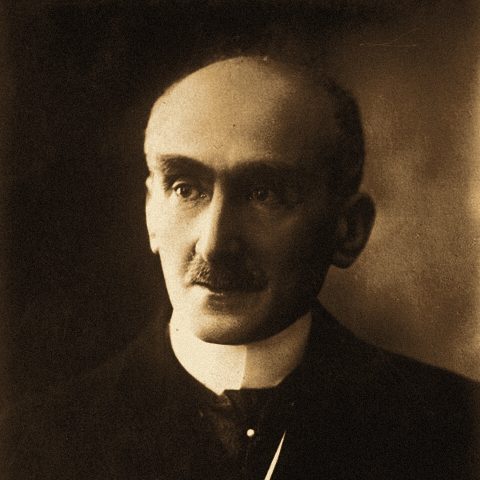
About the author
Henri Bergson
1859 Paris – 1941 Paris · French philosopher
Henri-Louis Bergson was a French philosopher who was influential in the traditions of analytic philosophy and continental philosophy, especially during the first half of the 20th century until the Second World War, but also after 1966 when Gilles Deleuze published Le Bergsonisme.
- 1859Born, Paris
- 1900Laughter
- 1907Creative Evolution
- 1941Died, Paris
If you like Creative Evolution
More like this


Start with “Chapter 1, part 1”
2 chapters free right now — no account. Your place follows you to iPhone and Android.