

2 chapters freeNo account needed.
Opens “Book 1, part 1” in the player · no sign-up needed
Nietzsche himself described it as 'the most personal of all my books.' The work introduces key concepts including eternal recurrence and the famous formulation 'God is dead.'
Inside the book
- Free nowno account · 2 chapters
- —Preface to the Second Edition31 min
- 2Book 1, part 142 min
- Premium10 chapters · every book, 7 days free
- 3Book 1, part 244 min
- 4Book 2, part 137 min
- 5Book 2, part 238 min
- 6Book 3, part 137 min
- 7Book 3, part 243 min
- 8Book 4 — Part 1 of 2: Sanctus Januarius43 min
- 9Book 445 min
- 10Book 5 — Part 1 of 3: We Fearless Ones38 min
- 11Book 5, part 139 min
- 12Book 5, part 241 min
The opening
Book 1, part 1
The Teachers of the Object of Existence.—Whether I look with a good or an evil eye upon men, I find them always at one problem, each and all of them: to do that which conduces to the conservation of the human species. And certainly not out of any sentiment of love for this species, but simply because nothing in them is older, stronger, more inexorable, and more unconquerable than that instinct,—because it is precisely the essence of our race and herd. Although we are accustomed readily enough, with our usual short-sightedness, to separate our neighbours precisely into useful and hurtful, into good and evil men, yet when we make a general calculation, and on longer reflection on the whole question, we become distrustful of this defining and separating, and finally leave it alone. Even the most hurtful man is still perhaps, in respect to the conservation of the race, the most useful of all; for he conserves in himself or by his effect on others, impulses without which mankind might long ago have languished or decayed.
Hatred, delight in mischief, rapacity and ambition, and whatever else is called evil—belong to the marvellous economy of the conservation of the race; to be sure a costly, lavish, and on the whole very foolish economy:—which has, however, hitherto preserved our race, as is demonstrated to us. I no longer know, my dear fellow-man and neighbour, if thou canst at all live to the disadvantage of the race, and therefore, "unreasonably" and "badly"; that which could have injured the race has perhaps died out many millenniums ago, and now belongs to the things which are no longer possible even to God. Indulge thy best or thy worst desires, and above all, go to wreck!—in either case thou art still probably the furtherer and benefactor of mankind in some way or other, and in that respect thou mayest have thy panegyrists—and similarly thy mockers! But thou wilt never find him who would be quite qualified to mock at thee, the individual, at thy best, who could bring home to thy conscience its limitless, buzzing and croaking wretchedness so as to be in accord with truth!
To laugh at oneself as one would have to laugh in order to laugh out of the veriest truth,—to do this the best have not hitherto had enough of the sense of truth, and the most endowed have had far too little genius! There is perhaps still a future even for laughter! When the maxim, "The race is all, the individual is nothing,"—has incorporated itself in humanity, and when access stands open to every one at all times to this ultimate emancipation and irresponsibility.—Perhaps then laughter will have united with wisdom, perhaps then there will be only "joyful wisdom." Meanwhile, however, it is quite otherwise, meanwhile the comedy of existence has not yet "become conscious" of itself, meanwhile it is still the period of tragedy, the period of morals and religions. What does the ever new appearing of founders of morals and religions, of instigators of struggles for moral valuations, of teachers of remorse of conscience and religious war, imply? What do these heroes on this stage imply?
For they have hitherto been the heroes of it, and all else, though solely visible for the time being, and too close to one, has served only as preparation for these heroes, whether as machinery and coulisse, or in the rôle of confidants and valets. (The poets, for example, have always been the valets of some morality or other.)—It is obvious of itself that these tragedians also work in the interest of the race, though they may believe that they work in the interest of God, and as emissaries of God. They also further the life of the species, in that they further the belief in life. "It is worth while to live"—each of them calls out,—"there is something of importance in this life; life has something behind it and under it; take care!" That impulse, which rules equally in the noblest and the ignoblest, the impulse towards the conservation of the species, breaks forth from time to time as reason and passion of spirit; it has then a brilliant train of motives about it, and tries with all its power to make us forget that fundamentally it is just impulse, instinct, folly and baselessness. Life should be loved, for...! Man should benefit himself and his neighbour, for...!
And whatever all these shoulds and fors imply, and may imply in future! In order that that which necessarily and always happens of itself and without design, may henceforth appear to be done by design, and may appeal to men as reason and ultimate command,—for that purpose the ethiculturist comes forward as the teacher of design in existence; for that purpose he devises a second and different existence, and by means of this new mechanism he lifts the old common existence off its old common hinges. No! he does not at all want us to laugh at existence, nor even at ourselves—nor at himself; to him an individual is always an individual, something first and last and immense, to him there are no species, no sums, no noughts.
However foolish and fanatical his inventions and valuations may be, however much he may misunderstand the course of nature and deny its conditions—and all systems of ethics hitherto have been foolish and anti-natural to such a degree that mankind would have been ruined by any one of them had it got the upper hand,—at any rate, every time that "the hero" came upon the stage something new was attained: the frightful counterpart of laughter, the profound convulsion of many individuals at the thought, "Yes, it is worth while to live! yes, I am worthy to live!"—life, and thou, and I, and all of us together became for a while interesting to ourselves once more.—It is not to be denied that hitherto laughter and reason and nature have in the long run got the upper hand of all the great teachers of design: in the end the short tragedy always passed over once more into the eternal comedy of existence; and the "waves of innumerable laughters"—to use the expression of Æschylus—must also in the end beat over the greatest of these tragedies.
But with all this corrective laughter, human nature has on the whole been changed by the ever new appearance of those teachers of the design of existence,—human nature has now an additional requirement, the very requirement of the ever new appearance of such teachers and doctrines of "design." Man has gradually become a visionary animal, who has to fulfil one more condition of existence than the other animals: man must from time to time believe that he knows why he exists; his species cannot flourish without periodically confiding in life! Without the belief in reason in life! And always from time to time will the human race decree anew that "there is something which really may not be laughed at." And the most clairvoyant philanthropist will add that "not only laughing and joyful wisdom, but also the tragic, with all its sublime irrationality, counts among the means and necessities for the conservation of the race!"—And consequently! Consequently! Consequently! Do you understand me, oh my brothers? Do you understand this new law of ebb and flow? We also shall have our time!
The Intellectual Conscience.—I have always the same experience over again, and always make a new effort against it; for although it is evident to me I do not want to believe it: in the greater number of men the intellectual conscience is lacking; indeed, it would often seem to me that in demanding such a thing, one is as solitary in the largest cities as in the desert. Everyone looks at you with strange eyes, and continues to make use of his scales, calling this good and that bad; and no one blushes for shame when you remark that these weights are not the full amount,—there is also no indignation against you; perhaps they laugh at your doubt.
I mean to say that the greater number of people do not find it contemptible to believe this or that, and live according to it, without having been previously aware of the ultimate and surest reasons for and against it, and without even giving themselves any trouble about such reasons afterwards,—the most gifted men and the noblest women still belong to this "greater number." But what is kind-heartedness, refinement and genius to me, if the man with these virtues harbours indolent sentiments in belief and judgment, if the longing for certainty does not rule in him, as his innermost desire and profoundest need—as that which separates higher from lower men! In certain pious people I have found a hatred of reason, and have been favourably disposed to them for it: their bad, intellectual conscience still betrayed itself, at least in this manner!
But to stand in the midst of this rerum concordia discors and all the marvellous uncertainty and ambiguity of existence, and not to question, not to tremble with desire and delight in questioning, not even to hate the questioner—perhaps even to make merry over him to the extent of weariness—that is what I regard as contemptible, and it is this sentiment which I first of all search for in every one:—some folly or other always persuades me anew that every man has this sentiment, as man. This is my special kind of unrighteousness.
Noble and Ignoble.—To ignoble natures all noble, magnanimous sentiments appear inexpedient, and on that account first and foremost, as incredible: they blink with their eyes when they hear of such matters, and seem inclined to say, "there will, no doubt, be some advantage therefrom, one cannot see through all walls;"—they are jealous of the noble person, as if he sought advantage by back-stair methods. When they are all too plainly convinced of the absence of selfish intentions and emoluments, the noble person is regarded by them as a kind of fool: they despise him in his gladness, and laugh at the lustre of his eye. "How can a person rejoice at being at a disadvantage, how can a person with open eyes want to meet with disadvantage! It must be a disease of the reason with which the noble affection is associated,"—so they think, and they look depreciatingly thereon; just as they depreciate the joy which the lunatic derives from his fixed idea.
The ignoble nature is distinguished by the fact that it keeps its advantage steadily in view, and that this thought of the end and advantage is even stronger than its strongest impulse: not to be tempted to inexpedient activities by its impulses—that is its wisdom and inspiration. In comparison with the ignoble nature the higher nature is more irrational:—for the noble, magnanimous, and self-sacrificing person succumbs in fact to his impulses, and in his best moments his reason lapses altogether. An animal, which at the risk of life protects its young, or in the pairing season follows the female where it meets with death, does not think of the risk and the death; its reason pauses likewise, because its delight in its young, or in the female, and the fear of being deprived of this delight, dominate it exclusively; it becomes stupider than at other times, like the noble and magnanimous person.
He possesses feelings of pleasure and pain of such intensity that the intellect must either be silent before them, or yield itself to their service: his heart then goes into his head, and one henceforth speaks of "passions." (Here and there to be sure, the antithesis to this, and as it were the "reverse of passion," presents itself; for example in Fontenelle, to whom some one once laid the hand on the heart with the words, "What you have there, my dearest friend, is brain also.") It is the unreason, or perverse reason of passion, which the ignoble man despises in the noble individual, especially when it concentrates upon objects whose value appears to him to be altogether fantastic and arbitrary. He is offended at him who succumbs to the passion of the belly, but he understands the allurement which here plays the tyrant; but he does not understand, for example, how a person out of love of knowledge can stake his health and honour on the game. The taste of the higher nature devotes itself to exceptional matters, to things which usually do not affect people, and seem to have no sweetness; the higher nature has a singular standard of value.
Besides, it is mostly of the belief that it has not a singular standard of value in its idiosyncrasies of taste; it rather sets up its values and non-values as the generally valid values and non-values, and thus becomes incomprehensible and impracticable. It is very rarely that a higher nature has so much reason over and above as to understand and deal with everyday men as such; for the most part it believes in its passion as if it were the concealed passion of every one, and precisely in this belief it is full of ardour and eloquence. If then such exceptional men do not perceive themselves as exceptions, how can they ever understand the ignoble natures and estimate average men fairly! Thus it is that they also speak of the folly, inexpediency and fantasy of mankind, full of astonishment at the madness of the world, and that it will not recognise the "one thing needful for it."—This is the eternal unrighteousness of noble natures.
That which Preserves the Species.—The strongest and most evil spirits have hitherto advanced mankind the most: they always rekindled the sleeping passions—all orderly arranged society lulls the passions to sleep; they always reawakened the sense of comparison, of contradiction, of delight in the new, the adventurous, the untried; they compelled men to set opinion against opinion, ideal plan against ideal plan. By means of arms, by upsetting boundary-stones, by violations of piety most of all: but also by new religions and morals! The same kind of "wickedness" is in every teacher and preacher of the new—which makes a conqueror infamous, although it expresses itself more refinedly, and does not immediately set the muscles in motion (and just on that account does not make so infamous!). The new, however, is under all circumstances the evil, as that which wants to conquer, which tries to upset the old boundary-stones and the old piety; only the old is the good! The good men of every age are those who go to the roots of the old thoughts and bear fruit with them, the agriculturists of the spirit. But every soil becomes finally exhausted, and the ploughshare of evil must always come once more.—There is at present a fundamentally erroneous theory of morals which is much celebrated, especially in England: according to it the judgments "good" and "evil" are the accumulation of the experiences of that which is "expedient" and "inexpedient"; according to this theory, that which is called good is conservative of the species, what is called evil, however, is detrimental to it. But in reality the evil impulses are just in as high a degree expedient, indispensable, and conservative of the species as the good:—only, their function is different.
Unconditional Duties.—All men who feel that they need the strongest words and intonations, the most eloquent gestures and attitudes, in order to operate at all—revolutionary politicians, socialists, preachers of repentance with or without Christianity, with all of whom there must be no mere half-success,—all these speak of "duties," and indeed, always of duties, which have the character of being unconditional—without such they would have no right to their excessive pathos: they know that right well! They grasp, therefore, at philosophies of morality which preach some kind of categorical imperative, or they assimilate a good lump of religion, as, for example, Mazzini did. Because they want to be trusted unconditionally, it is first of all necessary for them to trust themselves unconditionally, on the basis of some ultimate, undebatable command, sublime in itself, as the ministers and instruments of which, they would fain feel and announce themselves. Here we have the most natural, and for the most part, very influential opponents of moral enlightenment and scepticism: but they are rare. On the other hand, there is always a very numerous class of those opponents wherever interest teaches subjection, while repute and honour seem to forbid it. He who feels himself dishonoured at the thought of being the instrument of a prince, or of a party and sect, or even of wealthy power (for example, as the descendant of a proud, ancient family), but wishes just to be this instrument, or must be so before himself and before the public—such a person has need of pathetic principles which can at all times be appealed to:—principles of an unconditional ought, to which a person can subject himself without shame, and can show himself subjected. All more refined servility holds fast to the categorical imperative, and is the mortal enemy of those who want to take away the unconditional character of duty: propriety demands this from them, and not only propriety.
Loss of Dignity.—Meditation has lost all its dignity of form; the ceremonial and solemn bearing of the meditative person have been made a mockery, and one would no longer endure a wise man of the old style. We think too hastily and on the way and while walking and in the midst of business of all kinds, even when we think on the most serious matters; we require little preparation, even little quiet:—it is as if each of us carried about an unceasingly revolving machine in his head, which still works, even under the most unfavourable circumstances. Formerly it was perceived in a person that on some occasion he wanted to think—it was perhaps the exception!—that he now wanted to become wiser and collected his mind on a thought: he put on a long face for it, as for a prayer, and arrested his step—nay, stood still for hours on the street when the thought "came"—on one or on two legs. It was thus "worthy of the affair"!
Something for the Laborious.—He who at present wants to make moral questions a subject of study has an immense field of labour before him. All kinds of passions must be thought about singly, and followed singly throughout periods, peoples, great and insignificant individuals; all their rationality, all their valuations and elucidations of things, ought to come to light! Hitherto all that has given colour to existence has lacked a history: where would one find a history of love, of avarice, of envy, of conscience, of piety, of cruelty? Even a comparative history of law, as also of punishment, has hitherto been completely lacking. Have the different divisions of the day, the consequences of a regular appointment of the times for labour, feast, and repose, ever been made the object of investigation? Do we know the moral effects of the alimentary substances? Is there a philosophy of nutrition? (The ever-recurring outcry for and against vegetarianism proves that as yet there is no such philosophy!) Have the experiences with regard to communal living, for example, in monasteries, been collected? Has the dialectic of marriage and friendship been set forth?
The customs of the learned, of trades-people, of artists, and of mechanics—have they already found their thinkers? There is so much to think of thereon! All that up till now has been considered as the "conditions of existence," of human beings, and all reason, passion and superstition in this consideration—have they been investigated to the end? The observation alone of the different degrees of development which the human impulses have attained, and could yet attain, according to the different moral climates, would furnish too much work for the most laborious; whole generations, and regular co-operating generations of the learned, would be needed in order to exhaust the points of view and the material here furnished. The same is true of the determining of the reasons for the differences of the moral climates ("on what account does this sun of a fundamental moral judgment and standard of highest value shine here—and that sun there?"). And there is again a new labour which points out the erroneousness of all these reasons, and determines the entire essence of the moral judgments hitherto made.
Supposing all these labours to be accomplished, the most critical of all questions would then come into the foreground: whether science is in a position to furnish goals for human action, after it has proved that it can take them away and annihilate them—and then would be the time for a process of experimenting in which every kind of heroism could satisfy itself, an experimenting for centuries, which would put into the shade all the great labours and sacrifices of previous history. Science has not hitherto built its Cyclopic structures; for that also the time will come.
Unconscious Virtues.—All qualities in a man of which he is conscious—and especially when he presumes that they are visible and evident to his environment also—are subject to quite other laws of development than those qualities which are unknown to him, or imperfectly known, which by their subtlety can also conceal themselves from the subtlest observer, and hide as it were behind nothing,—as in the case of the delicate sculptures on the scales of reptiles (it would be an error to suppose them an adornment or a defence—for one sees them only with the microscope; consequently, with an eye artificially strengthened to an extent of vision which similar animals, to which they might perhaps have meant adornment or defence, do not possess!) Our visible moral qualities, and especially our moral qualities believed to be visible, follow their own course,—and our invisible qualities of similar name, which in relation to others neither serve for adornment nor defence, also follow their own course: quite a different course probably, and with lines and refinements, and sculptures, which might perhaps give pleasure to a God with a divine microscope. We have, for example, our diligence, our ambition, our acuteness: all the world knows about them,—and besides, we have probably once more our diligence, our ambition, our acuteness; but for these—our reptile scales—the microscope has not yet been invented!—And here the adherents of instinctive morality will say, "Bravo! He at least regards unconscious virtues as possible—that suffices us!"—Oh, ye unexacting creatures!
Our Eruptions.—Numberless things which humanity acquired in its earlier stages, but so weakly and embryonically that it could not be noticed that they were acquired, are thrust suddenly into light long afterwards, perhaps after the lapse of centuries: they have in the interval become strong and mature. In some ages this or that talent, this or that virtue seems to be entirely lacking, as it is in some men; but let us wait only for the grandchildren and grandchildren's children, if we have time to wait,—they bring the interior of their grandfathers into the sun, that interior of which the grandfathers themselves were unconscious. The son, indeed, is often the betrayer of his father; the latter understands himself better since he has got his son. We have all hidden gardens and plantations in us; and by another simile, we are all growing volcanoes, which will have their hours of eruption:—how near or how distant this is, nobody of course knows, not even the good God.
10.
A Species of Atavism.—I like best to think of the rare men of an age as suddenly emerging aftershoots of past cultures, and of their persistent strength: like the atavism of a people and its civilisation:—there is thus still something in them to think of! They now seem strange, rare, and extraordinary: and he who feels these forces in himself has to foster them in face of a different, opposing world; he has to defend them, honour them, and rear them to maturity: and he either becomes a great man thereby, or a deranged and eccentric person, unless he should altogether break down betimes. Formerly these rare qualities were usual, and were consequently regarded as common: they did not distinguish people. Perhaps they were demanded and presupposed; it was impossible to become great with them, for indeed there was also no danger of becoming insane and solitary with them.—It is principally in the old-established families and castes of a people that such after-effects of old impulses present themselves, while there is no probability of such atavism where races, habits, and valuations change too rapidly. For the tempo of the evolutional forces in peoples implies just as much as in music; for our case an andante of evolution is absolutely necessary, as the tempo of a passionate and slow spirit:—and the spirit of conserving families is certainly of that sort.
11.
Consciousness.—Consciousness is the last and latest development of the organic, and consequently also the most unfinished and least powerful of these developments. Innumerable mistakes originate out of consciousness, which, "in spite of fate," as Homer says, cause an animal or a man to break down earlier than might be necessary. If the conserving bond of the instincts were not very much more powerful, it would not generally serve as a regulator: by perverse judging and dreaming with open eyes, by superficiality and credulity, in short, just by consciousness, mankind would necessarily have broken down: or rather, without the former there would long ago have been nothing more of the latter! Before a function is fully formed and matured, it is a danger to the organism: all the better if it be then thoroughly tyrannised over! Consciousness is thus thoroughly tyrannised over—and not least by the pride in it! It is thought that here is the quintessence of man; that which is enduring, eternal, ultimate, and most original in him! Consciousness is regarded as a fixed, given magnitude! Its growth and intermittences are denied! It is accepted as the "unity of the organism"!—This ludicrous overvaluation and misconception of consciousness, has as its result the great utility, that a too rapid maturing of it has thereby been hindered. Because men believed that they already possessed consciousness, they gave themselves very little trouble to acquire it—and even now it is not otherwise! It is still an entirely new problem just dawning on the human eye and hardly yet plainly recognisable: to embody knowledge in ourselves and make it instinctive,—a problem which is only seen by those who have grasped the fact that hitherto our errors alone have been embodied in us, and that all our consciousness is relative to errors!
12.
The Goal of Science.—What? The ultimate goal of science is to create the most pleasure possible to man, and the least possible pain? But what if pleasure and pain should be so closely connected that he who wants the greatest possible amount of the one must also have the greatest possible amount of the other,—that he who wants to experience the "heavenly high jubilation," must also be ready to be "sorrowful unto death"?(ref. same footnote) And it is so, perhaps! The Stoics at least believed it was so, and they were consistent when they wished to have the least possible pleasure, in order to have the least possible pain from life. (When one uses the expression: "The virtuous man is the happiest," it is as much the sign-board of the school for the masses, as a casuistic subtlety for the subtle.) At present also ye have still the choice: either the least possible pain, in short painlessness—and after all, socialists and politicians of all parties could not honourably promise more to their people,—or the greatest possible amount of pain, as the price of the growth of a fullness of refined delights and enjoyments rarely tasted hitherto! If ye decide for the former, if ye therefore want to depress and minimise man's capacity for pain, well, ye must also depress and minimise his capacity for enjoyment. In fact, one can further the one as well as the other goal by science! Perhaps science is as yet best known by its capacity for depriving man of enjoyment, and making him colder, more statuesque, and more Stoical. But it might also turn out to be the great pain-bringer!—And then, perhaps, its counteracting force would be discovered simultaneously, its immense capacity for making new sidereal worlds of enjoyment beam forth!
13.
The Theory of the Sense of Power.—We exercise our power over others by doing them good or by doing them ill—that is all we care for! Doing ill to those on whom we have to make our power felt; for pain is a far more sensitive means for that purpose than pleasure:—pain always asks concerning the cause, while pleasure is inclined to keep within itself and not look backward. Doing good and being kind to those who are in any way already dependent on us (that is, who are accustomed to think of us as their raison d'être); we want to increase their power, because we thus increase our own; or we want to show them the advantage there is in being in our power,—they thus become more contented with their position, and more hostile to the enemies of our power and readier to contend with them. If we make sacrifices in doing good or in doing ill, it does not alter the ultimate value of our actions; even if we stake our life in the cause, as martyrs for the sake of our church, it is a sacrifice to our longing for power, or for the purpose of conserving our sense of power.
He who under these circumstances feels that he "is in possession of truth," how many possessions does he not let go, in order to preserve this feeling! What does he not throw overboard, in order to keep himself "up,"—that is to say, above the others who lack the "truth"! Certainly the condition we are in when we do ill is seldom so pleasant, so purely pleasant, as that in which we practise kindness,—it is an indication that we still lack power, or it betrays ill-humour at this defect in us; it brings with it new dangers and uncertainties as to the power we already possess, and clouds our horizon by the prospect of revenge, scorn, punishment and failure. Perhaps only those most susceptible to the sense of power, and eager for it, will prefer to impress the seal of power on the resisting individual,—those to whom the sight of the already subjugated person as the object of benevolence is a burden and a tedium. It is a question how a person is accustomed to season his life; it is a matter of taste whether a person would rather have the slow or the sudden, the safe or the dangerous and daring increase of power,—he seeks this or that seasoning always according to his temperament.
An easy booty is something contemptible to proud natures; they have an agreeable sensation only at the sight of men of unbroken spirit who could be enemies to them, and similarly, also, at the sight of all not easily accessible possession; they are often hard toward the sufferer, for he is not worthy of their effort or their pride,—but they show themselves so much the more courteous towards their equals, with whom strife and struggle would in any case be full of honour, if at any time an occasion for it should present itself. It is under the agreeable feelings of this perspective that the members of the knightly caste have habituated themselves to exquisite courtesy toward one another.—Pity is the most pleasant feeling in those who have not much pride, and have no prospect of great conquests: the easy booty—and that is what every sufferer is—is for them an enchanting thing. Pity is said to be the virtue of the gay lady.
14.
What is called Love.—The lust of property and love: what different associations each of these ideas evoke!—and yet it might be the same impulse twice named: on the one occasion disparaged from the standpoint of those already possessing (in whom the impulse has attained something of repose, and who are now apprehensive for the safety of their "possession"); on the other occasion viewed from the standpoint of the unsatisfied and thirsty, and therefore glorified as "good." Our love of our neighbour,—is it not a striving after new property? And similarly our love of knowledge, of truth; and in general all the striving after novelties? We gradually become satiated with the old, the securely possessed, and again stretch out our hands; even the finest landscape in which we live for three months is no longer certain of our love, and any kind of more distant coast excites our covetousness: the possession for the most part becomes smaller through possessing. Our pleasure in ourselves seeks to maintain itself, by always transforming something new into ourselves,—that is just possessing.
To become satiated with a possession, that is to become satiated with ourselves. (One can also suffer from excess,—even the desire to cast away, to share out, can assume the honourable name of "love.") When we see any one suffering, we willingly utilise the opportunity then afforded to take possession of him; the beneficent and sympathetic man, for example, does this; he also calls the desire for new possession awakened in him, by the name of "love," and has enjoyment in it, as in a new acquisition suggesting itself to him. The love of the sexes, however, betrays itself most plainly as the striving after possession: the lover wants the unconditioned, sole possession of the person longed for by him; he wants just as absolute power over her soul as over her body; he wants to be loved solely, and to dwell and rule in the other soul as what is highest and most to be desired.
When one considers that this means precisely to exclude all the world from a precious possession, a happiness, and an enjoyment; when one considers that the lover has in view the impoverishment and privation of all other rivals, and would like to become the dragon of his golden hoard, as the most inconsiderate and selfish of all "conquerors" and exploiters; when one considers finally that to the lover himself, the whole world besides appears indifferent, colourless, and worthless, and that he is ready to make every sacrifice, disturb every arrangement, and put every other interest behind his own,—one is verily surprised that this ferocious lust of property and injustice of sexual love should have been glorified and deified to such an extent at all times; yea, that out of this love the conception of love as the antithesis of egoism should have been derived, when it is perhaps precisely the most unqualified expression of egoism. Here, evidently, the non-possessors and desirers have determined the usage of language,—there were, of course, always too many of them.
Those who have been favoured with much possession and satiety, have, to be sure, dropped a word now and then about the "raging demon," as, for instance, the most lovable and most beloved of all the Athenians—Sophocles; but Eros always laughed at such revilers,—they were always his greatest favourites.—There is, of course, here and there on this terrestrial sphere a kind of sequel to love, in which that covetous longing of two persons for one another has yielded to a new desire and covetousness, to a common, higher thirst for a superior ideal standing above them: but who knows this love? Who has experienced it? Its right name is friendship.
15.
Out of the Distance.—This mountain makes the whole district which it dominates charming in every way, and full of significance: after we have said this to ourselves for the hundredth time, we are so irrationally and so gratefully disposed towards it, as the giver of this charm, that we fancy it must itself be the most charming thing in the district—and so we climb it, and are undeceived. All of a sudden, it itself, and the whole landscape around and under us, is as it were disenchanted; we had forgotten that many a greatness, like many a goodness, wants only to be seen at a certain distance, and entirely from below, not from above,—it is thus only that it operates. Perhaps you know men in your neighbourhood who can only look at themselves from a certain distance to find themselves at all endurable, or attractive and enlivening; they are to be dissuaded from self-knowledge.
16.
Across the Plank.—One must be able to dissimulate in intercourse with persons who are ashamed of their feelings; they experience a sudden aversion towards anyone who surprises them in a state of tender, or enthusiastic and high-running feeling, as if he had seen their secrets. If one wants to be kind to them in such moments one should make them laugh, or say some kind of cold, playful wickedness:—their feeling thereby congeals, and they are again self-possessed. But I give the moral before the story.—We were once on a time so near one another in the course of our lives, that nothing more seemed to hinder our friendship and fraternity, and there was merely a small plank between us. While you were just about to step on it, I asked you: "Do you want to come across the plank to me?" But then you did not want to come any longer; and when I again entreated, you were silent. Since then mountains and torrents, and whatever separates and alienates, have interposed between us, and even if we wanted to come to one another, we could no longer do so! When, however, you now remember that small plank, you have no longer words,—but merely sobs and amazement.
17.
Motivation of Poverty.—We cannot, to be sure, by any artifice make a rich and richly-flowing virtue out of a poor one, but we can gracefully enough reinterpret its poverty into necessity, so that its aspect no longer gives pain to us, and we do not make any reproachful faces at fate on account of it. It is thus that the wise gardener does, who puts the tiny streamlet of his garden into the arms of a fountain-nymph, and thus motivates the poverty:—and who would not like him need the nymphs!
18.
Ancient Pride.—The ancient savour of nobility is lacking in us, because the ancient slave is lacking in our sentiment. A Greek of noble descent found such immense intermediate stages, and such a distance betwixt his elevation and that ultimate baseness, that he could hardly even see the slave plainly: even Plato no longer saw him entirely. It is otherwise with us, accustomed as we are to the doctrine of the equality of men, although not to the equality itself. A being who has not the free disposal of himself and has not got leisure,—that is not regarded by us as anything contemptible; there is perhaps too much of this kind of slavishness in each of us, in accordance with the conditions of our social order and activity, which are fundamentally different from those of the ancients.—The Greek philosopher went through life with the secret feeling that there were many more slaves than people supposed—that is to say, that every one was a slave who was not a philosopher. His pride was puffed up when he considered that even the mightiest of the earth were thus to be looked upon as slaves. This pride is also unfamiliar to us, and impossible; the word "slave" has not its full force for us even in simile.
19.
Evil.—Test the life of the best and most productive men and nations, and ask yourselves whether a tree which is to grow proudly heavenward can dispense with bad weather and tempests: whether disfavour and opposition from without, whether every kind of hatred, jealousy, stubbornness, distrust, severity, greed, and violence do not belong to the favouring circumstances without which a great growth even in virtue is hardly possible? The poison by which the weaker nature is destroyed is strengthening to the strong individual—and he does not call it poison.
20.
Dignity of Folly.—Several millenniums further on in the path of the last century!—and in everything that man does the highest prudence will be exhibited: but just thereby prudence will have lost all its dignity. It will then, sure enough, be necessary to be prudent, but it will also be so usual and common, that a more fastidious taste will feel this necessity as vulgarity. And just as a tyranny of truth and science would be in a position to raise the value of falsehood, a tyranny of prudence could force into prominence a new species of nobleness. To be noble—that might then mean, perhaps, to be capable of follies.
21.
To the Teachers of Unselfishness.—The virtues of a man are called good, not in respect of the results they have for himself, but in respect of the results which we expect therefrom for ourselves and for society:—we have all along had very little unselfishness, very little "non-egoism" in our praise of the virtues! For otherwise it could not but have been seen that the virtues (such as diligence, obedience, chastity, piety, justice) are mostly injurious to their possessors, as impulses which rule in them too vehemently and ardently, and do not want to be kept in co-ordination with the other impulses by the reason. If you have a virtue, an actual, perfect virtue (and not merely a kind of impulse towards virtue!)—you are its victim! But your neighbour praises your virtue precisely on that account! One praises the diligent man though he injures his sight, or the originality and freshness of his spirit, by his diligence; the youth is honoured and regretted who has "worn himself out by work," because one passes the judgment that "for society as a whole the loss of the best individual is only a small sacrifice! A pity that this sacrifice should be necessary!
A much greater pity, it is true, if the individual should think differently, and regard his preservation and development as more important than his work in the service of society!" And so one regrets this youth, not on his own account, but because a devoted instrument, regardless of self—a so-called "good man," has been lost to society by his death. Perhaps one further considers the question, whether it would not have been more advantageous for the interests of society if he had laboured with less disregard of himself, and had preserved himself longer,—indeed, one readily admits an advantage therefrom, but one esteems the other advantage, namely, that a sacrifice has been made, and that the disposition of the sacrificial animal has once more been obviously endorsed—as higher and more enduring.
It is accordingly, on the one part, the instrumental character in the virtues which is praised when the virtues are praised, and on the other part, the blind, ruling impulse in every virtue, which refuses to let itself be kept within bounds by the general advantage to the individual; in short, what is praised is the unreason in the virtues, in consequence of which the individual allows himself to be transformed into a function of the whole. The praise of the virtues is the praise of something which is privately injurious to the individual; it is praise of impulses which deprive man of his noblest self-love, and the power to take the best care of himself. To be sure, for the teaching and embodying of virtuous habits a series of effects of virtue are displayed, which make it appear that virtue and private advantage are closely related,—and there is in fact such a relationship! Blindly furious diligence, for example, the typical virtue of an instrument, is represented as the way to riches and honour, and as the most beneficial antidote to tedium and passion: but people are silent concerning its danger, its greatest dangerousness.
Education proceeds in this manner throughout: it endeavours, by a series of enticements and advantages, to determine the individual to a certain mode of thinking and acting, which, when it has become habit, impulse and passion, rules in him and over him, in opposition to his ultimate advantage, but "for the general good." How often do I see that blindly furious diligence does indeed create riches and honours, but at the same time deprives the organs of the refinement by virtue of which alone an enjoyment of riches and honours is possible; so that really the main expedient for combating tedium and passion, simultaneously blunts the senses and makes the spirit refractory towards new stimuli! (The busiest of all ages—our age—does not know how to make anything out of its great diligence and wealth, except always more and more wealth, and more and more diligence; there is even more genius needed for laying out wealth than for acquiring it!—Well, we shall have our "grandchildren"!) If the education succeeds, every virtue of the individual is a public utility, and a private disadvantage in respect to the highest private end,—probably some psycho-æsthetic stunting, or even premature dissolution.
About the author
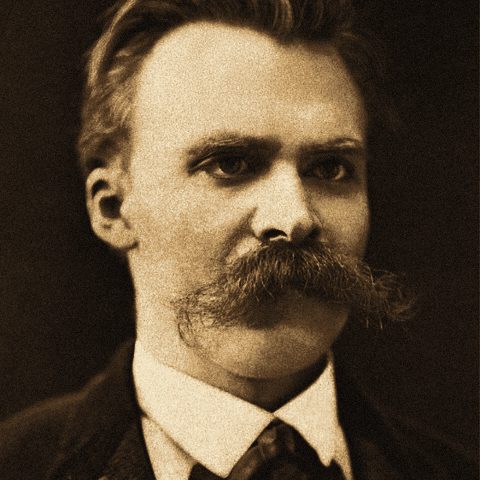
Friedrich Wilhelm Nietzsche
1844 Röcken – 1900 Weimar · German philosopher
Friedrich Wilhelm Nietzsche was a German philosopher and writer who started his career as a classical philologist and turned to philosophy early in his academic career. In 1869, at age 24, he was appointed Professor of Classical Philology at the University of Basel.
- 1844Born, Röcken
- 1872The Birth of Tragedy
- 1878Human, All Too Human
- 1881The Dawn of Day
- 1882The Joyful Wisdom
- 1885Thus Spake Zarathustra
- 1908Ecce Homo
More by Friedrich Wilhelm Nietzsche
Keep going with Nietzsche


If you like The Joyful Wisdom
More like this


Start with “Book 1, part 1”
2 chapters free right now — no account. Your place follows you to iPhone and Android.