

2 chapters freeNo account needed.
Opens “Sections 1–3” in the player · no sign-up needed
Yesterday—would you believe it?—I heard Bizet's masterpiece for the twentieth time.
Subtitled "A Musician's Problem".
Inside the book
- Free nowno account · 2 chapters
- —Introduction20 min
- 2Sections 1–313 min
- Premium9 chapters · every book, 7 days free
- 3Sections 4–614 min
- 4Sections 7–811 min
- 5Sections 9–1114 min
- 6Sections 1229 min
- 7Sections 1–213 min
- 8Sections 1–211 min
- 9Sections 3–1010 min
- 10Sections 11–5113 min
- 11Sections 52–766 min
The opening
Sections 1–3
Yesterday—would you believe it?—I heard Bizet's masterpiece for the twentieth time. Once more I attended with the same gentle reverence; once again I did not run away. This triumph over my impatience surprises me. How such a work completes one! Through it one almost becomes a "masterpiece" oneself—And, as a matter of fact, each time I heard Carmen it seemed to me that I was more of a philosopher, a better philosopher than at other times: I became so forbearing, so happy, so Indian, so settled.… To sit for five hours: the first step to holiness!—May I be allowed to say that Bizet's orchestration is the only one that I can endure now? That other orchestration which is all the rage at present—the Wagnerian—is brutal, artificial and "unsophisticated" withal, hence its appeal to all the three senses of the modern soul at once. How terribly Wagnerian orchestration affects me! I call it the Sirocco. A disagreeable sweat breaks out all over me. All my fine weather vanishes.
Bizet's music seems to me perfect. It comes forward lightly, gracefully, stylishly. It is lovable, it does not sweat. "All that is good is easy, everything divine runs with light feet": this is the first principle of my æsthetics. This music is wicked, refined, fatalistic, and withal remains popular,—it possesses the refinement of a race, not of an individual. It is rich. It is definite. It builds, organises, completes, and in this sense it stands as a contrast to the polypus in music, to "endless melody". Have more painful, more tragic accents ever been heard on the stage before? And how are they obtained? Without grimaces! Without counterfeiting of any kind! Free from the lie of the grand style!—In short: this music assumes that the listener is intelligent even as a musician,—thereby it is the opposite of Wagner, who, apart from everything else, was in any case the most ill-mannered genius on earth (Wagner takes us as if …, he repeats a thing so often that we become desperate,—that we ultimately believe it).
And once more: I become a better man when Bizet speaks to me. Also a better musician, a better listener. Is it in any way possible to listen better?—I even burrow behind this music with my ears. I hear its very cause. I seem to assist at its birth. I tremble before the dangers which this daring music runs, I am enraptured over those happy accidents for which even Bizet himself may not be responsible.—And, strange to say, at bottom I do not give it a thought, or am not aware how much thought I really do give it. For quite other ideas are running through my head the while.… Has any one ever observed that music emancipates the spirit? gives wings to thought? and that the more one becomes a musician the more one is also a philosopher? The grey sky of abstraction seems thrilled by flashes of lightning; the light is strong enough to reveal all the details of things; to enable one to grapple with problems; and the world is surveyed as if from a mountain top—With this I have defined philosophical pathos—And unexpectedly answers drop into my lap, a small hailstorm of ice and wisdom, of problems solved. Where am I? Bizet makes me productive. Everything that is good makes me productive. I have gratitude for nothing else, nor have I any other touchstone for testing what is good.
Bizet's work also saves; Wagner is not the only "Saviour." With it one bids farewell to the damp north and to all the fog of the Wagnerian ideal. Even the action in itself delivers us from these things. From Merimée it has this logic even in passion, from him it has the direct line, inexorable necessity, but what it has above all else is that which belongs to sub-tropical zones—that dryness of atmosphere, that limpidezza of the air. Here in every respect the climate is altered. Here another kind of sensuality, another kind of sensitiveness and another kind of cheerfulness make their appeal. This music is gay, but not in a French or German way. Its gaiety is African; fate hangs over it, its happiness is short, sudden, without reprieve. I envy Bizet for having had the courage of this sensitiveness, which hitherto in the cultured music of Europe has found no means of expression,—of this southern, tawny, sunburnt sensitiveness.… What a joy the golden afternoon of its happiness is to us! When we look out, with this music in our minds, we wonder whether we have ever seen the sea so calm. And how soothing is this Moorish dancing! How, for once, even our insatiability gets sated by its lascivious melancholy!—And finally love, love translated back into Nature! Not the love of a "cultured girl!"—no Senta-sentimentality.(7) But love as fate, as a fatality, cynical, innocent, cruel,—and precisely in this way Nature! The love whose means is war, whose very essence is the mortal hatred between the sexes!—I know no case in which the tragic irony, which constitutes the kernel of love, is expressed with such severity, or in so terrible a formula, as in the last cry of Don José with which the work ends:
"Yes, it is I who have killed her, I—my adored Carmen!"
—Such a conception of love (the only one worthy of a philosopher) is rare: it distinguishes one work of art from among a thousand others. For, as a rule, artists are no better than the rest of the world, they are even worse—they misunderstand love. Even Wagner misunderstood it. They imagine that they are selfless in it because they appear to be seeking the advantage of another creature often to their own disadvantage. But in return they want to possess the other creature.… Even God is no exception to this rule, he is very far from thinking "What does it matter to thee whether I love thee or not?"—He becomes terrible if he is not loved in return "L'amour—and with this principle one carries one's point against Gods and men—est de tous les sentiments le plus égoiste, et par conséquent, lorsqu'il est blessé, le moins généreux" (B. Constant).
Perhaps you are beginning to perceive how very much this music improves me?—Il faut méditerraniser la musique. and I have my reasons for this principle ("Beyond Good and Evil," pp. 216 et seq.) The return to Nature, health, good spirits, youth, virtue!—And yet I was one of the most corrupted Wagnerites.… I was able to take Wagner seriously. Oh, this old magician! what tricks has he not played upon us! The first thing his art places in our hands is a magnifying glass: we look through it, and we no longer trust our own eyes—Everything grows bigger, even Wagner grows bigger.… What a clever rattlesnake. Throughout his life he rattled "resignation," "loyalty," and "purity" about our ears, and he retired from the corrupt world with a song of praise to chastity!—And we believed it all.…
—But you will not listen to me? You prefer even the problem of Wagner to that of Bizet? But neither do I underrate it; it has its charm. The problem of salvation is even a venerable problem. Wagner pondered over nothing so deeply as over salvation: his opera is the opera of salvation. Someone always wants to be saved in his operas,—now it is a youth; anon it is a maid,—this is his problem—And how lavishly he varies his leitmotif! What rare and melancholy modulations! If it were not for Wagner, who would teach us that innocence has a preference for saving interesting sinners? (the case in "Tannhauser"). Or that even the eternal Jew gets saved and settled down when he marries? (the case in the "Flying Dutchman"). Or that corrupted old females prefer to be saved by chaste young men? (the case of Kundry). Or that young hysterics like to be saved by their doctor? (the case in "Lohengrin"). Or that beautiful girls most love to be saved by a knight who also happens to be a Wagnerite? (the case in the "Mastersingers"). Or that even married women also like to be saved by a knight? (the case of Isolde).
Or that the venerable Almighty, after having compromised himself morally in all manner of ways, is at last delivered by a free spirit and an immoralist? (the case in the "Ring"). Admire, more especially this last piece of wisdom! Do you understand it? I—take good care not to understand it.… That it is possible to draw yet other lessons from the works above mentioned,—I am much more ready to prove than to dispute. That one may be driven by a Wagnerian ballet to desperation—and to virtue! (once again the case in "Tannhauser"). That not going to bed at the right time may be followed by the worst consequences (once again the case of "Lohengrin").—That one can never be too sure of the spouse one actually marries (for the third time, the case of "Lohengrin"). "Tristan and Isolde" glorifies the perfect husband who, in a certain case, can ask only one question: "But why have ye not told me this before? Nothing could be simpler than that!" Reply:
"That I cannot tell thee. And what thou askest, That wilt thou never learn."
"Lohengrin" contains a solemn ban upon all investigation and questioning. In this way Wagner stood for the Christian concept, "Thou must and shalt believe". It is a crime against the highest and the holiest to be scientific.… The "Flying Dutchman" preaches the sublime doctrine that woman can moor the most erratic soul, or to put it into Wagnerian terms "save" him. Here we venture to ask a question. Supposing that this were actually true, would it therefore be desirable?—What becomes of the "eternal Jew" whom a woman adores and enchains? He simply ceases from being eternal, he marries,—that is to say, he concerns us no longer.—Transferred into the realm of reality, the danger for the artist and for the genius—and these are of course the "eternal Jews"—resides in woman: adoring women are their ruin. Scarcely any one has sufficient character not to be corrupted—"saved" when he finds himself treated as a God—he then immediately condescends to woman.—Man is a coward in the face of all that is eternally feminine, and this the girls know.—In many cases of woman's love, and perhaps precisely in the most famous ones, the love is no more than a refined form of parasitism, a making one's nest in another's soul and sometimes even in another's flesh—Ah! and how constantly at the cost of the host!
We know the fate of Goethe in old-maidish moralin-corroded Germany. He was always offensive to Germans, he found honest admirers only among Jewesses. Schiller, "noble" Schiller, who cried flowery words into their ears,—he was a man after their own heart. What did they reproach Goethe with?—with the Mount of Venus, and with having composed certain Venetian epigrams. Even Klopstock preached him a moral sermon; there was a time when Herder was fond of using the word "Priapus" when he spoke of Goethe. Even "Wilhelm Meister" seemed to be only a symptom of decline, of a moral "going to the dogs". The "Menagerie of tame cattle," the worthlessness of the hero in this book, revolted Niebuhr, who finally bursts out in a plaint which Biterolf(8) might well have sung: "nothing so easily makes a painful impression as when a great mind despoils itself of its wings and strives for virtuosity in something greatly inferior, while it renounces more lofty aims." But the most indignant of all was the cultured woman—all smaller courts in Germany, every kind of "Puritanism" made the sign of the cross at the sight of Goethe, at the thought of the "unclean spirit" in Goethe.—This history was what Wagner set to music. He saves Goethe, that goes without saying; but he does so in such a clever way that he also takes the side of the cultured woman. Goethe gets saved: a prayer saves him, a cultured woman draws him out of the mire.
—As to what Goethe would have thought of Wagner?—Goethe once set himself the question, "what danger hangs over all romanticists—the fate of romanticists?"—His answer was: "To choke over the rumination of moral and religious absurdities." In short: Parsifal.… The philosopher writes thereto an epilogue: Holiness—the only remaining higher value still seen by the mob or by woman, the horizon of the ideal for all those who are naturally short-sighted. To philosophers, however, this horizon, like every other, is a mere misunderstanding, a sort of slamming of the door in the face of the real beginning of their world,—their danger, their ideal, their desideratum.… In more polite language: La philosophie ne suffit pas au grand nombre. Il lui faut la sainteté.…
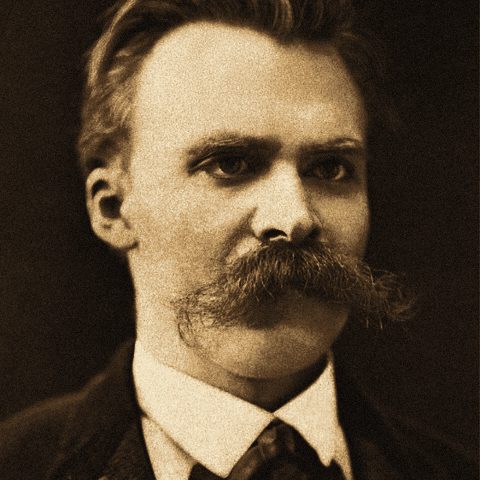
About the author
Friedrich Wilhelm Nietzsche
1844 Röcken – 1900 Weimar · German philosopher
Friedrich Wilhelm Nietzsche was a German philosopher and writer who started his career as a classical philologist and turned to philosophy early in his academic career. In 1869, at age 24, he was appointed Professor of Classical Philology at the University of Basel.
- 1844Born, Röcken
- 1872The Birth of Tragedy
- 1878Human, All Too Human
- 1881The Dawn of Day
- 1882The Joyful Wisdom
- 1888The Case of Wagner
- 1908Ecce Homo
More by Friedrich Wilhelm Nietzsche
Keep going with Nietzsche


If you like The Case of Wagner
More like this


Start with “Sections 1–3”
2 chapters free right now — no account. Your place follows you to iPhone and Android.