

2 chapters freeNo account needed.
Opens “The Three Metamorphoses” in the player · no sign-up needed
Three metamorphoses of the spirit do I designate to you: how the spirit becometh a camel, the camel a lion, and the lion at last a child.
The narrative follows the character Zarathustra, based on the historical figure Zoroaster, as he delivers discourses on metaphysics, morality, and Nietzsche's core philosophical concepts including the Übermensch, the death of God, will to power, and eternal…
Inside the book
- Free nowno account · 2 chapters
- —Introduction54 min
- 1The Three Metamorphoses4 min
- Premium78 chapters · every book, 7 days free
- 2The Academic Chairs of Virtue5 min
- 3Backworldsmen6 min
- 4The Despisers of the Body4 min
- 5Joys and Passions3 min
- 6The Pale Criminal4 min
- 7Reading and Writing3 min
- 8The Tree on the Hill5 min
- 9The Preachers of Death3 min
- 10War and Warriors3 min
- 11The New Idol5 min
- 12The Flies in the Market-Place6 min
- 13Chastity2 min
- 14The Friend4 min
- 15The Thousand and One Goals4 min
- 16Neighbour-Love3 min
- 17The Way of the Creating One5 min
- 18Old and Young Women4 min
- 19The Bite of the Adder3 min
- 20Child and Marriage4 min
- 21Voluntary Death5 min
- 22The Bestowing Virtue9 min
- 23The Child with the Mirror5 min
- 24In the Happy Isles5 min
- 25The Pitiful5 min
- 26The Priests5 min
- 27The Virtuous6 min
- 28The Rabble5 min
- 29The Tarantulas6 min
- 30The Famous Wise Ones5 min
- 31The Night-Song4 min
- 32The Dance-Song5 min
- 33The Grave-Song6 min
- 34Self-Surpassing6 min
- 35The Sublime Ones4 min
- 36The Land of Culture5 min
- 37Immaculate Perception5 min
- 38Scholars3 min
- 39Poets5 min
- 40Great Events7 min
- 41The Soothsayer7 min
- 42Redemption9 min
- 43Manly Prudence5 min
- 44The Stillest Hour6 min
- 45The Wanderer6 min
- 46The Vision and the Enigma10 min
- 47Involuntary Bliss6 min
- 48Before Sunrise6 min
- 49The Bedwarfing Virtue15 min
- 51On Passing-By6 min
- 52The Apostates7 min
- 53The Return Home7 min
- 54The Three Evil Things9 min
- 55The Spirit of Gravity7 min
- 56Old and New Tables33 min
- 57The Convalescent12 min
- 58The Great Longing5 min
- 59The Second Dance-Song6 min
- 60The Seven Seals6 min
- 61The Honey Sacrifice7 min
- 62The Cry of Distress7 min
- 63Talk with the Kings8 min
- 64The Leech6 min
- 65The Magician11 min
- 66Out of Service8 min
- 67The Ugliest Man10 min
- 68The Voluntary Beggar8 min
- 69The Shadow7 min
- 70Noontide6 min
- 71The Greeting11 min
- 72The Supper4 min
- 73The Higher Man18 min
- 74The Song of Melancholy6 min
- 75Science6 min
- 76Among Daughters of the Desert7 min
- 77The Awakening6 min
- 78The Ass-Festival7 min
- 79The Drunken Song15 min
- 80The Sign6 min
The opening
The Three Metamorphoses
Three metamorphoses of the spirit do I designate to you: how the spirit becometh a camel, the camel a lion, and the lion at last a child.
Many heavy things are there for the spirit, the strong load-bearing spirit in which reverence dwelleth: for the heavy and the heaviest longeth its strength.
What is heavy? so asketh the load-bearing spirit; then kneeleth it down like the camel, and wanteth to be well laden.
What is the heaviest thing, ye heroes? asketh the load-bearing spirit, that I may take it upon me and rejoice in my strength.
Is it not this: To humiliate oneself in order to mortify one's pride? To exhibit one's folly in order to mock at one's wisdom?
Or is it this: To desert our cause when it celebrateth its triumph? To ascend high mountains to tempt the tempter?
Or is it this: To feed on the acorns and grass of knowledge, and for the sake of truth to suffer hunger of soul?
Or is it this: To be sick and dismiss comforters, and make friends of the deaf, who never hear thy requests?
Or is it this: To go into foul water when it is the water of truth, and not disclaim cold frogs and hot toads?
Or is it this: To love those who despise us, and give one's hand to the phantom when it is going to frighten us?
All these heaviest things the load-bearing spirit taketh upon itself: and like the camel, which, when laden, hasteneth into the wilderness, so hasteneth the spirit into its wilderness.
But in the loneliest wilderness happeneth the second metamorphosis: here the spirit becometh a lion; freedom will it capture, and lordship in its own wilderness.
Its last Lord it here seeketh: hostile will it be to him, and to its last God; for victory will it struggle with the great dragon.
What is the great dragon which the spirit is no longer inclined to call Lord and God? "Thou shalt," is the great dragon called. But the spirit of the lion saith, "I will."
"Thou shalt," lieth in its path, sparkling with gold—a scale-covered beast; and on every scale glittereth golden, "Thou shalt!"
The values of a thousand years glitter on those scales, and thus speaketh the mightiest of all dragons: "All the values of things—glitter on me.
All values have already been created, and all created values—do I represent. Verily, there shall be no 'I will' any more." Thus speaketh the dragon.
My brethren, wherefore is there need of the lion in the spirit? Why sufficeth not the beast of burden, which renounceth and is reverent?
To create new values—that, even the lion cannot yet accomplish: but to create itself freedom for new creating—that can the might of the lion do.
To create itself freedom, and give a holy Nay even unto duty: for that, my brethren, there is need of the lion.
To assume the right to new values—that is the most formidable assumption for a load-bearing and reverent spirit. Verily, unto such a spirit it is preying, and the work of a beast of prey.
As its holiest, it once loved "Thou shalt": now is it forced to find illusion and arbitrariness even in the holiest things, that it may capture freedom from its love: the lion is needed for this capture.
But tell me, my brethren, what the child can do, which even the lion could not do? Why hath the preying lion still to become a child?
Innocence is the child, and forgetfulness, a new beginning, a game, a self-rolling wheel, a first movement, a holy Yea.
Aye, for the game of creating, my brethren, there is needed a holy Yea unto life: ITS OWN will, willeth now the spirit; HIS OWN world winneth the world's outcast.
Three metamorphoses of the spirit have I designated to you: how the spirit became a camel, the camel a lion, and the lion at last a child.—
Thus spake Zarathustra. And at that time he abode in the town which is called The Pied Cow.
About the author
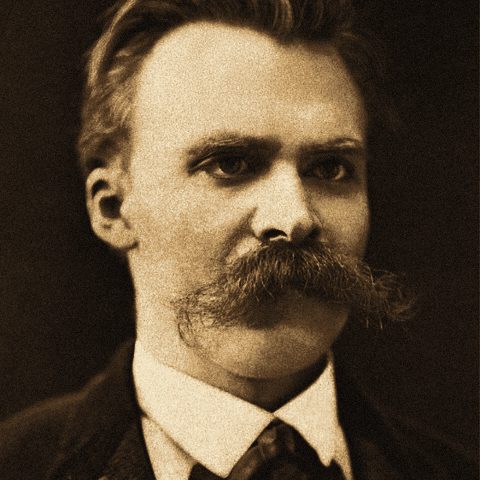
Friedrich Wilhelm Nietzsche
1844 Röcken – 1900 Weimar · German philosopher
Friedrich Wilhelm Nietzsche was a German philosopher and writer who started his career as a classical philologist and turned to philosophy early in his academic career. In 1869, at age 24, he was appointed Professor of Classical Philology at the University of Basel.
- 1844Born, Röcken
- 1872The Birth of Tragedy
- 1878Human, All Too Human
- 1881The Dawn of Day
- 1882The Joyful Wisdom
- 1885Thus Spake Zarathustra
- 1908Ecce Homo
More by Friedrich Wilhelm Nietzsche
Keep going with Nietzsche


Start with “The Three Metamorphoses”
2 chapters free right now — no account. Your place follows you to iPhone and Android.