

2 chapters freeNo account needed.
Opens “Sections 1–8” in the player · no sign-up needed
--Let us look each other in the face.
The Antichrist is a book by the philosopher Friedrich Nietzsche, originally published in 1895.
Inside the book
- Free nowno account · 2 chapters
- —Introduction36 min
- 2Sections 1–810 min
- Premium14 chapters · every book, 7 days free
- 3Sections 9–1411 min
- 4Sections 15–2012 min
- 5Sections 21–2410 min
- 6Sections 25–2711 min
- 7Sections 28–3212 min
- 8Sections 33–3811 min
- 9Sections 39–4211 min
- 10Sections 43–4513 min
- 11Sections 46–4910 min
- 12Sections 50–5210 min
- 13Sections 53–5511 min
- 14Sections 56–5710 min
- 15Sections 58–6010 min
- 16Sections 61–626 min
The opening
Sections 1–8
--Let us look each other in the face. We are Hyperboreans—we know well enough how remote our place is. "Neither by land nor by water will you find the road to the Hyperboreans": even Pindar, in his day, knew that much about us. Beyond the North, beyond the ice, beyond death—our life, our happiness... We have discovered that happiness; we know the way; we got our knowledge of it from thousands of years in the labyrinth. Who else has found it?—The man of today?—"I don't know either the way out or the way in; I am whatever doesn't know either the way out or the way in"—so sighs the man of today... This is the sort of modernity that made us ill,—we sickened on lazy peace, cowardly compromise, the whole virtuous dirtiness of the modern Yea and Nay. This tolerance and largeur of the heart that "forgives" everything because it "understands" everything is a sirocco to us. Rather live amid the ice than among modern virtues and other such south-winds!... We were brave enough; we spared neither ourselves nor others; but we were a long time finding out where to direct our courage. We grew dismal; they called us fatalists. Our fate—it was the fulness, the tension, the storing up of powers. We thirsted for the lightnings and great deeds; we kept as far as possible from the happiness of the weakling, from "resignation"... There was thunder in our air; nature, as we embodied it, became overcast—for we had not yet found the way. The formula of our happiness: a Yea, a Nay, a straight line, a goal...
Cf. the tenth Pythian ode. See also the fourth book of Herodotus. The Hyperboreans were a mythical people beyond the Rhipaean mountains, in the far North. They enjoyed unbroken happiness and perpetual youth.
What is good?—Whatever augments the feeling of power, the will to power, power itself, in man.
What is evil?—Whatever springs from weakness.
What is happiness?—The feeling that power increases—that resistance is overcome.
Not contentment, but more power; not peace at any price, but war; not virtue, but efficiency (virtue in the Renaissance sense, virtu, virtue free of moral acid).
The weak and the botched shall perish: first principle of our charity. And one should help them to it.
What is more harmful than any vice?—Practical sympathy for the botched and the weak—Christianity...
The problem that I set here is not what shall replace mankind in the order of living creatures (--man is an end--): but what type of man must be bred, must be willed, as being the most valuable, the most worthy of life, the most secure guarantee of the future.
This more valuable type has appeared often enough in the past: but always as a happy accident, as an exception, never as deliberately willed. Very often it has been precisely the most feared; hitherto it has been almost the terror of terrors;—and out of that terror the contrary type has been willed, cultivated and attained: the domestic animal, the herd animal, the sick brute-man—the Christian...
Mankind surely does not represent an evolution toward a better or stronger or higher level, as progress is now understood. This "progress" is merely a modern idea, which is to say, a false idea. The European of today, in his essential worth, falls far below the European of the Renaissance; the process of evolution does not necessarily mean elevation, enhancement, strengthening.
True enough, it succeeds in isolated and individual cases in various parts of the earth and under the most widely different cultures, and in these cases a higher type certainly manifests itself; something which, compared to mankind in the mass, appears as a sort of superman. Such happy strokes of high success have always been possible, and will remain possible, perhaps, for all time to come. Even whole races, tribes and nations may occasionally represent such lucky accidents.
We should not deck out and embellish Christianity: it has waged a war to the death against this higher type of man, it has put all the deepest instincts of this type under its ban, it has developed its concept of evil, of the Evil One himself, out of these instincts—the strong man as the typical reprobate, the "outcast among men." Christianity has taken the part of all the weak, the low, the botched; it has made an ideal out of antagonism to all the self-preservative instincts of sound life; it has corrupted even the faculties of those natures that are intellectually most vigorous, by representing the highest intellectual values as sinful, as misleading, as full of temptation. The most lamentable example: the corruption of Pascal, who believed that his intellect had been destroyed by original sin, whereas it was actually destroyed by Christianity!--
It is a painful and tragic spectacle that rises before me: I have drawn back the curtain from the rottenness of man. This word, in my mouth, is at least free from one suspicion: that it involves a moral accusation against humanity. It is used—and I wish to emphasize the fact again—without any moral significance: and this is so far true that the rottenness I speak of is most apparent to me precisely in those quarters where there has been most aspiration, hitherto, toward "virtue" and "godliness." As you probably surmise, I understand rottenness in the sense of décadence: my argument is that all the values on which mankind now fixes its highest aspirations are décadence-values.
I call an animal, a species, an individual corrupt, when it loses its instincts, when it chooses, when it prefers, what is injurious to it. A history of the "higher feelings," the "ideals of humanity"—and it is possible that I'll have to write it—would almost explain why man is so degenerate. Life itself appears to me as an instinct for growth, for survival, for the accumulation of forces, for power: whenever the will to power fails there is disaster. My contention is that all the highest values of humanity have been emptied of this will—that the values of décadence, of nihilism, now prevail under the holiest names.
Christianity is called the religion of pity.—Pity stands in opposition to all the tonic passions that augment the energy of the feeling of aliveness: it is a depressant. A man loses power when he pities. Through pity that drain upon strength which suffering works is multiplied a thousandfold. Suffering is made contagious by pity; under certain circumstances it may lead to a total sacrifice of life and living energy—a loss out of all proportion to the magnitude of the cause (--the case of the death of the Nazarene). This is the first view of it; there is, however, a still more important one. If one measures the effects of pity by the gravity of the reactions it sets up, its character as a menace to life appears in a much clearer light. Pity thwarts the whole law of evolution, which is the law of natural selection. It preserves whatever is ripe for destruction; it fights on the side of those disinherited and condemned by life; by maintaining life in so many of the botched of all kinds, it gives life itself a gloomy and dubious aspect.
Mankind has ventured to call pity a virtue (--in every superior moral system it appears as a weakness--); going still further, it has been called the virtue, the source and foundation of all other virtues—but let us always bear in mind that this was from the standpoint of a philosophy that was nihilistic, and upon whose shield the denial of life was inscribed. Schopenhauer was right in this: that by means of pity life is denied, and made worthy of denial—pity is the technic of nihilism. Let me repeat: this depressing and contagious instinct stands against all those instincts which work for the preservation and enhancement of life: in the rôle of protector of the miserable, it is a prime agent in the promotion of décadence—pity persuades to extinction... Of course, one doesn't say "extinction": one says "the other world," or "God," or "the true life," or Nirvana, salvation, blessedness... This innocent rhetoric, from the realm of religious-ethical balderdash, appears a good deal less innocent when one reflects upon the tendency that it conceals beneath sublime words: the tendency to destroy life. Schopenhauer was hostile to life: that is why pity appeared to him as a virtue...
Aristotle, as every one knows, saw in pity a sickly and dangerous state of mind, the remedy for which was an occasional purgative: he regarded tragedy as that purgative. The instinct of life should prompt us to seek some means of puncturing any such pathological and dangerous accumulation of pity as that appearing in Schopenhauer's case (and also, alack, in that of our whole literary décadence, from St. Petersburg to Paris, from Tolstoi to Wagner), that it may burst and be discharged... Nothing is more unhealthy, amid all our unhealthy modernism, than Christian pity. To be the doctors here, to be unmerciful here, to wield the knife here—all this is our business, all this is our sort of humanity, by this sign we are philosophers, we Hyperboreans!--
It is necessary to say just whom we regard as our antagonists: theologians and all who have any theological blood in their veins—this is our whole philosophy... One must have faced that menace at close hand, better still, one must have had experience of it directly and almost succumbed to it, to realize that it is not to be taken lightly (--the alleged free-thinking of our naturalists and physiologists seems to me to be a joke—they have no passion about such things; they have not suffered--). This poisoning goes a great deal further than most people think: I find the arrogant habit of the theologian among all who regard themselves as "idealists"—among all who, by virtue of a higher point of departure, claim a right to rise above reality, and to look upon it with suspicion... The idealist, like the ecclesiastic, carries all sorts of lofty concepts in his hand (--and not only in his hand!); he launches them with benevolent contempt against "understanding," "the senses," "honor," "good living," "science"; he sees such things as beneath him, as pernicious and seductive forces, on which "the soul" soars as a pure thing-in-itself—as if humility, chastity, poverty, in a word, holiness, had not already done much more damage to life than all imaginable horrors and vices... The pure soul is a pure lie... So long as the priest, that professional denier, calumniator and poisoner of life, is accepted as a higher variety of man, there can be no answer to the question, What is truth? Truth has already been stood on its head when the obvious attorney of mere emptiness is mistaken for its representative...
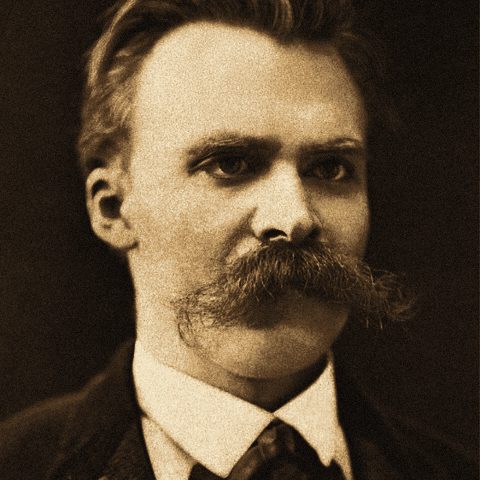
About the author
Friedrich Wilhelm Nietzsche
1844 Röcken – 1900 Weimar · German philosopher
Friedrich Wilhelm Nietzsche was a German philosopher and writer who started his career as a classical philologist and turned to philosophy early in his academic career. In 1869, at age 24, he was appointed Professor of Classical Philology at the University of Basel.
- 1844Born, Röcken
- 1872The Birth of Tragedy
- 1878Human, All Too Human
- 1881The Dawn of Day
- 1882The Joyful Wisdom
- 1895The Antichrist
- 1908Ecce Homo
More by Friedrich Wilhelm Nietzsche
Keep going with Nietzsche


If you like The Antichrist
More like this


Start with “Sections 1–8”
2 chapters free right now — no account. Your place follows you to iPhone and Android.