

2 chapters freeNo account needed.
Opens “The chief and universal characteristic of the Greek...” in the player · no sign-up needed
The work establishes the boundaries between painting and poetry as distinct artistic forms.
Inside the book
- Free nowno account · 2 chapters
- —Introduction7 min
- 1The chief and universal characteristic of the Greek...8 min
- Premium29 chapters · every book, 7 days free
- 2Be it truth or fable that Love made the first attemp...9 min
- 3But, as already observed, the realm of art has in mo...5 min
- 4A review of the reasons here alleged for the moderat...18 min
- 5Some critics of antiquity argue that the Laocoon, th...11 min
- 6My supposition that the artists imitated the poet is...8 min
- 7When we speak of an artist as imitating a poet or a...6 min
- 8Spence has the strangest notions of the resemblance...8 min
- 9When we compare poet and painter in particular insta...5 min
- 10Spence's surprise is again aroused in a way that sho...4 min
- 11Count Caylus also seems to require that the poet sho...7 min
- 12Homer treats of two different classes of beings and...7 min
- 13If Homer's works were completely destroyed, and noth...4 min
- 14If it, then, be true that a poem not in itself pictu...2 min
- 15Experience shows that the poet can produce this degr...2 min
- 16But I will try to prove my conclusions by starting f...10 min
- 17But, it may be urged, the signs employed in poetry n...10 min
- 18And shall Homer nevertheless have fallen into those...11 min
- 19The objections brought against Homer's shield by the...9 min
- 20To return, then, to my road, if a saunterer can be s...10 min
- 21But are we not robbing poetry of too much by taking...5 min
- 22Zeuxis painted a Helen, and had the courage to write...9 min
- 23A single incongruous part may destroy the harmonious...7 min
- 24Such is the use which the poet makes of ugliness of...6 min
- 25The second distinction mentioned by the critic just...12 min
- 26Winkelmann's "History of Ancient Art" has appeared...12 min
- 27A little item first brought to my notice by Winkelma...6 min
- 28Next to his judgment of the Laocoon, I was curious t...5 min
- 30Chapter 29, part 153 min
- 31Chapter 29, part 257 min
The opening
The chief and universal characteristic of the Greek...
The chief and universal characteristic of the Greek masterpieces in painting and sculpture consists, according to Winkelmann, in a noble simplicity and quiet grandeur, both of attitude and expression. "As the depths of the sea," he says, "remain always at rest, however the surface may be agitated, so the expression in the figures of the Greeks reveals in the midst of passion a great and steadfast soul."
"Such a soul is depicted in the countenance of the Laocoon, under sufferings the most intense. Nor is it depicted in the countenance only: the agony betrayed in every nerve and muscle,—we almost fancy we could detect it in the painful contraction of the abdomen alone, without looking at the face and other parts of the body,—this agony, I say, is yet expressed with no violence in the face and attitude. He raises no terrible cry, as Virgil sings of his Laocoon. This would not be possible, from the opening of the mouth, which denotes rather an anxious and oppressed sigh, as described by Sadolet. Bodily anguish and moral greatness are diffused in equal measure through the whole structure of the figure; being, as it were, balanced against each other. Laocoon suffers, but he suffers like the Philoctetes of Sophocles. His sufferings pierce us to the soul, but we are tempted to envy the great man his power of endurance."
"To express so noble a soul far outruns the constructive art of natural beauty. The artist must have felt within himself the mental greatness which he has impressed upon his marble. Greece united in one person artist and philosopher, and had more than one Metrodorus. Wisdom joined hands with art and inspired its figures with more than ordinary souls."
The remark which lies at the root of this criticism—that suffering is not expressed in the countenance of Laocoon with the intensity which its violence would lead us to expect—is perfectly just. That this very point, where a shallow observer would judge the artist to have fallen short of nature and not to have attained the true pathos of suffering, furnishes the clearest proof of his wisdom, is also unquestionable. But in the reason which Winkelmann assigns for this wisdom, and the universality of the rule which he deduces from it, I venture to differ from him.
His depreciatory allusion to Virgil was, I confess, the first thing that aroused my doubts, and the second was his comparison of Laocoon with Philoctetes. Using these as my starting-points, I shall proceed to write down my thoughts in the order in which they have occurred to me.
"Laocoon suffers like the Philoctetes of Sophocles." How does Philoctetes suffer? Strange that his sufferings have left such different impressions upon our minds. The complaints, the screams, the wild imprecations with which his pain filled the camp, interrupting the sacrifices and all offices of religion, resounded not less terribly through the desert island to which they had been the cause of his banishment. Nor did the poet hesitate to make the theatre ring with the imitation of these tones of rage, pain, and despair.
The third act of this play has been regarded as much shorter than the others. A proof, say the critics, that the ancients attached little importance to the equal length of the acts. I agree with their conclusion, but should choose some other example in support of it. The cries of pain, the moans, the broken exclamations, ἆ, ἆ! φεῦ! ἀτταταῖ! ὢ μοὶ, μοί! the παπαῖ, παπαῖ! filling whole lines, of which this act is made up, would naturally require to be prolonged in the delivery and interrupted by more frequent pauses than a connected discourse. In the representation, therefore, this third act must have occupied about as much time as the others. It seems shorter on paper to the reader than it did to the spectator in the theatre.
A cry is the natural expression of bodily pain. Homer's wounded heroes not infrequently fall with a cry to the ground. Venus screams aloud at a scratch, not as being the tender goddess of love, but because suffering nature will have its rights. Even the iron Mars, on feeling the lance of Diomedes, bellows as frightfully as if ten thousand raging warriors were roaring at once, and fills both armies with terror.
High as Homer exalts his heroes in other respects above human nature, they yet remain true to it in their sensitiveness to pain and injuries and in the expression of their feelings by cries or tears or revilings. Judged by their deeds they are creatures of a higher order; in their feelings they are genuine human beings.
We finer Europeans of a wiser posterity have, I know, more control over our lips and eyes. Courtesy and decency forbid cries and tears. We have exchanged the active bravery of the first rude ages for a passive courage. Yet even our ancestors were greater in the latter than the former. But our ancestors were barbarians. To stifle all signs of pain, to meet the stroke of death with unaverted eye, to die laughing under the adder's sting, to weep neither over our own sins nor at the loss of the dearest of friends, are traits of the old northern heroism. The law given by Palnatoko to the Jomsburghers was to fear nothing, nor even to name the word fear.
Not so the Greek. He felt and feared. He expressed his pain and his grief. He was ashamed of no human weakness, yet allowed none to hold him back from the pursuit of honor or the performance of a duty. Principle wrought in him what savageness and hardness developed in the barbarian. Greek heroism was like the spark hidden in the pebble, which sleeps till roused by some outward force, and takes from the stone neither clearness nor coldness. The heroism of the barbarian was a bright, devouring flame, ever raging, and blackening, if not consuming, every other good quality.
When Homer makes the Trojans advance to battle with wild cries, while the Greeks march in resolute silence, the commentators very justly observe that the poet means by this distinction to characterize the one as an army of barbarians, the other of civilized men. I am surprised they have not perceived a similar characteristic difference in another passage.
The opposing armies have agreed upon an armistice, and are occupied, not without hot tears on both sides (δάκρυα θερμὰ χέοντες), with the burning of their dead. But Priam forbids his Trojans to weep (οὐδ' εἴα κλαίειν Πρίαμος μέγας), "and for this reason," says Madame Dacier; "he feared they might become too tender-hearted, and return with less spirit to the morrow's fight." Good; but I would ask why Priam alone should apprehend this. Why does not Agamemnon issue the same command to his Greeks? The poet has a deeper meaning. He would show us that only the civilized Greek can weep and yet be brave, while the uncivilized Trojan, to be brave, must stifle all humanity. I am in no wise ashamed to weep (Νεμεσσῶμαί γε μὲν οὐδὲν κλαίειν), he elsewhere makes the prudent son of wise Nestor say.
It is worthy of notice that, among the few tragedies which have come down to us from antiquity, there should be two in which bodily pain constitutes not the least part of the hero's misfortunes. Besides Philoctetes we have the dying Hercules, whom also Sophocles represents as wailing, moaning, weeping, and screaming. Thanks to our well-mannered neighbors, those masters of propriety, a whimpering Philoctetes or a screaming Hercules would now be ridiculous and not tolerated upon the stage. One of their latest poets, indeed, has ventured upon a Philoctetes, but he seems not to have dared to show him in his true character.
Among the lost works of Sophocles was a Laocoon. If fate had but spared it to us! From the slight references to the piece in some of the old grammarians, we cannot determine how the poet treated his subject. Of one thing I am convinced,—that he would not have made his Laocoon more of a Stoic than Philoctetes and Hercules. Every thing stoical is untheatrical. Our sympathy is always proportionate with the suffering expressed by the object of our interest. If we behold him bearing his misery with magnanimity, our admiration is excited; but admiration is a cold sentiment, wherein barren wonder excludes not only every warmer emotion, but all vivid personal conception of the suffering.
I come now to my conclusion. If it be true that a cry, as an expression of bodily pain, is not inconsistent with nobility of soul, especially according to the views of the ancient Greeks, then the desire to represent such a soul cannot be the reason why the artist has refused to imitate this cry in his marble. He must have had some other reason for deviating in this respect from his rival, the poet, who expresses it with deliberate intention.
About the author
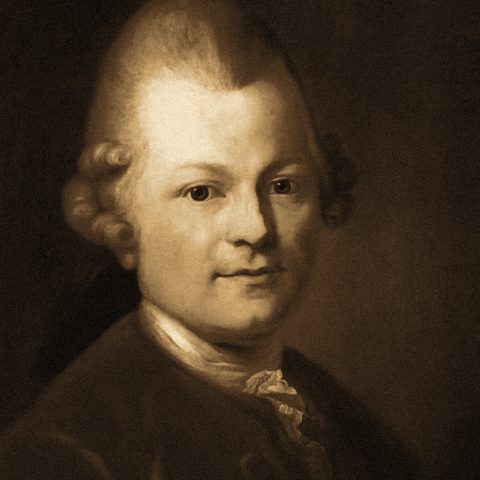
Gotthold Ephraim Lessing
1729 Kamenz – 1781 Brunswick · German writer, philosopher, publicist, and art critic
Gotthold Ephraim Lessing was a German philosopher, dramatist, publicist and art critic. He was a representative of the Enlightenment.
If you like Laocoon
More like this


Start with “The chief and universal characteristic of the Greek...”
2 chapters free right now — no account. Your place follows you to iPhone and Android.