

Chapter 1 freeNo account needed.
Opens “Advertisement” in the player · no sign-up needed
The Works of Edmund Burke, Volume 3 collects writings from 1785 to 1790 by the Irish-born British statesman and political thinker.
Inside the book
- Free nowno account · 1 chapter
- 1Advertisement11 min
- Premium9 chapters · every book, 7 days free
- 3Clauses of Mr Pitt's Bill2 min
- 4Nabob of Arcot's Debts57 min
- 5Clauses H52 min
- 6Sixth Article17 min
- 7In the Nabob's Own Hand20 min
- 8Speech27 min
- 9Intended to Have Been Sent to A Gentleman in Paris1 min
- 10The Revolution In FranceIn 10 parts · Part 1 · 50:20 + Part 2 · 51:15 + Part 3 · 50:45 + Part 4 · 50:49 + Part 5 · 50:32 + Part 6 · 50:22 + Part 7 · 51:08 + Part 8 · 51:33 + Part 9 · 51:22 + Part 10 · 53:548 h 32 m
The opening
Advertisement
That the least informed reader of this speech may be enabled to enter fully into the spirit of the transaction on occasion of which it was delivered, it may be proper to acquaint him, that, among the princes dependent on this nation in the southern part of India, the most considerable at present is commonly known by the title of the Nabob of Arcot.
This prince owed the establishment of his government, against the claims of his elder brother, as well as those of other competitors, to the arms and influence of the British East India Company. Being thus established in a considerable part of the dominions he now possesses, he began, about the year 1765, to form, at the instigation (as he asserts) of the servants of the East India Company, a variety of designs for the further extension of his territories. Some years after, he carried his views to certain objects of interior arrangement, of a very pernicious nature. None of these designs could be compassed without the aid of the Company's arms; nor could those arms be employed consistently with an obedience to the Company's orders. He was therefore advised to form a more secret, but an equally powerful, interest among the servants of that Company, and among others both at home and abroad. By engaging them in his interests, the use of the Company's power might be obtained without their ostensible authority; the power might even be employed in defiance of the authority, if the case should require, as in truth it often did require, a proceeding of that degree of boldness.
The Company had put him into possession of several great cities and magnificent castles. The good order of his affairs, his sense of personal dignity, his ideas of Oriental splendor, and the habits of an Asiatic life, (to which, being a native of India, and a Mahometan, he had from his infancy been inured,) would naturally have led him to fix the seat of his government within his own dominions. Instead of this, he totally sequestered himself from his country, and, abandoning all appearance of state, he took up his residence in an ordinary house, which he purchased in the suburbs of the Company's factory at Madras. In that place he has lived, without removing one day from thence, for several years past. He has there continued a constant cabal with the Company's servants, from the highest to the lowest,—creating, out of the ruins of the country, brilliant fortunes for those who will, and entirely destroying those who will not, be subservient to his purposes.
An opinion prevailed, strongly confirmed by several passages in his own letters, as well as by a combination of circumstances forming a body of evidence which cannot be resisted, that very great sums have been by him distributed, through a long course of years, to some of the Company's servants. Besides these presumed payments in ready money, (of which, from the nature of the thing, the direct proof is very difficult,) debts have at several periods been acknowledged to those gentlemen, to an immense amount,—that is, to some millions of sterling money. There is strong reason to suspect that the body of these debts is wholly fictitious, and was never created by money bonâ fide lent. But even on a supposition that this vast sum was really advanced, it was impossible that the very reality of such an astonishing transaction should not cause some degree of alarm and incite to some sort of inquiry.
It was not at all seemly, at a moment when the Company itself was so distressed as to require a suspension, by act of Parliament, of the payment of bills drawn on them from India,—and also a direct tax upon every house in England, in order to facilitate the vent of their goods, and to avoid instant insolvency,—at that very moment, that their servants should appear in so flourishing a condition, as, besides ten millions of other demands on their masters, to be entitled to claim a debt of three or four millions more from the territorial revenue of one of their dependent princes.
The ostensible pecuniary transactions of the Nabob of Arcot with very private persons are so enormous, that they evidently set aside every pretence of policy which might induce a prudent government in some instances to wink at ordinary loose practice in ill-managed departments. No caution could be too great in handling this matter, no scrutiny too exact. It was evidently the interest, and as evidently at least in the power, of the creditors, by admitting secret participation in this dark and undefined concern, to spread corruption to the greatest and the most alarming extent.
These facts relative to the debts were so notorious, the opinion of their being a principal source of the disorders of the British government in India was so undisputed and universal, that there was no party, no description of men in Parliament, who did not think themselves bound, if not in honor and conscience, at least in common decency, to institute a vigorous inquiry into the very bottom of the business, before they admitted any part of that vast and suspicious charge to be laid upon an exhausted country. Every plan concurred in directing such an inquiry, in order that whatever was discovered to be corrupt, fraudulent, or oppressive should lead to a due animadversion on the offenders, and, if anything fair and equitable in its origin should be found, (nobody suspected that much, comparatively speaking, would be so found,) it might be provided for,—in due subordination, however, to the ease of the subject and the service of the state.
These were the alleged grounds for an inquiry, settled in all the bills brought into Parliament relative to India,—and there were, I think, no less than four of them. By the bill commonly called Mr. Pitt's bill, the inquiry was specially, and by express words, committed to the Court of Directors, without any reserve for the interference of any other person or persons whatsoever. It was ordered that they should make the inquiry into the origin and justice of these debts, as far as the materials in their possession enabled them to proceed; and where they found those materials deficient, they should order the Presidency of Fort St. George (Madras) to complete the inquiry.
The Court of Directors applied themselves to the execution of the trust reposed in them. They first examined into the amount of the debt, which they computed, at compound interest, to be 2,945,600_l._ sterling. Whether their mode of computation, either of the original sums or the amount on compound interest, was exact, that is, whether they took the interest too high or the several capitals too low, is not material. On whatever principle any of the calculations were made up, none of them found the debt to differ from the recital of the act, which asserted that the sums claimed were "very large." The last head of these debts the Directors compute at 2,465,680_l._ sterling. Of the existence of this debt the Directors heard nothing until 1776, and they say, that, "although they had repeatedly written to the Nabob of Arcot, and to their servants, respecting the debt, yet they had never been able to trace the origin thereof, or to obtain any satisfactory information on the subject."
The Court of Directors, after stating the circumstances under which the debts appeared to them to have been contracted, add as follows:—"For these reasons we should have thought it our duty to inquire very minutely into those debts, even if the act of Parliament had been silent on the subject, before we concurred in any measure for their payment. But with the positive injunctions of the act before us to examine into their nature and origin, we are indispensably bound to direct such an inquiry to be instituted." They then order the President and Council of Madras to enter into a full examination, &c., &c.
The Directors, having drawn up their order to the Presidency on these principles, communicated the draught of the general letter in which those orders were contained to the board of his Majesty's ministers, and other servants lately constituted by Mr. Pitt's East India Act. These ministers, who had just carried through Parliament the bill ordering a specific inquiry, immediately drew up another letter, on a principle directly opposite to that which was prescribed by the act of Parliament and followed by the Directors. In these second orders, all idea of an inquiry into the justice and origin of the pretended debts, particularly of the last, the greatest, and the most obnoxious to suspicion, is abandoned. They are all admitted and established without any investigation whatsoever, (except some private conference with the agents of the claimants is to pass for an investigation,) and a fund for their discharge is assigned and set apart out of the revenues of the Carnatic. To this arrangement in favor of their servants, servants suspected of corruption and convicted of disobedience, the Directors of the East India Company were ordered to set their hands, asserting it to arise from their own conviction and opinion, in flat contradiction to their recorded sentiments, their strong remonstrance, and their declared sense of their duty, as well under their general trust and their oath as Directors, as under the express injunctions of an act of Parliament.
The principles upon which this summary proceeding was adopted by the ministerial board are stated by themselves in a number in the appendix to this speech.
By another section of the same act, the same Court of Directors were ordered to take into consideration and to decide on the indeterminate rights of the Rajah of Tanjore and the Nabob of Arcot; and in this, as in the former case, no power of appeal, revision, or alteration was reserved to any other. It was a jurisdiction, in a cause between party and party, given to the Court of Directors specifically. It was known that the territories of the former of these princes had been twice invaded and pillaged, and the prince deposed and imprisoned, by the Company's servants, influenced by the intrigues of the latter, and for the purpose of paying his pretended debts. The Company had, in the year 1775, ordered a restoration of the Rajah to his government, under certain conditions. The Rajah complained, that his territories had not been completely restored to him, and that no part of his goods, money, revenues, or records, unjustly taken and withheld from him, were ever returned. The Nabob, on the other hand, never ceased to claim the country itself, and carried on a continued train of negotiation, that it should again be given up to him, in violation of the Company's public faith.
The Directors, in obedience to this part of the act, ordered an inquiry, and came to a determination to restore certain of his territories to the Rajah. The ministers, proceeding as in the former case, without hearing any party, rescinded the decision of the Directors, refused the restitution of the territory, and, without regard to the condition of the country of Tanjore, which had been within a few years four times plundered, (twice by the Nabob of Arcot, and twice by enemies brought upon it solely by the politics of the same Nabob, the declared enemy of that people,) and without discounting a shilling for their sufferings, they accumulate an arrear of about four hundred thousand pounds of pretended tribute to this enemy; and then they order the Directors to put their hands to a new adjudication, directly contrary to a judgment in a judicial character and trust solemnly given by them and entered on their records.
These proceedings naturally called for some inquiry. On the 28th of February, 1785, Mr. Fox made the following motion in the House of Commons, after moving that the clauses of the act should be read:—"That the proper officer do lay before this House copies or extracts of all letters and orders of the Court of Directors of the United East India Company, in pursuance of the injunctions contained in the 37th and 38th clauses of the said act"; and the question being put, it passed in the negative by a very great majority.
The last speech in the debate was the following; which is given to the public, not as being more worthy of its attention than others, (some of which were of consummate ability,) but as entering more into the detail of the subject.
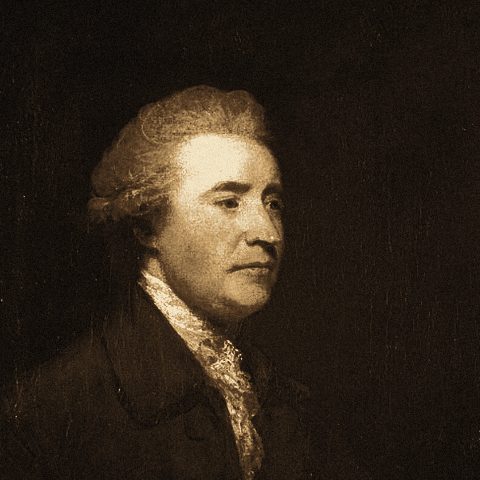
About the author
Edmund Burke
1729 Dublin – 1797 Beaconsfield · Anglo-Irish statesman, political theorist and conservative philosopher
Edmund Burke was an Anglo-Irish writer, philosopher, and politician who is widely credited as the founder of the cultural and political philosophy of conservatism.
If you like The Works of Edmund Burke, Volume 3
More like this


Start with “Advertisement”
First chapter free right now — no account. Your place follows you to iPhone and Android.