

2 chapters freeNo account needed.
Opens “Nature and her Laws” in the player · no sign-up needed
The work is notable for making an early case for atheism and ethical naturalism.
Inside the book
- Free nowno account · 2 chapters
- —Introduction14 min
- 1Nature and her Laws22 min
- Premium20 chapters · every book, 7 days free
- 2Of Motion, and its Origin32 min
- 3Of Matter.—Of its various Combinations.—Of its diver...15 min
- 4Laws of Motion, common to every Being of Nature.—Att...26 min
- 5Order and Confusion.—Intelligence.—Chance26 min
- 6Moral and Physical Distinctions of Man.—His Origin33 min
- 7The Soul and the Spiritual System27 min
- 8The Intellectual Faculties derived from the Faculty...27 min
- 10Chapter 9, part 135 min
- 11Chapter 9, part 235 min
- 10The Soul does not derive its ideas from itself—It ha...53 min
- 13Chapter 11, part 131 min
- 14Chapter 11, part 232 min
- 15Chapter 12, part 130 min
- 16Chapter 12, part 231 min
- 17Chapter 13, part 129 min
- 18Chapter 13, part 231 min
- 14Education, Morals, and the Laws suffice to restrain...37 min
- 15Of Man's true Interest, or of the Ideas he forms to...43 min
- 16The Errors of Man,—upon what constitutes Happiness.—...35 min
- 17Those Ideas which are true, or founded upon Nature...28 min
The opening
Nature and her Laws
Nature and her Laws.
Man has always deceived himself when he abandoned experience to follow imaginary systems.—He is the work of nature.—He exists in Nature.—He is submitted to the laws of Nature.—He cannot deliver himself from them:—cannot step beyond them even in thought. It is in vain his mind would spring forward beyond the visible world: direful and imperious necessity ever compels his return—being formed by Nature, he is circumscribed by her laws; there exists nothing beyond the great whole of which he forms a part, of which he experiences the influence. The beings his fancy pictures as above nature, or distinguished from her, are always chimeras formed after that which he has already seen, but of which it is utterly impossible he should ever form any finished idea, either as to the place they occupy, or their manner of acting—for him there is not, there can be nothing out of that Nature which includes all beings.
Therefore, instead of seeking out of the world he inhabits for beings who can procure him a happiness denied to him by Nature, let him study this Nature, learn her laws, contemplate her energies, observe the immutable rules by which she acts.—Let him apply these discoveries to his own felicity, and submit in silence to her precepts, which nothing can alter.—Let him cheerfully consent to be ignorant of causes hid from him under the most impenetrable veil.—Let him yield to the decrees of a universal power, which can never be brought within his comprehension, nor ever emancipate him from those laws imposed on him by his essence.
The distinction which has been so often made between the physical and the moral being, is evidently an abuse of terms. Man is a being purely physical: the moral man is nothing more than this physical being considered under a certain point of view; that is to say, with relation to some of his modes of action, arising out of his individual organization. But is not this organization itself the work of Nature? The motion or impulse to action, of which he is susceptible, is that not physical? His visible actions, as well as the invisible motion interiorly excited by his will or his thoughts, are equally the natural effects, the necessary consequences, of his peculiar construction, and the impulse he receives from those beings by whom he is always surrounded. All that the human mind has successively invented, with a view to change or perfect his being, to render himself happy, was never more than the necessary consequence of man's peculiar essence, and that of the beings who act upon him. The object of all his institutions, all his reflections, all his knowledge, is only to procure that happiness toward which he is continually impelled by the peculiarity of his nature. All that he does, all that he thinks, all that he is, all that he will be, is nothing more than what Universal Nature has made him. His ideas, his actions, his will, are the necessary effects of those properties infused into him by Nature, and of those circumstances in which she has placed him. In short, art is nothing but Nature acting with the tools she has furnished.
Nature sends man naked and destitute into this world which is to be his abode: he quickly learns to cover his nakedness—to shelter himself from the inclemencies of the weather, first with artlessly constructed huts, and the skins of the beasts of the forest; by degrees he mends their appearance, renders them more convenient: he establishes manufactories to supply his immediate wants; he digs clay, gold, and other fossils from the bowels of the earth; converts them into bricks for his house, into vessels for his use, gradually improves their shape, and augments their beauty. To a being exalted above our terrestrial globe, man would not appear less subjected to the laws of Nature when naked in the forest painfully seeking his sustenance, than when living in civilized society surrounded with ease, or enriched with greater experience, plunged in luxury, where he every day invents a thousand new wants and discovers a thousand new modes of supplying them. All the steps taken by man to regulate his existence, ought only to be considered as a long succession of causes and effects, which are nothing more than the development of the first impulse given him by nature.
The same animal, by virtue of his organization, passes successively from the most simple to the most complicated wants; it is nevertheless the consequence of his nature. The butterfly whose beauty we admire, whose colours are so rich, whose appearance is so brilliant, commences as an inanimate unattractive egg; from this, heat produces a worm, this becomes a chrysalis, then changes into that beautiful insect adorned with the most vivid tints: arrived at this stage he reproduces, he generates; at last despoiled of his ornaments, he is obliged to disappear, having fulfilled the task imposed on him by Nature, having performed the circle of transformation marked out for beings of his order.
The same course, the same change takes place in the vegetable world. It is by a series of combinations originally interwoven with the energies of the aloe, that this plant is insensibly regulated, gradually expanded, and at the end of a number of years produces those flowers which announce its dissolution.
It is equally so with man, who in all his motion, all the changes he undergoes, never acts but according to the laws peculiar to his organization, and to the matter of which he is composed.
The physical man, is he who acts by the causes our faculties make us understand.
The moral man, is he who acts by physical causes, with which our prejudices preclude us from becoming perfectly acquainted.
The wild man is a child destitute of experience, incapable of proceeding in his happiness, because he has not learnt how to oppose resistance to the impulses he receives from those beings by whom he is surrounded.
The civilized man, is he whom experience and sociality have enabled to draw from nature the means of his own happiness, because he has learned to oppose resistance to those impulses he receives from exterior beings, when experience has taught him they would be destructive to his welfare.
The enlightened man is man in his maturity, in his perfection; who is capable of advancing his own felicity, because he has learned to examine, to think for himself, and not to take that for truth upon the authority of others, which experience has taught him a critical disquisition will frequently prove erroneous.
The happy man is he who knows how to enjoy the benefits bestowed upon him by nature: in other words, he who thinks for himself; who is thankful for the good he possesses; who does not envy the welfare of others, nor sigh after imaginary benefits always beyond his grasp.
The unhappy man is he who is incapacitated to enjoy the benefits of nature; that is, he who suffers others to think for him; who neglects the absolute good he possesses, in a fruitless search after ideal benefits; who vainly sighs after that which ever eludes his pursuit.
It necessarily results, that man in his enquiry ought always to contemplate experience, and natural philosophy: These are what he should consult in his religion,—in his morals,—in his legislation,—in his political government,—in the arts,—in the sciences,—in his pleasures,—above all, in his misfortunes. Experience teaches that Nature acts by simple, regular, and invariable laws. It is by his senses, man is bound to this universal Nature; it is by his perception he must penetrate her secrets; it is from his senses he must draw experience of her laws. Therefore, whenever he neglects to acquire experience or quits its path, he stumbles into an abyss; his imagination leads him astray.
All the errors of man are physical: he never deceives himself but when he neglects to return back to nature, to consult her laws, to call practical knowledge to his aid. It is for want of practical knowledge he forms such imperfect ideas of matter, of its properties, of its combinations, of its power, of its mode of action, and of the energies which spring from its essence. Wanting this experience, the whole universe, to him, is but one vast scene of error. The most ordinary results appear to him the most astonishing phenomena; he wonders at every thing, understands nothing, and yields the guidance of his actions to those interested in betraying his interests. He is ignorant of Nature, and he has mistaken her laws; he has not contemplated the necessary routine which she has marked out for every thing she holds. Mistaken the laws of Nature, did I say? He has mistaken himself: the consequence is, that all his systems, all his conjectures, all his reasonings, from which he has banished experience, are nothing more than a tissue of errors, a long chain of inconsistencies.
Error is always prejudicial to man: it is by deceiving himself, the human race is plunged into misery. He neglected Nature; he did not comprehend her laws; he formed gods of the most preposterous and ridiculous kinds: these became the sole objects of his hope, and the creatures of his fear: he was unhappy, he trembled under these visionary deities; under the supposed influence of visionary beings created by himself; under the terror inspired by blocks of stone; by logs of wood; by flying fish; or the frowns of men, mortal as himself, whom his disturbed fancy had elevated above that Nature of which alone he is capable of forming any idea. His very posterity laughs at his folly, because experience has convinced them of the absurdity of his groundless fears—of his misplaced worship. Thus has passed away the ancient mythology, with all the trifling and nonsensical attributes attached to it by ignorance.
Not understanding that Nature, equal in her distributions, entirely destitute of malice, follows only necessary and immutable laws, when she either produces beings or destroys them, when she causes those to suffer, whose construction creates sensibility; when she scatters among them good and evil; when she subjects them to incessant change—he did not perceive it was in the breast of Nature herself, that it was in her exuberance he ought to seek to satisfy his deficiencies; for remedies against his pains; for the means of rendering himself happy: he expected to derive these benefits from fantastic beings, whom he supposed to be above Nature; whom he mistakingly imagined to be the authors of his pleasures, and the cause of his misfortunes. From hence it appears that to his ignorance of Nature, man owes the creation of those illusive powers; under which he has so long trembled with fear; that superstitious worship, which has been the source of all his misery, and the evils entailed upon posterity.
For want of clearly comprehending his own peculiar nature, his proper course, his wants, and his rights, man has fallen in society, from FREEDOM into SLAVERY. He had forgotten the purpose of his existence, or else he believed himself obliged to suppress the natural desires of his heart, to sacrifice his welfare to the caprice of chiefs, either elected by himself, or submitted to without examination. He was ignorant of the true policy of association—of the object of government; he disdained to listen to the voice of Nature, which loudly proclaimed the price of all submission to be protection and happiness: the end of all government is the benefit of the governed, not the exclusive advantage of the governors. He gave himself up without enquiry to men like himself, whom his prejudices induced him to contemplate as beings of a superior order, as Gods upon earth, they profited by his ignorance, took advantage of his prejudices, corrupted him, rendered him vicious, enslaved him, and made him miserable. Thus man, intended by Nature for the full enjoyment of liberty, to patiently search out her laws, to investigate her secrets, to cling to his experience; has, from a neglect of her salutary admonitions, from an inexcusable ignorance of his own peculiar essence, fallen into servility: has been wickedly governed.
Having mistaken himself, he has remained ignorant of the indispensable affinity that subsists between him, and the beings of his own species: having mistaken his duty to himself, it consequently follows, he has mistaken his duty to others. He made a calculation in error of what his happiness required; he did not perceive, what he owed to himself, the excesses he ought to avoid, the desires he ought to resist, the impulses he ought to follow, in order to consolidate his felicity, to promote his comfort, and to further his advantage. In short, he was ignorant of his true interests; hence his irregularities, his excesses, his shameful extravagance, with that long train of vices, to which he has abandoned himself, at the expense of his preservation, at the hazard of his permanent prosperity.
It is, therefore, ignorance of himself that has hindered man from enlightening his morals. The corrupt authorities to which he had submitted, felt an interest in obstructing the practice of his duties, even when he knew them. Time, with the influence of ignorance, aided by his corruption, gave them a strength not to be resisted by his enfeebled voice. His duties continued unperformed, and he fell into contempt both with himself and with others.
The ignorance of Man has endured so long, he has taken such slow, such irresolute steps to ameliorate his condition, only because he has neglected to study Nature, to scrutinize her laws, to search out her expedients, to discover her properties, that his sluggishness finds its account, in permitting himself to be guided by example, rather than to follow experience, which demands activity; to be led by routine, rather than by his reason, which enjoins reflection; to take that for truth upon the authority of others, which would require a diligent and patient investigation. From hence may be traced the hatred man betrays for every thing that deviates from those rules to which he has been accustomed; hence his stupid, his scrupulous respect for antiquity, for the most silly, the most absurd and ridiculous institutions of his fathers: hence those fears that seize him, when the most beneficial changes are proposed to him, or the most likely attempts are made to better his condition. He dreads to examine, because he has been taught to hold it irreverent of something immediately connected with his welfare; his credulity suffers him to believe the interested advice, and spurns at those who wish to show him the danger of the road he is travelling.
This is the reason why nations linger on in the most shameful lethargy, suffering under abuses handed down from century to century, trembling at the very idea of that which alone can repair their calamities.
It is for want of energy, for want of consulting experience, that medicine, natural philosophy, agriculture, painting, in fact, all the useful sciences, have so long remained under the fetters of authority, have progressed so little: those who profess these sciences, prefer treading the beaten paths, however imperfect, rather than strike out new ones,—they prefer the phrensy of their imagination, their voluntary conjectures, to that laboured experience which alone can extract her secrets from Nature.
Man, in short, whether from sloth or from terror, having abnegated the evidence of his senses, has been guided in all his actions, in all his enterprizes, by imagination, by enthusiasm, by habit, by preconceived opinions, but above all, by the influence of authority, which knew well how to deceive him, to turn his ignorance to esteem, his sloth to advantage. Thus imaginary, unsubstantial systems, have supplied the place of experience—of mature reflection—of reason. Man, petrified with his fears, intoxicated with the marvellous, stupified with sloth, surrendered his experience: guided by his credulity, he was unable to fall back upon it; he became consequently inexperienced; from thence he gave birth to the most ridiculous opinions, or else adopted all those vague chimeras, all those idle notions offered to him by men whose interest it was to continue him in that lamentable state of ignorance.
Thus the human race has continued so long in a state of infancy, because man has been inattentive to Nature; has neglected her ways, because he has disdained experience—because he has thrown by his reason—because he has been enraptured with the marvellous and the supernatural,—because he has unnecessarily TREMBLED. These are the reasons there is so much trouble in conducting him from this state of childhood to that of manhood. He has had nothing but the most trifling hypotheses, of which he has never dared to examine either the principles or the proofs, because he has been accustomed to hold them sacred, to consider them as the most perfect truths, and which he is not permitted to doubt, even for an instant. His ignorance made him credulous; his curiosity made him swallow the wonderful: time confirmed him in his opinions, and he passed his conjectures from race to race for realities; a tyrannical power maintained him in his notions, because by those alone could society be enslaved. It was in vain that some faint glimmerings of Nature occasionally attempted the recall of his reason—that slight corruscations of experience sometimes threw his darkness into light, the interest of the few was founded on his enthusiasm; their pre-eminence depended on his love of the marvellous; their very existence rested on the firmness of his ignorance; they consequently suffered no opportunity to escape, of smothering even the transient flame of intelligence. The many were thus first deceived into credulity, then forced into submission. At length the whole science of man became a confused mass of darkness, falsehood, and contradictions, with here and there a feeble ray of truth, furnished by that Nature, of which he can never entirely divest himself; because, without his perception, his necessities are continually bringing him back to her resources.
Let us then, if possible, raise ourselves above these clouds of prepossession! Let us quit the heavy atmosphere in which we are enucleated; let us in a more unsullied medium—in a more elastic current, contemplate the opinions of men, and observe their various systems. Let us learn to distrust a disordered conception; let us take that faithful monitor, experience, for our guide; let us consult Nature, examine her laws, dive into her stores; let us draw from herself, our ideas of the beings she contains; let us recover our senses, which interested error has taught us to suspect; let us consult that reason, which, for the vilest purposes has been so infamously calumniated, so cruelly dishonoured; let us examine with attention the visible world; let us try, if it will not enable us to form a supportable judgment of the invisible territory of the intellectual world: perhaps it may be found there has been no sufficient reason for distinguishing them—that it is not without motives, well worthy our enquiry, that two empires have been separated, which are equally the inheritance of nature.
The universe, that vast assemblage of every thing that exists, presents only matter and motion: the whole offers to our contemplation, nothing but an immense, an uninterrupted succession of causes and effects; some of these causes are known to us, because they either strike immediately on our senses, or have been brought under their cognizance, by the examination of long experience; others are unknown to us, because they act upon us by effects, frequently very remote from their primary cause. An immense variety of matter, combined under an infinity of forms, incessantly communicates, unceasingly receives a diversity of impulses. The different qualities of this matter, its innumerable combinations, its various methods of action, which are the necessary consequence of these associations, constitute for man what he calls the ESSENCE of beings: it is from these varied essences that spring the orders, the classes, or the systems, which these beings respectively possess, of which the sum total makes up that which is known by the term nature.
Nature, therefore, in its most significant meaning, is the great whole that results from the collection of matter, under its various combinations, with that contrariety of motion, which the universe presents to our view. Nature, in a less extended sense, or considered in each individual, is the whole that results from its essence; that is to say, the peculiar qualities, the combination, the impulse, and the various modes of action, by which it is discriminated from other beings. It is thus that MAN is, as a whole, or in his nature, the result of a certain combination of matter, endowed with peculiar properties, competent to give, capable of receiving, certain impulses, the arrangement of which is called organization; of which the essence is, to feel, to think, to act, to move, after a manner distinguished from other beings, with which he can be compared. Man, therefore, ranks in an order, in a system, in a class by himself, which differs from that of other animals, in whom we do not perceive those properties of which he is possessed. The different systems of beings, or if they will, their particular natures, depend on the general system of the great whole, or that Universal Nature, of which they form a part; to which every thing that exists is necessarily submitted and attached.
Having described the proper definition that should be applied to the word NATURE, I must advise the reader, once for all, that whenever in the course of this work the expression occurs, that "Nature produces such or such an effect," there is no intention of personifying that nature which is purely an abstract being; it merely indicates that the effect spoken of necessarily springs from the peculiar properties of those beings which compose the mighty macrocosm. When, therefore, it is said, Nature demands that man should pursue his own happiness, it is to prevent circumlocution—to avoid tautology; it is to be understood, that it is the property of a being that feels, that thinks, that acts, to labour to its own happiness; in short, that is called natural, which is conformable to the essence of things, or to the laws, which Nature prescribes to the beings she contains, in the different orders they occupy, under the various circumstances through which they are obliged to pass. Thus health is natural to man in a certain state; disease is natural to him under other circumstances; dissolution, or if they will, death, is a natural state for a body, deprived of some of those things, necessary to maintain the existence of the animal, &c. By ESSENCE is to be understood, that which constitutes a being, such as it is; the whole of the properties or qualities by which it acts as it does. Thus, when it is said, it is the essence of a stone to fall, it is the same as saying that its descent is the necessary effect of its gravity—of its density—of the cohesion of its parts—of the elements of which it is composed. In short, the essence of a being is its particular, its individual nature.
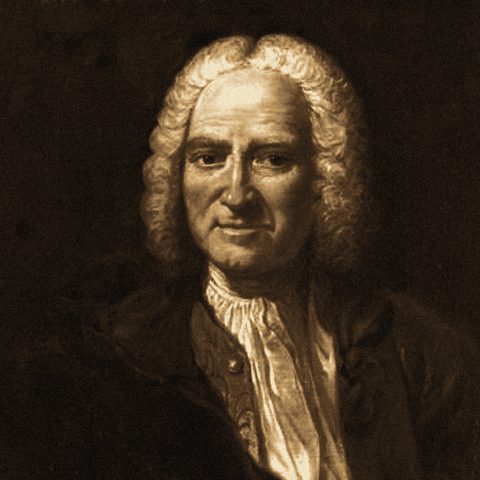
About the author
Paul Henri Thiry Holbach
1723 Edesheim – 1789 Paris · German-born French philosopher
Paul Thiry, Baron d'Holbach, known as d'Holbach, was a Franco-German philosopher, encyclopedist and writer, who was a prominent figure in the French Enlightenment. He was born in Edesheim, near Landau in the Rhenish Palatinate, but lived and worked mainly in Paris, where he kept a salon.
- 1723Born, Edesheim
- 1770The System of Nature, Volume 1
- 1789Died, Paris
If you like The System of Nature, Volume 1
More like this


Start with “Nature and her Laws”
2 chapters free right now — no account. Your place follows you to iPhone and Android.