

2 chapters freeNo account needed.
Opens “Meditation 1: Of Things Doubtful” in the player · no sign-up needed
The work consists of six meditations in which Descartes systematically discards all beliefs that aren't absolutely certain, then attempts to establish what can be known with surety.
Inside the book
- Free nowno account · 2 chapters
- —Introduction18 min
- 2Meditation 1: Of Things Doubtful9 min
- Premium6 chapters · every book, 7 days free
- 3Chapter 317 min
- 4Meditation 3: Of GOD, and that there is a God29 min
- 5Meditation 4: Of Truth and Falshood15 min
- 6Meditation 5: ~Of the Essence~ of Things ~Material~13 min
- 7Chapter 736 min
- 8Chapter 839 min
The opening
Meditation 1: Of Things Doubtful
Of Things Doubtful.
Some years past I perceived how many Falsities I admitted as Truths in my Younger years, and how Dubious those things were which I raised from thence; and therefore I thought it requisite (if I had a designe to establish any thing that should prove firme and permanent in sciences) that once in my life I should clearly cast aside all my former opinions, and begin a new from some First principles. But this seemed a great Task, and I still expected that maturity of years, then which none could be more apt to receive Learning; upon which Account I waited so long, that at last I should deservedly be blamed had I spent that time in Deliberation which remain'd only for Action.
This day therefore I conveniently released my mind from all cares, I procured to my self a Time Quiet, and free from all Business, I retired my self Alone; and now at length will I freely and seriously apply my self to the General overthrow of all my former Opinions.
To the Accomplishment of Which, it will not be necessary for me to prove them all false (for that perhaps I shall never atcheive) But because my reason perswades me, that I must withdraw my assent no less from those opinions which seem not so very certain and undoubted, then I should from those that are Apparently false, it will be sufficient if I reject all those wherein I find any Occasion of doubt.
Neither to effect this is it necessary, that they all should be run over particularly (which would be an endles trouble) but because the Foundation being once undermin'd, whatever is built thereon will of its own accord come to the ground, I shall therefore immediately assault the very principle, on which whatever I have believed was grounded. Viz.
Whatever I have hitherto admitted as most true, that I received either from, or by my Senses; but these I have often found to deceive me, and 'tis prudence never certainly to trust those that I have (tho but once) deceived us.
1 Doubt. But tho sometimes the senses deceive us being exercised about remote or small objects, yet there are many other things of which we cannot doubt tho we know them only by the senses? as that at present I am in this place, that I am sitting by a fire, that I have a Winter gown on me, that I feel this Paper with my hands; But how can it be denied that these hands or this body is mine? Unless I should compare my self to those mad men, whose brains are disturbed by such a disorderly melancholick vapour, that makes them continually profess themselves to be Kings, tho they are very poor, or fancy themselves cloathed in Purple Robes, tho they are naked, or that their heads are made of Clay as a bottle, or of glass, &c. But these are mad men, and I should be as mad as they in following their example by fancying these things as they do.
1 Solution. This truly would seem very clear to those that never sleep, and suffer the same things (and sometimes more unlikely) in their repose, then these mad men do whilst they are awake; for how often am I perswaded in a Dream of these usual occurrences, that I am in this place, that I have a Gown on me, that I am sitting by a fire, &c. Tho all the while I am lying naked between the Sheets.
But now I am certain that I am awake and look upon this Paper, neither is this head which I shake asleep, I knowingly and willingly stretch out this hand, and am sensible that things so distinct could not happen to one that sleeps. As if I could not remember my self to have been deceived formerly in my sleep by the like thoughts; which while I consider more attentively I am so far convinced of the difficulty of distinguishing sleep from waking that I am amazed, and this very amazement almost perswades me that I am asleep.
2 Doubt. Wherefore let us suppose our selves asleep, and that these things are not true, viz. that we open our eyes, move our heads, stretch our hands, and perhaps that we have no such things as hands or a body. Yet we must confess, that what we see in a Dream is (as it were) a painted Picture, which cannot be devised but after the likeness of some real thing; and that therefore these Generals at least, viz. eyes, head, hands, and the whole body are things really existent and not imaginary; For Painters themselves, (even then when they design Mermaids and Satyrs in the most unusual shapes) do not give them natures altogether new, but only add the divers Parts of different Animals together; And if by chance they invent any thing so new that nothing was ever seen like it, for that 'tis wholy fictitious and false, yet the colours at least of which, they make it must be true Colours; so upon the same account, tho these General things as eyes, head, hands, &c. may be imaginary; yet nevertheless we must of necessity confess the more simple and universal things to be True, of which (as of true Colours) these Images of things (whether true or false) which are in our minds are made; such as are the nature of a body in General, and its Extension, also the shape of things extended, with the quantity or bigness of them; their number also, and place wherein they are, the time in which they continue, and the like, and therefore from hence we make no bad conclusion, that Physick, both Natural, and Medicinal, Astronomy, and all other sciences, which depend on the consideration of compound things, are Doubtful. But that Arithmetick, Geometry, and the like (which treat only of the most simple, and General things not regarding whether they really are or not) have in them something certain and undoubted; for whether I sleep or wake, two and three added make five; a square has no more sides than four &c. neither seems it possible what such plain truths can be doubted off.
2 Solution. But all this While there is rooted in my mind a certain old opinion of the being of an Omnipotent God, by whom I am created in the state I am in; and how know I but he caused that there should be no Earth, no Heaven, no Body, no Figure, no Magnitude, no Place, and yet that all these things should seem to me to be as now they are? And as I very often judge others to Erre about those things which they think they Throughly understand, so why may not I be deceived, whenever I add two and three, or count the sides of a Square, or whatever other easy Matter can be thought of?
3. Doubt. But perhaps God wills not that I should be deceived, for he is said to be Infinitely Good.
3. Solution. Yet if it were Repugnant to his Goodness to create me so that I should be always deceived, it seems also unagreeable to his Goodness to permit me to be deceived at any time; Which last no one will affirme: Some there are truely who had rather deny Gods Omnipotence, then beleive all things uncertain; but there at present we may not contradict. And we will suppose all this of God to be false; yet whether they will suppose me to become what I am by Fate, by Chance, by a continued chain of causes, or any other way, because to erre is an Imperfection, by how much the less power they will Assigne to the Author of my Being, so much the more Probable it will be, that I am so Imperfect as to be alwayes deceived.
To which Arguments I know not what to answer but am forced to confess, that there is nothing of all those things which I formerly received as Truths, whereof at present I may not doubt; and this doubt shall not be grounded on inadvertency or Levity, but upon strong and Premeditated reasons; and therefore I must hereafter (if I designe to discover any truths) withdraw my assent from them no less then from apparent falshoods.
But 'tis not sufficient to think only Transiently on these things, but I must take care to remember them; for dayly my old opinions returne upon me, and much against my Will almost possesse my Beleife tyed to them, as it were by a continued use and Right of Familiarity; neither shall I ever cease to assent and trust in them, whilst I suppose them as in themselves they really are, that is to say, something doubtful (as now I have proved) yet notwithstanding highly Probable, which it is much more Reasonable to beleive then disbeleive.
Wherefore I conceive I should not do amiss, if (with my mind bent clearly to the contrary side) I should deceive my self, and suppose them for a While altogether false and Imaginary; till at length the Weights of prejudice being equal in each scale, no ill custome may any more Draw my Judgement from the true Conception of things, for I know from hence will follow no dangerous Error, and I can't too immoderately pamper my own Incredulity, seeing What I am about, concernes not Practice but Speculation.
To Which end I will suppose, not an Infinitely perfect God, the Fountain of truth, but that some Evil Spirit which is very Powerful and crafty has used all his endeavours to deceive me; I will conceive, the Heavens, Air, Earth, Colours, Figures, Sounds, and all outward things are nothing else but the delusions of Dreams, by which he has laid snares to catch my easy beleif; I will consider my self as not having hands, Eyes, Flesh, Blood, or Sences, but that I falsely think that I have all these; I will continue firmly in this Meditation; and tho it lyes not in my power to discover any truth, yet this is in my power, not to assent to Falsities, and with a strong resolution take care that the Mighty deceiver (tho never so powerful or cunning) impose not any thing on my beleife.
But this is a laborious intention, and a certain sloth reduces me to the usual course of life, and like a Prisoner who in his sleep perhaps enjoy'd an imaginary liberty, and when he begins to suppose that he is asleep is afraid to waken, but is willing to be deceived by the Pleasant delusion; so I willingly fall into my opinions, and am afraid to be Roused, least a toilsome waking succeeding a pleasant rest I may hereafter live not in the light, but in the confused darkness of the doubts now raised.
About the author
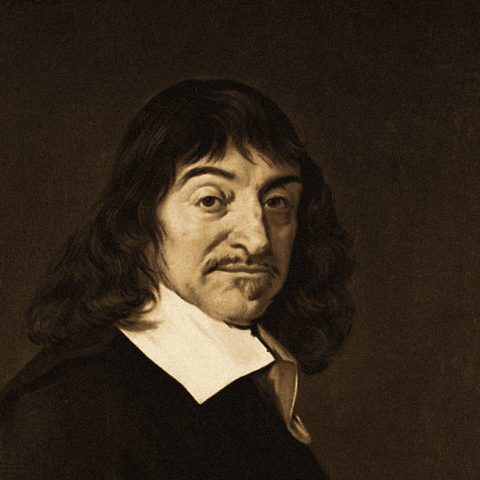
René Descartes
1596 Descartes – 1650 Stockholm · French philosopher, mathematician, and scientist
René Descartes was a French philosopher, mathematician, and scientist whose work was foundational to mathematics and modern philosophy. He connected the previously separate fields of geometry and algebra into analytic geometry and introduced a systematic method of inquiry that became influential in early modern philosophy.
- 1596Born, Descartes
- 1637Discourse on the Method of Rightly Conducting One's Reason and of Seeking Truth in the Sciences
- 1641Six Metaphysical Meditations
- 1650Died, Stockholm
If you like Six Metaphysical Meditations
More like this


Start with “Meditation 1: Of Things Doubtful”
2 chapters free right now — no account. Your place follows you to iPhone and Android.