

2 chapters freeNo account needed.
Opens “That men by various ways arrive at the same end (part 1)” in the player · no sign-up needed
Originally published in 1580, the work employs a conversational style that blends scholarly references with everyday language to examine the diversity of received opinions, the fallibility of human knowledge and the folly of certitude.
Inside the book
- Free nowno account · 2 chapters
- —Preface7 min
- 1That men by various ways arrive at the same end (part 1)52 min
- Premium125 chapters · every book, 7 days free
- 1That men by various ways arrive at the same end (part 2)53 min
- 4Chapter 410 min
- 5Chapter 59 min
- 6Chapter 617 min
- 7Chapter 75 min
- 8Chapter 86 min
- 9Book 1, Chapter 6: That the Hour of Parley Dangerous6 min
- 10Chapter 103 min
- 11Book 1, Chapter 8: Of Idleness3 min
- 12Chapter 1212 min
- 13Book 1, Chapter 10: Of Quick or Slow Speech5 min
- 14Book 1, Chapter 11: Of Prognostications11 min
- 15Book 1, Chapter 12: Of Constancy6 min
- 16Book 1, Chapter 13: The Ceremony of the Interview of Princes3 min
- 17Chapter 173 min
- 18Book 1, Chapter 15: Of the Punishment of Cowardice3 min
- 19Book 1, Chapter 16: A Proceeding of Some Ambassadors8 min
- 20Chapter 206 min
- 21Chapter 217 min
- 22Chapter 2239 min
- 23Book 1, Chapter 20: Of the Force of Imagination27 min
- 24Chapter 242 min
- 25Chapter 2542 min
- 26Book 1, Chapter 23: Various Events from the Same Counsel24 min
- 27Book 1, Chapter 24: Of Pedantry28 min
- 28Chapter 2845 min
- 29Chapter 2946 min
- 30Chapter 3011 min
- 31Book 1, Chapter 27: Of Friendship33 min
- 32Chapter 321 min
- 33Book 1, Chapter 29: Of Moderation15 min
- 34Book 1, Chapter 30: Of Cannibals32 min
- 35Chapter 355 min
- 36Chapter 364 min
- 37Chapter 377 min
- 38Book 1, Chapter 34: Of One Defect in Our Government3 min
- 39Book 1, Chapter 35: Of the Custom of Wearing Clothes8 min
- 40Book 1, Chapter 36: Of Cato the Younger10 min
- 41Book 1, Chapter 37: That We Laugh and Cry for the Same Thing8 min
- 42Book 1, Chapter 38: Of Solitude28 min
- 43Book 1, Chapter 39: A Consideration upon Cicero12 min
- 44Chapter 4447 min
- 45Book 1, Chapter 41: Not to Communicate A Man's Honour6 min
- 46Book 1, Chapter 42: Of the Inequality Amoungst Us24 min
- 47Book 1, Chapter 43: Of Sumptuary Laws5 min
- 48Chapter 485 min
- 49Book 1, Chapter 45: Of the Battle of Dreux3 min
- 50Chapter 5012 min
- 51Book 1, Chapter 47: Of the Uncertainty of Our Judgment15 min
- 52Book 1, Chapter 48: Of War Horses, or Destriers20 min
- 53Book 1, Chapter 49: Of Ancient Customs11 min
- 54Book 1, Chapter 50: Of Democritus and Heraclitus8 min
- 55Book 1, Chapter 51: Of the Vanity of Words8 min
- 56Book 1, Chapter 52: Of the Parsimony of the Ancients2 min
- 57Book 1, Chapter 53: Of A Saying of Caesar3 min
- 58Book 1, Chapter 54: Of Vain Subtleties7 min
- 59Chapter 595 min
- 60Book 1, Chapter 56: Of Prayers21 min
- 61Chapter 617 min
- 62Book 2, Chapter 1: Of the Inconstancy of Our Actions17 min
- 63Book 2, Chapter 2: Of Drunkenness22 min
- 64Book 2, Chapter 3: A Custom of the Isle of Cea33 min
- 65Book 2, Chapter 4: To-Morrow's A New Day5 min
- 66Book 2, Chapter 5: Of Conscience9 min
- 67Book 2, Chapter 6: Use Makes Perfect25 min
- 68Book 2, Chapter 7: Of Recompenses of Honour8 min
- 69Chapter 6945 min
- 70Book 2, Chapter 9: Of the Arms of the Parthians7 min
- 71Chapter 7132 min
- 72Book 2, Chapter 11: Of Cruelty36 min
- 73Book 2, Chapter 12: Apology For Raimond Sebond (part 1)50 min
- 74Book 2, Chapter 12: Apology For Raimond Sebond (part 2)49 min
- 75Book 2, Chapter 12: Apology For Raimond Sebond (part 3)49 min
- 76Book 2, Chapter 12: Apology For Raimond Sebond (part 4)51 min
- 77Book 2, Chapter 12: Apology For Raimond Sebond (part 5)52 min
- 78Book 2, Chapter 12: Apology For Raimond Sebond (part 6)50 min
- 79Book 2, Chapter 12: Apology For Raimond Sebond (part 7)50 min
- 80Book 2, Chapter 12: Apology For Raimond Sebond (part 8)53 min
- 81Book 2, Chapter 13: Of Judging of the Death of Another15 min
- 82Book 2, Chapter 14: That Our Mind Hinders Itself2 min
- 83Chapter 8314 min
- 84Chapter 8432 min
- 85Book 2, Chapter 17 — Part 1 of 2: Of Presumption38 min
- 86Chapter 8638 min
- 87Book 2, Chapter 18: Of Giving the Lie10 min
- 88Book 2, Chapter 19: Of Liberty of Conscience9 min
- 89Book 2, Chapter 20: That We Taste Nothing Pure7 min
- 90Book 2, Chapter 21: Against Idleness9 min
- 91Book 2, Chapter 22: Of Posting3 min
- 92Book 2, Chapter 23: Of Ill Means Employed to A Good End8 min
- 93Book 2, Chapter 24: Of the Roman Grandeur4 min
- 94Book 2, Chapter 25: Not to Counterfeit Being Sick5 min
- 95Chapter 952 min
- 96Book 2, Chapter 27: Cowardice the Mother of Cruelty22 min
- 97Book 2, Chapter 28: All Things Have Their Season5 min
- 98Chapter 9818 min
- 99Book 2, Chapter 30: Of A Monstrous Child3 min
- 100Chapter 10018 min
- 101Book 2, Chapter 32: Defence of Seneca and Plutarch15 min
- 102Book 2, Chapter 33: The Story of Spurina16 min
- 103Chapter 10319 min
- 104Book 2, Chapter 35: Of Three Good Women18 min
- 105Book 2, Chapter 36: Of the Most Excellent Men15 min
- 106Chapter 10634 min
- 107Chapter 10734 min
- 108Book 3, Chapter 1: Of Profit and Honesty36 min
- 109Book 3, Chapter 2: Of Repentance33 min
- 110Book 3, Chapter 3: Of Three Commerces29 min
- 111Book 3, Chapter 4: Of Diversion25 min
- 112Book 3, Chapter 5 — Part 1 of 3: Upon Some Verses Of Virgil48 min
- 113Chapter 11346 min
- 114Chapter 11448 min
- 115Book 3, Chapter 6: Of Coaches45 min
- 116Book 3, Chapter 7: Of the Inconvenience of Greatness12 min
- 117Book 3, Chapter 8: Of the Art of Conference53 min
- 118Chapter 11846 min
- 119Chapter 11946 min
- 120Chapter 12049 min
- 121Book 3, Chapter 10: Of Managing the Will55 min
- 122Book 3, Chapter 11: Of Cripples26 min
- 123Book 3, Chapter 12 — Part 1 of 2: Of Physiognomy35 min
- 124Chapter 12434 min
- 125Book 3, Chapter 13 — Part 1 of 3: Of Experience42 min
- 126Chapter 12645 min
- 127Chapter 12746 min
The opening
That men by various ways arrive at the same end (part 1)
II. Of Sorrow.
III. That our affections carry themselves beyond us.
IV. That the soul discharges her passions upon false objects, where the true are wanting.
V. Whether the governor of a place besieged ought himself to go out to parley.
VI. That the hour of parley is dangerous.
VII. That the intention is judge of our actions
VIII. Of idleness.
IX. Of liars.
X. Of quick or slow speech.
XI. Of prognostications.
XII. Of constancy.
XIII. The ceremony of the interview of princes.
XIV. That men are justly punished for being obstinate in the defence of a fort that is not in reason to be defended.
XV. Of the punishment of cowardice.
XVI. A proceeding of some ambassadors.
XVII. Of fear.
XVIII. That men are not to judge of our happiness till after death.
XIX. That to study philosophy is to learn to die.
XX. Of the force of imagination.
XXI. That the profit of one man is the damage of another.
XXII. Of custom, and that we should not easily change a law received.
XXIII. Various events from the same counsel.
XXIV. Of pedantry.
XXV. Of the education of children.
XXVI. That it is folly to measure truth and error by our own capacity.
XXVII. Of friendship.
XXVIII. Nine-and-twenty sonnets of Estienne de la Boetie.
XXIX. Of moderation.
XXX. Of cannibals.
XXXI. That a man is soberly to judge of the divine ordinances.
XXXII. That we are to avoid pleasures, even at the expense of life.
XXXIII. That fortune is oftentimes observed to act by the rule of reason.
XXXIV. Of one defect in our government.
XXXV. Of the custom of wearing clothes.
XXXVI. Of Cato the Younger.
XXXVII. That we laugh and cry for the same thing.
XXXVIII. Of solitude.
XXXIX. A consideration upon Cicero.
XL. That the relish of good and evil depends in a great measure upon the opinion we have of them.
XLI. Not to communicate a man's honour.
XLII. Of the inequality amongst us.
XLIII. Of sumptuary laws.
XLIV. Of sleep.
XLV. Of the battle of Dreux.
XLVI. Of names.
XLVII. Of the uncertainty of our judgment.
XLVIII. Of war-horses, or destriers.
XLIX. Of ancient customs.
L. Of Democritus and Heraclitus.
LI. Of the vanity of words.
LII. Of the parsimony of the Ancients.
LIII. Of a saying of Caesar.
LIV. Of vain subtleties.
LV. Of smells.
LVI. Of prayers.
LVII. Of age.
THE LIFE OF MONTAIGNE
[This is translated freely from that prefixed to the 'variorum' Paris edition, 1854, 4 vols. 8vo. This biography is the more desirable that it contains all really interesting and important matter in the journal of the Tour in Germany and Italy, which, as it was merely written under Montaigne's dictation, is in the third person, is scarcely worth publication, as a whole, in an English dress.]
The author of the Essays was born, as he informs us himself, between eleven and twelve o'clock in the day, the last of February 1533, at the chateau of St. Michel de Montaigne. His father, Pierre Eyquem, esquire, was successively first Jurat of the town of Bordeaux (1530), Under-Mayor 1536, Jurat for the second time in 1540, Procureur in 1546, and at length Mayor from 1553 to 1556. He was a man of austere probity, who had "a particular regard for honour and for propriety in his person and attire... a mighty good faith in his speech, and a conscience and a religious feeling inclining to superstition, rather than to the other extreme." [Essays, ii. 2.] Pierre Eyquem bestowed great care on the education of his children, especially on the practical side of it.
To associate closely his son Michel with the people, and attach him to those who stand in need of assistance, he caused him to be held at the font by persons of meanest position; subsequently he put him out to nurse with a poor villager, and then, at a later period, made him accustom himself to the most common sort of living, taking care, nevertheless, to cultivate his mind, and superintend its development without the exercise of undue rigour or constraint. Michel, who gives us the minutest account of his earliest years, charmingly narrates how they used to awake him by the sound of some agreeable music, and how he learned Latin, without suffering the rod or shedding a tear, before beginning French, thanks to the German teacher whom his father had placed near him, and who never addressed him except in the language of Virgil and Cicero. The study of Greek took precedence. At six years of age young Montaigne went to the College of Guienne at Bordeaux, where he had as preceptors the most eminent scholars of the sixteenth century, Nicolas Grouchy, Guerente, Muret, and Buchanan.
At thirteen he had passed through all the classes, and as he was destined for the law he left school to study that science. He was then about fourteen, but these early years of his life are involved in obscurity. The next information that we have is that in 1554 he received the appointment of councillor in the Parliament of Bordeaux; in 1559 he was at Bar-le-Duc with the court of Francis II, and in the year following he was present at Rouen to witness the declaration of the majority of Charles IX. We do not know in what manner he was engaged on these occasions.
Between 1556 and 1563 an important incident occurred in the life of Montaigne, in the commencement of his romantic friendship with Etienne de la Boetie, whom he had met, as he tells us, by pure chance at some festive celebration in the town. From their very first interview the two found themselves drawn irresistibly close to one another, and during six years this alliance was foremost in the heart of Montaigne, as it was afterwards in his memory, when death had severed it.
Although he blames severely in his own book [Essays, i. 27.] those who, contrary to the opinion of Aristotle, marry before five-and-thirty, Montaigne did not wait for the period fixed by the philosopher of Stagyra, but in 1566, in his thirty-third year, he espoused Francoise de Chassaigne, daughter of a councillor in the Parliament of Bordeaux. The history of his early married life vies in obscurity with that of his youth. His biographers are not agreed among themselves; and in the same degree that he lays open to our view all that concerns his secret thoughts, the innermost mechanism of his mind, he observes too much reticence in respect to his public functions and conduct, and his social relations. The title of Gentleman in Ordinary to the King, which he assumes, in a preface, and which Henry II. gives him in a letter, which we print a little farther on; what he says as to the commotions of courts, where he passed a portion of his life; the Instructions which he wrote under the dictation of Catherine de Medici for King Charles IX., and his noble correspondence with Henry IV., leave no doubt, however, as to the part which he played in the transactions of those times, and we find an unanswerable proof of the esteem in which he was held by the most exalted personages, in a letter which was addressed to him by Charles at the time he was admitted to the Order of St. Michael, which was, as he informs us himself, the highest honour of the French noblesse.
According to Lacroix du Maine, Montaigne, upon the death of his eldest brother, resigned his post of Councillor, in order to adopt the military profession, while, if we might credit the President Bouhier, he never discharged any functions connected with arms. However, several passages in the Essays seem to indicate that he not only took service, but that he was actually in numerous campaigns with the Catholic armies. Let us add, that on his monument he is represented in a coat of mail, with his casque and gauntlets on his right side, and a lion at his feet, all which signifies, in the language of funeral emblems, that the departed has been engaged in some important military transactions.
However it may be as to these conjectures, our author, having arrived at his thirty-eighth year, resolved to dedicate to study and contemplation the remaining term of his life; and on his birthday, the last of February 1571, he caused a philosophical inscription, in Latin, to be placed upon one of the walls of his chateau, where it is still to be seen, and of which the translation is to this effect:—"In the year of Christ... in his thirty-eighth year, on the eve of the Calends of March, his birthday, Michel Montaigne, already weary of court employments and public honours, withdrew himself entirely into the converse of the learned virgins where he intends to spend the remaining moiety of the to allotted to him in tranquil seclusion."
At the time to which we have come, Montaigne was unknown to the world of letters, except as a translator and editor. In 1569 he had published a translation of the "Natural Theology" of Raymond de Sebonde, which he had solely undertaken to please his father. In 1571 he had caused to be printed at Paris certain 'opuscucla' of Etienne de la Boetie; and these two efforts, inspired in one case by filial duty, and in the other by friendship, prove that affectionate motives overruled with him mere personal ambition as a literary man. We may suppose that he began to compose the Essays at the very outset of his retirement from public engagements; for as, according to his own account, observes the President Bouhier, he cared neither for the chase, nor building, nor gardening, nor agricultural pursuits, and was exclusively occupied with reading and reflection, he devoted himself with satisfaction to the task of setting down his thoughts just as they occurred to him. Those thoughts became a book, and the first part of that book, which was to confer immortality on the writer, appeared at Bordeaux in 1580. Montaigne was then fifty-seven; he had suffered for some years past from renal colic and gravel; and it was with the necessity of distraction from his pain, and the hope of deriving relief from the waters, that he undertook at this time a great journey. As the account which he has left of his travels in Germany and Italy comprises some highly interesting particulars of his life and personal history, it seems worth while to furnish a sketch or analysis of it.
"The Journey, of which we proceed to describe the course simply," says the editor of the Itinerary, "had, from Beaumont-sur-Oise to Plombieres, in Lorraine, nothing sufficiently interesting to detain us... we must go as far, as Basle, of which we have a description, acquainting us with its physical and political condition at that period, as well as with the character of its baths. The passage of Montaigne through Switzerland is not without interest, as we see there how our philosophical traveller accommodated himself everywhere to the ways of the country. The hotels, the provisions, the Swiss cookery, everything, was agreeable to him; it appears, indeed, as if he preferred to the French manners and tastes those of the places he was visiting, and of which the simplicity and freedom (or frankness) accorded more with his own mode of life and thinking. In the towns where he stayed, Montaigne took care to see the Protestant divines, to make himself conversant with all their dogmas. He even had disputations with them occasionally.
"Having left Switzerland he went to Isne, an imperial then on to Augsburg and Munich. He afterwards proceeded to the Tyrol, where he was agreeably surprised, after the warnings which he had received, at the very slight inconveniences which he suffered, which gave him occasion to remark that he had all his life distrusted the statements of others respecting foreign countries, each person's tastes being according to the notions of his native place; and that he had consequently set very little on what he was told beforehand.
"Upon his arrival at Botzen, Montaigne wrote to Francois Hottmann, to say that he had been so pleased with his visit to Germany that he quitted it with great regret, although it was to go into Italy. He then passed through Brunsol, Trent, where he put up at the Rose; thence going to Rovera; and here he first lamented the scarcity of crawfish, but made up for the loss by partaking of truffles cooked in oil and vinegar; oranges, citrons, and olives, in all of which he delighted."
After passing a restless night, when he bethought himself in the morning that there was some new town or district to be seen, he rose, we are told, with alacrity and pleasure.
His secretary, to whom he dictated his Journal, assures us that he never saw him take so much interest in surrounding scenes and persons, and believes that the complete change helped to mitigate his sufferings in concentrating his attention on other points. When there was a complaint made that he had led his party out of the beaten route, and then returned very near the spot from which they started, his answer was that he had no settled course, and that he merely proposed to himself to pay visits to places which he had not seen, and so long as they could not convict him of traversing the same path twice, or revisiting a point already seen, he could perceive no harm in his plan. As to Rome, he cared less to go there, inasmuch as everybody went there; and he said that he never had a lacquey who could not tell him all about Florence or Ferrara. He also would say that he seemed to himself like those who are reading some pleasant story or some fine book, of which they fear to come to the end: he felt so much pleasure in travelling that he dreaded the moment of arrival at the place where they were to stop for the night.
We see that Montaigne travelled, just as he wrote, completely at his ease, and without the least constraint, turning, just as he fancied, from the common or ordinary roads taken by tourists. The good inns, the soft beds, the fine views, attracted his notice at every point, and in his observations on men and things he confines himself chiefly to the practical side. The consideration of his health was constantly before him, and it was in consequence of this that, while at Venice, which disappointed him, he took occasion to note, for the benefit of readers, that he had an attack of colic, and that he evacuated two large stones after supper. On quitting Venice, he went in succession to Ferrara, Rovigo, Padua, Bologna (where he had a stomach-ache), Florence, &c.; and everywhere, before alighting, he made it a rule to send some of his servants to ascertain where the best accommodation was to be had. He pronounced the Florentine women the finest in the world, but had not an equally good opinion of the food, which was less plentiful than in Germany, and not so well served. He lets us understand that in Italy they send up dishes without dressing, but in Germany they were much better seasoned, and served with a variety of sauces and gravies. He remarked further, that the glasses were singularly small and the wines insipid.
After dining with the Grand-Duke of Florence, Montaigne passed rapidly over the intermediate country, which had no fascination for him, and arrived at Rome on the last day of November, entering by the Porta del Popolo, and putting up at Bear. But he afterwards hired, at twenty crowns a month, fine furnished rooms in the house of a Spaniard, who included in these terms the use of the kitchen fire. What most annoyed him in the Eternal City was the number of Frenchmen he met, who all saluted him in his native tongue; but otherwise he was very comfortable, and his stay extended to five months.
A mind like his, full of grand classical reflections, could not fail to be profoundly impressed in the presence of the ruins at Rome, and he has enshrined in a magnificent passage of the Journal the feelings of the moment: "He said," writes his secretary, "that at Rome one saw nothing but the sky under which she had been built, and the outline of her site: that the knowledge we had of her was abstract, contemplative, not palpable to the actual senses: that those who said they beheld at least the ruins of Rome, went too far, for the ruins of so gigantic a structure must have commanded greater reverence-it was nothing but her sepulchre.
The world, jealous of her, prolonged empire, had in the first place broken to pieces that admirable body, and then, when they perceived that the remains attracted worship and awe, had buried the very wreck itself.--[Compare a passage in one of Horace Walpole's letters to Richard West, 22 March 1740 (Cunningham's edit. i. 41), where Walpole, speaking of Rome, describes her very ruins as ruined.]--As to those small fragments which were still to be seen on the surface, notwithstanding the assaults of time and all other attacks, again and again repeated, they had been favoured by fortune to be some slight evidence of that infinite grandeur which nothing could entirely extingish.
But it was likely that these disfigured remains were the least entitled to attention, and that the enemies of that immortal renown, in their fury, had addressed themselves in the first instance to the destruction of what was most beautiful and worthiest of preservation; and that the buildings of this bastard Rome, raised upon the ancient productions, although they might excite the admiration of the present age, reminded him of the crows' and sparrows' nests built in the walls and arches of the old churches, destroyed by the Huguenots. Again, he was apprehensive, seeing the space which this grave occupied, that the whole might not have been recovered, and that the burial itself had been buried. And, moreover, to see a wretched heap of rubbish, as pieces of tile and pottery, grow (as it had ages since) to a height equal to that of Mount Gurson,--[In Perigord.]--and thrice the width of it, appeared to show a conspiracy of destiny against the glory and pre-eminence of that city, affording at the same time a novel and extraordinary proof of its departed greatness.
He (Montaigne) observed that it was difficult to believe considering the limited area taken up by any of her seven hills and particularly the two most favoured ones, the Capitoline and the Palatine, that so many buildings stood on the site. Judging only from what is left of the Temple of Concord, along the 'Forum Romanum', of which the fall seems quite recent, like that of some huge mountain split into horrible crags, it does not look as if more than two such edifices could have found room on the Capitoline, on which there were at one period from five-and-twenty to thirty temples, besides private dwellings. But, in point of fact, there is scarcely any probability of the views which we take of the city being correct, its plan and form having changed infinitely; for instance, the 'Velabrum', which on account of its depressed level, received the sewage of the city, and had a lake, has been raised by artificial accumulation to a height with the other hills, and Mount Savello has, in truth, grown simply out of the ruins of the theatre of Marcellus. He believed that an ancient Roman would not recognise the place again.
It often happened that in digging down into earth the workmen came upon the crown of some lofty column, which, though thus buried, was still standing upright. The people there have no recourse to other foundations than the vaults and arches of the old houses, upon which, as on slabs of rock, they raise their modern palaces. It is easy to see that several of the ancient streets are thirty feet below those at present in use."
Sceptical as Montaigne shows himself in his books, yet during his sojourn at Rome he manifested a great regard for religion. He solicited the honour of being admitted to kiss the feet of the Holy Father, Gregory XIII.; and the Pontiff exhorted him always to continue in the devotion which he had hitherto exhibited to the Church and the service of the Most Christian King.
"After this, one sees," says the editor of the Journal, "Montaigne employing all his time in making excursions bout the neighbourhood on horseback or on foot, in visits, in observations of every kind. The churches, the stations, the processions even, the sermons; then the palaces, the vineyards, the gardens, the public amusements, as the Carnival, &c.—nothing was overlooked. He saw a Jewish child circumcised, and wrote down a most minute account of the operation. He met at San Sisto a Muscovite ambassador, the second who had come to Rome since the pontificate of Paul III. This minister had despatches from his court for Venice, addressed to the 'Grand Governor of the Signory'. The court of Muscovy had at that time such limited relations with the other powers of Europe, and it was so imperfect in its information, that it thought Venice to be a dependency of the Holy See."
Of all the particulars with which he has furnished us during his stay at Rome, the following passage in reference to the Essays is not the least singular: "The Master of the Sacred Palace returned him his Essays, castigated in accordance with the views of the learned monks. 'He had only been able to form a judgment of them,' said he, 'through a certain French monk, not understanding French himself'"—we leave Montaigne himself to tell the story--"and he received so complacently my excuses and explanations on each of the passages which had been animadverted upon by the French monk, that he concluded by leaving me at liberty to revise the text agreeably to the dictates of my own conscience. I begged him, on the contrary, to abide by the opinion of the person who had criticised me, confessing, among other matters, as, for example, in my use of the word fortune, in quoting historical poets, in my apology for Julian, in my animadversion on the theory that he who prayed ought to be exempt from vicious inclinations for the time being; item, in my estimate of cruelty, as something beyond simple death; item, in my view that a child ought to be brought up to do everything, and so on; that these were my opinions, which I did not think wrong; as to other things, I said that the corrector understood not my meaning. The Master, who is a clever man, made many excuses for me, and gave me to suppose that he did not concur in the suggested improvements; and pleaded very ingeniously for me in my presence against another (also an Italian) who opposed my sentiments."
Such is what passed between Montaigne and these two personages at that time; but when the Essayist was leaving, and went to bid them farewell, they used very different language to him. "They prayed me," says he, "to pay no attention to the censure passed on my book, in which other French persons had apprised them that there were many foolish things; adding, that they honoured my affectionate intention towards the Church, and my capacity; and had so high an opinion of my candour and conscientiousness that they should leave it to me to make such alterations as were proper in the book, when I reprinted it; among other things, the word fortune. To excuse themselves for what they had said against my book, they instanced works of our time by cardinals and other divines of excellent repute which had been blamed for similar faults, which in no way affected reputation of the author, or of the publication as a whole; they requested me to lend the Church the support of my eloquence (this was their fair speech), and to make longer stay in the place, where I should be free from all further intrusion on their part. It seemed to me that we parted very good friends."
Before quitting Rome, Montaigne received his diploma of citizenship, by which he was greatly flattered; and after a visit to Tivoli he set out for Loretto, stopping at Ancona, Fano, and Urbino. He arrived at the beginning of May 1581, at Bagno della Villa, where he established himself, order to try the waters. There, we find in the Journal, of his own accord the Essayist lived in the strictest conformity with the regime, and henceforth we only hear of diet, the effect which the waters had by degrees upon system, of the manner in which he took them; in a word, he does not omit an item of the circumstances connected with his daily routine, his habit of body, his baths, and the rest. It was no longer the journal of a traveller which he kept, but the diary of an invalid,--["I am reading Montaigne's Travels, which have lately been found; there is little in them but the baths and medicines he took, and what he had everywhere for dinner."—H. Walpole to Sir Horace Mann, June 8, 1774.]--attentive to the minutest details of the cure which he was endeavouring to accomplish: a sort of memorandum book, in which he was noting down everything that he felt and did, for the benefit of his medical man at home, who would have the care of his health on his return, and the attendance on his subsequent infirmities. Montaigne gives it as his reason and justification for enlarging to this extent here, that he had omitted, to his regret, to do so in his visits to other baths, which might have saved him the trouble of writing at such great length now; but it is perhaps a better reason in our eyes, that what he wrote he wrote for his own use.
We find in these accounts, however, many touches which are valuable as illustrating the manners of the place. The greater part of the entries in the Journal, giving the account of these waters, and of the travels, down to Montaigne's arrival at the first French town on his homeward route, are in Italian, because he wished to exercise himself in that language.
The minute and constant watchfulness of Montaigne over his health and over himself might lead one to suspect that excessive fear of death which degenerates into cowardice. But was it not rather the fear of the operation for the stone, at that time really formidable? Or perhaps he was of the same way of thinking with the Greek poet, of whom Cicero reports this saying: "I do not desire to die; but the thought of being dead is indifferent to me." Let us hear, however, what he says himself on this point very frankly: "It would be too weak and unmanly on my part if, certain as I am of always finding myself in the position of having to succumb in that way,--[To the stone or gravel.]--and death coming nearer and nearer to me, I did not make some effort, before the time came, to bear the trial with fortitude. For reason prescribes that we should joyfully accept what it may please God to send us. Therefore the only remedy, the only rule, and the sole doctrine for avoiding the evils by which mankind is surrounded, whatever they are, is to resolve to bear them so far as our nature permits, or to put an end to them courageously and promptly."
He was still at the waters of La Villa, when, on the 7th September 1581, he learned by letter that he had been elected Mayor of Bordeaux on the 1st August preceding. This intelligence made him hasten his departure; and from Lucca he proceeded to Rome. He again made some stay in that city, and he there received the letter of the jurats of Bordeaux, notifying to him officially his election to the Mayoralty, and inviting him to return as speedily as possible. He left for France, accompanied by young D'Estissac and several other gentlemen, who escorted him a considerable distance; but none went back to France with him, not even his travelling companion. He passed by Padua, Milan, Mont Cenis, and Chambery; thence he went on to Lyons, and lost no time in repairing to his chateau, after an absence of seventeen months and eight days.
We have just seen that, during his absence in Italy, the author of the Essays was elected mayor of Bordeaux. "The gentlemen of Bordeaux," says he, "elected me Mayor of their town while I was at a distance from France, and far from the thought of such a thing. I excused myself; but they gave to understand that I was wrong in so doing, it being also the command of the king that I should stand." This the letter which Henry III. wrote to him on the occasion:
MONSIEUR, DE MONTAIGNE,—Inasmuch as I hold in great esteem your fidelity and zealous devotion to my service, it has been a pleasure to me to learn that you have been chosen mayor of my town of Bordeaux. I have had the agreeable duty of confirming the selection, and I did so the more willingly, seeing that it was made during your distant absence; wherefore it is my desire, and I require and command you expressly that you proceed without delay to enter on the duties to which you have received so legitimate a call. And so you will act in a manner very agreeable to me, while the contrary will displease me greatly. Praying God, M. de Montaigne, to have you in his holy keeping.
"Written at Paris, the 25th day of November 1581.
"HENRI.
"A Monsieur de MONTAIGNE, Knight of my Order, Gentleman in Ordinary of my Chamber, being at present in Rome."
Montaigne, in his new employment, the most important in the province, obeyed the axiom, that a man may not refuse a duty, though it absorb his time and attention, and even involve the sacrifice of his blood. Placed between two extreme parties, ever on the point of getting to blows, he showed himself in practice what he is in his book, the friend of a middle and temperate policy. Tolerant by character and on principle, he belonged, like all the great minds of the sixteenth century, to that political sect which sought to improve, without destroying, institutions; and we may say of him, what he himself said of La Boetie, "that he had that maxim indelibly impressed on his mind, to obey and submit himself religiously to the laws under which he was born. Affectionately attached to the repose of his country, an enemy to changes and innovations, he would have preferred to employ what means he had towards their discouragement and suppression, than in promoting their success." Such was the platform of his administration.
He applied himself, in an especial manner, to the maintenance of peace between the two religious factions which at that time divided the town of Bordeaux; and at the end of his two first years of office, his grateful fellow-citizens conferred on him (in 1583) the mayoralty for two years more, a distinction which had been enjoyed, as he tells us, only twice before. On the expiration of his official career, after four years' duration, he could say fairly enough of himself that he left behind him neither hatred nor cause of offence.
In the midst of the cares of government, Montaigne found time to revise and enlarge his Essays, which, since their appearance in 1580, were continually receiving augmentation in the form of additional chapters or papers. Two more editions were printed in 1582 and 1587; and during this time the author, while making alterations in the original text, had composed part of the Third Book. He went to Paris to make arrangements for the publication of his enlarged labours, and a fourth impression in 1588 was the result. He remained in the capital some time on this occasion, and it was now that he met for the first time Mademoiselle de Gournay. Gifted with an active and inquiring spirit, and, above all, possessing a sound and healthy tone of mind, Mademoiselle de Gournay had been carried from her childhood with that tide which set in with sixteenth century towards controversy, learning, and knowledge. She learnt Latin without a master; and when, the age of eighteen, she accidentally became possessor of a copy of the Essays, she was transported with delight and admiration.
She quitted the chateau of Gournay, to come and see him. We cannot do better, in connection with this journey of sympathy, than to repeat the words of Pasquier: "That young lady, allied to several great and noble families of Paris, proposed to herself no other marriage than with her honour, enriched with the knowledge gained from good books, and, beyond all others, from the essays of M. de Montaigne, who making in the year 1588 a lengthened stay in the town of Paris, she went there for the purpose of forming his personal acquaintance; and her mother, Madame de Gournay, and herself took him back with them to their chateau, where, at two or three different times, he spent three months altogether, most welcome of visitors." It was from this moment that Mademoiselle de Gournay dated her adoption as Montaigne's daughter, a circumstance which has tended to confer immortality upon her in a far greater measure than her own literary productions.
Montaigne, on leaving Paris, stayed a short time at Blois, to attend the meeting of the States-General. We do not know what part he took in that assembly: but it is known that he was commissioned, about this period, to negotiate between Henry of Navarre (afterwards Henry IV.) and the Duke of Guise. His political life is almost a blank; but De Thou assures us that Montaigne enjoyed the confidence of the principal persons of his time. De Thou, who calls him a frank man without constraint, tells us that, walking with him and Pasquier in the court at the Castle of Blois, he heard him pronounce some very remarkable opinions on contemporary events, and he adds that Montaigne had foreseen that the troubles in France could not end without witnessing the death of either the King of Navarre or of the Duke of Guise. He had made himself so completely master of the views of these two princes, that he told De Thou that the King of Navarre would have been prepared to embrace Catholicism, if he had not been afraid of being abandoned by his party, and that the Duke of Guise, on his part, had no particular repugnance to the Confession of Augsburg, for which the Cardinal of Lorraine, his uncle, had inspired him with a liking, if it had not been for the peril involved in quitting the Romish communion. It would have been easy for Montaigne to play, as we call it, a great part in politics, and create for himself a lofty position but his motto was, 'Otio et Libertati'; and he returned quietly home to compose a chapter for his next edition on inconveniences of Greatness.
The author of the Essays was now fifty-five. The malady which tormented him grew only worse and worse with years; and yet he occupied himself continually with reading, meditating, and composition. He employed the years 1589, 1590, and 1591 in making fresh additions to his book; and even in the approaches of old age he might fairly anticipate many happy hours, when he was attacked by quinsy, depriving him of the power utterance. Pasquier, who has left us some details his last hours, narrates that he remained three days in full possession of his faculties, but unable to speak, so that, in order to make known his desires, he was obliged to resort to writing; and as he felt his end drawing near, he begged his wife to summon certain of the gentlemen who lived in the neighbourhood to bid them a last farewell. When they had arrived, he caused mass to be celebrated in apartment; and just as the priest was elevating the host, Montaigne fell forward with his arms extended in front of him, on the bed, and so expired. He was in his sixtieth year. It was the 13th September 1592.
Montaigne was buried near his own house; but a few years after his decease, his remains were removed to the church of a Commandery of St. Antoine at Bordeaux, where they still continue. His monument was restored in 1803 by a descendant. It was seen about 1858 by an English traveller (Mr. St. John).'--["Montaigne the Essayist," by Bayle St. John, 1858, 2 vols. 8vo, is one of most delightful books of the kind.]-- and was then in good preservation.
In 1595 Mademoiselle de Gournay published a new edition of Montaigne's Essays, and the first with the latest emendations of the author, from a copy presented to her by his widow, and which has not been recovered, although it is known to have been in existence some years after the date of the impression, made on its authority.
Coldly as Montaigne's literary productions appear to have been received by the generation immediately succeeding his own age, his genius grew into just appreciation in the seventeenth century, when such great spirits arose as La Bruyere, Moliere, La Fontaine, Madame de Sevigne. "O," exclaimed the Chatelaine des Rochers, "what capital company he is, the dear man! he is my old friend; and just for the reason that he is so, he always seems new. My God! how full is that book of sense!" Balzac said that he had carried human reason as far and as high as it could go, both in politics and in morals. On the other hand, Malebranche and the writers of Port Royal were against him; some reprehended the licentiousness of his writings; others their impiety, materialism, epicureanism. Even Pascal, who had carefully read the Essays, and gained no small profit by them, did not spare his reproaches. But Montaigne has outlived detraction. As time has gone on, his admirers and borrowers have increased in number, and his Jansenism, which recommended him to the eighteenth century, may not be his least recommendation in the nineteenth. Here we have certainly, on the whole, a first-class man, and one proof of his masterly genius seems to be, that his merits and his beauties are sufficient to induce us to leave out of consideration blemishes and faults which would have been fatal to an inferior writer.
THE LETTERS OF MONTAIGNE.
To Monsieur de MONTAIGNE
[This account of the death of La Boetie begins imperfectly. It first appeared in a little volume of Miscellanies in 1571. See Hazlitt, ubi sup. p. 630.]--As to his last words, doubtless, if any man can give good account of them, it is I, both because, during the whole of his sickness he conversed as fully with me as with any one, and also because, in consequence of the singular and brotherly friendship which we had entertained for each other, I was perfectly acquainted with the intentions, opinions, and wishes which he had formed in the course of his life, as much so, certainly, as one man can possibly be with those of another man; and because I knew them to be elevated, virtuous, full of steady resolution, and (after all said) admirable. I well foresaw that, if his illness permitted him to express himself, he would allow nothing to fall from him, in such an extremity, that was not replete with good example. I consequently took every care in my power to treasure what was said.
True it is, Monseigneur, as my memory is not only in itself very short, but in this case affected by the trouble which I have undergone, through so heavy and important a loss, that I have forgotten a number of things which I should wish to have had known; but those which I recollect shall be related to you as exactly as lies in my power. For to represent in full measure his noble career suddenly arrested, to paint to you his indomitable courage, in a body worn out and prostrated by pain and the assaults of death, I confess, would demand a far better ability than mine: because, although, when in former years he discoursed on serious and important matters, he handled them in such a manner that it was difficult to reproduce exactly what he said, yet his ideas and his words at the last seemed to rival each other in serving him. For I am sure that I never knew him give birth to such fine conceptions, or display so much eloquence, as in the time of his sickness.
If, Monseigneur, you blame me for introducing his more ordinary observations, please to know that I do so advisedly; for since they proceeded from him at a season of such great trouble, they indicate the perfect tranquillity of his mind and thoughts to the last.
On Monday, the 9th day of August 1563, on my return from the Court, I sent an invitation to him to come and dine with me. He returned word that he was obliged, but, being indisposed, he would thank me to do him the pleasure of spending an hour with him before he started for Medoc. Shortly after my dinner I went to him. He had laid himself down on the bed with his clothes on, and he was already, I perceived, much changed. He complained of diarrhoea, accompanied by the gripes, and said that he had it about him ever since he played with M. d'Escars with nothing but his doublet on, and that with him a cold often brought on such attacks. I advised him to go as he had proposed, but to stay for the night at Germignac, which is only about two leagues from the town. I gave him this advice, because some houses, near to that where he was ping, were visited by the plague, about which he was nervous since his return from Perigord and the Agenois, here it had been raging; and, besides, horse exercise was, from my own experience, beneficial under similar circumstances. He set out, accordingly, with his wife and M. Bouillhonnas, his uncle.
Early on the following morning, however, I had intelligence from Madame de la Boetie, that in the night he had fresh and violent attack of dysentery. She had called in physician and apothecary, and prayed me to lose no time coming, which (after dinner) I did. He was delighted to see me; and when I was going away, under promise to turn the following day, he begged me more importunately and affectionately than he was wont to do, to give him as such of my company as possible. I was a little affected; yet was about to leave, when Madame de la Boetie, as if she foresaw something about to happen, implored me with tears to stay the night. When I consented, he seemed to grow more cheerful. I returned home the next day, and on the Thursday I paid him another visit. He had become worse; and his loss of blood from the dysentery, which reduced his strength very much, was largely on the increase. I quitted his side on Friday, but on Saturday I went to him, and found him very weak. He then gave me to understand that his complaint was infectious, and, moreover, disagreeable and depressing; and that he, knowing thoroughly my constitution, desired that I should content myself with coming to see him now and then. On the contrary, after that I never left his side.
It was only on the Sunday that he began to converse with me on any subject beyond the immediate one of his illness, and what the ancient doctors thought of it: we had not touched on public affairs, for I found at the very outset that he had a dislike to them.
But, on the Sunday, he had a fainting fit; and when he came to himself, he told me that everything seemed to him confused, as if in a mist and in disorder, and that, nevertheless, this visitation was not unpleasing to him. "Death," I replied, "has no worse sensation, my brother." "None so bad," was his answer. He had had no regular sleep since the beginning of his illness; and as he became worse and worse, he began to turn his attention to questions which men commonly occupy themselves with in the last extremity, despairing now of getting better, and intimating as much to me. On that day, as he appeared in tolerably good spirits, I took occasion to say to him that, in consideration of the singular love I bore him, it would become me to take care that his affairs, which he had conducted with such rare prudence in his life, should not be neglected at present; and that I should regret it if, from want of proper counsel, he should leave anything unsettled, not only on account of the loss to his family, but also to his good name.
He thanked me for my kindness; and after a little reflection, as if he was resolving certain doubts in his own mind, he desired me to summon his uncle and his wife by themselves, in order that he might acquaint them with his testamentary dispositions. I told him that this would shock them. "No, no," he answered, "I will cheer them by making out my case to be better than it is." And then he inquired, whether we were not all much taken by surprise at his having fainted? I replied, that it was of no importance, being incidental to the complaint from which he suffered.
"True, my brother," said he; "it would be unimportant, even though it should lead to what you most dread." "For you," I rejoined, "it might be a happy thing; but I should be the loser, who would thereby be deprived of so great, so wise, and so steadfast a friend, a friend whose place I should never see supplied." "It is very likely you may not," was his answer; "and be sure that one thing which makes me somewhat anxious to recover, and to delay my journey to that place, whither I am already half-way gone, is the thought of the loss both you and that poor man and woman there (referring to his uncle and wife) must sustain; for I love them with my whole heart, and I feel certain that they will find it very hard to lose me. I should also regret it on account of such as have, in my lifetime, valued me, and whose conversation I should like to have enjoyed a little longer; and I beseech you, my brother, if I leave the world, to carry to them for me an assurance of the esteem I entertained for them to the last moment of my existence.
My birth was, moreover, scarcely to so little purpose but that, had I lived, I might have done some service to the public; but, however this may be, I am prepared to submit to the will of God, when it shall please Him to call me, being confident of enjoying the tranquillity which you have foretold for me. As for you, my friend, I feel sure that you are so wise, that you will control your emotions, and submit to His divine ordinance regarding me; and I beg of you to see that that good man and woman do not mourn for my departure unnecessarily."
He proceeded to inquire how they behaved at present. "Very well," said I, "considering the circumstances." "Ah!" he replied, "that is, so long as they do not abandon all hope of me; but when that shall be the case, you will have a hard task to support them." It was owing to his strong regard for his wife and uncle that he studiously disguised from them his own conviction as to the certainty of his end, and he prayed me to do the same. When they were near him he assumed an appearance of gaiety, and flattered them with hopes. I then went to call them. They came, wearing as composed an air as possible; and when we four were together, he addressed us, with an untroubled countenance, as follows: "Uncle and wife, rest assured that no new attack of my disease, or fresh doubt that I have as to my recovery, has led me to take this step of communicating to you my intentions, for, thank God, I feel very well and hopeful; but taught by observation and experience the instability of all human things, and even of the life to which we are so much attached, and which is, nevertheless, a mere bubble; and knowing, moreover, that my state of health brings me more within the danger of death, I have thought proper to settle my worldly affairs, having the benefit of your advice." Then addressing himself more particularly to his uncle, "Good uncle," said he, "if I were to rehearse all the obligations under which I lie to you, I am sure that I never should make an end. Let me only say that, wherever I have been, and with whomsoever I have conversed, I have represented you as doing for me all that a father could do for a son; both in the care with which you tended my education, and in the zeal with which you pushed me forward into public life, so that my whole existence is a testimony of your good offices towards me. In short, I am indebted for all that I have to you, who have been to me as a parent; and therefore I have no right to part with anything, unless it be with your approval."
There was a general silence hereupon, and his uncle was prevented from replying by tears and sobs. At last he said that whatever he thought for the best would be agreeable to him; and as he intended to make him his heir, he was at liberty to dispose of what would be his.
Then he turned to his wife. "My image," said he (for so he often called her, there being some sort of relationship between them), "since I have been united to you by marriage, which is one of the most weighty and sacred ties imposed on us by God, for the purpose of maintaining human society, I have continued to love, cherish, and value you; and I know that you have returned my affection, for which I have no sufficient acknowledgment. I beg you to accept such portion of my estate as I bequeath to you, and be satisfied with it, though it is very inadequate to your desert."
Afterwards he turned to me. "My brother," he began, "for whom I have so entire a love, and whom I selected out of so large a number, thinking to revive with you that virtuous and sincere friendship which, owing to the degeneracy of the age, has grown to be almost unknown to us, and now exists only in certain vestiges of antiquity, I beg of you, as a mark of my affection to you, to accept my library: a slender offering, but given with a cordial will, and suitable to you, seeing that you are fond of learning. It will be a memorial of your old companion."
Then he addressed all three of us. He blessed God that in his extremity he had the happiness to be surrounded by those whom he held dearest in the world, and he looked upon it as a fine spectacle, where four persons were together, so unanimous in their feelings, and loving each other for each other's sake. He commended us one to the other; and proceeded thus: "My worldly matters being arranged, I must now think of the welfare of my soul. I am a Christian; I am a Catholic. I have lived one, and I shall die one. Send for a priest; for I wish to conform to this last Christian obligation." He now concluded his discourse, which he had conducted with such a firm face and with so distinct an utterance, that whereas, when I first entered his room, he was feeble, inarticulate in his speech, his pulse low and feverish, and his features pallid, now, by a sort of miracle, he appeared to have rallied, and his pulse was so strong that for the sake of comparison, I asked him to feel mine.
I felt my heart so oppressed at this moment, that I had not the power to make him any answer; but in the course of two or three hours, solicitous to keep up his courage, and, likewise, out of the tenderness which I had had all my life for his honour and fame, wishing a larger number of witnesses to his admirable fortitude, I said to him, how much I was ashamed to think that I lacked courage to listen to what he, so great a sufferer, had the courage to deliver; that down to the present time I had scarcely conceived that God granted us such command over human infirmities, and had found a difficulty in crediting the examples I had read in histories; but that with such evidence of the thing before my eyes, I gave praise to God that it had shown itself in one so excessively dear to me, and who loved me so entirely, and that his example would help me to act in a similar manner when my turn came. Interrupting me, he begged that it might happen so, and that the conversation which had passed between us might not be mere words, but might be impressed deeply on our minds, to be put in exercise at the first occasion; and that this was the real object and aim of all philosophy.
He then took my hand, and continued: "Brother, friend, there are many acts of my life, I think, which have cost me as much difficulty as this one is likely to do; and, after all, I have been long prepared for it, and have my lesson by heart. Have I not lived long enough? I am just upon thirty-three. By the grace of God, my days so far have known nothing but health and happiness; but in the ordinary course of our unstable human affairs, this could not have lasted much longer; it would have become time for me to enter on graver avocations, and I should thus have involved myself in numberless vexations, and, among them, the troubles of old age, from which I shall now be exempt. Moreover, it is probable that hitherto my life has been spent more simply, and with less of evil, than if God had spared me, and I had survived to feel the thirst for riches and worldly prosperity. I am sure, for my part, that I now go to God and the place of the blessed." He seemed to detect in my expression some inquietude at his words; and he exclaimed, "What, my brother, would you make me entertain apprehensions? Had I any, whom would it become so much as yourself to remove them?"
The notary, who had been summoned to draw up his will, came in the evening, and when he had the documents prepared, I inquired of La Boetie if he would sign them. "Sign them," cried he; "I will do so with my own hand; but I could desire more time, for I feel exceedingly timid and weak, and in a manner exhausted." But when I was going to change the conversation, he suddenly rallied, said he had but a short time to live, and asked if the notary wrote rapidly, for he should dictate without making any pause. The notary was called, and he dictated his will there and then with such speed that the man could scarcely keep up with him; and when he had done, he asked me to read it out, saying to me, "What a good thing it is to look after what are called our riches." 'Sunt haec, quoe hominibus vocantur bona'. As soon as the will was signed, the chamber being full, he asked me if it would hurt him to talk. I answered, that it would not, if he did not speak too loud.
He then summoned Mademoiselle de Saint Quentin, his niece, to him, and addressed her thus: "Dear niece, since my earliest acquaintance with thee, I have observed the marks of, great natural goodness in thee; but the services which thou rendered to me, with so much affectionate diligence, in my present and last necessity, inspire me with high hopes of thee; and I am under great obligations to thee, and give thee most affectionate thanks. Let me relieve my conscience by counselling thee to be, in the first place, devout, to God: for this doubtless is our first duty, failing which all others can be of little advantage or grace, but which, duly observed, carries with it necessarily all other virtues. After God, thou shouldest love thy father and mother—thy mother, my sister, whom I regard as one of the best and most intelligent of women, and by whom I beg of thee to let thy own life be regulated. Allow not thyself to be led away by pleasures; shun, like the plague, the foolish familiarities thou seest between some men and women; harmless enough at first, but which by insidious degrees corrupt the heart, and thence lead it to negligence, and then into the vile slough of vice.
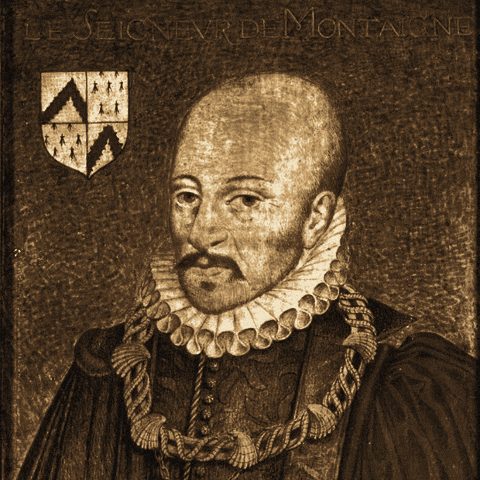
About the author
Michel de Montaigne
1533 Château de Montaigne – 1592 Château de Montaigne · French author, philosopher, and statesman
Michel Eyquem, Seigneur de Montaigne, commonly known as just Michel de Montaigne, was one of the most significant writers of the French Renaissance. He is known for popularising the essay as a literary genre.
If you like The Essays of Michel de Montaigne
More like this


Start with “That men by various ways arrive at the same end (part 1)”
2 chapters free right now — no account. Your place follows you to iPhone and Android.