

2 chapters freeNo account needed.
Opens “Education and Nationality” in the player · no sign-up needed
Gentile argues that education is a spiritual act in which teacher and pupil are united, and he examines its relation to nationality and personality, the conflict between realism and idealism in the concept of culture, and the unity of education.
Inside the book
- Free nowno account · 2 chapters
- —Introduction6 min
- 1Education and Nationality19 min
- Premium10 chapters · every book, 7 days free
- 2Education and Personality29 min
- 3The Fundamental Antimony of Education30 min
- 4Realism and Idealism in the Concept of Culture29 min
- 5The Spirituality of Culture33 min
- 6The Attributes of Culture39 min
- 7The Bias of Realism36 min
- 8The Unity of Education34 min
- 9Character and Physical Education36 min
- 10The Ideal of Education35 min
- 11Conclusion10 min
The opening
Education and Nationality
Education And Nationality
Participation on the part of elementary school teachers in the work and studies of the Universities has always seemed to me to constitute a real need of culture and of primary education. For the elementary school, by the very nature of the professional training of its teachers, is exposed to a grave danger from which it must be rescued if we mean to keep it alive.
The training of the elementary school teacher tends to be dogmatic. True it is that vigilant individuality and passionate love for his exquisitely spiritual calling impel the school teacher to an untiring criticism of his methods, of his actual teaching, and of the life of the school which he directs and promotes. But nevertheless in consequence of those very studies by which he has prepared himself to be an elementary instructor, he is led to look upon that learning which constitutes his mental equipment and the foundation of all his future teaching, as something quite finished, rounded out, enclosed in definite formulas, rules, and laws, all of which have been ascertained once for all and are no longer susceptible of ulterior revision. He looks upon this learning not as a developing organism, but as something definitely moulded and stereotyped. From this the conclusion is drawn that a certain kind of knowledge may serve as a corner stone for the whole school edifice. Since his discipline and his teaching consist mainly of elements which because of their abstractness miss the renovating flow of spiritual life, the teacher slowly but surely ends by shutting himself up in a certain number of ideas, which are final as far as he is concerned. They are never corrected or transformed; in their mechanical fixity they cease to live; and the mind which cherishes and preserves them loses its natural tendency to doubt. Yet what is doubt but dissatisfaction with what is known and with the manner of knowing, and a spur to further inquiry, to better and fuller learning, to self scrutiny, to an examination of one's own sentiments, one's own character, and an inducement to broadmindedness, to a welcoming receptiveness of all the suggestions and all the teachings which life at all moments generously showers on us?
The remedy against this natural tendency of the teacher's mind is to be found in the University, where in theory, and so far as is possible, in practice too, science is presented not as ready-made, definitely turned out in final theories, enclosed in consecrated manuals; but as inquiry, as research, as spiritual activity which does not rest satisfied with its accomplishments, but for ever feels that it does not yet know or does not know enough, aware of the difficulties which threaten every attained position, and ready unrestingly to track them, to reveal them, and meet them squarely. This life, which is perpetual criticism, and unceasing progress in a learning which is never completed, which never aspires to be complete, is the serious and fruitful purpose of the University. Here we must come, to restore freshness to our spiritual activities, which alone give value to knowledge, and wrest it from deadening crystallisation, from mechanical rigidity. For this reason, it seems to me, special provision should be made in the University to satisfy the needs of school teachers. It is not a question of merely furnishing them with additional information which they might just as well get out of books. The University must act on their minds, shake them, start them going, instil in them salutary doubt by criticism, and develop a taste for true knowledge.
The following chapters contain a series of University lectures, in accordance with these criteria, and delivered originally to the elementary teachers of Trieste, now for the first time again an Italian city. They constitute a course which aims not to increase the quantity of culture, but to change its character. It is an attempt to introduce the elementary teacher into those spiritual workshops which are the halls of a University, to induce him to take part in the original investigations which constantly contribute to the formation of our national learning; which forever make and reshape our ideas and our convictions as to what we should want Italian science to be, the Italian concepts of life and literature; as to what constitute the heirloom of our school, that sacred possession bequeathed to us by our forefathers which makes us what we are, which gives us a name and endows us with a personality, by which we are enabled to look forward to a future of Italy which is not solely economic and political, but moral and intellectual as well.
And thus, because of the time, the place, the audience, and the subject, we are from the start brought face to face with a serious question,—a question which has often been debated, and which in the last few years, on account of the exasperation of national sentiment brought about by the World War, has become the object of passionate controversies. For if it has been frequently argued on one side that science is by nature and ought to be national, there has been no lack of warning from the other side as to the dangers of this position. For war, it was said, would, sooner or later, come to an end and be a thing of the past; whereas truth never sets, never becomes a thing of the past; it is error alone that is destined to pass and disappear. We were reminded of the fact that what is scientifically true and artistically beautiful is beautiful and true beyond no less than within the national frontier; and that only on this condition is it worthy of its name. This question therefore presents itself as a preliminary to our investigation, and it is for us to examine it. We shall do so in as brief a manner as the subject will allow.
We shall first point out the inutility of distinguishing science from culture, education from instruction. Those who insist on these distinctions maintain that though a school is never national in virtue of the content of its scientific teaching, it must nevertheless be national in that it transforms science into culture, makes it over into an instrument with which to shape consciousness and conscience, and uses it as a tool for the making of men and for the training of citizens. Thus we have as an integral part of science a form of action directed on the character and the will of the young generations that are being nurtured and raised in accordance with national traditions and in view of the ends which the state wants to attain. Such distinctions however complicate but do not resolve the controversy. They entangle it with other questions which it were better to leave untouched at this juncture. For it might be said of questions what Manzoni said of books: one at a time is enough—if it isn't too much.
We shall therefore try to simplify matters, and begin by clarifying the two concepts of nationality and of knowledge, in order to define the concept of the "nationality of knowledge." What, then, is the nation? A very intricate question, indeed, over which violent discussions are raging, and all the more passionately because the premises and conclusions of this controversy are never maintained in the peaceful seclusion of abstract speculative theories, but are dragged at every moment in the very midst of the concrete interests of the men themselves who affirm or deny the value of nationalities. So that serious difficulties are encountered every time an attempt is made to determine the specific and concrete content of this concept of the nation, which is ever present, and yet ever elusive. Proteus-like, it appears before us, but as we try to grasp it, it changes semblance and breaks away. It is visible to the immediate intuition of every national consciousness, but it slips from thought as we strive to fix its essence.
Is it common territory that constitutes nationality? or is it common language? or political life led in common? or the accumulation of memories, of traditions, and of customs by which a people looks back to one past where it never fails to find itself? Or is it perhaps the relationship which binds together all the individuals of a community into a strong and compact structure, assigning a mission and an apostolate to a people's faith? One or the other of these elements, or all of them together, have in turn been proposed and rejected with equally strong arguments. For in each case it may be true or it may be false that the given element constitutes the essence of a people's nationality, or of any historical association whatsoever. All these elements, whether separately or jointly, may have two different meanings, one of which makes them a mere accidental content of the national consciousness, whereas the other establishes them as necessary, essential, and unfailing constituents. For they may have a merely natural value, or they may have a moral and spiritual one.
Our birth-land, which nourished us in our infancy, and now shelters the bodies of our parents, the mountains and the shores that surround it and individualise it, these are natural entities. They are not man-made; we cannot claim them, nor can we fasten our existence to them. Even our speech, our religion itself, which do indeed live in the human mind, may yet be considered as natural facts similar to the geographical accidents which give boundaries and elevation to the land of a people. We may, abstractly, look upon our language as that one which was spoken before we were born, by our departed ancestors who somehow produced this spiritual patrimony of which we now have the use and enjoyment, very much in the same way that we enjoy the sunlight showered upon us by nature. In this same way a few, perhaps many, conceive of religion: they look upon it as something bequeathed and inherited, and not therefore as the fruit of our own untiring faith and the correlate of our actual personality. All these elements in so far as they are natural are evidently extraneous to our personality.
We do dwell within this peninsula cloistered by the Alps; we delight in this luminous sky, in our charming shores smiled upon by the waters of the Mediterranean. But if we emigrate from this lovely abode, if under the stress of economic motives we traverse the ocean and gather, a number of us, somewhere across the Atlantic; and there, united by the natural tie of common origin, and fastened by the identity of speech, we maintain ourselves as a special community, with common interests and peculiar moral affinities, then, in spite of the severance from our native peninsula, we have preserved our nationality: Italy has crossed the ocean in our wake. Not only can we sunder ourselves from our land, but we may even relinquish our customs, forget our language, abandon our religion; or we may, within our own fatherland, be kept separate by peculiar historical traditions, by differences of dialects or even of language, by religion, by clashing interests, and yet respond with the same sentiment and the same soul to the sound of one Name, to the colours of one flag, to the summons of common hopes, to the alarm of common dangers.
And it is then that we feel ourselves to be a people; then are we a nation. It is not what we put within this concept that gives consistency and reality to the concept itself; it is the act of spiritual energy whereby we cling to a certain element or elements in the consciousness of that collective personality to which we feel we belong. Nationality consists not in content which may vary, but in the form which a certain content of human consciousness assumes when it is felt to constitute a nation's character.
But this truth is still far from being recognised. Its existence is not even suspected by those who utilise a materially constituted nationality as a title, that is, an antecedent, and a support for political rights claimed by more or less considerable ethnical aggregates that are more or less developed and more or less prepared to take on the form of free and independent states and to secure recognition of a de facto political personality on the strength of an assumed de jure existence.
This truth, however, was grasped by the profound intuition of Mazzini, the apostle of nationalities, the man who roused our national energies, and whose irresistible call awakened Italy and powerfully impelled her to affirm her national being. Even from the first years of the Giovine Italia he insisted that Italy, when still merely an idea, prior to her taking on a concrete and actual political reality, was not a people and was not a nation. For a nation, he maintained, is not something existing in nature; but a great spiritual reality. Therefore like all that is in and for the spirit, it is never a fact ready to be ascertained, but always a mission, a purpose, something that has to be realised—an action.
The Italians to whom Mazzini spoke were not the people around him. He was addressing that future people which the Italians themselves had to create. And they would create it by fixing their souls on one idea—the idea of a fatherland to be conquered—a sacred idea, so noble that people would live and die for it, as for that sovereign and ultimate Good for which all sacrifices are gladly borne, without which man can not live, outside of which he finds nothing that satisfies him, nothing that is conducive to a life's work. For Mazzini nationality is not inherited wealth, but it is man's own conquest. A people can not faint-heartedly claim from others recognition of their nation, but must themselves demonstrate its existence, realise it by their willingness to fight and die for its independence: independence which is freedom and unity and constitutes the nation. It is not true that first comes the nation and then follows the state; the nation is the state when it has triumphed over the enemy, and has overcome the oppression, which till then were hindering its formation. It is not therefore a vague aspiration or a faint wish, but an active faith, an energetic volition which creates, in the freed political Power, the reality of its own moral personality and of its collective consciousness. Hence the lofty aim of Mazzini in insisting that Italy should not be made with the help of foreigners but should be a product of the revolution, that is, of its own will.
And truly the nation is, substantially, as Mazzini saw and firmly believed, the common will of a people which affirms itself and thus secures self-realisation. A nation is a nation only when it wills to be one. I said, when it really wills, not when it merely says it does. It must therefore act in such a manner as to realise its own personality in the form of the State beyond which there is no collective will, no common personality of the people. And it must act seriously, sacrificing the individual to the collective whole, and welcoming martyrdom, which in every case is but the sacrifice of the individual to the universal, the lavishing of our own self to the ideal for which we toil.
From this we are not, however, to infer that a nation can under no circumstances exist prior to the formation of its State. For if this formation means the formal proclamation or the recognition by other States, it surely does pre-exist. But it does not if we consider that the proclamation of sovereignty is a moment in a previously initiated process, and the effect of pre-existing forces already at work; which effect is never definite because a State, even after it has been constituted, continues to develop in virtue of those very forces which produced it; so that it is constantly renewing and continually reconstituting itself. Hence a State is always a future. It is that state which this very day we must set up, or rather at this very instant, and with all our future efforts bent to that political ideal which gleams before us, not only in the light of a beautiful thought, but as the irresistible need of our own personality.
The nation therefore is as intimately pertinent and native to our own being as the State, considered as Universal Will, is one with our concrete and actual ethical personality. Italy for us is the fatherland which lives in our souls as that complex and lofty moral idea which we are realising. We realise it in every instant of our lives, by our feelings, and by our thoughts, by our speech and by our imagination, indeed, by our whole life which concretely flows into that Will which is the State and which thus makes itself felt in the world. And this Will, this State is Italy, which has fought and won; which has struggled for a long time amid errors and sorrows, hopes and dejection, manifestations of strength and confessions of weakness, but always with a secret thought, with a deep-seated aspiration which sustained her throughout her entire ordeal, now exalting her in the flush of action, now, in the critical moment of resistance, confirming and fortifying her by the undying faith in ultimate triumph. This nation, which we all wish to raise to an ever loftier station of honour and of beauty, even though we differ as to the means of attaining this end, is it not the substance of our personality,—of that personality which we possess not as individuals who drift with the current, but as men who have a powerful self-consciousness and who look upward for their destiny?
If we thus understand the nation, it follows that not only every man must bear the imprint of his nationality, but that also there is no true science, no man's science, which is not national. The ancients believed, in conformity with the teachings of the Greeks, that science soars outside of the human life, above the vicissitudes of mortals, beyond the current of history, which is troubled by the fatal conflicts of error, by falterings and doubts, and by the unsatisfied thirst for knowledge. Truth, lofty, pure, motionless, and unchangeable, was to them the fixed goal toward which the human mind moved, but completely severed from it and transcendent. This concept, after two thousand years of speculation, was to reveal itself as abstract and therefore fallacious,—abstract from the human mind, which at every given instance mirrors itself in such an image of truth, ever gazing upon an eternal ideal but always intent on reshaping it in a new and more adequate form.
The modern world, at first with dim consciousness, and guided rather by a fortunate intuition than by a clear concept of its own real orientation, then with an ever clearer, ever more critical conviction, has elaborated a concept which is directly antithetical to the classical idea of a celestial truth removed from the turmoil of earthly things. It has accordingly and by many ways reached the conclusion that reality, lofty though it be, and truth itself, which nourishes the mind and alone gives validity to human thought, are in life itself, in the development of the mind, in the growth of the human personality, and that this personality, though ideally beyond our grasp, is yet in the concrete always historical and actual, and realises itself in its immanent value. It therefore creates its truth and its world. Modern philosophy and modern consciousness no longer point to values which, transcending history, determine its movement and its direction by external finalities: they show to man that the lofty aim which is his law is within himself; that it is in his ever unsatisfied personality as it unceasingly strains upward towards its own ideal.
Science is no longer conceived to-day as the indifferent pure matter of the intellect. It is an interest which invests the entire person, extols it and with it moves onward in the eternal rhythm of an infinite development. Science is not for us the abstract contemplation of yore; it is self-consciousness that man acquires, and by means of which he actuates his own humanity. And therefore science is no longer an adornment or an equipment of the mind, considered as diverse to its content; it is culture, and the formation of this very mind. So that whenever science is as yet so abstract that it seems not to touch the person and fails to form it or transform it, it is an indication that it is not as yet true science.
So we conclude thus: he who distinguishes his person from his knowledge is ignorant of the nature of knowledge. The modern teacher knows of no science which is not an act of a personality. It knows no personality which admits of being sequestered from its ideas, from its ways of thinking and of feeling, from that greater life which is the nation. Concrete personality then is nationality, and therefore neither the school nor science possesses a learning which is not national.
And for this reason therefore our educational reforms which are inspired by the teachings of modern idealistic philosophy demand that the school be animated and vivified by the spiritual breath of the fatherland.
About the author
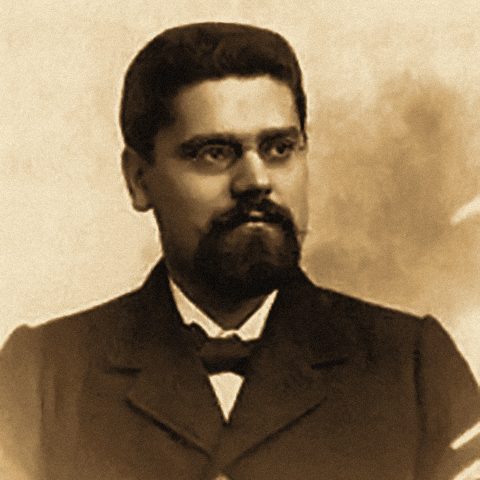
Giovanni Gentile
1875 Castelvetrano – 1944 Salviatino · Italian philosopher, educator, fascist theoretician and politician
Giovanni Gentile was an Italian pedagogue, philosopher, and politician. He was one of the primary founders of fascism.
If you like The Reform of Education
More like this


Start with “Education and Nationality”
2 chapters free right now — no account. Your place follows you to iPhone and Android.