

2 chapters freeNo account needed.
Opens “Influence of Environment upon Human Types” in the player · no sign-up needed
The work challenged widely held racist and eugenic claims about race and intelligence, particularly white supremacy.
Inside the book
- Free nowno account · 2 chapters
- —Preface36 min
- 2Influence of Environment upon Human Types56 min
- Premium8 chapters · every book, 7 days free
- 3Influence of Heredity upon Human Types21 min
- 4The Mental Traits of Primitive Man and of Civilized Man34 min
- 5Race and Language36 min
- 6The Universality of Cultural Traits22 min
- 7The Evolutionary Viewpoint26 min
- 9Summary7 min
- 10Race Problems in the United States32 min
The opening
Influence of Environment upon Human Types
AFTER having seen that the high estimate of our civilization does not necessarily imply that the carriers of this civilization have an anatomical organization superior to that of all other races, we may turn our attention to a closer investigation of the characteristics of different divisions of mankind. It is clear that our investigations cannot be based on vague descriptions of travellers,—who remark upon the enormous digestive organs of primitive man, or on his small size, or on the lack of development of his limbs, or even upon his resemblance to apes,—but on serious studies of anatomical characteristics.
Two problems may be distinguished here which have too often been confounded in discussions of the mental characteristics of civilized man and of primitive man. The one relates to the distinctions between races; the other, to distinctions between the social strata of the same race. According to the meaning of the terms "civilized" and "primitive," it is perfectly conceivable that there may be civilized groups belonging to different races (like the Chinese and Europeans), and civilized as well as primitive groups, both belonging to the same race (like the Yukaghir of Siberia and the Chinese, or like the group of educated negroes in the United States and the primitive tribes of the coasts of Africa). The problems presented by the differences between the various races of man, and by the differences between social groups in the same races, are, of course, entirely distinct, and each requires separate treatment.
There is one peculiarity common to both problems, which must be described before we can properly take up their treatment. When we compare the individuals comprising any one racial or social type, we find that they are not by any means uniform, but exhibit considerable variation. When we try to think of a Norwegian and of a negro, two entirely distinct types will be present to our minds,—the Norwegian, tall, with blond and somewhat wavy hair, blue eyes, light complexion, delicate face and nose; the negro, of medium stature, with black and frizzly hair, dark eyes, dark skin, projecting jaw, and heavy flat nose. Still, these pictures are only abstractions of what we think we have noticed most commonly in each type. When we compare the Norwegians among themselves, or the negroes among themselves, we find that each individual in each series has his peculiarities, which the others do not share. There are tall and short Norwegians; their hair is blond or dark, straight or wavy; their eyes vary from brown to blue; their complexion is light or dark, their faces more or less delicate. And so with the negroes.
The degree of blackness, the amount of projection of the chin, the flatness of the nose,—all show very considerable variations. Experience has demonstrated that in all cases of this kind, one certain type, one certain combination of features, is most common; and that deviations in either direction from this type become the rarer, the greater their amount. Thus the Norwegians show a prevalence of a certain blond color. Individuals with a color of hair much lighter than the most common color are the rarer, the greater the difference of their hair-color from the most common one; and in the same way individuals with a color of hair much darker than the most common color are the rarer, the greater the deviation of their color of hair from the common one. The extent to which such variations occur is not always the same. In some cases the individuals constituting the group show a remarkable similarity or uniformity of type; in other cases the diversity of types occurring in the same community is quite remarkable.
We call a series the more variable, the more frequently deviating types occur in it; so that the average amount of differences between the individuals constituting the series and the most common type may be used as a measure of the variability of the series.
These considerations are of prime importance in all attempts to compare different races. In some cases differences are found which are sufficiently fundamental to distinguish easily and definitely one from another. Thus the color of the skin, color and form of the hair, and configuration of lips and nose, distinguish the African negro definitely from the North European. When, however, we compare all the races and types of man, we find that innumerable transitions exist, which would make it difficult to state that any one particular feature belongs to all the individuals of one type, to the exclusion of all others. Thus it would not be difficult to find among members of the American race, for instance, lips and nose which approach in form those of the negro. The same may be said of color. This indefiniteness of distinctions between different types is due to the variability of the types, which has been described before, and to the comparatively small differences between the types.
To give an instance. Negroes have thick lips. Nevertheless the thickness is not the same among all of them. In some cases it is quite small, in others very large. Europeans have thin lips, but we can find individuals whose lips have very considerable thickness. Thus it happens that there are some negroes whose lips deviate from the normal type in being unusually thin, and whose lips are therefore similar to those of Europeans whose lips are unusually thick. The less distinct two types are, the greater will be the number of individuals in both groups that are alike. It follows also, from what has been said, that the greater the variability of each type, the greater will be the probability that some individuals of the two types compared will be alike. We may perhaps best express this by saying that the varieties constituting each race overlap. In many cases, and in some of those that are most important for our inquiry, this overlapping is extended. Thus I have pointed out the differences in average brain-weight between different races.
Brain-weights are, however, so variable, that a considerable overlapping occurs, and that even the average sizes of the brains of the white race are numerously represented among other races. Medium-sized brains of whites may be represented by the group of individuals having skull capacities of from 1450 cc. to 1650 cc. This group embraces 55 per cent of the Europeans, 58 per cent of the African negroes, and 58 per cent of the Melanesians. The same result appears when we compare the number of individuals having great cranial capacities. We find that 50 per cent of all whites have a capacity of the skull greater than 1550 cc., while 27 per cent of the negroes and 32 per cent of the Melanesians have capacities above this value. If we were to assume a direct relation between size of brain and ability,—which, as we have seen before, is not admissible,—we might, at most, anticipate a lack of men of high genius, but should not expect any great lack of faculty among the great mass of negroes living among the whites, and enjoying the advantages of the leadership of the best men of that race.
On the other hand, we find characteristics in different races so far apart and so little variable, that an overlapping is entirely or practically excluded. Examples of these are the frizzly hair of the negro as compared with the straight hair of the Mongol; the elevation and narrowness of the nose of the Armenian, and the flatness of the negro nose; the differences in pigmentation of the North European and of the Central African.
Investigations on the character of variability, which have been based on the measurements of the body, on social and economic phenomena, and also on variable physical phenomena, such as meteorological data, have resulted in the discovery that almost always the same law nearly covers the distribution of the numerical values of the observations (Lock, Bowley).
It has been shown that the values which represent the phenomenon are so distributed that certain numerical values occur very frequently, and that the greater the difference between an observation and the value at which the greatest number of cases are found, the less will be the number of these observations. The character of this distribution is shown in Fig. 1, in which the horizontal line represents the numerical values of the observations, while the vertical distances represent the frequency of that observation to which the vertical distance belongs. In the theoretical distribution which is represented in Fig. 1, the following values of the stature of a number of men are found:—
1415-1455 mm. 5 cases 1455-1495 mm. 11 cases 1495-1535 mm. 44 cases 1535-1575 mm. 135 cases 1575-1615 mm. 325 cases
1615-1655 mm. 607 cases 1655-1695 mm. 882 cases 1695-1735 mm. 1000 cases 1735-1775 mm. 882 cases 1775-1815 mm. 607 cases
1815-1855 mm. 325 cases 1855-1895 mm. 135 cases 1895-1935 mm. 44 cases 1935-1975 mm. 11 cases 1975-2015 mm. 5 cases
When we compare two series of this class which are grouped around different values, they may overlap each other. For instance, in a people of tall stature and another one of lower stature, the following theoretical distribution of numerical values of stature would be possible:—
I │ II │ 1415-1455 mm. │1425-1455 mm. │ 5 cases 1455-1495 mm. │1455-1485 mm. │ 11 cases 1495-1535 mm. │1485-1515 mm. │ 44 cases 1535-1575 mm. │1515-1545 mm. │ 135 cases 1575-1615 mm. │1545-1575 mm. │ 325 cases │ │ 1615-1655 mm. │1575-1605 mm. │ 607 cases 1655-1695 mm. │1605-1635 mm. │ 882 cases 1695-1735 mm. │1635-1665 mm. │ 1000 cases 1735-1775 mm. │1665-1695 mm. │ 882 cases 1775-1815 mm. │1695-1725 mm. │ 607 cases │ │ 1815-1855 mm. │1725-1755 mm. │ 325 cases 1855-1895 mm. │1755-1785 mm. │ 135 cases 1895-1935 mm. │1785-1815 mm. │ 44 cases 1935-1975 mm. │1815-1845 mm. │ 11 cases 1975-2015 mm. │1845-1875 mm. │ 5 cases
In these two series the group of statures from 1575 mm. to 1695 mm. occurs 1814 times in the first series, 3371 times in the second; that is to say, 1814 individuals are found in both classes, and 1557 (i.e., 3371-1814) are found only in the class of people of tall stature. In Fig. 2 I have represented these two series in one system of coordinates. Evidently all the individuals who belong to both series, and who are shown in the surface enclosed between both curves, are found in both series; and only the others, who are outside of this surface, and who belong to one of the groups, are not found in the other one.
Bearing in mind these facts relating to types and variability, we are in a position to turn to a consideration of the characteristics of primitive man and of civilized man, and of members of distinct races.
We will first direct our attention to the differences between civilized man and primitive man, both being members of the same race. For the white race this difference can no longer be observed, because there are no primitive white men in the strict sense of the term. Nevertheless we may discover certain analogues. Some of the peasants in the remote mountain districts of southeastern Europe do not live in a manner so very different from the way of living of what we ordinarily call primitive people; for the mode of life of the agricultural Indians of North America at the time of Columbus, or that of some agricultural negro tribes, is, so far as nutrition and occupation are concerned, quite similar to theirs. Also some of the fishermen on the coast of Europe may well be compared, in their mode of life, with the fishermen of America or Asia. More direct comparisons may be made among the people of eastern Asia, where we may contrast the cultured Chinese and the primitive Amur River tribes, the northern Japanese and the Ainu, the civilized Malay and the mountain tribes of Sumatra or the Philippines. Similar comparisons are possible for the negro race when we contrast the small educated class of negroes in America and the African tribesmen; and for the American race when we compare the educated Indians, particularly of Spanish America, and the tribes of the prairies and of the virgin forests.
It is obvious that in all these cases we are comparing groups of the same descent, but living in distinct economic, social, and other environmental conditions. If we find differences among them, they can only be due, directly or indirectly, to environment. Thus the fundamental problem presents itself, In how far are human types stable, in how far variable under the influences of environment?
It is difficult to take up this inquiry on the basis of a direct comparison between primitive and civilized types belonging to the same races, partly because material is hard to obtain, partly because the homogeneity of the race is often open to doubt; but it is at once apparent that every inquiry into the variability of human types living under the effect of different types of environment will help us to gain an insight into the question at issue, so that we are led to a more general discussion of the problem of the stability or variability of the form of the human body.
The principles of biological science forbid us to assume a permanent stability of bodily form. Our whole modern concept of the development of varieties and of species is based on the assumption of cumulative or sudden variation. The variations that have been found in the human body are quite in accordance with this view, and I may quote here a few words from Wiedersheim's admirable treatise on the structure of man as an index of his past history: "In the course of Phylogeny the body of Man has undergone a series of modifications which still in part find expression in his ontogeny. There are indications that changes in his organization are still continuing, and that the Man of the future will be different from the Man of to-day." The best illustrations of those changes are found in the forms of organs which are undergoing reduction. Thus we may observe that in modern man the little toe is often two-jointed, a phenomenon presumably due to lack of functional use. This condition has been observed in races going barefooted as well as in those wearing shoes, so that it cannot be ascribed to artificial causes. The teeth also show a tendency to gradual reduction, especially in the variable size of the molars and of the upper outer incisors. The third molar, or wisdom tooth, is often retained, and is in most races considerably reduced in size. Retention or slight development of the upper outer incisor is also of frequent occurrence. A similar reduction may be observed at the lower end of the thorax, where the development of ribs and sternum shows great variations.
The significance of these phenomena lies in the fact that in the evolutionary series the abnormal occurrences, which are found in different races in varying frequency, appear as new developments, which, if they should become normal, would increase the differentiation between man and the lower forms. The actual proof of increasing frequency of these features, and of their becoming permanent characteristics, has not been given, but seems more than plausible.
This inference is strongly supported by the occurrence of rudimentary, functionless organs, and by the temporary appearance of lower features during ontogenetic development.
It has been shown that some of these reductions—like the retention of outer incisors—are hereditary, and thus liable to perpetuate themselves. To a certain extent this explains the observation that certain variations occur with greater frequency among primitive tribes than in civilized man. Most primitive tribes are very small in numbers, or for long periods, during which they increased in numbers, have had little intercourse with foreign people. If in such a group any of the original families showed a certain peculiarity, it must now be found more frequently than in any other tribes. A case of this kind is the frequency of supernumerary vertebræ among the Indians of Vancouver Island, and probably also the frequency of the torus palatinus among the Lapps. It may be left an open question, whether the frequent occurrence of the os Incæ among the Pueblo Indians and Peruvians may be explained by the same consideration. Therefore it may be that the greater variability of certain races, in regard to these phenomena, is not an expression of a lower or higher degree of development of the whole group, as the case may be, but of the presence of a great number of members of a family which possessed the peculiar character. We do not deal in these cases with spontaneous variations, but with their hereditary re-appearance. In other words, if we are to admit the conclusion that greater variability means a lower or higher stage of development, it will be necessary first to prove that these variations appear spontaneously in any member of the group, and do not belong to certain families in which the feature is hereditary. Otherwise it will be necessary to prove that in larger groups of mankind the families exhibiting the particular anomaly had a greater probability of surviving than others.
However this may be, the occurrence of these variations shows that man cannot be assumed to have a stable form. It is of course an entirely open question, how long a time may be required to fix any one of the variations that we are here discussing.
The general tendency of anthropological inquiry has been to assume the permanence of the anatomical characteristics of the present races, beginning with the European races of the early neolithic times. Kollmann, the most pronounced advocate of this theory, claims that the oldest remains of man found in the neolithic deposits of Europe represent types which are still found unchanged among the modern civilized population of the continent. He has tried to identify all the varieties found in the neolithic prehistoric population with those living at the present time.
All studies of the distribution of head-forms and of other anthropometric traits have shown uniformity over considerable continuous areas and through long periods; and the natural inference has been that heredity controls anthropometric forms, and that these are therefore stable (Deniker).
There is only one exception to this rule. In all cases in which the anthropometric traits undergo very considerable changes during the period of growth, the influence of favorable or unfavorable causes makes itself felt. The investigations conducted by Gould and Baxter during the war of the Rebellion have shown that the representatives of European nationalities born in America have statures higher than the representatives of the same nationalities born in Europe; and it has been assumed that better nutrition, or perhaps better hygienic and economic conditions in general, might increase the stature of a people. These conclusions were confirmed by Bowditch's measurements of the school-children of Boston, and by Peckham's anthropometric work in Milwaukee. These changes in stature, due to changed conditions, have recently been demonstrated also in Europe, where Ammon has shown that the population of Baden has materially increased in size during the last thirty years. Other corroborative evidence has been obtained from the study of various social classes, in which Bowditch found an increase of stature, beginning with the children of unskilled laborers, and increasing among those of skilled laborers, members of the mercantile class and of the professional class; and from the observations showing a correlation between the character of streets occupied by the well-to-do and the poor, and the stature of their inhabitants (Ripley). Nevertheless these changes of stature were not interpreted as changes in type, because they may well be understood to be due to the elimination of retarding influences, which prevent many individuals from attaining their normal growth.
The results of the observations on stature are substantiated by other anthropometrical studies of various occupations. The best-authenticated fact, because based on the greatest number of observations, is the difference in type between sailors and soldiers who were measured during the war of the Rebellion. It was found that sailors had legs as long as those of the negroes, and correspondingly a shorter trunk, while their arms were equally as long as those of the soldiers of the army. We may also call to mind the investigations carried on in the gymnasiums of our colleges, which show that a series of measurements which depend largely upon the functions of groups of muscles change very rapidly under the influence of practice. It will be acknowledged at once that differences in the use of muscles during childhood, and continued in later life, must result in differences of structure, either permanent, or at least temporary.
A study of the conditions of growth shows how such changes in the form of the body must develop. Setting aside the prenatal development, we find that at the time of birth some parts of the body are so fully developed that they are not far removed from their final size, while others are quite undeveloped. Thus the skull is, comparatively speaking, large at the time of birth, grows rapidly for a short time, but very soon approaches its full size, and then continues to grow very slowly. The limbs, on the other hand, grow rapidly for many years. Other organs do not begin their rapid development until much later in life. Thus it happens that retarding or accelerating influences acting upon the body at different periods of growth may have quite different results. After the head has nearly completed its growth, retarding influences may still influence the length of the limbs. The face, which grows rapidly for a longer period than the cranium, can be influenced later than the latter. In short, the influence of environment may be the more marked, the less developed the organ that is subject to it. Data on the unequal rate of growth of different parts of the body have been furnished by Weissenberg.
The influence of retardation, so far as it has been studied, seems to be lasting. In other words, a retardation in development is never completely made good by long-continued development. When a child, through unfavorable influences, has grown slowly during a number of years, it will probably continue to grow longer than other, normal children; but the total amount of its growth will always remain too small (Boas and Wissler). On the other hand, children whose development has been accelerated will reach the adult stage early, but nevertheless the total amount of their growth will be relatively great. It follows from this consideration of the effect of retardation and of difference in period, that not only the absolute size, but also the relative proportions, of the body, must be influenced by periods of retardation or acceleration.
The whole trend of the studies of growth thus emphasizes the importance of the effect of rate of development upon the final form of the body. Illness in early childhood, malnutrition, lack of fresh air and physical exercise, are so many retarding causes, which bring it about that the growing individual of a certain age is in its physiological development younger than the healthy, well-nourished individual, who has plenty of fresh air, and who puts his muscular system to good use. Retardation or acceleration has, however, the effect of modifying the later course of development; so that the final stage will be the more favorable, the less the retarding causes.
It seems more than likely, judging from the course of development of a few simple mental activities that have been made the subject of study, that mental development follows laws quite analogous to those of physical development (Meumann).
These facts relating to growth are of fundamental importance for a correct interpretation of the oft-discussed phenomena of early arrest of growth. We have seen that among members of the same race a prolonged period of growth goes hand in hand with unfavorable development, while an abbreviated period of growth results in larger dimensions of all physical measurements, and in a superiority of mental activity. In this statement pathological cases of complete premature arrest of development, or of over-development, are of course excluded,—cases of dwarfish growth or of microcephaly, as well as cases of hypertrophic growth of organs. It follows, that, in judging the physiological value of arrest of growth, the mere fact that growth ceases in one race at an earlier time than in another cannot be considered as significant in itself without observations on the rapidity of growth.
So far, the question still remains open, in how far there may be changes in the types of man that cannot be explained by acceleration or retardation of growth.
An attempt has been made by Rieger to explain differences in head-form as due to the effect of physiological and mechanical conditions, and Engel emphasizes the effect of pressure of the muscles upon the forms of the head. Walcher tries to explain different head-forms by the consideration of the position of the infant in the cradle. He believes that position on the back produces round heads; position on the side, long heads. It would seem, however, that the difference of head-form in large areas of Europe, in which infants are treated in the same manner, are too great to make this explanation acceptable.
A number of observations have been made, however, which demonstrate conclusively a difference between urban and rural types. These observations were first made by Ammon, who showed that the urban population in Baden differs from the rural population in head-form, stature, and pigmentation. He accepts the conclusion that we have here an actual change in type; due, however, not to a direct effect of environment, but rather to an elimination of certain types in city life: in other words, an effect of natural selection. This observation is in accord with observations made by Livi in the cities of Italy, which show also a difference when compared to the surrounding country. Comparisons of the normal and hospital populations of London, made by Shrubsall, are not unfavorable to the assumption of a certain amount of correlation between morbidity and physical type, although the homogeneity of material from a metropolis like London, drawn from different social strata of a large city, remains always open to doubt.
Another explanation, given by Livi, seems to account adequately for the difference between city and country population, without necessitating the assumption of any considerable effect of natural selection, which presupposes an improbable correlation between mortality and fertility on the one hand, and traits like head-form and pigmentation on the other. The change of type in cities, so far as it has been observed, is of such character, that the city always shows greater resemblance to the average type of the whole large district in which it is located. If the local rural population is markedly short-headed, the general type over a larger area from which the city population is drawn more long-headed, then the city population will be more long-headed, and vice versâ. Unless selection can be demonstrated to occur in a sufficient number of definite families, this explanation seems simpler and adequate.
Up to quite recent times no evidence of actual changes of type was available, except the observations by Ammon and those by Livi on the physical characteristics of rural and urban populations, to which I have just referred, and some others on the influence of altitude upon physical form. In the discussions of the distribution of different types of man in Europe, peculiarities of body-form in certain areas—as in the mountains of central France, in parts of Tuscany, in the province of Zealand in Holland, in southwestern Norway—have been explained as due to the survival of old racial types, to the influence of natural selection, or to the direct influence of environment, according as the necessities of the case prompted the investigator to adduce the one cause or the other, or a combination of any two or of all, as a convenient explanation of the difficult phenomenon (Ripley). It goes without saying that haphazard application of unproved though possible theories cannot serve as proof of the effectiveness of selection or of environment in modifying types. The effectiveness of selection can be proved only by an investigation of the surviving members of a type as compared to those eliminated by death, or of a shifting of population connected with the selection of a certain type. The influence of environment requires the direct comparison of parents living under one environment with children living under another environment.
I cannot give any example in which the influence of selection has been proved beyond cavil. It seems plausible that in the criminal colonies of earlier periods, and in the settling of the West by the most vigorous members of our Eastern population, and in the complementary weeding-out of strong elements in some parts of New England, this principle may have been active; but we have no actual data which would connect with physical types the selection that has undoubtedly taken place.
On the other hand, it has been my good fortune to be able to demonstrate the existence of a direct influence of environment upon the bodily form of man by a comparison of immigrants born in Europe and their descendants born in New York City (Boas). I have investigated four groups of people,—the South Italians, representing the Mediterranean type of Europe, which is characterized by short stature, elongated head, dark complexion and hair; the Central European type, which is characterized by medium stature, short head, light hair and lighter complexion; the Northwest European type, which is characterized by tall stature, elongated head, light complexion, and blond hair. Furthermore, I have investigated an extended series of East European Hebrews, who resemble in some respects the Central European group. The traits which I selected for examination are head-measurements, stature, weight, and hair-color. Among these, only stature and weight are closely related to the rate of growth, while head-measurements and hair-color are only slightly subjected to these influences. Differences in hair-color and head-development do not belong to the group of measurements of which I spoke before, which depend in their final values upon the physiological conditions during the period of growth. From all we know, they are primarily dependent upon heredity.
The results of our inquiry have led to the unexpected result that the American-born descendants of these types differ from their parents; and that these differences develop in early childhood, and persist throughout life. It is furthermore remarkable that each type changes in a peculiar way. The head of the American-born Sicilian becomes rounder than that of the foreign-born. This is due to a loss in length and an increase in width. The face becomes narrower, the stature and weight decrease. The head of the American-born Central European loses both in length and width, more so in width, and thus becomes more elongated. The face decreases very much in width; stature and weight increase. The modifications of the American-born descendants of the Scotch type are not marked, except that stature and weight increase. The American-born Hebrew has a longer and narrower head than the European-born; the head is therefore considerably more elongated. His face is narrower; stature and weight are increased. In none of the types have marked differences in color of hair between American-born and foreign-born been found.
In order to understand the causes which bring about these alterations of type, it is necessary to know how long a time must have elapsed since the immigration of the parents before a noticeable change of type of the offspring is brought about. This investigation has been carried out mainly for the cephalic index, which, during the period of growth of the individual, undergoes only slight modifications. The investigation of the Hebrews shows very clearly that the cephalic index of the foreign-born is practically the same, no matter how old the individual at the time of immigration. This might be expected when the immigrants are adult or nearly mature; but it is of interest to note that even children who come here when one year or a few years old develop the cephalic index characteristic of the foreign-born. This index ranges around 83. When we compare the value of this index with that of the index of the American-born, according to the time elapsed since their immigration, we find a sudden change. The value drops to about 82 for those born immediately after the immigration of their parents, and drops to 79 in the second generation; i.e., among the children of American-born children of immigrants. In other words, the effect of American environment makes itself felt immediately, and increases slowly with the increase of time elapsed between the immigration of the parents and the birth of the child.
The conditions among the Sicilians and Neapolitans are quite similar to those observed among the Hebrews. The cephalic index of the foreign-born remains throughout on almost the same level. Those born in America immediately after the arrival of their parents show an increase of the cephalic index. In this case, the transition, although rapid, is not quite so sudden as among the Hebrews, probably because among those born a year before or after immigration there is some doubt as to the place of their birth. These uncertainties are due to the habit of the Italians to migrate back and forth between Italy and America before finally settling here, and to the indefiniteness of their answers in regard to the places of birth of the child, which sometimes had to be inferred from the age of the child and the year of immigration of the mother. As long as this uncertainty exists, which is hardly present at all in the data relating to the Hebrews, it does not seem necessary to assume any other cause for the more gradual change of the cephalic index about the time of immigration.
The Italian immigration is so recent, that individuals who were born many years after the arrival of their parents in America are very few in number, and no individuals of the second generation have been observed. For this reason it is hardly possible to decide whether the increase of the cephalic index continues with the length of time elapsed between the immigration of the parents and the birth of the child.
The explanation of these remarkable phenomena is not easy. Whatever their causes may be, the change in form cannot be doubted. It might, however, be claimed that the changes are not due to deep physiological causes, but to the changes of certain external factors. The composition of the immigrant population might be such that the people who came here at different periods had distinct physical characteristics, and that these are now reflected in the descendants of the older generations when compared with the more recent immigrants. It can be shown, however, that the differences between the Hebrews who immigrated at different periods between 1860 and 1909 are so slight that they cannot account for the type of the descendants of immigrants. This important point can be elucidated more definitely by the application of a different method. For this purpose I have compared the cephalic index of all immigrants of a certain year with that of their descendants. It appears from these comparisons that the differences which are exhibited by the whole series exist also between the immigrants who arrived here in a certain year and their descendants. This purely statistical explanation of the phenomenon may therefore be dismissed.
More difficult to investigate is the hypothesis that the mechanical treatment of infants may have a decided influence upon the form of the head, and that the changes in cradling and bedding which are made by some immigrants almost immediately after their arrival in America account for the changes of head-form. If this were true, the continued changes among the Hebrews might indicate merely that the American method of cradling is used the more frequently, the longer the family has resided in this country. A number of investigators have claimed that the position of the child on the back tends to produce short-headedness, and that the position on the side tends to produce long-headedness (Walcher). There is good evidence that a flattening of the occiput occurs when a very hard pillow is used and the child lies permanently on its back. This is the case, for instance, among many Indian tribes, and similar results might obtain if a swathed child were to lie permanently on its back. The prevalence of rachitis in New York would favor distortion due to pressure.
While I cannot disprove the existence of such influences, I think weighty considerations are against their acceptance. If we assume that among the Hebrews the children born abroad have a lesser length of head than those born here because they are swathed and lie more permanently on their backs than the American-born children, who can move about freely, we must conclude that there is a certain compensatory decrease in the other diameters of the head of the American-born. Since this compensation is distributed in all directions, its amount in any one direction will be very small (Boas).
The decrease in the width of head that has been observed is so large that it cannot be considered simply as an effect of compensation; but we have to make the additional hypothesis that the American-born children lie so much on their sides that a narrowing of the head is brought about by mechanical pressure. The same considerations hold good in all the other types. If, therefore, in one case the greater freedom of position of the child increases the length of its head, it is difficult to see why, among the Bohemians, the same causes should decrease both horizontal diameters of the head, and why, among the Sicilians, the length should decrease, the width increase.
The development of the width of the face seems to my mind to show most clearly that it is not the mechanical treatment of the infant that brings about the changes in question. The cephalic index suffers a very slight decrease from the second year to adult life. It is therefore evident that children who arrive in America very young cannot be much affected by American environment in regard to their cephalic index. On the other hand, if we consider a measurement that increases appreciably during the period of growth, we may expect that in children born abroad but removed to America when young, the total growth may be modified by American environment. The best material for this study is presented by the Bohemians, among whom there are relatively many full-grown American-born individuals. The width of face of Bohemians, when arranged according to their ages at the time of immigration, shows that there is a loss among those who came here as young children,—the greater, the younger they were. Continuing this comparison with the Americans born one, two, and more years after the arrival of their mothers, the width of face is seen to decrease still further. It appears, therefore, that the American environment causes a retardation of the growth of the width of face at a period when mechanical influences are no longer possible.
I have not carried through the analogous investigation for stature, because in this case the increase might simply be ascribed to the better nutrition of most of the north and central European immigrants after their immigration into this country.
There is another hypothesis which might account for the observed changes of type. If it were assumed that among the descendants of immigrants born in America there are an appreciable number who are in reality children of American fathers, not of their reputed fathers, a general assimilation by the American type would occur. Socially this condition is not at all plausible; but, on account of the importance of the phenomenon that we are discussing, it should be considered. I do not think that any of the observations that have been made are in favor of this theory. The changes that occur in the Bohemians who arrive here as young children, the different directions of the changes in distinct types, particularly the shortening of the head of Bohemians and of Italians, do not favor the assumption. Furthermore, if the modifications were due to race-mixture, the similarity between fathers and American-born children should be less than the similarity between fathers and foreign-born children, but there is no indication that this is the case.
This hypothesis is also shown to be untenable by the comparisons of fathers and mothers with their own foreign-born children. These comparisons show that the differences are the same in the case of fathers and children, and of mothers and children; so that obviously the same conditions must control the relations between fathers and their children, and mothers and their children. In other words, the fathers must be considered as the true fathers of their children.
Earnest advocates of the theory of selection might claim that all these changes are due to the effects of changes in death-rate among foreign-born and American-born; that either abroad or here individuals of certain types are more liable to die, and that thus these changes are gradually brought about. On the whole, it seems to my mind, the burden of proof would be entirely on those who claim such a correlation between head-index, width of face, etc., and death-rate,—a correlation which I think is highly improbable, and which could be proposed only to sustain the theory of selection, not on account of any available facts. I grant the desirability of settling the question by actual observations; but, until these are available, we may point out that the very suddenness of the changes after immigration, and the absence of changes due to selection by mortality among the adult foreign-born, would require such a complicated adjustment of cause and effect in regard to the correlation of mortality and bodily form, that the theory would become improbable on account of its complexity.
It would be saying too much to claim that all the distinct European types become the same in America, without mixture, solely by the action of the new environment. First of all, I have investigated only the effect of one environment, and there is every reason to believe that a number of distinct types are developing in America; but we will set aside this point, and discuss only our New York observations. Although the long-headed Sicilian becomes more round-headed in New York, the round-headed Bohemian and Hebrew more long-headed, the approach to a uniform general type cannot be established, because we do not know yet how long the changes continue, and whether they would all lead to the same result. I confess, I do not consider such a result as likely, because the proof of the plasticity of types does not imply that the plasticity is unlimited. The history of the British types in America, of the Dutch in the East Indies, of the Spaniards in South America, favors the assumption of a strictly limited plasticity. Certainly our discussion should be based on this more conservative basis until an unexpectedly wide range of variability of types can be proved. It is one of the most important problems that arise out of this investigation, to determine how far the instability or plasticity of types may extend.
Whatever the extent of these bodily changes may be, if we grant the correctness of our inferences in regard to the plasticity of human types, we are necessarily led to grant also a great plasticity of the mental make-up of human types. We have observed that features of the body which have almost obtained their final form at the time of birth show modifications of great importance in new surroundings. We have seen that others which increase during the whole period of growth, and are therefore subject to the continued effect of the new environment, are modified even among individuals who arrived here during their childhood. From these facts we must conclude that the fundamental traits of the mind, which are closely correlated with the physical condition of the body, and whose development continues over many years after physical growth has ceased, are the more subject to far-reaching changes. It is true that this is a conclusion by inference; but if we have succeeded in proving changes in the form of the body, the burden of proof will rest on those who, notwithstanding those changes, continue to claim the absolute permanence of other forms and functions of the body.
In order to gain a correct understanding of the importance of changes in the frame of the human body, it seems desirable to view the type of modern man from a somewhat different standpoint.
It is quite a number of years since Fritsch, in his studies of the anthropology of South Africa, pointed out that a peculiar difference exists in the form of the body of the Bushman and the Hottentot as compared to that of Europeans, in that the former exhibit slenderer forms of the bones, that the bone is very solid in its structure; while in the European the skeleton appears heavier, but of more open structure. Similar differences may be observed in a comparison between the skeletons of wild animals and those of domesticated animals; and this observation has led to the conclusion that the Bushmen are in their physical habitus to a certain extent like wild animals, while the Europeans resemble in their structure domesticated animals.
This point of view—namely, that the human race in its civilized forms must be compared, not with the forms of wild animals, but rather with those of domesticated animals—seems to me a very important one; and a somewhat detailed study of the conditions in which various races are found suggests that at the present time, even among the most primitive types of man, changes incident to domestication have taken place almost all over the world.
There are three different types of changes due to domestication which must be clearly distinguished. On the one hand, the bodies of domesticated animals undergo considerable transformations, owing to the change in nutrition and use of the body. On the other hand, selection and crossing have played an important part in the development of races of domesticated animals.
Some changes of the former class are due to the more regular and more ample nutrition; other changes are due to modifications of the kinds of food which the domesticated animal uses when compared with the wild animal of the same species; still others are due to the different manner in which the muscular and the nervous systems are put into use. These changes are not quite the same among carnivorous and among herbivorous animals. The dog and the cat, for instance, are fairly regularly fed when they are found in domestication; but the food which is given to them is of a quite different character from the food which the wild dog and cat eat. Even among people whose diet consists almost entirely of meat, dogs are generally fed with boiled meat, or rather with the boiled, less nutritious parts of animals; while, among other tribes which utilize to a great extent vegetable food, dogs are often fed with mush and other vegetable material. The same is true of our cats, whose diet is not by any means entirely a meat diet. The exertions which wild carnivorous animals undergo to obtain food are incomparably greater than those of domesticated carnivorous animals; and it is obvious that for this reason the muscular system and the central nervous system may undergo considerable changes.
The muscular exertions of herbivorous animals, so far as they are fed on pastures, are not so materially changed. The grazing habits of cattle and sheep in domestication are about the same as the grazing habits of wild animals of the same class; but the rapid movements and the watchfulness required for protecting the herd against carnivorous animals have completely disappeared. Stable-fed animals live under highly artificial conditions, and material changes may occur in them.
I think the changes due to these causes may be observed in the oldest types of domesticated animals, such as are found in the neolithic villages of Europe, in which native European species appear in domesticated form (Keller). They may also be observed in the dogs of the various continents, which differ markedly from the wild species from which they are derived. Even the Eskimo dog, which is a descendant of the gray wolf and still interbreeds with the gray wolf, differs in bodily form from the wild animal (Beckmann). Modifications may also be observed in newly domesticated animals, like the Chukchee reindeer, which differs in type from the wild reindeer of the same area (Bogoras). I think it very unlikely, judging from our knowledge of the methods of domestication of tribes like the Eskimo and Chukchee, that any material amount of selection has contributed to the modifications of form which are found in these races of primitive domesticated animals. Their uniformity is still fairly well marked, although they have assumed types different from the wild species.
A more marked differentiation of domesticated forms does not seem to occur until man begins to select and to isolate, more or less consciously, particular breeds. Opportunity for such isolation has been the greater, the older the domestication of any particular species. We find, therefore, that the number of distinct breeds have come to be greatest in those animals which have been under domestication for the longest periods.
The number of varieties of domesticated species has also been increased by unintentional or intentional crossing of different species, from which are derived many breeds whose ancestry it is often so difficult to unravel.
It appears, therefore, that there are three distinct causes which bring about the development of different types in domesticated animals: first, the influence of change of nutrition and mode of life; secondly, conscious selection; and, thirdly, crossing.
Among these causes, the first and the third have been most strongly active in the development of the races of man. The condition of the tribes of man the world over is such, that there are only very few whose mode of nutrition is analogous to that of wild animals, and a consideration of the stages of human culture shows that similar conditions have prevailed for a long period. I think we may safely say that in all those cases in which man practises agriculture, when he is the owner of herds of domesticated animals which are used for food, the food-supply has become regular, and is obtained by an application of the muscular system in highly specialized directions. Examples of this condition are, for instance, the central African negroes, who have their gardens near their villages, the cultivation of the gardens being essentially the work of the women, while the men are engaged in various specialized industrial pursuits. Neither is the manner of the use of the body which is applied by wild animals for protection against enemies found among these tribes. The manner of combat is one in which muscular strength alone is not decisive, but where excellence of weapons and strategy count as much as mere strength and agility. The conditions among the American agricultural Indians of the Mississippi Valley or of those of the South American forests are similar in character.
As an example of a pastoral people among whom considerable regularity in nutrition obtains, we might mention the reindeer-breeders of Siberia or the cattle-breeders of Africa.
We know, of course, that among all these people, periods of starvation occur, due to a failure of the crops or to epidemics in the herds; but the normal condition is one of fairly regular and ample food-supply.
The conditions among fishing tribes are not very different; and we find that, owing to methods of storing provisions, and to the superabundance of food-supply obtained in one season and sufficient to last for the rest of the year, the nutrition of these people is also fairly regular. In this case, also, the kind of muscular exertion required for obtaining food is specialized, and differs from that required from the simple pursuit of game.
The only modern tribes among which the effects of civilization on bodily activities are slight are those who, like the Bushmen of South Africa, the Australians, the Eskimo of Arctic America, the Veddahs of Ceylon, obtain their livelihood by the constant, daily-repeated pursuit of animals, or by the gathering of plants or small invertebrates which grow scattered over a wide area.
Connected with these conditions are also the characteristic selections of food-stuffs by different tribes, such as the exclusive meat diet of some tribes (perhaps most pronounced among the Eskimo) and the exclusive vegetable diet of others, well developed, for instance, in southern Asia. Both of these have, in all probability, a far-reaching effect upon the bodily form of these races.
The second group of causes which is most potent in developing distinct races of domesticated animals—namely, conscious selection—has probably never been very active in the races of man. We do not know of a single case in which it can be shown that intermarriage between distinct types of the same descent was prohibited; and whatever selection there may have been in the development of primitive society seems to have been rather that type of natural selection which encourages the mating of like with like, or such intricate selection as is due to the social laws of intermarriage, which prevented intermarriages of relatives of certain grades, and often also of members of different generations. Thus a very common form of marriage restriction brings it about that among certain tribes the children of brother and sister intermarry, while the children of brothers and the children of sisters are not allowed to intermarry. Similar restrictions are found in great number, and may possibly have had a certain selective effect, although their operation can hardly be assumed to have had very marked results upon the form of the human body (Pearson).
In some cases social laws have had the indirect effect of perpetuating distinctions between separate parts of a population, or at least of retarding their complete amalgamation. This is the case where laws of endogamy relate to groups of distinct descent, and may be observed, for instance, among the castes of Bengal, where the low castes are of the characteristic South Indian type, while the highest castes preserve the type of the tribes of northwestern India (Risley and Gait). The numerous intermediate castes show, however, that the laws of endogamy, even where they are as stringent as those of India, cannot prevent blood-mixture. Whether or not in extreme cases endogamy in small groups, as among the ancient Egyptians, has led to the development of well-defined types, is a question that cannot be answered; but it is certain that none of these types, when found in a large population, have survived.
The third element of domestication, on the other hand, has probably been very important in the development of the races of man. Crossings between distinct types are so markedly common in the history of primitive people, and so markedly rare in the history of wild animals, that in this case the analogy between domesticated animals and man becomes very clear. Cases of hybrid forms in nature are almost everywhere rare; while, as I have pointed out before, domesticated animals have been crossed and recrossed without end. Crossings between the most distinct types of man are also of very common occurrence. As an instance, I might mention the intermarriages between the Hamitic tribes of the Sahara and the negro tribes of the Soudan (Nachtigal); the mixtures between the Negritos and Malay, which are of such common occurrence in the Malay Peninsula (Martin), and which are probably to a great extent the cause of the peculiar distribution of types in the whole Malay Archipelago; the mixtures which have taken place in Fiji; that of the Ainu and Japanese in the northern part of Japan; of European and Mongol in eastern Europe; not to speak of the more recent mixtures between European and other races which were incident to the gradual distribution of the European race over the whole world.
This point of view—namely, the consideration of man as a domesticated being (with the sole exception, perhaps, of a few hunting tribes)—is also of great importance for a clear understanding of his mental activities. The behavior of primitive domesticated animals, like that of the Eskimo dog or of the Chukchee reindeer, is decidedly different from the behavior of wild animals. We might perhaps say that the range of mentality of the domesticated forms seems to be, on the whole, wider, and this condition increases with increasing degree of domestication. Cases in which the mental activities of domesticated animals are more deficient than those of the wild animals, do occur, but are not as frequent as the reverse cases. An example of this kind is furnished by sheep.
We are thus led to the conclusion that environment has an important effect upon the anatomical structure and physiological functions of man; and that for this reason differences of type and action between primitive and civilized groups of the same race must be expected. It seems plausible that one of the most potent causes of these modifications must be looked for in the progressive domestication of man incident to the advance of civilization.
About the author
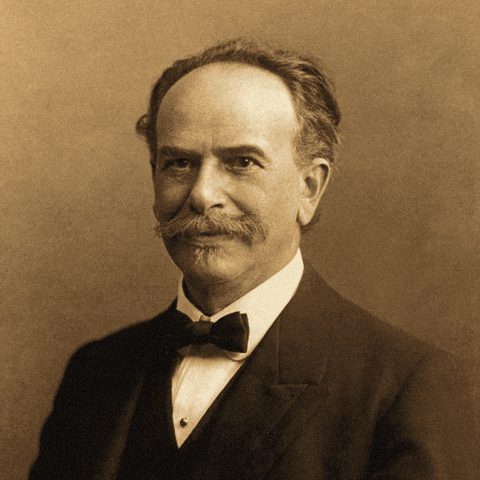
Franz Boas
1858 Minden – 1942 New York City · German-American anthropologist
Franz Uri Boas was a German-American anthropologist and ethnomusicologist. He was a pioneer of modern anthropology who has been called the "Father of American Anthropology".
- 1858Born, Minden
- 1911The Mind of Primitive Man
- 1942Died, New York City
If you like The Mind of Primitive Man
More like this


Start with “Influence of Environment upon Human Types”
2 chapters free right now — no account. Your place follows you to iPhone and Android.