

2 chapters freeNo account needed.
Opens “Rise and Conditions of the Philosophical Theory of T...” in the player · no sign-up needed
Drawing on Rousseau, Kant and Hegel, Bosanquet takes up the paradox of political obligation, how people can be both free and governed, and answers it with the idea of a 'real' or general will expressed in the state and its institutions.
Inside the book
- Free nowno account · 2 chapters
- —Preface7 min
- 1Rise and Conditions of the Philosophical Theory of T...22 min
- Premium13 chapters · every book, 7 days free
- 2Sociological Compared with Philosophical Theory56 min
- 3The Paradox of Political Obligation: Self-Government40 min
- 4The Problem of Political Obligation More Radically T...36 min
- 5The Conception of A "Real" Will31 min
- 6The Conception of Liberty, as Illustrated by the for...48 min
- 7Psychological Illustration of the Idea of A Real or...37 min
- 9Chapter 8, part 142 min
- 10Chapter 8, part 243 min
- 9Rousseau's Theory as Applied to the Modern State: Ka...34 min
- 12Chapter 10, part 132 min
- 13Chapter 10, part 232 min
- 14Chapter 11, part 130 min
- 15Chapter 11, part 230 min
The opening
Rise and Conditions of the Philosophical Theory of T...
Rise And Conditions Of The Philosophical Theory Of The State
1. First, it will be well to indicate, in a very few words, what is implied in a "philosophical theory," as distinguished from theories which make no claim to be philosophical. The primary difference is, that a philosophical treatment is the study of some thing as a whole and for its own sake. In a certain sense it may be compared to the gaze of a child or of an artist. It deals, that is, with the total and unbroken effect of its object. It desires to ascertain what a thing is, what is its full characteristic and being, its achievement in the general act of the world. History, explanation, analysis into cause and conditions, have value for it only in so far as they contribute to the intelligent estimation of the fullest nature and capabilities of the real individual whole which is under investigation. We all know that a flower is one thing for the geometrician, another for the chemist, another for the botanist, and another, again, for the artist. Now, philosophy can of course make no pretension to cope with any one of the specialists on his own ground.
But the general nature of the task imposed upon it is this: aiding itself, so far as possible, by the trained vision of all specialists, to make some attempt to see the full significance of the flower as a word or letter in the great book of the world. And this we call studying it, as it is, and for its own sake, without reservation or presupposition. It is assumed, then, for the purpose of a philosophical treatment, that everything, and more particularly in this case the political life of man, has a nature of its own, which is worthy of investigation on its own merits and for its own sake. How its phases come into being, or what causes or conditions have played a part in its growth, are other questions well worthy of investigation. But the philosophical problem is rather to see our object as it is and to learn what it is, to estimate, so to speak, its kind and degree of self-maintenance in the world, than to trace its history or to analyse its causation.
Yet such phrases as "what it is" and "for its own sake" must not mislead us. They do not mean that the nature of any reality which we experience can be appreciated in isolation from the general world of life and knowledge. On the contrary, they imply that when fully and fairly considered from the most thoroughly adequate point of view, our subject matter will reveal its true position and relations with reference to all else that man can do and can know. This position and these relations constitute its rank or significance in the totality of experience, and this value or significance—in the present case, what the form of life in question enables man to do and to become—is just what we mean by its nature "in itself," or its full and complete nature, or its significance when thoroughly studied "for its own sake" from an adequate point of view. Further illustrations of the distinction between an adequate point of view and partial or limited modes of consideration, and of the relations between the former and the latter, will be found in the following chapter.
2. In a certain sense it would be true to say that wherever men have lived, there has always been a "State." That is to say, there has been some association or corporation, larger than the family, and acknowledging no power superior to itself. But it is obvious that the experience of a State in this general sense of the word is not co-extensive with true political experience, and that something much more definite than this is necessary to awaken curiosity as to the nature and value of the community in which man finds himself to be a member.
Such curiosity has been awakened and sustained principally if not exclusively by two kindred types of associated life—the City-state of ancient Greece, and the Nation-state of the modern world. It will throw light on the nature of our subject if we glance rapidly at the characteristics to which it is due that political philosophy began in connection with the former, and revived in connection with the latter.
In considering the Greek city-states in connection with the birth of political philosophy, there are three points which press upon our attention: a. the type of experience which they presented; b. the type of mind which that experience implied; and c. the type of interpretation which such a mind elicited from such an experience.
a. A Greek city-state presented a marked contrast to the modes of human association which prevailed in the non-Greek world. It differed from them above all things by its distinct individuality. No doubt there was a recognisable character in the life and conduct of Egypt or of Assyria, of Phoenicia or of Israel. But the community which has a youth, a maturity, and a decadence, as distinct as those of a single human being, and very nearly as self-conscious; which has a tone and spirit as recognisable in the words and bearing of its members as those of a character in a play; and which expresses its mind in the various regions of human action and endurance much as an artist expresses his individuality in the creations of his genius—such a community had existed, before the beginnings of the modern world, in the Greek city-state, and in the Greek city-state alone. A political consciousness in the strict sense was a necessary factor in the experience of such a commonwealth. The demand for "autonomy"—government by one's own law,—and for "isonomy"—government according to equal law—though far from being always satisfied, was inherent in the Greek nature; and its strenuousness was evinced by the throes of revolution and the labours of legislation which were shaking the world of Greece at the dawn of history. The very instrument of all political action was invented, so far as we can see, by the Greeks. The simple device by which an orderly vote is taken, and the minority acquiesce in the will of the majority as if it had been their own—an invention no less definite than that of the lever or the wheel—is found for the first time as an everyday method of decision in Greek political life.
b. Such a type of experience implies a corresponding type of mind. It is not surprising that science and philosophy should owe their birth to the genius from which politics sprang. For politics is the expression of reason in the relations that bind man to man, as science and philosophy are the expression of it in the relations which link together man's whole experience. The mind which can recognise itself practically in the order of the commonwealth, can recognise itself theoretically in the order of nature. And ultimately, though not at first (for curiosity is awakened by objects perceived in space and time, before attention is turned to the very hinge and centre of man's own being), science passes into philosophy; and mind, and conduct, and the political consciousness, are themselves made objects of speculation. It has become a commonplace that this transference of curiosity from the outer to the inner—really, that is, from the partial to the total world—took shape in the work of Socrates, who invested with the greatness of his own intelligence and character a movement which the needs of the age had rendered inevitable. And thus there arose the ethical and political philosophy of Plato and Aristotle, the successors of Socrates, just at the time when the distinctive political life of Greece was beginning to decay.
c. This philosophy, like all genuine philosophy, was an interpretation of the experience presented to it; and in this case the interpretation was due to minds which were themselves a part of the phenomena on which they reflected. Such minds, hostile as they may feel themselves to the spirit of the age, and however passionately they may cry out for reform or for revolution, are none the less its representatives; and their interpretation, though it may modify and even mutilate the phenomena, will nevertheless be found to throw the central forces and principles of the time into the clearest light. So Plato's negative treatment of the family, and of other elements which seem essential to Greek civilisation, was no bar to his grasping, and representing with unequalled force, the central principle of the life around him. The fundamental idea of Greek political philosophy, as we find it in Plato and Aristotle, is that the human mind can only attain its full and proper life in a community of minds, or more strictly in a community pervaded by a single mind, uttering itself consistently though differently in the life and action of every member of the community.
This conception is otherwise expressed by such phrases as "the State is natural," i.e. is a growth or evolution, apart from which the end implied in man's origin cannot be attained; "the State is prior to the individual," i.e. there is a principle or condition underlying the life of the human individual, which will not admit of that life becoming what it has in it to be, unless the full sphere or arena which is constituted by the life of the State is realised in fact. The whole is summed up in the famous expression of Aristotle, "Man is a creature formed for the life of the City-state." The working out of this idea, as we find it in Plato's commonwealth, is bizarre to our minds; but its difficulty really lies in its simplicity and directness; and there is no sound political philosophy which is not an embodiment of Plato's conception.
The central idea is this: that every class of persons in the community—the statesman, the soldier, the workman—has a certain distinctive type of mind which fits its members for their functions, and that the community essentially consists in the working of these types of mind in their connection with one another, which connection constitutes their subordination to the common good. This working or adjustment obviously depends in the last resort on the qualities present in the innermost souls of the members of the community; and thus the outward organisation of society is really as it were a body which at every point and in every movement expresses the characteristics of a mind. We must not pause here to follow up the consequences of such a conception; but it will be seen at once, by those who reflect upon it, to imply that every individual mind must have its qualities drawn out in various ways to answer to—in fact, to constitute—the relations and functions which make up the community; and that in this sense every mind is a mirror or impression of the whole community from its own peculiar point of view.
The ethical assumption or principle of Plato's conception is, that a healthy organisation of the commonwealth will involve, by a necessary connection, a healthy balance and adjustment of qualities in the individual soul, and vice versa. An attempt will be made to illustrate this principle further in the latter portion of the present work. The general nature of Plato's conception—the characteristic conception of Greek political philosophy—is all that concerns us here.
It is important to observe that during the very genesis of this philosophical conception of society, an antagonistic view was powerfully represented. The individual could not freely find himself in the community unless he was capable of repudiating it; the possibility of negation, as a logician might express it, is necessary to a really significant affirmation. Thus we find in the very age of Plato and Aristotle the most startling anticipations of those modern ideas which seem diametrically opposed to theirs. We find the idea of nature identified not with the mature fulness, but with the empty starting point of life; we meet with the phenomena of vegetarianism, water-drinking, the reduction of dress to its minimum, in short, the familiar symptoms of the longing for the "return to nature," with all that it implies; we find law and political unity treated as a tissue of artifice and convention, and the individual disdaining to identify himself with the citizenship of a single state, but claiming to be a stranger in the city and a citizen of the world. To prove that these ideas were not without their justification, it is enough to point out that in some instances they were accompanied by a polemic against slavery, which, as a form of solidarity, was upheld in a qualified sense at least by Aristotle. The existence of this negative criticism is enough to show how distinctly the Greek intellect set before itself the fundamental problem of the relation between the individual and society, and of how high a quality was the bond of union which maintained this relation in such intimacy among minds of a temper so analytic.
3. Many writers have told the story of the change which came over the mind of Greece when the independent sovereignty of its City-states became a thing of the past. For our purpose it is enough to draw attention to the fact that with this change the political or social philosophy of the great Greek time not only lost its supremacy, but almost ceased to be understood. From this period forward, till the rise of the modern Nation-states, men's thoughts about life and conduct were cast in the mould of moral theory, of religious mysticism and theology, or of jurisprudence. The individual demanded in the sphere of ethics and religion to be shown a life sufficing to himself apart from any determinate human society—a problem which Plato and Aristotle had assumed to be insoluble. Stoicism and Epicureanism, the earliest non-national creeds of the western world, triumphantly developed the ideas which at first, as we saw, were little more than a rebellion against the central Socratic philosophy. Cosmopolitanism, the conception of humanity, the ideal of a "Society of Friends"—the Epicurean league—from which women were not excluded, and the precept of "not expecting from life more than it has to give," take the place of the highly individualised commonwealth, with its strenuous masculine life of war and politics, and its passionate temper which felt that nothing had been accomplished so long as anything remained undone.
With this change of temper in the civilised world there is brought into prominence a great deal of human nature which had not found expression through the immediate successors of Socrates. In the period between Aristotle and Cicero there is more than a whisper of the sound which meets us like a trumpet blast in the New Testament, "neither Jew nor Greek, barbarian nor Scythian, bond nor free." But the unworldliness which took final shape in Christianity was destined to undergo a long transmigration through shapes of other-worldliness before it should return in modern thought to the unity from which it started; and the history of ethics and religion has little bearing upon true political theory between the death of Aristotle and the awakening of the modern consciousness in the Reformation.
In so far as the political ideas of antiquity were preserved to modern times otherwise than in the manuscripts of Plato and Aristotle, the influence which preserved them was that of Roman Jurisprudence. The Roman rule, though it stereotyped the state of things in which genuine political function and the spur of freedom were unknown, had one peculiar gift by which it handed to posterity the germs of a great conception of human life. This is not the place to describe at length the origin of that vast practical induction from the working of the "foreigners' court" at Rome which obtained for itself the name of the Law of Nations, and which, as tinged with ideal theory, was known as the Law of Nature. Whatever fallacies may be near at hand when "natural right" is named, the conception that there is in man, as such, something which must be respected, a law of life which is his "nature," being indeed another name for his reason, and in some sense or other a "freedom" and an "equality" which are his birthright—this conception was not merely a legacy from Stoic ideas, which had almost a religious inspiration, but was solidly founded on the judicial experience of the most practical race that the world has ever seen.
4. In order that the forces which lay hidden in the conception of Natural Right and Freedom, like the powers of vegetation in a seed, might unfold themselves in the modern world, it was necessary that conditions should recur analogous to those which had first elicited them. And these earlier conditions were those of the Greek City-state; for it was here, as we have seen, that the conception of man's nature had flourished, as the idea of a purposive evolution into a full and many-sided social life, while in Stoic philosophy and Roman juristic theory it had become more and more a shibboleth and a formula which lost in depth of meaning what it gained in range of application.
To restore their ancient significance, expanded in conformity with a larger order of things, to the traditional formulae, demanded just the type of experience which was furnished by the modern Nation-state. The growth of Nation-states in modern Europe was in progress, we are told, from the ninth to the fifteenth century. And it is towards and after the close of this period, and especially in the seventeenth century when the national consciousness of the English people, as of others, had become thoroughly awakened, that political speculation in the strict sense begins again, after an interval extending back to the Politics of Aristotle. To let one example serve for many; when we read John of Gaunt's praises of England in Shakespeare's Richard II., we feel ourselves at once in contact with the mind of a social unity, such as necessarily to raise in any inquiring intelligence all those problems which were raised for Plato and Aristotle by the individuality of Athens and Sparta. And so we see the earliest political speculation of the modern world groping, as it were, for ideas by help of which to explain the experience of an individual self-governing sovereign society. And for the most part the ideas that offer themselves are those of Roman Jurisprudence, but distorted by political applications and by the rhetoric of Protestant fanaticism. As Mr. Ritchie points out, the conception of natural right and a law of nature makes a strange but effective coalition with the temper of the Wycliffite cry
"When Adam dalf, and Eve span, Who was then the gentleman?"
The notions of contract, of force, of representation in a single legal "person," are now applied separately or together to the phenomenon of the self-governing individual community. But the solution remains imperfect, and the fundamental fact of self-government refuses to be construed either as the association of individuals, originally free and equal, for certain limited purposes, or as the absolute absorption of their wills in the "person" of a despotic sovereign.
Natural Rights, p. 8.
The revival of a true philosophical meaning within the abstract terms of juristic tradition was the work of the eighteenth century as a whole. For the sake of clearness, and with as much historical justice as ever attaches to an attribution of the kind, we may connect it with the name of a single man—Jean Jacques Rousseau. For it is Rousseau who stands midway between Hobbes and Locke on the one hand, and Kant and Hegel on the other, and in whose writings the actual revival of the full idea of human nature may be watched from paragraph to paragraph as it struggles to throw off the husk of an effete tradition. Between Locke and Rousseau the genius of Vico and of Montesquieu had given a new meaning to the dry formulae of law by showing the sap of society circulating within them. Moreover the revived experience of the Greeks came in the nick of time. It was influential with Rousseau himself, and little as he grasped the political possibilities of a modern society, in matters of sheer principle this influence led him on the whole in the right direction. His insight was just, when it showed him that every political whole presented the same problem which had been presented by the Greek City-state, and involved the same principles. And he bequeathed to his successors the task of substituting for the mere words and fictions of contract, nature, and original freedom, the idea of the common life of an essentially social being, expressing and sustaining the human will at its best.
According to the view here indicated, the resurrection of true political philosophy out of the dead body of juristic abstractions was inaugurated by Vico and Montesquieu, and decisively declared itself in Jean Jacques Rousseau. The idea which most of us have formed of "the new Evangel of a Contrat Social" is not in harmony with this representation of the matter. Was it, we may be asked, a genuine political philosophy which inspired the leaders of the French Revolution? And the question cannot be evaded by denying all connection between the theory and the practice of that age. The phraseology of the revolutionary declarations—which will strike the reader accustomed to nineteenth century socialism as exceedingly moderate and even conservative in tone—is undoubtedly to a great extent borrowed from Rousseau's writings.
See the very interesting collection of documents in the Appendix to Professor Ritchie's Natural Rights.
Perhaps the truth of the matter may be approached as follows. The popular rendering of a great man's views is singularly liable to run straight into the pit-falls against which he more particularly warned the world. This could be proved true in an extraordinary degree of such men as Plato and Spinoza, and still more astonishingly, perhaps, of the founder of the Christian religion. The reason is obvious. A great man works with the ideas of his age, and regenerates them. But in as far as he regenerates them, he gets beyond the ordinary mind; while in as far as he operates with them, he remains accessible to it. And his own mind has its ordinary side; the regeneration of ideas which he is able to effect is not complete, and the notions of the day not only limit his entire range of achievement—where the strongest runner will get to must depend on where he starts—but float about unassimilated within his living stream of thought. Now all this ordinary side of his mind will partake of the strength and splendour of his whole nature. And thus he will seem to have preached the very superstitions which he combated. For in part he has done so, being himself infected; in part the overwhelming bias of his interpreters has reversed the meaning of his very warnings, by transferring the importance, due to his central thought, to some detail or metaphor which belongs to the lower level of his mind. It is an old story how Spinoza, "the God-intoxicated man," was held to be an "atheist," when in truth he was rather an "acosmist"; and in the same way, on a lower plane, the writer who struggled through to the idea that true sovereignty lay in the dominion of a common social good as expressed through law and institutions, is held to have ascribed absolute supremacy to that chance combination of individual voices in a majority, which he expressly pointed out to have, in itself, no authority at all.
But there is something more to be said of cases, like that under discussion, where a great man's ideas touch the practical world. If the complete and positive idea becomes narrow and negative as it impinges upon every-day life, this may be not only a consequence of its transmission through every-day minds, but a qualification for the work it has to do. The narrower truth may be, so to speak, the cutting edge of the more complete, as the negation is of the affirmation. And the vulgar notion of popular sovereignty and of natural right may have been necessary to do a work which a more organic social theory would have been too delicate to achieve. Like the faith in a speedy second coming of Christ among the early Christians, the gospel according to Jean Jacques may have taken for the minds of Revolutionary France a form which was serviceable as well as inevitable at the moment. If, as we said above, the great man is always misunderstood, it seems to follow that when his germinal ideas have been sown they must assert themselves first in lower phases if they are ever to bear fruit at all. And therefore, while not denying the influence of Rousseau on the Revolution, we shall attempt to show that he had another and a later influence, more adequate to the true reach of his genius.
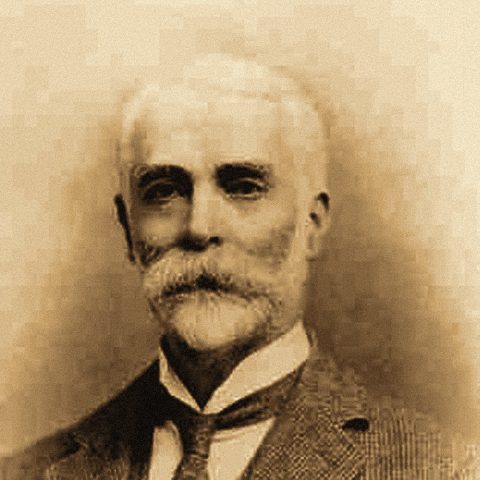
About the author
Bernard Bosanquet
1848 Alnwick – 1923 London · English philosopher
Bernard Bosanquet was an English philosopher and political theorist, and an influential figure on matters of political and social policy in the late 19th and early 20th centuries. His work influenced but was later subject to criticism by many thinkers, notably Bertrand Russell, John Dewey, William James and Ludwig Wittgenstein.
If you like The Philosophical Theory of the State
More like this


Start with “Rise and Conditions of the Philosophical Theory of T...”
2 chapters free right now — no account. Your place follows you to iPhone and Android.