
The History of Freedom, and Other Essays
 John Emerich Edward Dalberg Acton1834–1902
3 chapters freeNo account needed.
Opens “The History Of Freedom In Antiquity[2] (part 1)” in the player · no sign-up needed
The History of Freedom, and Other Essays is a 1907 posthumous collection of essays and reviews by the English historian Lord Acton.
Inside the book
- Free nowno account · 3 chapters
- —Part 1 of 2: Prefatory Note29 min
- —Part 2 of 230 min
- 1The History Of Freedom In Antiquity[2] (part 1)27 min
- Premium17 chapters · every book, 7 days free
- 1The History Of Freedom In Antiquity[2] (part 2)29 min
- 5The Protestant Theory of Persecution[193]54 min
- 6Political Thoughts on the Church[300]44 min
- 7Introduction to L.A. Burd's Edition of Il Principe by Machiavelli42 min
- 10Döllinger On The Temporal Power[334]In 3 parts · Part 1 · 50:10 + Part 2 · 50:41 + Part 3 · 53:072 h 34 m
- 11Döllinger's Historical Work[338]In 3 parts · Part 1 · 39:29 + Part 2 · 40:10 + Part 3 · 42:362 h 02 m
- 12Cardinal Wiseman and the Home and Foreign Review[339]48 min
- 15A History of the Inquisition of the Middle Ages. B49 min
- 16The American Commonwealth. B26 min
- 17Historical Philosophy in France and French Belgium and Switzerland18 min
The opening
The History Of Freedom In Antiquity[2] (part 1)
Liberty, next to religion, has been the motive of good deeds and the common pretext of crime, from the sowing of the seed at Athens, two thousand four hundred and sixty years ago, until the ripened harvest was gathered by men of our race. It is the delicate fruit of a mature civilisation; and scarcely a century has passed since nations, that knew the meaning of the term, resolved to be free. In every age its progress has been beset by its natural enemies, by ignorance and superstition, by lust of conquest and by love of ease, by the strong man's craving for power, and the poor man's craving for food. During long intervals it has been utterly arrested, when nations were being rescued from barbarism and from the grasp of strangers, and when the perpetual struggle for existence, depriving men of all interest and understanding in politics, has made them eager to sell their birthright for a mess of pottage, and ignorant of the treasure they resigned. At all times sincere friends of freedom have been rare, and its triumphs have been due to minorities, that have prevailed by associating themselves with auxiliaries whose objects often differed from their own; and this association, which is always dangerous, has been sometimes disastrous, by giving to opponents just grounds of opposition, and by kindling dispute over the spoils in the hour of success. No obstacle has been so constant, or so difficult to overcome, as uncertainty and confusion touching the nature of true liberty. If hostile interests have wrought much injury, false ideas have wrought still more; and its advance is recorded in the increase of knowledge, as much as in the improvement of laws. The history of institutions is often a history of deception and illusions; for their virtue depends on the ideas that produce and on the spirit that preserves them, and the form may remain unaltered when the substance has passed away.
A few familiar examples from modern politics will explain why it is that the burden of my argument will lie outside the domain of legislation. It is often said that our Constitution attained its formal perfection in 1679, when the Habeas Corpus Act was passed. Yet Charles II. succeeded, only two years later, in making himself independent of Parliament. In 1789, while the States-General assembled at Versailles, the Spanish Cortes, older than Magna Charta and more venerable than our House of Commons, were summoned after an interval of generations, but they immediately prayed the King to abstain from consulting them, and to make his reforms of his own wisdom and authority. According to the common opinion, indirect elections are a safeguard of conservatism. But all the Assemblies of the French Revolution issued from indirect elections. A restricted suffrage is another reputed security for monarchy.
But the Parliament of Charles X., which was returned by 90,000 electors, resisted and overthrew the throne; while the Parliament of Louis Philippe, chosen by a Constitution of 250,000, obsequiously promoted the reactionary policy of his Ministers, and in the fatal division which, by rejecting reform, laid the monarchy in the dust, Guizot's majority was obtained by the votes of 129 public functionaries. An unpaid legislature is, for obvious reasons, more independent than most of the Continental legislatures which receive pay. But it would be unreasonable in America to send a member as far as from here to Constantinople to live for twelve months at his own expense in the dearest of capital cities. Legally and to outward seeming the American President is the successor of Washington, and still enjoys powers devised and limited by the Convention of Philadelphia. In reality the new President differs from the Magistrate imagined by the Fathers of the Republic as widely as Monarchy from Democracy, for he is expected to make 70,000 changes in the public service; fifty years ago John Quincy Adams dismissed only two men.
The purchase of judicial appointments is manifestly indefensible; yet in the old French monarchy that monstrous practice created the only corporation able to resist the king. Official corruption, which would ruin a commonwealth, serves in Russia as a salutary relief from the pressure of absolutism. There are conditions in which it is scarcely a hyperbole to say that slavery itself is a stage on the road to freedom. Therefore we are not so much concerned this evening with the dead letter of edicts and of statutes as with the living thoughts of men. A century ago it was perfectly well known that whoever had one audience of a Master in Chancery was made to pay for three, but no man heeded the enormity until it suggested to a young lawyer that it might be well to question and examine with rigorous suspicion every part of a system in which such things were done. The day on which that gleam lighted up the clear hard mind of Jeremy Bentham is memorable in the political calendar beyond the entire administration of many statesmen. It would be easy to point out a paragraph in St.
Augustine, or a sentence of Grotius that outweighs in influence the Acts of fifty Parliaments, and our cause owes more to Cicero and Seneca, to Vinet and Tocqueville, than to the laws of Lycurgus or the Five Codes of France.
By liberty I mean the assurance that every man shall be protected in doing what he believes his duty against the influence of authority and majorities, custom and opinion. The State is competent to assign duties and draw the line between good and evil only in its immediate sphere. Beyond the limits of things necessary for its well-being, it can only give indirect help to fight the battle of life by promoting the influences which prevail against temptation,—religion, education, and the distribution of wealth. In ancient times the State absorbed authorities not its own, and intruded on the domain of personal freedom. In the Middle Ages it possessed too little authority, and suffered others to intrude. Modern States fall habitually into both excesses. The most certain test by which we judge whether a country is really free is the amount of security enjoyed by minorities. Liberty, by this definition, is the essential condition and guardian of religion; and it is in the history of the Chosen People, accordingly, that the first illustrations of my subject are obtained.
The government of the Israelites was a Federation, held together by no political authority, but by the unity of race and faith, and founded, not on physical force, but on a voluntary covenant. The principle of self-government was carried out not only in each tribe, but in every group of at least 120 families; and there was neither privilege of rank nor inequality before the law. Monarchy was so alien to the primitive spirit of the community that it was resisted by Samuel in that momentous protestation and warning which all the kingdoms of Asia and many of the kingdoms of Europe have unceasingly confirmed. The throne was erected on a compact; and the king was deprived of the right of legislation among a people that recognised no lawgiver but God, whose highest aim in politics was to restore the original purity of the constitution, and to make its government conform to the ideal type that was hallowed by the sanctions of heaven.
The inspired men who rose in unfailing succession to prophesy against the usurper and the tyrant, constantly proclaimed that the laws, which were divine, were paramount over sinful rulers, and appealed from the established authorities, from the king, the priests, and the princes of the people, to the healing forces that slept in the uncorrupted consciences of the masses. Thus the example of the Hebrew nation laid down the parallel lines on which all freedom has been won—the doctrine of national tradition and the doctrine of the higher law; the principle that a constitution grows from a root, by process of development, and not of essential change; and the principle that all political authorities must be tested and reformed according to a code which was not made by man. The operation of these principles, in unison, or in antagonism, occupies the whole of the space we are going over together.
The conflict between liberty under divine authority and the absolutism of human authorities ended disastrously. In the year 622 a supreme effort was made at Jerusalem to reform and preserve the State. The High Priest produced from the temple of Jehovah the book of the deserted and forgotten Law, and both king and people bound themselves by solemn oaths to observe it. But that early example of limited monarchy and of the supremacy of law neither lasted nor spread; and the forces by which freedom has conquered must be sought elsewhere. In the very year 586, in which the flood of Asiatic despotism closed over the city which had been, and was destined again to be, the sanctuary of freedom in the East, a new home was prepared for it in the West, where, guarded by the sea and the mountains, and by valiant hearts, that stately plant was reared under whose shade we dwell, and which is extending its invincible arms so slowly and yet so surely over the civilised world.
According to a famous saying of the most famous authoress of the Continent, liberty is ancient, and it is despotism that is new. It has been the pride of recent historians to vindicate the truth of that maxim. The heroic age of Greece confirms it, and it is still more conspicuously true of Teutonic Europe. Wherever we can trace the earlier life of the Aryan nations we discover germs which favouring circumstances and assiduous culture might have developed into free societies. They exhibit some sense of common interest in common concerns, little reverence for external authority, and an imperfect sense of the function and supremacy of the State. Where the division of property and labour is incomplete there is little division of classes and of power. Until societies are tried by the complex problems of civilisation they may escape despotism, as societies that are undisturbed by religious diversity avoid persecution.
In general, the forms of the patriarchal age failed to resist the growth of absolute States when the difficulties and temptations of advancing life began to tell; and with one sovereign exception, which is not within my scope to-day, it is scarcely possible to trace their survival in the institutions of later times. Six hundred years before the birth of Christ absolutism held unbounded sway. Throughout the East it was propped by the unchanging influence of priests and armies. In the West, where there were no sacred books requiring trained interpreters, the priesthood acquired no preponderance, and when the kings were overthrown their powers passed to aristocracies of birth. What followed, during many generations, was the cruel domination of class over class, the oppression of the poor by the rich, and of the ignorant by the wise. The spirit of that domination found passionate utterance in the verses of the aristocratic poet Theognis, a man of genius and refinement, who avows that he longed to drink the blood of his political adversaries. From these oppressors the people of many cities sought deliverance in the less intolerable tyranny of revolutionary usurpers.
The remedy gave new shape and energy to the evil. The tyrants were often men of surprising capacity and merit, like some of those who, in the fourteenth century, made themselves lords of Italian cities; but rights secured by equal laws and by sharing power existed nowhere.
From this universal degradation the world was rescued by the most gifted of the nations. Athens, which like other cities was distracted and oppressed by a privileged class, avoided violence and appointed Solon to revise its laws. It was the happiest choice that history records. Solon was not only the wisest man to be found in Athens, but the most profound political genius of antiquity; and the easy, bloodless, and pacific revolution by which he accomplished the deliverance of his country was the first step in a career which our age glories in pursuing, and instituted a power which has done more than anything, except revealed religion, for the regeneration of society. The upper class had possessed the right of making and administering the laws, and he left them in possession, only transferring to wealth what had been the privilege of birth. To the rich, who alone had the means of sustaining the burden of public service in taxation and war, Solon gave a share of power proportioned to the demands made on their resources. The poorest classes were exempt from direct taxes, but were excluded from office.
Solon gave them a voice in electing magistrates from the classes above them, and the right of calling them to account. This concession, apparently so slender, was the beginning of a mighty change. It introduced the idea that a man ought to have a voice in selecting those to whose rectitude and wisdom he is compelled to trust his fortune, his family, and his life. And this idea completely inverted the notion of human authority, for it inaugurated the reign of moral influence where all political power had depended on moral force. Government by consent superseded government by compulsion, and the pyramid which had stood on a point was made to stand upon its base. By making every citizen the guardian of his own interest Solon admitted the element of Democracy into the State. The greatest glory of a ruler, he said, is to create a popular government. Believing that no man can be entirely trusted, he subjected all who exercised power to the vigilant control of those for whom they acted.
The only resource against political disorders that had been known till then was the concentration of power. Solon undertook to effect the same object by the distribution of power. He gave to the common people as much influence as he thought them able to employ, that the State might be exempt from arbitrary government. It is the essence of Democracy, he said, to obey no master but the law. Solon recognised the principle that political forms are not final or inviolable, and must adapt themselves to facts; and he provided so well for the revision of his constitution, without breach of continuity or loss of stability, that for centuries after his death the Attic orators attributed to him, and quoted by his name, the whole structure of Athenian law. The direction of its growth was determined by the fundamental doctrine of Solon, that political power ought to be commensurate with public service. In the Persian war the services of the Democracy eclipsed those of the Patrician orders, for the fleet that swept the Asiatics from the Egean Sea was manned by the poorer Athenians. That class, whose valour had saved the State and had preserved European civilisation, had gained a title to increase of influence and privilege. The offices of State, which had been a monopoly of the rich, were thrown open to the poor, and in order to make sure that they should obtain their share, all but the highest commands were distributed by lot.
Whilst the ancient authorities were decaying, there was no accepted standard of moral and political right to make the framework of society fast in the midst of change. The instability that had seized on the forms threatened the very principles of government. The national beliefs were yielding to doubt, and doubt was not yet making way for knowledge. There had been a time when the obligations of public as well as private life were identified with the will of the gods. But that time had passed. Pallas, the ethereal goddess of the Athenians, and the Sun god whose oracles, delivered from the temple between the twin summits of Parnassus, did so much for the Greek nationality, aided in keeping up a lofty ideal of religion; but when the enlightened men of Greece learnt to apply their keen faculty of reasoning to the system of their inherited belief, they became quickly conscious that the conceptions of the gods corrupted the life and degraded the minds of the public. Popular morality could not be sustained by the popular religion. The moral instruction which was no longer supplied by the gods could not yet be found in books. There was no venerable code expounded by experts, no doctrine proclaimed by men of reputed sanctity like those teachers of the far East whose words still rule the fate of nearly half mankind. The effort to account for things by close observation and exact reasoning began by destroying. There came a time when the philosophers of the Porch and the Academy wrought the dictates of wisdom and virtue into a system so consistent and profound that it has vastly shortened the task of the Christian divines. But that time had not yet come.
The epoch of doubt and transition during which the Greeks passed from the dim fancies of mythology to the fierce light of science was the age of Pericles, and the endeavour to substitute certain truth for the prescriptions of impaired authorities, which was then beginning to absorb the energies of the Greek intellect, is the grandest movement in the profane annals of mankind, for to it we owe, even after the immeasurable progress accomplished by Christianity, much of our philosophy and far the better part of the political knowledge we possess. Pericles, who was at the head of the Athenian Government, was the first statesman who encountered the problem which the rapid weakening of traditions forced on the political world. No authority in morals or in politics remained unshaken by the motion that was in the air. No guide could be confidently trusted; there was no available criterion to appeal to, for the means of controlling or denying convictions that prevailed among the people. The popular sentiment as to what was right might be mistaken, but it was subject to no test. The people were, for practical purposes, the seat of the knowledge of good and evil. The people, therefore, were the seat of power.
The political philosophy of Pericles consisted of this conclusion. He resolutely struck away all the props that still sustained the artificial preponderance of wealth. For the ancient doctrine that power goes with land, he introduced the idea that power ought to be so equitably diffused as to afford equal security to all. That one part of the community should govern the whole, or that one class should make laws for another, he declared to be tyrannical. The abolition of privilege would have served only to transfer the supremacy from the rich to the poor, if Pericles had not redressed the balance by restricting the right of citizenship to Athenians of pure descent. By this measure the class which formed what we should call the third estate was brought down to 14,000 citizens, and became about equal in numbers with the higher ranks. Pericles held that every Athenian who neglected to take his part in the public business inflicted an injury on the commonwealth.
That none might be excluded by poverty, he caused the poor to be paid for their attendance out of the funds of the State; for his administration of the federal tribute had brought together a treasure of more than two million sterling. The instrument of his sway was the art of speaking. He governed by persuasion. Everything was decided by argument in open deliberation, and every influence bowed before the ascendency of mind. The idea that the object of constitutions is not to confirm the predominance of any interest, but to prevent it; to preserve with equal care the independence of labour and the security of property; to make the rich safe against envy, and the poor against oppression, marks the highest level attained by the statesmanship of Greece. It hardly survived the great patriot who conceived it; and all history has been occupied with the endeavour to upset the balance of power by giving the advantage to money, land, or numbers. A generation followed that has never been equalled in talent—a generation of men whose works, in poetry and eloquence, are still the envy of the world, and in history, philosophy, and politics remain unsurpassed.
But it produced no successor to Pericles, and no man was able to wield the sceptre that fell from his hand.
It was a momentous step in the progress of nations when the principle that every interest should have the right and the means of asserting itself was adopted by the Athenian Constitution. But for those who were beaten in the vote there was no redress. The law did not check the triumph of majorities or rescue the minority from the dire penalty of having been outnumbered. When the overwhelming influence of Pericles was removed, the conflict between classes raged without restraint, and the slaughter that befell the higher ranks in the Peloponnesian war gave an irresistible preponderance to the lower. The restless and inquiring spirit of the Athenians was prompt to unfold the reason of every institution and the consequences of every principle, and their Constitution ran its course from infancy to decrepitude with unexampled speed.
Two men's lives span the interval from the first admission of popular influence, under Solon, to the downfall of the State. Their history furnishes the classic example of the peril of Democracy under conditions singularly favourable. For the Athenians were not only brave and patriotic and capable of generous sacrifice, but they were the most religious of the Greeks. They venerated the Constitution which had given them prosperity, and equality, and freedom, and never questioned the fundamental laws which regulated the enormous power of the Assembly. They tolerated considerable variety of opinion and great licence of speech; and their humanity towards their slaves roused the indignation even of the most intelligent partisan of aristocracy. Thus they became the only people of antiquity that grew great by democratic institutions. But the possession of unlimited power, which corrodes the conscience, hardens the heart, and confounds the understanding of monarchs, exercised its demoralising influence on the illustrious democracy of Athens. It is bad to be oppressed by a minority, but it is worse to be oppressed by a majority. For there is a reserve of latent power in the masses which, if it is called into play, the minority can seldom resist. But from the absolute will of an entire people there is no appeal, no redemption, no refuge but treason. The humblest and most numerous class of the Athenians united the legislative, the judicial, and, in part, the executive power. The philosophy that was then in the ascendant taught them that there is no law superior to that of the State—the lawgiver is above the law.
It followed that the sovereign people had a right to do whatever was within its power, and was bound by no rule of right or wrong but its own judgment of expediency. On a memorable occasion the assembled Athenians declared it monstrous that they should be prevented from doing whatever they chose. No force that existed could restrain them; and they resolved that no duty should restrain them, and that they would be bound by no laws that were not of their own making. In this way the emancipated people of Athens became a tyrant; and their Government, the pioneer of European freedom, stands condemned with a terrible unanimity by all the wisest of the ancients. They ruined their city by attempting to conduct war by debate in the marketplace. Like the French Republic, they put their unsuccessful commanders to death. They treated their dependencies with such injustice that they lost their maritime Empire. They plundered the rich until the rich conspired with the public enemy, and they crowned their guilt by the martyrdom of Socrates.
When the absolute sway of numbers had endured for near a quarter of a century, nothing but bare existence was left for the State to lose; and the Athenians, wearied and despondent, confessed the true cause of their ruin. They understood that for liberty, justice, and equal laws, it is as necessary that Democracy should restrain itself as it had been that it should restrain the Oligarchy. They resolved to take their stand once more upon the ancient ways, and to restore the order of things which had subsisted when the monopoly of power had been taken from the rich and had not been acquired by the poor. After a first restoration had failed, which is only memorable because Thucydides, whose judgment in politics is never at fault, pronounced it the best Government Athens had enjoyed, the attempt was renewed with more experience and greater singleness of purpose. The hostile parties were reconciled, and proclaimed an amnesty, the first in history. They resolved to govern by concurrence. The laws, which had the sanction of tradition, were reduced to a code; and no act of the sovereign assembly was valid with which they might be found to disagree. Between the sacred lines of the Constitution which were to remain inviolate, and the decrees which met from time to time the needs and notions of the day, a broad distinction was drawn; and the fabric of a law which had been the work of generations was made independent of momentary variations in the popular will. The repentance of the Athenians came too late to save the Republic. But the lesson of their experience endures for all times, for it teaches that government by the whole people, being the government of the most numerous and most powerful class, is an evil of the same nature as unmixed monarchy, and requires, for nearly the same reasons, institutions that shall protect it against itself, and shall uphold the permanent reign of law against arbitrary revolutions of opinion.
Parallel with the rise and fall of Athenian freedom, Rome was employed in working out the same problems, with greater constructive sense, and greater temporary success, but ending at last in a far more terrible catastrophe. That which among the ingenious Athenians had been a development carried forward by the spell of plausible argument, was in Rome a conflict between rival forces. Speculative politics had no attraction for the grim and practical genius of the Romans. They did not consider what would be the cleverest way of getting over a difficulty, but what way was indicated by analogous cases; and they assigned less influence to the impulse and spirit of the moment, than to precedent and example. Their peculiar character prompted them to ascribe the origin of their laws to early times, and in their desire to justify the continuity of their institutions, and to get rid of the reproach of innovation, they imagined the legendary history of the kings of Rome. The energy of their adherence to traditions made their progress slow, they advanced only under compulsion of almost unavoidable necessity, and the same questions recurred often, before they were settled. The constitutional history of the Republic turns on the endeavours of the aristocracy, who claimed to be the only true Romans, to retain in their hands the power they had wrested from the kings, and of the plebeians to get an equal share in it. And this controversy, which the eager and restless Athenians went through in one generation, lasted for more than two centuries, from a time when the plebs were excluded from the government of the city, and were taxed, and made to serve without pay, until, in the year 286, they were admitted to political equality. Then followed one hundred and fifty years of unexampled prosperity and glory; and then, out of the original conflict which had been compromised, if not theoretically settled, a new struggle arose which was without an issue.
The mass of poorer families, impoverished by incessant service in war, were reduced to dependence on an aristocracy of about two thousand wealthy men, who divided among themselves the immense domain of the State. When the need became intense the Gracchi tried to relieve it by inducing the richer classes to allot some share in the public lands to the common people. The old and famous aristocracy of birth and rank had made a stubborn resistance, but it knew the art of yielding. The later and more selfish aristocracy was unable to learn it. The character of the people was changed by the sterner motives of dispute. The fight for political power had been carried on with the moderation which is so honourable a quality of party contests in England. But the struggle for the objects of material existence grew to be as ferocious as civil controversies in France. Repulsed by the rich, after a struggle of twenty-two years, the people, three hundred and twenty thousand of whom depended on public rations for food, were ready to follow any man who promised to obtain for them by revolution what they could not obtain by law.
For a time the Senate, representing the ancient and threatened order of things, was strong enough to overcome every popular leader that arose, until Julius Cæsar, supported by an army which he had led in an unparalleled career of conquest, and by the famished masses which he won by his lavish liberality, and skilled beyond all other men in the art of governing, converted the Republic into a Monarchy by a series of measures that were neither violent nor injurious.
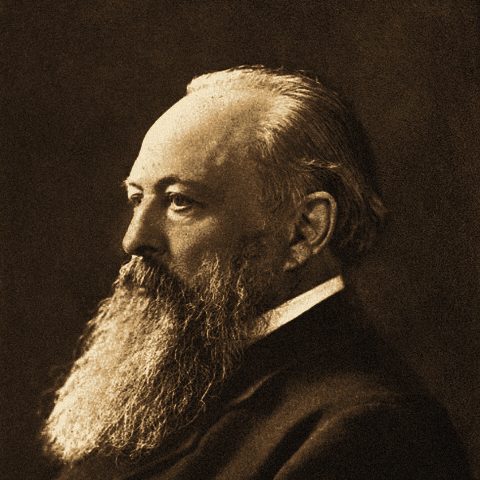
About the author
John Emerich Edward Dalberg Acton
1834 Naples – 1902 Tegernsee · British politician and historian
John Emerich Edward Dalberg-Acton, 1st Baron Acton, 13th Marquess of Groppoli, better known as Lord Acton, was an English Catholic historian, Liberal politician, and writer. A strong advocate for individual liberty, Acton is best known for his observation on the dangers of concentrated authority.
If you like The History of Freedom, and Other Essays
More like this


Start with “The History Of Freedom In Antiquity[2] (part 1)”
3 chapters free right now — no account. Your place follows you to iPhone and Android.