

2 chapters freeNo account needed.
Opens “Preface” in the player · no sign-up needed
The Group Mind is a 1920 book by the British-born psychologist William McDougall, subtitled as a sketch of the principles of collective psychology.
Inside the book
- Free nowno account · 2 chapters
- —Preface21 min
- 1Introduction47 min
- Premium22 chapters · every book, 7 days free
- 3Chapter 328 min
- 4Chapter 431 min
- 5Part 1, Chapter 3: The Highly Organised Group32 min
- 6Part 1, Chapter 4 — Part 1 of 2: The Group Spirit30 min
- 7Chapter 730 min
- 8Part 1, Chapter 5: Peculiarities of Groups of Various Types17 min
- 9Part 2, Chapter 6: Introductory21 min
- 10Part 2, Chapter 7 — Part 1 of 2: The Mind Of A Nation28 min
- 11Chapter 1129 min
- 12Chapter 128 min
- 13Part 2, Chapter 9: The Part of Leaders in National Life14 min
- 14Part 2, Chapter 10: Other Conditions of National Life29 min
- 15Part 2, Chapter 11: The Will of the Nation32 min
- 16Part 2, Chapter 12: Ideas in National Life39 min
- 17Part 2, Chapter 13: Nations of the Higher Type28 min
- 18Part 3, Chapter 14: Introductory18 min
- 19Part 3, Chapter 15: The Race-Making Period27 min
- 20Part 3, Chapter 16: The Race-Making Period (continued)29 min
- 21Part 3, Chapter 17: The Race-Making Period (continued)29 min
- 22Chapter 2252 min
- 23Part 3, Chapter 19: The Progress of Nations in Their Youth38 min
- 24Chapter 2435 min
The opening
Preface
Preface
In this book I have sketched the principles of the mental life of groups and have made a rough attempt to apply these principles to the understanding of the life of nations. I have had the substance of the book in the form of lecture notes for some years, but have long hesitated to publish it. I have been held back, partly by my sense of the magnitude and difficulty of the subject and the inadequacy of my own preparation for dealing with it, partly because I wished to build upon a firm foundation of generally accepted principles of human nature.
Some fifteen years ago I projected a complete treatise on Social Psychology which would have comprised the substance of the present volume. I was prevented from carrying out the ambitious scheme, partly by the difficulty of finding a publisher, partly by my increasing sense of the lack of any generally accepted or acceptable account of the constitution of human nature. I found it necessary to attempt to provide such a foundation, and in 1908 published my Introduction to Social Psychology. That book has enjoyed a certain popular success. But it was more novel, more revolutionary, than I had supposed when writing it; and my hope that it would rapidly be accepted by my colleagues as in the main a true account of the fundamentals of human nature has not been realised.
All this part of psychology labours under the great difficulty that the worker in it cannot, like other men of science, publish his conclusions as discoveries which will necessarily be accepted by any persons competent to judge. He can only state his conclusions and his reasonings and hope that they may gradually gain the general approval of his colleagues. For to the obscure questions of fact with which he deals it is in the nature of things impossible to return answers supported by indisputable experimental proofs. In this field the evidence of an author's approximation towards truth can consist only in his success in gradually persuading competent opinion of the value of his views. My sketch of the fundamentals of human nature can hardly claim even that degree of success which would be constituted by an active criticism and discussion of it in competent quarters. Yet there are not wanting indications that opinion is turning slowly towards the acceptance of some such doctrine as I then outlined. Especially the development of psycho-pathology, stimulated so greatly by the esoteric dogmas of the Freudian school, points in this direction.
The only test and verification to which any scheme of human nature can be submitted is the application of it to practice in the elucidation of the concrete phenomena of human life and in the control and direction of conduct, especially in the two great fields of medicine and education. And I have been much encouraged by finding that some workers in both of these fields have found my scheme of use in their practice and have even, in some few cases, given it a cordial general approval. But group psychology is itself one of the fields in which such testing and verification must be sought. And I have decided to delay no longer in attempting to bring my scheme to this test. I am also impelled to venture on what may appear to be premature publication by the fact that five of the best years of my life have been wholly given up to military service and the practical problems of psycho-therapy, and by the reflection that the years of a man's life are numbered and that, even though I should delay yet another fifteen years, I might find that I had made but little progress towards securing the firm foundation I desired.
It may seem to some minds astonishing that I should now admit that the substance of this book was committed to writing before the Great War; for that war is supposed by some to have revolutionised all our ideas of human nature and of national life. But the war has given me little reason to add to or to change what I had written. This may be either because I am too old to learn, or because what I had written was in the main true; and I am naturally disposed to accept the second explanation.
I wish to make it clear to any would-be reader of this volume that it is a sequel to my Introduction to Social Psychology, that it builds upon that book and assumes that the reader is acquainted with it. That former volume has been criticised as an attempted outline of Social Psychology. One critic remarks that it may be good psychology, but it is very little social; another wittily says "Mr McDougall, while giving a full account of the genesis of instincts that act in society, hardly shows how they issue into society. He seems to do a great deal of packing in preparation for a journey on which he never starts." The last sentence exactly describes the book. I found myself, like so many of my predecessors and contemporaries, about to start on a voyage of exploration of societies with an empty trunk, or at least with one very inadequately supplied with the things essential for successful travelling. I decided to avoid the usual practice of starting without impedimenta and of picking up or inventing bits of make-shift equipment as each emergency arose; I would pack my trunk carefully before starting. And now although my fellow travellers have not entirely approved my outfit, I have launched out to put it to the test; and I cannot hope that my readers will follow me if they have not at their command a similar outfit—namely, a similar view of the constitution of human nature.
I would gratefully confess that the resolve to go forward without a further long period of preparation has been made possible for me largely by the encouragement I have had from the recently published work of Dr James Drever, Instinct in Man. For the author of that work has carefully studied the most fundamental part of my Social Psychology, in the light of his wide knowledge of the cognate literature, and has found it to be in the main acceptable.
The title and much of the substance of the present volume might lead a hasty reader to suppose that I am influenced by, or even in sympathy with, the political philosophy associated with German 'idealism.' I would, therefore, take this opportunity both to prevent any such erroneous inference and to indicate my attitude towards that system of thought in plainer language than it seemed possible to use before the war. I have argued that we may properly speak of a group mind, and that each of the most developed nations of the present time may be regarded as in process of developing a group mind. This must lay me open to the suspicion of favouring the political philosophy which makes of the state a super-individual and semi-divine person before whom all men must bow down, renouncing their claims to freedom of judgment and action; the political philosophy in short of German 'idealism,' which derives in the main from Hegel, which has been so ably represented in this country by Dr Bosanquet, which has exerted so great an influence at Oxford, and which in my opinion is as detrimental to honest and clear thinking as it has proved to be destructive of political morality in its native country.
I am relieved of the necessity of attempting to justify these severe strictures by the recent publication of The Metaphysical Theory of the State by Prof. L. T. Hobhouse. In that volume Prof. Hobhouse has subjected the political philosophy of German 'idealism,' and especially Dr Bosanquet's presentation of it, to a criticism which, as it seems to me, should suffice to expose the hollowness of its claims to all men for all time; and I cannot better define my own attitude towards it than by expressing the completeness of my sympathy with the searching criticism of Mr Hobhouse's essay. In my youth I was misled into supposing that the Germans were the possessors of a peculiar wisdom; and I have spent a large part of my life in discovering, in one field of science after another, that I was mistaken.
I can always read the works of some German philosophers, especially those of Hermann Lotze, with admiration and profit; but I have no longer any desire to contend with the great systems of 'idealism,' and I think it a cruel waste that the best years of the lives of many young men should be spent struggling with the obscure phrases in which Kant sought to express his profound and subtle thought. My first scientific effort was to find evidence in support of a new hypothesis of muscular contraction; and, in working through the various German theories, I was dismayed by their lack of clear mechanical conceptions. My next venture was in the physiology of vision, a branch of science which had become almost exclusively German. Starting with a prepossession in favour of one of the dominant German theories, I soon reached the conclusion that the two German leaders in this field, Helmholtz and Hering, with their hosts of disciples, had, in spite of much admirable detailed work, added little of value and much confusion to the theory of vision left us by a great Englishman,—namely, Thomas Young; and in a long series of papers I endeavoured to restate and supplement Young's theory.
Advancing into the field of physiological psychology, I attacked the ponderous volumes of Wundt with enthusiasm; only to find that his physiology of the nervous system was a tissue of unacceptable hypotheses and that he failed to connect it in any profitable manner with his questionable psychology. And, finding even less satisfaction in such works as Ziehen's Physiologische Psychologie, with its crude materialism and associationism, or in the dogmatic speculations of Verworn, I published my own small attempt to bring psychology into fruitful relations with the physiology of the nervous system. This brought me up against the great problem of the relations between mind and body; and, having found that, in this sphere, German 'idealism' was pragmatically indistinguishable from thorough-going materialism, and that those Germans who claimed to reconcile the two did not really rise much above the level of Ernst Haeckel's wild flounderings, I published my History and Defense of Animism. And in this field, though I found much to admire in the writings of Lotze, I derived most encouragement and stimulus from Prof. Bergson.
In working at the foundations of human nature, I found little help in German psychology, and more in French books, especially in those of Prof. Ribot. In psycho-pathology I seemed to find that the claims of the German and Austrian schools were far outweighed by those of the French writers, especially of Prof. Janet. So now, in attacking the problems of the mental life of societies, I have found little help from German psychology or sociology, from the elaborations of Wundt's Völkerpsychologie or the ponderosities of Schäffle, and still less from the 'idealist' philosophy of politics. In this field also it is French authors from whom I have learnt most and with whom I find myself most in sympathy, especially MM. Fouillée, Boutmy, Tarde, and Demolins; though I would not be thought to hold in low esteem the works of many English and American authors, notably those of Buckle, Bagehot, Maine, Lecky, Lowell, and of many others, to some of which I have made reference in the chapters of this book.
I have striven to make this a strictly scientific work, rather than a philosophical one; that is to say, I have tried to ascertain and state the facts and principles of social life as it is and has been, without expressing my opinion as to what it should be. But, in order further to guard myself against the implications attached by German 'idealism' to the notion of a collective mind, I wish to state that politically my sympathies are with individualism and internationalism, although I have, I think, fully recognised the great and necessary part played in human life by the Group Spirit and by that special form of it which we now call 'Nationalism.'
I know well that those of my readers whose sympathies are with Collectivism, Syndicalism, or Socialism in any of its various forms will detect in this book the cloven foot of individualism and leanings towards the aristocratic principle. I know also that many others will reproach me with giving countenance to communistic and ultra-democratic tendencies. I would, therefore, point out explicitly at the outset that, if this book affords justification for any normative doctrine or ideal, it is for one which would aim at a synthesis of the principles of individualism and communism, of aristocracy and democracy, of self-realization and of service to the community. I can best express this ideal in the wise words of Mr F. H. Bradley, which I extract from his famous essay on 'My Station and its Duties.' "The individual's consciousness of himself is inseparable from the knowing himself as an organ of the whole;... for his nature now is not distinct from his 'artificial self.' He is related to the living moral system not as to a foreign body; his relation to it is 'too inward even for faith,' since faith implies a certain separation.
It is no other-world that he can not see but must trust to; he feels himself in it, and it in him;... the belief in this real moral organism is the one solution of ethical problems. It breaks down the antithesis of despotism and individualism; it denies them, while it preserves the truth of both. The truth of individualism is saved, because, unless we have intense life and self-consciousness in the members of the state, the whole state is ossified. The truth of despotism is saved, because, unless the member realizes the whole by and in himself, he fails to reach his own individuality. Considered in the main, the best communities are those which have the best men for their members, and the best men are the members of the best communities... The two problems of the best man and best state are two sides, two distinguishable aspects of the one problem, how to realize in human nature the perfect unity of homogeneity and specification; and when we see that each of these without the other is unreal, then we see that (speaking in general) the welfare of the state and the welfare of its individuals are questions which it is mistaken and ruinous to separate.
Personal morality and political and social institutions can not exist apart, and (in general) the better the one the better the other. The community is moral, because it realizes personal morality; personal morality is moral, because and in so far as it realizes the moral whole."
Since correcting the proofs of this volume I have become acquainted with two recent books whose teaching is so closely in harmony with my own that I wish to direct my readers' attention to them. One is Sir Martin Conway's The Crowd in Peace and War, which contains many valuable illustrations of group life. The other is Miss M. P. Follett's The New State; Group Organization the Solution of Popular Government, which expounds the principles and advantages of collective deliberation with vigour and insight.
I am under much obligation to the general editor of this series, Prof. G. Dawes Hicks. He has read the proofs of my book, and has helped me greatly with many suggestions; but he has, of course, no responsibility for the views expressed in it.
W. McD.
OXFORD, March 1920.
The need for a more concrete psychology—the conception of the group mind—objections to the conception examined—the conception not a new one but familiar in political philosophy and law—the essential problem 1-20
CHAPTER II. THE MENTAL LIFE OF THE CROWD
The crowd presents the phenomena of collective life in crude and simple forms—the formation of the psychological crowd—its peculiarities—spread and intensification of emotions—how that takes place—the notion of 'collective consciousness' provisionally rejected—the submergence of personality in the crowd—the low intelligence of crowds—suggestibility—lack of individual responsibility 21-47
CHAPTER III. THE HIGHLY ORGANISED GROUP
The principal conditions of organisation—the army as the type—how its organisation raises the soldier to a higher plane of collective life—the nature of collective will illustrated—influence of leaders 48-61
CHAPTER IV. THE GROUP SPIRIT
The self-consciousness of the group—the group idea and the group sentiment—the group consciousness in primitive life—views of Cornford and Lévy Bruhl examined—'collective representations'—the peculiar merit of the group spirit—multiple group consciousness—the hierarchy of groups—interaction of groups 62-87
CHAPTER V. PECULIARITIES OF GROUPS OF VARIOUS TYPES
Rudimentary groups—natural and artificial groups—purposive, traditional and mixed groups 88-95
PART II. THE NATIONAL MIND AND CHARACTER
CHAPTER VI. WHAT IS A NATION?
Difficulty of defining nationhood—Prof. Ramsay Muir's definition not adequate—mental organisation, resting on tradition, the most essential condition—lack of clear conceptions has given currency to many obscure notions—the study of nationhood essentially the work of group psychology 96-105
CHAPTER VII. THE MIND OF A NATION
National character defined—conditions essential to its formation—homogeneity a prime condition—the influence of racial qualities on national character—the durability of racial qualities—acquired mental homogeneity as illustrated by the American nation—the influence upon it of geographical conditions 106-130
CHAPTER VIII. FREEDOM OF COMMUNICATION AS A CONDITION OF NATIONAL LIFE
Large nations impossible in the ancient world—the tendency of nations to grow larger with increase of means of communication 131-134
CHAPTER IX. THE PART OF LEADERS IN NATIONAL LIFE
Nations owe their existence to influence of leaders—men of genius—men of talent—their rôle in national life 135-141
CHAPTER X. OTHER CONDITIONS OF NATIONAL LIFE
A common purpose—war the unifier—national responsibilities—continuity of national life—organisation of the national mind analogous to that of the individual mind—national self-consciousness—types of organisation 142-154
CHAPTER XI. THE WILL OF THE NATION
Rousseau's doctrine of the general will—Prof. Bosanquet's view inadequate—the national mind has both organic unity and the unity of self-consciousness—increase of national self-consciousness the leading fact of recent world history—self-consciousness of nations developed by rivalry and intercourse between them 155-168
CHAPTER XII. IDEAS IN NATIONAL LIFE
The idea of the nation is constitutive—ideas work as forces in national life only in virtue of sentiments grown up about their objects—the notions of society as an organism and as founded on contract synthesised in the conception of the nation as a contractual organism—the value of nationality examined—ideas of conquest—of ancestor worship—of liberty and equality—of progress—of solidarity 169-186
CHAPTER XIII. NATIONS OF THE HIGHER TYPE
National deliberation—the influence on it of organisation and of traditions—certain advantages of the representative system—public opinion arises from an informal organisation—the problem of the high level of public opinion—its solution to be found in the influence of leaders 187-199
PART III. THE DEVELOPMENT OF NATIONAL MIND AND CHARACTER
CHAPTER XIV. FACTORS OF NATIONAL DEVELOPMENT
Civilisation does not imply improvement of racial qualities—it abolishes selection by the physical environment—it consists in improved intellectual and moral traditions and is dependent on favourable social organisation 200-207
CHAPTER XV. THE RACE-MAKING PERIOD
Differentiation of races from a common stock—human evolution differs from that of the animals in becoming group evolution—physical environment supplanted by social environment and organisation—the direct effects of climate on the body—on the mind 208-219
CHAPTER XVI. THE RACE-MAKING PERIOD (continued)
Physical environment determines racial adaptation directly by selection—indirectly by determining occupations and social organisation—the protective spirit in France—the spirit of independence in England—attempts of Buckle, Boutmy and Sir H. Maine to account for these not successful 220-232
CHAPTER XVII. THE RACE-MAKING PERIOD (continued)
The influence of occupations—the leading principle of the school of Le Play—the development of the spirit of protection in the people of Gaul—the development of the spirit of independence in the ancestors of the English—the crossing of races—its bad and its good results 233-245
CHAPTER XVIII. RACIAL CHANGES DURING THE HISTORIC PERIOD
Race substitution—the population of Greece—internal selection—its effects in Spain—various forms of social selection—mostly negative or injurious to national stock—economic selection and the social ladder—the innate moral disposition—the question of its improvement 246-269
CHAPTER XIX. THE PROGRESS OF NATIONS IN THEIR YOUTH
The rarity of progress—the conditions enabling progress—group selection—in what has progress consisted?—views of Buckle and Kidd—conquest and domination an early condition of progress—variability of crossed races—influence of physical environment—western civilisation and social organisation 270-286
CHAPTER XX. THE PROGRESS OF NATIONS IN THEIR MATURITY
Liberty and social organisation—caste makes for rigidity—the growth of toleration—imaginative sympathy increases with increasing freedom of intercourse, bringing strife and understanding—the group spirit as the main agent of further progress 287-301
About the author
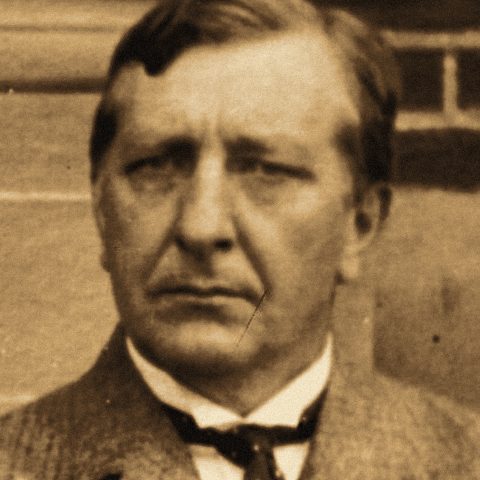
William McDougall
1871 Lancashire – 1938 Durham · British psychologist
William McDougall was an early 20th century psychologist who was a professor at University College London, University of Oxford, Harvard University and Duke University. He wrote a number of influential textbooks, and was important in the development of the theory of instinct and of social psychology in the English-speaking world.
If you like The Group Mind
More like this


Start with “Preface”
2 chapters free right now — no account. Your place follows you to iPhone and Android.