

2 chapters freeNo account needed.
Opens “Division of the Subject” in the player · no sign-up needed
Aristotle divides the blessings of life into three classes—those which come to us from without, those of the soul, and those of the body.
The selection was compiled not as a summation of or introduction to Schopenhauer's philosophy, but as augmentary readings for those who had already embraced it, although the author maintained it would be comprehensible and of interest to the uninitiated…
Inside the book
- Free nowno account · 2 chapters
- —Introduction3 min
- 1Division of the Subject17 min
- Premium4 chapters · every book, 7 days free
- 2Personality, or What A Man Is47 min
- 3Property, or What A Man Has14 min
- 5Chapter 4, part 155 min
- 6Chapter 4, part 255 min
The opening
Division of the Subject
Division Of The Subject.
Aristotle divides the blessings of life into three classes—those which come to us from without, those of the soul, and those of the body. Keeping nothing of this division but the number, I observe that the fundamental differences in human lot may be reduced to three distinct classes:
(1) What a man is: that is to say, personality, in the widest sense of the word; under which are included health, strength, beauty, temperament, moral character, intelligence, and education.
(2) What a man has: that is, property and possessions of every kind.
(3) How a man stands in the estimation of others: by which is to be understood, as everybody knows, what a man is in the eyes of his fellowmen, or, more strictly, the light in which they regard him. This is shown by their opinion of him; and their opinion is in its turn manifested by the honor in which he is held, and by his rank and reputation.
The differences which come under the first head are those which Nature herself has set between man and man; and from this fact alone we may at once infer that they influence the happiness or unhappiness of mankind in a much more vital and radical way than those contained under the two following heads, which are merely the effect of human arrangements. Compared with genuine personal advantages, such as a great mind or a great heart, all the privileges of rank or birth, even of royal birth, are but as kings on the stage, to kings in real life. The same thing was said long ago by Metrodorus, the earliest disciple of Epicurus, who wrote as the title of one of his chapters, The happiness we receive from ourselves is greater than that which we obtain from our surroundings And it is an obvious fact, which cannot be called in question, that the principal element in a man's well-being,—indeed, in the whole tenor of his existence,—is what he is made of, his inner constitution.
For this is the immediate source of that inward satisfaction or dissatisfaction resulting from the sum total of his sensations, desires and thoughts; whilst his surroundings, on the other hand, exert only a mediate or indirect influence upon him. This is why the same external events or circumstances affect no two people alike; even with perfectly similar surroundings every one lives in a world of his own. For a man has immediate apprehension only of his own ideas, feelings and volitions; the outer world can influence him only in so far as it brings these to life. The world in which a man lives shapes itself chiefly by the way in which he looks at it, and so it proves different to different men; to one it is barren, dull, and superficial; to another rich, interesting, and full of meaning.
On hearing of the interesting events which have happened in the course of a man's experience, many people will wish that similar things had happened in their lives too, completely forgetting that they should be envious rather of the mental aptitude which lent those events the significance they possess when he describes them; to a man of genius they were interesting adventures; but to the dull perceptions of an ordinary individual they would have been stale, everyday occurrences. This is in the highest degree the case with many of Goethe's and Byron's poems, which are obviously founded upon actual facts; where it is open to a foolish reader to envy the poet because so many delightful things happened to him, instead of envying that mighty power of phantasy which was capable of turning a fairly common experience into something so great and beautiful.
In the same way, a person of melancholy temperament will make a scene in a tragedy out of what appears to the sanguine man only in the light of an interesting conflict, and to a phlegmatic soul as something without any meaning;—all of which rests upon the fact that every event, in order to be realized and appreciated, requires the co-operation of two factors, namely, a subject and an object, although these are as closely and necessarily connected as oxygen and hydrogen in water. When therefore the objective or external factor in an experience is actually the same, but the subjective or personal appreciation of it varies, the event is just as much a different one in the eyes of different persons as if the objective factors had not been alike; for to a blunt intelligence the fairest and best object in the world presents only a poor reality, and is therefore only poorly appreciated,—like a fine landscape in dull weather, or in the reflection of a bad camera obscura. In plain language, every man is pent up within the limits of his own consciousness, and cannot directly get beyond those limits any more than he can get beyond his own skin; so external aid is not of much use to him.
On the stage, one man is a prince, another a minister, a third a servant or a soldier or a general, and so on,—mere external differences: the inner reality, the kernel of all these appearances is the same—a poor player, with all the anxieties of his lot. In life it is just the same. Differences of rank and wealth give every man his part to play, but this by no means implies a difference of inward happiness and pleasure; here, too, there is the same being in all—a poor mortal, with his hardships and troubles. Though these may, indeed, in every case proceed from dissimilar causes, they are in their essential nature much the same in all their forms, with degrees of intensity which vary, no doubt, but in no wise correspond to the part a man has to play, to the presence or absence of position and wealth. Since everything which exists or happens for a man exists only in his consciousness and happens for it alone, the most essential thing for a man is the constitution of this consciousness, which is in most cases far more important than the circumstances which go to form its contents.
All the pride and pleasure of the world, mirrored in the dull consciousness of a fool, are poor indeed compared with the imagination of Cervantes writing his Don Quixote in a miserable prison. The objective half of life and reality is in the hand of fate, and accordingly takes various forms in different cases: the subjective half is ourself, and in essentials is always remains the same.
Hence the life of every man is stamped with the same character throughout, however much his external circumstances may alter; it is like a series of variations on a single theme. No one can get beyond his own individuality. An animal, under whatever circumstances it is placed, remains within the narrow limits to which nature has irrevocably consigned it; so that our endeavors to make a pet happy must always keep within the compass of its nature, and be restricted to what it can feel. So it is with man; the measure of the happiness he can attain is determined beforehand by his individuality. More especially is this the case with the mental powers, which fix once for all his capacity for the higher kinds of pleasure. If these powers are small, no efforts from without, nothing that his fellowmen or that fortune can do for him, will suffice to raise him above the ordinary degree of human happiness and pleasure, half animal though it be; his only resources are his sensual appetite,—a cozy and cheerful family life at the most,—low company and vulgar pastime; even education, on the whole, can avail little, if anything, for the enlargement of his horizon. For the highest, most varied and lasting pleasures are those of the mind, however much our youth may deceive us on this point; and the pleasures of the mind turn chiefly on the powers of the mind. It is clear, then, that our happiness depends in a great degree upon what we are, upon our individuality, whilst lot or destiny is generally taken to mean only what we have, or our reputation. Our lot, in this sense, may improve; but we do not ask much of it if we are inwardly rich: on the other hand, a fool remains a fool, a dull blockhead, to his last hour, even though he were surrounded by houris in paradise. This is why Goethe, in the West-östliclien Divan, says that every man, whether he occupies a low position in life, or emerges as its victor, testifies to personality as the greatest factor in happiness:--
Volk und Knecht und Uberwinder Sie gestehen, zu jeder Zeit, Höchtes Glück der Erdenkinder Sei nur die Persönlichkeit.
Everything confirms the fact that the subjective element in life is incomparably more important for our happiness and pleasure than the objective, from such sayings as Hunger is the best sauce, and Youth and Age cannot live together, up to the life of the Genius and the Saint. Health outweighs all other blessings so much that one may really say that a healthy beggar is happier than an ailing king. A quiet and cheerful temperament, happy in the enjoyment of a perfectly sound physique, an intellect clear, lively, penetrating and seeing things as they are, a moderate and gentle will, and therefore a good conscience—these are privileges which no rank or wealth can make up for or replace. For what a man is in himself, what accompanies him when he is alone, what no one can give or take away, is obviously more essential to him than everything he has in the way of possessions, or even what he may be in the eyes of the world. An intellectual man in complete solitude has excellent entertainment in his own thoughts and fancies, while no amount of diversity or social pleasure, theatres, excursions and amusements, can ward off boredom from a dullard. A good, temperate, gentle character can be happy in needy circumstances, whilst a covetous, envious and malicious man, even if he be the richest in the world, goes miserable. Nay more; to one who has the constant delight of a special individuality, with a high degree of intellect, most of the pleasures which are run after by mankind are simply superfluous; they are even a trouble and a burden. And so Horace says of himself, that, however many are deprived of the fancy-goods of life, there is one at least who can live without them:--
Gemmas, marmor, ebur, Tyrrhena sigilla, tabellas, Argentum, vestes, Gaetulo murice tinctas Sunt qui non habeant, est qui non curat habere;
and when Socrates saw various articles of luxury spread out for sale, he exclaimed: How much there is in the world I do not want.
So the first and most essential element in our life's happiness is what we are,—our personality, if for no other reason than that it is a constant factor coming into play under all circumstances: besides, unlike the blessings which are described under the other two heads, it is not the sport of destiny and cannot be wrested from us;—and, so far, it is endowed with an absolute value in contrast to the merely relative worth of the other two. The consequence of this is that it is much more difficult than people commonly suppose to get a hold on a man from without. But here the all-powerful agent, Time, comes in and claims its rights, and before its influence physical and mental advantages gradually waste away. Moral character alone remains inaccessible to it. In view of the destructive effect of time, it seems, indeed, as if the blessings named under the other two heads, of which time cannot directly rob us, were superior to those of the first. Another advantage might be claimed for them, namely, that being in their very nature objective and external, they are attainable, and every one is presented with the possibility, at least, of coming into possession of them; whilst what is subjective is not open to us to acquire, but making its entry by a kind of divine right, it remains for life, immutable, inalienable, an inexorable doom. Let me quote those lines in which Goethe describes how an unalterable destiny is assigned to every man at the hour of his birth, so that he can develop only in the lines laid down for him, as it were, by the conjunctions of the stars: and how the Sybil and the prophets declare that himself a man can never escape, nor any power of time avail to change the path on which his life is cast:--
Wie an dem Tag, der dich der Welt verliehen, Dïe Sonne stand zum Grusse der Planeten, Bist alsobald und fort und fort gediehen, Nach dem Gesetz, wonach du angetreten. So musst du sein, dir kannst du nicht entfliehen, So tagten schon Sybillen und Propheten; Und keine Zeit, und keine Macht zerstückelt Geprägte Form, die lebend sich entwickelt.
The only thing that stands in our power to achieve, is to make the most advantageous use possible of the personal qualities we possess, and accordingly to follow such pursuits only as will call them into play, to strive after the kind of perfection of which they admit and to avoid every other; consequently, to choose the position, occupation and manner of life which are most suitable for their development.
Imagine a man endowed with herculean strength who is compelled by circumstances to follow a sedentary occupation, some minute exquisite work of the hands, for example, or to engage in study and mental labor demanding quite other powers, and just those which he has not got,—compelled, that is, to leave unused the powers in which he is pre-eminently strong; a man placed like this will never feel happy all his life through. Even more miserable will be the lot of the man with intellectual powers of a very high order, who has to leave them undeveloped and unemployed, in the pursuit of a calling which does not require them, some bodily labor, perhaps, for which his strength is insufficient. Still, in a case of this kind, it should be our care, especially in youth, to avoid the precipice of presumption, and not ascribe to ourselves a superfluity of power which is not there.
Since the blessings described under the first head decidedly outweigh those contained under the other two, it is manifestly a wiser course to aim at the maintenance of our health and the cultivation of our faculties, than at the amassing of wealth; but this must not be mistaken as meaning that we should neglect to acquire an adequate supply of the necessaries of life. Wealth, in the strict sense of the word, that is, great superfluity, can do little for our happiness; and many rich people feel unhappy just because they are without any true mental culture or knowledge, and consequently have no objective interests which would qualify them for intellectual occupations. For beyond the satisfaction of some real and natural necessities, all that the possession of wealth can achieve has a very small influence upon our happiness, in the proper sense of the word; indeed, wealth rather disturbs it, because the preservation of property entails a great many unavoidable anxieties. And still men are a thousand times more intent on becoming rich than on acquiring culture, though it is quite certain that what a man is contributes much more to his happiness than what he has.
So you may see many a man, as industrious as an ant, ceaselessly occupied from morning to night in the endeavor to increase his heap of gold. Beyond the narrow horizon of means to this end, he knows nothing; his mind is a blank, and consequently unsusceptible to any other influence. The highest pleasures, those of the intellect, are to him inaccessible, and he tries in vain to replace them by the fleeting pleasures of sense in which he indulges, lasting but a brief hour and at tremendous cost. And if he is lucky, his struggles result in his having a really great pile of gold, which he leaves to his heir, either to make it still larger, or to squander it in extravagance. A life like this, though pursued with a sense of earnestness and an air of importance, is just as silly as many another which has a fool's cap for its symbol.
What a man has in himself is, then, the chief element in his happiness. Because this is, as a rule, so very little, most of those who are placed beyond the struggle with penury feel at bottom quite as unhappy as those who are still engaged in it. Their minds are vacant, their imagination dull, their spirits poor, and so they are driven to the company of those like them—for similis simili gaudet—where they make common pursuit of pastime and entertainment, consisting for the most part in sensual pleasure, amusement of every kind, and finally, in excess and libertinism. A young man of rich family enters upon life with a large patrimony, and often runs through it in an incredibly short space of time, in vicious extravagance; and why? Simply because, here too, the mind is empty and void, and so the man is bored with existence. He was sent forth into the world outwardly rich but inwardly poor, and his vain endeavor was to make his external wealth compensate for his inner poverty, by trying to obtain everything from without, like an old man who seeks to strengthen himself as King David or Maréchal de Rex tried to do. And so in the end one who is inwardly poor comes to be also poor outwardly.
I need not insist upon the importance of the other two kinds of blessings which make up the happiness of human life; now-a-days the value of possessing them is too well known to require advertisement. The third class, it is true, may seem, compared with the second, of a very ethereal character, as it consists only of other people's opinions. Still every one has to strive for reputation, that is to say, a good name. Rank, on the other hand, should be aspired to only by those who serve the state, and fame by very few indeed. In any case, reputation is looked upon as a priceless treasure, and fame as the most precious of all the blessings a man can attain,—the Golden Fleece, as it were, of the elect: whilst only fools will prefer rank to property. The second and third classes, moreover, are reciprocally cause and effect; so far, that is, as Petronius' maxim, habes habeberis, is true; and conversely, the favor of others, in all its forms, often puts us in the way of getting what we want.
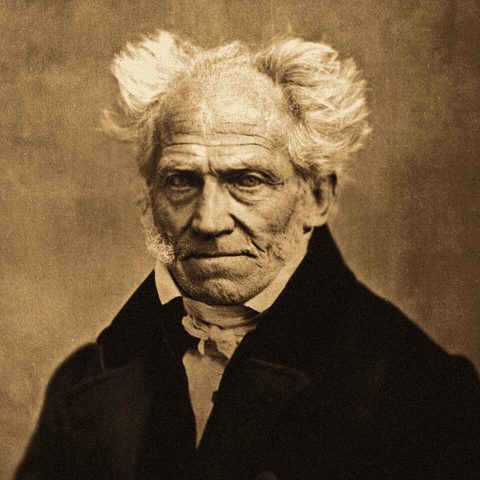
About the author
Arthur Schopenhauer
1788 Gdańsk – 1860 Frankfurt · German philosopher
Arthur Schopenhauer, also known as the “Philosopher of Pessimism”, was a German philosopher and writer. He is known for his 1818 work The World as Will and Representation, which characterizes the phenomenal world as the manifestation of a blind and irrational noumenal will.
- 1788Born, Gdańsk
- 1819The World as Will and Idea, Volume 1
- 1851Essays of Schopenhauer
- 1851The Essays of Arthur Schopenhauer
- 1860Died, Frankfurt
If you like The Essays of Arthur Schopenhauer: the Wisdom…
More like this


Start with “Division of the Subject”
2 chapters free right now — no account. Your place follows you to iPhone and Android.