

2 chapters freeNo account needed.
Opens chapter 2 in the player · no sign-up needed
The Advancement of Learning is a 1605 book by Francis Bacon which introduces and popularizes the scientific method of observation, skepticism and testability.
Inside the book
- Free nowno account · 2 chapters
- —Introduction14 min
- 2Chapter 29 min
- Premium33 chapters · every book, 7 days free
- 3Chapter 313 min
- 4Chapter 414 min
- 5Chapter 518 min
- 6Chapter 610 min
- 7Chapter 712 min
- 8Chapter 826 min
- 9Chapter 928 min
- 10Chapter 108 min
- 11Chapter 1114 min
- 12Chapter 124 min
- 13Chapter 136 min
- 14Chapter 146 min
- 15Chapter 154 min
- 16Chapter 1617 min
- 17Chapter 1714 min
- 18Chapter 187 min
- 19Chapter 1917 min
- 20Chapter 205 min
- 21Chapter 214 min
- 22Chapter 2214 min
- 23Chapter 2311 min
- 24Chapter 243 min
- 25Chapter 257 min
- 26Chapter 2611 min
- 27Chapter 278 min
- 28Chapter 286 min
- 29Chapter 2912 min
- 30Chapter 3016 min
- 31Chapter 3125 min
- 32Chapter 3229 min
- 33Chapter 3329 min
- 34Chapter 343 min
- 35Chapter 3526 min
The opening
Chapter 2
(1) In the entrance to the former of these—to clear the way and, as it were, to make silence, to have the true testimonies concerning the dignity of learning to be better heard, without the interruption of tacit objections—I think good to deliver it from the discredits and disgraces which it hath received, all from ignorance, but ignorance severally disguised; appearing sometimes in the zeal and jealousy of divines, sometimes in the severity and arrogancy of politics, and sometimes in the errors and imperfections of learned men themselves.
(2) I hear the former sort say that knowledge is of those things which are to be accepted of with great limitation and caution; that the aspiring to overmuch knowledge was the original temptation and sin whereupon ensued the fall of man; that knowledge hath in it somewhat of the serpent, and, therefore, where it entereth into a man it makes him swell; Scientia inflat; that Solomon gives a censure, "That there is no end of making books, and that much reading is weariness of the flesh;" and again in another place, "That in spacious knowledge there is much contristation, and that he that increaseth knowledge increaseth anxiety;" that Saint Paul gives a caveat, "That we be not spoiled through vain philosophy;" that experience demonstrates how learned men have been arch-heretics, how learned times have been inclined to atheism, and how the contemplation of second causes doth derogate from our dependence upon God, who is the first cause.
(3) To discover, then, the ignorance and error of this opinion, and the misunderstanding in the grounds thereof, it may well appear these men do not observe or consider that it was not the pure knowledge of Nature and universality, a knowledge by the light whereof man did give names unto other creatures in Paradise as they were brought before him according unto their proprieties, which gave the occasion to the fall; but it was the proud knowledge of good and evil, with an intent in man to give law unto himself, and to depend no more upon God's commandments, which was the form of the temptation.
Neither is it any quantity of knowledge, how great soever, that can make the mind of man to swell; for nothing can fill, much less extend the soul of man, but God and the contemplation of God; and, therefore, Solomon, speaking of the two principal senses of inquisition, the eye and the ear, affirmeth that the eye is never satisfied with seeing, nor the ear with hearing; and if there be no fulness, then is the continent greater than the content: so of knowledge itself and the mind of man, whereto the senses are but reporters, he defineth likewise in these words, placed after that calendar or ephemerides which he maketh of the diversities of times and seasons for all actions and purposes, and concludeth thus: "God hath made all things beautiful, or decent, in the true return of their seasons.
Also He hath placed the world in man's heart, yet cannot man find out the work which God worketh from the beginning to the end"—declaring not obscurely that God hath framed the mind of man as a mirror or glass, capable of the image of the universal world, and joyful to receive the impression thereof, as the eye joyeth to receive light; and not only delighted in beholding the variety of things and vicissitude of times, but raised also to find out and discern the ordinances and decrees which throughout all those changes are infallibly observed. And although he doth insinuate that the supreme or summary law of Nature (which he calleth "the work which God worketh from the beginning to the end") is not possible to be found out by man, yet that doth not derogate from the capacity of the mind; but may be referred to the impediments, as of shortness of life, ill conjunction of labours, ill tradition of knowledge over from hand to hand, and many other inconveniences, whereunto the condition of man is subject.
For that nothing parcel of the world is denied to man's inquiry and invention, he doth in another place rule over, when he saith, "The spirit of man is as the lamp of God, wherewith He searcheth the inwardness of all secrets." If, then, such be the capacity and receipt of the mind of man, it is manifest that there is no danger at all in the proportion or quantity of knowledge, how large soever, lest it should make it swell or out-compass itself; no, but it is merely the quality of knowledge, which, be it in quantity more or less, if it be taken without the true corrective thereof, hath in it some nature of venom or malignity, and some effects of that venom, which is ventosity or swelling.
This corrective spice, the mixture whereof maketh knowledge so sovereign, is charity, which the Apostle immediately addeth to the former clause; for so he saith, "Knowledge bloweth up, but charity buildeth up;" not unlike unto that which he deilvereth in another place: "If I spake," saith he, "with the tongues of men and angels, and had not charity, it were but as a tinkling cymbal." Not but that it is an excellent thing to speak with the tongues of men and angels, but because, if it be severed from charity, and not referred to the good of men and mankind, it hath rather a sounding and unworthy glory than a meriting and substantial virtue. And as for that censure of Solomon concerning the excess of writing and reading books, and the anxiety of spirit which redoundeth from knowledge, and that admonition of St.
Paul, "That we be not seduced by vain philosophy," let those places be rightly understood; and they do, indeed, excellently set forth the true bounds and limitations whereby human knowledge is confined and circumscribed, and yet without any such contracting or coarctation, but that it may comprehend all the universal nature of things; for these limitations are three: the first, "That we do not so place our felicity in knowledge, as we forget our mortality;" the second, "That we make application of our knowledge, to give ourselves repose and contentment, and not distaste or repining;" the third, "That we do not presume by the contemplation of Nature to attain to the mysteries of God." For as touching the first of these, Solomon doth excellently expound himself in another place of the same book, where he saith: "I saw well that knowledge recedeth as far from ignorance as light doth from darkness; and that the wise man's eyes keep watch in his head, whereas this fool roundeth about in darkness: but withal I learned that the same mortality involveth them both." And for the second, certain it is there is no vexation or anxiety of mind which resulteth from knowledge otherwise than merely by accident; for all knowledge and wonder (which is the seed of knowledge) is an impression of pleasure in itself; but when men fall to framing conclusions out of their knowledge, applying it to their particular, and ministering to themselves thereby weak fears or vast desires, there groweth that carefulness and trouble of mind which is spoken of; for then knowledge is no more Lumen siccum, whereof Heraclitus the profound said, Lumen siccum optima anima; but it becometh Lumen madidum, or maceratum, being steeped and infused in the humours of the affections.
And as for the third point, it deserveth to be a little stood upon, and not to be lightly passed over; for if any man shall think by view and inquiry into these sensible and material things to attain that light, whereby he may reveal unto himself the nature or will of God, then, indeed, is he spoiled by vain philosophy; for the contemplation of God's creatures and works produceth (having regard to the works and creatures themselves) knowledge, but having regard to God no perfect knowledge, but wonder, which is broken knowledge. And, therefore, it was most aptly said by one of Plato's school, "That the sense of man carrieth a resemblance with the sun, which (as we see) openeth and revealeth all the terrestrial globe; but then, again, it obscureth and concealeth the stars and celestial globe: so doth the sense discover natural things, but it darkeneth and shutteth up divine." And hence it is true that it hath proceeded, that divers great learned men have been heretical, whilst they have sought to fly up to the secrets of the Deity by this waxen wings of the senses.
And as for the conceit that too much knowledge should incline a man to atheism, and that the ignorance of second causes should make a more devout dependence upon God, which is the first cause; first, it is good to ask the question which Job asked of his friends: "Will you lie for God, as one man will lie for another, to gratify him?" For certain it is that God worketh nothing in Nature but by second causes; and if they would have it otherwise believed, it is mere imposture, as it were in favour towards God, and nothing else but to offer to the Author of truth the unclean sacrifice of a lie. But further, it is an assured truth, and a conclusion of experience, that a little or superficial knowledge of philosophy may incline the mind of men to atheism, but a further proceeding therein doth bring the mind back again to religion.
For in the entrance of philosophy, when the second causes, which are next unto the senses, do offer themselves to the mind of man, if it dwell and stay there it may induce some oblivion of the highest cause; but when a man passeth on further and seeth the dependence of causes and the works of Providence; then, according to the allegory of the poets, he will easily believe that the highest link of Nature's chain must needs he tied to the foot of Jupiter's chair. To conclude, therefore, let no man upon a weak conceit of sobriety or an ill-applied moderation think or maintain that a man can search too far, or be too well studied in the book of God's word, or in the book of God's works, divinity or philosophy; but rather let men endeavour an endless progress or proficience in both; only let men beware that they apply both to charity, and not to swelling; to use, and not to ostentation; and again, that they do not unwisely mingle or confound these learnings together.
About the author
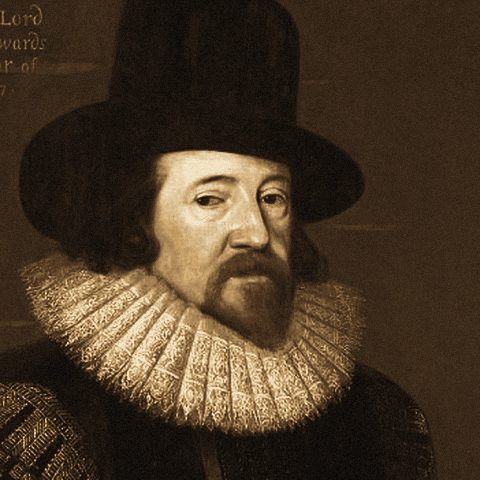
Francis Bacon
1561 – 1626 Highgate · English philosopher and statesman
Francis Bacon, 1st Viscount St Alban was an English philosopher and statesman who served as Attorney General and Lord Chancellor of England under King James I. Bacon argued for the importance of natural philosophy, guided by the scientific method, and his works remained influential throughout the Scientific Revolution.
- 1597The Essays or Counsels, Civil and Moral
- 1605The Advancement of Learning
- 1626Died, Highgate
- 1627New Atlantis
If you like The Advancement of Learning
More like this


Start with chapter 2
2 chapters free right now — no account. Your place follows you to iPhone and Android.