

2 chapters freeNo account needed.
Opens “Childhood” in the player · no sign-up needed
My Bondage and My Freedom is an autobiographical slave narrative written by Frederick Douglass and published in 1855.
Inside the book
- Free nowno account · 2 chapters
- —Introduction41 min
- 1Childhood15 min
- Premium24 chapters · every book, 7 days free
- 2Removed from My First Home11 min
- 3Parentage15 min
- 4A General Survey of the Slave Plantation29 min
- 5Gradual Initiation to the Mysteries of Slavery15 min
- 6Treatment of Slaves on Lloyd’s Plantation27 min
- 7Life in the Great House19 min
- 8A Chapter of Horrors14 min
- 9Personal Treatment17 min
- 10Life in Baltimore15 min
- 11“A Change Came O’er the Spirit of My Dream”18 min
- 12Religious Nature Awakened15 min
- 13The Vicissitudes of Slave Life18 min
- 14Experience in St. Michael’s30 min
- 15Covey, the Negro Breaker28 min
- 16Another Pressure of the Tyrant’s Vice16 min
- 17The Last Flogging25 min
- 18New Relations and Duties31 min
- 19The Run-Away Plot52 min
- 20Apprenticeship Life27 min
- 21My Escape from Slavery21 min
- 22Liberty Attained31 min
- 23Introduced to the Abolitionists11 min
- 24Twenty-One Months in Great Britain37 min
The opening
Childhood
PLACE OF BIRTH—CHARACTER OF THE DISTRICT—TUCKAHOE—ORIGIN OF THE NAME—CHOPTANK RIVER—TIME OF BIRTH—GENEALOGICAL TREES—MODE OF COUNTING TIME—NAMES OF GRANDPARENTS—THEIR POSITION—GRANDMOTHER ESPECIALLY ESTEEMED—"BORN TO GOOD LUCK"—SWEET POTATOES—SUPERSTITION—THE LOG CABIN—ITS CHARMS—SEPARATING CHILDREN—MY AUNTS—THEIR NAMES—FIRST KNOWLEDGE OF BEING A SLAVE—OLD MASTER—GRIEFS AND JOYS OF CHILDHOOD—COMPARATIVE HAPPINESS OF THE SLAVE-BOY AND THE SON OF A SLAVEHOLDER.
In Talbot county, Eastern Shore, Maryland, near Easton, the county town of that county, there is a small district of country, thinly populated, and remarkable for nothing that I know of more than for the worn-out, sandy, desert-like appearance of its soil, the general dilapidation of its farms and fences, the indigent and spiritless character of its inhabitants, and the prevalence of ague and fever.
The name of this singularly unpromising and truly famine stricken district is Tuckahoe, a name well known to all Marylanders, black and white. It was given to this section of country probably, at the first, merely in derision; or it may possibly have been applied to it, as I have heard, because some one of its earlier inhabitants had been guilty of the petty meanness of stealing a hoe—or taking a hoe that did not belong to him. Eastern Shore men usually pronounce the word took, as tuck; Took-a-hoe, therefore, is, in Maryland parlance, Tuckahoe. But, whatever may have been its origin—and about this I will not be positive—that name has stuck to the district in question; and it is seldom mentioned but with contempt and derision, on account of the barrenness of its soil, and the ignorance, indolence, and poverty of its people. Decay and ruin are everywhere visible, and the thin population of the place would have quitted it long ago, but for the Choptank river, which runs through it, from which they take abundance of shad and herring, and plenty of ague and fever.
It was in this dull, flat, and unthrifty district, or neighborhood, surrounded by a white population of the lowest order, indolent and drunken to a proverb, and among slaves, who seemed to ask, "Oh! what's the use?" every time they lifted a hoe, that I—without any fault of mine was born, and spent the first years of my childhood.
The reader will pardon so much about the place of my birth, on the score that it is always a fact of some importance to know where a man is born, if, indeed, it be important to know anything about him. In regard to the time of my birth, I cannot be as definite as I have been respecting the place. Nor, indeed, can I impart much knowledge concerning my parents. Genealogical trees do not flourish among slaves. A person of some consequence here in the north, sometimes designated father, is literally abolished in slave law and slave practice. It is only once in a while that an exception is found to this statement. I never met with a slave who could tell me how old he was. Few slave-mothers know anything of the months of the year, nor of the days of the month. They keep no family records, with marriages, births, and deaths. They measure the ages of their children by spring time, winter time, harvest time, planting time, and the like; but these soon become undistinguishable and forgotten. Like other slaves, I cannot tell how old I am. This destitution was among my earliest troubles. I learned when I grew up, that my master—and this is the case with masters generally—allowed no questions to be put to him, by which a slave might learn his age. Such questions deemed evidence of impatience, and even of impudent curiosity. From certain events, however, the dates of which I have since learned, I suppose myself to have been born about the year 1817.
The first experience of life with me that I now remember—and I remember it but hazily—began in the family of my grandmother and grandfather. Betsey and Isaac Baily. They were quite advanced in life, and had long lived on the spot where they then resided. They were considered old settlers in the neighborhood, and, from certain circumstances, I infer that my grandmother, especially, was held in high esteem, far higher than is the lot of most colored persons in the slave states. She was a good nurse, and a capital hand at making nets for catching shad and herring; and these nets were in great demand, not only in Tuckahoe, but at Denton and Hillsboro, neighboring villages. She was not only good at making the nets, but was also somewhat famous for her good fortune in taking the fishes referred to. I have known her to be in the water half the day.
Grandmother was likewise more provident than most of her neighbors in the preservation of seedling sweet potatoes, and it happened to her—as it will happen to any careful and thrifty person residing in an ignorant and improvident community—to enjoy the reputation of having been born to "good luck." Her "good luck" was owing to the exceeding care which she took in preventing the succulent root from getting bruised in the digging, and in placing it beyond the reach of frost, by actually burying it under the hearth of her cabin during the winter months. In the time of planting sweet potatoes, "Grandmother Betty," as she was familiarly called, was sent for in all directions, simply to place the seedling potatoes in the hills; for superstition had it, that if "Grandmamma Betty but touches them at planting, they will be sure to grow and flourish." This high reputation was full of advantage to her, and to the children around her. Though Tuckahoe had but few of the good things of life, yet of such as it did possess grandmother got a full share, in the way of presents.
If good potato crops came after her planting, she was not forgotten by those for whom she planted; and as she was remembered by others, so she remembered the hungry little ones around her.
The dwelling of my grandmother and grandfather had few pretensions. It was a log hut, or cabin, built of clay, wood, and straw. At a distance it resembled—though it was smaller, less commodious and less substantial—the cabins erected in the western states by the first settlers. To my child's eye, however, it was a noble structure, admirably adapted to promote the comforts and conveniences of its inmates. A few rough, Virginia fence-rails, flung loosely over the rafters above, answered the triple purpose of floors, ceilings, and bedsteads. To be sure, this upper apartment was reached only by a ladder—but what in the world for climbing could be better than a ladder? To me, this ladder was really a high invention, and possessed a sort of charm as I played with delight upon the rounds of it. In this little hut there was a large family of children: I dare not say how many. My grandmother—whether because too old for field service, or because she had so faithfully discharged the duties of her station in early life, I know not—enjoyed the high privilege of living in a cabin, separate from the quarter, with no other burden than her own support, and the necessary care of the little children, imposed. She evidently esteemed it a great fortune to live so. The children were not her own, but her grandchildren—the children of her daughters. She took delight in having them around her, and in attending to their few wants. The practice of separating children from their mother, and hiring the latter out at distances too great to admit of their meeting, except at long intervals, is a marked feature of the cruelty and barbarity of the slave system. But it is in harmony with the grand aim of slavery, which, always and everywhere, is to reduce man to a level with the brute. It is a successful method of obliterating from the mind and heart of the slave, all just ideas of the sacredness of the family, as an institution.
Most of the children, however, in this instance, being the children of my grandmother's daughters, the notions of family, and the reciprocal duties and benefits of the relation, had a better chance of being understood than where children are placed—as they often are in the hands of strangers, who have no care for them, apart from the wishes of their masters. The daughters of my grandmother were five in number. Their names were JENNY, ESTHER, MILLY, PRISCILLA, and HARRIET. The daughter last named was my mother, of whom the reader shall learn more by-and-by.
Living here, with my dear old grandmother and grandfather, it was a long time before I knew myself to be a slave. I knew many other things before I knew that. Grandmother and grandfather were the greatest people in the world to me; and being with them so snugly in their own little cabin—I supposed it be their own—knowing no higher authority over me or the other children than the authority of grandmamma, for a time there was nothing to disturb me; but, as I grew larger and older, I learned by degrees the sad fact, that the "little hut," and the lot on which it stood, belonged not to my dear old grandparents, but to some person who lived a great distance off, and who was called, by grandmother, "OLD MASTER." I further learned the sadder fact, that not only the house and lot, but that grandmother herself, (grandfather was free,) and all the little children around her, belonged to this mysterious personage, called by grandmother, with every mark of reverence, "Old Master." Thus early did clouds and shadows begin to fall upon my path. Once on the track—troubles never come singly—I was not long in finding out another fact, still more grievous to my childish heart. I was told that this "old master," whose name seemed ever to be mentioned with fear and shuddering, only allowed the children to live with grandmother for a limited time, and that in fact as soon as they were big enough, they were promptly taken away, to live with the said "old master." These were distressing revelations indeed; and though I was quite too young to comprehend the full import of the intelligence, and mostly spent my childhood days in gleesome sports with the other children, a shade of disquiet rested upon me.
The absolute power of this distant "old master" had touched my young spirit with but the point of its cold, cruel iron, and left me something to brood over after the play and in moments of repose. Grandmammy was, indeed, at that time, all the world to me; and the thought of being separated from her, in any considerable time, was more than an unwelcome intruder. It was intolerable.
Children have their sorrows as well as men and women; and it would be well to remember this in our dealings with them. SLAVE-children are children, and prove no exceptions to the general rule. The liability to be separated from my grandmother, seldom or never to see her again, haunted me. I dreaded the thought of going to live with that mysterious "old master," whose name I never heard mentioned with affection, but always with fear. I look back to this as among the heaviest of my childhood's sorrows. My grandmother! my grandmother! and the little hut, and the joyous circle under her care, but especially she, who made us sorry when she left us but for an hour, and glad on her return,—how could I leave her and the good old home?
But the sorrows of childhood, like the pleasures of after life, are transient. It is not even within the power of slavery to write indelible sorrow, at a single dash, over the heart of a child.
The tear down childhood's cheek that flows, Is like the dew-drop on the rose— When next the summer breeze comes by, And waves the bush—the flower is dry.
There is, after all, but little difference in the measure of contentment felt by the slave-child neglected and the slaveholder's child cared for and petted. The spirit of the All Just mercifully holds the balance for the young.
The slaveholder, having nothing to fear from impotent childhood, easily affords to refrain from cruel inflictions; and if cold and hunger do not pierce the tender frame, the first seven or eight years of the slave-boy's life are about as full of sweet content as those of the most favored and petted white children of the slaveholder. The slave-boy escapes many troubles which befall and vex his white brother. He seldom has to listen to lectures on propriety of behavior, or on anything else. He is never chided for handling his little knife and fork improperly or awkwardly, for he uses none. He is never reprimanded for soiling the table-cloth, for he takes his meals on the clay floor. He never has the misfortune, in his games or sports, of soiling or tearing his clothes, for he has almost none to soil or tear. He is never expected to act like a nice little gentleman, for he is only a rude little slave.
Thus, freed from all restraint, the slave-boy can be, in his life and conduct, a genuine boy, doing whatever his boyish nature suggests; enacting, by turns, all the strange antics and freaks of horses, dogs, pigs, and barn-door fowls, without in any manner compromising his dignity, or incurring reproach of any sort. He literally runs wild; has no pretty little verses to learn in the nursery; no nice little speeches to make for aunts, uncles, or cousins, to show how smart he is; and, if he can only manage to keep out of the way of the heavy feet and fists of the older slave boys, he may trot on, in his joyous and roguish tricks, as happy as any little heathen under the palm trees of Africa. To be sure, he is occasionally reminded, when he stumbles in the path of his master—and this he early learns to avoid—that he is eating his "white bread," and that he will be made to "see sights" by-and-by. The threat is soon forgotten; the shadow soon passes, and our sable boy continues to roll in the dust, or play in the mud, as bests suits him, and in the veriest freedom.
If he feels uncomfortable, from mud or from dust, the coast is clear; he can plunge into the river or the pond, without the ceremony of undressing, or the fear of wetting his clothes; his little tow-linen shirt—for that is all he has on—is easily dried; and it needed ablution as much as did his skin. His food is of the coarsest kind, consisting for the most part of cornmeal mush, which often finds it way from the wooden tray to his mouth in an oyster shell. His days, when the weather is warm, are spent in the pure, open air, and in the bright sunshine. He always sleeps in airy apartments; he seldom has to take powders, or to be paid to swallow pretty little sugar-coated pills, to cleanse his blood, or to quicken his appetite. He eats no candies; gets no lumps of loaf sugar; always relishes his food; cries but little, for nobody cares for his crying; learns to esteem his bruises but slight, because others so esteem them. In a word, he is, for the most part of the first eight years of his life, a spirited, joyous, uproarious, and happy boy, upon whom troubles fall only like water on a duck's back.
And such a boy, so far as I can now remember, was the boy whose life in slavery I am now narrating.
About the author
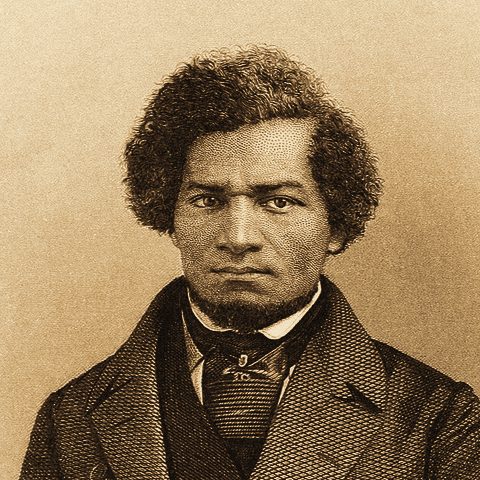
Frederick Douglass
1818 Talbot County – 1895 Washington, D.C. · African-American social reformer, writer, and abolitionist
Frederick Douglass was an American social reformer, abolitionist, orator, writer, and statesman. He was "the most important leader of the movement for African-American civil rights in the 19th century".
- 1818Born, Talbot County
- 1845Narrative of the Life of Frederick Douglass, an American Slave
- 1895Died, Washington, D.C.
If you like My Bondage and My Freedom
More like this


Start with “Childhood”
2 chapters free right now — no account. Your place follows you to iPhone and Android.