

Chapter 1 freeNo account needed.
Opens “Society and the Individual” in the player · no sign-up needed
Arguing that society and the individual are two aspects of the same thing, it explores suggestion and choice, sympathy, hostility, emulation, leadership and conscience.
Inside the book
- Free nowno account · 1 chapter
- 1Society and the Individual17 min
- Premium11 chapters · every book, 7 days free
- 2Suggestion and Choice39 min
- 4Sympathy or Communion as an Aspect of Society45 min
- 7Hostility40 min
- 8Emulation28 min
- 11Personal Degeneracy26 min
- 12Freedom17 min
The opening
Society and the Individual
Are Aspects Of The Same Thing—The Fallacy Of Setting Them In Opposition—Various Forms Of This Fallacy.
"Society and the Individual" is really the subject of this whole book, and not merely of Chapter One. It is my general aim to set forth, from various points of view, what the individual is, considered as a member of a social whole; while the special purpose of this chapter is only to offer a preliminary statement of the matter, as I conceive it, afterward to be unfolded at some length and variously illustrated.
A separate individual is an abstraction unknown to experience, and so likewise is society when regarded as something apart from individuals. The real thing is Human Life, which may be considered either in an individual aspect or in a social, that is to say a general, aspect; but is always, as a matter of fact, both individual and general. In other words, "society" and "individuals" do not denote separable phenomena, but are simply collective and distributive aspects of the same thing, the relation between them being like that between other expressions one of which denotes a group as a whole and the other the members of the group, such as the army and the soldiers, the class and the students, and so on. This holds true of any social aggregate, great or small; of a family, a city, a nation, a race; of mankind as a whole: no matter how extensive, complex, or enduring a group may be, no good reason can be given for regarding it as essentially different in this respect from the smallest, simplest, or most transient.
So far, then, as there is any difference between the two, it is rather in our point of view than in the object we are looking at: when we speak of society, or use any other collective term, we fix our minds upon some general view of the people concerned, while when we speak of individuals we disregard the general aspect and think of them as if they were separate. Thus "the Cabinet" may consist of President Lincoln, Secretary Stanton, Secretary Seward, and so on; but when I say "the Cabinet" I do not suggest the same idea as when I enumerate these gentlemen separately. Society, or any complex group, may, to ordinary observation, be a very different thing from all of its members viewed one by one—as a man who beheld General Grant's army from Missionary Ridge would have seen something other than he would by approaching every soldier in it. In the same way a picture is made up of so many square inches of painted canvas; but if you should look at these one at a time, covering the others, until you had seen them all, you would still not have seen the picture. There may, in all such cases, be a system or organization in the whole that is not apparent in the parts. In this sense, and in no other, is there a difference between society and the individuals of which it is composed; a difference not residing in the facts themselves but existing to the observer on account of the limits of his perception. A complete view of society would also be a complete view of all the individuals, and vice versa; there would be no difference between them.
And just as there is no society or group that is not a collective view of persons, so there is no individual who may not be regarded as a particular view of social groups. He has no separate existence; through both the hereditary and the social factors in his life a man is bound into the whole of which he is a member, and to consider him apart from it is quite as artificial as to consider society apart from individuals.
If this is true there is, of course, a fallacy in that not uncommon manner of speaking which sets the social and the individual over against each other as separate and antagonistic. The word "social" appears to be used in at least three fairly distinct senses, but in none of these does it mean something that can properly be regarded as opposite to individual or personal.
In its largest sense it denotes that which pertains to the collective aspect of humanity, to society in its widest and vaguest meaning. In this sense the individual and all his attributes are social, since they are all connected with the general life in one way or another, and are part of a collective development.
Again, social may mean what pertains to immediate intercourse, to the life of conversation and face-to-face sympathy—sociable in short. This is something quite different, but no more antithetical to individual than the other; it is in these relations that individuality most obviously exists and expresses itself.
In a third sense the word means conducive to the collective welfare, and thus becomes nearly equivalent to moral, as when we say that crime or sensuality is unsocial or anti-social; but here again it cannot properly be made the antithesis of individual—since wrong is surely no more individual than right—but must be contrasted with immoral, brutal, selfish, or some other word with an ethical implication.
There are a number of expressions which are closely associated in common usage with this objectionable antithesis; such words, for instance, as individualism, socialism, particularism, collectivism. These appear to be used with a good deal of vagueness, so that it is always in order to require that anyone who employs them shall make it plain in what sense they are to be taken. I wish to make no captious objections to particular forms of expression, and so far as these can be shown to have meanings that express the facts of life I have nothing to say against them. Of the current use of individualism and socialism in antithesis to each other, about the same may be said as of the words without the ism. I do not see that life presents two distinct and opposing tendencies that can properly be called individualism and socialism, any more than that there are two distinct and opposing entities, society and the individual, to embody these tendencies. The phenomena usually called individualistic are always socialistic in the sense that they are expressive of tendencies growing out of the general life, and, contrariwise, the so-called socialistic phenomena have always an obvious individual aspect. These and similar terms may be used, conveniently enough, to describe theories or programmes of the day, but whether they are suitable for purposes of careful study appears somewhat doubtful. If used, they ought, it seems to me, to receive more adequate definition than they have at present.
For example, all the principal epochs of European history might be, and most of them are, spoken of as individualistic on one ground or another, and without departing from current usage of the word. The decaying Roman Empire was individualistic if a decline of public spirit and an every-man-for-himself feeling and practice constitute individualism. So also was the following period of political confusion. The feudal system is often regarded as individualistic, because of the relative independence and isolation of small political units—quite a different use of the word from the preceding—and after this come the Revival of Learning, the Renaissance, and the Reformation, which are all commonly spoken of, on still other grounds, as assertions of individualism. Then we reach the seventeenth and eighteenth centuries, sceptical, transitional, and, again, individualistic; and so to our own time, which many hold to be the most individualistic of all. One feels like asking whether a word which means so many things as this means anything whatever.
There is always some confusion of terms in speaking of opposition between an individual and society in general, even when the writer's meaning is obvious enough: it would be more accurate to say either that one individual is opposing many, or that one part of society is opposing other parts; and thus avoid confusing the two aspects of life in the same expression. When Emerson says that society is in a conspiracy against the independence of each of its members, we are to understand that any peculiar tendency represented by one person finds itself more or less at variance with the general current of tendencies organized in other persons. It is no more individual, nor any less social, in a large sense, than other tendencies represented by more persons. A thousand persons are just as truly individuals as one, and the man who seems to stand alone draws his being from the general stream of life just as truly and inevitably as if he were one of a thousand. Innovation is just as social as conformity, genius as mediocrity. These distinctions are not between what is individual and what is social, but between what is usual or established and what is exceptional or novel. In other words, wherever you find life as society there you will find life as individuality, and vice versa.
I think, then, that the antithesis, society versus the individual, is false and hollow whenever used as a general or philosophical statement of human relations. Whatever idea may be in the minds of those who set these words and their derivatives over against each other, the notion conveyed is that of two separable entities or forces; and certainly such a notion is untrue to fact.
Most people not only think of individuals and society as more or less separate and antithetical, but they look upon the former as antecedent to the latter. That persons make society would be generally admitted as a matter of course; but that society makes persons would strike many as a startling notion, though I know of no good reason for looking upon the distributive aspect of life as more primary or causative than the collective aspect. The reason for the common impression appears to be that we think most naturally and easily of the individual phase of life, simply because it is a tangible one, the phase under which men appear to the senses, while the actuality of groups, of nations, of mankind at large, is realized only by the active and instructed imagination. We ordinarily regard society, so far as we conceive it at all, in a vaguely material aspect, as an aggregate of physical bodies, not as the vital whole which it is; and so, of course, we do not see that it may be as original or causative as anything else. Indeed many look upon "society" and other general terms as somewhat mystical, and are inclined to doubt whether there is any reality back of them.
This naïve individualism of thought—which, however, does not truly see the individual any more than it does society—is reinforced by traditions in which all of us are brought up, and is so hard to shake off that it may be worth while to point out a little more definitely some of the prevalent ways of conceiving life which are permeated by it, and which anyone who agrees with what has just been said may regard as fallacious. My purpose in doing this is only to make clearer the standpoint from which succeeding chapters are written, and I do not propose any thorough discussion of the views mentioned.
First, then, we have mere individualism. In this the distributive aspect is almost exclusively regarded, collective phases being looked upon as quite secondary and incidental. Each person is held to be a separate agent, and all social phenomena are thought of as originating in the action of such agents. The individual is the source, the independent, the only human source, of events. Although this way of looking at things has been much discredited by the evolutionary science and philosophy of recent years, it is by no means abandoned, even in theory, and practically it enters as a premise, in one shape or another, into most of the current thought of the day. It springs naturally from the established way of thinking, congenial, as I have remarked, to the ordinary material view of things and corroborated by theological and other traditions.
Next is double causation, or a partition of power between society and the individual, thought of as separate causes. This notion, in one shape or another, is the one ordinarily met with in social and ethical discussion. It is no advance, philosophically, upon the preceding. There is the same premise of the individual as a separate, unrelated agent; but over against him is set a vaguely conceived general or collective interest and force. It seems that people are so accustomed to thinking of themselves as uncaused causes, special creators on a small scale, that when the existence of general phenomena is forced upon their notice they are likely to regard these as something additional, separate, and more or less antithetical. Our two forces contend with varying fortunes, the thinker sometimes sympathizing with one, sometimes with the other, and being an individualist or a socialist accordingly. The doctrines usually understood in connection with these terms differ, as regards their conception of the nature of life, only in taking opposite sides of the same questionable antithesis. The socialist holds it desirable that the general or collective force should win; the individualist has a contrary opinion. Neither offers any change of ground, any reconciling and renewing breadth of view. So far as breadth of view is concerned a man might quite as well be an individualist as a socialist or collectivist, the two being identical in philosophy though antagonistic in programme. If one is inclined to neither party he may take refuge in the expectation that the controversy, resting, as he may hold that it does, on a false conception of life, will presently take its proper place among the forgotten débris of speculation.
Thirdly we have primitive individualism. This expression has been used to describe the view that sociality follows individuality in time, is a later and additional product of development. This view is a variety of the preceding, and is, perhaps, formed by a mingling of individualistic preconceptions with a somewhat crude evolutionary philosophy. Individuality is usually conceived as lower in moral rank as well as precedent in time. Man was a mere individual, mankind a mere aggregation of such, but he has gradually become socialized, he is progressively merging into a social whole. Morally speaking, the individual is the bad, the social the good, and we must push on the work of putting down the former and bringing in the latter.
Of course the view which I regard as sound, is that individuality is neither prior in time nor lower in moral rank than sociality; but that the two have always existed side by side as complementary aspects of the same thing, and that the line of progress is from a lower to a higher type of both, not from the one to the other. If the word social is applied only to the higher forms of mental life it should, as already suggested, be opposed not to individual, but to animal, sensual, or some other word implying mental or moral inferiority. If we go back to a time when the state of our remote ancestors was such that we are not willing to call it social, then it must have been equally undeserving to be described as individual or personal; that is to say, they must have been just as inferior to us when viewed separately as when viewed collectively. To question this is to question the vital unity of human life.
The life of the human species, like that of other species, must always have been both general and particular, must always have had its collective and distributive aspects. The plane of this life has gradually risen, involving, of course, both the aspects mentioned. Now, as ever, they develop as one, and may be observed united in the highest activities of the highest minds. Shakespeare, for instance, is in one point of view a unique and transcendent individual; in another he is a splendid expression of the general life of mankind: the difference is not in him but in the way we choose to look at him.
Finally, there is the social faculty view. This expression might be used to indicate those conceptions which regard the social as including only a part, often a rather definite part, of the individual. Human nature is thus divided into individualistic or non-social tendencies or faculties, and those that are social. Thus, certain emotions, as love, are social; others, as fear or anger, are unsocial or individualistic. Some writers have even treated the intelligence as an individualistic faculty, and have found sociality only in some sorts of emotion or sentiment.
This idea of instincts or faculties that are peculiarly social is well enough if we use this word in the sense of pertaining to conversation or immediate fellow-feeling. Affection is certainly more social in this sense than fear. But if it is meant that these instincts or faculties are in themselves morally higher than others, or that they alone pertain to the collective life, the view is, I think, very questionable. At any rate the opinion I hold, and expect to explain more fully in the further course of this book, is that man's psychical outfit is not divisible into the social and the non-social; but that he is all social in a large sense, is all a part of the common human life, and that his social or moral progress consists less in the aggrandizement of particular faculties or instincts and the suppression of others, than in the discipline of all with reference to a progressive organization of life which we know in thought as conscience.
Some instincts or tendencies may grow in relative importance, may have an increasing function, while the opposite may be true of others. Such relative growth and diminution of parts seems to be a general feature of evolution, and there is no reason why it should be absent from our mental development. But here as well as elsewhere most parts, if not all, are or have been functional with reference to a life collective as well as distributive; there is no sharp separation of faculties, and progress takes place rather by gradual adaptation of old organs to new functions than by disuse and decay.
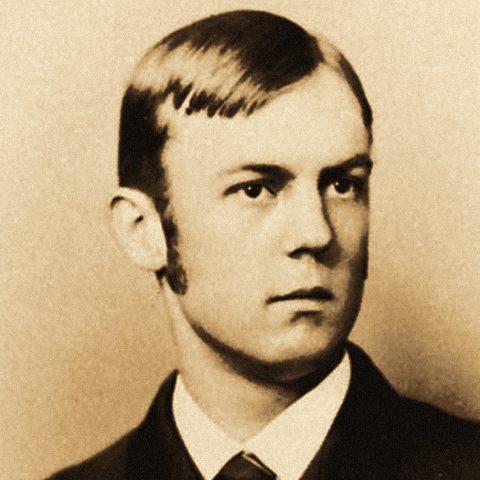
About the author
Charles Horton Cooley
1864 Ann Arbor – 1929 Ann Arbor · American sociologist
Charles Horton Cooley was an American sociologist. He was the son of Michigan Supreme Court Judge Thomas M. Cooley.
If you like Human Nature and the Social Order
More like this


Start with “Society and the Individual”
First chapter free right now — no account. Your place follows you to iPhone and Android.