

Chapter 1 freeNo account needed.
Opens “Book 3, Chapter 1: Of Words or Language in General” in the player · no sign-up needed
Book III is concerned with language, and Book IV with knowledge, including intuition, mathematics, moral philosophy, natural philosophy, faith, and opinion.
Inside the book
- Free nowno account · 1 chapter
- 1Book 3, Chapter 1: Of Words or Language in General6 min
- Premium31 chapters · every book, 7 days free
- 2Book 3, Chapter 2: Of the Signification of Words9 min
- 3Book 3, Chapter 3: Of General Terms27 min
- 4Book 3, Chapter 4: Of the Names of Simple Ideas18 min
- 5Book 3, Chapter 5: Of the Names of Mixed Modes and Relations22 min
- 6Book 3, Chapter 6 — Part 1 of 2: Of The Names Of Substances36 min
- 7Chapter 738 min
- 8Book 3, Chapter 7: Of Particles6 min
- 9Book 3, Chapter 8: Of Abstract and Concrete Terms4 min
- 10Book 3, Chapter 9: Of the Imperfection of Words32 min
- 11Book 3, Chapter 10: Of the Abuse of Words42 min
- 12Chapter 1237 min
- 13Book 4, Chapter 1: Of Knowledge in General12 min
- 14Book 4, Chapter 2: Of the Degrees of Our Knowledge18 min
- 15Book 4, Chapter 3: Of the Extent of Human Knowledge52 min
- 16Book 4, Chapter 4: Of the Reality of Knowledge26 min
- 17Book 4, Chapter 5: Of Truth in General12 min
- 18Chapter 1827 min
- 19Book 4, Chapter 7: Of Maxims40 min
- 20Book 4, Chapter 8: Of Trifling Propositions15 min
- 21Book 4, Chapter 9: Of Our Threefold Knowledge of Existence2 min
- 22Chapter 2225 min
- 23Chapter 2320 min
- 24Book 4, Chapter 12: Of the Improvement of Our Knowledge24 min
- 25Chapter 254 min
- 26Book 4, Chapter 14: Of Judgment4 min
- 27Book 4, Chapter 15: Of Probability8 min
- 28Book 4, Chapter 16: Of the Degrees of Assent24 min
- 29Book 4, Chapter 17: Of Reason28 min
- 30Chapter 3018 min
- 31Book 4, Chapter 20: Of Wrong Assent, or Error28 min
- 32Book 4, Chapter 21: Of the Division of the Sciences4 min
The opening
Book 3, Chapter 1: Of Words or Language in General
Of Words Or Language In General.
1. Man fitted to form articulated Sounds.
God, having designed man for a sociable creature, made him not only with an inclination, and under a necessity to have fellowship with those of his own kind, but furnished him also with language, which was to be the great instrument and common tie of society. Man, therefore, had by nature his organs so fashioned, as to be fit to frame articulate sounds, which we call words. But this was not enough to produce language; for parrots, and several other birds, will be taught to make articulate sounds distinct enough, which yet by no means are capable of language.
2. To use these sounds as Signs of Ideas.
Besides articulate sounds, therefore, it was further necessary that he should be able to use these sounds as signs of internal conceptions; and to make them stand as marks for the ideas within his own mind, whereby they might be made known to others, and the thoughts of men's minds be conveyed from one to another.
3. To make them general Signs.
But neither was this sufficient to make words so useful as they ought to be. It is not enough for the perfection of language, that sounds can be made signs of ideas, unless those signs can be so made use of as to comprehend several particular things: for the multiplication of words would have perplexed their use, had every particular thing need of a distinct name to be signified by. [To remedy this inconvenience, language had yet a further improvement in the use of GENERAL TERMS, whereby one word was made to mark a multitude of particular existences: which advantageous use of sounds was obtained only by the difference of the ideas they were made signs of: those names becoming general, which are made to stand for GENERAL IDEAS, and those remaining particular, where the IDEAS they are used for are PARTICULAR.]
4. To make them signify the absence of positive Ideas.
Besides these names which stand for ideas, there be other words which men make use of, not to signify any idea, but the want or absence of some ideas, simple or complex, or all ideas together; such as are NIHIL in Latin, and in English, IGNORANCE and BARRENNESS. All which negative or privative words cannot be said properly to belong to, or signify no ideas: for then they would be perfectly insignificant sounds; but they relate to positive ideas, and signify their absence.
5. Words ultimately derived from such as signify sensible Ideas.
It may also lead us a little towards the original of all our notions and knowledge, if we remark how great a dependence our words have on common sensible ideas; and how those which are made use of to stand for actions and notions quite removed from sense, have their rise from thence, and from obvious sensible ideas are transferred to more abstruse significations, and made to stand for ideas that come not under the cognizance of our senses; v.g. to IMAGINE, APPREHEND, COMPREHEND, ADHERE, CONCEIVE, INSTIL, DISGUST, DISTURBANCE, TRANQUILLITY, &c., are all words taken from the operations of sensible things, and applied to certain modes of thinking. SPIRIT, in its primary signification, is breath; ANGEL, a messenger: and I doubt not but, if we could trace them to their sources, we should find, in all languages, the names which stand for things that fall not under our senses to have had their first rise from sensible ideas.
By which we may give some kind of guess what kind of notions they were, and whence derived, which filled their minds who were the first beginners of languages, and how nature, even in the naming of things, unawares suggested to men the originals and principles of all their knowledge: whilst, to give names that might make known to others any operations they felt in themselves, or any other ideas that came not under their senses, they were fain to borrow words from ordinary known ideas of sensation, by that means to make others the more easily to conceive those operations they experimented in themselves, which made no outward sensible appearances; and then, when they had got known and agreed names to signify those internal operations of their own minds, they were sufficiently furnished to make known by words all their other ideas; since they could consist of nothing but either of outward sensible perceptions, or of the inward operations of their minds about them; we having, as has been proved, no ideas at all, but what originally come either from sensible objects without, or what we feel within ourselves, from the inward workings of our own spirits, of which we are conscious to ourselves within.
6. Distribution of subjects to be treated of.
But to understand better the use and force of Language, as subservient to instruction and knowledge, it will be convenient to consider:
First, TO WHAT IT IS THAT NAMES, IN THE USE OF LANGUAGE, ARE IMMEDIATELY APPLIED.
Secondly, Since all (except proper) names are general, and so stand not particularly for this or that single thing, but for sorts and ranks of things, it will be necessary to consider, in the next place, what the sorts and kinds, or, if you rather like the Latin names, WHAT THE SPECIES AND GENERA OF THINGS ARE, WHEREIN THEY CONSIST, AND HOW THEY COME TO BE MADE. These being (as they ought) well looked into, we shall the better come to find the right use of words; the natural advantages and defects of language; and the remedies that ought to be used, to avoid the inconveniences of obscurity or uncertainty in the signification of words: without which it is impossible to discourse with any clearness or order concerning knowledge: which, being conversant about propositions, and those most commonly universal ones, has greater connexion with words than perhaps is suspected. These considerations, therefore, shall be the matter of the following chapters.
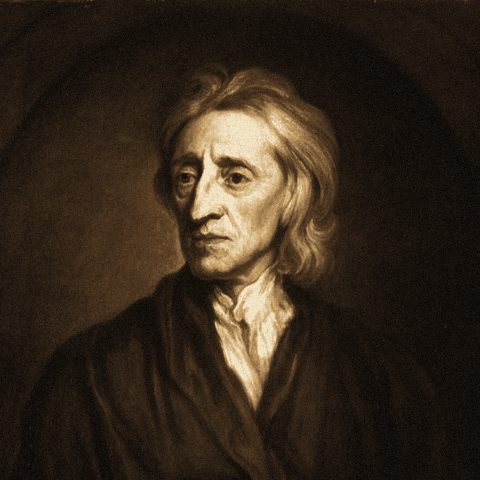
About the author
John Locke
1632 Wrington – 1704 High Laver · English philosopher and physician
John Locke was an English philosopher and physician, widely regarded as one of the most influential of the Enlightenment thinkers and commonly known as the "father of liberalism". His important works include A Letter Concerning Toleration (1689), Two Treatises of Government (1689/90), both published anonymously, and An Essay Concerning Human Understanding (1689/90).
- 1632Born, Wrington
- 1690Second Treatise of Government
- 1690An Essay Concerning Human Understanding, Volume 1
- 1690An Essay Concerning Human Understanding, Volume 2
- 1704Died, High Laver
If you like An Essay Concerning Human Understanding, Volume 2
More like this


Start with “Book 3, Chapter 1: Of Words or Language in General”
First chapter free right now — no account. Your place follows you to iPhone and Android.