

6 chapters freeNo account needed.
Opens “The Story Continued By Vincent Gilmore (part 1)” in the player · no sign-up needed
I write these lines at the request of my friend, Mr. Walter Hartright.
The Woman in White is Wilkie Collins's fifth published novel, written in 1860 and set from 1849 to 1850. It is a mystery novel and falls under the genre of "sensation novels."
Inside the book
- Free nowno account · 6 chapters
- —Part 1 of 551 min
- —Part 2 of 551 min
- —Part 3 of 550 min
- —Part 4 of 551 min
- —Part 5 of 553 min
- 1The Story Continued By Vincent Gilmore (part 1)37 min
- Premium12 chapters · every book, 7 days free
- 1The Story Continued By Vincent Gilmore (part 2)38 min
- 2The Story Continued by Marian Halcombe37 min
- 3Limmeridge House35 min
- 4Blackwater Park, HampshireIn 6 parts · Part 1 · 48:44 + Part 2 · 51:01 + Part 3 · 51:10 + Part 4 · 50:48 + Part 5 · 51:18 + Part 6 · 54:355 h 08 m
- 5Postscript by A Sincere Friend47 min
- 7The Story Continued in Several Narratives26 min
- 8The Story Continued By Walter HartrightIn 5 parts · Part 1 · 46:50 + Part 2 · 49:57 + Part 3 · 48:33 + Part 4 · 50:52 + Part 5 · 52:414 h 09 m
- 9The Story Continued by Mrs. Catherick28 min
- 10The Story Continued By Walter HartrightIn 3 parts · Part 1 · 41:42 + Part 2 · 42:05 + Part 3 · 43:592 h 08 m
- 11The Count’s Narrative33 min
- 12The Story Concluded by Walter Hartright30 min
The opening
The Story Continued By Vincent Gilmore (part 1)
(of Chancery Lane, Solicitor)
I write these lines at the request of my friend, Mr. Walter Hartright. They are intended to convey a description of certain events which seriously affected Miss Fairlie's interests, and which took place after the period of Mr. Hartright's departure from Limmeridge House.
There is no need for me to say whether my own opinion does or does not sanction the disclosure of the remarkable family story, of which my narrative forms an important component part. Mr. Hartright has taken that responsibility on himself, and circumstances yet to be related will show that he has amply earned the right to do so, if he chooses to exercise it. The plan he has adopted for presenting the story to others, in the most truthful and most vivid manner, requires that it should be told, at each successive stage in the march of events, by the persons who were directly concerned in those events at the time of their occurrence. My appearance here, as narrator, is the necessary consequence of this arrangement. I was present during the sojourn of Sir Percival Glyde in Cumberland, and was personally concerned in one important result of his short residence under Mr. Fairlie's roof. It is my duty, therefore, to add these new links to the chain of events, and to take up the chain itself at the point where, for the present only, Mr. Hartright has dropped it.
I arrived at Limmeridge House on Friday the second of November.
My object was to remain at Mr. Fairlie's until the arrival of Sir Percival Glyde. If that event led to the appointment of any given day for Sir Percival's union with Miss Fairlie, I was to take the necessary instructions back with me to London, and to occupy myself in drawing the lady's marriage-settlement.
On the Friday I was not favoured by Mr. Fairlie with an interview. He had been, or had fancied himself to be, an invalid for years past, and he was not well enough to receive me. Miss Halcombe was the first member of the family whom I saw. She met me at the house door, and introduced me to Mr. Hartright, who had been staying at Limmeridge for some time past.
I did not see Miss Fairlie until later in the day, at dinner-time. She was not looking well, and I was sorry to observe it. She is a sweet lovable girl, as amiable and attentive to every one about her as her excellent mother used to be—though, personally speaking, she takes after her father. Mrs. Fairlie had dark eyes and hair, and her elder daughter, Miss Halcombe, strongly reminds me of her. Miss Fairlie played to us in the evening—not so well as usual, I thought. We had a rubber at whist, a mere profanation, so far as play was concerned, of that noble game. I had been favourably impressed by Mr. Hartright on our first introduction to one another, but I soon discovered that he was not free from the social failings incidental to his age. There are three things that none of the young men of the present generation can do. They can't sit over their wine, they can't play at whist, and they can't pay a lady a compliment. Mr. Hartright was no exception to the general rule. Otherwise, even in those early days and on that short acquaintance, he struck me as being a modest and gentlemanlike young man.
So the Friday passed. I say nothing about the more serious matters which engaged my attention on that day—the anonymous letter to Miss Fairlie, the measures I thought it right to adopt when the matter was mentioned to me, and the conviction I entertained that every possible explanation of the circumstances would be readily afforded by Sir Percival Glyde, having all been fully noticed, as I understand, in the narrative which precedes this.
On the Saturday Mr. Hartright had left before I got down to breakfast. Miss Fairlie kept her room all day, and Miss Halcombe appeared to me to be out of spirits. The house was not what it used to be in the time of Mr. and Mrs. Philip Fairlie. I took a walk by myself in the forenoon, and looked about at some of the places which I first saw when I was staying at Limmeridge to transact family business, more than thirty years since. They were not what they used to be either.
At two o'clock Mr. Fairlie sent to say he was well enough to see me. HE had not altered, at any rate, since I first knew him. His talk was to the same purpose as usual—all about himself and his ailments, his wonderful coins, and his matchless Rembrandt etchings. The moment I tried to speak of the business that had brought me to his house, he shut his eyes and said I "upset" him. I persisted in upsetting him by returning again and again to the subject. All I could ascertain was that he looked on his niece's marriage as a settled thing, that her father had sanctioned it, that he sanctioned it himself, that it was a desirable marriage, and that he should be personally rejoiced when the worry of it was over. As to the settlements, if I would consult his niece, and afterwards dive as deeply as I pleased into my own knowledge of the family affairs, and get everything ready, and limit his share in the business, as guardian, to saying Yes, at the right moment—why, of course he would meet my views, and everybody else's views, with infinite pleasure. In the meantime, there I saw him, a helpless sufferer, confined to his room. Did I think he looked as if he wanted teasing? No. Then why tease him?
I might, perhaps, have been a little astonished at this extraordinary absence of all self-assertion on Mr. Fairlie's part, in the character of guardian, if my knowledge of the family affairs had not been sufficient to remind me that he was a single man, and that he had nothing more than a life-interest in the Limmeridge property. As matters stood, therefore, I was neither surprised nor disappointed at the result of the interview. Mr. Fairlie had simply justified my expectations—and there was an end of it.
Sunday was a dull day, out of doors and in. A letter arrived for me from Sir Percival Glyde's solicitor, acknowledging the receipt of my copy of the anonymous letter and my accompanying statement of the case. Miss Fairlie joined us in the afternoon, looking pale and depressed, and altogether unlike herself. I had some talk with her, and ventured on a delicate allusion to Sir Percival. She listened and said nothing. All other subjects she pursued willingly, but this subject she allowed to drop. I began to doubt whether she might not be repenting of her engagement—just as young ladies often do, when repentance comes too late.
On Monday Sir Percival Glyde arrived.
I found him to be a most prepossessing man, so far as manners and appearance were concerned. He looked rather older than I had expected, his head being bald over the forehead, and his face somewhat marked and worn, but his movements were as active and his spirits as high as a young man's. His meeting with Miss Halcombe was delightfully hearty and unaffected, and his reception of me, upon my being presented to him, was so easy and pleasant that we got on together like old friends. Miss Fairlie was not with us when he arrived, but she entered the room about ten minutes afterwards. Sir Percival rose and paid his compliments with perfect grace. His evident concern on seeing the change for the worse in the young lady's looks was expressed with a mixture of tenderness and respect, with an unassuming delicacy of tone, voice, and manner, which did equal credit to his good breeding and his good sense. I was rather surprised, under these circumstances, to see that Miss Fairlie continued to be constrained and uneasy in his presence, and that she took the first opportunity of leaving the room again. Sir Percival neither noticed the restraint in her reception of him, nor her sudden withdrawal from our society. He had not obtruded his attentions on her while she was present, and he did not embarrass Miss Halcombe by any allusion to her departure when she was gone. His tact and taste were never at fault on this or on any other occasion while I was in his company at Limmeridge House.
As soon as Miss Fairlie had left the room he spared us all embarrassment on the subject of the anonymous letter, by adverting to it of his own accord. He had stopped in London on his way from Hampshire, had seen his solicitor, had read the documents forwarded by me, and had travelled on to Cumberland, anxious to satisfy our minds by the speediest and the fullest explanation that words could convey. On hearing him express himself to this effect, I offered him the original letter, which I had kept for his inspection. He thanked me, and declined to look at it, saying that he had seen the copy, and that he was quite willing to leave the original in our hands.
The statement itself, on which he immediately entered, was as simple and satisfactory as I had all along anticipated it would be.
Mrs. Catherick, he informed us, had in past years laid him under some obligations for faithful services rendered to his family connections and to himself. She had been doubly unfortunate in being married to a husband who had deserted her, and in having an only child whose mental faculties had been in a disturbed condition from a very early age. Although her marriage had removed her to a part of Hampshire far distant from the neighbourhood in which Sir Percival's property was situated, he had taken care not to lose sight of her—his friendly feeling towards the poor woman, in consideration of her past services, having been greatly strengthened by his admiration of the patience and courage with which she supported her calamities. In course of time the symptoms of mental affliction in her unhappy daughter increased to such a serious extent, as to make it a matter of necessity to place her under proper medical care. Mrs. Catherick herself recognised this necessity, but she also felt the prejudice common to persons occupying her respectable station, against allowing her child to be admitted, as a pauper, into a public Asylum.
Sir Percival had respected this prejudice, as he respected honest independence of feeling in any rank of life, and had resolved to mark his grateful sense of Mrs. Catherick's early attachment to the interests of himself and his family, by defraying the expense of her daughter's maintenance in a trustworthy private Asylum. To her mother's regret, and to his own regret, the unfortunate creature had discovered the share which circumstances had induced him to take in placing her under restraint, and had conceived the most intense hatred and distrust of him in consequence. To that hatred and distrust—which had expressed itself in various ways in the Asylum—the anonymous letter, written after her escape, was plainly attributable. If Miss Halcombe's or Mr. Gilmore's recollection of the document did not confirm that view, or if they wished for any additional particulars about the Asylum (the address of which he mentioned, as well as the names and addresses of the two doctors on whose certificates the patient was admitted), he was ready to answer any question and to clear up any uncertainty.
He had done his duty to the unhappy young woman, by instructing his solicitor to spare no expense in tracing her, and in restoring her once more to medical care, and he was now only anxious to do his duty towards Miss Fairlie and towards her family, in the same plain, straightforward way.
I was the first to speak in answer to this appeal. My own course was plain to me. It is the great beauty of the Law that it can dispute any human statement, made under any circumstances, and reduced to any form. If I had felt professionally called upon to set up a case against Sir Percival Glyde, on the strength of his own explanation, I could have done so beyond all doubt. But my duty did not lie in this direction—my function was of the purely judicial kind. I was to weigh the explanation we had just heard, to allow all due force to the high reputation of the gentleman who offered it, and to decide honestly whether the probabilities, on Sir Percival's own showing, were plainly with him, or plainly against him. My own conviction was that they were plainly with him, and I accordingly declared that his explanation was, to my mind, unquestionably a satisfactory one.
Miss Halcombe, after looking at me very earnestly, said a few words, on her side, to the same effect—with a certain hesitation of manner, however, which the circumstances did not seem to me to warrant. I am unable to say, positively, whether Sir Percival noticed this or not. My opinion is that he did, seeing that he pointedly resumed the subject, although he might now, with all propriety, have allowed it to drop.
"If my plain statement of facts had only been addressed to Mr. Gilmore," he said, "I should consider any further reference to this unhappy matter as unnecessary. I may fairly expect Mr. Gilmore, as a gentleman, to believe me on my word, and when he has done me that justice, all discussion of the subject between us has come to an end. But my position with a lady is not the same. I owe to her—what I would concede to no man alive—a PROOF of the truth of my assertion. You cannot ask for that proof, Miss Halcombe, and it is therefore my duty to you, and still more to Miss Fairlie, to offer it. May I beg that you will write at once to the mother of this unfortunate woman—to Mrs. Catherick—to ask for her testimony in support of the explanation which I have just offered to you."
I saw Miss Halcombe change colour, and look a little uneasy. Sir Percival's suggestion, politely as it was expressed, appeared to her, as it appeared to me, to point very delicately at the hesitation which her manner had betrayed a moment or two since.
"I hope, Sir Percival, you don't do me the injustice to suppose that I distrust you," she said quickly.
"Certainly not, Miss Halcombe. I make my proposal purely as an act of attention to YOU. Will you excuse my obstinacy if I still venture to press it?"
He walked to the writing-table as he spoke, drew a chair to it, and opened the paper case.
"Let me beg you to write the note," he said, "as a favour to ME. It need not occupy you more than a few minutes. You have only to ask Mrs. Catherick two questions. First, if her daughter was placed in the Asylum with her knowledge and approval. Secondly, if the share I took in the matter was such as to merit the expression of her gratitude towards myself? Mr. Gilmore's mind is at ease on this unpleasant subject, and your mind is at ease—pray set my mind at ease also by writing the note."
"You oblige me to grant your request, Sir Percival, when I would much rather refuse it."
With those words Miss Halcombe rose from her place and went to the writing-table. Sir Percival thanked her, handed her a pen, and then walked away towards the fireplace. Miss Fairlie's little Italian greyhound was lying on the rug. He held out his hand, and called to the dog good-humouredly.
"Come, Nina," he said, "we remember each other, don't we?"
The little beast, cowardly and cross-grained, as pet-dogs usually are, looked up at him sharply, shrank away from his outstretched hand, whined, shivered, and hid itself under a sofa. It was scarcely possible that he could have been put out by such a trifle as a dog's reception of him, but I observed, nevertheless, that he walked away towards the window very suddenly. Perhaps his temper is irritable at times. If so, I can sympathise with him. My temper is irritable at times too.
Miss Halcombe was not long in writing the note. When it was done she rose from the writing-table, and handed the open sheet of paper to Sir Percival. He bowed, took it from her, folded it up immediately without looking at the contents, sealed it, wrote the address, and handed it back to her in silence. I never saw anything more gracefully and more becomingly done in my life.
"You insist on my posting this letter, Sir Percival?" said Miss Halcombe.
"I beg you will post it," he answered. "And now that it is written and sealed up, allow me to ask one or two last questions about the unhappy woman to whom it refers. I have read the communication which Mr. Gilmore kindly addressed to my solicitor, describing the circumstances under which the writer of the anonymous letter was identified. But there are certain points to which that statement does not refer. Did Anne Catherick see Miss Fairlie?"
"Certainly not," replied Miss Halcombe.
"Did she see you?"
"No."
"She saw nobody from the house then, except a certain Mr. Hartright, who accidentally met with her in the churchyard here?"
"Nobody else."
"Mr. Hartright was employed at Limmeridge as a drawing-master, I believe? Is he a member of one of the Water-Colour Societies?"
"I believe he is," answered Miss Halcombe.
He paused for a moment, as if he was thinking over the last answer, and then added—
"Did you find out where Anne Catherick was living, when she was in this neighbourhood?"
"Yes. At a farm on the moor, called Todd's Corner."
"It is a duty we all owe to the poor creature herself to trace her," continued Sir Percival. "She may have said something at Todd's Corner which may help us to find her. I will go there and make inquiries on the chance. In the meantime, as I cannot prevail on myself to discuss this painful subject with Miss Fairlie, may I beg, Miss Halcombe, that you will kindly undertake to give her the necessary explanation, deferring it of course until you have received the reply to that note."
Miss Halcombe promised to comply with his request. He thanked her, nodded pleasantly, and left us, to go and establish himself in his own room. As he opened the door the cross-grained greyhound poked out her sharp muzzle from under the sofa, and barked and snapped at him.
"A good morning's work, Miss Halcombe," I said, as soon as we were alone. "Here is an anxious day well ended already."
"Yes," she answered; "no doubt. I am very glad your mind is satisfied."
"My mind! Surely, with that note in your hand, your mind is at ease too?"
"Oh yes—how can it be otherwise? I know the thing could not be," she went on, speaking more to herself than to me; "but I almost wish Walter Hartright had stayed here long enough to be present at the explanation, and to hear the proposal to me to write this note."
I was a little surprised—perhaps a little piqued also—by these last words.
"Events, it is true, connected Mr. Hartright very remarkably with the affair of the letter," I said; "and I readily admit that he conducted himself, all things considered, with great delicacy and discretion. But I am quite at a loss to understand what useful influence his presence could have exercised in relation to the effect of Sir Percival's statement on your mind or mine."
"It was only a fancy," she said absently. "There is no need to discuss it, Mr. Gilmore. Your experience ought to be, and is, the best guide I can desire."
I did not altogether like her thrusting the whole responsibility, in this marked manner, on my shoulders. If Mr. Fairlie had done it, I should not have been surprised. But resolute, clear-minded Miss Halcombe was the very last person in the world whom I should have expected to find shrinking from the expression of an opinion of her own.
"If any doubts still trouble you," I said, "why not mention them to me at once? Tell me plainly, have you any reason to distrust Sir Percival Glyde?"
"None whatever."
"Do you see anything improbable, or contradictory, in his explanation?"
"How can I say I do, after the proof he has offered me of the truth of it? Can there be better testimony in his favour, Mr. Gilmore, than the testimony of the woman's mother?"
"None better. If the answer to your note of inquiry proves to be satisfactory, I for one cannot see what more any friend of Sir Percival's can possibly expect from him."
"Then we will post the note," she said, rising to leave the room, "and dismiss all further reference to the subject until the answer arrives. Don't attach any weight to my hesitation. I can give no better reason for it than that I have been over-anxious about Laura lately—and anxiety, Mr. Gilmore, unsettles the strongest of us."
She left me abruptly, her naturally firm voice faltering as she spoke those last words. A sensitive, vehement, passionate nature—a woman of ten thousand in these trivial, superficial times. I had known her from her earliest years—I had seen her tested, as she grew up, in more than one trying family crisis, and my long experience made me attach an importance to her hesitation under the circumstances here detailed, which I should certainly not have felt in the case of another woman. I could see no cause for any uneasiness or any doubt, but she had made me a little uneasy, and a little doubtful, nevertheless. In my youth, I should have chafed and fretted under the irritation of my own unreasonable state of mind. In my age, I knew better, and went out philosophically to walk it off.
We all met again at dinner-time.
Sir Percival was in such boisterous high spirits that I hardly recognised him as the same man whose quiet tact, refinement, and good sense had impressed me so strongly at the interview of the morning. The only trace of his former self that I could detect reappeared, every now and then, in his manner towards Miss Fairlie. A look or a word from her suspended his loudest laugh, checked his gayest flow of talk, and rendered him all attention to her, and to no one else at table, in an instant. Although he never openly tried to draw her into the conversation, he never lost the slightest chance she gave him of letting her drift into it by accident, and of saying the words to her, under those favourable circumstances, which a man with less tact and delicacy would have pointedly addressed to her the moment they occurred to him. Rather to my surprise, Miss Fairlie appeared to be sensible of his attentions without being moved by them. She was a little confused from time to time when he looked at her, or spoke to her; but she never warmed towards him. Rank, fortune, good breeding, good looks, the respect of a gentleman, and the devotion of a lover were all humbly placed at her feet, and, so far as appearances went, were all offered in vain.
On the next day, the Tuesday, Sir Percival went in the morning (taking one of the servants with him as a guide) to Todd's Corner. His inquiries, as I afterwards heard, led to no results. On his return he had an interview with Mr. Fairlie, and in the afternoon he and Miss Halcombe rode out together. Nothing else happened worthy of record. The evening passed as usual. There was no change in Sir Percival, and no change in Miss Fairlie.
The Wednesday's post brought with it an event—the reply from Mrs. Catherick. I took a copy of the document, which I have preserved, and which I may as well present in this place. It ran as follows—
"MADAM,—I beg to acknowledge the receipt of your letter, inquiring whether my daughter, Anne, was placed under medical superintendence with my knowledge and approval, and whether the share taken in the matter by Sir Percival Glyde was such as to merit the expression of my gratitude towards that gentleman. Be pleased to accept my answer in the affirmative to both those questions, and believe me to remain, your obedient servant,
"JANE ANNE CATHERICK."
Short, sharp, and to the point; in form rather a business-like letter for a woman to write—in substance as plain a confirmation as could be desired of Sir Percival Glyde's statement. This was my opinion, and with certain minor reservations, Miss Halcombe's opinion also. Sir Percival, when the letter was shown to him, did not appear to be struck by the sharp, short tone of it. He told us that Mrs. Catherick was a woman of few words, a clear-headed, straightforward, unimaginative person, who wrote briefly and plainly, just as she spoke.
The next duty to be accomplished, now that the answer had been received, was to acquaint Miss Fairlie with Sir Percival's explanation. Miss Halcombe had undertaken to do this, and had left the room to go to her sister, when she suddenly returned again, and sat down by the easy-chair in which I was reading the newspaper. Sir Percival had gone out a minute before to look at the stables, and no one was in the room but ourselves.
"I suppose we have really and truly done all we can?" she said, turning and twisting Mrs. Catherick's letter in her hand.
"If we are friends of Sir Percival's, who know him and trust him, we have done all, and more than all, that is necessary," I answered, a little annoyed by this return of her hesitation. "But if we are enemies who suspect him——"
"That alternative is not even to be thought of," she interposed. "We are Sir Percival's friends, and if generosity and forbearance can add to our regard for him, we ought to be Sir Percival's admirers as well. You know that he saw Mr. Fairlie yesterday, and that he afterwards went out with me."
"Yes. I saw you riding away together."
"We began the ride by talking about Anne Catherick, and about the singular manner in which Mr. Hartright met with her. But we soon dropped that subject, and Sir Percival spoke next, in the most unselfish terms, of his engagement with Laura. He said he had observed that she was out of spirits, and he was willing, if not informed to the contrary, to attribute to that cause the alteration in her manner towards him during his present visit. If, however, there was any more serious reason for the change, he would entreat that no constraint might be placed on her inclinations either by Mr. Fairlie or by me. All he asked, in that case, was that she would recall to mind, for the last time, what the circumstances were under which the engagement between them was made, and what his conduct had been from the beginning of the courtship to the present time. If, after due reflection on those two subjects, she seriously desired that he should withdraw his pretensions to the honour of becoming her husband—and if she would tell him so plainly with her own lips—he would sacrifice himself by leaving her perfectly free to withdraw from the engagement."
"No man could say more than that, Miss Halcombe. As to my experience, few men in his situation would have said as much."
She paused after I had spoken those words, and looked at me with a singular expression of perplexity and distress.
"I accuse nobody, and I suspect nothing," she broke out abruptly. "But I cannot and will not accept the responsibility of persuading Laura to this marriage."
"That is exactly the course which Sir Percival Glyde has himself requested you to take," I replied in astonishment. "He has begged you not to force her inclinations."
"And he indirectly obliges me to force them, if I give her his message."
"How can that possibly be?"
"Consult your own knowledge of Laura, Mr. Gilmore. If I tell her to reflect on the circumstances of her engagement, I at once appeal to two of the strongest feelings in her nature—to her love for her father's memory, and to her strict regard for truth. You know that she never broke a promise in her life—you know that she entered on this engagement at the beginning of her father's fatal illness, and that he spoke hopefully and happily of her marriage to Sir Percival Glyde on his deathbed."
I own that I was a little shocked at this view of the case.
"Surely," I said, "you don't mean to infer that when Sir Percival spoke to you yesterday he speculated on such a result as you have just mentioned?"
Her frank, fearless face answered for her before she spoke.
"Do you think I would remain an instant in the company of any man whom I suspected of such baseness as that?" she asked angrily.
I liked to feel her hearty indignation flash out on me in that way. We see so much malice and so little indignation in my profession.
"In that case," I said, "excuse me if I tell you, in our legal phrase, that you are travelling out of the record. Whatever the consequences may be, Sir Percival has a right to expect that your sister should carefully consider her engagement from every reasonable point of view before she claims her release from it. If that unlucky letter has prejudiced her against him, go at once, and tell her that he has cleared himself in your eyes and in mine. What objection can she urge against him after that? What excuse can she possibly have for changing her mind about a man whom she had virtually accepted for her husband more than two years ago?"
"In the eyes of law and reason, Mr. Gilmore, no excuse, I daresay. If she still hesitates, and if I still hesitate, you must attribute our strange conduct, if you like, to caprice in both cases, and we must bear the imputation as well as we can."
With those words she suddenly rose and left me. When a sensible woman has a serious question put to her, and evades it by a flippant answer, it is a sure sign, in ninety-nine cases out of a hundred, that she has something to conceal. I returned to the perusal of the newspaper, strongly suspecting that Miss Halcombe and Miss Fairlie had a secret between them which they were keeping from Sir Percival, and keeping from me. I thought this hard on both of us, especially on Sir Percival.
My doubts—or to speak more correctly, my convictions—were confirmed by Miss Halcombe's language and manner when I saw her again later in the day. She was suspiciously brief and reserved in telling me the result of her interview with her sister. Miss Fairlie, it appeared, had listened quietly while the affair of the letter was placed before her in the right point of view, but when Miss Halcombe next proceeded to say that the object of Sir Percival's visit at Limmeridge was to prevail on her to let a day be fixed for the marriage she checked all further reference to the subject by begging for time. If Sir Percival would consent to spare her for the present, she would undertake to give him his final answer before the end of the year. She pleaded for this delay with such anxiety and agitation, that Miss Halcombe had promised to use her influence, if necessary, to obtain it, and there, at Miss Fairlie's earnest entreaty, all further discussion of the marriage question had ended.
The purely temporary arrangement thus proposed might have been convenient enough to the young lady, but it proved somewhat embarrassing to the writer of these lines. That morning's post had brought a letter from my partner, which obliged me to return to town the next day by the afternoon train. It was extremely probable that I should find no second opportunity of presenting myself at Limmeridge House during the remainder of the year. In that case, supposing Miss Fairlie ultimately decided on holding to her engagement, my necessary personal communication with her, before I drew her settlement, would become something like a downright impossibility, and we should be obliged to commit to writing questions which ought always to be discussed on both sides by word of mouth. I said nothing about this difficulty until Sir Percival had been consulted on the subject of the desired delay. He was too gallant a gentleman not to grant the request immediately. When Miss Halcombe informed me of this I told her that I must absolutely speak to her sister before I left Limmeridge, and it was, therefore, arranged that I should see Miss Fairlie in her own sitting-room the next morning. She did not come down to dinner, or join us in the evening. Indisposition was the excuse, and I thought Sir Percival looked, as well he might, a little annoyed when he heard of it.
The next morning, as soon as breakfast was over, I went up to Miss Fairlie's sitting-room. The poor girl looked so pale and sad, and came forward to welcome me so readily and prettily, that the resolution to lecture her on her caprice and indecision, which I had been forming all the way upstairs, failed me on the spot. I led her back to the chair from which she had risen, and placed myself opposite to her. Her cross-grained pet greyhound was in the room, and I fully expected a barking and snapping reception. Strange to say, the whimsical little brute falsified my expectations by jumping into my lap and poking its sharp muzzle familiarly into my hand the moment I sat down.
"You used often to sit on my knee when you were a child, my dear," I said, "and now your little dog seems determined to succeed you in the vacant throne. Is that pretty drawing your doing?"
I pointed to a little album which lay on the table by her side and which she had evidently been looking over when I came in. The page that lay open had a small water-colour landscape very neatly mounted on it. This was the drawing which had suggested my question—an idle question enough—but how could I begin to talk of business to her the moment I opened my lips?
"No," she said, looking away from the drawing rather confusedly, "it is not my doing."
Her fingers had a restless habit, which I remembered in her as a child, of always playing with the first thing that came to hand whenever any one was talking to her. On this occasion they wandered to the album, and toyed absently about the margin of the little water-colour drawing. The expression of melancholy deepened on her face. She did not look at the drawing, or look at me. Her eyes moved uneasily from object to object in the room, betraying plainly that she suspected what my purpose was in coming to speak to her. Seeing that, I thought it best to get to the purpose with as little delay as possible.
"One of the errands, my dear, which brings me here is to bid you good-bye," I began. "I must get back to London to-day: and, before I leave, I want to have a word with you on the subject of your own affairs."
"I am very sorry you are going, Mr. Gilmore," she said, looking at me kindly. "It is like the happy old times to have you here."
"I hope I may be able to come back and recall those pleasant memories once more," I continued; "but as there is some uncertainty about the future, I must take my opportunity when I can get it, and speak to you now. I am your old lawyer and your old friend, and I may remind you, I am sure, without offence, of the possibility of your marrying Sir Percival Glyde."
She took her hand off the little album as suddenly as if it had turned hot and burnt her. Her fingers twined together nervously in her lap, her eyes looked down again at the floor, and an expression of constraint settled on her face which looked almost like an expression of pain.
"Is it absolutely necessary to speak of my marriage engagement?" she asked in low tones.
"It is necessary to refer to it," I answered, "but not to dwell on it. Let us merely say that you may marry, or that you may not marry. In the first case, I must be prepared, beforehand, to draw your settlement, and I ought not to do that without, as a matter of politeness, first consulting you. This may be my only chance of hearing what your wishes are. Let us, therefore, suppose the case of your marrying, and let me inform you, in as few words as possible, what your position is now, and what you may make it, if you please, in the future."
I explained to her the object of a marriage-settlement, and then told her exactly what her prospects were—in the first place, on her coming of age, and in the second place, on the decease of her uncle—marking the distinction between the property in which she had a life-interest only, and the property which was left at her own control. She listened attentively, with the constrained expression still on her face, and her hands still nervously clasped together in her lap.
"And now," I said in conclusion, "tell me if you can think of any condition which, in the case we have supposed, you would wish me to make for you—subject, of course, to your guardian's approval, as you are not yet of age."
She moved uneasily in her chair, then looked in my face on a sudden very earnestly.
"If it does happen," she began faintly, "if I am——"
"If you are married," I added, helping her out.
"Don't let him part me from Marian," she cried, with a sudden outbreak of energy. "Oh, Mr. Gilmore, pray make it law that Marian is to live with me!"
Under other circumstances I might, perhaps, have been amused at this essentially feminine interpretation of my question, and of the long explanation which had preceded it. But her looks and tones, when she spoke, were of a kind to make me more than serious—they distressed me. Her words, few as they were, betrayed a desperate clinging to the past which boded ill for the future.
"Your having Marian Halcombe to live with you can easily be settled by private arrangement," I said. "You hardly understood my question, I think. It referred to your own property—to the disposal of your money. Supposing you were to make a will when you come of age, who would you like the money to go to?"
"Marian has been mother and sister both to me," said the good, affectionate girl, her pretty blue eyes glistening while she spoke. "May I leave it to Marian, Mr. Gilmore?"
"Certainly, my love," I answered. "But remember what a large sum it is. Would you like it all to go to Miss Halcombe?"
She hesitated; her colour came and went, and her hand stole back again to the little album.
"Not all of it," she said. "There is some one else besides Marian——"
She stopped; her colour heightened, and the fingers of the hand that rested upon the album beat gently on the margin of the drawing, as if her memory had set them going mechanically with the remembrance of a favourite tune.
"You mean some other member of the family besides Miss Halcombe?" I suggested, seeing her at a loss to proceed.
The heightening colour spread to her forehead and her neck, and the nervous fingers suddenly clasped themselves fast round the edge of the book.
"There is some one else," she said, not noticing my last words, though she had evidently heard them; "there is some one else who might like a little keepsake if—if I might leave it. There would be no harm if I should die first——"
About the author
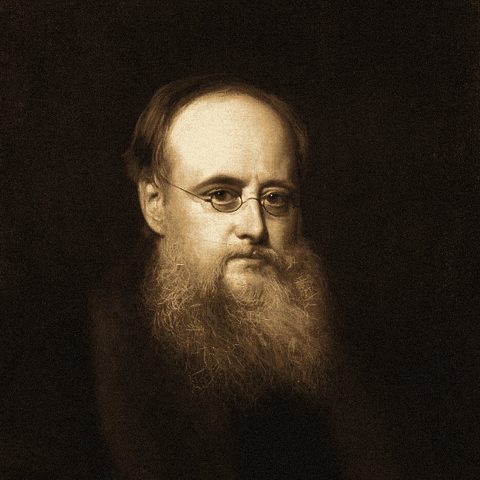
Wilkie Collins
1824 London – 1889 London · British writer
William Wilkie Collins was an English novelist and playwright known especially for The Woman in White (1860), a mystery novel and early sensation novel, and for The Moonstone (1868), which established many of the ground rules of the modern detective novel and is also perhaps the earliest clear example of the police procedural genre.
- 1824Born, London
- 1860The Woman in White
- 1862No Name
- 1866Armadale
- 1868The Moonstone
- 1875The Law and the Lady
- 1889Died, London
More by Wilkie Collins
Keep going with Collins


If you like The Woman in White
More like this


Start with “The Story Continued By Vincent Gilmore (part 1)”
6 chapters free right now — no account. Your place follows you to iPhone and Android.