

Chapter 1 freeNo account needed.
Opens “The Ideal of Sculpture” in the player · no sign-up needed
Lectures on Aesthetics or Lectures on Fine Art is a compilation of notes from university lectures on aesthetics given by Georg Wilhelm Friedrich Hegel in Heidelberg in 1818 and in Berlin in 1820/21, 1823, 1826 and 1828/29.
Inside the book
- Free nowno account · 1 chapter
- 1The Ideal of Sculpture4 min
- Premium17 chapters · every book, 7 days free
- 2The Art of Painting6 min
- 3Music7 min
- 4The Philosophy of Fine Art21 min
- 5Division of Subject23 min
- 6Architecture3 min
- 7Division of Subject9 min
- 9Classical Architecture54 min
- 10I. General Character40 min
- 11Sculpture23 min
- 12The Principle of Genuine Sculpture26 min
- 16Chapter 14, part 131 min
- 17Chapter 14, part 231 min
- 15The Romantic Arts12 min
- 16The Art Of PaintingIn 5 parts · Part 1 · 44:57 + Part 2 · 45:43 + Part 3 · 45:27 + Part 4 · 45:50 + Part 5 · 47:213 h 49 m
The opening
The Ideal of Sculpture
Introduction and division of subject
1. The general character of the ideal form of sculpture
(a) The free product of the genius of the artist. General content borrowed from mythology, etc.
(b) The animation which results from the plastic perfection of the integrated coalescence of the whole throughout its definition and relief
(c) No mere imitation of Nature. The external shape must be suffused with ideal content]
2. The particular aspects of the ideal form of sculpture as such
(a) The Greek profile. Contrast of the human mouth with that of animals. The projection of the forehead. Position of nose. Consideration of the human eye and ear. Beauty of the human mouth. Treatment of the chin in sculpture, also the hair
(b) Position of other parts of the human body and the motion thereof
[(α) The nature of the relation under which the limbs are associated in their contribution to spiritual ideality. The upright position
(β) The motion and repose of the same in their freedom and beauty
(γ) The type of position and motion adapted to a situation (habitus) or bodily habit under which the Ideal is expressed]
(c) Drapery
[(α) Ethical origin and artistic justification of, in sculpture
(β) Treatment of it by Greek sculpture
(γ) Artistic principle as determining the right emphasis on ideal significance. Contrast between antique and modern sculpture in the use of it]
3. The individuality of the ideal figures of Sculpture
(a) Incidental attributes and style of drapery, armour, etc., treated by sculpture. Distinguishing symbolic accessories of Greek gods
(b) Distinctions of age and sex in gods, heroes, human figures, and animals
(c) Representation of particular gods
CHAPTER III
THE VARIOUS KINDS OF REPRESENTATION, MATERIAL, AND THE HISTORICAL STAGES OF THE EVOLUTION OF SCULPTURE
Introduction and division of subject
1. Modes of Representation
(a) The single statue
(b) The group. Tranquil juxtaposition. Conflicting actions. Niobe. Lacoon
(c) The relief
2. The material of sculpture
(a) Wood
(b) Ivory, gold, bronze, and marble
(c) Precious stones and glass
3. The historical evolution of sculpture
(a) Egyptian sculpture. Deficiency of ideal spontaneity. Position of hands and arms. Position of eyes
(b) Sculpture of the Greeks and Romans
(c) Christian sculpture
SUBSECTION III
THE ROMANTIC ARTS
INTRODUCTION
[The principle of subjectivity as such. How it is accepted as the essential principle by romantic art. The contrast presented by romantic and classical art in the changed point of view. The effect of such a change on both the subjective side of soul-life and the external aspect of objective presentment. The process of the gradual idealization of the external medium of art itself as illustrated by the particular romantic arts and the necessity thereof]
CHAPTER I
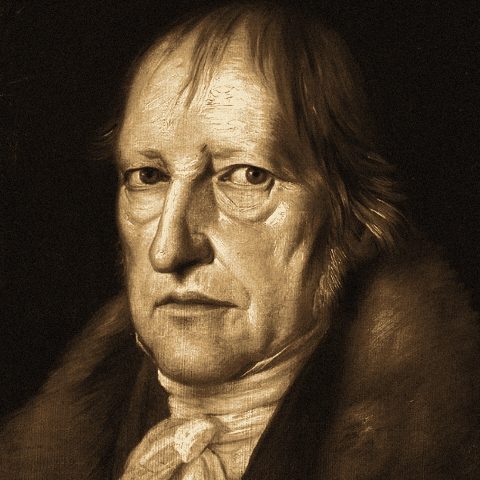
About the author
Georg Wilhelm Friedrich Hegel
1770 Stuttgart – 1831 Berlin · German philosopher and theologian
Georg Wilhelm Friedrich Hegel was a German philosopher and a major figure in the tradition of German idealism. His influence on Western philosophy extends across a wide range of topics—from metaphysical issues in epistemology and ontology, to political philosophy, to philosophy of art and philosophy of religion.
- 1770Born, Stuttgart
- 1812The Logic of Hegel
- 1831Died, Berlin
- 1835The Philosophy of Fine Art, Volume 1
- 1835The Philosophy of Fine Art, Volume 2
- 1835The Philosophy of Fine Art, Volume 3
- 1835The Philosophy of Fine Art, Volume 4
More by Georg Wilhelm Friedrich Hegel
Keep going with Hegel


If you like The Philosophy of Fine Art, Volume 3
More like this
 The Critique of Pure ReasonKant19 h 44 m
 Fundamental Principles of the Metaphysic of MoralsKant2 h 41 m
 Kant's Critique of JudgementKant11 h 13 m
 Prolegomena to Any Future MetaphysicsKant3 h 59 m
 Life's Basis and Life's IdealEucken12 h 5 m
 Prolegomena to the Study of Hegel's PhilosophyWallace13 h 4 m

Start with “The Ideal of Sculpture”
First chapter free right now — no account. Your place follows you to iPhone and Android.