

Chapter 1 freeNo account needed.
Opens “Book 1, Chapter 1: The Two Gentlemen of Pompeii” in the player · no sign-up needed
'HO, Diomed, well met!
The novel was inspired by the painting The Last Day of Pompeii by the Russian painter Karl Briullov, which Bulwer-Lytton had seen in Milan.
Inside the book
- Free nowno account · 1 chapter
- 1Book 1, Chapter 1: The Two Gentlemen of Pompeii5 min
- Premium54 chapters · every book, 7 days free
- 2Chapter 222 min
- 3Book 1, Chapter 3: Parentage of Glaucus34 min
- 4Book 1, Chapter 4: The Temple of Isis19 min
- 5Book 1, Chapter 5: More of the Flower-Girl15 min
- 6Chapter 625 min
- 7Book 1, Chapter 7: The Gay Life of the Pompeian Lounger21 min
- 8Chapter 828 min
- 9Chapter 916 min
- 10Book 2, Chapter 2: Two Worthies9 min
- 11Chapter 1111 min
- 12Chapter 1225 min
- 13Book 2, Chapter 5: The Poor Tortoise11 min
- 14Book 2, Chapter 6: The Happy Beauty and the Blind Slave12 min
- 15Chapter 1510 min
- 16Chapter 1623 min
- 17Chapter 1721 min
- 18Book 3, Chapter 1: The Forum of the Pompeians11 min
- 19Chapter 1918 min
- 20Book 3, Chapter 3: The Congregation19 min
- 21Book 3, Chapter 4: The Stream of Love Runs on21 min
- 22Book 3, Chapter 5: Nydia Encounters Julia12 min
- 23Book 3, Chapter 6: The Porter. The Girl14 min
- 24Book 3, Chapter 7: The Dressing-Room of A Pompeian Beauty12 min
- 25Book 3, Chapter 8: Julia Seeks Arbaces12 min
- 26Book 3, Chapter 9: Storm in the South22 min
- 27Chapter 2716 min
- 28Book 3, Chapter 11: Progress of Events15 min
- 29Chapter 296 min
- 30Book 4, Chapter 2: A Classic Host, Cook, and Kitchen23 min
- 31Chapter 3133 min
- 32Chapter 328 min
- 33Book 4, Chapter 5: The Philtre. Its Effect10 min
- 34Book 4, Chapter 6: A Reunion of Different Actors23 min
- 35Chapter 3520 min
- 36Book 4, Chapter 8: A Classic Funeral13 min
- 37Book 4, Chapter 9: In Which an Adventure Happens to Ione4 min
- 38Chapter 3810 min
- 39Book 4, Chapter 11: Nydia Affects the Sorceress8 min
- 40Book 4, Chapter 12: A Wasp Ventures into the Spider's Web9 min
- 41Book 4, Chapter 13: The Slave Consults the Oracle13 min
- 42Book 4, Chapter 14: Nydia Accosts Calenus4 min
- 43Book 4, Chapter 15: Arbaces and Ione16 min
- 44Chapter 4415 min
- 45Book 4, Chapter 17: A Chance for Glaucus29 min
- 46Book 5, Chapter 1: The Dream of Arbaces19 min
- 47Book 5, Chapter 2: The Amphitheatre32 min
- 48Book 5, Chapter 3: Sallust and Nydia's Letter4 min
- 49Book 5, Chapter 4: The Amphitheatre Once More18 min
- 50Chapter 507 min
- 51Book 5, Chapter 6: Calenus and Burbo9 min
- 52Book 5, Chapter 7: The Progress of the Destruction10 min
- 53Book 5, Chapter 8: Arbaces Encounters Glaucus and Ione7 min
- 54Book 5, Chapter 9: The Despair of the Lovers9 min
- 55Book 5, Chapter 10: The Next Morning14 min
The opening
Book 1, Chapter 1: The Two Gentlemen of Pompeii
The Two Gentlemen Of Pompeii.
'HO, Diomed, well met! Do you sup with Glaucus to-night?' said a young man of small stature, who wore his tunic in those loose and effeminate folds which proved him to be a gentleman and a coxcomb.
'Alas, no! dear Clodius; he has not invited me,' replied Diomed, a man of portly frame and of middle age. 'By Pollux, a scurvy trick! for they say his suppers are the best in Pompeii'.
'Pretty well—though there is never enough of wine for me. It is not the old Greek blood that flows in his veins, for he pretends that wine makes him dull the next morning.'
'There may be another reason for that thrift,' said Diomed, raising his brows. 'With all his conceit and extravagance he is not so rich, I fancy, as he affects to be, and perhaps loves to save his amphorae better than his wit.'
'An additional reason for supping with him while the sesterces last. Next year, Diomed, we must find another Glaucus.'
'He is fond of the dice, too, I hear.'
'He is fond of every pleasure; and while he likes the pleasure of giving suppers, we are all fond of him.'
'Ha, ha, Clodius, that is well said! Have you ever seen my wine-cellars, by-the-by?'
'I think not, my good Diomed.'
'Well, you must sup with me some evening; I have tolerable muraenae in my reservoir, and I ask Pansa the aedile to meet you.'
'O, no state with me!—Persicos odi apparatus, I am easily contented. Well, the day wanes; I am for the baths—and you...'
'To the quaestor—business of state—afterwards to the temple of Isis. Vale!'
'An ostentatious, bustling, ill-bred fellow,' muttered Clodius to himself, as he sauntered slowly away. 'He thinks with his feasts and his wine-cellars to make us forget that he is the son of a freedman—and so we will, when we do him the honour of winning his money; these rich plebeians are a harvest for us spendthrift nobles.'
Thus soliloquising, Clodius arrived in the Via Domitiana, which was crowded with passengers and chariots, and exhibited all that gay and animated exuberance of life and motion which we find at this day in the streets of Naples.
The bells of the cars as they rapidly glided by each other jingled merrily on the ear, and Clodius with smiles or nods claimed familiar acquaintance with whatever equipage was most elegant or fantastic: in fact, no idler was better known in Pompeii.
'What, Clodius! and how have you slept on your good fortune?' cried, in a pleasant and musical voice, a young man, in a chariot of the most fastidious and graceful fashion. Upon its surface of bronze were elaborately wrought, in the still exquisite workmanship of Greece, reliefs of the Olympian games; the two horses that drew the car were of the rarest breed of Parthia; their slender limbs seemed to disdain the ground and court the air, and yet at the slightest touch of the charioteer, who stood behind the young owner of the equipage, they paused motionless, as if suddenly transformed into stone—lifeless, but lifelike, as one of the breathing wonders of Praxiteles. The owner himself was of that slender and beautiful symmetry from which the sculptors of Athens drew their models; his Grecian origin betrayed itself in his light but clustering locks, and the perfect harmony of his features. He wore no toga, which in the time of the emperors had indeed ceased to be the general distinction of the Romans, and was especially ridiculed by the pretenders to fashion; but his tunic glowed in the richest hues of the Tyrian dye, and the fibulae, or buckles, by which it was fastened, sparkled with emeralds: around his neck was a chain of gold, which in the middle of his breast twisted itself into the form of a serpent's head, from the mouth of which hung pendent a large signet ring of elaborate and most exquisite workmanship; the sleeves of the tunic were loose, and fringed at the hand with gold: and across the waist a girdle wrought in arabesque designs, and of the same material as the fringe, served in lieu of pockets for the receptacle of the handkerchief and the purse, the stilus and the tablets.
'My dear Glaucus!' said Clodius, 'I rejoice to see that your losses have so little affected your mien. Why, you seem as if you had been inspired by Apollo, and your face shines with happiness like a glory; any one might take you for the winner, and me for the loser.'
'And what is there in the loss or gain of those dull pieces of metal that should change our spirit, my Clodius? By Venus, while yet young, we can cover our full locks with chaplets—while yet the cithara sounds on unsated ears—while yet the smile of Lydia or of Chloe flashes over our veins in which the blood runs so swiftly, so long shall we find delight in the sunny air, and make bald time itself but the treasurer of our joys. You sup with me to-night, you know.'
'Who ever forgets the invitation of Glaucus!'
'But which way go you now?'
'Why, I thought of visiting the baths: but it wants yet an hour to the usual time.'
'Well, I will dismiss my chariot, and go with you. So, so, my Phylias,' stroking the horse nearest to him, which by a low neigh and with backward ears playfully acknowledged the courtesy: 'a holiday for you to-day. Is he not handsome, Clodius?'
'Worthy of Phoebus,' returned the noble parasite--'or of Glaucus.'
About the author
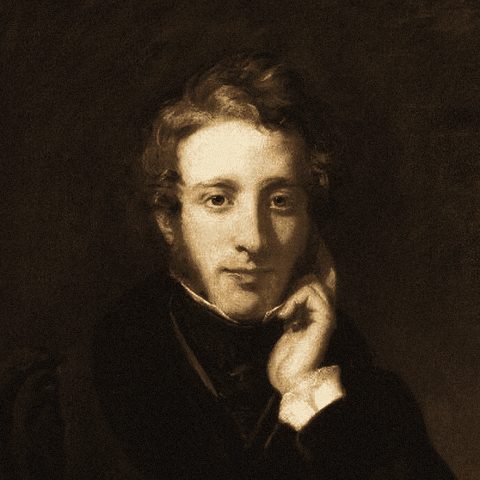
Edward Bulwer Lytton
1803 London – 1873 Torquay · British statesman and author
Edward George Earle Lytton Bulwer-Lytton, 1st Baron Lytton was an English writer and politician. He served as a Whig member of Parliament from 1831 to 1841 and a Conservative from 1851 to 1866.
- 1803Born, London
- 1834The Last Days of Pompeii
- 1871The Coming Race
- 1873Died, Torquay
If you like The Last Days of Pompeii
More like this


Start with “Book 1, Chapter 1: The Two Gentlemen of Pompeii”
First chapter free right now — no account. Your place follows you to iPhone and Android.