

2 chapters freeNo account needed.
Opens “The Moral” in the player · no sign-up needed
Then leave complaints: fools only strive To make a great an honest hive.
The Fable of the Bees: or, Private Vices, Publick Benefits is a 1714 book by the Anglo-Dutch philosopher Bernard Mandeville.
Inside the book
- Free nowno account · 2 chapters
- —Preface27 min
- 1The Moral23 min
- Premium7 chapters · every book, 7 days free
- 2RemarksIn 11 parts · Part 1 · 51:02 + Part 2 · 49:49 + Part 3 · 50:25 + Part 4 · 50:59 + Part 5 · 50:39 + Part 6 · 51:05 + Part 7 · 49:45 + Part 8 · 49:44 + Part 9 · 50:45 + Part 10 · 50:33 + Part 11 · 55:229 h 20 m
- 3Cleomenes54 min
The opening
The Moral
Then leave complaints: fools only strive To make a great an honest hive. 410 T' enjoy the world's conveniences, Be fam'd in war, yet live in ease, Without great vices, is a vain Eutopia seated in the brain. Fraud, luxury, and pride must live, 415 While we the benefits receive: Hunger's a dreadful plague, no doubt, Yet who digests or thrives without? Do we not owe the growth of wine To the dry shabby crooked vine? 420 Which, while its shoots neglected stood, Chok'd other plants, and ran to wood; But blest us with its noble fruit, As soon as it was ty'd and cut: So vice is beneficial found, 425 When it's by justice lopp'd and bound; Nay, where the people would be great, } As necessary to the state, } As hunger is to make 'em eat. } Bare virtue can't make nations live 430 In splendor; they, that would revive A golden age, must be as free, For acorns as for honesty. 433
THE INTRODUCTION.
One of the greatest reasons why so few people understand themselves, is, that most writers are always teaching men what they should be, and hardly ever trouble their heads with telling them what they really are. As for my part, without any compliment to the courteous reader, or myself, I believe man (besides skin, flesh, bones, &c. that are obvious to the eye) to be a compound of various passions; that all of them, as they are provoked and come uppermost, govern him by turns, whether he will or no. To show that these qualifications, which we all pretend to be ashamed of, are the great support of a flourishing society, has been the subject of the foregoing poem. But there being some passages in it seemingly paradoxical, I have in the preface promised some explanatory remarks on it; which, to render more useful, I have thought fit to inquire, how man, no better qualified, might yet by his own imperfections be taught to distinguish between virtue and vice: and here I must desire the reader once for all to take notice, that when I say men, I mean neither Jews nor Christians; but mere man, in the state of nature and ignorance of the true Deity.
AN INQUIRY INTO THE ORIGIN OF MORAL VIRTUE.
All untaught animals are only solicitous of pleasing themselves, and naturally follow the bent of their own inclinations, without considering the good or harm that, from their being pleased, will accrue to others. This is the reason that, in the wild state of nature, those creatures are fittest to live peaceably together in great numbers, that discover the least of understanding, and have the fewest appetites to gratify; and consequently no species of animals is, without the curb of government, less capable of agreeing long together in multitudes, than that of man; yet such are his qualities, whether good or bad I shall not determine, that no creature besides himself can ever be made sociable: but being an extraordinary selfish and headstrong, as well as cunning animal, however he may be subdued by superior strength, it is impossible by force alone to make him tractable, and receive the improvements he is capable of.
The chief thing, therefore, which lawgivers, and other wise men that have laboured for the establishment of society, have endeavoured, has been to make the people they were to govern, believe, that it was more beneficial for every body to conquer than indulge his appetites, and much better to mind the public than what seemed his private interest. As this has always been a very difficult task, so no wit or eloquence has been left untried to compass it; and the moralists and philosophers of all ages employed their utmost skill to prove the truth of so useful an assertion. But whether mankind would have ever believed it or not, it is not likely that any body could have persuaded them to disapprove of their natural inclinations, or prefer the good of others to their own, if, at the same time, he had not showed them an equivalent to be enjoyed as a reward for the violence, which, by so doing, they of necessity must commit upon themselves. Those that have undertaken to civilize mankind, were not ignorant of this; but being unable to give so many real rewards as would satisfy all persons for every individual action, they were forced to contrive an imaginary one, that, as a general equivalent for the trouble of self-denial, should serve on all occasions, and without costing any thing either to themselves or others, be yet a most acceptable recompence to the receivers.
They thoroughly examined all the strength and frailties of our nature, and observing that none were either so savage as not to be charmed with praise, or so despicable as patiently to bear contempt, justly concluded, that flattery must be the most powerful argument that could be used to human creatures. Making use of this bewitching engine, they extolled the excellency of our nature above other animals, and setting forth with unbounded praises the wonders of our sagacity and vastness of understanding, bestowed a thousand encomiums on the rationality of our souls, by the help of which we were capable of performing the most noble achievements. Having, by this artful way of flattery, insinuated themselves into the hearts of men, they began to instruct them in the notions of honour and shame; representing the one as the worst of all evils, and the other as the highest good to which mortals could aspire: which being done, they laid before them how unbecoming it was the dignity of such sublime creatures to be solicitous about gratifying those appetites, which they had in common with brutes, and at the same time unmindful of those higher qualities that gave them the pre-eminence over all visible beings. They indeed confessed, that those impulses of nature were very pressing; that it was troublesome to resist, and very difficult wholly to subdue them. But this they only used as an argument to demonstrate, how glorious the conquest of them was on the one hand, and how scandalous on the other not to attempt it.
To introduce, moreover, an emulation amongst men, they divided the whole species into two classes, vastly differing from one another: the one consisted of abject, low-minded people, that always hunting after immediate enjoyment, were wholly incapable of self-denial, and without regard to the good of others, had no higher aim than their private advantage; such as being enslaved by voluptuousness, yielded without resistance to every gross desire, and make no use of their rational faculties but to heighten their sensual pleasure. These wild grovelling wretches, they said, were the dross of their kind, and having only the shape of men, differed from brutes in nothing but their outward figure. But the other class was made up of lofty high-spirited creatures, that, free from sordid selfishness, esteemed the improvements of the mind to be their fairest possessions; and, setting a true value upon themselves, took no delight but in embellishing that part in which their excellency consisted; such as despising whatever they had in common with irrational creatures, opposed by the help of reason their most violent inclinations; and making a continual war with themselves, to promote the peace of others, aimed at no less than the public welfare, and the conquest of their own passion.
Fortior est qui se quam qui fortissima Vincit Moenia ---- ----
These they called the true representatives of their sublime species, exceeding in worth the first class by more degrees, than that itself was superior to the beasts of the field.
As in all animals that are not too imperfect to discover pride, we find, that the finest, and such as are the most beautiful and valuable of their kind, have generally the greatest share of it; so in man, the most perfect of animals, it is so inseparable from his very essence (how cunningly soever some may learn to hide or disguise it), that without it the compound he is made of would want one of the chiefest ingredients: which, if we consider, it is hardly to be doubted but lessons and remonstrances, so skilfully adapted to the good opinion man has of himself, as those I have mentioned, must, if scattered amongst a multitude, not only gain the assent of most of them, as to the speculative part, but likewise induce several, especially the fiercest, most resolute, and best among them, to endure a thousand inconveniences, and undergo as many hardships, that they may have the pleasure of counting themselves men of the second class, and consequently appropriating to themselves all the excellencies they have heard of it.
From what has been said, we ought to expect, in the first place, that the heroes who took such extraordinary pains to master some of their natural appetites, and preferred the good of others to any visible interest of their own, would not recede an inch from the fine notions they had received concerning the dignity of rational creatures; and having ever the authority of the government on their side, with all imaginable vigour assert the esteem that was due to those of the second class, as well as their superiority over the rest of their kind. In the second, that those who wanted a sufficient stock of either pride or resolution, to buoy them up in mortifying of what was dearest to them, followed the sensual dictates of nature, would yet be ashamed of confessing themselves to be those despicable wretches that belonged to the inferior class, and were generally reckoned to be so little removed from brutes; and that therefore, in their own defence, they would say, as others did, and hiding their own imperfections as well as they could, cry up self-denial and public spiritedness as much as any: for it is highly probable, that some of them, convinced by the real proofs of fortitude and self-conquest they had seen, would admire in others what they found wanting in themselves; others be afraid of the resolution and prowess of those of the second class, and that all of them were kept in awe by the power of their rulers; wherefore is it reasonable to think, that none of them (whatever they thought in themselves) would dare openly contradict, what by every body else was thought criminal to doubt of.
This was (or at least might have been) the manner after which savage man was broke; from whence it is evident, that the first rudiments of morality, broached by skilful politicians, to render men useful to each other, as well as tractable, were chiefly contrived, that the ambitious might reap the more benefit from, and govern vast numbers of them with the greater ease and security. This foundation of politics being once laid, it is impossible that man should long remain uncivilized: for even those who only strove to gratify their appetites, being continually crossed by others of the same stamp, could not but observe, that whenever they checked their inclinations or but followed them with more circumspection, they avoided a world of troubles, and often escaped many of the calamities that generally attended the too eager pursuit after pleasure.
First, they received, as well as others, the benefit of those actions that were done for the good of the whole society, and consequently could not forbear wishing well to those of the superior class that performed them. Secondly, the more intent they were in seeking their own advantage, without regard to others, the more they were hourly convinced, that none stood so much in their way as those that were most like themselves.
It being the interest then of the very worst of them, more than any, to preach up public-spiritedness, that they might reap the fruits of the labour and self-denial of others, and at the same time indulge their own appetites with less disturbance, they agreed with the rest, to call every thing, which, without regard to the public, man should commit to gratify any of his appetites, vice; if in that action there could be observed the least prospect, that it might either be injurious to any of the society, or ever render himself less serviceable to others: and to give the name of virtue to every performance, by which man, contrary to the impulse of nature, should endeavour the benefit of others, or the conquest of his own passions, out of a rational ambition of being good.
It shall be objected, that no society was ever any ways civilized before the major part had agreed upon some worship or other of an over-ruling power, and consequently that the notions of good and evil, and the distinction between virtue and vice, were never the contrivance of politicians, but the pure effect of religion. Before I answer this objection, I must repeat what I have said already, that in this inquiry into the origin of moral virtue, I speak neither of Jews or Christians, but man in his state of nature and ignorance of the true Deity; and then I affirm, that the idolatrous superstitions of all other nations, and the pitiful notions they had of the Supreme Being, were incapable of exciting man to virtue, and good for nothing but to awe and amuse a rude and unthinking multitude. It is evident from history, that in all considerable societies, how stupid or ridiculous soever people's received notions have been, as to the deities they worshipped, human nature has ever exerted itself in all its branches, and that there is no earthly wisdom or moral virtue, but at one time or other men have excelled in it in all monarchies and commonwealths, that for riches and power have been any ways remarkable.
The Egyptians, not satisfied with having deified all the ugly monsters they could think on, were so silly as to adore the onions of their own sowing; yet at the same time their country was the most famous nursery of arts and sciences in the world, and themselves more eminently skilled in the deepest mysteries of nature than any nation has been since.
No states or kingdoms under heaven have yielded more or greater patterns in all sorts of moral virtues, than the Greek and Roman empires, more especially the latter; and yet how loose, absurd and ridiculous were their sentiments as to sacred matters? For without reflecting on the extravagant number of their deities, if we only consider the infamous stories they fathered upon them, it is not to be denied but that their religion, far from teaching men the conquest of their passions, and the way to virtue, seemed rather contrived to justify their appetites, and encourage their vices. But if we would know what made them excel in fortitude, courage, and magnanimity, we must cast our eyes on the pomp of their triumphs, the magnificence of their monuments and arches; their trophies, statues, and inscriptions; the variety of their military crowns, their honours decreed to the dead, public encomiums on the living, and other imaginary rewards they bestowed on men of merit; and we shall find, that what carried so many of them to the utmost pitch of self-denial, was nothing but their policy in making use of the most effectual means that human pride could be flattered with.
It is visible, then, that it was not any heathen religion, or other idolatrous superstition, that first put man upon crossing his appetites and subduing his dearest inclinations, but the skilful management of wary politicians; and the nearer we search into human nature, the more we shall be convinced, that the moral virtues are the political offspring which flattery begot upon pride.
There is no man, of what capacity or penetration soever, that is wholly proof against the witchcraft of flattery, if artfully performed, and suited to his abilities. Children and fools will swallow personal praise, but those that are more cunning, must be managed with much greater circumspection; and the more general the flattery is, the less it is suspected by those it is levelled at. What you say in commendation of a whole town is received with pleasure by all the inhabitants: speak in commendation of letters in general, and every man of learning will think himself in particular obliged to you. You may safely praise the employment a man is of, or the country he was born in; because you give him an opportunity of screening the joy he feels upon his own account, under the esteem which he pretends to have for others.
It is common among cunning men, that understand the power which flattery has upon pride, when they are afraid they shall be imposed upon, to enlarge, though much against their conscience, upon the honour, fair dealing, and integrity of the family, country, or sometimes the profession of him they suspect; because they know that men often will change their resolution, and act against their inclination, that they may have the pleasure of continuing to appear in the opinion of some, what they are conscious not to be in reality. Thus sagacious moralists draw men like angels, in hopes that the pride at least of some will put them upon copying after the beautiful originals which they are represented to be.
When the incomparable Sir Richard Steele, in the usual elegance of his easy style, dwells on the praises of his sublime species, and with all the embellishments of rhetoric, sets forth the excellency of human nature, it is impossible not to be charmed with his happy turns of thought, and the politeness of his expressions. But though I have been often moved by the force of his eloquence, and ready to swallow the ingenious sophistry with pleasure, yet I could, never be so serious, but, reflecting on his artful encomiums, I thought on the tricks made use of by the women that would teach children to be mannerly. When an awkward girl before she can either speak or go, begins after many entreaties to make the first rude essays of curtseying, the nurse falls in an ecstacy of praise; "There is a delicate curtsey! O fine Miss! there is a pretty lady! Mamma!
Miss can make a better curtsey than her sister Molly!" The same is echoed over by the maids, whilst Mamma almost hugs the child to pieces; only Miss Molly, who being four years older, knows how to make a very handsome curtsey, wonders at the perverseness of their judgment, and swelling with indignation, is ready to cry at the injustice that is done her, till, being whispered in the ear that it is only to please the baby, and that she is a woman, she grows proud at being let into the secret, and rejoicing at the superiority of her understanding, repeats what has been said with large additions, and insults over the weakness of her sister, whom all this while she fancies to be the only bubble among them. These extravagant praises would by any one, above the capacity of an infant, be called fulsome flatteries, and, if you will, abominable lies; yet experience teaches us, that by the help of such gross encomiums, young misses will be brought to make pretty curtesies, and behave themselves womanly much sooner, and with less trouble, than they would without them.
It is the same with boys, whom they will strive to persuade, that all fine gentlemen do as they are bid, and that none but beggar boys are rude, or dirty their clothes; nay, as soon as the wild brat with his untaught fist begins to fumble for his hat, the mother, to make him pull it off, tells him before he is two years old, that he is a man; and if he repeats that action when she desires him, he is presently a captain, a lord mayor, a king, or something higher if she can think of it, till edged on by the force of praise, the little urchin endeavours to imitate man as well as he can, and strains all his faculties to appear what his shallow noddle imagines he is believed to be.
The meanest wretch puts an inestimable value upon himself, and the highest wish of the ambitious man is to have all the world, as to that particular, of his opinion: so that the most insatiable thirst after fame that ever heroe was inspired with, was never more than an ungovernable greediness to engross the esteem and admiration of others in future ages as well as his own; and (what mortification soever this truth might be to the second thoughts of an Alexander or a Caesar) the great recompense in view, for which the most exalted minds have with so much alacrity sacrificed their quiet, health, sensual pleasures, and every inch of themselves, has never been any thing else but the breath of man, the aerial coin of praise. Who can forbear laughing when he thinks on all the great men that have been so serious on the subject of that Macedonian madman, his capacious soul, that mighty heart, in one corner of which, according to Lorenzo Gratian, the world was so commodiously lodged, that in the whole there was room for six more? Who can forbear laughing, I say, when he compares the fine things that have been said of Alexander, with the end he proposed to himself from his vast exploits, to be proved from his own mouth; when the vast pains he took to pass the Hydaspes forced him to cry out? Oh ye Athenians, could you believe what dangers I expose myself to, to be praised by you! To define then, the reward of glory in the amplest manner, the most that can be said of it, is, that it consists in a superlative felicity which a man, who is conscious of having performed a noble action, enjoys in self-love, whilst he is thinking on the applause he expects of others.
But here I shall be told, that besides the noisy toils of war and public bustle of the ambitious, there are noble and generous actions that are performed in silence; that virtue being its own reward, those who are really good, have a satisfaction in their consciousness of being so, which is all the recompence they expect from the most worthy performances; that among the heathens there have been men, who, when they did good to others, were so far from coveting thanks and applause, that they took all imaginable care to be for ever concealed from those on whom they bestowed their benefits, and consequently that pride has no hand in spurring man on to the highest pitch of self-denial.
In answer to this, I say, that it is impossible to judge of a man's performance, unless we are thoroughly acquainted with the principle and motive from which he acts. Pity, though it is the most gentle and the least mischievous of all our passions, is yet as much a frailty of our nature, as anger, pride, or fear. The weakest minds have generally the greatest share of it, for which reason none are more compassionate than women and children. It must be owned, that of all our weaknesses, it is the most amiable, and bears the greatest resemblance to virtue; nay, without a considerable mixture of it, the society could hardly subsist: but as it is an impulse of nature, that consults neither the public interest nor our own reason, it may produce evil as well as good. It has helped to destroy the honour of virgins, and corrupted the integrity of judges; and whoever acts from it as a principle, what good soever he may bring to the society, has nothing to boast of, but that he has indulged a passion that has happened to be beneficial to the public. There is no merit in saving an innocent babe ready to drop into the fire: the action is neither good nor bad, and what benefit soever the infant received, we only obliged ourselves; for to have seen it fall, and not strove to hinder it, would have caused a pain, which self preservation compelled us to prevent: Nor has a rich prodigal, that happens to be of a commiserating temper, and loves to gratify his passions, greater virtue to boast of, when he relieves an object of compassion with what to himself is a trifle.
But such men, as without complying with any weakness of their own, can part from what they value themselves, and, from no other motive but there love to goodness, perform a worthy action in silence: such men, I confess, have acquired more refined notions of virtue than those I have hitherto spoke of; yet even in these (with which the world has yet never swarmed) we may discover no small symptoms of pride, and the humblest man alive must confess, that the reward of a virtuous action, which is the satisfaction that ensues upon it, consists in a certain pleasure he procures to himself by contemplating on his own worth: which pleasure, together with the occasion of it, are as certain signs of pride, as looking pale and trembling at any imminent danger, are the symptoms of fear.
If the too scrupulous reader should at first view condemn these notions concerning the origin of moral virtue, and think them perhaps offensive to Christianity, I hope he will forbear his censures, when he shall consider, that nothing can render the unsearchable depth of the Divine Wisdom more conspicuous, than that man, whom Providence had designed for society, should not only by his own frailties and imperfections, be led into the road to temporal happiness, but likewise receive, from a seeming necessity of natural causes, a tincture of that knowledge, in which he was afterwards to be made perfect by the true religion, to his eternal welfare.
About the author
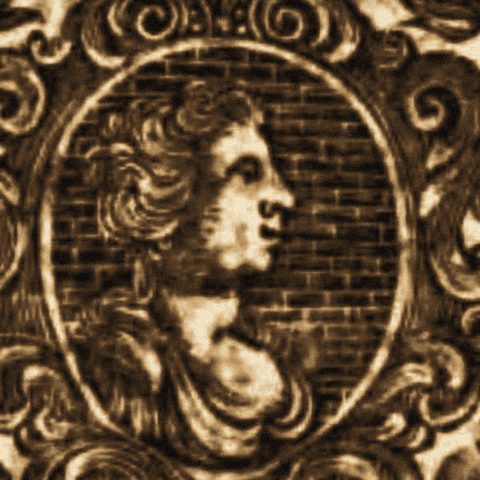
Bernard Mandeville
1670 Rotterdam – 1733 Hackney · Anglo-Dutch writer and physician
Bernard Mandeville, or Bernard de Mandeville, was an Anglo-Dutch philosopher, political economist, satirist, writer and physician. Born in Rotterdam, he lived most of his life in England and used English for most of his published works.
- 1670Born, Rotterdam
- 1705The Fable of the Bees
- 1733Died, Hackney
If you like The Fable of the Bees
More like this


Start with “The Moral”
2 chapters free right now — no account. Your place follows you to iPhone and Android.