

2 chapters freeNo account needed.
Opens “Lecture 1: The Problem of Logic” in the player · no sign-up needed
Written as an introduction, it treats logic not as a set of formal rules but as the study of how judgment builds up our knowledge of a connected world.
Inside the book
- Free nowno account · 2 chapters
- —Preface3 min
- 2Lecture 1: The Problem of Logic31 min
- Premium9 chapters · every book, 7 days free
- 3Lecture 2: “Judgment” as the Consciousness of A World34 min
- 4Lecture 3: The Relation of Logic to Knowledge29 min
- 5Lecture 4: Types of Judgment and the General Conditions30 min
- 6Lecture 5: The Proposition and the Name30 min
- 7Lecture 6: Parts of the Judgment, and Its Unity22 min
- 8Lecture 7: The Categorical and Hypothetical Characters in23 min
- 9Lecture 8: Negation, and Opposition of Judgments17 min
- 10Lecture 9: Inference and the Syllogistic Forms22 min
- 11Lecture 10: Induction, Deduction, and Causation27 min
The opening
Lecture 1: The Problem of Logic
Difficulty of the science
1. There is no science more difficult than that on which we are entering in these lectures. It is worth while to discuss the nature of this difficulty. It is a question of interest rather than of intricacy. All sciences have, perhaps, much the same possibilities of broad theory and subtle analysis. But Logic stands alone in the difficulty with which the student sustains his persuasion that its point of view is worth applying.
In most other sciences, even in the philosophical sciences, there is a continual stimulus to sense-perception, to curiosity, to human interest. The learner is called upon to dissect animals or plants, to undertake delicate manipulations with beautifully contrived instruments, to acquaint himself with the history of nations, with the genesis of worlds, with strange and novel speculations upon the nature of space, or with the industry and well-being of various classes among mankind at the present day. And these elements of novelty, these stimulations of sense-perception or of practical interest, carry us forward imperceptibly, and sustain our eagerness to analyse and combine in theoretic completeness the novel matter thus constantly impinging upon us.
In Philosophy, and more especially in Logic, we can promise little or nothing of this kind. The teacher of Philosophy, from Socrates downwards, has talked about common things, things already familiar to his hearers. And although he calls upon them to think of these things in a peculiar way, and from an unaccustomed point of view, yet it is likely to be felt that he is demanding a new effort, without supplying a new interest. And it is a common experience, that after a time the mind rebels against this artificial attitude, which fatigues without instructing, if we have accustomed ourselves to understand by instruction the accumulation of new sense-perceptions and the extension of historical or scientific vision over a wider superficial area.
Now this I cannot help, and I will not disguise. In Philosophy, and in Logic above all, it must be so. The whole point and meaning of the study is that in it we re-traverse familiar ground, and survey it by unfamiliar processes. We do not, except accidentally, so much as widen our mental horizon. For those who care to understand, to trace the connecting principles and functions that permeate our intellectual world, there is indeed an interest of a peculiar kind. But even experienced students will occasionally feel the strain of attending to difficult distinctions, entirely without the excitement of novelty in sense-perception or of a practical bearing upon human life. It is this that makes Logic probably the hardest of all the sciences.
The problem stated
2. We cannot hope to vanquish this difficulty unless we face it boldly from the first. There are in the old-fashioned Logic-books tricks and puzzles, fallacies and repartees, which can in some degree be made amusing; but of these I do not intend to speak. The course by which alone I can hope honestly to awaken a true logical interest among any who may be quite unfamiliar with the subject, is to approach the matter descriptively, and try to set before you fully and fairly what the problem is which the process of knowledge has to meet. And then it may be possible to claim a genuine theoretical curiosity—none the less genuine that it may be tinged with a sympathy for man's common birthright of intelligence—for the detailed explanation of the means by which this problem is solved from day to day. Such an explanation is the science of Logic.
The problem may be thus introduced. Several of those present have, I believe, attended a previous course of lectures on Psychology. They have learned, I presume, to think of the mind as the course of consciousness, a continuous connected presentation, more or less emphasising within it various images, and groups of images and ideas, which may be roughly said to act and re-act upon each other, to cohere in systems, and to give rise to the perception of self. This course of consciousness, including certain latent elements, the existence of which it is necessary to assume, is an individual mind, attached to a particular body, and so far as we know, not separable from the actions and affections of that body. What is the connection between such a course of consciousness in any individual, and the world as that individual knows and wills it? This is the point at which Psychology passes into Logic. Psychology treats of the course of ideas and feelings; Logic of the mental construction of reality. How does the course of my private ideas and feelings contain in it, for me, a world of things and persons which are not merely in my mind?
World as Idea
3. Schopenhauer called his great work, The World as Will and Idea. Leaving out Will for the moment, let us consider the world "as Idea."
"'The world is my idea;' this is a truth which holds good for everything that lives and knows, though man alone can bring it into reflective and abstract consciousness. If he really does this, he has attained to philosophical wisdom. It then becomes clear and certain to him that what he knows is not a sun and an earth, but only an eye that sees a sun, a hand that feels an earth; that the world which surrounds him is there only as an idea, i.e. only in relation to something else, the consciousness which is himself. If any truth can be asserted a priori, it is this; for it is the expression of the most general form of all possible and thinkable experience: a form which is more general than time, space, or causality, for they all pre-suppose it.
...
"No truth, therefore, is more certain, more independent of all others, and less in need of proof than this, that all that exists for knowledge, and, therefore, this whole world, is only object in relation to subject, perception of a perceiver, in a word, idea. This is obviously true of the past and the future, as well as of the present, of what is farthest off, as of what is near; for it is true of time and space themselves, in which alone these distinctions arise. All that in any way belongs or can belong to the world is inevitably thus conditioned through the subject and exists only for the subject. The world is idea."
E. Tr. (Trubner, 1883).
Schopenhauer, op. cit. beginning.
The world, then, for each of us, exists in the medium of our mind. It is a sort of building, of which the materials are our ideas and perceptions.
The "world"
4. So much for "idea." What do we mean by "world"? A succession of images passing before us, or rather making up our consciousness, like a dream, is not a world. The term is very expressive; it is a favourite word in Shakespeare. When the courtier says —
"Hereafter, in a better world than this, I shall desire more love and knowledge of you,"
he does not mean, as I used to think, "in heaven"; he means in a better condition of social affairs. In "mad world, mad kings, mad composition," the term means more especially the set of political and family connections within which extraordinary reversals of behaviour have just taken place. Often we use the expression, with a qualifying epithet, to indicate some particular sphere of connected action, "the ecclesiastical world," "the political world," and so forth. Always there seems to be implied the notion of a set of things or persons bound together by some common quality which enables them to act upon each other, and to constitute what is technically termed a "whole." The "world" par excellence, then, ought to mean the one connected set of things and persons which we all recognise and refer to as the same, and as including ourselves along with all who use the word in the same sense.
Then the "world as idea" means no less than this, that the system of things and persons which surrounds all of us, and which each of us speaks of and refers to as the same for every one, exists for each of us as something built up in his own mind—the mind attached to his own body—and out of the material of his own mind.
The animal's world
5. Let us illustrate this building up by thinking of the world, our surroundings, as an animal must be aware of it. The lowest beginnings of sight, for example, give no colour and no shape. An animal in this stage can, probably, only just take warning if a dark object comes between him and the light. Therefore he cannot have the ordered visual image of space definitely stretching away all round him, which is the primary basis of our idea of a world. He can move, no doubt, but there is nothing to make us suppose that he records and co-ordinates the results of his movements into anything like that permanent order of objects which must be constructed in some way by a human being even though born blind. Succession, we might say, is much more powerful with animals than co-existence; but we should have to guard ourselves against supposing that this was what we mean by succession, that is, a process definitely recognised as in time, with a connection of some reasonable kind between its phases. For the most part with animals out of sight is out of mind; if so, the present is not interpreted, enlarged, and arranged with reference to what is not present in time or space by them as it is by us. And therefore the consciousness of a single system of things, permanent, and distinct from the momentary presentations of the senses, cannot, in all probability, grow up for them. If so, they have no real world, but only a dream world, i.e. a world not contrasted with the stream of presentation, nor taken as the common theatre of all actions and events. This difference between the world of an animal and that of a human being, is a rough measure of what man does by mental or intellectual construction in making his world.
The character of the sensory powers, which are strongest in many animals, contributes to this conclusion. Mr. F.H. Bradley is sure that his dog's system of logic, if he had one, would run, "What exists smells; what does not smell is nothing." The sense of smell can scarcely give rise to the idea of a world of objects. It has hardly any capacity of structural discernment.
The world as objective
6. We have now got the idea of a "world," as a system of things and persons connected together, taken to be the same for oneself at different times and for different minds at the same time, yet existing, for oneself, in the medium of one's individual consciousness.
We see at once that we cannot stop here. We have really got a contradiction. If the parts of our world are connected with each other, they are not merely dependent upon us, that is, upon the changes of our consciousness. And we all take them to be independent of us, in the sense that we do not suppose the presence or absence of our perception to make any difference to the world except by the continuance or cessation of our perception of it or of its parts. This is the state of mind in which we practically live, philosophers and all. I do not really take notice of any difference in mode of existence between the wall in front of me, which I see, and the wall behind me, which I do not see. While you are in this lecture-hall, if you think of your rooms at home, you think of them as they look, that is, as they would look if you were there to see them. How else, indeed, could you think of them? This is practically necessary, and therefore, for practical purposes, true.
But if you take it as a theory, omitting the hypothetical factor, "if I was there to see," you go wrong. You then treat your world as being, outside your consciousness, the same that it is inside your consciousness, without allowing for the withdrawal of your consciousness. You are then on the way to think that the world, as you see, hear, and feel it, is outside your mind, and that the sight, hearing, feeling, and the ideas born of them, are inside your mind as a sort of faint and imperfect copy of the world which you then call "external," in the sense of outside the mind.
Common sense
i. The first position was that of common sense. The second is that of common-sense theory. Common sense is quite justified. It says, "Things affect each other, but the mere presence and absence of our perception does not affect them." For practical purposes we must treat them as being, when unapprehended by our minds, just the same as when apprehended by our minds. This is the first idea or rather postulate—for it is not a theoretical idea—of objectivity. Objective = "independent of our consciousness for practical purposes."
Common-sense theory
ii. In describing the second position as that of common-sense theory I do not refer to the doctrine of any regular school of philosophers. There was a Scotch school of philosophy—the school of Reid in the eighteenth century—commonly called the common-sense school. I will say below how I think this school was related to the position which I am now describing. But my present purpose is to hit off the simple theory of reality which common-sense people make for themselves when they reflect. Now this theory, in which we all live except when we make a special effort, accepts the distinction between things and the mind. For example, it defines truth as the conformity of ideas to objects. That means something of this kind: the ideas are inside our heads, and the objects are outside our heads. If we are to have knowledge, the objects have to be represented inside our heads, and they get in through the senses. And then you have two similar forms of the world, one outside our heads, which is real, and another like it but less perfect and without solidity or causal power, inside our heads, which is ideal or mental. This is what I call the common-sense theory of the Objective. Like common sense, it assumes that there is a world which the withdrawal of our individual consciousness does not affect, but which persists and acts all the same. Unlike common sense, it lays down an assertion as to the nature of this world, viz. that it is, apart from our consciousness, the same as it is for our consciousness. The world in consciousness, it assumes, is subjective, the world out of consciousness is objective, and the former is an imperfect copy of the latter in a feebler material.
The schools of common-sense philosophy, such as are represented by Locke and Reid, are not quite so simple-minded as the reflection of ordinary common sense, because every systematic thinker sees at once that the question stares him in the face, "If the world outside the mind is copied by the world inside the mind, how can we ever know whether the copy conforms to the original?" We are by the hypothesis inside the mind; whatever has passed through the senses is inside the mind. We cannot as at present advised get at anything outside the senses or outside the mind. In face of this question, the common-sense philosophies have two courses open. They may start from the idea of things outside the mind, but admit that in passing through the senses the things are in some partial respects transformed—as for instance, that they acquire colour, sound, and smell in passing through the senses—this is what Locke says. Or again, still starting from the idea of things outside the mind, they may simply assert that perception is of such a nature that it gives us things as they really are. The former was the view of Locke, the latter that of Reid. This latter view obviously might pass into the most extreme idealism, and its interpretation, if it does not so pass, is exceedingly difficult.
But whatever may have been the view of the historical "common-sense school," the common-sense theory which we all make for ourselves involves a separation between the mind and reality. The objective world is the world as independent of mind, and independent of mind means existing and acting outside mind, exactly, or almost exactly, as it seems to exist and act before the mind.
See Seth, Scottish Philosophy (Blackwood, 1885).
Now this is an absolute cul-de-sac. If the objective is that which is outside perception, the objective is out of our reach, and the world of our perception can never be objective. This is the pass to which we are brought by taking common sense as the guide of theory and not as its material.
Philosophical theory.
iii. There is no way out but by retracing our steps, and avoiding a false turn which we took in passing from common sense to common-sense theory. It was quite true that the world is unaffected by the withdrawal of my individual perception and consciousness (except in so far as I acted qua bodily thing in the world); but it does not follow from this that if it becomes the object of a consciousness in me, it can be so otherwise than as presented within that consciousness. We must distinguish between the idea that the objective is outside consciousness and therefore not in consciousness, and the idea that the objective can be in the individual consciousness, but identified with something beyond the individual consciousness. It may be that consciousness is capable of containing a world, not as a copy of a ready-made original, but as something which it makes for itself by a necessary process, and which refers beyond this finite and momentary consciousness.
According to these ideas, the objective is, shortly stated, whatever we are obliged to think. This, though it is in our thought, is not considered merely as our thought, or as a train of images or whole of presentation in our minds. That is an artificial point of view, the point of view of psychology, and we must carefully avoid starting from it. But knowledge refers beyond its mental self, and has no limitation in time or in kind except its own necessity. Thus, I am forced to think, by a certain context of ideas and perceptions, that there is now a fire burning in my study at home. This judgment is not barred by the fact that my mind, as a function attached to my body, is here three miles away. The thought is objective for me, so long as I am obliged to think it. My presence in or absence from the room where the fire is burning has no effect on the question, except as it furnishes me with evidence one way or the other. Not only absence in space is no obstacle, but succession in time is no obstacle. My thought, which is here and now, refers confidently to what has happened in long intervals of time, if the necessity of consistency obliges it to do so.
Thus if I go back to my room and find the fire out and the room very cold, I infer without hesitation to certain acts and events which are needed to explain this state of things. And interpretations or explanations of this kind make up my world, which is for me in my thought, but is presented as more than my thought, and cannot be a world at all unless it is more than in my thought. It is in as far as my thought constructs and presents a world which is more than my momentary psychical state, that my thought, and the world as presented to me in it, is objective. The world is not a set of my ideas, but it is a set of objects and relations of which I frame an idea, and the existence of which has no meaning for me except as presented in the idea which 1 frame. We are not to think of (i) Ideas, and (ii) Things which they represent; the ideas, taken as parts of a world, are the things.
We begin to see, then, how the nature of knowledge meets the puzzle which I stated above. How, I asked, can a connected "world," whose parts act on one another quite independently of my perception, be in my individual mind? I answer that it does not follow, because the world is for me only in my presentation, that my presentation is the only thing which goes on in the world. "What I am obliged to think" may represent a real development depending on laws and a system which is not confined to my individual course of consciousness. The "objective" in this sense is for Logic an assumption, or rather a fact to be analysed. We do not attempt to prove its existence, except in the sense of calling attention to its nature in detail. It will be seen that "outside the mind" ceases, on this view of objectivity, to have meaning as regards anything that can be related to us. "Outside" is a relation of bodies to one another; but everything, about which we can so much as ask a question, is so far inside the mind, i.e. given in its continuum of presentation or idea.
I will recapitulate the three conceptions of the "objective."
(1) According to practical "common sense" the objective is independent of our consciousness in the sense that the presence or absence of our consciousness makes no difference to the operation of things upon each other.
(2) According to "common-sense theory" the objective is independent of our consciousness in the sense that the presence or absence of our consciousness makes no difference in the mode of being of things (viz. that the world in consciousness approaches objectivity by resembling or reproducing a similar and quite objective world outside consciousness).
(3) According to philosophical theory the objective is independent of our consciousness in the sense that it is what we are constrained to think in order to make our consciousness consistent with itself. "What we are constrained to think" is not confined, in its reference to our thought, or to thought at all.
Our separate worlds.
7. Thus, for the purposes of Logic, we must turn our usual ideas upside down. We must try to imagine something of this kind. We have all seen a circular panorama. Each one of us, we must think, is shut up alone inside such a panorama, which is movable and flexible, and follows him wherever he goes. The things and persons depicted in it move and act upon one another; but all this is in the panorama, and not beyond it. The individual cannot get outside this encircling scenery, and no one else can get inside it. Apart from it, prior to it, we have no self; it is indeed the stuff of which oneself is made. Is every one's panorama exactly the same? No, they are not exactly the same. They are formed round different centres, each person differing from all the others by individual qualities, and by his position towards the points and processes which determine his picture. For—and here is the remarkable point—every one of us has painted for himself the picture within which he is shut up, and he is perpetually painting and re-painting it, not by copying from some original, but by arranging and completing confused images and tints that are always appearing magically on his canvas.
Now this magical panorama, from which the individual cannot escape, and the laws of which are the laws of his experience, is simply his own mind regarded as a content or a world. His own body and mind, regarded as things, are within the panorama, just as other people's bodies and minds are. The whole world, for each of us, is our course of consciousness, in so far as this is regarded as a system of objects which we are obliged to think. Not, in so far as it really is a system, for an onlooker, say for a psychologist. For no doubt every child's mind, and every animal's mind, is a working system of presentations, which a psychologist may study and analyse from without. Consciousness is consciousness of a world only in so far as it presents a system, a whole of objects, acting on one another, and therefore independent of the presence or absence of the consciousness which presents them.
I take another very rough metaphor to explain this curious contrast between my mind as a working system, observable from without, and belonging to my individual body—distinguishable from the thirty or forty quite different minds belonging to the thirty or forty persons in this room—and my mind as a continuum of presentations which includes, as objects, itself, and all the other minds in the room, and the whole world so far as I have any conscious relation to it whatever.
All of us are familiar with the appearance of a microscope ready adjusted for use, with its little lamp, its mirror and illuminating apparatus under the stage, with a specimen on the stage under the object-glass, its object-glass and its eye-piece. Any one who understands the working of a microscope finds this a most suggestive spectacle. He follows in his imagination the light as it comes from the lamp to the mirror, through the illuminating lenses, through the transparent specimen, through perhaps a dozen lenses arranged as an object-glass within an inch of distance, through the eye-piece and into the observer's eye. Give him the parts, lenses, prisms, and mirrors into his hands, and he will test them all, and tell you exactly how they work. This scientific onlooker may be compared to the psychologist looking at another man's mind. He sees it as a thing among other things, a working system of parts.
But there is one thing that the mere onlooker cannot see. He cannot see the object. That can only be seen by looking through the tube. And every one has felt, I should think, the magical transformation, suggestive of looking through another man's eye and mind, which occurs when you put your eye to the eye-piece of an optical instrument. The outside world of other objects, the tube, the stage, the mirror, the bystanders, the external light, all disappear, and you see nothing but the field of vision and whatever distinctly pictured structure may be displayed within it. The observer who looks through the tube may be compared with each one of us as he contemplates his own world of knowledge and perception. This is a thing that no one else can ever do.
The metaphor, indeed, breaks down, in so far as each of us is able to observe the history and character of his own mind as an object within the field of presentation which is before his mind. Of course such a metaphor must break down at some point. But it remains true that the mind, while directly observing its field of objects, cannot observe its own peculiarities, and when turned, as we say, upon itself, is still observing only a part of itself. It remains true that my mind contains the whole presented world for me and is merely one among thousands of similar mind-things for you.
Thus, I repeat, the world for each of us is our course of consciousness, looked at in that way in which it presents a systematic, organised picture of inter-acting objects, not in that way in which it is a stream of ideas and feelings, taking place in our several heads. In the former point of view it is the world as our idea; in the latter point of view it is simply the consciousness attached to our body. We might soon puzzle ourselves with the contradictions which arise if we fail to distinguish these points of view. In one sense my mind is in my head, in the other sense my head is in my mind. In the one sense I am in space, in the other sense space is in me. Just so, however rough the metaphor, from one point of view the microscope is one among a host of things seen from the outside; from the other point of view all that we see is in the microscope, which is itself not seen at all.
It is in this latter sense that our mental equipment is looked at, when it is regarded as knowledge; and it is in this sense that it forms a panorama which absolutely shuts in every one of us into his own circle of ideas. (It is not implied, we should carefully observe, that his ideas or experience are in any way secondary to his self, or separable from it, or an adjective of it.) Then how does it happen that our separate worlds, the panoramas which we construct, do not contradict one another?
The answer is, that they correspond. It is this conception from which we must start in Logic. We must learn to regard our separate worlds of knowledge; as something constructed by definite processes, and corresponding to each other in consequence of the common nature of these processes. We know that we begin apart. We begin in fact, though not conscious of our limits, with feelings and fancies and unorganised experiences which give us little or no common ground and power of co-operation with other people. But as the constructive process advances, the correspondence between our worlds is widened and deepened, and the greater proportion of what we are obliged to think is in harmony with what other people are obliged to think. Now of course this would not be so unless reality, the whole actual system in which we find ourselves, were self-consistent. But more than that, it would not be so unless the nature of intelligence were the same in every mind. It is this common nature of intelligence, together with its differentiated adaptations to reality, that we have to deal with in Logic.
Thus the separate worlds, in which we are all shut up, must be considered as corresponding so far as they are objective, that is, so far as they approach what we are ultimately obliged to think. I say "corresponding," because that is the term which expresses the relation between systems which represent the same thing by the same rules, but with different starting-points. Drawings in perspective of the same building from different points of view are such corresponding systems; the parts represented answer each to each, but the same part is near or large in one drawing, and distant and small in another; not, however, by chance, but as a definite consequence of the same laws. Our separate worlds may be compared to such drawings: the things in them are identified by their relations and functions, so that we can understand each other, i.e. make identical references, though my drawing be taken from the east, and yours from the west. The things do not look quite the same in our different worlds; besides being taken from different standpoints, both drawings are imperfect and incorrect. But so long as we can make out the correspondence, we have a basis for co-operation and for discussion. Logic shows us the principles and processes by which, under the given influences, these drawings are constructed.
Subjective Idealism
8. If we merely hold to the doctrine of separate worlds, without insisting upon their correspondence with each other and with reality, we fall back into the position of subjective idealism, which is a natural completion of common-sense theory, when, instead of turning round to retrace its path, it runs deeper into the cul-de-sac. It is a very obvious reflection, that each of us is shut up within his own mind, and much easier to grasp than the reason for assuming a real system which appears differently, though correspondingly, in the centres of consciousness which are ourselves. We cannot get at anything but in terms of consciousness; how can we justify the assumption that our consciousness of a world of objects is rooted in reality, e.g., that objects may rightly be treated as persisting and inter-acting when our personal consciousness is withdrawn? And if we once doubt this, then why should we assume that our ideas need be or tend to be consistent with themselves and each other, as for the time they apparently are?
Subjective Idealism necessarily arises if the common-sense theory of two worlds, the real outside the mind, and the ideal, copying it, within the mind, is pushed to its conclusion. The real, outside the mind, being inaccessible, falls away. The arguments of this Idealism, as Hume said, "admit of no answer and produce no conviction." But I mention the idea, because I do not think that any one can really understand the problem of Logic, or indeed of science in general, without having thoroughly thought himself into the difficulty of Subjective Idealism. It is necessary to be wholly dissatisfied with common-sense theory, and with the notion of a ready-made world set up for us to copy in the mind, before the logical analysis of intellectual construction can have interest or meaning for us. And to produce this dissatisfaction is the value of Subjective Idealism.
Vol. iv. p. 176 (ed. of 1854), Inquiry concerning Human Understanding, sect. 12.
About the author
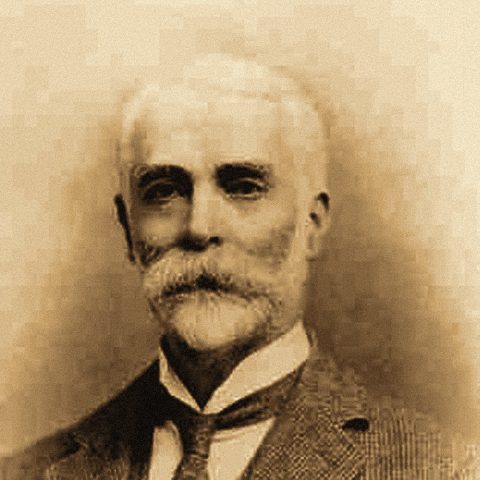
Bernard Bosanquet
1848 Alnwick – 1923 London · English philosopher
Bernard Bosanquet was an English philosopher and political theorist, and an influential figure on matters of political and social policy in the late 19th and early 20th centuries. His work influenced but was later subject to criticism by many thinkers, notably Bertrand Russell, John Dewey, William James and Ludwig Wittgenstein.
If you like The Essentials of Logic
More like this


Start with “Lecture 1: The Problem of Logic”
2 chapters free right now — no account. Your place follows you to iPhone and Android.