

2 chapters freeNo account needed.
Opens “On Certain Kinds of Groups or Series as the Foundati...” in the player · no sign-up needed
Venn grounds probability in the long-run frequency of events within a series rather than in degrees of belief, one of the first full statements of the frequency interpretation.
Inside the book
- Free nowno account · 2 chapters
- —Introduction38 min
- 1On Certain Kinds of Groups or Series as the Foundati...39 min
- Premium21 chapters · every book, 7 days free
- 2Further Discussion upon the Nature of the Series Men...53 min
- 3On the Causal Process by Which the Groups or Series...36 min
- 5Chapter 4, part 154 min
- 6Chapter 4, part 254 min
- 7Chapter 4, part 355 min
- 7The Rules of Inference in Probability38 min
- 8The Rule of Succession21 min
- 9Induction and Its Connection with Probability55 min
- 10Chance as Opposed to Causation and Design56 min
- 11On Certain Consequences of the Objective Treatment O...22 min
- 12Consequences of the Foregoing Distinctions30 min
- 14Chapter 13, part 133 min
- 15Chapter 13, part 234 min
- 14Part 1 of 233 min
- 17Chapter 1433 min
- 15Insurance and Gambling42 min
- 16The Application of Probability to Testimony20 min
- 17On the Credibility of Extraordinary Stories53 min
- 18The Nature and Use of an Average, and on the Differe...56 min
- 22Chapter 19, part 133 min
- 23Chapter 19, part 233 min
The opening
On Certain Kinds of Groups or Series as the Foundati...
On Certain Kinds Of Groups Or Series As The Foundation Of Probability.
1. It is sometimes not easy to give a clear definition of a science at the outset, so as to set its scope and province before the reader in a few words. In the case of those sciences which are more immediately and directly concerned with what are termed objects, rather than with what are termed processes, this difficulty is not indeed so serious. If the reader is already familiar with the objects, a simple reference to them will give him a tolerably accurate idea of the direction and nature of his studies. Even if he be not familiar with them, they will still be often to some extent connected and associated in his mind by a name, and the mere utterance of the name may thus convey a fair amount of preliminary information. This is more or less the case with many of the natural sciences; we can often tell the reader beforehand exactly what he is going to study. But when a science is concerned, not so much with objects directly, as with processes and laws, or when it takes for the subject of its enquiry some comparatively obscure feature drawn from phenomena which have little or nothing else in common, the difficulty of giving preliminary information becomes greater. Recognized classes of objects have then to be disregarded and even broken up, and an entirely novel arrangement of the objects to be made. In such cases it is the study of the science that first gives the science its unity, for till it is studied the objects with which it is concerned were probably never thought of together. Here a definition cannot be given at the outset, and the process of obtaining it may become by comparison somewhat laborious.
The science of Probability, at least on the view taken of it in the following pages, is of this latter description. The reader who is at present unacquainted with the science cannot be at once informed of its scope by a reference to objects with which he is already familiar. He will have to be taken in hand, as it were, and some little time and trouble will have to be expended in directing his attention to our subject-matter before he can be expected to know it. To do this will be our first task.
2. In studying Nature, in any form, we are continually coming into possession of information which we sum up in general propositions. Now in very many cases these general propositions are neither more nor less certain and accurate than the details which they embrace and of which they are composed. We are assuming at present that the truth of these generalizations is not disputed; as a matter of fact they may rest on weak evidence, or they may be uncertain from their being widely extended by induction; what is meant is, that when we resolve them into their component parts we have precisely the same assurance of the truth of the details as we have of that of the whole. When I know, for instance, that all cows ruminate, I feel just as certain that any particular cow or cows ruminate as that the whole class does. I may be right or wrong in my original statement, and I may have obtained it by any conceivable mode in which truths can be obtained; but whatever the value of the general proposition may be, that of the particulars is neither greater nor less. The process of inferring the particular from the general is not accompanied by the slightest diminution of certainty. If one of these 'immediate inferences' is justified at all, it will be equally right in every case.
But it is by no means necessary that this characteristic should exist in all cases. There is a class of immediate inferences, almost unrecognized indeed in logic, but constantly drawn in practice, of which the characteristic is, that as they increase in particularity they diminish in certainty. Let me assume that I am told that some cows ruminate; I cannot infer logically from this that any particular cow does so, though I should feel some way removed from absolute disbelief, or even indifference to assent, upon the subject; but if I saw a herd of cows I should feel more sure that some of them were ruminant than I did of the single cow, and my assurance would increase with the numbers of the herd about which I had to form an opinion. Here then we have a class of things as to the individuals of which we feel quite in uncertainty, whilst as we embrace larger numbers in our assertions we attach greater weight to our inferences. It is with such classes of things and such inferences that the science of Probability is concerned.
3. In the foregoing remarks, which are intended to be purely preliminary, we have not been able altogether to avoid some reference to a subjective element, viz. the degree of our certainty or belief about the things which we are supposed to contemplate. The reader may be aware that by some writers this element is regarded as the subject-matter of the science. Hence it will have to be discussed in a future chapter. As however I do not agree with the opinion of the writers just mentioned, at least as regards treating this element as one of primary importance, no further allusion will be made to it here, but we will pass on at once to a more minute investigation of that distinctive characteristic of certain classes of things which was introduced to notice in the last section.
In these classes of things, which are those with which Probability is concerned, the fundamental conception which the reader has to fix in his mind as clearly as possible, is, I take it, that of a series. But it is a series of a peculiar kind, one of which no better compendious description can be given than that which is contained in the statement that it combines individual irregularity with aggregate regularity. This is a statement which will probably need some explanation. Let us recur to an example of the kind already alluded to, selecting one which shall be in accordance with experience. Some children will not live to thirty. Now if this proposition is to be regarded as a purely indefinite or, as it would be termed in logic, 'particular' proposition, no doubt the notion of a series does not obviously present itself in connection with it. It contains a statement about a certain unknown proportion of the whole, and that is all. But it is not with these purely indefinite propositions that we shall be concerned.
Let us suppose the statement, on the contrary, to be of a numerical character, and to refer to a given proportion of the whole, and we shall then find it difficult to exclude the notion of a series. We shall find it, I think, impossible to do so as soon as we set before us the aim of obtaining accurate, or even moderately correct inferences. What, for instance, is the meaning of the statement that two new-born children in three fail to attain the age of sixty-three? It certainly does not declare that in any given batch of, say, thirty, we shall find just twenty that fail: whatever might be the strict meaning of the words, this is not the import of the statement. It rather contemplates our examination of a large number, of a long succession of instances, and states that in such a succession we shall find a numerical proportion, not indeed fixed and accurate at first, but which tends in the long run to become so. In every kind of example with which we shall be concerned we shall find this reference to a large number or succession of objects, or, as we shall term it, series of them.
A few additional examples may serve to make this plain.
Let us suppose that we toss up a penny a great many times; the results of the successive throws may be conceived to form a series. The separate throws of this series seem to occur in utter disorder; it is this disorder which causes our uncertainty about them. Sometimes head comes, sometimes tail comes; sometimes there is a repetition of the same face, sometimes not. So long as we confine our observation to a few throws at a time, the series seems to be simply chaotic. But when we consider the result of a long succession we find a marked distinction; a kind of order begins gradually to emerge, and at last assumes a distinct and striking aspect. We find in this case that the heads and tails occur in about equal numbers, that similar repetitions of different faces do so also, and so on. In a word, notwithstanding the individual disorder, an aggregate order begins to prevail. So again if we are examining the length of human life, the different lives which fall under our notice compose a series presenting the same features. The length of a single life is familiarly uncertain, but the average duration of a batch of lives is becoming in an almost equal degree familiarly certain. The larger the number we take out of any mixed crowd, the clearer become the symptoms of order, the more nearly will the average length of each selected class be the same. These few cases will serve as simple examples of a property of things which can be traced almost everywhere, to a greater or less extent, throughout the whole field of our experience. Fires, shipwrecks, yields of harvest, births, marriages, suicides; it scarcely seems to matter what feature we single out for observation. The irregularity of the single instances diminishes when we take a large number, and at last seems for all practical purposes to disappear.
In speaking of the effect of the average in thus diminishing the irregularities which present themselves in the details, the attention of the student must be prominently directed to the point, that it is not the absolute but the relative irregularities which thus tend to diminish without limit. This idea will be familiar enough to the mathematician, but to others it may require some reflection in order to grasp it clearly. The absolute divergences and irregularities, so far from diminishing, show a disposition to increase, and this (it may be) without limit, though their relative importance shows a corresponding disposition to diminish without limit. Thus in the case of tossing a penny, if we take a few throws, say ten, it is decidedly unlikely that there should be a difference of six between the numbers of heads and tails; that is, that there should be as many as eight heads and therefore as few as two tails, or vice versâ. But take a thousand throws, and it becomes in turn exceedingly likely that there should be as much as, or more than, a difference of six between the respective numbers. On the other hand the proportion of heads to tails in the case of the thousand throws will be very much nearer to unity, in most cases, than when we only took ten. In other words, the longer a game of chance continues the larger are the spells and runs of luck in themselves, but the less their relative proportions to the whole amounts involved.
4. In speaking as above of events or things as to the details of which we know little or nothing, it is not of course implied that our ignorance about them is complete and universal, or, what comes to the same thing, that irregularity may be observed in all their qualities. All that is meant is that there are some qualities or marks in them, the existence of which we are not able to predicate with certainty in the individuals. With regard to all their other qualities there may be the utmost uniformity, and consequently the most complete certainty. The irregularity in the length of human life is notorious, but no one doubts the existence of such organs as a heart and brains in any person whom he happens to meet. And even in the qualities in which the irregularity is observed, there are often, indeed generally, positive limits within which it will be found to be confined. No person, for instance, can calculate what may be the length of any particular life, but we feel perfectly certain that it will not stretch out to 150 years. The irregularity of the individual instances is only shown in certain respects, as e.g. the length of the life, and even in these respects it has its limits. The same remark will apply to most of the other examples with which we shall be concerned. The disorder in fact is not universal and unlimited, it only prevails in certain directions and up to certain points.
5. In speaking as above of a series, it will hardly be necessary to point out that we do not imply that the objects themselves which compose the series must occur successively in time; the series may be formed simply by their coming in succession under our notice, which as a matter of fact they may do in any order whatever. A register of mortality, for instance, may be made up of deaths which took place simultaneously or successively; or, we might if we pleased arrange the deaths in an order quite distinct from either of these. This is entirely a matter of indifference; in all these cases the series, for any purposes which we need take into account, may be regarded as being of precisely the same description. The objects, be it remembered, are given to us in nature; the order under which we view them is our own private arrangement. This is mentioned here simply by way of caution, the meaning of this assertion will become more plain in the sequel.
I am aware that the word 'series' in the application with which it is used here is liable to some misconstruction, but I cannot find any better word, or indeed any as suitable in all respects. As remarked above, the events need not necessarily have occurred in a regular sequence of time, though they often will have done so. In many cases (for instance, the throws of a penny or a die) they really do occur in succession; in other cases (for instance, the heights of men, or the duration of their lives), whatever may have been the order of their actual occurrence, they are commonly brought under our notice in succession by being arranged in statistical tables. In all cases alike our processes of inference involve the necessity of examining one after another of the members which compose the group, or at least of being prepared to do this, if we are to be in a position to justify our inferences. The force of these considerations will come out in the course of the investigation in Chapter VI.
The late Leslie Ellis has expressed what seems to me a substantially similar view in terms of genus and species, instead of speaking of a series. He says, "When individual cases are considered, we have no conviction that the ratios of frequency of occurrence depend on the circumstances common to all the trials. On the contrary, we recognize in the determining circumstances of their occurrence an extraneous element, an element, that is, extraneous to the idea of the genus and species. Contingency and limitation come in (so to speak) together; and both alike disappear when we consider the genus in its entirety, or (which is the same thing) in what may be called an ideal and practically impossible realization of all which it potentially contains. If this be granted, it seems to follow that the fundamental principle of the Theory of Probabilities may be regarded as included in the following statement,—The conception of a genus implies that of numerical relations among the species subordinated to it." As remarked above, this appears a substantially similar doctrine to that explained in this chapter, but I do not think that the terms genus and species are by any means so well fitted to bring out the conception of a tendency or limit as when we speak of a series, and I therefore much prefer the latter expression.
6. The reader will now have in his mind the conception of a series or group of things or events, about the individuals of which we know but little, at least in certain respects, whilst we find a continually increasing uniformity as we take larger numbers under our notice. This is definite enough to point out tolerably clearly the kind of things with which we have to deal, but it is not sufficiently definite for purposes of accurate thought. We must therefore attempt a somewhat closer analysis.
There are certain phrases so commonly adopted as to have become part of the technical vocabulary of the subject, such as an 'event' and the 'way in which it can happen.' Thus the act of throwing a penny would be called an event, and the fact of its giving head or tail would be called the way in which the event happened. If we were discussing tables of mortality, the former term would denote the mere fact of death, the latter the age at which it occurred, or the way in which it was brought about, or whatever else in it might be the particular circumstance under discussion. This phraseology is very convenient, and will often be made use of in this work, but without explanation it may lead to confusion. For in many cases the way in which the event happens is of such great relative importance, that according as it happens in one way or another the event would have a different name; in other words, it would not in the two cases be nominally the same event. The phrase therefore will have to be considerably stretched before it will conveniently cover all the cases to which we may have to apply it. If for instance we were contemplating a series of human beings, male and female, it would sound odd to call their humanity an event, and their sex the way in which the event happened.
If we recur however to any of the classes of objects already referred to, we may see our path towards obtaining a more accurate conception of what we want. It will easily be seen that in every one of them there is a mixture of similarity and dissimilarity; there is a series of events which have a certain number of features or attributes in common,—without this they would not be classed together. But there is also a distinction existing amongst them; a certain number of other attributes are to be found in some and are not to be found in others. In other words, the individuals which form the series are compound, each being made up of a collection of things or attributes; some of these things exist in all the members of the series, others are found in some only. So far there is nothing peculiar to the science of Probability; that in which the distinctive characteristic consists is this;—that the occasional attributes, as distinguished from the permanent, are found on an extended examination to tend to exist in a certain definite proportion of the whole number of cases. We cannot tell in any given instance whether they will be found or not, but as we go on examining more cases we find a growing uniformity. We find that the proportion of instances in which they are found to instances in which they are wanting, is gradually subject to less and less comparative variation, and approaches continually towards some apparently fixed value.
The above is the most comprehensive form of description; as a matter of fact the groups will in many cases take a far simpler form; they may appear, e.g. simply as a succession of things of the same kind, say human beings, with or without an occasional attribute, say that of being left-handed. We are using the word attribute, of course, in its widest sense, intending it to include every distinctive feature that can be observed in a thing, from essential qualities down to the merest accidents of time and place.
7. On examining our series, therefore, we shall find that it may best be conceived, not necessarily as a succession of events happening in different ways, but as a succession of groups of things. These groups, on being analysed, are found in every case to be resolvable into collections of substances and attributes. That which gives its unity to the succession of groups is the fact of some of these substances or attributes being common to the whole succession; that which gives their distinction to the groups in the succession is the fact of some of them containing only a portion of these substances and attributes, the other portion or portions being occasionally absent. So understood, our phraseology may be made to embrace every class of things of which Probability can take account.
8. It will be easily seen that the ordinary expression (viz. the 'event,' and the 'way in which it happens') may be included in the above. When the occasional attributes are unimportant the permanent ones are sufficient to fix and appropriate the name, the presence or absence of the others being simply denoted by some modification of the name or the addition of some predicate. We may therefore in all such cases speak of the collection of attributes as 'the event,'—the same event essentially, that is—only saying that it (so as to preserve its nominal identity) happens in different ways in the different cases. When the occasional attributes however are important, or compose the majority, this way of speaking becomes less appropriate; language is somewhat strained by our implying that two extremely different assemblages are in reality the same event, with a difference only in its mode of happening. The phrase is however a very convenient one, and with this caution against its being misunderstood, it will frequently be made use of here.
9. A series of the above-mentioned kind is, I apprehend, the ultimate basis upon which all the rules of Probability must be based. It is essential to a clear comprehension of the subject to have carried our analysis up to this point, but any attempt at further analysis into the intimate nature of the events composing the series, is not required. It is altogether unnecessary, for instance, to form any opinion upon the questions discussed in metaphysics as to the independent existence of substances. We have discovered, on examination, a series composed of groups of substances and attributes, or of attributes alone. At such a series we stop, and thence investigate our rules of inference; into what these substances or attributes would themselves be ultimately analysed, if taken in hand by the psychologist or metaphysician, it is no business of ours to enquire here.
10. The stage then which we have now reached is that of having discovered a quantity of things (they prove on analysis to be groups of things) which are capable of being classified together, and are best regarded as constituting a series. The distinctive peculiarity of this series is our finding in it an order, gradually emerging out of disorder, and showing in time a marked and unmistakeable uniformity.
The impression which may possibly be derived from the description of such a series, and which the reader will probably already entertain if he have studied Probability before, is that the gradual evolution of this order is indefinite, and its approach therefore to perfection unlimited. And many of the examples commonly selected certainly tend to confirm such an impression. But in reference to the theory of the subject it is, I am convinced, an error, and one liable to lead to much confusion.
The lines which have been prefixed as a motto to this work, "So careful of the type she seems, so careless of the single life," are soon after corrected by the assertion that the type itself, if we regard it for a long time, changes, and then vanishes and is succeeded by others. So in Probability; that uniformity which is found in the long run, and which presents so great a contrast to the individual disorder, though durable is not everlasting. Keep on watching it long enough, and it will be found almost invariably to fluctuate, and in time may prove as utterly irreducible to rule, and therefore as incapable of prediction, as the individual cases themselves. The full bearing of this fact upon the theory of the subject, and upon certain common modes of calculation connected with it, will appear more fully in some of the following chapters; at present we will confine ourselves to very briefly establishing and illustrating it.
Let us take, for example, the average duration of life. This, provided our data are sufficiently extensive, is known to be tolerably regular and uniform. This fact has been already indicated in the preceding sections, and is a truth indeed of which the popular mind has a tolerably clear grasp at the present day. But a very little consideration will show that there may be a superior as well as an inferior limit to the extent within which this uniformity can be observed; in other words whilst we may fall into error by taking too few instances we may also fail in our aim, though in a very different way and from quite different reasons, by taking too many. At the present time the average duration of life in England may be, say, forty years; but a century ago it was decidedly less; several centuries ago it was presumably very much less; whilst if we possessed statistics referring to a still earlier population of the country we should probably find that there has been since that time a still more marked improvement. What may be the future tendency no man can say for certain.
It may be, and we hope that it will be the case, that owing to sanitary and other improvements, the duration of life will go on increasing steadily; it is at least conceivable, though doubtless incredible, that it should do so without limit. On the other hand, and with much more likelihood, this duration might gradually tend towards some fixed length. Or, again, it is perfectly possible that future generations might prefer a short and a merry life, and therefore reduce their average longevity. The duration of life cannot but depend to some extent upon the general tastes, habits and employments of the people, that is upon the ideal which they consciously or unconsciously set before them, and he would be a rash man who should undertake to predict what this ideal will be some centuries hence. All that it is here necessary however to indicate is, that this particular uniformity (as we have hitherto called it, in order to mark its relative character) has varied, and, under the influence of future eddies in opinion and practice, may vary still; and this to any extent, and with any degree of irregularity.
To borrow a term from Astronomy, we find our uniformity subject to what might be called an irregular secular variation.
11. The above is a fair typical instance. If we had taken a less simple feature than the length of life, or one less closely connected with what may be called by comparison the great permanent uniformities of nature, we should have found the peculiarity under notice exhibited in a far more striking degree. The deaths from small-pox, for example, or the instances of duelling or accusations of witchcraft, if examined during a few successive decades, might have shown a very tolerable degree of uniformity. But these uniformities have risen possibly from zero; after various and very great fluctuations seem tending towards zero again, at least in this century; and may, for anything we know, undergo still more rapid fluctuations in future. Now these examples must be regarded as being only extreme ones, and not such very extreme ones, of what is the almost universal rule in nature. I shall endeavour to show that even the few apparent exceptions, such as the proportions between male and female births, &c., may not be, and probably in reality are not, strictly speaking, exceptions. A type, that is, which shall be in the fullest sense of the words, persistent and invariable is scarcely to be found in nature. The full import of this conclusion will be seen in future chapters. Attention is only directed here to the important inference that, although statistics are notoriously of no value unless they are in sufficient numbers, yet it does not follow but that in certain cases we may have too many of them. If they are made too extensive, they may again fall short, at least for any particular time or place, of their greatest attainable accuracy.
12. These natural uniformities then are found at length to be subject to fluctuation. Now contrast with them any of the uniformities afforded by games of chance; these latter seem to show no trace of secular fluctuation, however long we may continue our examination of them. Criticisms will be offered, in the course of the following chapters, upon some of the common attempts to prove à priori that there must be this fixity in the uniformity in question, but of its existence there can scarcely be much doubt. Pence give heads and tails about equally often now, as they did when they were first tossed, and as we believe they will continue to do, so long as the present order of things continues. The fixity of these uniformities may not be as absolute as is commonly supposed, but no amount of experience which we need take into account is likely in any appreciable degree to interfere with them. Hence the obvious contrast, that, whereas natural uniformities at length fluctuate, those afforded by games of chance seem fixed for ever.
13. Here then are series apparently of two different kinds. They are alike in their initial irregularity, alike in their subsequent regularity; it is in what we may term their ultimate form that they begin to diverge from each other. The one tends without any irregular variation towards a fixed numerical proportion in its uniformity; in the other the uniformity is found at last to fluctuate, and to fluctuate, it may be, in a manner utterly irreducible to rule.
As this chapter is intended to be little more than explanatory and illustrative of the foundations of the science, the remark may be made here (for which subsequent justification will be offered) that it is in the case of series of the former kind only that we are able to make anything which can be interpreted into strict scientific inferences. We shall be able however in a general way to see the kind and extent of error that would be committed if, in any example, we were to substitute an imaginary series of the former kind for any actual series of the latter kind which experience may present to us. The two series are of course to be as alike as possible in all respects, except that the variable uniformity has been replaced by a fixed one. The difference then between them would not appear in the initial stage, for in that stage the distinctive characteristics of the series of Probability are not apparent; all is there irregularity, and it would be as impossible to show that they were alike as that they were different; we can only say generally that each shows the same kind of irregularity.
Nor would it appear in the next subsequent stage, for the real variability of the uniformity has not for some time scope to make itself perceived. It would only be in what we have called the ultimate stage, when we suppose the series to extend for a very long time, that the difference would begin to make itself felt. The proportion of persons, for example, who die each year at the age of six months is, when the numbers examined are on a small scale, utterly irregular; it becomes however regular when the numbers examined are on a larger scale; but if we continued our observation for a very great length of time, or over a very great extent of country, we should find this regularity itself changing in an irregular way. The substitution just mentioned is really equivalent to saying, Let us assume that the regularity is fixed and permanent. It is making a hypothesis which may not be altogether consistent with fact, but which is forced upon us for the purpose of securing precision of statement and definition.
14. The full meaning and bearing of such a substitution will only become apparent in some of the subsequent chapters, but it may be pointed out at once that it is in this way only that we can with perfect strictness introduce the notion of a 'limit' into our account of the matter, at any rate in reference to many of the applications of the subject to purely statistical enquiries. We say that a certain proportion begins to prevail among the events in the long run; but then on looking closer at the facts we find that we have to express ourselves hypothetically, and to say that if present circumstances remain as they are, the long run will show its characteristics without disturbance. When, as is often the case, we know nothing accurately of the circumstances by which the succession of events is brought about, but have strong reasons to suspect that these circumstances are likely to undergo some change, there is really nothing else to be done. We can only introduce the conception of a limit, towards which the numbers are tending, by assuming that these circumstances do not change; in other words, by substituting a series with a fixed uniformity for the actual one with the varying uniformity.
15. If the reader will study the following example, one well known to mathematicians under the name of the Petersburg problem, he will find that it serves to illustrate several of the considerations mentioned in this chapter. It serves especially to bring out the facts that the series with which we are concerned must be regarded as indefinitely extensive in point of number or duration; and that when so regarded certain series, but certain series only (the one in question being a case in point), take advantage of the indefinite range to keep on producing individuals in it whose deviation from the previous average has no finite limit whatever. When rightly viewed it is a very simple problem, but it has given rise, at one time or another, to a good deal of confusion and perplexity.
The problem may be stated thus:—a penny is tossed up; if it gives head I receive one pound; if heads twice running two pounds; if heads three times running four pounds, and so on; the amount to be received doubling every time that a fresh head succeeds. That is, I am to go on as long as it continues to give a succession of heads, to regard this succession as a 'turn' or set, and then take another turn, and so on; and for each such turn I am to receive a payment; the occurrence of tail being understood to yield nothing, in fact being omitted from our consideration. However many times head may be given in succession, the number of pounds I may claim is found by raising two to a power one less than that number of times. Here then is a series formed by a succession of throws. We will assume,—what many persons will consider to admit of demonstration, and what certainly experience confirms within considerable limits,—that the rarity of these 'runs' of the same face is in direct proportion to the amount I receive for them when they do occur.
In other words, if we regard only the occasions on which I receive payments, we shall find that every other time I get one pound, once in four times I get two pounds, once in eight times four pounds, and so on without any end. The question is then asked, what ought I to pay for this privilege? At the risk of a slight anticipation of the results of a subsequent chapter, we may assume that this is equivalent to asking, what amount paid each time would on the average leave me neither winner nor loser? In other words, what is the average amount I should receive on the above terms? Theory pronounces that I ought to give an infinite sum: that is, no finite sum, however great, would be an adequate equivalent. And this is really quite intelligible. There is a series of indefinite length before me, and the longer I continue to work it the richer are my returns, and this without any limit whatever. It is true that the very rich hauls are extremely rare, but still they do come, and when they come they make it up by their greater richness.
On every occasion on which people have devoted themselves to the pursuit in question, they made acquaintance, of course, with but a limited portion of this series; but the series on which we base our calculation is unlimited; and the inferences usually drawn as to the sum which ought in the long run to be paid for the privilege in question are in perfect accordance with this supposition.
The common form of objection is given in the reply, that so far from paying an infinite sum, no sensible man would give anything approaching to £50 for such a chance. Probably not, because no man would see enough of the series to make it worth his while. What most persons form their practical opinion upon, is such small portions of the series as they have actually seen or can reasonably expect. Now in any such portion, say one which embraces 100 turns, the longest succession of heads would not amount on the average to more than seven or eight. This is observed, but it is forgotten that the formula which produced these, would, if it had greater scope, keep on producing better and better ones without any limit. Hence it arises that some persons are perplexed, because the conduct they would adopt, in reference to the curtailed portion of the series which they are practically likely to meet with, does not find its justification in inferences which are necessarily based upon the series in the completeness of its infinitude.
16. This will be more clearly seen by considering the various possibilities, and the scope required in order to exhaust them, when we confine ourselves to a limited number of throws. Begin with three. This yields eight equally likely possibilities. In four of these cases the thrower starts with tail and therefore loses: in two he gains a single point (i.e. £1); in one he gains two points, and in one he gains four points. Hence his total gain being eight pounds achieved in four different contingencies, his average gain would be two pounds.
Now suppose he be allowed to go as far as n throws, so that we have to contemplate 2^{n} possibilities. All of these have to be taken into account if we wish to consider what happens on the average. It will readily be seen that, when all the possible cases have been reckoned once, his total gain will be (reckoned in pounds),
2^{n-2} + 2^{n-3}·2 + 2^{n-4}·2^ +... + 2·2^{n-3} + 2^{n-2} + 2^{n-1},
viz.
(n + 1) 2^{n-2}.
This being spread over 2^{n-1} different occasions of gain his average gain will be 1/2 (n + 1).
Now when we are referring to averages it must be remembered that the minimum number of different occurrences necessary in order to justify the average is that which enables each of them to present itself once. A man proposes to stop short at a succession of ten heads. Well and good. We tell him that his average gain will be £5. 10s. 0d.: but we also impress upon him that in order to justify this statement he must commence to toss at least 1024 times, for in no less number can all the contingencies of gain and loss be exhibited and balanced. If he proposes to reach an average gain of £20, he will require to be prepared to go up to 39 throws, To justify this payment he must commence to throw 2^ times, i.e. about a million million times. Not before he has accomplished this will he be in a position to prove to any sceptic that this is the true average value of a 'turn' extending to 39 successive tosses.
Of course if he elects to toss to all eternity we must adopt the line of explanation which alone is possible where questions of infinity in respect of number and magnitude are involved. We cannot tell him to pay down 'an infinite sum,' for this has no strict meaning. But we tell him that, however much he may consent to pay each time runs of heads occur, he will attain at last a stage in which he will have won back his total payments by his total receipts. However large n may be, if he perseveres in trying 2^{n} times he may have a true average receipt of 1/2 (n + 1) pounds, and if he continues long enough onwards he will have it.
The problem will recur for consideration in a future chapter.
1. The following statistics will give a fair idea of the wide range of experience over which such regularity is found to exist: "As illustrations of equal amounts of fluctuation from totally dissimilar causes, take the deaths in the West district of London in seven years (fluctuation 13.66), and offences against the person (fluctuation 13.61); or deaths from apoplexy (fluctuation 5.54), and offences against property, without violence (fluctuation 5.48); or students registered at the College of Surgeons (fluctuation 1.85), and the number of pounds of manufactured tobacco taken for home consumption (fluctuation 1.89); or out-door paupers (fluctuation 3.45) and tonnage of British vessels entered in ballast (fluctuation 3.43), &c." [Extracted from a paper in the Journal of the Statistical Society, by Mr Guy, March, 1858; the 'fluctuation' here given is a measure of the amount of irregularity, that is of departure from the average, estimated in a way which will be described hereafter.]
2. Transactions of the Cambridge Philosophical Society, Vol. IX. p. 605. Reprinted in the collected edition of his writings, p. 50.
3. We might express it thus:—a few instances are not sufficient to display a law at all; a considerable number will suffice to display it; but it takes a very great number to establish that a change is taking place in the law.
4. The mathematician may illustrate the nature of this substitution by the analogies of the 'circle of curvature' in geometry, and the 'instantaneous ellipse' in astronomy. In the cases in which these conceptions are made use of we have a phenomenon which is continuously varying and also changing its rate of variation. We take it at some given moment, suppose its rate at that moment to be fixed, and then complete its career on that supposition.
5. So called from its first mathematical treatment appearing in the Commentarii of the Petersburg Academy; a variety of notices upon it will be found in Mr Todhunter's History of the Theory of Probability.
About the author
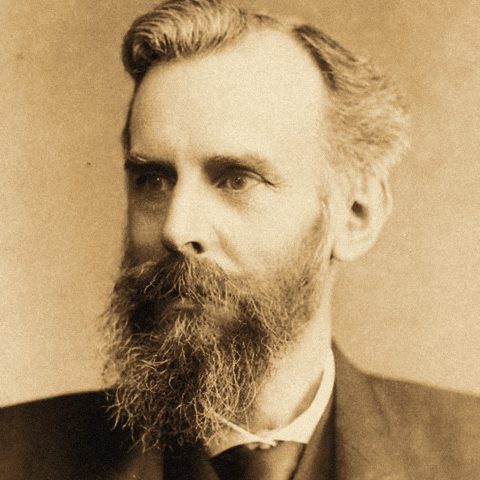
John Venn
1834 Kingston upon Hull – 1923 Cambridge · British logician and philosopher
John Venn, FRS, FSA was an English mathematician, logician and philosopher noted for introducing Venn diagrams, which are used in logic, set theory, probability, statistics, and computer science.
If you like The Logic of Chance
More like this


Start with “On Certain Kinds of Groups or Series as the Foundati...”
2 chapters free right now — no account. Your place follows you to iPhone and Android.