

Chapter 1 freeNo account needed.
Opens “Part 1, Chapter 1: Where the Slush Lamp Burns” in the player · no sign-up needed
Mr Button was seated on a sea-chest with a fiddle under his left ear.
The Blue Lagoon is a coming-of-age romance novel written by Henry De Vere Stacpoole, first published by T. Fisher Unwin in 1908.
Inside the book
- Free nowno account · 1 chapter
- 1Part 1, Chapter 1: Where the Slush Lamp Burns6 min
- Premium48 chapters · every book, 7 days free
- 2Part 1, Chapter 2: Under the Stars11 min
- 3Part 1, Chapter 3: The Shadow and the Fire6 min
- 4Part 1, Chapter 4: And Like A Dream Dissolved9 min
- 5Part 1, Chapter 5: Voices Heard in the Mist8 min
- 6Part 1, Chapter 6: Dawn on A Wide, Wide Sea14 min
- 7Part 1, Chapter 7: Story of the Pig and the Billy-Goat5 min
- 8Part 1, Chapter 8: "S-H-E-N-A-N-D-O-A-H"12 min
- 9Part 1, Chapter 9: Shadows in the Moonlight10 min
- 10Part 1, Chapter 10: The Tragedy of the Boats5 min
- 11Part 1, Chapter 11: The Island6 min
- 12Part 1, Chapter 12: The Lake of Azure12 min
- 13Part 1, Chapter 13: Death Veiled with Lichen7 min
- 14Part 1, Chapter 14: Echoes of Fairy-Land8 min
- 15Part 1, Chapter 15: Fair Pictures in the Blue3 min
- 16Part 1, Chapter 16: The Poetry of Learning16 min
- 17Part 1, Chapter 17: The Devil's Cask7 min
- 18Part 1, Chapter 18: The Rat Hunt7 min
- 19Part 1, Chapter 19: Starlight on the Foam7 min
- 20Part 1, Chapter 20: The Dreamer on the Reef8 min
- 21Part 1, Chapter 21: The Garland of Flowers5 min
- 22Chapter 224 min
- 23Part 1, Chapter 23: They Move Away4 min
- 24Part 2, Chapter 1: Under the Artu Tree4 min
- 25Part 2, Chapter 2: Half Child—Half Savage10 min
- 26Part 2, Chapter 3: The Demon of the Reef6 min
- 27Part 2, Chapter 4: What Beauty Concealed8 min
- 28Part 2, Chapter 5: The Sound of A Drum6 min
- 29Part 2, Chapter 6: Sails upon the Sea12 min
- 30Part 2, Chapter 7: The Schooner6 min
- 31Part 2, Chapter 8: Love Steps in6 min
- 32Part 2, Chapter 9: The Sleep of Paradise2 min
- 33Part 2, Chapter 10: An Island Honeymoon4 min
- 34Part 2, Chapter 11: The Vanishing of Emmeline8 min
- 35Part 2, Chapter 12: The Vanishing of Emmeline (continued)4 min
- 36Part 2, Chapter 13: The Newcomer3 min
- 37Chapter 376 min
- 38Part 2, Chapter 15: The Lagoon of Fire4 min
- 39Part 2, Chapter 16: The Cyclone6 min
- 40Part 2, Chapter 17: The Stricken Woods5 min
- 41Part 2, Chapter 18: A Fallen Idol4 min
- 42Part 2, Chapter 19: The Expedition10 min
- 43Part 2, Chapter 20: The Keeper of the Lagoon4 min
- 44Part 2, Chapter 21: The Hand of the Sea2 min
- 45Chapter 451 min
- 46Part 3, Chapter 1: Mad Lestrange4 min
- 47Part 3, Chapter 2: The Secret of the Azure5 min
- 48Part 3, Chapter 3: Captain Fountain15 min
- 49Chapter 4910 min
The opening
Part 1, Chapter 1: Where the Slush Lamp Burns
Where The Slush Lamp Burns
Mr Button was seated on a sea-chest with a fiddle under his left ear. He was playing the "Shan van vaught," and accompanying the tune, punctuating it, with blows of his left heel on the fo'cs'le deck.
"O the Frinch are in the bay, Says the Shan van vaught."
He was dressed in dungaree trousers, a striped shirt, and a jacket baize—green in parts from the influence of sun and salt. A typical old shell-back, round-shouldered, hooked of finger; a figure with strong hints of a crab about it.
His face was like a moon, seen red through tropical mists; and as he played it wore an expression of strained attention as though the fiddle were telling him tales much more marvellous than the old bald statement about Bantry Bay.
"Left-handed Pat," was his fo'cs'le name; not because he was left-handed, but simply because everything he did he did wrong—or nearly so. Reefing or furling, or handling a slush tub—if a mistake was to be made, he made it.
He was a Celt, and all the salt seas that had flowed between him and Connaught these forty years and more had not washed the Celtic element from his blood, nor the belief in fairies from his soul. The Celtic nature is a fast dye, and Mr Button's nature was such that though he had been shanghaied by Larry Marr in 'Frisco, though he had got drunk in most ports of the world, though he had sailed with Yankee captains and been man-handled by Yankee mates, he still carried his fairies about with him—they, and a very large stock of original innocence.
Nearly over the musician's head swung a hammock from which hung a leg; other hammocks hanging in the semi-gloom called up suggestions of lemurs and arboreal bats. The swinging kerosene lamp cast its light forward, past the heel of the bowsprit to the knightheads, lighting here a naked foot hanging over the side of a bunk, here a face from which protruded a pipe, here a breast covered with dark mossy hair, here an arm tattooed.
It was in the days before double topsail yards had reduced ships' crews, and the fo'cs'le of the Northumberland had a full company: a crowd of packet rats such as often is to be found on a Cape Horner "Dutchmen" Americans—men who were farm labourers and tending pigs in Ohio three months back, old seasoned sailors like Paddy Button—a mixture of the best and the worst of the earth, such as you find nowhere else in so small a space as in a ship's fo'cs'le.
The Northumberland had experienced a terrible rounding of the Horn. Bound from New Orleans to 'Frisco she had spent thirty days battling with head-winds and storms—down there, where the seas are so vast that three waves may cover with their amplitude more than a mile of sea space; thirty days she had passed off Cape Stiff, and just now, at the moment of this story, she was locked in a calm south of the line.
Mr Button finished his tune with a sweep of the bow, and drew his right coat sleeve across his forehead. Then he took out a sooty pipe, filled it with tobacco, and lit it.
"Pawthrick," drawled a voice from the hammock above, from which depended the leg, "what was that yarn you wiz beginnin' to spin ter night 'bout a lip me dawn?"
"A which me dawn?" asked Mr Button, cocking his eye up at the bottom of the hammock while he held the match to his pipe.
"It vas about a green thing," came a sleepy Dutch voice from a bunk.
"Oh, a Leprachaun you mane. Sure, me mother's sister had one down in Connaught."
"Vat vas it like?" asked the dreamy Dutch voice—a voice seemingly possessed by the calm that had made the sea like a mirror for the last three days, reducing the whole ship's company meanwhile to the level of wasters.
"Like? Sure, it was like a Leprachaun; and what else would it be like?"
"What like vas that?" persisted the voice.
"It was like a little man no bigger than a big forked raddish, an' as green as a cabbidge. Me a'nt had one in her house down in Connaught in the ould days. O musha! musha! the ould days, the ould days! Now, you may b'lave me or b'lave me not, but you could have put him in your pocket, and the grass-green head of him wouldn't more than'v stuck out. She kept him in a cupboard, and out of the cupboard he'd pop if it was a crack open, an' into the milk pans he'd be, or under the beds, or pullin' the stool from under you, or at some other divarsion. He'd chase the pig—the crathur!—till it'd be all ribs like an ould umbrilla with the fright, an' as thin as a greyhound with the runnin' by the marnin; he'd addle the eggs so the cocks an' hens wouldn't know what they wis afther wid the chickens comin' out wid two heads on them, an' twinty-seven legs fore and aft. And you'd start to chase him, an' then it'd be mainsail haul, and away he'd go, you behint him, till you'd landed tail over snout in a ditch, an' he'd be back in the cupboard."
"He was a Troll," murmured the Dutch voice.
"I'm tellin' you he was a Leprachaun, and there's no knowin' the divilments he'd be up to. He'd pull the cabbidge, maybe, out of the pot boilin' on the fire forenint your eyes, and baste you in the face with it; and thin, maybe, you'd hold out your fist to him, and he'd put a goulden soverin in it."
"Wisht he was here!" murmured a voice from a bunk near the knightheads.
"Pawthrick," drawled the voice from the hammock above, "what'd you do first if you found y'self with twenty pound in your pocket?"
"What's the use of askin' me?" replied Mr Button. "What's the use of twenty pound to a sayman at say, where the grog's all wather an' the beef's all horse? Gimme it ashore, an' you'd see what I'd do wid it!"
"I guess the nearest grog-shop keeper wouldn't see you comin' for dust," said a voice from Ohio.
"He would not," said Mr Button; "nor you afther me. Be damned to the grog and thim that sells it!"
"It's all darned easy to talk," said Ohio. "You curse the grog at sea when you can't get it; set you ashore, and you're bung full."
"I likes me dhrunk," said Mr Button, "I'm free to admit; an' I'm the divil when it's in me, and it'll be the end of me yet, or me ould mother was a liar. 'Pat,' she says, first time I come home from say rowlin', 'storms you may escape, an' wimmen you may escape, but the potheen 'ill have you.' Forty year ago—forty year ago!"
"Well," said Ohio, "it hasn't had you yet."
"No," replied Mr Button, "but it will."
About the author
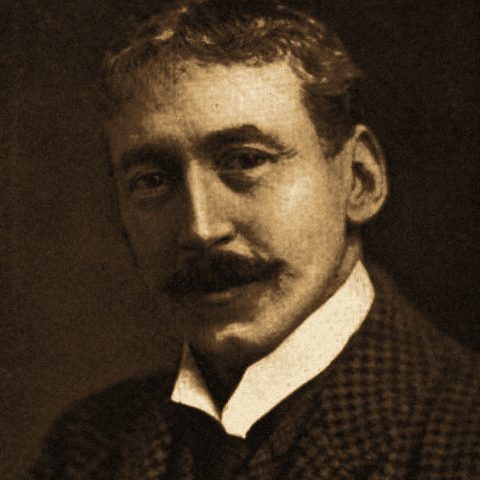
H. De Vere Stacpoole
1863 Dún Laoghaire – 1951 Shanklin · British writer
Henry de Vere Stacpoole was an Irish author. His 1908 romance novel The Blue Lagoon has been adapted into multiple films.
- 1863Born, Dún Laoghaire
- 1908The Blue Lagoon
- 1951Died, Shanklin
If you like The Blue Lagoon
More like this


Start with “Part 1, Chapter 1: Where the Slush Lamp Burns”
First chapter free right now — no account. Your place follows you to iPhone and Android.