

Chapter 1 freeNo account needed.
Opens “A Flash of Lightning” in the player · no sign-up needed
Barry Cumberland pushed on through a growing darkness.
Inside the book
- Free nowno account · 1 chapter
- 1A Flash of Lightning10 min
- Premium32 chapters · every book, 7 days free
- 2The Dividing Line12 min
- 3A Week Later11 min
- 4Shaded Windows8 min
- 5Barry Is Haunted14 min
- 6Danbazzar12 min
- 7Zalithea11 min
- 8Special Opinions15 min
- 9Egypt Bound11 min
- 10Cairo10 min
- 11Luxor12 min
- 12The Camp in the Desert12 min
- 13The Excavators12 min
- 14The Haunted Valley14 min
- 15The Hawwara14 min
- 16The Hole in the Wall10 min
- 17Mr. Tawwab Comes to Terms14 min
- 18The Lotus Sarcophagus14 min
- 19The Voice in the Valley12 min
- 20The Ritual13 min
- 21The Awakening13 min
- 22A Summons from the Princess14 min
- 23An English Lesson17 min
- 24The Return to Luxor10 min
- 25Social Amenities14 min
- 26In New York14 min
- 27About It and About14 min
- 28A Door Closes14 min
- 29The Hieroglyphic Letter14 min
- 30Marguerite Devina15 min
- 31The Meeting13 min
- 32The Great Ahmes11 min
- 33A Flash of Lightning12 min
The opening
A Flash of Lightning
Barry Cumberland pushed on through a growing darkness. There seemed to be an unfamiliar quality in this darkness which he first noticed when, quite mechanically, he stooped to switch on his headlights, and in doing so saw the time by the clock in the car. He slowed down for a moment, on a crossways, and stared into the west.
A great cloud, black as the pall of Avalon, was draped before the sinking sun.
As he watched, it crept farther and farther up the dome of blue, like a velvet curtain drawn by giant hands. Through a gap in the trees which had closely beset the path for some distance now, Barry looked down into the valley along which his route lay to the highroad and New York.
Three hundred feet below, perched apparently on the edge of a ravine, he saw a house. Some rent in the curtain of the storm had allowed a ray like a searchlight to break through and to shine upon a sort of turret which crowned the building. Shrinking behind guardian walls and overhanging yet lower depths, the effect was that of a drawing by Sidney Sime. Beyond, the road zigzagged, disappeared into shadow, later to reappear in the form of a bridge, until it finally became lost to sight before the plain was reached.
The moving curtain blotted out the light. Where a fairy castle had been, eerily illuminated, came blackness. He looked ahead sharply, accelerated, and knowing the violence of these sudden storms in the mountains, prayed that his Rolls would deliver him from treacherous byways before the blinding rain began.
He had only himself to blame if he should be stormbound. For no reason that he could have defined he had left a cheery crowd at the club, with never a word of farewell, urged by a sudden irrational impulse to reach home in time for supper. Such abrupt changes of plan were characteristic of Barry, annoying to his friends, but in no way destructive of his popularity.
A young man endowed with good looks, charm of manner, and John Cumberland for a father is not dropped socially merely because nature has designed him for a poet in a material age.
Through this ever-growing darkness he drove on; and although the route was one which normally carried little traffic, it seemed that this evening not a soul rode or walked upon the length of it. But loneliness dovetailed with his mood. He welcomed it. And so, when a sharp bend leading to a long descent set the storm behind him, he thought of it as a pursuer. He took the slope in breakneck fashion. It was a race against the pursuing darkness.
Presently came a dangerous turning which he remembered. But he had possessed the Rolls—a birthday present from his father—long enough for it to have become a part of him, responsive almost to a thought, nearly to a mood.
He checked where a ragged fence appeared suddenly ahead like a barrier and negotiated a tortured figure S which brought him out above a sheer drop. Beneath lay meadows where late corn showed speckled gold in the crawling shadows. Down, the road led, and still down. A gallant ray from the stifled sun alighted momentarily upon white walls of a building far ahead. He was aware of a flowered porch, a window, a low roof.
Vaguely he recalled this little home. Something had drawn his attention to it upon the outward journey from New York. Then it was blotted out like a house of dreams; but he was losing nothing on the storm. The race grew more and more real.
Some classic analogy cropped up in his mind; a fragment of half forgotten studies which he could not identify. He became a mortal defying the gods. But from this flight of imagination he came sharply back to earth. The house by the roadside passed—and even now he was bearing down upon it—what lay beyond?
Jim Sakers, his pilot on the outward run, now was many miles behind, probably dancing; happily unconscious of the fact that his friend, bareheaded, in dinner kit, was racing for New York, a victim of moods, pursued by the storm.
There was a bridge, Barry remembered. They had passed a Studebaker on it; very nice navigation, for the bridge was narrow. Yes! Here was the bridge. The Rolls went booming across it at fifty-five. And now Barry sighted his first pedestrian: an old man with a clean-shaven upper lip and a tufty white beard. He wore blue overalls, a huge plaid cap which would have suited Harry Lauder, and smoked a very short pipe. Pausing, he stepped hurriedly aside as the bareheaded madman swept by in a cloud of dust. His cap went up like a Scotch balloon.
Barry clenched his teeth. The shadow was gaining upon him. Oh! for a long, straight turnpike where he could open up. But memory warned him that there were many tortuous miles in which no such race track offered. Now came a long sweeping curve which he recalled clearly, tree bordered on the one side, and, on the other, outlining an upcrop of primitive sandstone, where sparse vegetation and scattered rocks formed an isthmus around which his route lay.
Here for a moment he could glance aside. The black curtain was still gaining. The storm promised to win.
Into a cutting he plunged, high-banked, tree-topped, through the blackness of which his headlights carved like a gleaming scimitar. Some little animal shot across the blade of silver. He resigned himself to his mood, wondering in what way he differed from his friends, what barrier it was that would intrude at times between him and those enjoyments for which others never lost zest.
In the games and amusements to which they devoted much of their lives he took part; and most of the things that Barry Cumberland attempted he did well. His sports record was good, but not excellent. He was happy in athletic pursuits, but could never screw up any enthusiasm for pot hunting. Cards frankly bored him. He danced well, except when abruptly, unaccountably, his dancing mood left him and he experienced a sudden longing for the silence of imaginary forests.
The girls about whom other men raved stirred him but slightly. They were all too true to pattern. The thought of home life with any one of them was definitely objectionable.
He took a sharp bend at dangerous speed, wondering if, during a long-projected but never accomplished tour of Europe, he should meet a girl having power to arouse that curious state of unrest which he had sometimes noted in his friends and vaguely wished he could experience. No doubt he was a visionary. He had often been told so. Perhaps the influence of his own home might be to blame.
It was only reasonable to suppose that an establishment which is less a residence than a museum of Ancient Egyptian antiquities, should contribute something to the character of one born and reared in it. Those almond-eyed, slender priestesses, so alluring, so aloof, had possibly played a part in disabusing his mind of any romance in connection with the girls of that very modern set to which he belonged. Since childhood they had looked down upon him, from wall paintings, vases, bas-reliefs, those cloudily robed, sinuous Egyptians, whose long eyes were wells of feminine secrets; who had never smoked or tasted cocktails, but who lived in a mysterious world which for some reason he identified with the deep notes of an organ.
Yes, it was their mystery that appealed to him. Mystery was what he sought, but never found, among the women of his acquaintance.
The road became a high ledge, a thread encircling a bowl of shadow. The gradient grew dangerously steep, and Barry checked speed almost unconsciously.
His musing had carried him many miles. Startled, he became aware of the fact that he could recall no point of the route from the spot where he had passed that solitary pedestrian. But the black cloud had won; for a darkness like night had fallen all around him. He must think what lay at the bottom of this winding road, and how they had approached it. He seemed to remember that there was a fork; that they had come out upon the valley side by one of three ways. But by which of them?
He slowed down more and more as he reached the bottom of the slope, which now turned sharply eastward out of the valley. He had been right. Three roads opened before him. His decision was promptly made. He swung into the middle route, confidently giving the Rolls her head again. On he raced, along a smooth avenue, overshadowed, and so dark that midnight might have come.
During that momentary check he had heard the booming of thunder, away behind him in the west. The avenue began to curve south. It seemed to be unfamiliarly narrow. More and more southerly it inclined, until at last came a crossroad. He pulled up, hesitated, and knew definitely that he had made a wrong choice. It was the north fork he should have taken. Therefore he turned left into the crossing, presuming that it must bring him out upon his proper route.
Going was very bad. The Rolls bumped and shook from stem to stern. But he pursued his way and swore under his breath when he found that this road also inclined to the south. But now, through an opening in the trees, he saw yet another crossway. Left again he swung, pursued by louder rumbling of thunder. Rain was beginning to fall.
Suddenly, his head lamps flooded a high wall. He wondered, but drove on; when—blinding, awesome—the lightning came… and he saw Her!
There was a stone-faced house not twenty yards ahead, and on a balcony high up before an open window she stood. She wore some kind of cloudy robe—a jewelled girdle—the dress of a Theban priestess! One hand upraised rested against the sash of the window, the other upon the curve of her hip.
She had long dark eyes which seemed to be watching him, and her lips were parted in a slight smile.…
"I am dreaming," he said aloud. "An Egyptian princess!"
Save that it seemed to live, the beautiful figure was one of those out of a dim past which had watched over him from childhood!
And now the wheel was wrenched from Barry's grasp—he was aware of a cry—a loud, splintering crash—a sickening blow on the skull—of no more.…
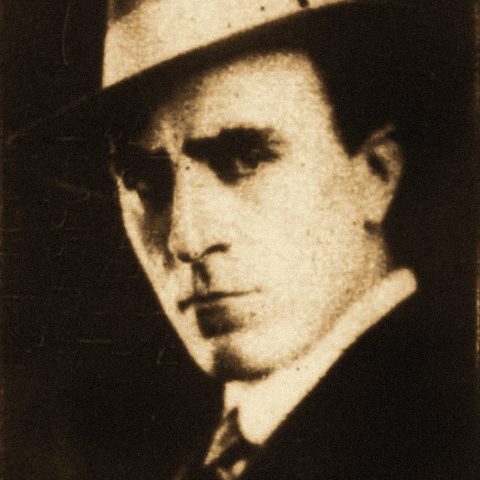
About the author
Sax Rohmer
1883 Birmingham – 1959 White Plains · English novelist
Sax Rohmer was the pen name of the English novelist Arthur Henry "Sarsfield" Ward. He is remembered chiefly for a series of novels built around the criminal mastermind Fu Manchu.
- 1883Born, Birmingham
- 1913The Insidious Dr. Fu Manchu
- 1959Died, White Plains
If you like She Who Sleeps
More like this


Good to know
About this audiobook
How long is the She Who Sleeps audiobook?
About 6 hr 57 min in total, across 33 chapters, so roughly 13 minutes a chapter. Your place is saved on every device, which makes it easy to listen in short sittings.
Where should I start with She Who Sleeps?
Start with “A Flash of Lightning”. It plays free with no account, and your place is saved when you come back.
Play it free
Can I read She Who Sleeps while I listen?
Yes. The full text is on screen as you listen, so you can follow along or look back at a line you missed.
Is She Who Sleeps free to listen to?
The first chapter plays free with no account. A free account saves your place and lets you keep one whole book from a shelf of five classics. Every chapter of She Who Sleeps is in Premium: $4.99 a month or $44.99 a year, with a 7-day free trial for new members.
Can I listen on my phone?
Yes. Compendium works on iPhone, Android and the web, and with an account your place follows you between them. In the apps, Premium also lets you download chapters to listen offline.
Get it on the App Store · Get it on Google Play
What should I listen to next?
If you like She Who Sleeps, try The War of the Worlds by Wells, Gulliver's Travels into Several Remote Nations of the World by Swift or Twenty Thousand Leagues Under the Sea by Verne. Or browse every science fiction & fantasy audiobook.

Start with “A Flash of Lightning”
First chapter free right now — no account. Your place follows you to iPhone and Android.