

2 chapters freeNo account needed.
Opens “The Historical Relations of Sextus Empiricus” in the player · no sign-up needed
Interest has revived in the works of Sextus Empiricus in recent times, especially, one may say, since the date of Herbart.
Sextus Empiricus and Greek Scepticism is a study by the American scholar Mary Mills Patrick.
Inside the book
- Free nowno account · 2 chapters
- —Preface4 min
- 1The Historical Relations of Sextus Empiricus37 min
- Premium38 chapters · every book, 7 days free
- 2The Position and Aim of Pyrrhonism14 min
- 3The Sceptical Tropes56 min
- 4Aenesidemus and the Philosophy of Heraclitus29 min
- 5Critical Examination of Pyrrhonism33 min
- 7Chapter 71 min
- 8Book 1, Chapter 2: Ways of Treating Scepticism1 min
- 9Book 1, Chapter 3: The Nomenclature of Scepticism1 min
- 10Book 1, Chapter 4: What is Scepticism?2 min
- 11Book 1, Chapter 5: The Sceptic1 min
- 12Book 1, Chapter 6: The Origin of Scepticism1 min
- 13Chapter 132 min
- 14Book 1, Chapter 8: Is Scepticism a Sect?1 min
- 15Chapter 151 min
- 16Chapter 161 min
- 17Book 1, Chapter 11: The Criterion of Scepticism2 min
- 18Chapter 183 min
- 19Book 1, Chapter 13: The General Method of Scepticism2 min
- 20Book 1, Chapter 14: The Ten Tropes52 min
- 21Book 1, Chapter 15: The Five Tropes6 min
- 22Book 1, Chapter 16: The Two Tropes1 min
- 23Chapter 233 min
- 24Book 1, Chapter 18: The Sceptical Formulae1 min
- 25Chapter 252 min
- 26Chapter 261 min
- 27Chapter 271 min
- 28Book 1, Chapter 22: epochê or the Suspension of Judgment1 min
- 29Chapter 291 min
- 30Chapter 301 min
- 31Chapter 311 min
- 32Chapter 321 min
- 33Chapter 332 min
- 34Chapter 342 min
- 35Chapter 353 min
- 36Chapter 361 min
- 37Chapter 371 min
- 38Chapter 382 min
- 39Chapter 399 min
- 40Chapter 403 min
The opening
The Historical Relations of Sextus Empiricus
The Historical Relations of Sextus Empiricus.
Interest has revived in the works of Sextus Empiricus in recent times, especially, one may say, since the date of Herbart. There is much in the writings of Sextus that finds a parallel in the methods of modern philosophy. There is a common starting-point in the study of the power and limitations of human thought. There is a common desire to investigate the phenomena of sense-perception, and the genetic relations of man to the lower animals, and a common interest in the theory of human knowledge.
While, however, some of the pages of Sextus' works would form a possible introduction to certain lines of modern philosophical thought, we cannot carry the analogy farther, for Pyrrhonism as a whole lacked the essential element of all philosophical progress, which is a belief in the possibility of finding and establishing the truth in the subjects investigated.
Before beginning a critical study of the writings of Sextus Empiricus, and the light which they throw on the development of Greek Scepticism, it is necessary to make ourselves somewhat familiar with the environment in which he lived and wrote. We shall thus be able to comprehend more fully the standpoint from which he regarded philosophical questions.
Let us accordingly attempt to give some details of his life, including his profession, the time when he lived, the place of his birth, the country in which he taught, and the general aim and character of his works. Here, however, we encounter great difficulties, for although we possess most of the writings of Sextus well preserved, the evidence which they provide on the points mentioned is very slight. He does not give us biographical details in regard to himself, nor does he refer to his contemporaries in a way to afford any exact knowledge of them. His name even furnishes us with a problem impossible of solution. He is called Sextos ho empeirikos by Diogenes Laertius: Hêrodotou de diêkouse Sextos ho empeirikos hou kai ta deka tôn skeptikôn kai alla kallista' Sextou de diêkouse Satorninos ho Kythênas, empeirikos kai autos. Although in this passage Diogenes speaks of Sextus the second time without the surname, we cannot understand the meaning otherwise than that Diogenes considered Sextus a physician of the Empirical School. Other evidence also is not wanting that Sextus bore this surname. Fabricius, in his edition of the works of Sextus, quotes from the Tabella de Sectis Medicorum of Lambecius the statement that Sextus was called Empiricus because of his position in medicine.
Pseudo-Galen also refers to him as one of the directors of the Empirical School, and calls him Sextos ho empeirikos. His name is often found in the manuscripts written with the surname, as for example at the end of Logic II. In other places it is found written without the surname, as Fabricius testifies, where Sextus is mentioned as a Sceptic in connection with Pyrrho.
Diog. Laert. IX. 12, 116.
Fabricius Testimonia, p. 2.
Pseudo-Galen Isag. 4; Fabricius Testimonia, p. 2.
Bekker Math. VIII. 481.
The Sceptical School was long closely connected with the Empirical School of medicine, and the later Pyrrhoneans, when they were physicians, as was often the case, belonged for the most part to this school. Menedotus of Nicomedia is the first Sceptic, however, who is formally spoken of as an Empirical physician, and his contemporary Theodas of Laodicea was also an Empirical physician. The date of Menedotus and Theodas is difficult to fix, but Brochard and Hass agree that it was about 150 A.D. After the time of these two physicians, who were also each in turn at the head of the Sceptical School, there seems to have been a definite alliance between Pyrrhonism and Empiricism in medicine, and we have every reason to believe that this alliance existed until the time of Sextus.
Diog. IX. 12, 115.
Brochard Op. cit. Livre IV. p. 311.
Diog. IX. 12, 116.
The difficulty in regard to the name arises from Sextus' own testimony. In the first book of the Hypotyposes he takes strong ground against the identity of Pyrrhonism and Empiricism in medicine. Although he introduces his objections with the admission that "some say that they are the same," in recognition of the close union that had existed between them, he goes on to say that "Empiricism is neither Scepticism itself, nor would it suit the Sceptic to take that sect upon himself", for the reason that Empiricism maintains dogmatically the impossibility of knowledge, but he would prefer to belong to the Methodical School, which was the only medical school worthy of the Sceptic. "For this alone of all the medical sects, does not proceed rashly it seems to me, in regard to unknown things, and does not presume to say whether they are comprehensible or not, but it is guided by phenomena. It will thus be seen that the Methodical School of medicine has a certain relationship to Scepticism which is closer than that of the other medical sects."
Hyp. I. 236.
Hyp. I. 237.
Hyp. I. 241.
We know from the testimony of Sextus himself that he was a physician. In one case he uses the first person for himself as a physician, and in another he speaks of Asclepius as "the founder of our science," and all his illustrations show a breadth and variety of medical knowledge that only a physician could possess. He published a medical work which he refers to once as iatrika hupomnêmata, and again as empeirika hupomnêmata These passages probably refer to the same work, which, unfortunately for the solution of the difficult question that we have in hand, is lost, and nothing is known of its contents.
In apparent contradiction to his statement in Hypotyposes I., that Scepticism and Empiricism are opposed to each other, in that Empiricism denies the possibility of knowledge, and Scepticism makes no dogmatic statements of any kind, Sextus classes the Sceptics and Empiricists together in another instance, as regarding knowledge as impossible all oi men phasin auta mê katalambanesthai, hôster hoi apo tês empeirias iatroi kai hoi apo tês skepseôs phiolosophoi. In another case, on the contrary, he contrasts the Sceptics sharply with the Empiricists in regard to the apodeixeis. hoi de empeirikoi anairousin, hoi de skeptikoi en epochê tautên ephylaxan.
Hyp. ii. 238.
Adv. Math. A. 260.
Adv. Math. vii. 202.
Adv. Math. A. 61.
Zeller Op. cit.. iii. 43.
Adv. Math. viii. 191.
Adv. Math. VIII. 328.
Pappenheim thinks that Sextus belonged to the Methodical School, both from his strong expression in favor of that school in Hyp. I. 236, as above, and also because many of his medical opinions, as found in his works, agree with the teachings of the Methodical School, more nearly than with those of the Empiricists. Pappenheim also claims that we find no inconsistency with this view in the passage given where Sextus classes the Sceptics with the Empiricists, but considers that statement an instance of carelessness in expressing himself, on the part of Sextus.
Lebensverhältnisse des Sex. Em. 36.
The position of Pappenheim is assailable for the reason that in dealing with any problem regarding an author on the basis of internal evidence, we have no right to consider one of his statements worthy of weight, and another one unworthy, on the supposition that he expressed himself carelessly in the second instance. Rather must we attempt to find his true standpoint by fairly meeting all the difficulties offered in apparently conflicting passages. This has been attempted by Zeller, Brochard, Natorp and others, with the general result that all things considered they think without doubt that Sextus belonged to the Empirical School. His other references are too strong to allow his fidelity to it to be doubted. He is called one of the leaders of Empiricism by Pseudo-Galen, and his only medical work bore the title empeirika hupomnêmata.
The opinion of the writers above referred to is that the passage which we have quoted from the Hypotyposes does not necessarily mean that Sextus was not an Empiricist, but as he was more of a Sceptic than a physician, he gave preference to those doctrines that were most consistent with Scepticism, and accordingly claimed that it was not absolutely necessary that a Sceptic physician should be an Empiricist. Natorp considers that the different standpoint from which Sextus judges the Empirical and Methodical Schools in his different works is accounted for on the supposition that he was an Empiricist, but disagreed with that school on the one point only. Natorp points out that Sextus does not speak more favourably of the medical stand of the Methodical School, but only compares the way in which both schools regarded the question of the possibility of knowledge, and thinks that Sextus could have been an Empiricist as a physician notwithstanding his condemnation of the attitude of the Empirical School in relation to the theory of knowledge.
This difference between the two schools was a small one, and on a subtle and unimportant point; in fact, a difference in philosophical theory, and not in medical practice.
Brochard Op. cit. Livre IV. 317; Zeller Op. cit. III. 15; Natorp Op. cit. p. 155.
Natorp Op. cit. 157.
While we would agree with the authors above referred to, that Sextus very probably recognized the bond between the Empirical School of medicine and Pyrrhonism, yet to make his possible connection with that school the explanation of his name, gives him more prominence as a physician than is consistent with what we know of his career. The long continued union of Empiricism and Scepticism would naturally support the view that Sextus was, at least during the earlier part of his life, a physician of that school, and yet it may be that he was not named Empiricus for that reason. There is one instance in ancient writings where Empiricus is known as a simple proper name. It may have been a proper name in Sextus' case, or there are many other ways in which it could have originated, as those who have studied the origin of names will readily grant, perhaps indeed, from the title of the above-named work, empeirika hupomnêmata.
The chief argument for this view of the case is that there were other leaders of the Sceptical School, for whom we can claim far greater influence as Empiricists than for Sextus, and for whom the surname Empiricus would have been more appropriate, if it was given in consequence of prominence in the Empirical School. Sextus is known to the world as a Sceptic, and not as a physician. He was classed in later times with Pyrrho, and his philosophical works survived, while his medical writings did not, but are chiefly known from his own mention of them. Moreover, the passage which we have quoted from the Hypotyposes is too strong to allow us easily to believe that Sextus remained all his life a member of the Empirical School. He could hardly have said, "Nor would it suit the Sceptic to take that sect upon himself," if he at the same time belonged to it. His other references to the Empirical School, of a more favorable character, can be easily explained on the ground of the long continued connection which had existed between the two schools.
It is quite possible to suppose that Sextus was an Empiricist a part of his life, and afterwards found the Methodical School more to his liking, and such a change would not in any way have affected his stand as a physician.
Pappenheim Leb. Ver. Sex. Em. 6.
In regard to the exact time when Sextus Empiricus lived, we gain very little knowledge from internal evidence, and outside sources of information are equally uncertain. Diogenes Laertius must have been a generation younger than Sextus, as he mentions the disciple of Sextus, Saturninus, as an Empirical physician. The time of Diogenes is usually estimated as the first half of the third century A.D., therefore Sextus cannot be brought forward later than the beginning of the century. Sextus, however, directs his writings entirely against the Dogmatics, by whom he distinctly states that he means the Stoics, and the influence of the Stoics began to decline in the beginning of the third century A.D. A fact often used as a help in fixing the date of Sextus is his mention of Basilides the Stoic, alla kai oi stôikoi, ôs oi peri ton Basileidên. This Basilides was supposed to be identical with one of the teachers of Marcus Aurelius. This is accepted by Zeller in the second edition of his History of Philosophy, but not in the third for the reason that Sextus, in all the work from which this reference is taken, i.e. Math. VII.-XI., mentions no one besides Aenesidemus, who lived later than the middle of the last century B.C. The Basilides referred to by Sextus may be one mentioned in a list of twenty Stoics, in a fragment of Diogenes Laertius, recently published in Berlin by Val Rose. Too much importance has, however, been given to the relation of the mention of Basilides the Stoic to the question of the date of Sextus. Even if the Basilides referred to by Sextus is granted to have been the teacher of Marcus Aurelius, it only serves to show that Sextus lived either at the same time with Marcus Aurelius or after him, which is a conclusion that we must in any case reach for other reasons.
Diog. IX. 12, 116.
Ueberweg Hist. of Phil. p. 21.
Hyp. I. 65.
Adv. Math. VII. 258.
Fabricius Vita Sexti.
Zeller Op. cit. III. 8.
Brochard Op. cit. IV. 315.
The fact that has caused the greatest uncertainty in regard to the date of Sextus is that Claudius Galen in his works mentions several Sceptics who were also physicians of the Empirical School, and often speaks of Herodotus, supposed to be identical with the teacher of Sextus given by Diogenes Laertius, but makes no reference whatever to Sextus. As Galen's time passes the limit of the second century A.D., we must either infer that Sextus was not the well-known physician that he was stated to be by Pseudo-Galen, and consequently not known to Galen, or that Galen wrote before Sextus became prominent as a Sceptic. This silence on the part of Galen in regard to Sextus increases the doubt, caused by Sextus' own criticism of the Empirical School of medicine, as to his having been an Empiricist. The question is made more complicated, as it is difficult to fix the identity of the Herodotus so often referred to by Galen.
As Galen died about 200 A.D. at the age of seventy, we should fix the date of Sextus early in the third century, and that of Diogenes perhaps a little later than the middle, were it not that early in the third century the Stoics began to decline in influence, and could hardly have excited the warmth of animosity displayed by Sextus. We must then suppose that Sextus wrote at the very latter part of the second century, and either that Galen did not know him, or that Galen's books were published before Sextus became prominent either as a physician or as a Sceptic. The fact that he may have been better known as the latter than as the former does not sufficiently account for Galen's silence, as other Sceptics are mentioned by him of less importance than Sextus, and the latter, even if not as great a physician as Pseudo-Galen asserts, was certainly both a Sceptic and a physician, and must have belonged to one of the two medical schools so thoroughly discussed by Galen—either the Empirical or the Methodical.
Therefore, if Sextus were a contemporary of Galen, he was so far removed from the circle of Galen's acquaintances as to have made no impression upon him, either as a Sceptic or a physician, a supposition that is very improbable. We must then fix the date of Sextus late in the second century, and conclude that the climax of his public career was reached after Galen had finished those of his writings which are still extant.
Zeller, III. 7.
Diog. XI. 12, 116.
Pappenheim Lebens. Ver. Sex. Em. 30.
Zeller Grundriss der Ges. der Phil. p. 260.
Sextus has a Latin name, but he was a Greek; we know this from his own statement. We also know that he must have been a Greek from the beauty and facility of his style, and from his acquaintance with Greek dialects. The place of his birth can only, however, be conjectured, from arguments indirectly derived from his writings. His constant references throughout his works to the minute customs of different nations ought to give us a clue to the solution of this question, but strange to say they do not give us a decided one. Of these references a large number, however, relate to the customs of Libya, showing a minute knowledge in regard to the political and religious customs of this land that he displays in regard to no other country except Egypt. Fabricius thinks Libya was not his birth place because of a reference which he makes to it in the Hypotyposes—Thrakôn de kai Gaitoulôn (Libyôn de ethnos touto). This conclusion is, however, entirely unfounded, as the explanation of Sextus simply shows that the people whom he was then addressing were not familiar with the nations of Libya. Suidas speaks of two men called Sextus, one from Chæronea and one from Libya, both of whom he calls Sceptics, and to one of whom he attributes Sextus' books. All authorities agree in asserting that great confusion exists in the works of Suidas; and Fabricius, Zeller, and Pappenheim place no weight upon this testimony of Suidas. Haas, however, contends that it is unreasonable to suppose that this confusion could go as far as to attribute the writings of Sextus Empiricus to Sextus of Chæronea, and also make the latter a Sceptic, and he considers it far more reasonable to accept the testimony of Suidas, as it coincides so well with the internal evidence of Sextus' writings in regard to his native land. It is nevertheless evident, from his familiarity with the customs, language, and laws of Athens, Alexandria and Rome, that he must have resided at some time in each of these cities.
Adv. Math. A. 246; Hyp. I. 152; Hyp. III. 211, 214.
Haas Op. cit. p. 10.
Hyp. III. 213.
Pappenheim Lebens. Ver. Sex. Em. 5, 22; Zeller Op. cit. III. 39; Fabricius Vita de Sextus.
Haas Op. cit. p. 6.
Of all the problems connected with the historical details of the life of Sextus, the one that is the most difficult of solution, and also the most important for our present purpose of making a critical study of his teaching, is to fix the seat of the Sceptical School during the time that he was in charge of it. The Hypotyposes are lectures delivered in public in that period of his life. Where then were they delivered? We know that the Sceptical School must have had a long continued existence as a definite philosophical movement, although some have contended otherwise. The fact of its existence as an organized direction of thought, is demonstrated by its formulated teachings, and the list given by Diogenes Laertius of its principal leaders, and by references from the writings of Sextus. In the first book of Hypotyposes he refers to Scepticism as a distinct system of philosophy, kai taen diakrisin taes skepseos apo ton parakeimenon autae philosophion. He speaks also of the older Sceptics, and the later Sceptics.
Pyrrho, the founder of the school, taught in Elis, his native village; but even as early as the time of Timon, his immediate follower, his teachings were somewhat known in Alexandria, where Timon for a while resided. The immediate disciples of Timon, as given by Diogenes, were not men known in Greece or mentioned in Greek writings. Then we have the well-known testimony of Aristocles the Peripatetic in regard to Aenesidemus, that he taught Pyrrhonism in Alexandria—echthes kai proaen en Alexandreia tae kat' Aigypton Ainaesidaemos tis anazopyrein aerxato ton huthlon touton.
Diog. XI. 12, 115, 116.
Hyp. I. 5.
Hyp. I. 36.
Hyp. I. 164.
Chaignet Op. cit. 45.
Aristocles of Euseb. Praep. Ev. XIV. E. 446.
This was after the dogmatic tendency of the Academy under Antiochus and his followers had driven Pyrrhonism from the partial union with the Academy, which it had experienced after the breaking up of the school under the immediate successors of Timon. Aenesidemus taught about the time of our era in Alexandria, and established the school there anew; and his followers are spoken of in a way that presupposes their continuing in the same place. There is every reason to think that the connection of Sextus with Alexandria was an intimate one, not only because Alexandria had been for so long a time the seat of Pyrrhonism, but also from internal evidence from his writings and their subsequent historical influence; and yet the Hypotyposes could not have been delivered in Alexandria, as he often refers to that place in comparison with the place where he was then speaking. He says, furthermore, that he teaches in the same place where his master taught. Blepon te hoti entha ho huphaegaetaes ho emos dielegeto, entautha ego nun dialegomai. Therefore the school must have been removed from Alexandria, in or before the time of the teacher of Sextus, to some other centre.
The Hypotyposes are from beginning to end a direct attack on the Dogmatics; therefore Sextus must have taught either in some city where the dogmatic philosophy was strong, or in some rival philosophical centre. The Hypotyposes show also that the writer had access to some large library. Alexandria, Rome and Athens are the three places the most probable for selection for such a purpose. For whatever reason the seat of the school was removed from Alexandria by the master of Sextus, or by himself, from the place where it had so long been united with the Empirical School of medicine, Athens would seem the most suitable city for its recontinuance, in the land where Pyrrhonism first had its birth. Sextus, however, in one instance, in referring to things invisible because of their outward relations, says in illustration, "as the city of Athens is invisible to us at present." In other places also he contrasts the Athenians with the people whom he is addressing, equally with the Alexandrians, thus putting Athens as well as Alexandria out of the question.
Hyp. III. 120.
Hyp. II. 98.
Of the different writers on Sextus Empiricus, those who have treated this part of the subject most critically are Haas and Pappenheim. We will therefore consider, somewhat at length, the results presented by these two authors. Haas thinks that the Hypotyposes were delivered in Rome for the following reasons. Sextus' lectures must have been given in some centre of philosophical schools and of learning. He never opposes Roman relations to those of the place where he is speaking, as he does in regard to Athens and Alexandria. He uses the name "Romans" only three times, once comparing them to the Rhodians, once to the Persians, and once in general to other nations. In the first two of these references, the expression "among the Romans" in the first part of the antithesis is followed by the expression, "among us," in the second part, which Haas understands to be synonymous. The third reference is in regard to a Roman law, and the use of the word 'Roman' does not at all show that Sextus was not then in Rome. The character of the laws referred to by Sextus as par' haemin shows that they were always Roman laws, and his definition of law is especially a definition of Roman law.
This argument might, it would seem, apply to any part of the Roman Empire, but Haas claims that the whole relation of law to custom as treated of by Sextus, and all his statements of customs forbidden at that time by law, point to Rome as the place of his residence. Further, Haas considers the Herodotus mentioned by Galen as a prominent physician in Rome, to have been the predecessor and master of Sextus, in whose place Sextus says that he is teaching. Haas also thinks that Sextus' refutation of the identity of Pyrrhonism with Empiricism evidently refers to a paragraph in Galen's Subfiguratio Empirica, which would be natural if the Hypotyposes were written shortly after Galen's Sub. Em., and in the same place. Further, Hippolytus, who wrote in or near Rome very soon after the time of Sextus, apparently used the Hypotyposes, which would be more natural if he wrote in the same place. According to Haas, every thing in internal evidence, and outward testimony, points to Rome as having been the city where Sextus occupied his position as the head of the Sceptical School.
Haas Op. cit. p. 15.
Hyp. I. 149, 152; III. 211.
Hyp. I. 146.
Galen de puls. IV. 11; Bd. VIII. 751.
Hyp. III. 120.
Galen Sub. Em. 123 B-126 D. (Basileae, 1542).
Coming now to the position of Pappenheim on this subject, we find that he takes very decided ground against the seat of the Sceptical School having been in Rome, even for a short time, in his latest publication regarding it. This opinion is the result of late study on the part of Pappenheim, for in his work on the Lebensverhältnisse des Sextus Empiricus Berlin 1875, he says, "Dass Herodotus in Rom lebte sagt Galen. Vermuthlich auch Sextus." His reasons given in the later article for not connecting the Sceptical School at all with Rome are as follows. He finds no proof of the influence of Scepticism in Rome, as Cicero remarks that Pyrrhonism is extinct, and he also gives weight to the well-known sarcastic saying of Seneca, Quis est qui tradat praecepta Pyrrhonis! While Haas claims that Sextus would naturally seek one of the centres of dogmatism, in order most effectively to combat it, Pappenheim, on the contrary, contends that it would have been foolishness on the part of Sextus to think of starting the Sceptical School in Rome, where Stoicism was the favored philosophy of the Roman Emperors; and when either for the possible reason of strife between the Empirical and Methodical Schools, or for some other cause, the Pyrrhonean School was removed from Alexandria, Pappenheim claims that all testimony points to the conclusion that it was founded in some city of the East. The name of Sextus is never known in Roman literature, but in the East, on the contrary, literature speaks for centuries of Sextus and Pyrrho. The Hypotyposes, especially, were well-known in the East, and references to Sextus are found there in philosophical and religious dogmatic writings. The Emperor Julian makes use of the works of Sextus, and he is frequently quoted by the Church Fathers of the Eastern Church. Pappenheim accordingly concludes that the seat of Pyrrhonism after the school was removed from Alexandria, was in some unknown city of the East.
Pappenheim Sitz der Skeptischen Schule. Archiv für Geschichte der Phil. 1888.
Cicero De Orat. III. 17, 62.
Seneca nat. qu. VII. 32. 2.
Fabricius de Sexto Empirico Testimonia.
In estimating the weight of these arguments, we must accept with Pappenheim the close connection of Pyrrhonism with Alexandria, and the subsequent influence which it exerted upon the literature of the East. All historical relations tend to fix the permanent seat of Pyrrhonism, after its separation from the Academy, in Alexandria. There is nothing to point to its removal from Alexandria before the time of Menodotus, who is the teacher of Herodotus, and for many reasons to be considered the real teacher of Sextus. It was Menodotus who perfected the Empirical doctrines, and who brought about an official union between Scepticism and Empiricism, and who gave Pyrrhonism in great measure, the éclat that it enjoyed in Alexandria, and who appears to have been the most powerful influence in the school, from the time of Aenesidemus to that of Sextus. Furthermore, Sextus' familiarity with Alexandrian customs bears the imprint of original knowledge, and he cannot, as Zeller implies, be accepted as simply quoting. One could hardly agree with Zeller, that the familiarity shown by Sextus with the customs of both Alexandria and Rome in the Hypotyposes does not necessarily show that he ever lived in either of those places, because a large part of his works are compilations from other books; but on the contrary, the careful reader of Sextus' works must find in all of them much evidence of personal knowledge of Alexandria, Athens and Rome.
Diog. IX. 12, 116.
Zeller Op. cit. III. p. 39.
A part of Sextus' books also may have been written in Alexandria. Pros phusikous could have been written in Alexandria. If these were also lectures, then Sextus taught in Alexandria as well as elsewhere. The history of Eastern literature for the centuries immediately following the time of Sextus, showing as it does in so many instances the influence of Pyrrhonism, and a knowledge of the Hypotyposes, furnishes us with an incontestable proof that the school could not have been for a long time removed from the East, and the absence of such knowledge in Roman literature is also a strong argument against its long continuance in that city. It would seem, however, from all the data at command, that during the years that the Sceptical School was removed from Alexandria, its head quarters were in Rome, and that the Pyrrhonean Hypotyposes were delivered in Rome. Let us briefly consider the arguments in favour of such a hypothesis. Scepticism was not unknown in Rome. Pappenheim quotes the remark of Cicero that Pyrrhonism was long since dead, and the sarcasm of Seneca, Quis est qui tradat praecepta Pyrrhonis? as an argument against the knowledge of Pyrrhonism in Rome.
We must remember, however, that in Cicero's time Aenesidemus had not yet separated himself from the Academy; or if we consider the Lucius Tubero to whom Aenesidemus dedicated his works, as the same Lucius Tubero who was the friend of Cicero in his youth, and accordingly fix the date of Aenesidemus about 50 B.C., even then Aenesidemus' work in Alexandria was too late to have necessarily been known to Cicero, whose remark must have been referred to the old school of Scepticism. Should we grant, however, that the statements of Cicero and Seneca prove that in their time Pyrrhonism was extinct in Rome, they certainly do not show that after their death it could not have again revived, for the Hypotyposes were delivered more than a century after the death of Seneca. There are very few writers in Aenesidemus' own time who showed any influence of his teachings. This influence was felt later, as Pyrrhonism became better known. That Pyrrhonism received some attention in Rome before the time of Sextus is nevertheless demonstrated by the teachings of Favorinus there.
Although Favorinus was known as an Academician, the title of his principal work was tous philosophoumenous autô tôn logôn, hôn aristoi hoi Purrhôneioi. Suidas calls Favorinus a great author and learned in all science and philosophy, and Favorinus made Rome the centre of his teaching and writing. His date is fixed by Zeller at 80-150 A.D., therefore Pyrrhonism was known in Rome shortly before the time of Sextus.
Pappenheim Sitz der Skeptischen Schule; Archiv für Geschichte der Phil., 1888; Adv. Math. X. 15, 95.
Zeller Op. cit. III. 10.
Zeller Op. cit. p. 63.
Zeller Op. cit. p. 67.
Brochard Op. cit. 329.
The whole tone of the Hypotyposes, with the constant references to the Stoics as living present opponents, shows that these lectures must have been delivered in one of the centres of Stoicism. As Alexandria and Athens are out of the question, all testimony points to Rome as having been the seat of the Pyrrhonean School, for at least a part of the time that Sextus was at its head. We would then accept the teacher of Sextus, in whose place he says he taught, as the Herodotus so often referred to by Galen who lived in Rome. Sextus' frequent references to Asclepiades, whom he mentions ten different times by name in his works, speak in favour of Rome in the matter under discussion, as Asclepiades made that city one of the centres of medical culture. On the other hand, the fact that there is no trace of the Hypotyposes in later Roman literature, with the one exception of the works of Hippolytus, as opposed to the wide-spread knowledge of them shown in the East for centuries, is incontestable historical proof that the Sceptical School could not long have had its seat at Rome. From the two passages given above from Sextus' work against physics, he must either have written that book in Alexandria, it would seem, or have quoted those passages from some other work. May we not then conclude, that Sextus was at the head of the school in Rome for a short time, where it may have been removed temporarily, on account of the difficulty with the Empiricists, implied in Hyp. I. 236-241, or in order to be better able to attack the Stoics, but that he also taught in Alexandria, where the real home of the school was certainly found? There it probably came to an end about fifty years after the time of Sextus, and from that centre the Sceptical works of Sextus had their wide-spread influence in the East.
Galen VIII. 751.
Bekker Index.
The books of Sextus Empiricus furnish us with the best and fullest presentation of ancient Scepticism which has been preserved to modern times, and give Sextus the position of one of the greatest men of the Sceptical School. His works which are still extant are the Pyrrhonean Hypotyposes in three volumes, and the two works comprising eleven books which have been united in later times under the title of pros mathêmatikous, one of which is directed against the sciences in general, and the other against the dogmatic philosophers. The six books composing the first of these are written respectively against grammarians, rhetoricians, geometricians, arithmeticians, astronomers and musicians. The five books of the latter consist of two against the logicians, two against physics, and one against systems of morals. If the last short work of the first book directed against the arithmeticians is combined with the one preceding against the geometricians, as it well could be, the two works together would be divided into ten different parts; there is evidence to show that in ancient times such a division was made.
There were two other works of Sextus which are now lost, the medical work before referred to, and a book entitled peri psuchês. The character of the extant works of Sextus is similar, as they are all directed either against science or against the dogmatics, and they all present the negative side of Pyrrhonism. The vast array of arguments comprising the subject-matter, often repeated in the same and different forms, are evidently taken largely from the Sceptical works which Sextus had resource to, and are, in fact, a summing up of all the wisdom of the Sceptical School. The style of these books is fluent, and the Greek reminds one of Plutarch and Thucydides, and although Sextus does not claim originality, but presents in all cases the arguments of the Sceptic, yet the illustrations and the form in which the arguments are presented, often bear the marks of his own thought, and are characterized here and there by a wealth of humor that has not been sufficiently noticed in the critical works on Sextus. Of all the authors who have reviewed Sextus, Brochard is the only one who seems to have understood and appreciated his humorous side.
We shall now proceed to the consideration of the general position and aim of Pyrrhonism.
Diog. IX. 12, 116.
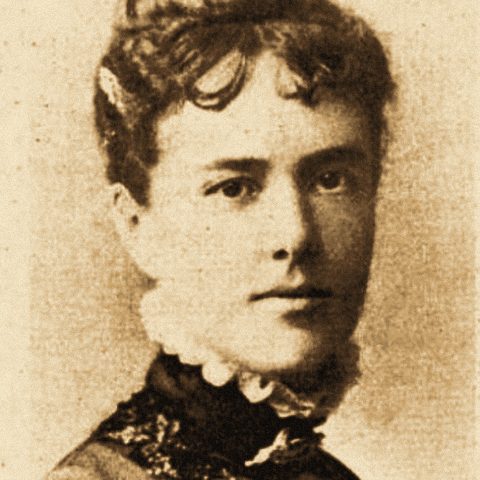
About the author
Mary Mills Patrick
1850 Canterbury – 1940 · American writer
Mary Mills Patrick was a college president and author.
If you like Sextus Empiricus and Greek Scepticism
More like this


Start with “The Historical Relations of Sextus Empiricus”
2 chapters free right now — no account. Your place follows you to iPhone and Android.