

2 chapters freeNo account needed.
Opens chapter 2 in the player · no sign-up needed
Structured as ten interconnected books, this foundational text explores how individuals should best live through the development of virtue and the pursuit of eudaimonia (flourishing).
Inside the book
- Free nowno account · 2 chapters
- —Introduction50 min
- 2Chapter 25 min
- Premium116 chapters · every book, 7 days free
- 3Chapter 32 min
- 4Book 1, Chapter 3: But to return from this digression8 min
- 5Chapter 53 min
- 6Chapter 64 min
- 7Chapter 75 min
- 8Chapter 82 min
- 9Chapter 95 min
- 10Chapter 101 min
- 11Chapter 112 min
- 12Chapter 125 min
- 13Chapter 133 min
- 14Chapter 147 min
- 15Chapter 152 min
- 16Book 2, Chapter 4: Next, we must examine what Virtue is2 min
- 17Chapter 174 min
- 18Chapter 182 min
- 19Chapter 196 min
- 20Chapter 203 min
- 21Chapter 213 min
- 22Chapter 224 min
- 23Chapter 233 min
- 24Chapter 241 min
- 25Chapter 254 min
- 26Chapter 265 min
- 27Chapter 272 min
- 28Chapter 287 min
- 29Chapter 291 min
- 30Chapter 303 min
- 31Chapter 313 min
- 32Chapter 326 min
- 33Chapter 332 min
- 34Chapter 348 min
- 35Chapter 353 min
- 36Book 4, Chapter 1: We will next speak of Liberality7 min
- 37Chapter 375 min
- 38Chapter 386 min
- 39Chapter 399 min
- 40Chapter 401 min
- 41Chapter 412 min
- 42Chapter 424 min
- 43Chapter 433 min
- 44Chapter 444 min
- 45Chapter 453 min
- 46Chapter 462 min
- 47Chapter 473 min
- 48Chapter 483 min
- 49Chapter 492 min
- 50Chapter 502 min
- 51Chapter 511 min
- 52Chapter 524 min
- 53Chapter 534 min
- 54Chapter 546 min
- 55Chapter 552 min
- 56Chapter 565 min
- 57Chapter 576 min
- 58Chapter 583 min
- 59Chapter 592 min
- 60Chapter 602 min
- 61Chapter 613 min
- 62Chapter 622 min
- 63Chapter 632 min
- 64Chapter 641 min
- 65Chapter 654 min
- 66Chapter 662 min
- 67Chapter 672 min
- 68Chapter 683 min
- 69Chapter 691 min
- 70Chapter 703 min
- 71Chapter 715 min
- 72Chapter 723 min
- 73Chapter 732 min
- 74Chapter 742 min
- 75Chapter 7512 min
- 76Chapter 763 min
- 77Chapter 775 min
- 78Chapter 787 min
- 79Chapter 795 min
- 80Chapter 803 min
- 81Chapter 814 min
- 82Chapter 828 min
- 83Chapter 832 min
- 84Chapter 8418 min
- 85Chapter 852 min
- 86Chapter 861 min
- 87Chapter 872 min
- 88Chapter 883 min
- 89Chapter 896 min
- 90Chapter 901 min
- 91Chapter 914 min
- 92Chapter 927 min
- 93Chapter 933 min
- 94Chapter 943 min
- 95Chapter 953 min
- 96Chapter 964 min
- 97Chapter 975 min
- 98Chapter 983 min
- 99Chapter 995 min
- 100Chapter 1004 min
- 101Chapter 1013 min
- 102Chapter 1025 min
- 103Chapter 1032 min
- 104Chapter 1042 min
- 105Chapter 1054 min
- 106Chapter 1066 min
- 107Chapter 1076 min
- 108Chapter 1083 min
- 109Chapter 1093 min
- 110Chapter 1102 min
- 111Chapter 1112 min
- 112Chapter 1128 min
- 113Chapter 1133 min
- 114Chapter 1149 min
- 115Chapter 1154 min
- 116Chapter 1169 min
- 117Chapter 1172 min
- 118Chapter 11811 min
The opening
Chapter 2
Every art, and every science reduced to a teachable form, and in like manner every action and moral choice, aims, it is thought, at some good: for which reason a common and by no means a bad description of the Chief Good is, "that which all things aim at."
Now there plainly is a difference in the Ends proposed: for in some cases they are acts of working, and in others certain works or tangible results beyond and beside the acts of working: and where there are certain Ends beyond and beside the actions, the works are in their nature better than the acts of working. Again, since actions and arts and sciences are many, the Ends likewise come to be many: of the healing art, for instance, health; of the ship-building art, a vessel; of the military art, victory; and of domestic management, wealth; are respectively the Ends.
And whatever of such actions, arts, or sciences range under some one faculty (as under that of horsemanship the art of making bridles, and all that are connected with the manufacture of horse-furniture in general; this itself again, and every action connected with war, under the military art; and in the same way others under others), in all such, the Ends of the master-arts are more choice-worthy than those ranging under them, because it is with a view to the former that the latter are pursued.
(And in this comparison it makes no difference whether the acts of working are themselves the Ends of the actions, or something further beside them, as is the case in the arts and sciences we have been just speaking of.)
Since then of all things which may be done there is some one End which we desire for its own sake, and with a view to which we desire everything else; and since we do not choose in all instances with a further End in view (for then men would go on without limit, and so the desire would be unsatisfied and fruitless), this plainly must be the Chief Good, i.e. the best thing of all.
Surely then, even with reference to actual life and conduct, the knowledge of it must have great weight; and like archers, with a mark in view, we shall be more likely to hit upon what is right: and if so, we ought to try to describe, in outline at least, what it is and of which of the sciences and faculties it is the End.
Now one would naturally suppose it to be the End of that which is most commanding and most inclusive: and to this description, πολιτικὴ plainly answers: for this it is that determines which of the sciences should be in the communities, and which kind individuals are to learn, and what degree of proficiency is to be required. Again; we see also ranging under this the most highly esteemed faculties, such as the art military, and that of domestic management, and Rhetoric. Well then, since this uses all the other practical sciences, and moreover lays down rules as to what men are to do, and from what to abstain, the End of this must include the Ends of the rest, and so must be The Good of Man. And grant that this is the same to the individual and to the community, yet surely that of the latter is plainly greater and more perfect to discover and preserve: for to do this even for a single individual were a matter for contentment; but to do it for a whole nation, and for communities generally, were more noble and godlike.
Such then are the objects proposed by our treatise, which is of the nature of πολιτικὴ: and I conceive I shall have spoken on them satisfactorily, if they be made as distinctly clear as the nature of the subject-matter will admit: for exactness must not be looked for in all discussions alike, any more than in all works of handicraft. Now the notions of nobleness and justice, with the examination of which πολιτικὴ is concerned, admit of variation and error to such a degree, that they are supposed by some to exist conventionally only, and not in the nature of things: but then, again, the things which are allowed to be goods admit of a similar error, because harm comes to many from them: for before now some have perished through wealth, and others through valour.
We must be content then, in speaking of such things and from such data, to set forth the truth roughly and in outline; in other words, since we are speaking of general matter and from general data, to draw also conclusions merely general. And in the same spirit should each person receive what we say: for the man of education will seek exactness so far in each subject as the nature of the thing admits, it being plainly much the same absurdity to put up with a mathematician who tries to persuade instead of proving, and to demand strict demonstrative reasoning of a Rhetorician.
Now each man judges well what he knows, and of these things he is a good judge: on each particular matter then he is a good judge who has been instructed in it, and in a general way the man of general mental cultivation.
Hence the young man is not a fit student of Moral Philosophy, for he has no experience in the actions of life, while all that is said presupposes and is concerned with these: and in the next place, since he is apt to follow the impulses of his passions, he will hear as though he heard not, and to no profit, the end in view being practice and not mere knowledge.
And I draw no distinction between young in years, and youthful in temper and disposition: the defect to which I allude being no direct result of the time, but of living at the beck and call of passion, and following each object as it rises. For to them that are such the knowledge comes to be unprofitable, as to those of imperfect self-control: but, to those who form their desires and act in accordance with reason, to have knowledge on these points must be very profitable.
Let thus much suffice by way of preface on these three points, the student, the spirit in which our observations should be received, and the object which we propose.
About the author
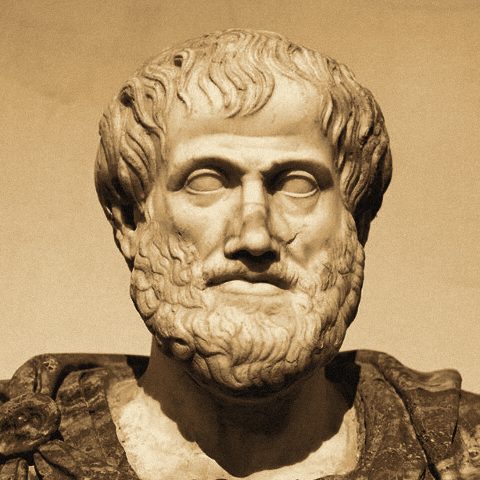
Aristotle
384 BC Stageira – 322 BC Chalcis · Greek philosopher
Aristotle was an ancient Greek philosopher and polymath. His writings span the natural sciences, philosophy, linguistics, economics, politics, psychology, and the arts.
More by Aristotle
Keep going with Aristotle


If you like The Nicomachean Ethics of Aristotle
More like this


Start with chapter 2
2 chapters free right now — no account. Your place follows you to iPhone and Android.