

2 chapters freeNo account needed.
Opens chapter 2 in the player · no sign-up needed
Progress and Poverty: An Inquiry into the Cause of Industrial Depressions and of Increase of Want with Increase of Wealth: The Remedy is an 1879 book by social theorist and economist Henry George.
Inside the book
- Free nowno account · 2 chapters
- —Introduction30 min
- 2Chapter 221 min
- Premium42 chapters · every book, 7 days free
- 3Part 1, Chapter 2: The Meaning of the Terms32 min
- 4Chapter 435 min
- 5Chapter 515 min
- 6Part 1, Chapter 5: The Real Functions of Capital15 min
- 7Chapter 720 min
- 8Part 2, Chapter 2: Inferences from Facts43 min
- 9Part 2, Chapter 3: Inferences from Analogy18 min
- 10Part 2, Chapter 4: Disproof of the Malthusian Theory21 min
- 11Chapter 1120 min
- 12Part 3, Chapter 2: Rent and the Law of Rent13 min
- 13Part 3, Chapter 3: Of Interest and the Cause of Interest28 min
- 14Chapter 1410 min
- 15Part 3, Chapter 5: The Law of Interest15 min
- 16Part 3, Chapter 6: Wages and the Law of Wages23 min
- 17Chapter 173 min
- 18Part 3, Chapter 8: The Statics of the Problem Thus Explained7 min
- 19Part 4, Chapter 1: The Dynamics of the Problem Yet to Seek3 min
- 20Chapter 2024 min
- 21Chapter 2119 min
- 22Chapter 2210 min
- 23Chapter 2332 min
- 24Chapter 2426 min
- 25Chapter 2550 min
- 26Part 6, Chapter 2: The True Remedy4 min
- 27Part 7, Chapter 1: The Injustice of Private Property in Land23 min
- 28Chapter 2818 min
- 29Part 7, Chapter 3: Claim of Land Owners to Compensation16 min
- 30Chapter 3028 min
- 31Part 7, Chapter 5: Of Property in Land in the United States18 min
- 32Chapter 329 min
- 33Chapter 339 min
- 34Chapter 3422 min
- 35Part 8, Chapter 4: Indorsements and Objections14 min
- 36Chapter 3611 min
- 37Chapter 3712 min
- 38Chapter 3811 min
- 39Chapter 3932 min
- 40Chapter 4024 min
- 41Part 10, Chapter 2: Differences in Civilization—To What Due28 min
- 42Part 10, Chapter 3: The Law of Human Progress37 min
- 43Part 10, Chapter 4: How Modern Civilization May Decline29 min
- 44Part 10, Chapter 5: The Central Truth34 min
The opening
Chapter 2
The Current Doctrine Of Wages—Its Insufficiency.
Reducing to its most compact form the problem we have set out to investigate, let us examine, step by step, the explanation which political economy, as now accepted by the best authority, gives of it.
The cause which produces poverty in the midst of advancing wealth is evidently the cause which exhibits itself in the tendency, everywhere recognized, of wages to a minimum. Let us, therefore, put our inquiry into this compact form:
Why, in spite of increase in productive power, do wages tend to a minimum which will give but a bare living?
The answer of the current political economy is, that wages are fixed by the ratio between the number of laborers and the amount of capital devoted to the employment of labor, and constantly tend to the lowest amount on which laborers will consent to live and reproduce, because the increase in the number of laborers tends naturally to follow and overtake any increase in capital. The increase of the divisor being thus held in check only by the possibilities of the quotient, the dividend may be increased to infinity without greater result.
In current thought this doctrine holds all but undisputed sway. It bears the indorsement of the very highest names among the cultivators of political economy, and though there have been attacks upon it, they are generally more formal than real. It is assumed by Buckle as the basis of his generalizations of universal history. It is taught in all, or nearly all, the great English and American universities, and is laid down in text-books which aim at leading the masses to reason correctly upon practical affairs, while it seems to harmonize with the new philosophy, which, having in a few years all but conquered the scientific world, is now rapidly permeating the general mind.
Thus entrenched in the upper regions of thought, it is in cruder form even more firmly rooted in what may be styled the lower. What gives to the fallacies of protection such a tenacious hold, in spite of their evident inconsistencies and absurdities, is the idea that the sum to be distributed in wages is in each community a fixed one, which the competition of "foreign labor" must still further subdivide. The same idea underlies most of the theories which aim at the abolition of interest and the restriction of competition, as the means whereby the share of the laborer in the general wealth can be increased; and it crops out in every direction among those who are not thoughtful enough to have any theories, as may be seen in the columns of newspapers and the debates of legislative bodies.
And yet, widely accepted and deeply rooted as it is, it seems to me that this theory does not tally with obvious facts. For, if wages depend upon the ratio between the amount of labor seeking employment and the amount of capital devoted to its employment, the relative scarcity or abundance of one factor must mean the relative abundance or scarcity of the other. Thus, capital must be relatively abundant where wages are high, and relatively scarce where wages are low. Now, as the capital used in paying wages must largely consist of the capital constantly seeking investment, the current rate of interest must be the measure of its relative abundance or scarcity. So, if it be true that wages depend upon the ratio between the amount of labor seeking employment and the capital devoted to its employment, then high wages, the mark of the relative scarcity of labor, must be accompanied by low interest, the mark of the relative abundance of capital, and reversely, low wages must be accompanied by high interest.
This is not the fact, but the contrary. Eliminating from interest the element of insurance, and regarding only interest proper, or the return for the use of capital, is it not a general truth that interest is high where and when wages are high, and low where and when wages are low? Both wages and interest have been higher in the United States than in England, in the Pacific than in the Atlantic States. Is it not a notorious fact that where labor flows for higher wages, capital also flows for higher interest? Is it not true that wherever there has been a general rise or fall in wages there has been at the same time a similar rise or fall in interest? In California, for instance, when wages were higher than anywhere else in the world, so also was interest higher. Wages and interest have in California gone down together. When common wages were $5 a day, the ordinary bank rate of interest was twenty-four per cent. per annum. Now that common wages are $2 or $2.50 a day, the ordinary bank rate is from ten to twelve per cent.
Now, this broad, general fact, that wages are higher in new countries, where capital is relatively scarce, than in old countries, where capital is relatively abundant, is too glaring to be ignored. And although very lightly touched upon, it is noticed by the expounders of the current political economy. The manner in which it is noticed proves what I say, that it is utterly inconsistent with the accepted theory of wages. For in explaining it such writers as Mill, Fawcett, and Price virtually give up the theory of wages upon which, in the same treatises, they formally insist. Though they declare that wages are fixed by the ratio between capital and laborers, they explain the higher wages and interest of new countries by the greater relative production of wealth. I shall hereafter show that this is not the fact, but that, on the contrary, the production of wealth is relatively larger in old and densely populated countries than in new and sparsely populated countries. But at present I merely wish to point out the inconsistency. For to say that the higher wages of new countries are due to greater proportionate production, is clearly to make the ratio with production, and not the ratio with capital, the determinator of wages.
Though this inconsistency does not seem to have been perceived by the class of writers to whom I refer, it has been noticed by one of the most logical of the expounders of the current political economy. Professor Cairnes endeavors in a very ingenious way to reconcile the fact with the theory, by assuming that in new countries, where industry is generally directed to the production of food and what in manufactures is called raw material, a much larger proportion of the capital used in production is devoted to the payment of wages than in older countries where a greater part must be expended in machinery and material, and thus, in the new country, though capital is scarcer, and interest is higher, the amount determined to the payment of wages is really larger, and wages are also higher. For instance, of $100,000 devoted in an old country to manufactures, $80,000 would probably be expended for buildings, machinery and the purchase of materials, leaving but $20,000 to be paid out in wages; whereas in a new country, of $30,000 devoted to agriculture, etc., not more than $5,000 would be required for tools, etc., leaving $25,000 to be distributed in wages. In this way it is explained that the wage fund may be comparatively large where capital is comparatively scarce, and high wages and high interest accompany each other.
In what follows I think I shall be able to show that this explanation is based upon a total misapprehension of the relations of labor to capital—a fundamental error as to the fund from which wages are drawn; but at present it is necessary only to point out that the connection in the fluctuation of wages and interest in the same countries and in the same branches of industry cannot thus be explained. In those alternations known as "good times" and "hard times" a brisk demand for labor and good wages is always accompanied by a brisk demand for capital and stiff rates of interest. While, when laborers cannot find employment and wages droop, there is always an accumulation of capital seeking investment at low rates. The present depression has been no less marked by want of employment and distress among the working classes than by the accumulation of unemployed capital in all the great centers, and by nominal rates of interest on undoubted security. Thus, under conditions which admit of no explanation consistent with the current theory, do we find high interest coinciding with high wages, and low interest with low wages—capital seemingly scarce when labor is scarce, and abundant when labor is abundant.
All these well known facts, which coincide with each other, point to a relation between wages and interest, but it is to a relation of conjunction, not of opposition. Evidently they are utterly inconsistent with the theory that wages are determined by the ratio between labor and capital, or any part of capital.
How, then, it will be asked, could such a theory arise? How is it that it has been accepted by a succession of economists, from the time of Adam Smith to the present day?
If we examine the reasoning by which in current treatises this theory of wages is supported, we see at once that it is not an induction from observed facts, but a deduction from a previously assumed theory—viz., that wages are drawn from capital. It being assumed that capital is the source of wages, it necessarily follows that the gross amount of wages must be limited by the amount of capital devoted to the employment of labor, and hence that the amount individual laborers can receive must be determined by the ratio between their number and the amount of capital existing for their recompense. This reasoning is valid, but the conclusion, as we have seen, does not correspond with the facts. The fault, therefore, must be in the premises. Let us see.
I am aware that the theorem that wages are drawn from capital is one of the most fundamental and apparently best settled of current political economy, and that it has been accepted as axiomatic by all the great thinkers who have devoted their powers to the elucidation of the science. Nevertheless, I think it can be demonstrated to be a fundamental error—the fruitful parent of a long series of errors, which vitiate most important practical conclusions. This demonstration I am about to attempt. It is necessary that it should be clear and conclusive, for a doctrine upon which so much important reasoning is based, which is supported by such a weight of authority, which is so plausible in itself, and is so liable to recur in different forms, cannot be safely brushed aside in a paragraph.
The proposition I shall endeavor to prove, is:
That wages, instead of being drawn from capital, are in reality drawn from the product of the labor for which they are paid.
Now, inasmuch as the current theory that wages are drawn from capital also holds that capital is reimbursed from production, this at first glance may seem a distinction without a difference—a mere change in terminology, to discuss which would be but to add to those unprofitable disputes that render so much that has been written upon politico-economic subjects as barren and worthless as the controversies of the various learned societies about the true reading of the inscription on the stone that Mr. Pickwick found. But that it is much more than a formal distinction will be apparent when it is considered that upon the difference between the two propositions are built up all the current theories as to the relations of capital and labor; that from it are deduced doctrines that, themselves regarded as axiomatic, bound, direct, and govern the ablest minds in the discussion of the most momentous questions.
For, upon the assumption that wages are drawn directly from capital, and not from the product of the labor, is based, not only the doctrine that wages depend upon the ratio between capital and labor, but the doctrine that industry is limited by capital—that capital must be accumulated before labor is employed, and labor cannot be employed except as capital is accumulated; the doctrine that every increase of capital gives or is capable of giving additional employment to industry; the doctrine that the conversion of circulating capital into fixed capital lessens the fund applicable to the maintenance of labor; the doctrine that more laborers can be employed at low than at high wages; the doctrine that capital applied to agriculture will maintain more laborers than if applied to manufactures; the doctrine that profits are high or low as wages are low or high, or that they depend upon the cost of the subsistence of laborers; together with such paradoxes as that a demand for commodities is not a demand for labor, or that certain commodities may be increased in cost by a reduction in wages or diminished in cost by an increase in wages.
In short, all the teachings of the current political economy, in the widest and most important part of its domain, are based more or less directly upon the assumption that labor is maintained and paid out of existing capital before the product which constitutes the ultimate object is secured. If it be shown that this is an error, and that on the contrary the maintenance and payment of labor do not even temporarily trench on capital, but are directly drawn from the product of the labor, then all this vast superstructure is left without support and must fall. And so likewise must fall the vulgar theories which also have their base in the belief that the sum to be distributed in wages is a fixed one, the individual shares in which must necessarily be decreased by an increase in the number of laborers.
The difference between the current theory and the one I advance is, in fact, similar to that between the mercantile theory of international exchanges and that with which Adam Smith supplanted it. Between the theory that commerce is the exchange of commodities for money, and the theory that it is the exchange of commodities for commodities, there may seem no real difference when it is remembered that the adherents of the mercantile theory did not assume that money had any other use than as it could be exchanged for commodities. Yet, in the practical application of these two theories, there arises all the difference between rigid governmental protection and free trade.
If I have said enough to show the reader the ultimate importance of the reasoning through which I am about to ask him to follow me, it will not be necessary to apologize in advance either for simplicity or prolixity. In arraigning a doctrine of such importance—a doctrine supported by such a weight of authority, it is necessary to be both clear and thorough.
Were it not for this I should be tempted to dismiss with a sentence the assumption that wages are drawn from capital. For all the vast superstructure which the current political economy builds upon this doctrine is in truth based upon a foundation which has been merely taken for granted, without the slightest attempt to distinguish the apparent from the real. Because wages are generally paid in money, and in many of the operations of production are paid before the product is fully completed, or can be utilized, it is inferred that wages are drawn from pre-existing capital, and, therefore, that industry is limited by capital—that is to say that labor cannot be employed until capital has been accumulated, and can only be employed to the extent that capital has been accumulated.
Yet in the very treatises in which the limitation of industry by capital is laid down without reservation and made the basis for the most important reasonings and elaborate theories, we are told that capital is stored-up or accumulated labor—"that part of wealth which is saved to assist future production." If we substitute for the word "capital" this definition of the word, the proposition carries its own refutation, for that labor cannot be employed until the results of labor are saved becomes too absurd for discussion.
Should we, however, with this reductio ad absurdum, attempt to close the argument, we should probably be met with the explanation, not that the first laborers were supplied by Providence with the capital necessary to set them to work, but that the proposition merely refers to a state of society in which production has become a complex operation.
But the fundamental truth, that in all economic reasoning must be firmly grasped, and never let go, is that society in its most highly developed form is but an elaboration of society in its rudest beginnings, and that principles obvious in the simpler relations of men are merely disguised and not abrogated or reversed by the more intricate relations that result from the division of labor and the use of complex tools and methods. The steam grist mill, with its complicated machinery exhibiting every diversity of motion, is simply what the rude stone mortar dug up from an ancient river bed was in its day—an instrument for grinding corn. And every man engaged in it, whether tossing wood into the furnace, running the engine, dressing stones, printing sacks or keeping books, is really devoting his labor to the same purpose that the pre-historic savage did when he used his mortar—the preparation of grain for human food.
And so, if we reduce to their lowest terms all the complex operations of modern production, we see that each individual who takes part in this infinitely subdivided and intricate network of production and exchange is really doing what the primeval man did when he climbed the trees for fruit or followed the receding tide for shellfish—endeavoring to obtain from nature by the exertion of his powers the satisfaction of his desires. If we keep this firmly in mind, if we look upon production as a whole—as the co-operation of all embraced in any of its great groups to satisfy the various desires of each, we plainly see that the reward each obtains for his exertions comes as truly and as directly from nature as the result of that exertion, as did that of the first man.
To illustrate: In the simplest state of which we can conceive, each man digs his own bait and catches his own fish. The advantages of the division of labor soon become apparent, and one digs bait while the others fish. Yet evidently the one who digs bait is in reality doing as much toward the catching of fish as any of those who actually take the fish. So when the advantages of canoes are discovered, and instead of all going a-fishing, one stays behind and makes and repairs canoes, the canoe-maker is in reality devoting his labor to the taking of fish as much as the actual fishermen, and the fish which he eats at night when the fishermen come home are as truly the product of his labor as of theirs. And thus when the division of labor is fairly inaugurated, and instead of each attempting to satisfy all of his wants by direct resort to nature, one fishes, another hunts, a third picks berries, a fourth gathers fruit, a fifth makes tools, a sixth builds huts, and a seventh prepares clothing—each one is to the extent he exchanges the direct product of his own labor for the direct product of the labor of others really applying his own labor to the production of the things he uses—is in effect satisfying his particular desires by the exertion of his particular powers; that is to say, what he receives he in reality produces. If he digs roots and exchanges them for venison, he is in effect as truly the procurer of the venison as though he had gone in chase of the deer and left the huntsman to dig his own roots. The common expression, "I made so and so," signifying "I earned so and so," or "I earned money with which I purchased so and so," is, economically speaking, not metaphorically but literally true. Earning is making.
Now, if we follow these principles, obvious enough in a simpler state of society, through the complexities of the state we call civilized, we shall see clearly that in every case in which labor is exchanged for commodities, production really precedes enjoyment; that wages are the earnings—that is to say, the makings of labor—not the advances of capital, and that the laborer who receives his wages in money (coined or printed, it may be, before his labor commenced) really receives in return for the addition his labor has made to the general stock of wealth, a draft upon that general stock, which he may utilize in any particular form of wealth that will best satisfy his desires; and that neither the money, which is but the draft, nor the particular form of wealth which he uses it to call for, represents advances of capital for his maintenance, but on the contrary represents the wealth, or a portion of the wealth, his labor has already added to the general stock.
Keeping these principles in view we see that the draughtsman, who, shut up in some dingy office on the banks of the Thames, is drawing the plans for a great marine engine, is in reality devoting his labor to the production of bread and meat as truly as though he were garnering the grain in California or swinging a lariat on a La Plata pampa; that he is as truly making his own clothing as though he were shearing sheep in Australia or weaving cloth in Paisley, and just as effectually producing the claret he drinks at dinner as though he gathered the grapes on the banks of the Garonne. The miner who, two thousand feet under ground in the heart of the Comstock, is digging out silver ore, is, in effect, by virtue of a thousand exchanges, harvesting crops in valleys five thousand feet nearer the earth's center; chasing the whale through Arctic icefields; plucking tobacco leaves in Virginia; picking coffee berries in Honduras; cutting sugar cane on the Hawaiian Islands; gathering cotton in Georgia or weaving it in Manchester or Lowell; making quaint wooden toys for his children in the Hartz Mountains; or plucking amid the green and gold of Los Angeles orchards the oranges which, when his shift is relieved, he will take home to his sick wife. The wages which he receives on Saturday night at the mouth of the shaft, what are they but the certificate to all the world that he has done these things—the primary exchange in the long series which transmutes his labor into the things he has really been laboring for?
All this is clear when looked at in this way; but to meet this fallacy in all its strongholds and lurking places we must change our investigation from the deductive to the inductive form. Let us now see, if, beginning with facts and tracing their relations, we arrive at the same conclusions as are thus obvious when, beginning with first principles, we trace their exemplification in complex facts.
About the author
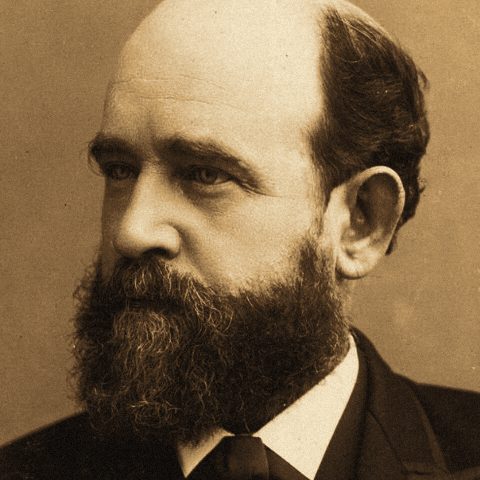
Henry George
1839 Philadelphia – 1897 New York City · American political economist and journalist
Henry George was an American political economist, social philosopher and journalist. His writing was popular in 19th-century America and sparked several reform movements of the Progressive Era.
- 1839Born, Philadelphia
- 1879Progress and Poverty
- 1897Died, New York City
If you like Progress and Poverty
More like this


Start with chapter 2
2 chapters free right now — no account. Your place follows you to iPhone and Android.