

2 chapters freeNo account needed.
Opens “Book 1: Of Providence (To Lucilius)” in the player · no sign-up needed
Minor Dialogues, Together With the Dialogue on Clemency collects the moral essays of the Roman Stoic philosopher Lucius Annaeus Seneca.
Inside the book
- Free nowno account · 2 chapters
- —Preface1 min
- 2Book 1: Of Providence (To Lucilius)37 min
- Premium21 chapters · every book, 7 days free
- 3Book 245 min
- 4Book 3: Of Anger, Book I (To Novatus)53 min
- 5Book 4, part 135 min
- 6Book 4, part 236 min
- 7Book 5, part 142 min
- 8Book 5, part 244 min
- 9Book 6: Of Consolation (To Marcia) (part 1)37 min
- 10Book 6: Of Consolation (To Marcia) (part 2)39 min
- 11Book 7, part 131 min
- 12Book 7, part 234 min
- 13Book 8: Of Leisure (To Serenus)17 min
- 14Book 9, part 133 min
- 15Book 9, part 235 min
- 16Book 10, part 128 min
- 17Book 10, part 228 min
- 18Book 11, part 129 min
- 19Book 11, part 229 min
- 20Book 12: Of Consolation (To Polybius)48 min
- 21Book 1, part 130 min
- 22Book 1, part 232 min
- 23Book 2: On Clemency (To Nero Caesar)14 min
The opening
Book 1: Of Providence (To Lucilius)
I. You have asked me, Lucilius, why, if the world be ruled by providence, so many evils befall good men? The answer to this would be more conveniently given in the course of this work, after we have proved that providence governs the universe, and that God is amongst us: but, since you wish me to deal with one point apart from the whole, and to answer one replication before the main action has been decided, I will do what is not difficult, and plead the cause of the gods.
At the present time it is superfluous to point out that it is not without some guardian that so great a work maintains its position, that the assemblage and movements of the stars do not depend upon accidental impulses, or that objects whose motion is regulated by chance often fall into confusion and soon stumble, whereas this swift and safe movement goes on, governed by eternal law, bearing with it so many things both on sea and land, so many most brilliant lights shining in order in the skies; that this regularity does not belong to matter moving at random, and that particles brought together by chance could not arrange themselves with such art as to make the heaviest weight, that of the earth, remain unmoved, and behold the flight of the heavens as they hasten round it, to make the seas pour into the valleys and so temper the climate of the land, without any sensible increase from the rivers which flow into them, or to cause huge growths to proceed from minute seeds.
Even those phenomena which appear to be confused and irregular, I mean showers of rain and clouds, the rush of lightning from the heavens, fire that pours from the riven peaks of mountains, quakings of the trembling earth, and everything else which is produced on earth by the unquiet element in the universe, do not come to pass without reason, though they do so suddenly: but they also have their causes, as also have those things which excite our wonder by the strangeness of their position, such as warm springs amidst the waves of the sea, and new islands that spring up in the wide ocean. Moreover, any one who has watched how the shore is laid bare by the retreat of the sea into itself, and how within a short time it is again covered, will believe that it is in obedience to some hidden law of change that the waves are at one time contracted and driven inwards, at another burst forth and regain their bed with a strong current, since all the while they wax in regular proportion, and come up at their appointed day and hour greater or less, according as the moon, at whose pleasure the ocean flows, draws them.
Let these matters be set aside for discussion at their own proper season, but I, since you do not doubt the existence of providence but complain of it, will on that account more readily reconcile you to gods who are most excellent to excellent men: for indeed the nature of things does not ever permit good to be injured by good. Between good men and the gods there is a friendship which is brought about by virtue— friendship do I say? nay, rather relationship and likeness, since the good man differs from a god in time alone, being his pupil and rival and true offspring, whom his glorious parent trains more severely than other men, insisting sternly on virtuous conduct, just as strict fathers do. When therefore you see men who are good and acceptable to the gods toiling, sweating, painfully struggling upwards, while bad men run riot and are steeped in pleasures, reflect that modesty pleases us in our sons, and forwardness in our house-born slave-boys; that the former are held in check by a somewhat stern rule, whereas the boldness of the latter is encouraged. Be thou sure that God acts in like manner: He does not pet the good man: He tries him, hardens him, and fits him for Himself.
II. Why do many things turn out badly for good men? Why, no evil can befall a good man: contraries cannot combine. Just as so many rivers, so many showers of rain from the clouds, such a number of medicinal springs, do not alter the taste of the sea, indeed, do not so much as soften it, so the pressure of adversity does not affect the mind of a brave man; for the mind of a brave man maintains its balance and throws its own complexion over all that takes place, because it is more powerful than any external circumstances. I do not say that he does not feel them, but he conquers them, and on occasion calmly and tranquilly rises superior to their attacks, holding all misfortunes to be trials of his own firmness. Yet who is there who, provided he be a man and have honourable ambition, does not long for due employment, and is not eager to do his duty in spite of danger? Is there any hard-working man to whom idleness is not a punishment?
We see athletes, who study only their bodily strength, engage in contests with the strongest of men, and insist that those who train them for the arena should put out their whole strength when practising with them: they endure blows and maltreatment, and, if they cannot find any single person who is their match, they engage with several at once: their strength and courage droop without an antagonist: they can only prove how great and how mighty it is by proving how much they can endure. You should know that good men ought to act in like manner, so as not to fear troubles and difficulties, nor to lament their hard fate, to take in good part whatever befalls them, and force it to become a blessing to them. It does not matter what you bear, but how you bear it. Do you not see how differently fathers and mothers indulge their children? how the former urge them to begin their tasks betimes, will not suffer them to be idle even on holidays, and exercise them till they perspire, and sometimes till they shed tears—while their mothers want to cuddle them in their laps, and keep them out of the sun, and never wish them to be vexed, or to cry, or to work.
God bears a fatherly mind towards good men, and loves them in a manly spirit. "Let them," says He, "be exercised by labours, sufferings, and losses, that so they may gather true strength." Those who are surfeited with ease break down not only with labour, but with mere motion and by their own weight. Unbroken prosperity cannot bear a single blow; but he who has waged an unceasing strife with his misfortunes has gained a thicker skin by his sufferings, yields to no disaster, and even though he fall yet fights on his knee. Do you wonder that God, who so loves the good, who would have them attain the highest goodness and pre-eminence, should appoint fortune to be their adversary? I should not be surprised if the gods sometimes experience a wish to behold great men struggling with some misfortune. We sometimes are delighted when a youth of steady courage receives on his spear the wild beast that attacks him; or when he meets the charge of a lion without flinching; and the more eminent the man is who acts thus, the more attractive is the sight: yet these are not matters which can attract the attention of the gods, but are mere pastime and diversions of human frivolity.
Behold a sight worthy to be viewed by a god interested in his own work, behold a pair worthy of a god, a brave man matched with evil fortune, especially if he himself has given the challenge. I say, I do not know what nobler spectacle Jupiter could find on earth, should he turn his eyes thither, than that of Cato, after his party had more than once been defeated, still standing upright amid the ruins of the commonwealth. Quoth he, "What though all be fallen into one man's power, though the land be guarded by his legions, the sea by his fleets, though Caesar's soldiers beset the city gate? Cato has a way out of it: with one hand he will open a wide path to freedom; his sword, which he has borne unstained by disgrace and innocent of crime even in a civil war, will still perform good and noble deeds; it will give to Cato that freedom which it could not give to his country. Begin, my soul, the work which thou so long hast contemplated, snatch thyself away from the world of man.
Already Petreius and Juba have met and fallen, each slain by the other's hand—a brave and noble compact with fate, yet not one befitting my greatness: it is as disgraceful for Cato to beg his death of any one as it would be for him to beg his life."
It is clear to me that the gods must have looked on with great joy, while that man, his own most ruthless avenger, took thought for the safety of others and arranged the escape of those who departed, while even on his last night he pursued his studies, while he drove the sword into his sacred breast, while he tore forth his vitals and laid his hand upon that most holy life which was unworthy to be defiled by steel. This, I am inclined to think, was the reason that his wound was not well-aimed and mortal: the gods were not satisfied with seeing Cato die once: his courage was kept in action and recalled to the stage, that it might display itself in a more difficult part: for it needs a greater mind to return a second time to death. How could they fail to view their pupil with interest when leaving his life by such a noble and memorable departure? Men are raised to the level of the gods by a death which is admired even by those who fear them.
III. However, as my argument proceeds, I shall prove that what appear to be evils are not so; for the present I say this, that what you call hard measure, misfortunes, and things against which we ought to pray, are really to the advantage, firstly, of those to whom they happen, and secondly, of all mankind, for whom the gods care more than for individuals; and next, that these evils befall them with their own good will, and that men deserve to endure misfortunes, if they are unwilling to receive them. To this I shall add, that misfortunes proceed thus by destiny, and that they befall good men by the same law which makes them good. After this, I shall prevail upon you never to pity any good man; for though he may be called unhappy, he cannot be so.
Of all these propositions that which I have stated first appears the most difficult to prove. I mean, that the things which we dread and shudder at are to the advantage of those to whom they happen. "Is it," say you, "to their advantage to be driven into exile, to be brought to want, to carry out to burial their children and wife, to be publicly disgraced, to lose their health?" Yes! if you are surprised at these being to any man's advantage, you will also be surprised at any man being benefited by the knife and cautery, or by hunger and thirst as well. Yet if you consider that some men, in order to be cured, have their bones scraped, and pieces of them extracted, that their veins are pulled out and that some have limbs cut off, which could not remain in their place without ruin to the whole body, you will allow me to prove to you this also, that some misfortunes are for the good of those to whom they happen, just as much, by Hercules, as some things which are praised and sought after are harmful to those who enjoy them like indigestions and drunkenness and other matters which kill us through pleasure.
Among many grand sayings of our Demetrius is this, which I have but just heard, and which still rings and thrills in my ears: "No one," said he, "seems to me more unhappy than the man whom no misfortune has ever befallen." He never has had an opportunity of testing himself; though everything has happened to him according to his wish, nay, even before he has formed a wish, yet the gods have judged him unfavourably; he has never been deemed worthy to conquer ill fortune, which avoids the greatest cowards, as though it said, "Why should I take that man for my antagonist? He will straightway lay down his arms: I shall not need all my strength against him: he will be put to flight by a mere menace: he dares not even face me; let me look around for some other with whom I may fight hand to hand: I blush to join battle with one who is prepared to be beaten." A gladiator deems it a disgrace to be matched with an inferior, and knows that to win without danger is to win without glory. Just so Fortune; she seeks out the bravest to match herself with, passes over some with disdain, and makes for the most unyielding and upright of men, to exert her strength against them.
She tried Mucius fire, Fabricius by poverty, Rutilius by exile, Regulus by torture, Socrates by poison, Cato by death: it is ill fortune alone that discovers these glorious examples. Was Mucius unhappy, because he grasped the enemy's fire with his right hand, and of his own accord paid the penalty of his mistake? because he overcame the King with his hand when it was burned, though he could not when it held a sword? Would he have been happier, if he had warmed his hand in his mistress's bosom? Was Fabricius unhappy, because when the state could spare him, he dug his own land? because he waged war against riches as keenly as against Pyrrhus? because he supped beside his hearth off the very roots and herbs which he himself, though an old man, and one who had enjoyed a triumph, had grubbed up while clearing his field of weeds? What then? would he have been happier if he had gorged himself with fishes from distant shores, and birds caught in foreign lands? if he had roused the torpor of his queasy stomach with shellfish from the upper and the lower sea? if he had piled a great heap of fruits round game of the first head, which many huntsmen had been killed in capturing?
Was Rutilius unhappy, because those who condemned him will have to plead their cause for all ages? because he endured the loss of his country more composedly than that of his banishment? because he was the only man who refused anything to Sulla the dictator, and when recalled from exile all but went further away and banished himself still more. "Let those," said he, "whom thy fortunate reign catches at Rome, see to the Forum drenched with blood, and the heads of Senators above the Pool of Servilius—the place where the victims of Sulla's proscriptions were stripped—the bands of assassins roaming at large through the city, and many thousands of Roman citizens slaughtered in one place, after, nay, by means of a promise of quarter. Let those who are unable to go into exile behold these things." Well! is Lucius Sulla happy, because when he comes down into the Forum room is made for him with sword-strokes, because he allows the heads of consulars to be shown to him, and counts out the price of blood through the quaestor and the state exchequer? And this, this was the man who passed the Lex Cornelia!
Let us now come to Regulus: what injury did fortune do him when she made him an example of good faith, an example of endurance? They pierce his skin with nails: wherever he leans his weary body, it rests on a wound; his eyes are fixed for ever open; the greater his sufferings, the greater is his glory. Would you know how far he is from regretting that he valued his honour at such a price? heal his wounds and send him again into the senate-house; he will give the same advice. So, then, you think Maecenas a happier man, who when troubled by love, and weeping at the daily repulses of his ill-natured wife, sought for sleep by listening to distant strains of music? Though he drug himself with wine, divert himself with the sound of falling waters, and distract his troubled thoughts with a thousand pleasures, yet Maecenas will no more sleep on his down cushions than Regulus on the rack. Yet it consoles the latter that he suffers for the sake of honour, and he looks away from his torments to their cause: whilst the other, jaded with pleasures and sick with over-enjoyment, is more hurt by the cause of his sufferings than by the sufferings themselves.
Vice has not so utterly taken possession of the human race that, if men were allowed to choose their destiny, there can be any doubt but that more would choose to be Reguluses than to be Maecenases: or if there were any one who dared to say that he would prefer to be born Maecenas than Regulus that man, whether he says so or not, would rather have been Terentia (than Cicero).
Do you consider Socrates to have been badly used, because he took that draught which the state assigned to him as though it were a charm to make him immortal, and argued about death until death itself? Was he ill treated, because his blood froze and the current of his veins gradually stopped as the chill of death crept over them? How much more is this man to be envied than he who is served on precious stones, whose drink a creature trained to every vice, a eunuch or much the same, cools with snow in a golden cup? Such men as these bring up again all that they drink, in misery and disgust at the taste of their own bile, while Socrates cheerfully and willingly drains his poison. As for Cato, enough has been said, and all men must agree that the highest happiness was reached by one who was chosen by Nature herself as worthy to contend with all her terrors: "The enmity," says she, "of the powerful is grievous, therefore let him be opposed at once by Pompeius, Caesar, and Crassus: it is grievous, when a candidate for public offices, to be defeated by one's inferiors; therefore let him be defeated by Vatinius: it is grievous to take part in civil wars, therefore let him fight in every part of the world for the good cause with equal obstinacy and ill-luck: it is grievous to lay hands upon one's self, therefore let him do so. What shall I gain by this? That all men may know that these things, which I have deemed Cato worthy to undergo, are not real evils."
IV. Prosperity comes to the mob, and to low-minded men as well as to great ones; but it is the privilege of great men alone to send under the yoke the disasters and terrors of mortal life: whereas to be always prosperous, and to pass through life without a twinge of mental distress, is to remain ignorant of one half of nature. You are a great man; but how am I to know it, if fortune gives you no opportunity of showing your virtue? You have entered the arena of the Olympic games, but no one else has done so: you have the crown, but not the victory: I do not congratulate you as I would a brave man, but as one who has obtained a consulship or praetorship. You have gained dignity. I may say the same of a good man, if troublesome circumstances have never given him a single opportunity of displaying the strength of his mind. I think you unhappy because you never have been unhappy: you have passed through your life without meeting an antagonist: no one will know your powers, not even you yourself.
For a man cannot know himself without a trial: no one ever learnt what he could do without putting himself to the test; for which reason many have of their own free will exposed themselves to misfortunes which no longer came in their way, and have sought for an opportunity of making their virtue, which otherwise would have been lost in darkness, shine before the world. Great men, I say, often rejoice at crosses of fortune just as brave soldiers do at wars. I remember to have heard Triumphus, who was a gladiator in the reign of Tiberius Caesar, complaining about the scarcity of prizes; "What a glorious time," said he, "is past." Valour is greedy of danger, and thinks only of whither it strives to go, not of what it will suffer, since even what it will suffer is part of its glory. Soldiers pride themselves on their wounds, they joyously display their blood flowing over their breastplate. Though those who return unwounded from battle may have done as bravely, yet he who returns wounded is more admired.
God, I say, favours those whom He wishes to enjoy the greatest honours, whenever He affords them the means of performing some exploit with spirit and courage, something which is not easily to be accomplished: you can judge of a pilot in a storm, of a soldier in a battle. How can I know with how great a spirit you could endure poverty, if you overflow with riches? How can I tell with how great firmness you could bear up against disgrace, dishonour, and public hatred, if you grow old to the sound of applause, if popular favour cannot be alienated from you, and seems to flow to you by the natural bent of men's minds? How can I know how calmly you would endure to be childless, if you see all your children around you? I have heard what you said when you were consoling others: then I should have seen whether you could have consoled yourself, whether you could have forbidden yourself to grieve. Do not, I beg you, dread those things which the immortal gods apply to our minds like spurs: misfortune is virtue's opportunity.
Those men may justly be called unhappy who are stupified with excess of enjoyment, whom sluggish contentment keeps as it were becalmed in a quiet sea: whatever befalls them will come strange to them. Misfortunes press hardest on those who are unacquainted with them: the yoke feels heavy to the tender neck. The recruit turns pale at the thought of a wound: the veteran, who knows that he has often won the victory after losing blood, looks boldly at his own flowing gore. In like manner God hardens, reviews, and exercises those whom He tests and loves: those whom He seems to indulge and spare, He is keeping out of condition to meet their coming misfortunes: for you are mistaken if you suppose that any one is exempt from misfortune: he who has long prospered will have his share some day; those who seem to have been spared them have only had them put off. Why does God afflict the best of men with ill-health, or sorrow, or other troubles?
Because in the army the most hazardous services are assigned to the bravest soldiers: a general sends his choicest troops to attack the enemy in a midnight ambuscade, to reconnoitre his line of march, or to drive the hostile garrisons from their strong places. No one of these men says as he begins his march, "The general has dealt hardly with me," but "He has judged well of me." Let those who are bidden to suffer what makes the weak and cowardly weep, say likewise, "God has thought us worthy subjects on whom to try how much suffering human nature can endure." Avoid luxury, avoid effeminate enjoyment, by which men's minds are softened, and in which, unless something occurs to remind them of the common lot of humanity, they lie unconscious, as though plunged in continual drunkenness. He whom glazed windows have always guarded from the wind, whose feet are warmed by constantly renewed fomentations, whose dining-room is heated by hot air beneath the floor and spread through the walls, cannot meet the gentlest breeze without danger.
While all excesses are hurtful, excess of comfort is the most hurtful of all; it affects the brain; it leads men's minds into vain imaginings; it spreads a thick cloud over the boundaries of truth and falsehood. Is it not better, with virtue by one's side, to endure continual misfortune, than to burst with an endless surfeit of good things? It is the overloaded stomach that is rent asunder: death treats starvation more gently. The gods deal with good men according to the same rule as schoolmasters with their pupils, who exact most labour from those of whom they have the surest hopes. Do you imagine that the Lacedaemonians, who test the mettle of their children by public flogging, do not love them? Their own fathers call upon them to endure the strokes of the rod bravely, and when they are torn and half dead, ask them to offer their wounded skin to receive fresh wounds. Why then should we wonder if God tries noble spirits severely? There can be no easy proof of virtue. Fortune lashes and mangles us: well, let us endure it: it is not cruelty, it is a struggle, in which the oftener we engage the braver we shall become.
The strongest part of the body is that which is exercised by the most frequent use: we must entrust ourselves to fortune to be hardened by her against herself: by degrees she will make us a match for herself. Familiarity with danger leads us to despise it. Thus the bodies of sailors are hardened by endurance of the sea, and the hands of farmers by work; the arms of soldiers are powerful to hurl darts, the legs of runners are active: that part of each man which he exercises is the strongest: so by endurance the mind becomes able to despise the power of misfortunes. You may see what endurance might effect in us if you observe what labour does among tribes that are naked and rendered stronger by want. Look at all the nations that dwell beyond the Roman Empire: I mean the Germans and all the nomad tribes that war against us along the Danube. They suffer from eternal winter, and a dismal climate, the barren soil grudges them sustenance, they keep off the rain with leaves or thatch, they bound across frozen marshes, and hunt wild beasts for food. Do you think them unhappy?
There is no unhappiness in what use has made part of one's nature: by degrees men find pleasure in doing what they were first driven to do by necessity. They have no homes and no resting-places save those which weariness appoints them for the day; their food, though coarse, yet must be sought with their own hands; the harshness of the climate is terrible, and their bodies are unclothed. This, which you think a hardship, is the mode of life of all these races: how then can you wonder at good men being shaken, in order that they may be strengthened? No tree which the wind does not often blow against is firm and strong; for it is stiffened by the very act of being shaken, and plants its roots more securely: those which grow in a sheltered valley are brittle: and so it is to the advantage of good men, and causes them to be undismayed, that they should live much amidst alarms, and learn to bear with patience what is not evil save to him who endures it ill.
V. Add to this that it is to the advantage of every one that the best men should, so to speak, be on active service and perform labours: God has the same purpose as the wise man, that is, to prove that the things which the herd covets and dreads are neither good nor bad in themselves. If, however, He only bestows them upon good men, it will be evident that they are good things, and bad, if He only inflicts them upon bad men. Blindness would be execrable if no one lost his eyes except those who deserve to have them pulled out; therefore let Appius and Metellus be doomed to darkness. Riches are not a good thing: therefore let Elius the pander possess them, that men who have consecrated money in the temple, may see the same in the brothel: for by no means can God discredit objects of desire so effectually as by bestowing them upon the worst of men, and removing them from the best.
"But," you say, "it is unjust that a good man should be enfeebled, or transfixed, or chained, while bad men swagger at large with a whole skin." What! is it not unjust that brave men should bear arms, pass the night in camps, and stand on guard along the rampart with their wounds still bandaged, while within the city eunuchs and professional profligates live at their ease? what? is it not unjust that maidens of the highest birth should be roused at night to perform Divine service, while fallen women enjoy the soundest sleep? Labour calls for the best man: the senate often passes the whole day in debate, while at the same time every scoundrel either amuses his leisure in the Campus Martius, or lurks in a tavern, or passes his time in some pleasant society. The same thing happens in this great commonwealth (of the world): good men labour, spend and are spent, and that too of their own free will; they are not dragged along by fortune, but follow her and take equal steps with her; if they knew how, they would outstrip her. I remember, also, to have heard this spirited saying of that stoutest-hearted of men, Demetrius.
"Ye immortal Gods," said he, "the only complaint which I have to make of you is that you did not make your will known to me earlier; for then I would sooner have gone into that state of life to which I now have been called. Do you wish to take my children? it was for you that I brought them up. Do you wish to take some part of my body? take it: it is no great thing that I am offering you, I shall soon have done with the whole of it. Do you wish for my life? why should I hesitate to return to you what you gave me? whatever you ask you shall receive with my good will: nay, I would rather give it than be forced to hand it over to you: what need had you to take away what you did? you might have received it from me: yet even as it is you cannot take anything from me, because you cannot rob a man unless he resists."
I am constrained to nothing, I suffer nothing against my will, nor am I God's slave, but his willing follower, and so much the more because I know that everything is ordained and proceeds according to a law that endures for ever. The fates guide us, and the length of every man's days is decided at the first hour of his birth: every cause depends upon some earlier cause: one long chain of destiny decides all things, public or private. Wherefore, everything must be patiently endured, because events do not fall in our way, as we imagine, but come by a regular law. It has long ago been settled at what you should rejoice and at what you should weep, and although the lives of individual men appear to differ from one another in a great variety of particulars, yet the sum total comes to one and the same thing: we soon perish, and the gifts which we receive soon perish. Why, then, should we be angry? why should we lament? we are prepared for our fate: let nature deal as she will with her own bodies; let us be cheerful whatever befalls, and stoutly reflect that it is not anything of our own that perishes.
What is the duty of a good man? to submit himself to fate: it is a great consolation to be swept away together with the entire universe: whatever law is laid upon us that thus we must live and thus we must die, is laid upon the gods also: one unchangeable stream bears along men and gods alike: the creator and ruler of the universe himself, though he has given laws to the fates, yet is guided by them: he always obeys, he only once commanded. "But why was God so unjust in His distribution of fate, as to assign poverty, wounds, and untimely deaths to good men?" The workman cannot alter his materials: this is their nature. Some qualities cannot be separated from some others: they cling together; are indivisible. Dull minds, tending to sleep or to a waking state exactly like sleep, are composed of sluggish elements: it requires stronger stuff to form a man meriting careful description. His course will not be straightforward; he must go upwards and downwards, be tossed about, and guide his vessel through troubled waters: he must make his way in spite of fortune: he will meet with much that is hard which he must soften, much that is rough that he must make smooth.
Fire tries gold, misfortune tries brave men. See how high virtue has to climb: you may be sure that it has no safe path to tread.
"Steep is the path at first: the steeds, though strong, Fresh from their rest, can hardly crawl along; The middle part lies through the topmost sky, Whence oft, as I the earth and sea descry, I shudder, terrors through my bosom thrill. The ending of the path is sheer down hill, And needs the careful guidance of the rein, For ever when I sink beneath the main, Old Tethys trembles in her depths below Lest headlong down upon her I should go."
When the spirited youth heard this, he said, "I have no fault to find with the road: I will mount it, it is worth while to go through these places, even though one fall." His father did not cease from trying to scare his brave spirit with terrors:—
"Then, too, that thou may'st hold thy course aright, And neither turn aside to left nor right. Straight through the Bull's fell horns thy path must go. Through the fierce Lion, and the Archer's bow."
After this Phaethon says:—
"Harness the chariot which you yield to me,
I am encouraged by these things with which you think to scare me: I long to stand where the Sun himself trembles to stand." It is the part of grovellers and cowards to follow the safe track; courage loves a lofty path.
VI. "Yet, why does God permit evil to happen to good men?" He does not permit it: he takes away from them all evils, such as crimes and scandalous wickedness, daring thoughts, grasping schemes, blind lusts, and avarice coveting its neighbour's goods. He protects and saves them. Does any one besides this demand that God should look after the baggage of good men also? Why, they themselves leave the care of this to God: they scorn external accessories. Democritus forswore riches, holding them to be a burden to a virtuous mind: what wonder then, if God permits that to happen to a good man, which a good man sometimes chooses should happen to himself? Good men, you say, lose their children: why should they not, since sometimes they even put them to death? They are banished: why should they not be, since sometimes they leave their country of their own free will, never to return? They are slain: why not, since sometimes they choose to lay violent hands on themselves? Why do they suffer certain miseries? it is that they may teach others how to do so. They are born as patterns. Conceive, therefore, that God says:—"You, who have chosen righteousness, what complaint can you make of me?
I have encompassed other men with unreal good things, and have deceived their inane minds as it were by a long and misleading dream: I have bedecked them with gold, silver, and ivory, but within them there is no good thing. Those men whom you regard as fortunate, if you could see, not their outward show, but their hidden life, are really unhappy, mean, and base, ornamented on the outside like the walls of their houses: that good fortune of theirs is not sound and genuine: it is only a veneer, and that a thin one. As long, therefore, as they can stand upright and display themselves as they choose, they shine and impose upon one; when something occurs to shake and unmask them, we see how deep and real a rottenness was hidden by that factitious magnificence. To you I have given sure and lasting good things, which become greater and better the more one turns them over and views them on every side: I have granted to you to scorn danger, to disdain passion. You do not shine outwardly, all your good qualities are turned inwards; even so does the world neglect what lies without it, and rejoices in the contemplation of itself.
I have placed every good thing within your own breasts: it is your good fortune not to need any good fortune. 'Yet many things befall you which are sad, dreadful, hard to be borne.' Well, as I have not been able to remove these from your path, I have given your minds strength to combat all: bear them bravely. In this you can surpass God himself; He is beyond suffering evil: you are above it. Despise poverty; no man lives as poor as he was born: despise pain; either it will cease or you will cease: despise death; it either ends you or takes you elsewhere: despise fortune; I have given her no weapon that can reach the mind. Above all, I have taken care that no one should hold you captive against your will: the way of escape lies open before you: if you do not choose to fight, you may fly. For this reason, of all those matters which I have deemed essential for you, I have made nothing easier for you than to die. I have set man's life as it were on a mountain side: it soon slips down. Do but watch, and you will see how short and how ready a path leads to freedom.
I have not imposed such long delays upon those who quit the world as upon those who enter it: were it not so, fortune would hold a wide dominion over you, if a man died as slowly as he is born. Let all time, let every place teach you, how simple it is to renounce nature, and to fling back her gifts to her: before the altar itself and during the solemn rites of sacrifice, while life is being prayed for, learn how to die. Fat oxen fall dead with a tiny wound; a blow from a man's hand fells animals of great strength: the sutures of the neck are severed by a thin blade, and when the joint which connects the head and neck is cut, all that great mass falls. The breath of life is not deep seated, nor only to be let forth by steel—the vitals need not be searched throughout by plunging a sword among them to the hilt: death lies near the surface, I have not appointed any particular spot for these blows—the body may be pierced wherever you please.
That very act which is called dying, by which the breath of life leaves the body, is too short for you to be able to estimate its quickness: whether a knot crushes the windpipe, or water stops your breathing: whether you fall headlong from a height and perish upon the hard ground below, or a mouthful of fire checks the drawing of your breath—whatever it is, it acts swiftly. Do you not blush to spend so long a time in dreading what takes so short a time to do?"
honestior opposed to the gladiator—the loftier the station of the combatant. The Gracchus of Juvenal, Sat. ii. and viii., illustrates, the passage.
par, a technical term in the language of sport (worthy of such a spectator).
viderint—Let them see to it: it is no matter of mine.
That is, to triumph over. "Two spears were set upright... and a third was fastened across them at the top; and through this gateway the vanquished army marched out, as a token that they had been conquered in war, and owed their lives to the enemy's mercy. It was no peculiar insult devised for this occasion, but a common usage, so far as appears, in similar cases; like the modern ceremony of piling arms when a garrison or army surrender themselves as prisoners of war."— Arnold's History of Rome, ch. xxxi.
He was a "mirmillo," a kind of gladiator who was armed with a Gaulish helmet.
e lorica.
The lines occur in Ovid's Metamorphoses, ii. 63. Phoebus is telling Phaethon how to drive the chariot of the Sun.
Compare Walter Scott: "All... must have felt that but for the dictates of religion, or the natural recoil of the mind from the idea of dissolution, there have been times when they would have been willing to throw away life as a child does a broken toy. I am sure I know one who has often felt so. O God! what are we?—Lords of nature?—Why, a tile drops from a house-top, which an elephant would not feel more than a sheet of pasteboard, and there lies his lordship. Or something of inconceivably minute origin, the pressure of a bone, or the inflammation of a particle of the brain takes place, and the emblem of the Deity destroys himself or some one else. We hold our health and our reason on terms slighter than any one would desire, were it in their choice, to hold an Irish cabin."—Lockhart's Life of Sir Walter Scott, vol. vii., p. 11.
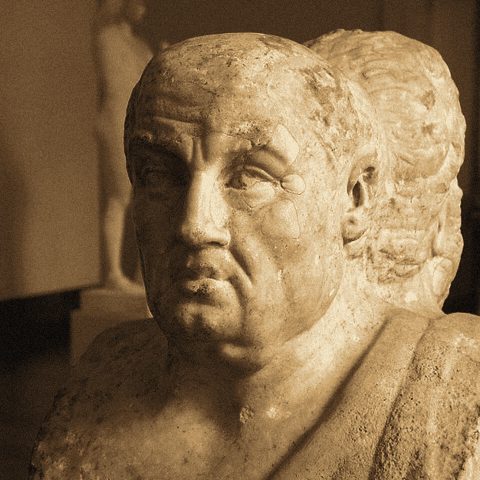
About the author
Lucius Annaeus Seneca
65 Rome · Roman Stoic philosopher, statesman and dramatist
Lucius Annaeus Seneca the Younger, usually known mononymously as Seneca, was a Stoic philosopher of Ancient Rome, a statesman, a dramatist, and in one work (Apocolocyntosis) a satirist from the post-Augustan age of Latin literature.
If you like Minor Dialogues, Together With the Dialogue on Clemency
More like this


Start with “Book 1: Of Providence (To Lucilius)”
2 chapters free right now — no account. Your place follows you to iPhone and Android.