

2 chapters freeNo account needed.
Opens “Of the Things Which Are in Our Power and Not in Our Power” in the player · no sign-up needed
Though originally eight books, only four survive complete today, presenting a practical philosophy centered on living well through mastering one's judgments and will.
Inside the book
- Free nowno account · 2 chapters
- —Introduction6 min
- 2Of the Things Which Are in Our Power and Not in Our Power3 min
- Premium57 chapters · every book, 7 days free
- 3Chapter 31 min
- 4All Men to the Rest2 min
- 5Of Progress or Improvement6 min
- 6Against the Academics1 min
- 7Of Providence7 min
- 8Of Contentment5 min
- 9How Everything May Be Done Acceptably to the Gods1 min
- 10What Philosophy Promises2 min
- 11Chapter 113 min
- 12How We Should Behave to Tyrants4 min
- 13Against Those Who Wish to Be Admired5 min
- 14How We Should Struggle with Circumstances2 min
- 15On the Same4 min
- 16Against Them3 min
- 17Great Things Among Men5 min
- 18On Constancy (Or Firmness)8 min
- 19That Confidence (Courage) Is Not Inconsistent with Caution7 min
- 20Of Tranquillity (Freedom from Perturbation)3 min
- 21How Magnanimity Is Consistent with Care4 min
- 22Of Indifference4 min
- 23How We Ought to Use Divination6 min
- 24We Assume the Character of A Philosopher5 min
- 25How We May Discover the Duties of Life from Names5 min
- 26What the Beginning of Philosophy Is5 min
- 27Of Disputation or Discussion1 min
- 28On Anxiety (Solicitude)5 min
- 29To Naso7 min
- 30Chapter 306 min
- 31How We Must Adapt Preconceptions to Particular Cases2 min
- 32How We Should Struggle Against Appearances5 min
- 33Of Inconsistency3 min
- 34On Friendship6 min
- 35On the Power of Speaking10 min
- 36Of Finery in Dress2 min
- 37We Neglect the Chief Things5 min
- 38We Ought Chiefly to Practise Ourselves5 min
- 39To the Administrator of the Free Cities Who Was an Epicurean6 min
- 40To A Certain Rhetorician Who Was Going Up to Rome on A Suit4 min
- 41In What Manner We Ought to Bear Sickness5 min
- 42About Exercise2 min
- 43What Solitude Is, and What Kind of Person A Solitary Man Is3 min
- 44Certain Miscellaneous Matters10 min
- 45About Cynicism8 min
- 46In Our Power13 min
- 47To Those Who Fall Off (Desist) from Their Purpose1 min
- 48To Those Who Fear Want4 min
- 49About Freedom14 min
- 50On Familiar Intimacy1 min
- 51What Things We Should Exchange for Other Things3 min
- 52To Those Who Are Desirous of Passing Life in Tranquillity6 min
- 53Against the Quarrelsome and Ferocious9 min
- 54Against Those Who Lament Over Being Pitied3 min
- 55On Freedom from Fear6 min
- 56Chapter 564 min
- 57About Purity (Cleanliness)4 min
- 58On Attention3 min
- 59Against or to Those Who Readily Tell Their Own Affairs46 min
The opening
Of the Things Which Are in Our Power and Not in Our Power
Of all the faculties (except that which I shall soon mention), you will find not one which is capable of contemplating itself, and, consequently, not capable either of approving or disapproving. How far does the grammatic art possess the contemplating power? As far as forming a judgment about what is written and spoken. And how far music? As far as judging about melody. Does either of them then contemplate itself? By no means. But when you must write something to your friend, grammar will tell you what words you should write; but whether you should write or not, grammar will not tell you. And so it is with music as to musical sounds; but whether you should sing at the present time and play on the lute, or do neither, music will not tell you. What faculty then will tell you? That which contemplates both itself and all other things. And what is this faculty? The rational faculty; for this is the only faculty that we have received which examines itself, what it is, and what power it has, and what is the value of this gift, and examines all other faculties: for what else is there which tells us that golden things are beautiful, for they do not say so themselves? Evidently it is the faculty which is capable of judging of appearances. What else judges of music, grammar, and the other faculties, proves their uses, and points out the occasions for using them? Nothing else.
What then should a man have in readiness in such circumstances? What else than this? What is mine, and what is not mine; and what is permitted to me, and what is not permitted to me. I must die. Must I then die lamenting? I must be put in chains. Must I then also lament? I must go into exile. Does any man then hinder me from going with smiles and cheerfulness and contentment? Tell me the secret which you possess. I will not, for this is in my power. But I will put you in chains. Man, what are you talking about? Me, in chains? You may fetter my leg, but my will not even Zeus himself can overpower. I will throw you into prison. My poor body, you mean. I will cut your head off. When then have I told you that my head alone cannot be cut off? These are the things which philosophers should meditate on, which they should write daily, in which they should exercise themselves.
What then did Agrippinus say? He said, "I am not a hindrance to myself." When it was reported to him that his trial was going on in the Senate, he said: "I hope it may turn out well; but it is the fifth hour of the day"—this was the time when he was used to exercise himself and then take the cold bath,—"let us go and take our exercise." After he had taken his exercise, one comes and tells him, "You have been condemned." "To banishment," he replies, "or to death?" "To banishment." "What about my property?" "It is not taken from you." "Let us go to Aricia then," he said, "and dine."
About the author
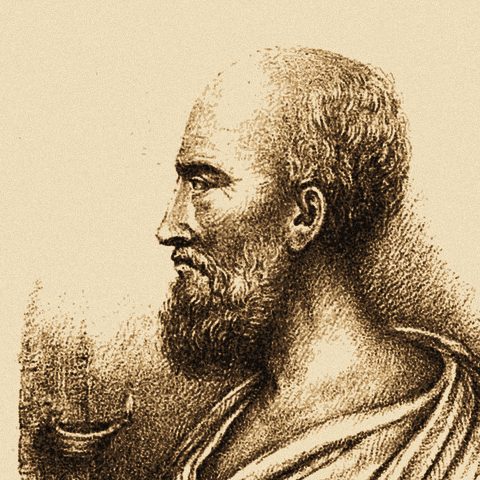
Epictetus
50 Hierapolis – 138 Nicopolis · Greek Stoic philosopher
Epictetus was a Greek Stoic philosopher. He was born into slavery at Hierapolis, Phrygia and lived in Rome until his banishment, after which he spent the rest of his life in Nicopolis in northwestern Greece.
If you like A Selection from the Discourses of Epictetus with the Encheiridion
More like this


Start with “Of the Things Which Are in Our Power and Not in Our Power”
2 chapters free right now — no account. Your place follows you to iPhone and Android.