

2 chapters freeNo account needed.
Opens act 1 in the player · no sign-up needed
After the first scene, which takes place on a ship at sea during a storm, the rest of the play is set on a remote island, where Prospero, a magician, lives with his daughter Miranda and his two servants: Caliban, a savage monster figure, and Ariel, an airy…
Inside the book
- Free nowno account · 2 chapters
- —Introduction2 min
- 2Act 142 min
- Premium4 chapters · every book, 7 days free
- 3Act 233 min
- 4Act 324 min
- 5Act 418 min
- 6Act 522 min
The opening
Act 1
SCENE I. On a ship at sea: a tempestuous noise of thunder and lightning heard.
_Enter a Ship-Master and a Boatswain._
Mast. Boatswain!
Boats. Here, master: what cheer?
Mast. Good, speak to the mariners: fall to't, yarely, or we run ourselves aground: bestir, bestir. [Exit.
_Enter Mariners._
Boats. Heigh, my hearts! cheerly, cheerly, my hearts! 5 yare, yare! Take in the topsail. Tend to the master's whistle. Blow, till thou burst thy wind, if room enough!
Enter ALONSO, SEBASTIAN, ANTONIO, FERDINAND, GONZALO, and others.
Alon. Good boatswain, have care. Where's the master? Play the men.
Boats. I pray now, keep below. 10
Ant. Where is the master, boatswain?
Boats. Do you not hear him? You mar our labour: keep your cabins: you do assist the storm.
Gon. Nay, good, be patient.
Boats. When the sea is. Hence! What cares these 15 roarers for the name of king? To cabin: silence! trouble us not.
Gon. Good, yet remember whom thou hast aboard.
Boats. None that I more love than myself. You are a Counsellor; if you can command these elements to silence, 20 and work the peace of the present, we will not hand a rope more; use your authority: if you cannot, give thanks you have lived so long, and make yourself ready in your cabin for the mischance of the hour, if it so hap. Cheerly, good hearts! Out of our way, I say. [Exit. 25
Gon. I have great comfort from this fellow: methinks he hath no drowning mark upon him; his complexion is perfect gallows. Stand fast, good Fate, to his hanging: make the rope of his destiny our cable, for our own doth little advantage. If he be not born to be hanged, our case 30 is miserable. [Exeunt.
Re-enter Boatswain.
Boats. Down with the topmast! yare! lower, lower! Bring her to try with main-course. [A cry within.] A plague upon this howling! they are louder than the weather or our office. 35
Re-enter SEBASTIAN, ANTONIO, and GONZALO.
Yet again! what do you here? Shall we give o'er, and drown? Have you a mind to sink?
Seb. A pox o' your throat, you bawling, blasphemous, incharitable dog!
Boats. Work you, then. 40
Ant. Hang, cur! hang, you whoreson, insolent noise-maker. We are less afraid to be drowned than thou art.
Gon. I'll warrant him for drowning; though the ship were no stronger than a nutshell, and as leaky as an unstanched wench. 45
Boats. Lay her a-hold, a-hold! set her two courses off to sea again; lay her off.
_Enter Mariners wet._
Mariners. All lost! to prayers, to prayers! all lost!
Boats. What, must our mouths be cold?
Gon. The king and prince at prayers! let's assist them, 50 For our case is as theirs.
Seb. I'm out of patience.
Ant. We are merely cheated of our lives by drunkards: This wide-chapp'd rascal,—would thou mightst lie drowning The washing of ten tides!
Gon. He'll be hang'd yet, Though every drop of water swear against it, 55 And gape at widest to glut him.
[A confused noise within: "Mercy on us!"-- "We split, we split!"—"Farewell my wife and children!"-- "Farewell, brother!"—"We split, we split, we split!"]
Ant. Let's all sink with the king. 60
Seb. Let's take leave of him. [Exeunt Ant. and Seb.
Gon. Now would I give a thousand furlongs of sea for an acre of barren ground, long heath, brown furze, any thing. The wills above be done! but I would fain die a dry death. [Exeunt. 65
Notes: I, 1.
SC. I. On a ship at sea] Pope. Enter... Boatswain] Collier MS. adds 'shaking off wet.' 3: Good,] Rowe. Good: Ff. Good. Collier. 7: till thou burst thy wind] till thou burst, wind Johnson conj. till thou burst thee, wind Steevens conj. 8: Capell adds stage direction [Exeunt Mariners aloft. 11: boatswain] Pope. boson Ff. 11-18: Verse. S. Walker conj. 15: cares] care Rowe. See note (I). 31: [Exeunt] Theobald. [Exit. Ff. 33: Bring her to try] F4. Bring her to Try F1 F2 F3. Bring her to. Try Story conj. 33-35: Text as in Capell. A plague—A cry within. Enter Sebastian, Anthonio, and Gonzalo. upon this howling. Ff. 34-37: Verse. S. Walker conj. 43: for] from Theobald. 46: two courses off to sea] two courses; off to sea Steevens (Holt conj.). 46: [Enter...] [Re-enter... Dyce. 47: [Exeunt. Theobald. 50: at] are at Rowe. 50-54: Printed as prose in Ff. 56: to glut] t' englut Johnson conj. 57: See note (II). 59: Farewell, brother!] Brother, farewell! Theobald. 60: with the] Rowe. with' F1 F2. with F3 F4. 61: [Exeunt A. and S.] [Exit. Ff. 63: furze Rowe. firrs F1 F2 F3. firs F4. long heath, brown furze] ling, heath, broom, furze Hanmer.] 65: [Exeunt] [Exit F1, om. F2 F3 F4.]
SCENE II. The island. Before PROSPERO'S cell.
Enter PROSPERO and MIRANDA.
Mir. If by your art, my dearest father, you have Put the wild waters in this roar, allay them. The sky, it seems, would pour down stinking pitch, But that the sea, mounting to the welkin's cheek, Dashes the fire out. O, I have suffer'd 5 With those that I saw suffer! a brave vessel, Who had, no doubt, some noble creature in her, Dash'd all to pieces. O, the cry did knock Against my very heart! Poor souls, they perish'd! Had I been any god of power, I would 10 Have sunk the sea within the earth, or ere It should the good ship so have swallow'd and The fraughting souls within her.
Pros. Be collected: No more amazement: tell your piteous heart There's no harm done.
Mir. O, woe the day!
Pros. No harm. 15 I have done nothing but in care of thee, Of thee, my dear one, thee, my daughter, who Art ignorant of what thou art, nought knowing Of whence I am, nor that I am more better Than Prospero, master of a full poor cell, 20 And thy no greater father.
Mir. More to know Did never meddle with my thoughts.
Pros. 'Tis time I should inform thee farther. Lend thy hand, And pluck my magic garment from me.—So: [Lays down his mantle. Lie there, my art. Wipe thou thine eyes; have comfort. 25 The direful spectacle of the wreck, which touch'd The very virtue of compassion in thee, I have with such provision in mine art So safely order'd, that there is no soul, No, not so much perdition as an hair 30 Betid to any creature in the vessel Which thou heard'st cry, which thou saw'st sink. Sit down; For thou must now know farther.
Mir. You have often Begun to tell me what I am; but stopp'd, And left me to a bootless inquisition, 35 Concluding "Stay: not yet."
Pros. The hour's now come; The very minute bids thee ope thine ear; Obey, and be attentive. Canst thou remember A time before we came unto this cell? I do not think thou canst, for then thou wast not 40 Out three years old.
Mir. Certainly, sir, I can.
Pros. By what? by any other house or person? Of any thing the image tell me that Hath kept with thy remembrance.
Mir. 'Tis far off, And rather like a dream than an assurance 45 That my remembrance warrants. Had I not Four or five women once that tended me?
Pros. Thou hadst, and more, Miranda. But how is it That this lives in thy mind? What seest thou else In the dark backward and abysm of time? 50 If thou remember'st ought ere thou camest here, How thou camest here thou mayst.
Mir. But that I do not.
Pros. Twelve year since, Miranda, twelve year since, Thy father was the Duke of Milan, and A prince of power.
Mir. Sir, are not you my father? 55
Pros. Thy mother was a piece of virtue, and She said thou wast my daughter; and thy father Was Duke of Milan; and his only heir And princess, no worse issued.
Mir. O the heavens! What foul play had we, that we came from thence? 60 Or blessed was't we did?
Pros. Both, both, my girl: By foul play, as thou say'st, were we heaved thence; But blessedly holp hither.
Mir. O, my heart bleeds To think o' the teen that I have turn'd you to. Which is from my remembrance! Please you, farther. 65
Pros. My brother, and thy uncle, call'd Antonio,-- I pray thee, mark me,—that a brother should Be so perfidious!—he whom, next thyself, Of all the world I loved, and to him put The manage of my state; as, at that time, 70 Through all the signories it was the first, And Prospero the prime duke, being so reputed In dignity, and for the liberal arts Without a parallel; those being all my study, The government I cast upon my brother, 75 And to my state grew stranger, being transported And rapt in secret studies. Thy false uncle-- Dost thou attend me?
Mir. Sir, most heedfully.
Pros. Being once perfected how to grant suits, How to deny them, whom to advance, and whom 80 To trash for over-topping, new created The creatures that were mine, I say, or changed 'em, Or else new form'd 'em; having both the key Of officer and office, set all hearts i' the state To what tune pleased his ear; that now he was 85 The ivy which had hid my princely trunk, And suck'd my verdure out on't. Thou attend'st not.
Mir. O, good sir, I do.
Pros. I pray thee, mark me. I, thus neglecting worldly ends, all dedicated To closeness and the bettering of my mind 90 With that which, but by being so retired, O'er-prized all popular rate, in my false brother Awaked an evil nature; and my trust, Like a good parent, did beget of him A falsehood in its contrary, as great 95 As my trust was; which had indeed no limit, A confidence sans bound. He being thus lorded, Not only with what my revenue yielded, But what my power might else exact, like one Who having into truth, by telling of it, 100 Made such a sinner of his memory, To credit his own lie, he did believe He was indeed the duke; out o' the substitution, And executing the outward face of royalty, With all prerogative:—hence his ambition growing,-- 105 Dost thou hear?
Mir. Your tale, sir, would cure deafness.
Pros. To have no screen between this part he play'd And him he play'd it for, he needs will be Absolute Milan. Me, poor man, my library Was dukedom large enough: of temporal royalties 110 He thinks me now incapable; confederates, So dry he was for sway, wi' the King of Naples To give him annual tribute, do him homage, Subject his coronet to his crown, and bend The dukedom, yet unbow'd,—alas, poor Milan!-- 115 To most ignoble stooping.
Mir. O the heavens!
Pros. Mark his condition, and th' event; then tell me If this might be a brother.
Mir. I should sin To think but nobly of my grandmother: Good wombs have borne bad sons.
Pros. Now the condition. 120 This King of Naples, being an enemy To me inveterate, hearkens my brother's suit; Which was, that he, in lieu o' the premises, Of homage and I know not how much tribute, Should presently extirpate me and mine 125 Out of the dukedom, and confer fair Milan, With all the honours, on my brother: whereon, A treacherous army levied, one midnight Fated to the purpose, did Antonio open The gates of Milan; and, i' the dead of darkness, 130 The ministers for the purpose hurried thence Me and thy crying self.
Mir. Alack, for pity! I, not remembering how I cried out then, Will cry it o'er again: it is a hint That wrings mine eyes to't.
Pros. Hear a little further, 135 And then I'll bring thee to the present business Which now's upon 's; without the which, this story Were most impertinent.
Mir. Wherefore did they not That hour destroy us?
Pros. Well demanded, wench: My tale provokes that question. Dear, they durst not, 140 So dear the love my people bore me; nor set A mark so bloody on the business; but With colours fairer painted their foul ends. In few, they hurried us aboard a bark, Bore us some leagues to sea; where they prepared 145 A rotten carcass of a boat, not rigg'd, Nor tackle, sail, nor mast; the very rats Instinctively have quit it: there they hoist us, To cry to the sea that roar'd to us; to sigh To the winds, whose pity, sighing back again, 150 Did us but loving wrong.
Mir. Alack, what trouble Was I then to you!
Pros. O, a cherubin Thou wast that did preserve me. Thou didst smile, Infused with a fortitude from heaven, When I have deck'd the sea with drops full salt, 155 Under my burthen groan'd; which raised in me An undergoing stomach, to bear up Against what should ensue.
Mir. How came we ashore?
Pros. By Providence divine. Some food we had, and some fresh water, that 160 A noble Neapolitan, Gonzalo, Out of his charity, who being then appointed Master of this design, did give us, with Rich garments, linens, stuffs and necessaries, Which since have steaded much; so, of his gentleness, 165 Knowing I loved my books, he furnish'd me From mine own library with volumes that I prize above my dukedom.
Mir. Would I might But ever see that man!
Pros. Now I arise: [Resumes his mantle. Sit still, and hear the last of our sea-sorrow. 170 Here in this island we arrived; and here Have I, thy schoolmaster, made thee more profit Than other princesses can, that have more time For vainer hours, and tutors not so careful.
Mir. Heavens thank you for't! And now, I pray you, sir, 175 For still 'tis beating in my mind, your reason For raising this sea-storm?
Pros. Know thus far forth. By accident most strange, bountiful Fortune, Now my dear lady, hath mine enemies Brought to this shore; and by my prescience 180 I find my zenith doth depend upon A most auspicious star, whose influence If now I court not, but omit, my fortunes Will ever after droop. Here cease more questions: Thou art inclined to sleep; 'tis a good dulness, 185 And give it way: I know thou canst not choose. [Miranda sleeps. Come away, servant, come. I am ready now. Approach, my Ariel, come.
_Enter ARIEL._
Ari. All hail, great master! grave sir, hail! I come To answer thy best pleasure; be't to fly, 190 To swim, to dive into the fire, to ride On the curl'd clouds, to thy strong bidding task Ariel and all his quality.
Pros. Hast thou, spirit, Perform'd to point the tempest that I bade thee?
Ari. To every article. 195 I boarded the king's ship; now on the beak, Now in the waist, the deck, in every cabin, I flamed amazement: sometime I'ld divide, And burn in many places; on the topmast, The yards and bowsprit, would I flame distinctly, 200 Then meet and join. Jove's lightnings, the precursors O' the dreadful thunder-claps, more momentary And sight-outrunning were not: the fire and cracks Of sulphurous roaring the most mighty Neptune Seem to besiege, and make his bold waves tremble, 205 Yea, his dread trident shake.
Pros. My brave spirit! Who was so firm, so constant, that this coil Would not infect his reason?
Ari. Not a soul But felt a fever of the mad, and play'd Some tricks of desperation. All but mariners 210 Plunged in the foaming brine, and quit the vessel, Then all afire with me: the king's son, Ferdinand, With hair up-staring,—then like reeds, not hair,-- Was the first man that leap'd; cried, "Hell is empty, And all the devils are here."
Pros. Why, that's my spirit! 215 But was not this nigh shore?
Ari. Close by, my master.
Pros. But are they, Ariel, safe?
Ari. Not a hair perish'd; On their sustaining garments not a blemish, But fresher than before: and, as thou badest me, In troops I have dispersed them 'bout the isle. 220 The king's son have I landed by himself; Whom I left cooling of the air with sighs In an odd angle of the isle, and sitting, His arms in this sad knot.
Pros. Of the king's ship The mariners, say how thou hast disposed, 225 And all the rest o' the fleet.
Ari. Safely in harbour Is the king's ship; in the deep nook, where once Thou call'dst me up at midnight to fetch dew From the still-vex'd Bermoothes, there she's hid: The mariners all under hatches stow'd; 230 Who, with a charm join'd to their suffer'd labour, I have left asleep: and for the rest o' the fleet, Which I dispersed, they all have met again, And are upon the Mediterranean flote, Bound sadly home for Naples; 235 Supposing that they saw the king's ship wreck'd, And his great person perish.
Pros. Ariel, thy charge Exactly is perform'd: but there's more work. What is the time o' the day?
Ari. Past the mid season.
Pros. At least two glasses. The time 'twixt six and now 240 Must by us both be spent most preciously.
Ari. Is there more toil? Since thou dost give me pains, Let me remember thee what thou hast promised, Which is not yet perform'd me.
Pros. How now? moody? What is't thou canst demand?
Ari. My liberty. 245
Pros. Before the time be out? no more!
Ari. I prithee, Remember I have done thee worthy service; Told thee no lies, made thee no mistakings, served Without or grudge or grumblings: thou didst promise To bate me a full year.
Pros. Dost thou forget 250 From what a torment I did free thee?
Ari. No.
Pros. Thou dost; and think'st it much to tread the ooze Of the salt deep, To run upon the sharp wind of the north, To do me business in the veins o' the earth 255 When it is baked with frost.
Ari. I do not, sir.
Pros. Thou liest, malignant thing! Hast thou forgot The foul witch Sycorax, who with age and envy Was grown into a hoop? hast thou forgot her?
Ari. No, sir.
Pros. Thou hast. Where was she born? speak; tell me. 260
Ari. Sir, in Argier.
Pros. O, was she so? I must Once in a month recount what thou hast been, Which thou forget'st. This damn'd witch Sycorax, For mischiefs manifold, and sorceries terrible To enter human hearing, from Argier, 265 Thou know'st, was banish'd: for one thing she did They would not take her life. Is not this true?
Ari. Ay, sir.
Pros. This blue-eyed hag was hither brought with child, And here was left by the sailors. Thou, my slave, 270 As thou report'st thyself, wast then her servant; And, for thou wast a spirit too delicate To act her earthy and abhorr'd commands, Refusing her grand hests, she did confine thee, By help of her more potent ministers, 275 And in her most unmitigable rage, Into a cloven pine; within which rift Imprison'd thou didst painfully remain A dozen years; within which space she died, And left thee there; where thou didst vent thy groans 280 As fast as mill-wheels strike. Then was this island-- Save for the son that she did litter here, A freckled whelp hag-born—not honour'd with A human shape.
Ari. Yes, Caliban her son.
Pros. Dull thing, I say so; he, that Caliban, 285 Whom now I keep in service. Thou best know'st What torment I did find thee in; thy groans Did make wolves howl, and penetrate the breasts Of ever-angry bears: it was a torment To lay upon the damn'd, which Sycorax 290 Could not again undo: it was mine art, When I arrived and heard thee, that made gape The pine, and let thee out.
Ari. I thank thee, master.
Pros. If thou more murmur'st, I will rend an oak, And peg thee in his knotty entrails, till 295 Thou hast howl'd away twelve winters.
Ari. Pardon, master: I will be correspondent to command, And do my spiriting gently.
Pros. Do so; and after two days I will discharge thee.
Ari. That's my noble master! What shall I do? say what; what shall I do? 300
Pros. Go make thyself like a nymph o' the sea: Be subject to no sight but thine and mine; invisible To every eyeball else. Go take this shape, And hither come in't: go, hence with diligence!
[Exit Ariel.
Awake, dear heart, awake! thou hast slept well; 305 Awake!
Mir. The strangeness of your story put Heaviness in me.
Pros. Shake it off. Come on; We'll visit Caliban my slave, who never Yields us kind answer.
Mir. 'Tis a villain, sir, I do not love to look on.
Pros. But, as 'tis, 310 We cannot miss him: he does make our fire, Fetch in our wood, and serves in offices That profit us. What, ho! slave! Caliban! Thou earth, thou! speak.
Cal. [within] There's wood enough within.
Pros. Come forth, I say! there's other business for thee: 315 Come, thou tortoise! when?
Re-enter ARIEL like a water-nymph.
Fine apparition! My quaint Ariel, Hark in thine ear.
Ari. My lord, it shall be done. [Exit.
Pros. Thou poisonous slave, got by the devil himself Upon thy wicked dam, come forth! 320
Enter CALIBAN.
Cal. As wicked dew as e'er my mother brush'd With raven's feather from unwholesome fen Drop on you both! a south-west blow on ye And blister you all o'er!
Pros. For this, be sure, to-night thou shalt have cramps, 325 Side-stitches that shall pen thy breath up; urchins Shall, for that vast of night that they may work, All exercise on thee; thou shalt be pinch'd As thick as honeycomb, each pinch more stinging Than bees that made 'em.
Cal. I must eat my dinner. 330 This island's mine, by Sycorax my mother, Which thou takest from me. When thou camest first, Thou strokedst me, and madest much of me; wouldst give me Water with berries in't; and teach me how To name the bigger light, and how the less, 335 That burn by day and night: and then I loved thee, And show'd thee all the qualities o' th' isle, The fresh springs, brine-pits, barren place and fertile: Curs'd be I that did so! All the charms Of Sycorax, toads, beetles, bats, light on you! 340 For I am all the subjects that you have, Which first was mine own king: and here you sty me In this hard rock, whiles you do keep from me The rest o' th' island.
Pros. Thou most lying slave, Whom stripes may move, not kindness! I have used thee, 345 Filth as thou art, with human care; and lodged thee In mine own cell, till thou didst seek to violate The honour of my child.
Cal. O ho, O ho! would 't had been done! Thou didst prevent me; I had peopled else 350 This isle with Calibans.
Pros. Abhorred slave, Which any print of goodness wilt not take, Being capable of all ill! I pitied thee, Took pains to make thee speak, taught thee each hour One thing or other: when thou didst not, savage, 355 Know thine own meaning, but wouldst gabble like A thing most brutish, I endow'd thy purposes With words that made them known. But thy vile race, Though thou didst learn, had that in't which good natures Could not abide to be with; therefore wast thou 360 Deservedly confined into this rock, Who hadst deserved more than a prison.
Cal. You taught me language; and my profit on't Is, I know how to curse. The red plague rid you For learning me your language!
Pros. Hag-seed, hence! 365 Fetch us in fuel; and be quick, thou'rt best, To answer other business. Shrug'st thou, malice? If thou neglect'st, or dost unwillingly What I command, I'll rack thee with old cramps, Fill all thy bones with aches, make thee roar, 370 That beasts shall tremble at thy din.
Cal. No, pray thee. [Aside] I must obey: his art is of such power, It would control my dam's god, Setebos, And make a vassal of him.
Pros. So, slave; hence! [Exit Caliban.
Re-enter ARIEL, invisible, playing and singing; FERDINAND following.
ARIEL'S song.
Come unto these yellow sands, 375 And then take hands: Courtsied when you have and kiss'd The wild waves whist: Foot it featly here and there; And, sweet sprites, the burthen bear. 380
Burthen [dispersedly]. Hark, hark! Bow-wow. The watch-dogs bark: Bow-wow.
Ari. Hark, hark! I hear The strain of strutting chanticleer 385 Cry, Cock-a-diddle-dow.
Fer. Where should this music be? i' th' air or th' earth? It sounds no more: and, sure, it waits upon Some god o' th' island. Sitting on a bank, Weeping again the king my father's wreck, 390 This music crept by me upon the waters, Allaying both their fury and my passion With its sweet air: thence I have follow'd it. Or it hath drawn me rather. But 'tis gone. No, it begins again. 395
ARIEL sings.
Full fathom five thy father lies; Of his bones are coral made; Those are pearls that were his eyes: Nothing of him that doth fade, But doth suffer a sea-change 400 Into something rich and strange. Sea-nymphs hourly ring his knell:
Burthen: Ding-dong.
Ari. Hark! now I hear them,—Ding-dong, bell.
Fer. The ditty does remember my drown'd father. 405 This is no mortal business, nor no sound That the earth owes:—I hear it now above me.
Pros. The fringed curtains of thine eye advance, And say what thou seest yond.
Mir. What is't? a spirit? Lord, how it looks about! Believe me, sir, 410 It carries a brave form. But 'tis a spirit.
Pros. No, wench; it eats and sleeps and hath such senses As we have, such. This gallant which thou seest Was in the wreck; and, but he's something stain'd With grief, that's beauty's canker, thou mightst call him 415 A goodly person: he hath lost his fellows, And strays about to find 'em.
Mir. I might call him A thing divine; for nothing natural I ever saw so noble.
Pros. [Aside] It goes on, I see, As my soul prompts it. Spirit, fine spirit! I'll free thee 420 Within two days for this.
Fer. Most sure, the goddess On whom these airs attend! Vouchsafe my prayer May know if you remain upon this island; And that you will some good instruction give How I may bear me here: my prime request, 425 Which I do last pronounce, is, O you wonder! If you be maid or no?
Mir. No wonder, sir; But certainly a maid.
Fer. My language! heavens! I am the best of them that speak this speech, Were I but where 'tis spoken.
Pros. How? the best? 430 What wert thou, if the King of Naples heard thee?
Fer. A single thing, as I am now, that wonders To hear thee speak of Naples. He does hear me; And that he does I weep: myself am Naples, Who with mine eyes, never since at ebb, beheld 435 The king my father wreck'd.
Mir. Alack, for mercy!
Fer. Yes, faith, and all his lords; the Duke of Milan And his brave son being twain.
Pros. [Aside] The Duke of Milan And his more braver daughter could control thee, If now 'twere fit to do't. At the first sight 440 They have changed eyes. Delicate Ariel, I'll set thee free for this. [To Fer.] A word, good sir; I fear you have done yourself some wrong: a word.
Mir. Why speaks my father so ungently? This Is the third man that e'er I saw; the first 445 That e'er I sigh'd for: pity move my father To be inclined my way!
Fer. O, if a virgin, And your affection not gone forth, I'll make you The queen of Naples.
Pros. Soft, sir! one word more. [Aside] They are both in either's powers: but this swift business 450 I must uneasy make, lest too light winning Make the prize light. [To Fer.] One word more; I charge thee That thou attend me: thou dost here usurp The name thou owest not; and hast put thyself Upon this island as a spy, to win it 455 From me, the lord on't.
Fer. No, as I am a man.
Mir. There's nothing ill can dwell in such a temple: If the ill spirit have so fair a house, Good things will strive to dwell with't.
Pros. Follow me. Speak not you for him; he's a traitor. Come; 460 I'll manacle thy neck and feet together: Sea-water shalt thou drink; thy food shall be The fresh-brook muscles, wither'd roots, and husks Wherein the acorn cradled. Follow.
Fer. No; I will resist such entertainment till 465 Mine enemy has more power. [Draws, and is charmed from moving.
Mir. O dear father, Make not too rash a trial of him, for He's gentle, and not fearful.
Pros. What! I say, My foot my tutor? Put thy sword up, traitor; Who makest a show, but darest not strike, thy conscience 470 Is so possess'd with guilt: come from thy ward; For I can here disarm thee with this stick And make thy weapon drop.
Mir. Beseech you, father.
Pros. Hence! hang not on my garments.
Mir. Sir, have pity; I'll be his surety.
Pros. Silence! one word more 475 Shall make me chide thee, if not hate thee. What! An advocate for an impostor! hush! Thou think'st there is no more such shapes as he, Having seen but him and Caliban: foolish wench! To the most of men this is a Caliban, 480 And they to him are angels.
Mir. My affections Are, then, most humble; I have no ambition To see a goodlier man.
Pros. Come on; obey: Thy nerves are in their infancy again, And have no vigour in them.
Fer. So they are: 485 My spirits, as in a dream, are all bound up. My father's loss, the weakness which I feel, The wreck of all my friends, nor this man's threats, To whom I am subdued, are but light to me, Might I but through my prison once a day 490 Behold this maid: all corners else o' th' earth Let liberty make use of; space enough Have I in such a prison.
Pros. [Aside] It works. [To Fer.] Come on. Thou hast done well, fine Ariel! [To Fer.] Follow me. [To Ari.] Hark what thou else shalt do me.
Mir. Be of comfort; 495 My father's of a better nature, sir, Than he appears by speech: this is unwonted Which now came from him.
Pros. Thou shalt be as free As mountain winds: but then exactly do All points of my command.
Ari. To the syllable. 500
Pros. Come, follow. Speak not for him. [Exeunt.
Notes: I, 2.
3: stinking] flaming Singer conj. kindling S. Verges conj. 4: cheek] heat Collier MS. crack Staunton conj. 7: creature] creatures Theobald. 13: fraughting] Ff. fraighted Pope. fraighting Theobald. freighting Steevens. 15: Mir. O, woe the day! Pros. No harm.] Mir. O woe the day! no harm? Johnson conj. 19: I am more better] I'm more or better Pope. 24: [Lays... mantle] Pope. 28: provision] F1. compassion F2 F3 F4. prevision Hunter conj. 29: soul] soul lost Rowe. foyle Theobald. soil Johnson conj. loss Capell. foul Wright conj. 31: betid] F1. betide F2 F3 F4. 35: a] F1. the F2 F3 F4. 38: thou] om. Pope. 41: Out] Full Pope (after Dryden). Quite Collier MS. 44: with] in Pope (after Dryden). 53: Twelve year... year] Tis twelve years... years Pope. 58, 59: and his only heir And princess] and his only heir A princess Pope. thou his only heir And princess Steevens. and though his only heir A princess] Johnson conj. 63: holp] help'd Pope. O, my heart] My heart Pope. 78: me] om. F3 F4. 80: whom... whom] F2 F3 F4. who... who F1. 81: trash] plash Hanmer. 82, 83: 'em... 'em] them... them Capell. 84: i' the state] i'th state F1. e'th state F2. o'th state F3 F4. om.
Pope. 88: O, good sir... mark me.] Good sir... mark me then. Pope. O yes, good sir... mark me. Capell. Mir. O,... do. Pros. I... me] I... me. Mir. O... do. Steevens. 89: dedicated] dedicate Steevens (Ritson conj.). 91: so] F1. om. F2 F3 F4. 97: lorded] loaded Collier MS. 99: exact, like] exact. Like Ff. 100: having into truth... of it] loving an untruth, and telling 't oft Hanmer. having unto truth... oft Warburton. having to untruth... of it Collier MS. having sinn'd to truth... oft Musgrave conj. telling] quelling S. Verges conj. 101: Made... memory] Makes... memory Hanmer. Makes... memory too Musgrave conj. 103: indeed the duke] the duke Steevens. indeed duke S. Walker conj. out o' the] from Pope. 105: his] is F2. 105, 106: ambition growing] ambition Growing Steevens. 106: hear?] hear, child? Hanmer. 109: Milan] Millanie F1 (Capell's copy). 112: wi' the] Capell. with Ff. wi' th' Rowe. with the Steevens. 116: most] F1. much F2 F3 F4. 119: but] not Pope. 120: Good... sons] Theobald suggested that these words should be given to Prospero.
Hanmer prints them so. 122: hearkens] hears Pope. hearks Theobald. 129: Fated] Mated Dryden's version. purpose] practise Collier MS. 131: ministers] minister Rowe. 133: out] on't Steevens conj. 135: to 't] om. Steevens (Farmer conj.). 138: Wherefore] Why Pope. 141: me] om. Pope. 146: boat] Rowe (after Dryden). butt F1 F2 F3. but F4. busse Black conj. 147: sail] F1. nor sail F2 F3 F4. 148: have] had Rowe (after Dryden). 150: the winds] winds Pope. 155: deck'd] brack'd Hanmer. mock'd Warburton. fleck'd Johnson conj. degg'd anon. ap. Reed conj. 162: who] om. Pope. he Steevens conj. 169: Now I arise] Continued to Miranda. Blackstone conj. [Resumes his mantle] om. Ff. [Put on robe again. Collier MS. 173: princesses] princesse F1 F2 F3. princess F4. princes Rowe. princess' Dyce (S. Walker conj.). See note (III). 186: [M. sleeps] Theobald. 189: SCENE III. Pope. 190: be't] F1. be it F2 F3 F4. 193: quality] qualities Pope (after Dryden). 198: sometime] F1. sometimes F2 F3 F4. 200: bowsprit] bore-sprit Ff. bolt-sprit Rowe. 201: lightnings] Theobald. lightning Ff. 202: o' the] of Pope. thunder-claps] thunder-clap Johnson. 205: Seem] Seem'd Theobald. 206: dread] F1. dead F2 F3 F4.
My brave] My brave, brave Theobald. That's my brave Hanmer. 209: mad] mind Pope (after Dryden). 211, 212: vessel,... son] vessell; Then all a fire with me the King's sonne Ff. 218: sustaining] sea-stained Edwards conj. unstaining or sea-staining Spedding conj. 229: Bermoothes] Bermudas Theobald. 231: Who] Whom Hanmer. 234: are] all Collier MS. upon] on Pope. 239-240: Ari. Past the mid season. Pros. At least two glasses] Ari. Past the mid season at least two glasses. Warburton. Pros... Past the mid season? Ari. At least two glasses Johnson conj. 244: How now? moody?] How now, moody! Dyce (so Dryden, ed. 1808). 245: What] F1. Which F2 F3 F4. 248: made thee] Ff. made Pope. 249: didst] F3 F4. did F1 F2. 264: and sorceries] sorceries too Hanmer. 267: Is not this true?] Is this not true?
Pope. 271: wast then] Rowe (after Dryden). was then Ff. 273: earthy] earthly Pope. 282: son] F1. sunne F2. sun F3 F4. she] Rowe (after Dryden). he Ff. 298: See note (IV). 301: like] F1. like to F2 F3 F4. 302: Be subject to] be subject To Malone. but thine and mine] but mine Pope. 304: in't] in it Pope. go, hence] goe: hence Ff. go hence Pope. hence Hanmer. 307: Heaviness] Strange heaviness Edd. conj. 312: serves in offices] F1. serves offices F2 F3 F4. serveth offices Collier MS. 316: Come, thou tortoise! when?] om. Pope. Come] Come forth Steevens.] 320: come forth!] come forth, thou tortoise! Pope. 321: SCENE IV. Pope. 332: camest] Rowe. cam'st Ff. cam'st here Ritson conj. 333: madest] Rowe (after Dryden). made Ff. 339: Curs'd be I that] F1. Curs'd be I that I F2 F3 F4. cursed be I that Steevens. 342: Which] Who Pope, and at line 351. 346: thee] om. F4. 349: would 't] Ff. I wou'd it Pope. 351: Pros.] Theobald (after Dryden). Mira. Ff. 352: wilt] F1. will F2 F3 F4. 355, 356: didst not... Know] couldst not... Shew Hanmer. 356: wouldst] didst Hanmer. 361, 362: Deservedly... deserved] Justly... who hadst Deserv'd S. Walker conj. Confin'd... deserv'd id. conj. 362: Who... prison] om.
Pope (after Dryden). 366: thou'rt] F1 F2 F3. thou art F4. thou wer't Rowe. 375: SCENE V. Pope. following.] Malone. 378: The wild waves whist] Printed as a parenthesis by Steevens. See note (V). 380: the burthen bear] Pope. bear the burthen Ff. 381-383: Steevens gives Hark, hark! The watch-dogs bark to Ariel. 387: i' th' air or th' earth?] in air or earth? Pope. 390: again] against Rowe (after Dryden). 407: owes] owns Pope (after Dryden), but leaves ow'st 454. 408: SCENE VI. Pope. 419: It goes on, I see,] It goes, I see Capell. It goes on Steevens. 420: fine spirit!] om. Hanmer. 427: maid] F3. mayd F1 F2. made F4. 443: See note (VI). 444: ungently] F1. urgently F2 F3 F4. 451: lest] F4. least F1 F2 F3. 452: One] Sir, one Pope. I charge thee] I charge thee [to Ariel. Pope. 460: Pros. prefixed again to this line in Ff. 468: and] tho' Hanmer. 469: foot] fool S. Walker conj. child Dryden's version. 470: makest] mak'st F1. makes F2 F3 F4. 471: so] F1. om. F2 F3 F4. all Pope. 478: is] are Rowe. 488: nor] and Rowe (after Dryden). or Capell. 489: are] were Malone conj.
About the author
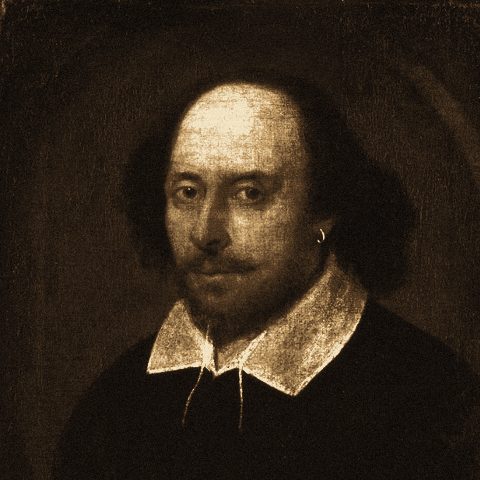
William Shakespeare
1564 Stratford-upon-Avon – 1616 Stratford-upon-Avon · English playwright and poet
William Shakespeare was an English playwright, poet and actor. He is widely regarded as the greatest writer in the English language and the world's pre-eminent dramatist.
- 1564Born, Stratford-upon-Avon
- 1597Richard III
- 1600A Midsummer Night's Dream
- 1600Much Ado About Nothing
- 1600The Merchant of Venice
- 1623The Tempest
- 1623Antony and Cleopatra
More by William Shakespeare
Keep going with Shakespeare


If you like The Tempest
More like this


Start with act 1
2 chapters free right now — no account. Your place follows you to iPhone and Android.