

2 chapters freeNo account needed.
Opens chapter 2 in the player · no sign-up needed
The storm had ceased its wintry roar, Hoarse dash the billows of the sea; But who on Thule's desert shore, Cries, Have I burnt my harp for thee?
The setting is the southern tip of the main island of Shetland, towards the end of the 17th century, with 1689 as the likely date of the main incidents.
Inside the book
- Free nowno account · 2 chapters
- —Introduction33 min
- 2Chapter 217 min
- Premium42 chapters · every book, 7 days free
- 3Chapter 320 min
- 4Chapter 413 min
- 5Chapter 536 min
- 6Chapter 631 min
- 7Chapter 721 min
- 8Chapter 840 min
- 9Chapter 919 min
- 10Part 1, Chapter 9: This is a gentle trader, and a prudent17 min
- 11Chapter 1120 min
- 12Chapter 1224 min
- 13Chapter 1333 min
- 14Chapter 1420 min
- 15Chapter 1520 min
- 16Chapter 1616 min
- 17Chapter 1725 min
- 18Chapter 1826 min
- 19Chapter 1925 min
- 20Chapter 2029 min
- 21Chapter 2128 min
- 22Chapter 2239 min
- 23Chapter 2322 min
- 24Chapter 2435 min
- 25Chapter 2528 min
- 26Chapter 2617 min
- 27Chapter 2717 min
- 28Chapter 2820 min
- 29Chapter 2913 min
- 30Chapter 3021 min
- 31Chapter 3119 min
- 32Part 2, Chapter 10: What ho, my jovial mates26 min
- 33Chapter 3330 min
- 34Chapter 3418 min
- 35Chapter 3519 min
- 36Chapter 3627 min
- 37Chapter 3717 min
- 38Chapter 3832 min
- 39Chapter 3924 min
- 40Part 2, Chapter 18: Fly, Fleance, fly!—Thou mayst escape19 min
- 41Chapter 4122 min
- 42Chapter 4224 min
- 43Chapter 4312 min
- 44Chapter 4436 min
The opening
Chapter 2
The storm had ceased its wintry roar, Hoarse dash the billows of the sea; But who on Thule's desert shore, Cries, Have I burnt my harp for thee?
MACNIEL.
That long, narrow, and irregular island, usually called the mainland of Zetland, because it is by far the largest of that Archipelago, terminates, as is well known to the mariners who navigate the stormy seas which surround the Thule of the ancients, in a cliff of immense height, entitled Sumburgh-Head, which presents its bare scalp and naked sides to the weight of a tremendous surge, forming the extreme point of the isle to the south-east. This lofty promontory is constantly exposed to the current of a strong and furious tide, which, setting in betwixt the Orkney and Zetland Islands, and running with force only inferior to that of the Pentland Frith, takes its name from the headland we have mentioned, and is called the Roost of Sumburgh; roost being the phrase assigned in those isles to currents of this description.
On the land side, the promontory is covered with short grass, and slopes steeply down to a little isthmus, upon which the sea has encroached in creeks, which, advancing from either side of the island, gradually work their way forward, and seem as if in a short time they would form a junction, and altogether insulate Sumburgh-Head, when what is now a cape, will become a lonely mountain islet, severed from the mainland, of which it is at present the terminating extremity.
Man, however, had in former days considered this as a remote or unlikely event; for a Norwegian chief of other times, or, as other accounts said, and as the name of Jarlshof seemed to imply, an ancient Earl of the Orkneys had selected this neck of land as the place for establishing a mansion-house. It has been long entirely deserted, and the vestiges only can be discerned with difficulty; for the loose sand, borne on the tempestuous gales of those stormy regions, has overblown, and almost buried, the ruins of the buildings; but in the end of the seventeenth century, a part of the Earl's mansion was still entire and habitable. It was a rude building of rough stone, with nothing about it to gratify the eye, or to excite the imagination; a large old-fashioned narrow house, with a very steep roof, covered with flags composed of grey sandstone, would perhaps convey the best idea of the place to a modern reader. The windows were few, very small in size, and distributed up and down the building with utter contempt of regularity. Against the main structure had rested, in former times, certain smaller co-partments of the mansion-house, containing offices, or subordinate apartments, necessary for the accommodation of the Earl's retainers and menials. But these had become ruinous; and the rafters had been taken down for fire-wood, or for other purposes; the walls had given way in many places; and, to complete the devastation, the sand had already drifted amongst the ruins, and filled up what had been once the chambers they contained, to the depth of two or three feet.
Amid this desolation, the inhabitants of Jarlshof had contrived, by constant labour and attention, to keep in order a few roods of land, which had been enclosed as a garden, and which, sheltered by the walls of the house itself, from the relentless sea-blast, produced such vegetables as the climate could bring forth, or rather as the sea-gale would permit to grow; for these islands experience even less of the rigour of cold than is encountered on the mainland of Scotland; but, unsheltered by a wall of some sort or other, it is scarce possible to raise even the most ordinary culinary vegetables; and as for shrubs or trees, they are entirely out of the question, such is the force of the sweeping sea-blast.
At a short distance from the mansion, and near to the sea-beach, just where the creek forms a sort of imperfect harbour, in which lay three or four fishing-boats, there were a few most wretched cottages for the inhabitants and tenants of the township of Jarlshof, who held the whole district of the landlord upon such terms as were in those days usually granted to persons of this description, and which, of course, were hard enough. The landlord himself resided upon an estate which he possessed in a more eligible situation, in a different part of the island, and seldom visited his possessions at Sumburgh-Head. He was an honest, plain Zetland gentleman, somewhat passionate, the necessary result of being surrounded by dependents; and somewhat over-convivial in his habits, the consequence, perhaps, of having too much time at his disposal; but frank-tempered and generous to his people, and kind and hospitable to strangers. He was descended also of an old and noble Norwegian family; a circumstance which rendered him dearer to the lower orders, most of whom are of the same race; while the lairds, or proprietors, are generally of Scottish extraction, who, at that early period, were still considered as strangers and intruders. Magnus Troil, who deduced his descent from the very Earl who was supposed to have founded Jarlshof, was peculiarly of this opinion.
The present inhabitants of Jarlshof had experienced, on several occasions, the kindness and good will of the proprietor of the territory. When Mr. Mertoun—such was the name of the present inhabitant of the old mansion—first arrived in Zetland, some years before the story commences, he had been received at the house of Mr. Troil with that warm and cordial hospitality for which the islands are distinguished. No one asked him whence he came, where he was going, what was his purpose in visiting so remote a corner of the empire, or what was likely to be the term of his stay. He arrived a perfect stranger, yet was instantly overpowered by a succession of invitations; and in each house which he visited, he found a home as long as he chose to accept it, and lived as one of the family, unnoticed and unnoticing, until he thought proper to remove to some other dwelling. This apparent indifference to the rank, character, and qualities of their guest, did not arise from apathy on the part of his kind hosts, for the islanders had their full share of natural curiosity; but their delicacy deemed it would be an infringement upon the laws of hospitality, to ask questions which their guest might have found it difficult or unpleasing to answer; and instead of endeavouring, as is usual in other countries, to wring out of Mr. Mertoun such communications as he might find it agreeable to withhold, the considerate Zetlanders contented themselves with eagerly gathering up such scraps of information as could be collected in the course of conversation.
But the rock in an Arabian desert is not more reluctant to afford water, than Mr. Basil Mertoun was niggard in imparting his confidence, even incidentally; and certainly the politeness of the gentry of Thule was never put to a more severe test than when they felt that good-breeding enjoined them to abstain from enquiring into the situation of so mysterious a personage.
All that was actually known of him was easily summed up. Mr. Mertoun had come to Lerwick, then rising into some importance, but not yet acknowledged as the principal town of the island, in a Dutch vessel, accompanied only by his son, a handsome boy of about fourteen years old. His own age might exceed forty. The Dutch skipper introduced him to some of the very good friends with whom he used to barter gin and gingerbread for little Zetland bullocks, smoked geese, and stockings of lambs-wool; and although Meinheer could only say, that "Meinheer Mertoun hab bay his bassage like one gentlemans, and hab given a Kreitz-dollar beside to the crew," this introduction served to establish the Dutchman's passenger in a respectable circle of acquaintances, which gradually enlarged, as it appeared that the stranger was a man of considerable acquirements.
This discovery was made almost per force; for Mertoun was as unwilling to speak upon general subjects, as upon his own affairs. But he was sometimes led into discussions, which showed, as it were in spite of himself, the scholar and the man of the world; and, at other times, as if in requital of the hospitality which he experienced, he seemed to compel himself, against his fixed nature, to enter into the society of those around him, especially when it assumed the grave, melancholy, or satirical cast, which best suited the temper of his own mind. Upon such occasions, the Zetlanders were universally of opinion that he must have had an excellent education, neglected only in one striking particular, namely, that Mr. Mertoun scarce knew the stem of a ship from the stern; and in the management of a boat, a cow could not be more ignorant. It seemed astonishing such gross ignorance of the most necessary art of life (in the Zetland Isles at least) should subsist along with his accomplishments in other respects; but so it was.
Unless called forth in the manner we have mentioned, the habits of Basil Mertoun were retired and gloomy. From loud mirth he instantly fled; and even the moderated cheerfulness of a friendly party, had the invariable effect of throwing him into deeper dejection than even his usual demeanour indicated.
Women are always particularly desirous of investigating mystery, and of alleviating melancholy, especially when these circumstances are united in a handsome man about the prime of life. It is possible, therefore, that amongst the fair-haired and blue-eyed daughters of Thule, this mysterious and pensive stranger might have found some one to take upon herself the task of consolation, had he shown any willingness to accept such kindly offices; but, far from doing so, he seemed even to shun the presence of the sex, to which in our distresses, whether of mind or body, we generally apply for pity and comfort.
To these peculiarities Mr. Mertoun added another, which was particularly disagreeable to his host and principal patron, Magnus Troil. This magnate of Zetland, descended by the father's side, as we have already said, from an ancient Norwegian family, by the marriage of its representative with a Danish lady, held the devout opinion that a cup of Geneva or Nantz was specific against all cares and afflictions whatever. These were remedies to which Mr. Mertoun never applied; his drink was water, and water alone, and no persuasion or entreaties could induce him to taste any stronger beverage than was afforded by the pure spring. Now this Magnus Troil could not tolerate; it was a defiance to the ancient northern laws of conviviality, which, for his own part, he had so rigidly observed, that although he was wont to assert that he had never in his life gone to bed drunk, (that is, in his own sense of the word,) it would have been impossible to prove that he had ever resigned himself to slumber in a state of actual and absolute sobriety. It may be therefore asked, What did this stranger bring into society to compensate the displeasure given by his austere and abstemious habits? He had, in the first place, that manner and self-importance which mark a person of some consequence: and although it was conjectured that he could not be rich, yet it was certainly known by his expenditure that neither was he absolutely poor. He had, besides, some powers of conversation, when, as we have already hinted, he chose to exert them, and his misanthropy or aversion to the business and intercourse of ordinary life, was often expressed in an antithetical manner, which passed for wit, when better was not to be had. Above all, Mr. Mertoun's secret seemed impenetrable, and his presence had all the interest of a riddle, which men love to read over and over, because they cannot find out the meaning of it.
Notwithstanding these recommendations, Mertoun differed in so many material points from his host, that after he had been for some time a guest at his principal residence, Magnus Troil was agreeably surprised when, one evening after they had sat two hours in absolute silence, drinking brandy and water,—that is, Magnus drinking the alcohol, and Mertoun the element,—the guest asked his host's permission to occupy, as his tenant, this deserted mansion of Jarlshof, at the extremity of the territory called Dunrossness, and situated just beneath Sumburgh-Head. "I shall be handsomely rid of him," quoth Magnus to himself, "and his kill-joy visage will never again stop the bottle in its round. His departure will ruin me in lemons, however, for his mere look was quite sufficient to sour a whole ocean of punch."
Yet the kind-hearted Zetlander generously and disinterestedly remonstrated with Mr. Mertoun on the solitude and inconveniences to which he was about to subject himself. "There were scarcely," he said, "even the most necessary articles of furniture in the old house—there was no society within many miles—for provisions, the principal article of food would be sour sillocks, and his only company gulls and gannets."
"My good friend," replied Mertoun, "if you could have named a circumstance which would render the residence more eligible to me than any other, it is that there would be neither human luxury nor human society near the place of my retreat; a shelter from the weather for my own head, and for the boy's, is all I seek for. So name your rent, Mr. Troil, and let me be your tenant at Jarlshof."
"Rent?" answered the Zetlander; "why, no great rent for an old house which no one has lived in since my mother's time—God rest her!—and as for shelter, the old walls are thick enough, and will bear many a bang yet. But, Heaven love you, Mr. Mertoun, think what you are purposing. For one of us to live at Jarlshof, were a wild scheme enough; but you, who are from another country, whether English, Scotch, or Irish, no one can tell"----
"Nor does it greatly matter," said Mertoun, somewhat abruptly.
"Not a herring's scale," answered the Laird; "only that I like you the better for being no Scot, as I trust you are not one. Hither they have come like the clack-geese—every chamberlain has brought over a flock of his own name, and his own hatching, for what I know, and here they roost for ever—catch them returning to their own barren Highlands or Lowlands, when once they have tasted our Zetland beef, and seen our bonny voes and lochs. No, sir," (here Magnus proceeded with great animation, sipping from time to time the half-diluted spirit, which at the same time animated his resentment against the intruders, and enabled him to endure the mortifying reflection which it suggested,)—"No, sir, the ancient days and the genuine manners of these Islands are no more; for our ancient possessors,—our Patersons, our Feas, our Schlagbrenners, our Thorbiorns, have given place to Giffords, Scotts, Mouats, men whose names bespeak them or their ancestors strangers to the soil which we the Troils have inhabited long before the days of Turf-Einar, who first taught these Isles the mystery of burning peat for fuel, and who has been handed down to a grateful posterity by a name which records the discovery."
This was a subject upon which the potentate of Jarlshof was usually very diffuse, and Mertoun saw him enter upon it with pleasure, because he knew he should not be called upon to contribute any aid to the conversation, and might therefore indulge his own saturnine humour while the Norwegian Zetlander declaimed on the change of times and inhabitants. But just as Magnus had arrived at the melancholy conclusion, "how probable it was, that in another century scarce a merk—scarce even an ure of land, would be in the possession of the Norse inhabitants, the true Udallers of Zetland," he recollected the circumstances of his guest, and stopped suddenly short. "I do not say all this," he added, interrupting himself, "as if I were unwilling that you should settle on my estate, Mr. Mertoun—But for Jarlshof—the place is a wild one—Come from where you will, I warrant you will say, like other travellers, you came from a better climate than ours, for so say you all. And yet you think of a retreat, which the very natives run away from. Will you not take your glass?"—(This was to be considered as interjectional,)—"then here's to you."
"My good sir," answered Mertoun, "I am indifferent to climate; if there is but air enough to fill my lungs, I care not if it be the breath of Arabia or of Lapland."
"Air enough you may have," answered Magnus, "no lack of that—somewhat damp, strangers allege it to be, but we know a corrective for that—Here's to you, Mr. Mertoun—You must learn to do so, and to smoke a pipe; and then, as you say, you will find the air of Zetland equal to that of Arabia. But have you seen Jarlshof?"
The stranger intimated that he had not.
"Then," replied Magnus, "you have no idea of your undertaking. If you think it a comfortable roadstead like this, with the house situated on the side of an inland voe, that brings the herrings up to your door, you are mistaken, my heart. At Jarlshof you will see nought but the wild waves tumbling on the bare rocks, and the Roost of Sumburgh running at the rate of fifteen knots an-hour."
"I shall see nothing at least of the current of human passions," replied Mertoun.
"You will hear nothing but the clanging and screaming of scarts, sheer-waters, and seagulls, from daybreak till sunset."
"I will compound, my friend," replied the stranger, "so that I do not hear the chattering of women's tongues."
"Ah," said the Norman, "that is because you hear just now my little Minna and Brenda singing in the garden with your Mordaunt. Now, I would rather listen to their little voices, than the skylark which I once heard in Caithness, or the nightingale that I have read of.—What will the girls do for want of their playmate Mordaunt?"
"They will shift for themselves," answered Mertoun; "younger or elder they will find playmates or dupes.—But the question is, Mr. Troil, will you let to me, as your tenant, this old mansion of Jarlshof?"
"Gladly, since you make it your option to live in a spot so desolate."
"And as for the rent?" continued Mertoun.
"The rent?" replied Magnus; "hum—why, you must have the bit of plantie cruive, which they once called a garden, and a right in the scathold, and a sixpenny merk of land, that the tenants may fish for you;—eight lispunds of butter, and eight shillings sterling yearly, is not too much?"
Mr. Mertoun agreed to terms so moderate, and from thenceforward resided chiefly at the solitary mansion which we have described in the beginning of this chapter, conforming not only without complaint, but, as it seemed, with a sullen pleasure, to all the privations which so wild and desolate a situation necessarily imposed on its inhabitant.
About the author
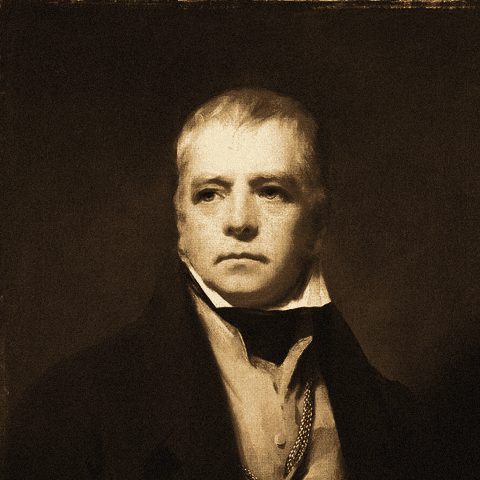
Walter Scott
1771 Edinburgh – 1832 · Scottish novelist, poet and playwright
Sir Walter Scott, 1st Baronet, was a Scottish novelist, poet and historian. Many of his works remain classics of European and Scottish literature.
- 1771Born, Edinburgh
- 1810The Lady of the Lake
- 1814Waverley
- 1819Ivanhoe
- 1821Kenilworth
- 1822The Pirate
More by Walter Scott
Keep going with Scott


If you like The Pirate
More like this


Start with chapter 2
2 chapters free right now — no account. Your place follows you to iPhone and Android.