

Chapter 1 freeNo account needed.
Opens “Hell, Canto 1” in the player · no sign-up needed
The Divine Comedy is an Italian narrative poem by Dante Alighieri, begun c. 1308 and completed c. 1321, shortly before the author's death.
Inside the book
- Free nowno account · 1 chapter
- 1Hell, Canto 16 min
- Premium99 chapters · every book, 7 days free
- 2Hell, Canto 26 min
- 3Hell, Canto 36 min
- 4Hell, Canto 46 min
- 5Hell, Canto 56 min
- 6Hell, Canto 65 min
- 7Hell, Canto 76 min
- 8Hell, Canto 86 min
- 9Hell, Canto 96 min
- 10Hell, Canto 106 min
- 11Hell, Canto 115 min
- 12Hell, Canto 126 min
- 13Hell, Canto 137 min
- 14Hell, Canto 146 min
- 15Hell, Canto 156 min
- 16Hell, Canto 166 min
- 17Hell, Canto 176 min
- 18Hell, Canto 186 min
- 19Hell, Canto 196 min
- 20Hell, Canto 206 min
- 21Hell, Canto 216 min
- 22Hell, Canto 227 min
- 23Hell, Canto 236 min
- 24Hell, Canto 246 min
- 25Hell, Canto 256 min
- 26Hell, Canto 266 min
- 27Hell, Canto 276 min
- 28Hell, Canto 286 min
- 29Hell, Canto 296 min
- 30Hell, Canto 306 min
- 31Hell, Canto 316 min
- 32Hell, Canto 326 min
- 33Hell, Canto 337 min
- 34Hell, Canto 346 min
- 35Purgatory, Canto 16 min
- 36Purgatory, Canto 26 min
- 37Purgatory, Canto 36 min
- 38Purgatory, Canto 46 min
- 39Purgatory, Canto 56 min
- 40Purgatory, Canto 67 min
- 41Purgatory, Canto 76 min
- 42Purgatory, Canto 86 min
- 43Purgatory, Canto 96 min
- 44Purgatory, Canto 106 min
- 45Purgatory, Canto 116 min
- 46Purgatory, Canto 126 min
- 47Purgatory, Canto 136 min
- 48Purgatory, Canto 147 min
- 49Purgatory, Canto 156 min
- 50Purgatory, Canto 167 min
- 51Purgatory, Canto 176 min
- 52Purgatory, Canto 186 min
- 53Purgatory, Canto 196 min
- 54Purgatory, Canto 206 min
- 55Purgatory, Canto 216 min
- 56Purgatory, Canto 226 min
- 57Purgatory, Canto 236 min
- 58Purgatory, Canto 247 min
- 59Purgatory, Canto 256 min
- 60Purgatory, Canto 266 min
- 61Purgatory, Canto 276 min
- 62Purgatory, Canto 286 min
- 63Purgatory, Canto 296 min
- 64Purgatory, Canto 306 min
- 65Purgatory, Canto 316 min
- 66Purgatory, Canto 327 min
- 67Purgatory, Canto 336 min
- 68Paradise, Canto 16 min
- 69Paradise, Canto 26 min
- 70Paradise, Canto 36 min
- 71Paradise, Canto 46 min
- 72Paradise, Canto 56 min
- 73Paradise, Canto 66 min
- 74Paradise, Canto 76 min
- 75Paradise, Canto 87 min
- 76Paradise, Canto 96 min
- 77Paradise, Canto 106 min
- 78Paradise, Canto 116 min
- 79Paradise, Canto 126 min
- 80Paradise, Canto 136 min
- 81Paradise, Canto 146 min
- 82Paradise, Canto 156 min
- 83Paradise, Canto 166 min
- 84Paradise, Canto 176 min
- 85Paradise, Canto 186 min
- 86Paradise, Canto 196 min
- 87Paradise, Canto 206 min
- 88Paradise, Canto 216 min
- 89Paradise, Canto 226 min
- 90Paradise, Canto 236 min
- 91Paradise, Canto 247 min
- 92Paradise, Canto 256 min
- 93Paradise, Canto 266 min
- 94Paradise, Canto 276 min
- 95Paradise, Canto 286 min
- 96Paradise, Canto 296 min
- 97Paradise, Canto 306 min
- 98Paradise, Canto 316 min
- 99Paradise, Canto 326 min
- 100Paradise, Canto 336 min
The opening
Hell, Canto 1
In the midway of this our mortal life, I found me in a gloomy wood, astray Gone from the path direct: and e'en to tell It were no easy task, how savage wild That forest, how robust and rough its growth, Which to remember only, my dismay Renews, in bitterness not far from death. Yet to discourse of what there good befell, All else will I relate discover'd there. How first I enter'd it I scarce can say, Such sleepy dullness in that instant weigh'd My senses down, when the true path I left, But when a mountain's foot I reach'd, where clos'd The valley, that had pierc'd my heart with dread, I look'd aloft, and saw his shoulders broad Already vested with that planet's beam, Who leads all wanderers safe through every way.
Then was a little respite to the fear, That in my heart's recesses deep had lain, All of that night, so pitifully pass'd: And as a man, with difficult short breath, Forespent with toiling, 'scap'd from sea to shore, Turns to the perilous wide waste, and stands At gaze; e'en so my spirit, that yet fail'd Struggling with terror, turn'd to view the straits, That none hath pass'd and liv'd. My weary frame After short pause recomforted, again I journey'd on over that lonely steep,
The hinder foot still firmer. Scarce the ascent Began, when, lo! a panther, nimble, light, And cover'd with a speckled skin, appear'd, Nor, when it saw me, vanish'd, rather strove To check my onward going; that ofttimes With purpose to retrace my steps I turn'd.
The hour was morning's prime, and on his way Aloft the sun ascended with those stars, That with him rose, when Love divine first mov'd Those its fair works: so that with joyous hope All things conspir'd to fill me, the gay skin Of that swift animal, the matin dawn And the sweet season. Soon that joy was chas'd, And by new dread succeeded, when in view A lion came, 'gainst me, as it appear'd,
With his head held aloft and hunger-mad, That e'en the air was fear-struck. A she-wolf Was at his heels, who in her leanness seem'd Full of all wants, and many a land hath made Disconsolate ere now. She with such fear O'erwhelmed me, at the sight of her appall'd, That of the height all hope I lost. As one, Who with his gain elated, sees the time When all unwares is gone, he inwardly Mourns with heart-griping anguish; such was I, Haunted by that fell beast, never at peace, Who coming o'er against me, by degrees Impell'd me where the sun in silence rests.
While to the lower space with backward step I fell, my ken discern'd the form one of one, Whose voice seem'd faint through long disuse of speech. When him in that great desert I espied, "Have mercy on me!" cried I out aloud, "Spirit! or living man! what e'er thou be!"
He answer'd: "Now not man, man once I was, And born of Lombard parents, Mantuana both By country, when the power of Julius yet Was scarcely firm. At Rome my life was past Beneath the mild Augustus, in the time Of fabled deities and false. A bard Was I, and made Anchises' upright son The subject of my song, who came from Troy, When the flames prey'd on Ilium's haughty towers. But thou, say wherefore to such perils past Return'st thou? wherefore not this pleasant mount Ascendest, cause and source of all delight?" "And art thou then that Virgil, that well-spring, From which such copious floods of eloquence Have issued?" I with front abash'd replied. "Glory and light of all the tuneful train! May it avail me that I long with zeal Have sought thy volume, and with love immense Have conn'd it o'er. My master thou and guide! Thou he from whom alone I have deriv'd That style, which for its beauty into fame Exalts me. See the beast, from whom I fled. O save me from her, thou illustrious sage!
"For every vein and pulse throughout my frame She hath made tremble." He, soon as he saw That I was weeping, answer'd, "Thou must needs Another way pursue, if thou wouldst 'scape From out that savage wilderness. This beast, At whom thou criest, her way will suffer none To pass, and no less hindrance makes than death: So bad and so accursed in her kind, That never sated is her ravenous will, Still after food more craving than before. To many an animal in wedlock vile She fastens, and shall yet to many more, Until that greyhound come, who shall destroy Her with sharp pain. He will not life support By earth nor its base metals, but by love, Wisdom, and virtue, and his land shall be The land 'twixt either Feltro. In his might Shall safety to Italia's plains arise, For whose fair realm, Camilla, virgin pure, Nisus, Euryalus, and Turnus fell. He with incessant chase through every town Shall worry, until he to hell at length Restore her, thence by envy first let loose. I for thy profit pond'ring now devise, That thou mayst follow me, and I thy guide Will lead thee hence through an eternal space, Where thou shalt hear despairing shrieks, and see Spirits of old tormented, who invoke A second death; and those next view, who dwell Content in fire, for that they hope to come, Whene'er the time may be, among the blest, Into whose regions if thou then desire T' ascend, a spirit worthier than I Must lead thee, in whose charge, when I depart, Thou shalt be left: for that Almighty King, Who reigns above, a rebel to his law, Adjudges me, and therefore hath decreed, That to his city none through me should come. He in all parts hath sway; there rules, there holds His citadel and throne. O happy those, Whom there he chooses!" I to him in few: "Bard! by that God, whom thou didst not adore, I do beseech thee (that this ill and worse I may escape) to lead me, where thou saidst, That I Saint Peter's gate may view, and those Who as thou tell'st, are in such dismal plight."
Onward he mov'd, I close his steps pursu'd.
About the author
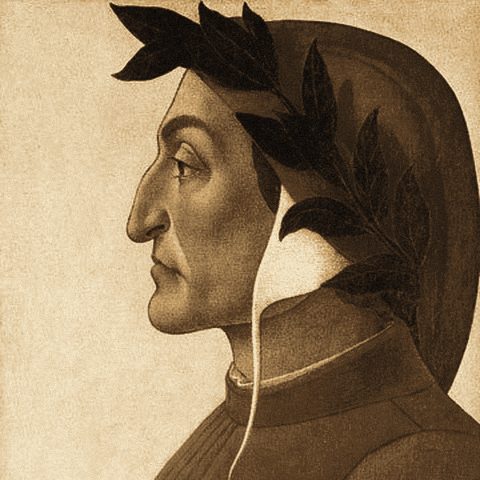
Dante Alighieri
1265 Florence – 1321 Ravenna · Florentine poet, writer, and philosopher
Dante Alighieri, widely known mononymously as Dante, was an Italian poet, writer, and philosopher. His Divine Comedy, originally called Comedìa and later christened Divina by Giovanni Boccaccio, is widely considered one of the most important poems of the Middle Ages and the greatest literary work in the Italian language.
- 1265Born, Florence
- 1320The Divine Comedy
- 1321Died, Ravenna
If you like The Divine Comedy
More like this


Start with “Hell, Canto 1”
First chapter free right now — no account. Your place follows you to iPhone and Android.