

3 chapters freeNo account needed.
Opens “Book 1, part 1” in the player · no sign-up needed
The Countess of Pembroke's Arcadia, also known simply as the Arcadia, is a long prose pastoral romance by Sir Philip Sidney written towards the end of the 16th century.
Inside the book
- Free nowno account · 3 chapters
- —Part 1 of 233 min
- —Part 2 of 236 min
- 3Book 1, part 149 min
- Premium34 chapters · every book, 7 days free
- 4Book 1, part 248 min
- 5Book 1, part 349 min
- 6Book 1, part 449 min
- 7Book 1, part 549 min
- 8Book 1, part 658 min
- 9Book 2, part 154 min
- 10Book 2, part 255 min
- 11Book 2, part 354 min
- 12Book 2, part 456 min
- 13Book 2, part 554 min
- 14Book 2, part 654 min
- 15Book 2, part 754 min
- 16Book 2, part 81 h 02 m
- 17Book 3, part 151 min
- 18Book 3, part 251 min
- 19Book 3, part 350 min
- 20Book 3, part 450 min
- 21Book 3, part 550 min
- 22Book 3, part 652 min
- 23Book 3, part 750 min
- 24Book 3, part 851 min
- 25Book 3, part 951 min
- 26Book 3, part 1051 min
- 27Book 3, part 1158 min
- 28Book 4, part 144 min
- 29Book 4, part 244 min
- 30Book 4, part 346 min
- 31Book 5, part 146 min
- 32Book 5, part 246 min
- 33Book 5, part 348 min
- 34Book 6, part 138 min
- 35Book 6, part 238 min
- 36Book 6, part 344 min
- 37Book 3: Notes [b3-01] sowed] i.e2 min
The opening
Book 1, part 1
It was in the time that the earth begins to put on her new apparel against the approach of her lover, and that the sun, running a most even course, becomes an indifferent arbiter between the night and the day, when the hopeless shepherd Strephon was come to the sands, which lie against the island of Cithera; where viewing the place with a heavy kind of delight, and sometimes casting his eyes to the isleward, he called his friendly rival the pastor Claius unto him; and setting first down in his darkened countenance a doleful copy of what he would speak, "O my Claius," said he, "hither we are now come to pay the rent, for which we are so called unto by over-busy remembrance, remembrance, restless remembrance, which claims not only this duty of us, but for it will have us forget ourselves. I pray you, when we were amid our flock, and that of other shepherds some were running after their sheep, strayed beyond their bounds; some delighting their eyes with seeing them nibble upon the short and sweet grass; some medicining their sick ewes; some setting a bell for an ensign of a sheepish squadron; some with more leisure inventing new games of exercising their bodies, and sporting their wits; did remembrance grant us any holiday, either for pastime or devotion, nay either for necessary food, or natural rest, but that still it forced our thoughts to work upon this place, where we last (alas! that the word last should so long last) did graze our eyes upon her ever-flourishing beauty, did it not still cry within us? 'Ah, you base-minded wretches!—are your thoughts so deeply bemired in the trade of ordinary worldings, as for respect of gain some paltry wool may yield you, to let so much time pass without knowing perfectly her estate, especially in so troublesome a season; to leave that shore unsaluted from whence you may see to the island where she dwelleth; to leave those steps unkissed wherein Urania printed the farewell of all beauty?'
"Well, then, remembrance commanded, we obeyed, and here we find that as our remembrance came ever clothed unto us in the form of this place, so this place gives new heat to the fever of our languishing remembrance. Yonder, my Claius, Urania lighted; the very horse, methought, bewailed to be so disburdened: and as for thee, poor Claius, when thou wentest to help her down, I saw reverence and desire so divide thee, that thou didst at one instant both blush and quake, and instead of bearing her wert ready to fall down thyself. There she sat, vouchsafing my cloak (then most gorgeous) under her: at yonder rising of the ground she turned herself, looking back towards her wonted abode, and because of her parting, bearing much sorrow in her eyes, the lightsomeness whereof had yet so natural a cheerfulness that it made even sorrow seem to smile; at that turning she spake to us all, opening the cherry of her lips, and Lord how greedily mine ears did feed upon the sweet words she uttered! And here she laid her hand over thine eyes, when she saw the tears springing in them, as if she would conceal them from other, and yet herself feel some of thy sorrow. But woe is me, yonder, yonder, did she put her foot into the boat, at that instant, as it were, dividing her heavenly beauty between the earth and the sea. But when she was embarked, did you not mark how the winds whistled and the seas danced for joy, how the sails did swell with pride, and all because they had Urania? O Urania, blessed be thou Urania, the sweetest fairness, and fairest sweetness!"
With that word his voice brake so with sobbing, that he could say no further; and Claius thus answered:
"Alas my Strephon," said he, "what needs this score to reckon up only our losses? What doubt is there, but that the sight of this place doth call our thoughts to appear at the court of affection, held by that racking steward remembrance? As well may sheep forget to fear when they spy wolves, as we can miss such fancies when we see any place made happy by her treading. Who can choose that saw her, but think where she stayed, where she walked, where she turned, where she spoke? But what is all this? truly no more, but as this place served us to think of those things, so those things serve as places to call to memory more excellent matters. No, no, let us think with consideration, and consider with acknowledging, and acknowledge with admiration, and admire with love, and love with joy in the midst of all woes. Let us in such sort think, I say, that our poor eyes were so enriched as to behold and our low hearts so exalted as to love a maid who is such, that as the greatest thing the world can shew is her beauty, so the least thing that may be praised in her is her beauty.
Certainly as her eye-lids are more pleasant to behold than two white kids climbing up a fair tree, and browsing on its tenderest branches, and yet are nothing comparing to the day-shining stars contained in them; and as her breath is more sweet than a gentle south-west wind, which comes creeping over flowery fields and shadowed waters in the extreme heat of summer; and yet is nothing, compared to the honey-flowing speech that breath doth carry: no more all that our eyes can see of her (though when they have seen her, what else they shall ever see is but dry stubble after clover-grass) is to be matched with the flock of unspeakable virtues laid up delightfully in that best-builded fold. But indeed, as we can better consider the sun's beauty by marking how he gilds these waters and mountains than by looking upon his own face, too glorious for our weak eyes: so it may be our conceits (not able to bear her sun-staining excellency) will better weigh it by her works upon some meaner subject employed. And alas, who can better witness that than we, whose experience is grounded upon feeling?
Hath not the only love of her made us (being silly ignorant shepherds) raise up our thoughts above the ordinary level of the world, so that great clerks do not disdain our conference? Hath not the desire to seem worthy in her eyes made us, when others were sleeping, to sit viewing the course of the heavens; when others were running at Base[b1-01], to run over learned writings; when others mark their sheep, we to mark ourselves? Hath not she thrown reason upon our desires, and, as it were, given eyes unto Cupid? Hath in any but in her love-fellowship maintained friendship between rivals, and beauty taught the beholders chastity?"
He was going on with his praises, but Strephon bade him stay and look: and so they both perceived a thing which floated, drawing nearer and nearer to the bank; but rather by the favourable working of the sea than by any self-industry. They doubted a while what it should be till it was cast up even hard before them, at which time they fully saw that it was a man. Whereupon running for pity's sake unto him, they found his hands (as it should appear, constanter friends to his life than his memory) fast gripping upon the edge of a square small coffer which lay all under his breast: else in himself no show of life, so that the board seemed to be but a bier to carry him to land to his sepulchre. So drew they up a young man of goodly shape, and well-pleasing favour, that one would think death had in him a lovely countenance; and that, though he were naked, nakedness was to him an apparel. That sight increased their compassion, and their compassion called up their care; so that lifting his feet above his head, making a great deal of salt water come out of his mouth, they laid him upon some of their garments, and fell to rub and chafe him, till they brought him to recover both breath, the servant, and warmth, the companion, of living. At length opening his eyes, he gave a great groan (a doleful note, but a pleasant ditty, for by that they found not only life but strength of life in him). They therefore continued on their charitable office until, his spirits being well returned, he—without so much as thanking them for their pains—gat up, and looking round about to the uttermost limits of sight, and crying upon the name of Pyrocles, nor seeing nor hearing cause of comfort, "What," said he, "and shall Musidorus live after Pyrocles's destruction?"
Therewithal he offered wilfully to cast himself again into the sea: a strange sight to the shepherds, to whom it seemed that before being in appearance dead, had yet saved his life, and now coming to his life, should be a cause to procure his death; but they ran unto him, and pulling him back (then too feeble for them) by force stickled that unnatural fray.
"I pray you," said he, "honest men, what such right have you in me, as not to suffer me to do with myself what I list, and what policy have you to bestow a benefit where it is counted an injury?"
They hearing him speak in Greek (which was their natural language) became the more tender-hearted towards him, and considering by his calling and looking that the loss of some dear friend was great cause of his sorrow, told him, they were poor men that were bound, by course of humanity, to prevent so great a mischief; and that they wished him, if opinion of some body's perishing bred such desperate anguish in him, that he should be comforted by his own proof, who had lately escaped as apparent danger as any might be.
"No, no," said he, "it is not for me to attend so high a blissfulness: but since you take care of me, I pray you find means that some barque may be provided, that will go out of the haven that if it be possible we may find the body, far, far too precious food for fishes: and for that hire I have within this casket of value sufficient to content them."
Claius presently went to a fisherman, and having agreed with him, and provided some apparel for the naked stranger, he embarked, and the shepherds with him: and were no sooner gone beyond the mouth of the haven, but that some way into the sea they might discern, as it were, a stain of the water's colour, and by times some sparks and smoke mounting thereout. But the young man no sooner saw it, but that beating his breast he cried that there was the beginning of his ruin, entreating them to bend their course as near unto it as they could; telling, how that smoke was but a small relique of a great fire which had driven both him and his friend rather to commit themselves to the cold mercy of the sea than to abide the hot cruelty of the fire; and that therefore, though they both had abandoned the ship, that he was (if any were) in that course to be met withal. They steered therefore as near thitherward as they could: but when they came so near that their eyes were full masters of the object, they saw a sight full of piteous strangeness: a ship, or rather the carcase of the ship, or rather some few bones of the carcase hulling there, part broken, part burned, part drowned: death having used more than one dart to that destruction. About it floated great store of very rich things and many chests which might promise no less. And amidst the precious things were a number of dead bodies, which likewise did not only testify both elements' violence, but that the chief violence was grown of human inhumanity: for their bodies were full of grisly wounds, and their blood had (as it were) filled the wrinkles of the sea's visage; which it seemed the sea would not wash away, that it might witness that it is not always its fault when we do condemn its cruelty. In sum, a defeat where the conquered kept both field and spoil: a shipwreck without storm or ill-footing: and a waste of fire in the midst of the water.
But a little way off they saw the mast, whose proud height now lay along; like a widow having lost her mate of whom she held her honour: but upon the mast they saw a young man (at least if he were a man) bearing show of about eighteen years of age, who sat (as on horse-back) having nothing upon him but his shirt, which being wrought with blue silk and gold had a kind of resemblance to the sea: on which the sun (then near his western home) did shoot some of his beams. His hair (which the young men of Greece used to wear very long) was stirred up and down with the wind, which seemed to have a sport to play with it, as the sea had to kiss his feet; himself full of admirable beauty, set forth by the strangeness both of his seat and gesture. For, holding his head up full of unmoved majesty he held a sword aloft with his fair arm, which often he waved about his crown, as though he would threaten the world in that extremity. But the fishermen, when they came so near him that it was time to throw out a rope by which hold they might draw him, their simplicity bred such amazement, and their amazement such superstition that (assuredly thinking it was some God begotten between Neptune and Venus that had made all this terrible slaughter), as they went under sail by him, held up their hands and made their prayers. Which when Musidorus saw, though he were almost as much ravished with joy as they with astonishment, he leaped to the mariner, and took the cord out of his hand, and (saying, "Dost thou live, and art thou well," who answered, "Thou canst tell best, since most of my well-being stands in thee,") threw it out, but already the ship was passed beyond Pyrocles: and therefore Musidorus could do no more but persuade the mariners to cast about again, assuring them that he was but a man, although of most divine excellencies, and promising great rewards for their pains.
And now they were already come upon the stays; when one of the sailors descried a galley which came with sails and oars directly in the chase of them; and straight perceived it was a well-known pirate who hunted not only for goods but for bodies of men, which he employed either to be his galley-slaves or to sell at the best market. Which when the matter understood, he commanded forthwith to set on all the canvas he could and fly homeward, leaving in that fort poor Pyrocles so near to be rescued. But what did not Musidorus say, what did he not offer to persuade them to venture to fight; but fear standing at the gates of their ears, put back all persuasions: so that he had nothing whatever to accompany Pyrocles but his eyes, nought to succour him but his wishes. Therefore praying for him, and casting a long look that way, he saw the galley leave the pursuit of them and turn to take up the spoils of the other wreck: and lastly he might well see them lift up the young man; and "alas," said he to himself, "dear Pyrocles, shall that body of thine be enchained, shall those victorious hands of thine be commanded to base offices, shall virtue become a slave to those that be slaves to viciousness, alas, better had it been thou hadst ended nobly thy noble days: what death is so evil as unworthy servitude?"
But that opinion soon ceased when he saw the galley setting upon another ship, which held long and strong fight with her: for then he began afresh to fear the life of his friend, and to wish well to the pirates whom before he hated, lest in their ruin he might perish. But the fishermen made such speed into the haven, that they absented his eyes from beholding the issue: where being entered, he could not procure neither them, or any other as then, to put themselves into the sea: so that being so full of sorrow for being unable to do anything as void of counsel how to do anything, besides that sickness grew something upon him, the honest shepherds Strephon and Claius (who being themselves true friends did the more perfectly judge the justness of his sorrow) advise him that he should mitigate somewhat of his woe, since he had gotten an amendment in fortune, being come from assured persuasion of his death to have no cause to despair of his life: as one that had lamented the death of his sheep should after know they were but strayed would receive pleasure, though readily he knew not where to find them.
"Now, Sir," said they, "thus for ourselves it is; we are in profession but shepherds, and in this country of Laconia little better than strangers, and therefore neither in skill nor ability of power greatly to stead you. But what we can present unto you is this: Arcadia, of which country we are, is but a little way hence; and even upon the next confines there dwelleth a gentleman, by name Kalander, who vouchsafest much favour unto us: a man who for his hospitality is so much haunted that no news stir but comes to his ears; for his upright dealings so beloved of his neighbours, that he hath many ever ready to do him their uttermost service; and by the great goodwill our prince bears him may soon obtain the use of his name and credit, which hath a principal sway, not only in his own Arcadia, but in all these countries of Peloponnesus: and (which is worth all) all these things give him not so much power, as his nature gives him will to benefit: so that it seems no music is so sweet to his ears as deserved thanks. To him we will bring you, and there you may recover again your health, without which you cannot be able to make any diligent search for your friend; and therefore you must labour for it. Besides, we are sure the comfort of courtesy and ease of wise counsel shall not be wanting."
Musidorus (who, besides he was merely unacquainted in the country, had his wits astonished with sorrow) gave easy consent to that from which he saw no reason to disagree: and therefore (defraying the mariners with a ring bestowed upon them) they took their journey together through Laconia; Claius and Strephon by course carrying his chest for him, Musidorus only bearing in his countenance evident marks of a sorrowful mind, supported with a weak body; which they perceiving, and knowing that the violence of sorrow is not, at the first, to be striven withal (being like a mighty beast, sooner tamed with following than overthrown by withstanding), they gave way unto it, for that day and the next; never troubling him, either with asking questions or finding fault with his melancholy; but rather fitting to his dolour, dolorous discourses of their own and other folks' misfortunes. Which speeches, though they had not a lively entrance to his senses shut up in sorrow, yet like one half asleep he took hold of much of the matter spoken unto him, for that a man may say, ere sorrow was aware, they made his thoughts bear away something else beside his own sorrow, which wrought so in him, that at length he grew content to mark their speeches, then to marvel at such wit in shepherds, after to like their company, and lastly to vouchsafe conference: so that the third day after, in the time that the morning did strew roses and violets in the heavenly floor against the coming of the sun, the nightingales (striving one with the other which could in most dainty variety recount their wrong-caused sorrow) made them put off their sleep, and rising from under a tree (which that night had been their pavilion) they went on their journey, which by and by welcomed Musidorus's eyes (wearied with the wasted soil of Laconia) with delightful prospects.
There were hills which garnished their proud heights with stately trees; humble valleys whose base estate seemed comforted with the refreshing of silver rivers; meadows, enamelled with all sorts of eye-pleasing flowers; thickets, which, being lined with most pleasant shade, were witnessed so too by the cheerful disposition of many well-tuned birds; each pasture stored with sheep feeding with sober security, while the pretty lambs with bleating oratory craved the dams' comfort; here a shepherd's boy piping, as though he should never be old; there a young shepherdess knitting, and withal singing, and it seemed that her voice comforted her hands to work and her hands kept time to her voice-music. As for the houses of the country (for many houses came under their eye) they were all scattered, no two being one by the other, and yet not so far off as that it barred mutual succour: a show, as it were, of an accompanable solitariness and of a civil wildness. "I pray you," said Musidorus, then first unsealing his long silent lips: "what countries be these we pass through, which are so divers in show, the one wanting no store, the other having no store but of want?"
"The country," answered Claius, "where you were cast ashore and now are passed through is Laconia, not so poor by the barrenness of the soil (though in itself not passing fertile) as by a civil war, which being these two years within the bowels of that estate, between the gentlemen and the peasants (by them named Helots), hath in this fort as it were disfigured the face of nature, and made it so unhospitable as now you have found it: the towns neither of the one side nor the other willingly opening their gates to strangers, nor strangers willingly entering for fear of being mistaken.
"But this country where now you set your foot is Arcadia: and even hard by is the house of Kalander, whither we lead you. This country being thus decked with peace and (the child of peace) good husbandry, these houses you see so scattered are of men, as we two are, that live upon the commodity of their sheep; and therefore in the division of the Arcadian estate are termed shepherds: a happy people, wanting little, because they desire not much."
"What cause then," said Musidorus, "made you venture to leave this sweet life, and put yourself in yonder unpleasant and dangerous realm?" "Guarded with poverty," answered Strephon, "and guided with love." "But now," said Claius, "since it hath pleased you to ask anything of us, whose baseness is such as the very knowledge is darkness, give us leave to know something of you, and of the young man you so much lament, that at least we may be the better instructed to inform Kalander, and he the better know how to proportion his entertainment."
Musidorus, according to the agreement between Pyrocles and him to alter their names answered that he called himself Palladius and his friend Daiphantus; "but till I have him again," said he, "I am indeed nothing, and therefore my story is of nothing; his entertainment (since so good a man he is) cannot be so low as I account my estate; and in sum, the sum of all his courtesy may be to help me by some means to seek my friend."
They perceived he was not willing to open himself further, and therefore without further questioning brought him to the house; about which they might see (with fit consideration both of the air, the prospect, and the nature of the ground) all such necessary additions to a great house as might well show Kalander knew that provision is the foundation of hospitality and thrift the fuel of magnificence. The house itself was built of fair and strong stone, not affecting so much any extraordinary kind of fineness as an honourable representing of a firm stateliness. The lights, doors and stairs rather directed to the use of the guest than to the eye of the artificer; and yet as the one chiefly heeded, so the other not neglected; each place handsome without curiosity, and homely without loathsomeness; not so dainty as not to be trod on, nor yet slubbered up with good fellowship; all more lasting than beautiful, but that the consideration of the exceeding lastingness made the eye believe it was exceeding beautiful. The servants not so many in number as cleanly in apparel and serviceable in behaviour, testifying even in their countenances that their master took as well care to be served as of them that did serve. One of them was forthwith ready to welcome the shepherds as men whom though they were poor their master greatly favoured; and understanding by them that the young man with them was to be much accounted of, for that they had seen tokens of more than common greatness, howsoever now eclipsed with fortune, he ran to his master, who came presently forth, and pleasantly welcoming the shepherds, but especially applying him to Musidorus, Strephon privately told him all what he knew of him, and particularly that he found this stranger was loth to be known.
"No," said Kalander speaking aloud, "I am no herald to inquire of men's pedigrees; it sufficeth me if I know their virtues; which (if this young man's face be not a false witness) do better apparel his mind, than you have done his body." While he was thus speaking, there came a boy in show like a merchant's prentice, who, taking Strephon by the sleeve delivered him a letter, written jointly both to him and Claius, from Urania, which they no sooner had read but that with short leave taking of Kalander (who quickly guessed and smiled at the matter) and once again (though hastily) recommending the young man unto him, they went away, leaving Musidorus even loth to part with them, for the good conversation he had had of them and obligation he accounted himself tied in unto them: and therefore, they delivering his chest unto him, he opened it, and would have presented them with two very rich jewels, but they absolutely refused them, telling him that they were more than enough rewarded in the knowing of him, and without hearkening unto a reply (like men whose hearts disdained all desires but one) gat speedily away, as if the letter had brought wings to make them fly. But by that sight Kalander soon judged that his guest was of no mean calling; and therefore the more respectfully entertaining him, Musidorus found his sickness (which the fight, the sea and late travel had laid upon him) grow greatly, so that, fearing some sudden accident, he delivered the chest to Kalander, which was full of most precious stones gorgeously and cunningly set in divers manners, desiring him he would keep those trifles, and if he died, he would bestow so much of it as was needful, to find out and redeem a young man, naming himself Daiphantus, as then in the hands of Laconian pirates.
But Kalander seeing him faint more and more, with careful speed conveyed him to the most commodious lodging in his house, where being possessed with an extreme burning fever he continued some while with no great hope of life; but youth at length got the victory of sickness, so that in six weeks the excellency of his returned beauty was a credible ambassador of his health, to the great joy of Kalander, who, as in his time he had by certain friends of his that dwelt near the sea in Messenia set forth a ship and a galley to seek and succour Daiphantus, so at home did he omit nothing which he thought might either profit or gratify Palladius.
For, having found in him (besides his bodily gifts beyond the degree of admiration) by daily discourses, which he delighted himself to have with him, a mind of most excellent composition, a piercing wit, quite void of ostentation, high erected thought seated in a heart of courtesy, an eloquence as sweet in the uttering as slow to come to the uttering, a behaviour so noble as gave a majesty to adversity; and all in a man whose age could not be above one and twenty years; the good old man was even enamoured with a fatherly love towards him, or rather became his servant by the bonds such virtue laid upon him; once, he acknowledged himself so to be by the badge of diligent attendance.
But Palladius having gotten his health, and only staying there to be in place where he might hear answer of the ships set forth, Kalander one afternoon led him abroad to a well-arrayed ground he had behind his house, which he thought to show him before his going as the place himself more than in any other delighted in. The backside of the house was neither field, garden nor orchard; or rather it was both field, garden and orchard: for as soon as the descending of the stairs had delivered them down, they came into a place cunningly set with trees of the most taste-pleasing fruits: but scarcely they had taken that into their consideration but that they were suddenly stept into a delicate green; of each side of the green a thicket, and behind the thickets again new beds of flowers, which being under the trees the trees were to them a pavilion, and they to the trees a mosaical floor, so that it seemed that Art therein would needs be delightful, by counterfeiting his enemy Error and making order in confusion.
In the midst of all the place was a fair pond whose shaking crystal was a perfect mirror to all the other beauties, so that it bare show of two gardens; one in deed, the other in shadows. And in one of the thickets was a fine fountain made thus: a naked Venus of white marble, wherein the graver had used such cunning that the natural blue veins of the marble were framed in fit places to set forth the beautiful veins of her body. At her breast she had her babe Aeneas, who seemed, having begun to suck, to leave that to look upon her fair eyes, which smiled at the babe's folly, meanwhile the breast running.
Hard by was a house of pleasure built for a summer-retiring place; whither Kalander leading him he found a square room full of delightful pictures made by the most excellent workmen of Greece. There was Diana when Actaeon saw her bathing; in whose cheeks the painter had set such a colour as was mixed between shame and disdain, and one of her foolish nymphs, who weeping, and withal lowering, one might see the workman meant to set forth tears of anger. In another table was Atalanta, the posture of whose limbs was so lively expressed, that if the eyes were only judges, as they be the only seers, one would have sworn the very picture had run. Besides many more, as of Helena, Omphale, Iole: but in none of them all beauty seemed to speak so much as in a large table, which contained a comely old man, with a lady of middle-age, but of excellent beauty, and more excellent would have been deemed, but that there stood between a young maid, whose wonderfulness took away all beauty from her, but that which it might seem she gave her back again by her very shadow.
And such difference (being known that it did indeed counterfeit a person living) was there between her and all the other, though goddesses, that it seemed the skill of the painter bestowed nothing on the other new beauty, but that the beauty of her bestowed new skill on the painter. Though he thought inquisitiveness an uncomely guest he could not choose but ask who she was, that bearing show of one being indeed could with natural gifts go beyond the reach of invention. Kalander answered, that it was made by Philoclea, the younger daughter of his prince, who also with his wife were contained in that table: the painter meaning to represent the present condition of the young lady, who stood watched by an over-curious eye of her parents; and that he would also have drawn her eldest sister, esteemed her match for beauty, in her shepherdish attire, but that rude clown her guardian would not suffer it; neither durst he ask leave of the prince, for fear of suspicion. Palladius perceived that the matter was wrapped up in some secrecy, and therefore would, for modesty, demand no further; but yet his countenance could not but with dumb eloquence desire it.
Which Kalander perceiving, "Well," said he, "my dear guest, I know your mind, and I will satisfy it: neither will I do it like a niggardly answerer, going no further than the bounds of the question; but I will discover unto you as well that wherein my knowledge is common with others as that which by extraordinary means is delivered unto me; knowing so much in you (though not long acquainted) that I shall find your ears faithful treasurers." So then sitting down in two chairs, and sometimes casting his eye to the picture, he thus spake:
"This country Arcadia among all the provinces of Greece, hath ever been had in singular reputation; partly for the sweetness of the air and other natural benefits, but principally for the well-tempered minds of the people who (finding that the shining title of glory, so much affected by other nations, doth indeed help little to the happiness of life) are the only people which, as by their justice and providence give neither cause nor hope to their neighbours to annoy, so are they not stirred with false praise to trouble others' quiet, thinking it a small reward for the wasting of their own lives in ravening, that their posterity should long after say they had done so. Even the Muses seem to approve their good determination by choosing this country for their chief repairing place, and by bestowing their perfections so largely here that the very shepherds have their fancies lifted to so high conceits that the learned of other nations are content both to borrow their names and imitate their cunning.
"Here dwelleth and reigneth this prince (whose picture you see) by name Basilius; a prince of sufficient skill to govern so quiet a country, where the good minds of the former princes had set down good laws, and the well-bringing up of the people doth serve as a most sure bond to hold them. But to be plain with you, he excels in nothing so much as the zealous love of his people, wherein he doth not only pass all his own foregoers but, as I think, all the princes living. Whereof the cause is, that though he exceed not in the virtues which get admiration, as depth of wisdom, height of courage, and largeness of magnificence, yet is he notable in those which stir affection, as truth of word, meekness, courtesy, mercifulness, and liberality.
"He, being already well stricken in years, married a young princess, named Gynecia, daughter to the king of Cyprus, of notable beauty, as by her picture you see: a woman of great wit, and in truth of more princely virtues than her husband; of most unspotted chastity; but of so working a mind and so vehement spirits that a man may say, it was happy she took a good course for otherwise it would have been terrible.
"Of these two are brought into the world two daughters, so beyond measure excellent in all the gifts allotted to reasonable creatures that we may think they were born to show that nature is no stepmother to that sex, how much soever some men (sharp-witted only in evil speaking) have sought to disgrace them. The elder is named Pamela; by many men not deemed inferior to her sister: for my part, when I marked them both, methought there was (if at least such perfections may receive the word of more) more sweetness in Philoclea but more majesty in Pamela: methought love played in Philoclea's eyes, and threatened in Pamela's; methought Philoclea's beauty only persuaded, but so persuaded as all hearts must yield; Pamela's beauty used violence, and such violence as no heart could resist. And it seems that such proportion is between their minds: Philoclea so bashful, as though her excellencies had stolen into her before she was aware; so humble, that she will put all pride out of countenance; in sum, such proceeding as will stir hope but teach hope good manners.
Pamela of high thoughts who avoids not pride with not knowing her excellencies, but by making that one of her excellencies to be void of pride; her mother's wisdom, greatness, nobility, but (if I can guess aright) knit with a more constant temper. Now then, our Basilius being so publicly happy as to be a prince, and so happy in that happiness as to be a beloved prince; and so in his private estate blessed as to have so excellent a wife and so over-excellent children, hath of late taken a course which yet makes him more spoken of than all these blessings. For having made a journey to Delphos, and safely returned, within short space, he brake up his court, and retired himself, his wife and children, into a certain forest hereby which he called his desert; wherein (besides an house appointed for stables and lodgings for certain persons of mean calling who do all household services) he hath builded two fine lodges: in the one of them himself remains with his younger daughter Philoclea (which was the cause they three were matched together in this picture) without having any other creature living in that lodge with him.
"Which though it be strange, yet not strange as the course he hath taken with the princess Pamela whom he hath placed in the other lodge: but how think you accompanied? Truly with none other but one Dametas, the most arrant doltish clown that I think ever was without the privilege of a bauble, with his wife Miso and daughter Mopsa, in whom no wit can devise anything wherein they may pleasure her but to exercise her patience and to serve for a foil of her perfections. This loutish clown is such that you never saw so ill-favoured a vizor; his behaviour such that he is beyond the degree of ridiculous; and for his apparel, even as I would with him: Miso his wife so handsome a beldam, that only her face and her splay-foot have made her accused for a witch; only one good point she hath, that she observes decorum, having a forward mind in a wretched body. Between these two personages (who never agreed in any humour, but in disagreeing) is issued forth mistress Mopsa, a fit woman to participate of both their perfections: but because a pleasant fellow of my acquaintance set forth her praises in verse, I will only repeat them, and spare mine own tongue, since she goes for a woman. The verses are these, which I have so often caused to be sung, that I have them without book.
What length of verse can serve, brave Mopsa's good to show? When virtues strange, and beauties such, as no man them may know: Thus shrewdly burden'd then, how can my Muse escape? The Gods must help, and precious things must serve, to shew her shape, Like great God Saturn fair, and like fair Venus chaste: As smooth as Pan, as Juno mild, like Goddess Iris fac't, With Cupid she forsees, and goes God Vulcan's pace: And for a taste of all these gifts, she steals God Momus' grace. Her forehead Jacinth-like, her cheeks of Opal hue, Her twinkling eyes bedeck'd with Pearl, her lips a Sapphire blue: Her hair like Crapal stone; her mouth O heav'nly wide! Her skin like burnished gold, her hands like silver ore untry'd. As for her parts unknown, which hidden sure are best: Happy be they which will believe, and never seek the rest.
"Now truly having made these descriptions unto you, methinks you should imagine that I rather feign some pleasant device than recount a truth that a prince (not banished from his own wits) could possibly make so unworthy a choice. But truly (dear guest) so it is that princes (whose doings have been often smoothed with good success) think nothing so absurd, which they cannot make honourable. The beginning of his credit was by the prince's straying out of the way, one time he hunted, where meeting this fellow, and asking him the way; and so falling into other questions, he found some of his answers (as a dog sure, if he could speak, had wit enough to describe his kennel) not unsensible, and all uttered with such rudeness, which he interpreted plainness (though there be great difference between them) that Basilius, conceiving a sudden delight, took him to his court, with apparent show of his good opinion: where the flattering courtier had no sooner taken the prince's mind, but that there were straight reasons to confirm the prince's doing, and shadows of virtues found for Dametas.
His silence grew wit, his bluntness integrity, his beastly ignorance virtuous simplicity, and the prince (according to the nature of great persons, in love with what he had done himself) fancied that his weakness with his presence would much be mended. And so like a creature of his own making, he liked him more and more; and thus having first given him the office of principal herdsman; lastly, since he took this strange determination, he hath in a manner put the life of himself and his children into his hands. Which authority (like too great a sail for so small a boat) doth so oversway poor Dametas, that, if before he was a good fool in a chamber, he might be allowed it now in a comedy, so as I doubt me (I fear me indeed) my master will in the end (with his cost) find that his office is not to make men, but to use men as men are, no more than a horse will be taught to hunt, or an ass to manage. But in sooth I am afraid I have given your ears too great a surfeit with gross discourses of that heavy piece of flesh. But the zealous grief I conceive to see so great an error in my lord hath made me bestow more words than I confess so base a subject deserveth.
"Thus much now that I have told you is nothing more than in effect any Arcadian knows. But what moved him to this strange solitariness hath been imparted (as I think) but to one person living. Myself can conjecture, and indeed more than conjecture by this accident that I will tell you: I have an only son, by name Clitophon, who is now absent, preparing for his own marriage, which I mean shortly shall be here celebrated. This son of mine (while the prince kept his court) was of his bed-chamber: now since the breaking up of thereof returned home, and showed me (among other things he had gathered) the copy which he had taken of a letter: which when the prince had read, he had laid in a window, presuming nobody durst look in his writings: but my son not only took a time to read it, but to copy it. In truth I blamed Clitophon for the curiosity which made him break his duty in such a kind, whereby kings' secrets are subject to be revealed, but since it was done, I was content to take so much profit as to know it. Now here is the letter that I ever since, for my good liking, have carried about me: which before I read unto you, I must tell you from whom it came.
It is a nobleman of his country, named Philanax, appointed by the prince regent, in this time of his retiring, and most worthy so to be: for, there lives no man whose excellent wit more simply embraceth integrity, beside his unfeigned love to his master, wherein never yet any could make question, saving whether he loved Basilius, or the prince better: a rare temper, while most men either servilely yield to all appetites, or with an obstinate austerity looking to that they fancied good, in effect neglect the prince's person. This then being the man, whom of all other (and most worthy) the prince chiefly loves, it should seem (for more than the letter I have not to guess by) that the prince upon his return from Delphos (Philanax then lying sick) had written unto him his determination, rising (as evidently appears) upon some oracle he had there received: whereunto he wrote this answer:
Philanax's letter to Basilius.
Most redoubted and beloved prince! if as well it had pleased you at your going to Delphos, as now, to have used my humble service, both I should in better season, and to better purpose have spoken; and you (if my speech had prevailed) should have been at this time, as no way more in danger, so much more in quietness? I would then have said that wisdom and virtue be the only destinies appointed to man to follow; whence we ought to seek all our knowledge, since they be such guides as cannot fail; which, besides their inward comfort, do lead so direct a way of proceeding, as either prosperity must ensue; or, if the wickedness of the world should oppress it, it can never be said that evil happeneth to him who falls accompanied with virtue: I would then have said the heavenly powers ought to be reverenced and searched into, and their mercies rather by prayers to be fought than their hidden counsels by curiosity. These kinds of sooth-sayings (since they have left us in ourselves sufficient guides) be nothing but fancy, wherein there must either be vanity, or infallibleness, and so either not to be respected, or not to be prevented.
But since it is weakness too much to remember what should have been done, and that your commandment stretched to know what is to be done, I do (most dear Lord!) with humble boldness say that the manner of your determination doth in no sort better please me than the cause of your going. These thirty years you have so governed this region, that neither your subjects have wanted justice in you, nor you obedience in them; and your neighbours have found you so hurtlessly strong, that they thought it better to rest in your friendship, than to make new trial of your enmity. If this then have proceeded out of the good constitution of your state, and out of a wise providence generally to prevent all those things which might encumber your happiness, why should you now seek new courses, since your own example comforts you to continue, and that it is to me most certain (though it please you not to tell me the very words of the oracle) that yet no destiny nor influence whatsoever can bring man's wit to a higher point than wisdom and goodness: why should you deprive yourself of government for fear of losing your government, like one that should kill himself for fear of death?
Nay, rather, if this oracle be to be accounted of, arm up your courage the more against it: for who will stick to him that abandons himself: let your subjects have you in their eyes, let them see the benefits of your justice daily more and more, and so much they needs rather like of present sureties than uncertain changes. Lastly, whether your time call you to live or die, do both like a prince. Now for your second resolution, which is to suffer no worthy prince to be a suitor to either of your daughters, but while you live to keep them both unmarried, and, as it were, to kill the joy of posterity, which in your time you may enjoy, moved perchance by a misunderstood oracle? what shall I say, if the affection of a father to his own children cannot plead sufficiently against such fancies? once, certain it is, the God which is God of nature doth never teach unnaturalness; and even the same mind hold I touching your banishing them from company, lest I know not what strange loves should follow.
Certainly, Sir, in my ladies, your daughters, nature promiseth nothing but goodness, and their education by your fatherly care hath been hitherto such as hath been most fit to restrain all evil, giving their minds virtuous delights, and not grieving them for want of well-ruled liberty. Now to fall to a sudden straightening them, what can it do but argue suspicion? a thing no more unpleasant than unsure for the preserving of virtue. Leave women's minds the most untamed that way of any: see whether a cage can please a bird; or whether a dog grow not fiercer with tying? what doth jealousy but stir up the mind to think what it is from which are restrained? for they are treasures or things of great delight, which men use to hide for the aptness they have to each man's fancy: and the thoughts once awaked to that, harder sure it is to keep those thoughts from accomplishment than had been before to have kept the mind (which being the chief part, by this means is defiled) from thinking.
Lastly, for the recommending of so principal a charge of the princess Pamela (whose mind goes beyond the governing of many thousand such) to such a person as Dametas is (besides that the thing in itself is strange) it comes of a very ill ground that ignorance should be the mother of faithfulness. Oh no, he cannot be good that knows not why he is good; but stands so far good as his fortune may keep him unassayed; but coming once to that, his rude simplicity is either easily changed, or easily deceived: and so grows that to be the last excuse of his fault, which seemed to have been the foundation of his faith. Thus far hath your commandment and my zeal drawn me; which I, like a man in a valley that may discern hills, or like a poor passenger that may spy a rock, so humbly submit to your gracious consideration, beseeching you again to stand wholly upon your own virtue, as the surest way to maintain you in that you are, and to avoid any evil which may be imagined.
"By the contents of this letter you may perceive, that the cause of all hath been the vanity which possesseth many who (making a perpetual mansion of this poor baiting-place of man's life) are desirous to know the certainty of things to come, wherein there is nothing so certain as our continual uncertainty. But what in particular points the oracle was, in faith I know not, neither (as you may see by one place of Philanax's letter) he himself distinctly knew. But this experience shews us that Basilius's judgment, corrupted with a prince's fortune, hath rather heard than followed the wise (as I take it) counsel of Philanax. For having left the stern of his government with much amazement to the people, among whom many strange bruits are received for current, with some appearance of danger in respect of the valiant Amphialus his nephew, and much envying the ambitious number of the nobility against Philanax, to see Philanax so advanced, though (to speak simply) he deserve more than as many of us as there be in Arcadia: the prince himself hath hidden his head, in such sort as I told you, not sticking plainly to confess that he means not (while he breathes) that his daughters shall have any husband, but keep them thus solitary with him: where he gives no other body leave to visit him at any time but a certain priest, who being excellent in poetry, he makes him write out such things as he best likes, he being no less delightful in conversation than needful for devotion, and about twenty specified shepherds, in whom (some for eclogues) he taketh greater recreation.
"And now you know as much as myself: wherein if I have held you over-long, lay hardly the fault upon my old age, which in the very disposition of it is talkative, whether it be (said he smiling) that nature loves to exercise that part most, which is least decayed, and that is our tongue, or, that knowledge being the only thing whereof we poor old men can brag, we cannot make it known but by utterance: or, that mankind by all means seeking to eternize himself so much the more, as he is near his end, doth it not only by the children that come of him, but by speeches and writings recommended to the memory of hearers and readers. And yet thus much I will say for myself, that I have not laid these matters either so openly or largely to any as to yourself: so much (if I much fail not) do I see in you which makes me both love and trust you."
"Never may he be old," answered Palladius, "that doth not reverence that age, whose heaviness, if it weigh down the frail and fleshly balance, it as much lifts up the noble and spiritual part; and well might you have alleged another reason, that their wisdom makes them willing to profit others. And that have I received of you, never to be forgotten, but with ungratefulness. But among many strange conceits you told me, which have shewed effects in your prince, truly even the last, that he should conceive such pleasure in shepherds' discourses would not seem the least unto me, saving that you told me at the first that this country is notable in those wits, and that indeed myself having been brought not only to this place, but to my life by Strephon and Claius in their conference found wits as might better become such shepherds as Homer speaks of, that be governors of people, than such senators who hold their council in a sheep-cote."
"For them two (said Kalander), especially Claius, they are beyond the rest by so much as learning commonly doth add to nature: for, having neglected their wealth in respect of their knowledge, they have not so much impaired the meaner, as they bettered the better. Which all notwithstanding, it is a sport to hear how they impute to love which hath indued their thoughts (say they) with such a strength. But certainly all the people of this country, from high to low, are given to those sports of the wit, so as you would wonder to hear how soon even children will begin to versify. Once, ordinary it is amongst the meanest sort, to make songs and dialogues in metre, either love whetting their brain, or long peace having begun it, example and emulation amending it. Not so much, but the clown Dametas will stumble sometimes upon some songs that might become a better brain: but no sort of people are so excellent in that kind as the pastors, for their living standing but upon the looking to their beasts, they have ease, the nurse of poetry.
Neither are our shepherds such as (I hear) they be in other countries, but they are the very owners of the sheep, to which either themselves look, or their children give daily attendance. And then truly, it would delight you under some tree, or by some river's side (when two or three of them meet together) to hear their rural muse, how prettily it will deliver out, sometimes joys, sometimes lamentations, sometimes challengings one of the other, sometimes under hidden forms, uttering such matters as otherwise they durst not deal with. Then have they most commonly one who judgeth the prize to the best doer, of which they are no less glad than great princes are of triumphs: and his part is to set down in writing all that is said, save that it may be his pen with more leisure doth polish the rudeness of an unthought-on song.
Now the choice of all (as you may well think) either for goodness of voice, or pleasantness of wit, the prince hath: among whom also there are two or three strangers, who, inward melancholies having made weary of the world's eyes, have come to spend their lives among the country people of Arcadia, and their conversation being well approved, the prince vouchsafeth them his presence, and not only by looking on, but by great courtesy and liberality animates the shepherds the more exquisitely to labour for his good liking. So that there is no cause to blame the prince for sometimes hearing them; the blame-worthiness is, that to hear them, he rather goes to solitariness than makes them come to company.
About the author
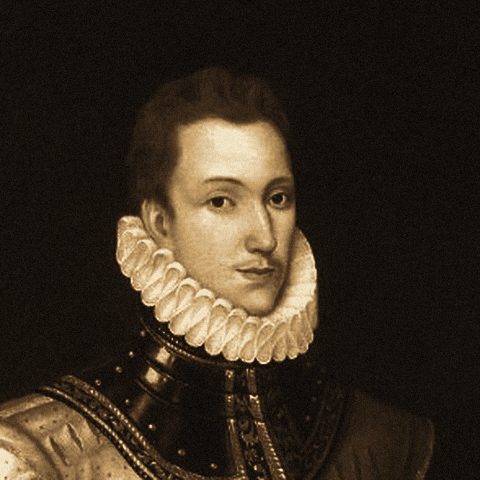
Philip Sidney
1554 Penshurst – 1586 Arnhem · English poet, courtier, diplomat
Sir Philip Sidney was an English poet, courtier, scholar and soldier who is remembered as one of the most prominent figures of the Elizabethan age.
If you like The Countess of Pembroke's Arcadia
More like this


Start with “Book 1, part 1”
3 chapters free right now — no account. Your place follows you to iPhone and Android.