

2 chapters freeNo account needed.
Opens “Some Sage Observations That Naturally Introduce Our Important History” in the player · no sign-up needed
The Adventures of Ferdinand, Count Fathom is a novel by Tobias Smollett, first published in 1753.
Inside the book
- Free nowno account · 2 chapters
- —Introduction26 min
- 1Some Sage Observations That Naturally Introduce Our Important History8 min
- Premium66 chapters · every book, 7 days free
- 2A Superficial View of Our Hero’s Infancy5 min
- 3He Is Initiated in A Military Life, and Has the Good...6 min
- 4His Mother's Prowess and Death; Together with Some I...10 min
- 5A Brief Detail of His Education12 min
- 6He Meditates Schemes of Importance8 min
- 7Engages in Partnership with A Female Associate, in O...9 min
- 8Their First Attempt; with A Digression Which Some Re...10 min
- 9The Confederates Change Their Battery, and Achieve A...7 min
- 10They Proceed to Levy Contributions with Great Succes...8 min
- 11Fathom Makes Various Efforts in the World of Gallantry6 min
- 12He Effects A Lodgment in the House of A Rich Jeweller10 min
- 13He Is Exposed to A Most Perilous Incident in the Cou...10 min
- 14He Is Reduced to A Dreadful Dilemma, in Consequence...7 min
- 15But at Length Succeeds in His Attempt upon Both11 min
- 16His Success Begets A Blind Security, by Which He Is...12 min
- 17The Step-Dame's Suspicions Being Awakened, She Lays...14 min
- 18Our Hero Departs from Vienna, and Quits the Domain O...8 min
- 19He Puts Himself Under the Guidance of His Associate...10 min
- 20He Prepares A Stratagem but Finds Himself Countermin...11 min
- 21He Falls upon Scylla, Seeking to Avoid Charybdis8 min
- 22He Arrives at Paris, and Is Pleased with His Reception8 min
- 23Acquits Himself with Address in A Nocturnal Riot17 min
- 24He Overlooks the Advances of His Friends, and Smarts...17 min
- 25He Bears His Fate Like A Philosopher; and Contracts...8 min
- 26The History of the Noble Castilian38 min
- 27A Flagrant Instance of Fathom's Virtue, in the Manne...8 min
- 28Some Account of His Fellow-Travellers7 min
- 29Another Providential Deliverance from the Effects of...14 min
- 30The Singular Manner of Fathom's Attack and Triumph O...9 min
- 31He by Accident Encounters His Old Friend, with Whom...11 min
- 32He Appears in the Great World with Universal Applause and Admiration11 min
- 33He Attracts the Envy and Ill Offices of the Minor Kn...12 min
- 34He Performs Another Exploit, That Conveys A True Ide...19 min
- 35He Repairs to Bristol Spring, Where He Reigns Paramo...7 min
- 36He Is Smitten with the Charms of A Female Adventurer...9 min
- 37Fresh Cause for Exerting His Equanimity and Fortitude14 min
- 38The Biter Is Bit8 min
- 39Our Adventurer Is Made Acquainted with A New Scene of Life14 min
- 40He Contemplates Majesty and Its Satellites in Eclipse9 min
- 41One Quarrel Is Compromised, and Another Decided by Unusual Arms11 min
- 42An Unexpected Rencontre, and A Happy Revolution in T...10 min
- 43Fathom Justifies the Proverb, "What's Bred in the Bo...7 min
- 44Anecdotes of Poverty, and Experiments for the Benefi...14 min
- 45Renaldo’s Distress Deepens, and Fathom’s Plot Thickens10 min
- 46Our Adventurer Becomes Absolute in His Power Over Th...24 min
- 47The Art of Borrowing Further Explained, and an Accou...15 min
- 48Count Fathom Unmasks His Battery; Is Repulsed; and V...11 min
- 49Monimia’s Honour Is Protected by the Interposition of Heaven17 min
- 50Fathom Shifts the Scene, and Appears in A New Character17 min
- 51Triumphs Over A Medical Rival17 min
- 53Chapter 5212 min
- 53Acquires Employment in Consequence of A Lucky Miscarriage11 min
- 54His Eclipse, and Gradual Declination11 min
- 55After Divers Unsuccessful Efforts, He Has Recourse T...16 min
- 56In Which His Fortune Is Effectually Strangled9 min
- 57Fathom Being Safely Housed, the Reader Is Entertaine...10 min
- 58Renaldo Abridges the Proceedings at Law, and Approve...14 min
- 59He Is the Messenger of Happiness to His Sister, Who...14 min
- 60He Recompenses the Attachment of His Friend; and Rec...19 min
- 61Renaldo Meets with A Living Monument of Justice, and...13 min
- 62His Return to England, and Midnight Pilgrimage to Monimia’s Tomb18 min
- 63He Renews the Rites of Sorrow, and Is Entranced18 min
- 64The Mystery Unfolded—Another Recognition, Which, It...19 min
- 66Chapter 6516 min
- 66The History Draws Near A Period25 min
- 67The Longest and the Last35 min
The opening
Some Sage Observations That Naturally Introduce Our Important History
Cardinal de Retz very judiciously observes, that all historians must of necessity be subject to mistakes, in explaining the motives of those actions they record, unless they derive their intelligence from the candid confession of the person whose character they represent; and that, of consequence, every man of importance ought to write his own memoirs, provided he has honesty enough to tell the truth, without suppressing any circumstance that may tend to the information of the reader. This, however, is a requisite that, I am afraid, would be very rarely found among the number of those who exhibit their own portraits to the public. Indeed, I will venture to say, that, how upright soever a man's intentions may be, he will, in the performance of such a task, be sometimes misled by his own phantasy, and represent objects, as they appeared to him, through the mists of prejudice and passion.
An unconcerned reader, when he peruses the history of two competitors, who lived two thousand years ago, or who perhaps never had existence, except in the imagination of the author, cannot help interesting himself in the dispute, and espousing one side of the contest, with all the zeal of a warm adherent. What wonder, then, that we should be heated in our own concerns, review our actions with the same self-approbation that they had formerly acquired, and recommend them to the world with all the enthusiasm of paternal affection?
Supposing this to be the case, it was lucky for the cause of historical truth, that so many pens have been drawn by writers, who could not be suspected of such partiality; and that many great personages, among the ancients as well as moderns, either would not or could not entertain the public with their own memoirs. From this want of inclination or capacity to write, in our hero himself, the undertaking is now left to me, of transmitting to posterity the remarkable adventures of FERDINAND COUNT FATHOM; and by the time the reader shall have glanced over the subsequent sheets, I doubt not but he will bless God that the adventurer was not his own historian.
This mirror of modern chivalry was none of those who owe their dignity to the circumstances of their birth, and are consecrated from the cradle for the purposes of greatness, merely because they are the accidental children of wealth. He was heir to no visible patrimony, unless we reckon a robust constitution, a tolerable appearance, and an uncommon capacity, as the advantages of inheritance. If the comparison obtains in this point of consideration, he was as much as any man indebted to his parent; and pity it was, that, in the sequel of his fortune, he never had an opportunity of manifesting his filial gratitude and regard. From this agreeable act of duty to his sire, and all those tendernesses that are reciprocally enjoyed betwixt the father and the son, he was unhappily excluded by a small circumstance; at which, however, he was never heard to repine. In short, had he been brought forth in the fabulous ages of the world, the nature of his origin might have turned to his account; he might, like other heroes of antiquity, have laid claim to divine extraction, without running the risk of being claimed by an earthly father. Not that his parents had any reason to disown or renounce their offspring, or that there was anything preternatural in the circumstances of his generation and birth; on the contrary, he was, from the beginning, a child of promising parts, and in due course of nature ushered into the world amidst a whole cloud of witnesses. But, that he was acknowledged by no mortal sire, solely proceeded from the uncertainty of his mother, whose affections were so dissipated among a number of admirers, that she could never pitch upon the person from whose loins our hero sprung.
Over and above this important doubt under which he was begotten, other particularities attended his birth, and seemed to mark him out as something uncommon among the sons of men. He was brought forth in a waggon, and might be said to be literally a native of two different countries; for, though he first saw the light in Holland, he was not born till after the carriage arrived in Flanders; so that, all these extraordinary circumstances considered, the task of determining to what government he naturally owed allegiance, would be at least as difficult as that of ascertaining the so much contested birthplace of Homer.
Certain it is, the Count's mother was an Englishwoman, who, after having been five times a widow in one campaign, was, in the last year of the renowned Marlborough's command, numbered among the baggage of the allied army, which she still accompanied, through pure benevolence of spirit, supplying the ranks with the refreshing streams of choice Geneva, and accommodating individuals with clean linen, as the emergency of their occasions required. Nor was her philanthropy altogether confined to such ministration; she abounded with "the milk of human kindness," which flowed plentifully among her fellow-creatures; and to every son of Mars who cultivated her favour, she liberally dispensed her smiles, in order to sweeten the toils and dangers of the field.
And here it will not be amiss to anticipate the remarks of the reader, who, in the chastity and excellency of his conception, may possibly exclaim, "Good Heaven! will these authors never reform their imaginations, and lift their ideas from the obscene objects of low life? Must the public be again disgusted with the grovelling adventures of a waggon? Will no writer of genius draw his pen in the vindication of taste, and entertain us with the agreeable characters, the dignified conversation, the poignant repartee, in short, the genteel comedy of the polite world?"
Have a little patience, gentle, delicate, sublime critic; you, I doubt not, are one of those consummate connoisseurs, who, in their purifications, let humour evaporate, while they endeavour to preserve decorum, and polish wit, until the edge of it is quite worn off.
Or, perhaps, of that class, who, in the sapience of taste, are disgusted with those very flavours in the productions of their own country which have yielded infinite delectation to their faculties, when imported from another clime; and d—n an author in despite of all precedent and prescription;—who extol the writings of Petronius Arbiter, read with rapture the amorous sallies of Ovid's pen, and chuckle over the story of Lucian's ass; yet, if a modern author presumes to relate the progress of a simple intrigue, are shocked at the indecency and immorality of the scene;—who delight in following Guzman d'Alfarache, through all the mazes of squalid beggary; who with pleasure accompany Don Quixote and his squire, in the lowest paths of fortune; who are diverted with the adventures of Scarron's ragged troop of strollers, and highly entertained with the servile situations of Gil Blas; yet, when a character in humble life occasionally occurs in a performance of our own growth, exclaim, with an air of disgust, "Was ever anything so mean! sure, this writer must have been very conversant with the lowest scenes of life;"—who, when Swift or Pope represents a coxcomb in the act of swearing, scruple not to laugh at the ridiculous execrations; but, in a less reputed author, condemn the use of such profane expletives;—who eagerly explore the jakes of Rabelais, for amusement, and even extract humour from the dean's description of a lady's dressing-room; yet in a production of these days, unstamped with such venerable names, will stop their noses, with all the signs of loathing and abhorrence, at a bare mention of the china chamber-pot;—who applauded Catullus, Juvenal, Persius, and Lucan, for their spirit in lashing the greatest names of antiquity; yet, when a British satirist, of this generation, has courage enough to call in question the talents of a pseudo-patron in power, accuse him of insolence, rancour, and scurrility.
If such you be, courteous reader, I say again, have a little patience; for your entertainment we are about to write. Our hero shall, with all convenient despatch, be gradually sublimed into those splendid connexions of which you are enamoured; and God forbid, that, in the meantime, the nature of his extraction should turn to his prejudice in a land of freedom like this, where individuals are every day ennobled in consequence of their own qualifications, without the least retrospective regard to the rank or merit of their ancestors. Yes, refined reader, we are hastening to that goal of perfection, where satire dares not show her face; where nature is castigated, almost even to still life; where humour turns changeling, and slavers in an insipid grin; where wit is volatilised into a mere vapour; where decency, divested of all substance, hovers about like a fantastic shadow; where the salt of genius, escaping, leaves nothing but pure and simple phlegm; and the inoffensive pen for ever drops the mild manna of soul-sweetening praise.
About the author
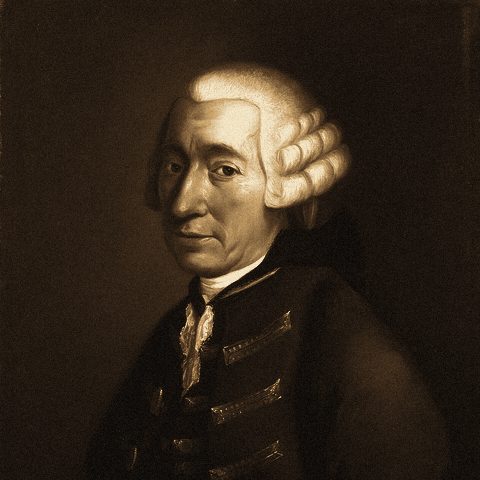
T. Smollett
1721 Cardross – 1771 Livorno · Scottish writer and surgeon
Tobias George Smollett was a Scottish writer and surgeon. He was best known for writing picaresque novels such as The Adventures of Roderick Random, The Adventures of Peregrine Pickle and The Expedition of Humphry Clinker, which influenced later generations of British novelists, including Charles Dickens.
- 1721Born, Cardross
- 1748The Adventures of Roderick Random
- 1753The Adventures of Ferdinand Count Fathom
- 1771Died, Livorno
- 1771The Expedition of Humphry Clinker
If you like The Adventures of Ferdinand Count Fathom
More like this


Start with “Some Sage Observations That Naturally Introduce Our Important History”
2 chapters free right now — no account. Your place follows you to iPhone and Android.