

3 chapters freeNo account needed.
Opens “Section 1: Goods—Wants” in the player · no sign-up needed
Roscher begins with goods, wants, value, wealth and the nature of a national economy, and defends a historical method that studies economic life as it has developed among real peoples rather than through abstract deduction.
Inside the book
- Free nowno account · 3 chapters
- —Part 1 of 246 min
- —Part 2 of 247 min
- 3Section 1: Goods—Wants4 min
- Premium153 chapters · every book, 7 days free
- 4Section 2: Goods.—Economic Goods2 min
- 5Section 3: Goods.—The Three Classes of Goods2 min
- 6Section 4: Of Value.—Value in Use3 min
- 7Section 5: Value.—Value in Exchange1 min
- 8Section 6, part 12 min
- 9Section 7: Resources or Means (Vermögen)1 min
- 10Section 8: Valuation of Resources3 min
- 11Section 91 min
- 12Section 10: Wealth.—Signs of National Wealth3 min
- 13Section 11: Of Economy (Husbandry)4 min
- 14Section 12: Economy.—Grades of Economy3 min
- 15Section 13: Political Economy.—The Economic Organism3 min
- 16Section 14: Origin of A Nation's Economy2 min
- 17Section 15: Diseases of the Social Organism1 min
- 18Section 16: Political or National Economy4 min
- 19Section 172 min
- 20Section 183 min
- 21Section 19: Private Economy—Cameralistic Science3 min
- 22Section 20: Private Economy2 min
- 23Section 21: What Political Economy Treats of3 min
- 24Section 22: Former Methods4 min
- 25Section 23: The Idealistic Method5 min
- 26Section 25: The Idealistic Method2 min
- 27Section 262 min
- 28Section 272 min
- 29Section 28: Advantages of the Historical Method2 min
- 30Section 292 min
- 31Section 30: Meaning of Production2 min
- 32Section 311 min
- 33Section 32: External Nature.—The Sea.—Climate4 min
- 34Section 332 min
- 35Section 34: External Nature2 min
- 36Section 353 min
- 37Section 362 min
- 38Section 373 min
- 39Section 38: Of Labor.—Divisions of Labor2 min
- 40Section 39: Labor.—Taste for Labor.—Piece-Wages5 min
- 41Section 40: Labor.—Labor-Power of Individuals3 min
- 42Section 412 min
- 43Section 425 min
- 44Section 43: Capital.—Productive Capital3 min
- 45Section 442 min
- 46Section 45: Capital.—How It Originates3 min
- 47Section 462 min
- 48Section 473 min
- 49Section 481 min
- 50Section 494 min
- 51Section 50: The Same Subject Continued4 min
- 52Section 52: Idea of Productiveness1 min
- 53Section 53: The Same Subject Continued2 min
- 54Section 544 min
- 55Section 55: The Degree of Productiveness1 min
- 56Section 56: Development of the Division of Labor1 min
- 57Section 573 min
- 58Section 58: Advantages of the Division of Labor4 min
- 59Section 59: Conditions of the Division of Labor1 min
- 60Section 602 min
- 61Section 614 min
- 62Section 623 min
- 63Section 633 min
- 64Section 64: The Co-Operation of Labor1 min
- 65Section 653 min
- 66Section 66: Advantage of Large Enterprises1 min
- 67Section 67: The Origin of Slavery2 min
- 68Section 68: The Same Subject Continued2 min
- 69Section 69: Origin of Slavery.—Want of Freedom1 min
- 70Section 70: Emancipation2 min
- 71Section 71: Disadvantages of Slavery4 min
- 72Section 721 min
- 73Section 73: The Same Subject Continued3 min
- 74Section 74: The Same Subject Continued1 min
- 75Section 75: The Same Subject Continued3 min
- 76Section 76: (Appendix to Chapter IV.)5 min
- 77Section 77: Capital.—Importance of Private Property1 min
- 78Section 78: Socialism and Communism5 min
- 79Section 80: Socialism and Communism2 min
- 80Section 81: Community of Goods4 min
- 81Section 82: The Organization of Labor3 min
- 82Section 83: The Organization of Labor3 min
- 83Section 84: The Organization of Labor4 min
- 84Section 85: The Right of Inheritance1 min
- 85Section 863 min
- 86Section 87: Landed Property2 min
- 87Section 88: Landed Property3 min
- 88Section 89: Credit in General3 min
- 89Section 90: Credit—Effects of Credit4 min
- 90Section 91: Debtor Laws2 min
- 91Section 92: History of Credit Laws3 min
- 92Section 93: Means of Promoting Credit3 min
- 93Section 94: Letters of Respite (Specialmoratorien)3 min
- 94Section 95: Meaning of the Circulation of Goods3 min
- 95Section 96: Rapidity of Circulation2 min
- 96Section 97: Freedom of Competition5 min
- 97Section 982 min
- 98Section 993 min
- 99Section 100: Prices in General2 min
- 100Section 1014 min
- 101Section 1021 min
- 102Section 103: Demand.—Indispensable Goods3 min
- 103Section 1041 min
- 104Section 1051 min
- 105Section 106: The Cost of Production4 min
- 106Section 1083 min
- 107Section 109: Effect of A Decline of Price Below Cost4 min
- 108Section 1111 min
- 109Section 112: Exceptions3 min
- 110Section 1132 min
- 111Section 114: Prices Fixed by Government2 min
- 112Section 1154 min
- 113Section 116: Instrument of Exchange3 min
- 114Section 117: Effect of the Introduction of Money4 min
- 115Section 118: The Different Kinds of Money1 min
- 116Section 119: The Metals as Money3 min
- 117Section 120: Money—The Precious Metals4 min
- 118Section 1212 min
- 119Section 122: Value in Exchange of Money2 min
- 120Section 123: The Quantity of Money A Nation Needs7 min
- 121Section 124: The Quantity of Money A Nation Needs1 min
- 122Section 1253 min
- 123Section 1263 min
- 124Section 127: Measure of Prices,—Constant Measure2 min
- 125Section 128: Value in Exchange Estimated in Labor3 min
- 126Section 1294 min
- 127Section 1302 min
- 128Section 1312 min
- 129Section 1323 min
- 130Section 1331 min
- 131Section 1343 min
- 132Section 1352 min
- 133Section 1365 min
- 134Section 1375 min
- 135Section 1383 min
- 136Section 1396 min
- 137Section 1405 min
- 138Section 1411 min
- 139Section 1423 min
- 140Section 1432 min
- 141Section 1: Paper Money and Money-Paper2 min
- 142Section 23 min
- 143Section 3: Kinds of Redemption2 min
- 144Section 4: Compulsory Circulation6 min
- 145Section 5: Resumption of Specie Payments4 min
- 146Section 6, part 21 h 05 m
- 147Section 6, part 31 h 05 m
- 148Section 6, part 41 h 09 m
- 149Section 6, part 51 h 09 m
- 150Section 6, part 61 h 10 m
- 151Section 6, part 71 h 06 m
- 152Section 6, part 81 h 07 m
- 153Section 6, part 91 h 08 m
- 154Section 6, part 101 h 11 m
- 155Section 6, part 111 h 18 m
- 156Section 6, part 121 h 16 m
The opening
Section 1: Goods—Wants
Goods—Wants.
The starting point, as well as the object-point of our science is Man.(49)
Every man has numberless wants, physical and intellectual.(50)(51) Wants are either necessaries, decencies (Anstandsbedürfnisse) or luxuries. The non-satisfaction of necessary wants causes disease or death; that of the wants of decency endangers one's social position.(52) The much greater number, and the longer continuance of his wants are among the most striking differences between man and the brute:(53) wants such as clothing, fuel,(54) tools, and those resulting from his much longer period of infancy; which last, together with other causes, has contributed so largely to make marriage necessary and universal. While the lower animals have no wants, but necessities, and while their aggregate-want, even in the longest series of generations, admits of no qualitative increase, the circle of man's wants is susceptible of indefinite extension.(55) And, indeed, every advance in culture made by man finds expression in an increase in the number and in the keenness of his rational wants. No man who distinguishes himself in anything, but feels spurred thereto by a peculiar want; and this want is both the cause and the effect of the power which is peculiar to him. No one but the poet feels the want of poetizing; no one but the philosopher, of philosophizing. In every particular, intellectual or physical, in which the man is in advance of the child, he experiences new wants unknown to the child. Our education consists, for the most part, in awakening wants and providing for their satisfaction.
Goods are anything which can be used, whether directly or indirectly, for the satisfaction of any true(56) or legitimate human want,(57) and whose utility, for this purpose, is recognized. Hence, the idea goods is an essentially relative one. Every change in man's wants, or knowledge, is accompanied by a rapid, corresponding change, either in the limits of the circle(58) of goods, or in their relative importance. Thus, the tobacco plant has, probably, existed thousands of years. It became goods, however, only from the time that man recognized its use for smoking, snuffing etc., and experienced the want of it for these purposes. In a similar way, the limestone of the Solenhofen quarries has become goods, of considerable importance, only since the invention of lithography; decaying bones, only since that of bone-dust manure; caoutchouc since about 1825, and gutta-percha, only since 1844. On the other hand, charms,(59) philters, and even relics, since the decay of faith in their efficacy, have lost the quality of goods. If the aggregate income of all mankind were, by some sudden revolution, to be equally divided among all, diamonds, for instance, would greatly decline in value, for the reason that it is dependent, in great part, on the wants generated by vanity, or by the desire of outshining others. Beer, tobacco etc., would rise in the scale as goods, because the circle of those to whose wants they minister would have been very greatly extended. On the whole, advancement in civilization has uniformly the effect, of itself, to increase the quantity and number of goods, the wants and knowledge of men being thereby increased. We should reach the ideal here, if all men experienced only true or legitimate wants, but these completely; if they could see their way, clearly, to the satisfaction of them, and find the means of satisfying them with just the amount of effort most conducive to their physico-intellectual development.(60)
About the author
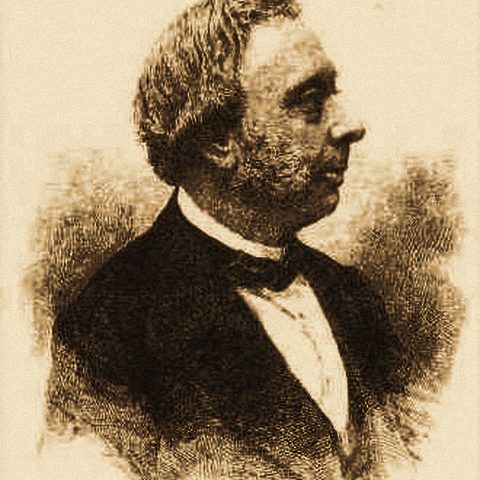
Wilhelm Roscher
1817 Hanover – 1894 Leipzig · German economist
Wilhelm Georg Friedrich Roscher was a German economist from Hanover.
If you like Principles of Political Economy
More like this


Start with “Section 1: Goods—Wants”
3 chapters free right now — no account. Your place follows you to iPhone and Android.