

2 chapters freeNo account needed.
Opens “Lecture 1: Mind and Matter” in the player · no sign-up needed
I have been invited to speak to you about the relations between Religion and Philosophy.
Rashdall argues from an idealist starting point that mind cannot be reduced to matter, that the world requires a universal cause of a mental kind, and that the moral consciousness points to a righteous God.
Inside the book
- Free nowno account · 2 chapters
- —Preface11 min
- 2Lecture 1: Mind and Matter36 min
- Premium5 chapters · every book, 7 days free
- 3Lecture 2: The Universal Cause39 min
- 4Lecture 3: God and the Moral Consciousness37 min
- 5Lecture 4: Difficulties and Objections54 min
- 6Lecture 5: Revelation38 min
- 7Lecture 6: Christianity44 min
The opening
Lecture 1: Mind and Matter
Mind And Matter
I have been invited to speak to you about the relations between Religion and Philosophy. To do that in a logical and thoroughgoing way it would be necessary to discuss elaborately the meaning first of Religion and then of Philosophy. Such a discussion would occupy at least a lecture, and I am unwilling to spend one out of six scanty hours in formal preliminaries. I shall assume, therefore, that we all know in some general way the meaning of Religion. It is not necessary for our present purpose to discuss such questions as the definition of Religion for purposes of sociological investigation, or the possibility of a Religion without a belief in God, or the like. I shall assume that, whatever else may be included in the term Religion, Christianity may at least be included in it; and that what you are practically most interested in is the bearing of Philosophy upon the Christian ideas concerning the being and nature of God, the hope of Immortality, the meaning and possibility of Revelation. When we turn to Philosophy, I cannot perhaps assume with equal confidence that all of you know what it is.
But then learning what Philosophy is—especially that most fundamental part of Philosophy which is called Metaphysics—is like learning to swim: you never discover how to do it until you find yourself considerably out of your depth. You must strike out boldly, and at last you discover what you are after. I shall presuppose that in a general way you do all know that Philosophy is an enquiry into the ultimate nature of the Universe at large, as opposed to the discussion of those particular aspects or departments of it which are dealt with by the special Sciences. What you want to know, I take it, is—what rational enquiry, pushed as far as it will go, has to say about those ultimate problems of which the great historical Religions likewise profess to offer solutions. The nature and scope of Philosophy is best understood by examples: and therefore I hope you will excuse me if without further preface I plunge in medias res. I shall endeavour to presuppose no previous acquaintance with technical Philosophy, and I will ask those who have already made some serious study of Philosophy kindly to remember that I am trying to make myself intelligible to those who have not.
I shall not advance anything which I should not be prepared to defend even before an audience of metaphysical experts. But I cannot undertake in so short a course of lectures to meet all the objections which will, I know, be arising in the minds of any metaphysically trained hearers who may honour me with their presence, many of which may probably occur to persons not so trained. And I further trust the Metaphysicians among you will forgive me if, in order to be intelligible to all, I sometimes speak with a little less than the akribeia at which I might feel bound to aim if I were reading a paper before an avowedly philosophical Society. Reservations, qualifications, and elaborate distinctions must be omitted, if I am to succeed in saying anything clearly in the course of six lectures.
Moreover, I would remark that, though I do not believe that an intention to edify is any excuse for slipshod thought or intellectual dishonesty, I am speaking now mainly from the point of view of those who are enquiring into metaphysical truth for the guidance of their own religious and practical life, rather than from the point of view of pure speculation. I do not, for my own part, believe in any solution of the religious problem which evades the ultimate problems of all thought. The Philosophy of Religion is for me not so much a special and sharply distinguished branch or department of Philosophy as a particular aspect of Philosophy in general.
But many questions which may be of much importance from the point of view of a complete theory of the Universe can be entirely, or almost entirely, put on one side when the question is, 'What may I reasonably believe about those ultimate questions which have a direct and immediate bearing upon my religious and moral life; what may I believe about God and Duty, about the world and its ultimate meaning, about the soul and its destiny?' For such purposes solutions stopping short of what will fully satisfy the legitimate demands of the professed Metaphysician may be all that is necessary, or at least all that is possible for those who are not intending to make a serious and elaborate study of Metaphysic. I have no sympathy with the attempt to base Religion upon anything but honest enquiry into truth: and yet the professed Philosophers are just those who will most readily recognize that there are—if not what are technically called degrees of truth—still different levels of thought, different degrees of adequacy and systematic completeness, even within the limits of thoroughly philosophical thinking.
I shall assume that you are not content to remain at the level of ordinary unreflecting Common-sense or of merely traditional Religion—that you do want (so far as time and opportunity serve) to get to the bottom of things, but that you will be content in such a course as the present if I can suggest to you, or help you to form for yourselves, an outline—what Plato would call the hypotyposis of a theory of the Universe which may still fall very far short of a finished and fully articulated metaphysical system.
I suppose that to nearly everybody who sets himself down to think seriously about the riddle of the Universe there very soon occurs the question whether Materialism may not contain the solution of all difficulties. I think, therefore, our present investigation had better begin with an enquiry whether Materialism can possibly be true. I say 'can be true' rather than 'is true,' because, though dogmatic Materialists are rare, the typical Agnostic is one who is at least inclined to admit the possibility of Materialism, even when he does not, at the bottom of his mind, practically assume its truth. The man who is prepared to exclude even this one theory of the Universe from the category of possible but unprovable theories is not, properly speaking, an Agnostic. To know that Materialism at least is not true is to know something, and something very important, about the ultimate nature of things. I shall not attempt here any very precise definition of what is meant by Materialism. Strictly speaking, it ought to mean the view that nothing really exists but matter. But the existence, in some sense or other, of our sensations and thoughts and emotions is so obvious to Common-sense that such a creed can hardly be explicitly maintained: it is a creed which is refuted in the very act of enunciating it. For practical purposes, therefore, Materialism may be said to be the view that the ultimate basis of all existence is matter; and that thought, feeling, emotion—consciousness of every kind—is merely an effect, a by-product or concomitant, of certain material processes.
Now if we are to hold that matter is the only thing which exists, or is the ultimate source of all that exists, we ought to be able to say what matter is. To the unreflecting mind matter seems to be the thing that we are most certain of, the one thing that we know all about. Thought, feeling, will, it may be suggested, are in some sense appearances which (though we can't help having them) might, from the point of view of superior insight, turn out to be mere delusions, or at best entirely unimportant and inconsiderable entities. This attitude of mind has been amusingly satirised by the title of one of Mr. Bradley's philosophical essays--'on the supposed uselessness of the Soul.' In this state of mind matter presents itself as the one solid reality—as something undeniable, something perfectly intelligible, something, too, which is pre-eminently important and respectable; while thinking and feeling and willing, joy and sorrow, hope and aspiration, goodness and badness, if they cannot exactly be got rid of altogether, are, as it were, negligible quantities, which must not be allowed to disturb or interfere with the serious business of the Universe.
From this point of view matter is supposed to be the one reality with which we are in immediate contact, which we see and touch and taste and handle every hour of our lives. It may, therefore, sound a rather startling paradox to say that matter—matter in the sense of the Materialist—is something which nobody has ever seen, touched, or handled. Yet that is the literal and undeniable fact. Nobody has ever seen or touched or otherwise come in contact with a piece of matter. For in the experience which the plain man calls seeing or touching there is always present another thing. Even if we suppose that he is Justified in saying 'I touch matter,' there is always present the 'I' as well as the matter. It is always and inevitably matter + mind that he knows. Nobody ever can get away from this 'I,' nobody can ever see or feel what matter is like apart from the 'I' which knows it. He may, indeed, infer that this matter exists apart from the 'I' which knows it. He may infer that it exists, and may even go as far as to assume that, apart from his seeing or touching, or anybody else's seeing or touching, matter possesses all those qualities which it possesses for his own consciousness. But this is inference, and not immediate knowledge. And the validity or reasonableness of the inference may be disputed. How far it is reasonable or legitimate to attribute to matter as it is in itself the qualities which it has for us must depend upon the nature of those qualities. Let us then go on to ask whether the qualities which constitute matter as we know it are qualities which we can reasonably or even intelligibly attribute to a supposed matter-in-itself, to matter considered as something capable of existing by itself altogether apart from any kind of conscious experience.
In matter, as we know it, there are two elements. There are certain sensations, or certain qualities which we come to know by sensation, and there are certain relations. Now, with regard to the sensations, a very little reflection will, I think, show us that it is absolutely meaningless to say that matter has the qualities implied by these sensations, even when they are not felt, and would still possess them, even supposing it never had been and never would be felt by any one whatever. In a world in which there were no eyes and no minds, what would be the meaning of saying that things were red or blue? In a world in which there were no ears and no minds, there would clearly be no such thing as sound. This is exactly the point at which Locke's analysis stopped. He admitted that the 'secondary qualities'—colours, sounds, tastes—of objects were really not in the things themselves but in the mind which perceives them.
What existed in the things was merely a power of producing these sensations in us, the quality in the thing being not in the least like the sensations which it produces in us: he admitted that this power of producing a sensation was something different from, and totally unlike, the sensation itself. But when he came to the primary qualities—solidity, shape, magnitude and the like—he supposed that the qualities in the thing were exactly the same as they are for our minds. If all mind were to disappear from the Universe, there would henceforth be no red and blue, no hot and cold; but things would still be big or small, round or square, solid or fluid. Yet, even with these 'primary qualities' the reference to mind is really there just as much as in the case of the secondary qualities; only the fact is not quite so obvious. And one reason for this is that these primary qualities involve, much more glaringly and unmistakably than the secondary, something which is not mere sensation—something which implies thought and not mere sense. What do we mean by solidity, for instance?
We mean partly that we get certain sensations from touching the object—sensations of touch and sensations of what is called the muscular sense, sensations of muscular exertion and of pressure resisted. Now, so far as that is what solidity means, it is clear that the quality in question involves as direct a reference to our subjective feelings as the secondary qualities of colour and sound. But something more than this is implied in our idea of solidity. We think of external objects as occupying space. And spaciality cannot be analysed away into mere feelings of ours. The feelings of touch which we derive from an object come to us one after the other. No mental reflection upon sensations which come one after the other in time could ever give us the idea of space, if they were not spacially related from the first. It is of the essence of spaciality that the parts of the object shall be thought of as existing side by side, outside one another. But this side-by-sideness, this outsideness, is after all a way in which the things present themselves to a mind.
Space is made up of relations; and what is the meaning of relations apart from a mind which relates, or for which the things are related? If spaciality were a quality of the thing in itself, it would exist no matter what became of other things. It would be quite possible, therefore, that the top of this table should exist without the bottom: yet everybody surely would admit the meaninglessness of talking about a piece of matter (no matter how small, be it an atom or the smallest electron conceived by the most recent physical speculation) which had a top without a bottom, or a right-hand side without a left. This space-occupying quality which is the most fundamental element in our ordinary conception of matter is wholly made up of the relation of one part of it to another. Now can a relation exist except for a mind? As it seems to me, the suggestion is meaningless. Relatedness only has a meaning when thought of in connection with a mind which is capable of grasping or holding together both terms of the relation. The relation between point A and point B is not in point A or in point B taken by themselves.
It is all in the 'between': 'betweenness' from its very nature cannot exist in any one point of space or in several isolated points of space or things in space; it must exist only in some one existent which holds together and connects those points. And nothing, as far as we can understand, can do that except a mind. Apart from mind there can be no relatedness: apart from relatedness no space: apart from space no matter. It follows that apart from mind there can be no matter.
It will probably be known to all of you that the first person to make this momentous inference was Bishop Berkeley. There was, indeed, an obscure medieval schoolman, hardly recognized by the historians of Philosophy, one Nicholas of Autrecourt, Dean of Metz, who anticipated him in the fourteenth century, and other better-known schoolmen who approximated to the position; and there are, of course, elements in the teaching of Plato and even of Aristotle, or possible interpretations of Plato and Aristotle, which point in the same direction. But full-blown Idealism, in the sense which involves a denial of the independent existence of matter, is always associated with the name of Bishop Berkeley.
I can best make my meaning plain to you by quoting a passage or two from his Principles of Human Knowledge, in which he extends to the primary qualities of matter the analysis which Locke had already applied to the secondary.
'But, though it were possible that solid, figured, moveable substances may exist without the mind, corresponding to the ideas we have of bodies, yet how is it possible for us to know this? Either we must know it by Sense or by Reason.—As for our senses, by them we have the knowledge only of our sensations, ideas, or those things that are immediately perceived by sense, call them what you will; but they do not inform us that things exist without the mind, or unperceived, like to those which are perceived. This the Materialists themselves acknowledge.—It remains therefore that if we have any knowledge at all of external things, it must be by Reason inferring their existence from what is immediately perceived by sense. But what reason can induce us to believe the existence of bodies without the mind, from what we perceive, since the very patrons of Matter themselves do not pretend there is any necessary connexion betwixt them and our ideas? I say it is granted on all hands—and what happens in dreams, frenzies, and the like, puts it beyond dispute—that it is possible we might be affected with all the ideas we have now, though there were no bodies existing without resembling them. Hence, it is evident the supposition of external bodies is not necessary for the producing our ideas; since it is granted they are produced sometimes, and might possibly be produced always in the same order we see them in at present, without their concurrence.
'In short, if there were external bodies, it is impossible we should ever come to know it; and if there were not, we might have the very same reasons to think there were that we have now. Suppose—what no one can deny possible—an intelligence without the help of external bodies, to be affected with the same train of sensations or ideas that you are, imprinted in the same order and with like vividness in his mind. I ask whether that intelligence hath not all the reason to believe the existence of corporeal substances, represented by his ideas, and exciting them in his mind, that you can possibly have for believing the same thing? Of this there can be no question—which one consideration were enough to make any reasonable person suspect the strength of whatever arguments he may think himself to have, for the existence of bodies without the mind.'
Do you say that in that case the tables and chairs must be supposed to disappear the moment we all leave the room? It is true that we do commonly think of the tables and chairs as remaining, even when there is no one there to see or touch them. But that only means, Berkeley explains, that if we or any one else were to come back into the room, we should perceive them. Moreover, even in thinking of them as things which might be perceived under certain conditions, they have entered our minds and so proclaimed their ideal or mind-implying character. To prove that things exist without the mind we should have to conceive of things as unconceived or unthought of. And that is a feat which no one has ever yet succeeded in accomplishing.
Here is Berkeley's own answer to the objection:
'But, say you, surely there is nothing easier than for me to imagine trees, for instance, in a park, or books existing in a closet, and nobody by to perceive them. I answer, you may so, there is no difficulty in it; but what is all this, I beseech you, more than framing in your mind certain ideas which you call books and trees, and at the same time omitting to frame the idea of any one that may perceive them? But do not you yourself perceive or think of them all the while? This therefore is nothing to the purpose: it only shews you have the power of imagining or forming ideas in your mind; but it does not shew that you can conceive it possible the objects of your thought may exist without the mind. To make out this, it is necessary that you conceive them existing unconceived or unthought of, which is a manifest repugnancy. When we do our utmost to conceive the existence of external bodies, we are all the while only contemplating our own ideas. But the mind, taking no notice of itself, is deluded to think it can and does conceive bodies existing unthought of or without the mind, though at the same time they are apprehended by, or exist in, itself. A little attention will discover to any one the truth and evidence of what is here said, and make it unnecessary to insist on any other proofs against the existence of material substance.'
Berkeley no doubt did not adequately appreciate the importance of the distinction between mere sensations and mental relations. In the paragraph which I have read to you he tends to explain space away into mere subjective feelings: in this respect and in many others he has been corrected by Kant and the post-Kantian Idealists. Doubtless we cannot analyse away our conception of space or of substance into mere feelings. But relations imply mind no less than sensations. Things are no mere bundles of sensations; we do think of them as objects or substances possessing attributes. Indeed to call them (with Berkeley), 'bundles of sensations' implies that the bundle is as important an element in thinghood as the sensations themselves. The bundle implies what Kant would call the intellectual 'categories' of Substance, Quantity, Quality, and the like. We do think objects: but an object is still an object of thought. We can attach no intelligible meaning to the term 'object' which does not imply a subject.
If there is nothing in matter, as we know it, which does not obviously imply mind, if the very idea of matter is unintelligible apart from mind, it is clear that matter can never have existed without mind.
What then, it may be asked, of the things which no human eye has ever seen or even thought of? Are we to suppose that a new planet comes into existence for the first time when first it sails into the telescope of the astronomer, and that Science is wrong in inferring that it existed not only before that particular astronomer saw it, but before there were any astronomers or other human or even animal intelligences upon this planet to observe it? Did the world of Geology come into existence for the first time when some eighteenth-century geologist first suspected that the world was more than six thousand years old? Are all those ages of past history, when the earth and the sun were but nebulae, a mere imagination, or did that nebulous mass come into existence thousands or millions of years afterwards when Kant or Laplace first conceived that it had existed? The supposition is clearly self-contradictory and impossible. If Science be not a mass of illusion, this planet existed millions of years before any human—or, so far as we know, any animal minds—existed to think its existence. And yet I have endeavoured to show the absurdity of supposing that matter can exist except for a mind.
It is clear, then, that it cannot be merely for such minds as ours that the world has always existed. Our minds come and go. They have a beginning; they go to sleep; they may, for aught that we can immediately know, come to an end. At no time does any one of them, at no time do all of them together, apprehend all that there is to be known. We do not create a Universe; we discover it piece by piece, and after all very imperfectly. Matter cannot intelligibly be supposed to exist apart from Mind: and yet it clearly does not exist merely for our minds. Each of us knows only one little bit of the Universe: all of us together do not know the whole. If the whole is to exist at all, there must be some one mind which knows the whole. The mind which is necessary to the very existence of the Universe is the mind that we call God.
In this way we are, as it seems to me, led up by a train of reasoning which is positively irresistible to the idea that, so far from matter being the only existence, it has no existence of its own apart from some mind which knows it—in which and for which it exists. The existence of a Mind possessing universal knowledge is necessary as the presupposition both of there being any world to know, and also of there being any lesser minds to know it. It is, indeed, possible to believe in the eternal existence of limited minds, while denying the existence of the one Omniscient Mind. That is a hypothesis on which I will say a word hereafter. It is enough here to say that it is one which is not required to explain the world as we know it. The obvious prima facie view of the matter is that the minds which apparently have a beginning, which develope slowly and gradually and in close connexion with certain physical processes, owe their origin to whatever is the ultimate source or ground of the physical processes themselves. The order or systematic interconnexion of all the observable phenomena in the Universe suggests that the ultimate Reality must be one Being of some kind; the argument which I have suggested leads us to regard that one Reality as a spiritual Reality. We are not yet entitled to speak of this physical Universe as caused by God: that is a question which I hope to discuss in our next lecture. All that I want to establish now is that we cannot explain the world without the supposition of one universal Mind in which and for which all so-called material things exist, and always have existed.
So far I have endeavoured to establish the existence of God by a line of thought which also leads to the position that matter has no independent existence apart from conscious mind, that at bottom nothing exists except minds and their experiences. Now I know that this is a line of thought which, to those who are unfamiliar with it, seems so paradoxical and extravagant that, even when a man does not see his way to reply to it, it will seldom produce immediate or permanent conviction the first time he becomes acquainted with it. It is for the most part only by a considerable course of habituation, extending over some years, that a man succeeds in thinking himself into the idealistic view of the Universe. And after all, there are many minds—some of them, I must admit, not wanting in philosophical power—who never succeed in accomplishing that feat at all. Therefore, while I feel bound to assert that the clearest and most irrefragable argument for the existence of God is that which is supplied by the idealistic line of thought, I should be sorry to have to admit that a man cannot be a Theist, or that he cannot be a Theist on reasonable grounds, without first being an Idealist. From my own point of view most of the other reasons for believing in the existence of God resolve themselves into idealistic arguments imperfectly thought out. But they may be very good arguments, as far as they go, even when they are not thought out to what seem to me their logical consequences. One of these lines of thought I shall hope to develope in my next lecture; but meanwhile let me attempt to reduce the argument against Materialism to a form in which it will perhaps appeal to Common-sense without much profound metaphysical reflection.
At the level of ordinary common-sense thought there appear to be two kinds of Reality—mind and matter. And yet our experience of the unity of Nature, of the intimate connexion between human and animal minds and their organisms (organisms governed by a single intelligible and interconnected system of laws) is such that we can hardly help regarding them as manifestations or products or effects or aspects of some one Reality. There is, almost obviously, some kind of Unity underlying all the diversity of things. Our world does not arise by the coming together of two quite independent Realities—mind and matter—governed by no law or by unconnected and independent systems of law. All things, all phenomena, all events form parts of a single inter-related, intelligible whole: that is the presupposition not only of Philosophy but of Science. Or if any one chooses to say that it is a presupposition and so an unwarrantable piece of dogmatism, I will say that it is the hypothesis to which all our knowledge points. It is at all events the one common meeting-point of nearly all serious thinkers.
The question remains, 'What is the nature of this one Reality?' Now, if this ultimate Reality be not mind, it must be one of two things. It must be matter, or it must be a third thing which is neither mind nor matter, but something quite different from either. Now many who will not follow the idealistic line of thought the whole way—so far as to recognize that the ultimate Reality is Mind—will at least admit that Idealists have successfully shown the impossibility of supposing that the ultimate Reality can be matter. For all the properties of matter are properties which imply some relation to our sensibility or our thought. Moreover, there is such a complete heterogeneity between consciousness and unconscious matter, considered as something capable of existing without mind, that it seems utterly impossible and unthinkable that mind should be simply the product or attribute of matter. That the ultimate Reality cannot be what we mean by matter has been admitted by the most naturalistic, and, in the ordinary sense, anti-religious thinkers—Spinoza, for instance, and Haeckel, and Herbert Spencer.
The question remains, 'Which is the easier, the more probable, the more reasonable theory—that the ultimate Reality should be Mind, or that it should be something so utterly unintelligible and inconceivable to us as a tertium quid—a mysterious Unknown and Unknowable—which is neither mind nor matter?' For my own part, I see no reason to suppose that our inability to think of anything which is neither matter nor mind but quite unlike either is a mere imperfection of human thought. It seems more reasonable to assume that our inability to think of such a mysterious X is due to there being no such thing.
Our only way of judging of the Unknown is by the analogy of the known. It is more probable, surely, that the world known to us should exhibit something of the characteristics of the Reality from which it is derived, or of which it forms a manifestation, than that it should exhibit none of these characteristics. No doubt, if we were to argue from some small part of our experience, or from the detailed characteristics of one part of our experience to what is beyond our experience; if, for instance (I am here replying to an objection of Hoeffding's), a blind man were to argue that the world must be colourless because he sees no colour, or if any of us were to affirm that in other planets there can be no colours but what we see, no sensations but what we feel, no mental powers but what we possess, the inference would be precarious enough. The Anthropomorphist in the strict sense—the man who thinks that God or the gods must have human bodies—no doubt renders himself liable to the gibe that, if oxen could think, they would imagine the gods to be like oxen, and so on. But the cases are not parallel.
We have no difficulty in thinking that in other worlds there may be colours which we have never seen, or whole groups of sensation different from our own: we cannot think that any existence should be neither mind nor matter, but utterly unlike either. We are not arguing from the mere absence of some special experience, but from the whole character of all the thought and experience that we actually possess, of all that we are and the whole Universe with which we are in contact. The characteristic of the whole world which we know is that it consists of mind and matter in close connexion—we may waive for a moment the nature of that connexion. Is it more probable that the ultimate Reality which lies beyond our reach should be something which possesses the characteristics of mind, or that it should be totally unlike either mind or matter? Do you insist that we logically ought to say it might contain the characteristics of both mind and matter?
There is only one way in which such a combination seems clearly thinkable by us, i.e. when we represent matter as either in the idealistic sense the thought or experience of mind, or (after the fashion of ordinary realistic Theism) as created or produced by mind. But if you insist on something more than this, if you want to think of the qualities of matter as in some other way included in the nature of the ultimate Reality as well as those of mind, at all events we could still urge that we shall get nearer to the truth by thinking of this ultimate Reality in its mind-aspect than by thinking of it in its matter-aspect.
I do not believe that the human mind is really equal to the task of thinking of a Reality which is one and yet is neither mind nor matter but something which combines the nature of both. Practically, where such a creed is professed, the man either thinks of an unconscious Reality in some way generating or evolving mind, and so falls back into the Materialism which he has verbally disclaimed; or he thinks of a mind producing or causing or generating a matter which when produced is something different from itself. This last is of course ordinary Theism in the form in which it is commonly held by those who are not Idealists. From a practical and religious point of view there is nothing to be said against such a view. Still it involves a Dualism, the philosophical difficulties of which I have attempted to suggest to you. I confess that for my own part the only way in which I can conceive of a single ultimate Reality which combines the attributes of what we call mind with those of what we know as matter is by thinking of a Mind conscious of a world or nature which has no existence except in and for that Mind and whatever less complete consciousnesses that may be. I trust that those who have failed to follow my sketch of the arguments which lead to this idealistic conclusion may at least be led by it to see the difficulties either of Materialism or of that kind of agnostic Pantheism which, while admitting in words that the ultimate Reality is not matter, refuses to invest it with the attributes of mind. The argument may be reduced to its simplest form by saying we believe that the ultimate Reality is Mind because mind will explain matter, while matter will not explain mind: while the idea of a Something which is neither in mind nor matter is both unintelligible and gratuitous.
And this line of thought may be supplemented by another. Whatever may be thought of the existence of matter apart from mind, every one will admit that matter possesses no value or worth apart from mind. When we bring into account our moral judgements or judgements of value, we have no difficulty in recognizing mind as the highest or best kind of existence known to us. There is, surely, a certain intrinsic probability in supposing that the Reality from which all being is derived must possess at least as much worth or value as the derived being; and that in thinking of that Reality by the analogy of the highest kind of existence known to us we shall come nearer to a true thought of it than by any other way of thinking possible to us. This is a line of argument which I hope to develope further when I come to examine the bearing upon the religious problem of what is as real a part of our experience as any other—our moral experience.
I will remind you in conclusion, that our argument for the existence of God is at present incomplete. I have tried to lead you to the idea that the ultimate Reality is spiritual, that it is a Mind which knows, or is conscious of, matter. I have tried to lead you with the Idealist to think of the physical Universe as having no existence except in the mind of God, or at all events (for those who fail to follow the idealistic line of thought) to believe that the Universe does not exist without such a Mind. What further relation exists between physical nature and this Universal Spirit, I shall hope in the next lecture to consider; and in so doing to suggest a line of argument which will independently lead to the same result, and which does not necessarily presuppose the acceptance of the idealistic creed.
LITERATURE
The reader who wishes to have the idealistic argument sketched in the foregoing chapter developed more fully should read Berkeley's Principles of Human Knowledge. For the correction of Berkeley's sensationalistic mistakes the best course is to read Kant's Critique of Pure Reason or the shorter Prolegomena to any future Metaphysic or any of the numerous expositions or commentaries upon Kant. (One of the best is the 'Reproduction' prefixed to Dr. Hutchison Stirling's Text-book to Kant.) The non-metaphysical reader should, however, be informed that Kant is very hard reading, and is scarcely intelligible without some slight knowledge of the previous history of Philosophy, especially of Locke, Berkeley, and Hume, while some acquaintance with elementary Logic is also desirable. He will find the argument for non-sensationalistic Idealism re-stated in a post-Kantian but much easier form in Ferrier's Institutes of Metaphysic. The argument for a theistic Idealism is powerfully stated (though it is not easy reading) in the late Prof. T. H. Green's Prolegomena to Ethics, Book I. In view of recent realistic revivals I may add that the earlier chapters of Mr. Bradley's Appearance and Reality still seem to me to contain an unanswerable defence of Idealism as against Materialism or any form of Realism, though his Idealism is not of the theistic type defended in the above lecture. The idealistic argument is stated in a way which makes strongly for Theism by Professor Ward in Naturalism and Agnosticism—a work which would perhaps be the best sequel to these lectures for any reader who does not want to undertake a whole course of philosophical reading: readers entirely unacquainted with Physical Science might do well to begin with Part II. A more elementary and very clear defence of Theism from the idealistic point of view is to be found in Dr. Illingworth's Personality Human and Divine. Representatives of non-idealistic Theism will be mentioned at the end of the next lecture.
Mind, vol. iv. (U.S.), 1885.
I do not mean of course that in the earliest stages of consciousness this distinction is actually made; but, if there are stages of consciousness in which the 'I' is not realized, the idea of matter or even of an 'object' or 'not-self' existing apart from consciousness must be supposed to be equally absent.
I have dealt at length with this forgotten thinker in a Presidential Address to the Aristotelian Society, printed in their Proceedings for 1907.
Principles of Human Knowledge, pt. i., Sections 18, 20.
Principles of Human Knowledge, pt. 1., Section 23.
See Lecture IV., pp. 96-101, 123-6.
I have attempted to meet this line of argument somewhat more adequately, in the form in which it has recently been taken up by Professor Hoeffding in his Philosophy of Religion, in a review in the Review of Theology and Philosophy for November, 1907 (vol. iii.).
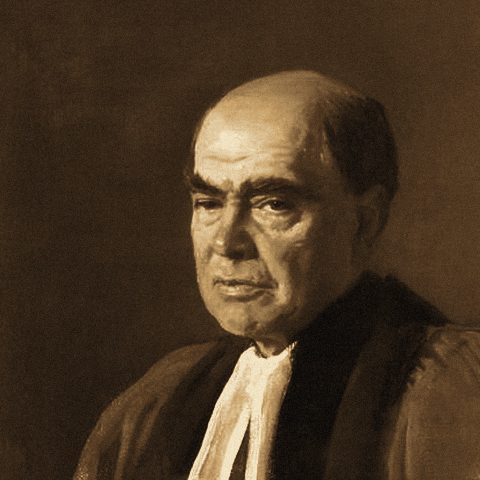
About the author
Hastings Rashdall
1858 London – 1924 Worthing · British philosopher, theologian, historian and Anglican priest
Hastings Rashdall was an English philosopher, theologian, historian, and Anglican priest. He expounded a theory known as ideal utilitarianism, and he was a major historian of the universities of the Middle Ages.
If you like Philosophy and Religion
More like this


Start with “Lecture 1: Mind and Matter”
2 chapters free right now — no account. Your place follows you to iPhone and Android.