
Outlines of a Philosophy of Religion Based on Psychology and History
 Auguste Sabatier1839–1901
2 chapters freeNo account needed.
Opens chapter 2 in the player · no sign-up needed
Sabatier locates the origin of religion in human psychology, as the soul's sense of dependence and its response in prayer, and reinterprets revelation, miracle and inspiration in that light.
Inside the book
- Free nowno account · 2 chapters
- —Preface6 min
- 2Chapter 234 min
- Premium12 chapters · every book, 7 days free
- 3Part 1, Chapter 2: Religion and Revelation42 min
- 4Part 1, Chapter 3: Miracle and Inspiration29 min
- 5Part 1, Chapter 4: The Religious Development of Humanity32 min
- 6Part 2, Chapter 1: Hebraism, or the Origins of the Gospel16 min
- 7Part 2, Chapter 2: The Essence of Christianity50 min
- 8Chapter 828 min
- 9Chapter 929 min
- 10Part 3, Chapter 1: What Is A Dogma?18 min
- 11Chapter 1118 min
- 12Part 3, Chapter 3: The Science of Dogmas19 min
- 13Chapter 1341 min
- 14Chapter 1442 min
The opening
Chapter 2
On The Psychological Origin, And On The Nature Of Religion
1. First Critical Reflections
Why am I religious? Because I cannot help it: it is a moral necessity of my being. They tell me it is a matter of heredity, of education, of temperament. I have often said so to myself. But that explanation simply puts the problem further back; it does not solve it
The necessity which I experience in my individual life I find to be still more invincible in the collective life of humanity. Humanity is not less incurably religious than I am. The cults it has espoused and abandoned have deceived it in vain; in vain has the criticism of savants and philosophers shattered its dogmas and mythologies; in vain has religion left such tracks of blood and fire throughout the annals of humanity; it has survived all change, all revolution, all stages of culture and progress. Cut down a thousand times, the ancient stem has always sent new branches forth. Whence comes this indestructible vitality? What is the cause of the universality and perpetuity of religion?
Before entering upon this question it will be necessary to remove a fruitful cause of error with respect to the essence and origin of the religious sense, especially among the peoples of Latin extraction. This cause lies in the very word religion. It very badly designates the psychological phenomenon to be studied; it envelops it in accessory and even in alien ideas, which blind and mislead half-educated men. The word comes to us from the least religious of the peoples of the world. It has no synonym or equivalent in the language of the ancient Hebrews, or in that of the Greeks, the Germans, the Celts, or the Hindus, the human families which, in the religious order, have been the most original and the most creative. It was Rome that imposed the word upon us along with her language, her genius, and her institutions.
The first Christians were not acquainted with it. It is absent from the New Testament. When, in the third century, it enters into Christian speech, it no doubt undergoes a sort of baptism, and seems to cover a meaning more in conformity with the spirit of the Gospel. Lactantius defines religion as "the link which unites man to God." But in the ancient Roman writers the word never had this profound and mystical meaning. Instead of marking the inward and subjective side of religion, and signalising it as a phenomenon of the life of the soul, it defined religion by the outside, as a tradition of rites, and as a social institution bequeathed by ancestors. The Christian baptism through which the word passed did not efface this ancient Roman stamp. To the majority, even now, religion is hardly anything more than a series of traditional rites, supernatural beliefs, political institutions; it is a Church in possession of divine sacraments, constituted by a sacerdotal hierarchy, for the discipline and government of souls. Such is the form under which the genius of Rome conceived and realised Christianity in the Western world; and the fascination that this political and social conception of religion still exercises is so great that minds the most enlightened know no better than to agree with M. Brunetiere, who, when wishing to set forth the superiority of Catholicism to Protestantism, confines himself, like Bossuet, to praising it as a perfect model of government.
By a sort of logical necessity, whenever and wherever this political conception of religion has predominated, an analogous explanation of its origin has always arisen. It is natural that men should have applied to it the ancient juridical adage: is fecit cui prodest. Religion admirably serves to govern the peoples; therefore it was originally invented for that purpose. It was the work of priests and chiefs who wished by means of it to strengthen and to ratify their authority. So reason the Romans in the days of Cicero and the philosophers of the eighteenth century. And there is some foundation for their arguments. Religion has often been utilised by politics: pious frauds are to be found in all the cults. But what then? What do the facts prove? It is not the pious fraud that produces the religion; it is the religion that gives occasion and opportunity to pious frauds. Without religion there would have been no pious frauds. When I hear it said, "Priests made religion," I simply ask, "And who, pray, made the priests?" In order to create a priesthood, and in order that that invention should find general acceptance with the people that were to be subject to it, must there not have been already in the hearts of men a religious sentiment that would clothe the institution with a sacred character? The terms must be reversed: it is not priesthood that explains religion, but religion that explains priesthood.
The theory propounded by Positivism is profounder and more serious. Religion, which dates from the earliest ages, can only have been a first attempt at an explanation of the extraordinary phenomena by which man in his ignorance was astonished and frightened. It is the beginning of the childish form of science, which, in course of time, would naturally give place to higher and more rigorous forms. Children and savages animate all things round about them with a psychical life; they see particular wills behind every phenomenon that excites their hope or fear. Thus the imagination of primitive man peopled the universe with an infinite number of spirits, good and evil, whose mysterious action made itself felt at every moment of their destiny. A while ago we had the explanation of religion by priesthood; now we have the explanation by mythology. But it is the same vicious circle: it is an insufficient psychology once more mistaking the effect for the cause.
To conceive of religion as a species of knowledge is an error not less grave than to represent it as a sort of political institution. No doubt religious faith is always accompanied by knowledge, but this intellectual element, however indispensable, so far from being the basis and the substance of religion, varies continually at all the epochs of religious evolution. Doctrinal formulas and liturgies are means of expression and of education, of which religion avails itself, but which it can exchange for others after each philosophical crisis. Rites and beliefs become obliterated or die out; religion possesses a power of perpetual resurrection, whose principle cannot be exhausted in any external form or in any dogmatic idea.
Comte's theory of the three stages through which human thought has passed is well known: the theological stage of primitive times, the metaphysical stage in the Middle Ages, the positive or scientific stage of modern times. If knowledge were the essence of religion, one could easily understand the logical course of this evolution, an inferior form of knowledge being condemned to disappear before a superior form. The proof that it is nothing of the kind is the fact that religion does not cease to reappear at all epochs and in the most widely different conditions of culture. The three stages are not successive but simultaneous; they do not correspond to three periods of history, but to three permanent needs of the human soul. You find them combined in various degrees in antiquity, in Socrates, Plato, and Aristotle; in modern times, in Descartes, Pascal, Leibniz, Kant, Claude Bernard, and Pasteur. The more science progresses and becomes conscious of its true method and of its limits, the more does it become distinguished from philosophy and religion. Scientific research, exclusively devoted to the determination of phenomena and of their conditions in time and space, is one thing; the philosophic need of comprehending the universe as an intelligible whole, and of explaining all that exists by a principle of sufficient reason, is another and a different thing; and, lastly, differing from both, is the religious need which, rightly understood, is but a manifestation, in the moral order, of the instinct of every being to persevere in being. Why may not these divers tendencies of soul, coexisting always and everywhere, manifest themselves simultaneously and on parallel lines?
We need not go beyond the Positivists themselves for examples and proofs of this persistence of the religious sentiment. Comte, Spencer, and Littre may be called as witnesses. The founder of Positivism, who had predicted the fatal extinction of the disposition to religion in the human soul, crowned his system and ended his career by founding a new religion, clumsily copied from the sacerdotal organisation and the ritual practices of Roman Catholicism. There actually exists a Positivist Church, with a calendar of saints, with relics and anniversaries, with a catechism, and with a high priest not less infallible than the one at Rome. A few disciples, scandalised by this supreme temptation of the master, desired to excuse him by declaring that he had gone mad. It was a mistake. The fact is that, arriving at the construction of a Positive Sociology, Comte comprehended the role of the religious instinct and of religious feeling in the life of peoples, and he believed that he would only be able to cement the edifice of society in the future by religion. It is said that those who have been amputated sometimes feel sharp twitches in the limbs they have lost. Comte and his disciples have experienced something similar. Nature, with her usual irony, has avenged herself on them for the violence they have done to her.
Of Herbert Spencer not much need be said; everybody knows that the Unknowable in his system has become a sort of undetermined and unconscious force, eluding every effort of the mind to grasp it, but remaining, none the less, the cause explaining evolution, and the source profound whence all things flow. Under different names, do we not recognise the First Cause of the philosophers, and the image, half-effaced, of the God of believers? Need we be surprised that the English thinker pronounces religion to be eternal? that he finally reduces the mental life of man to these two essential and primordial activities—the scientific activity which pursues the knowledge of phenomena and their transformation, and religious activity delivering itself up to mystical contemplation and to silent adoration of universal being?
The example of Littre is more touching still. I remember reading a sublime page in one of his works, in which the savant, after running through the terra firma of positive knowledge, reaches its utmost limit, and, seating himself on the extremest promontory, sees himself surrounded by the mystery of the unknowable, as by an infinite ocean. He has neither barque, nor sails, nor compass wherewith to explore this boundless sea; nevertheless, he stands there gazing into it; he contemplates it; he meditates in presence of this vast unknown, and finally abandons himself to a movement of adoration and of confidence which renews his mental vigour and which fills his heart with peace. What is this, I ask, but a sudden outburst of religious feeling which positive science, so far from extinguishing, has only served to deepen and accentuate? And since we have here the religion of the unknowable, is it not evident that religion is not necessarily knowledge?
I now come to a third explanation which, older than either of the others, will bring us nearer to the end at which we aim. "It is fear," says a Latin poet, "that engenders the gods." There is a sense in which this is true. It cannot be doubted that religion was at first awakened in the heart of man under the impress of the terror caused by the disordered and destructive forces of primitive Nature. Thrown naked and disarmed on the barely-cooled planet, walking tremblingly upon a soil that quaked beneath his tread, his would be a state of misery and distress which filled his heart with an infinite terror. But the explanation needs completing. In itself and of itself, fear is not religious; it paralyses, crushes, stuns. In order that it may become religiously fruitful, it is necessary that, from the outset, it should be mixed with an opposite sentiment, an impulse of hope; it is necessary that man, the prey of fear, should conceive, in some way or other, the possibility of surmounting it—that is to say that he should find above him some help, some succour, by which to confront the dangers which threaten him. Fear only gives birth to religion in man because it awakens hope and calls forth prayer—prayer that opens an issue to human distress. There is that amount of truth in the ancient hypothesis. It brings us near the source we are seeking, for it places us on the practical arena of life, and not in the theoretical region of science. The question man puts to himself in religion is always a question of salvation, and if he seems sometimes to be pursuing in it the enigma of the universe, it is only that he may solve the enigma of his life. And now we must press nearer to the problem. We must ascertain out of what fundamental contradiction the religious feeling arises. We may reach it by a mental analysis that every one can follow, and verify the more easily inasmuch as it is always in course of reconstruction, by noting our own experiences.
2. Initial Contradiction of the Psychological Consciousness
What is man? Externally he does not differ much from the higher animals, the series of which seems to have been closed by his appearance on our planet. His physical organism is composed of the same elements, acting according to the same laws; and of the same organs, performing analogous functions. It is by the incomparable development of his mental life that man is distinguished, and little by little disengages himself from animality. Phenomena and laws of a new kind now make their appearance. The mysterious life of the spirit, emerging from the physical life, unfolds itself gradually like a divine flower, and gives the world, for us, its meaning and its loveliness. The region of the true, the beautiful, the good, is opened up to consciousness; the moral world is constituted as a higher order to which man belongs. It is these moral laws, capable of dominating physical laws and bending them to higher ends that, in the human animal, realise and constitute humanity. Man is only man in so far as he obeys them, and such is the point of transition that he occupies between two worlds, such the necessity of the crisis by which he must disengage himself from material animality, that, if he does not rise above the brute, he necessarily, by the very perversion of his higher life, falls beneath him.
From the beginning, physical life implies a double movement: a movement inward from the outside to the centre of the ego, and a movement outward from the centre to the circumference. The first represents the action of external things upon the ego by sensation (passivity); the second, the reaction of the ego upon things by the will (activity). This internal flux and reflux is the whole mental life. From this point we shall soon perceive the initial contradiction in which this life is formed, and in which it goes on developing itself continually. The passive side and the active side of the life of the mind are not harmonious. Sensation crushes the will. The activity, the free expansion of the ego, its desires to extend and aggrandise itself are checked and crushed by the weight of the world, which on every side is pressing in upon it. Springing up from the centre, the wave of life breaks itself inevitably on the rocks of outward things. This perpetual collision, this conflict of the ego and the universe,—this is the primary cause and origin of all pain. Thus thrown back upon itself, the activity of the ego returns upon the centre and heats it like the axle of a wheel in motion. Sparks soon fly, and the inner life of the ego is lit up. This is consciousness. Brought back by painful sensations and by repeated failure of its efforts from the outside, the ego begins to reflect upon itself; it doubles itself and knows itself; soon it judges itself; it separates itself from the organism with which at first it confounded itself; it opposes itself to itself, as if there were really in itself two beings, an ideal ego and an empirical ego. Hence comes its torment, its struggles, its remorse, but also the impulse ever renewed, the indefinite progress of its spiritual life, of which each moment seems to be but a degree from which it ought to rise to a stage still higher.
May we not here foresee the divine purpose of pain? Without it, it would seem as if the life of the spirit could not have arisen out of physical life. All births are painful. Consciousness, like every other child, was born in tears. The child of pain, it can only be developed by pain. Where do you find intelligence the most refined, consciousness the keenest, inner life the most intense, if not amongst the human beings whose external activities have been repressed by sickness or by some limitation in their social position? How else will you explain the Pensees of Pascal or of Maine de Biran, or the Journal of Amiel? Whence comes that extraordinary development of consciousness of which we are all aware in men like these, unless it be that they feel more profoundly than others that radical contradiction which constitutes at once the misery and the grandeur of human destiny?
Continue this observation; follow each of our faculties in its progressive expansion. Starting from a contradiction without which they would not exist, you see them all end in a contradiction in which they seem to perish, so that that which has engendered consciousness seems as if it must destroy it. Everywhere the same discouraging antinomy. Man cannot know himself without knowing himself to be limited. But he cannot feel these fatal limitations without going beyond them in thought and by desire, so that he is never satisfied with what he possesses, and cannot be happy except with that which he cannot attain. I desire to know; my labouring intellect is athirst to comprehend and understand, and its first discoveries enchant it. But, alas, my head soon runs itself against the wall of mystery. Not only are there things it does not know, but there are things which it knows for a certainty that it will never be able to know. How can a man jump off his own shadow, or stand on his own shoulders, to look over the impassable wall? That all which is intelligible to us is real, I grant; but is all that is real intelligible to us?
And then what becomes my knowledge save a melancholy feeling of ignorance that knows itself to be such? The same contradiction in my faculty for enjoyment. As my seeming knowledge changed into its opposite, so now I see pleasure and happiness changing into pain and sorrow. Let the superficial and the vulgar lay on fate or things the blame of their deceptions and of their inability to be happy; as for me, I can only blame the inner constitution of my being. It is as the result of that very constitution that enjoyment bears within itself the cause of its own exhaustion, that pleasure is changed into disgust, and that pain is born of all voluptuousness. Pessimism is in the right; for it is proved by an experience only too long-lived that the only result of happiness exclusively pursued is an increase of the capacity for suffering. Need I speak of moral activity? I desire to do good, but "evil is present with me." I do not do that which I approve, and I do not approve that which I do: I feel myself free in my will, and I am enslaved in action.
The more effort I make towards an ideal righteousness, the more that ideal, which I never reach, constitutes me a sinner and strengthens in me the consciousness of sin; so that here again, and here especially, the final result of my search is the opposite of that which I set out to seek.
Whence shall deliverance come? How shall I solve this contradiction of my being which makes me at the same time live and die? To free man from the miseries and limitations of his nature men count upon the progress of science and the amelioration of the conditions of his life. But who does not see that here is a new source of despair? How can we forget that, so far from attenuating it, science in its progress aggravates and renders mortal the original condition of life? To make a discovery, to explain a new phenomenon, what is this but to add another link to the causal and necessary network which science weaves and spreads over things? To put sequence, order, and stability into the world, is not this, for science, to put necessity into it, and to make necessity the sovereign ruler of the world? Science, in the strict sense of the word, is determinist. But then, prolong this progress of science indefinitely; multiply it by ten, by a hundred, a thousand; what do you do but multiply proportionately the weight of universal determinism beneath which our soul groans and ceases to strive?
We should then end in the still more tragic contradiction—between science and conscience, physical laws and moral laws, action and reflection. The more the one enlarges and triumphs the vainer seems the other. Hence that philosophical dualism in which modern thought ends—a science which cannot engender an acknowledged morality, and a morality which cannot be the object of positive science. We touch the cause of that strange malady le mal du siecle, a sort of internal consumption by which all cultivated minds are more or less affected. It is an intestine war which arms the human ego against itself and dries up all the springs of life. The more one reflects on the reasons that may be urged in favour of living and acting, the less capable one is of effort and of action. Clearness of thought is in inverse proportion to the energy of the will. The Pessimists tell us that if we were fully and perfectly conscious we should lose the will to act, and even the desire to be. And which of us is not more or less of a Pessimist nowadays? Who does not complain of "the weary weight of all this unintelligible world"? Who does not feel his weakness and the pressure of external things?
Who has not marked that union now become almost habitual of frivolity of character and intellectual culture the most perfect and refined? That sad monotone which comes to us on every wind, from the latest volume of philosophy, from the most popular novel, from the most successful play,—what is it but the melancholy sigh of a life that seems to be ready to expire, of a world that seems about to disappear. Must one give up thinking then if he would retain the courage to live, and resign himself to death in order to preserve the right to think?
From this feeling of distress, from this initial contradiction of the inner life of man, religion springs. It is the rent in the rock through which the living and life-giving waters flow. Not that religion brings a theoretical solution to the problem. The issue it opens and proposes to us is pre-eminently practical. It does not save us by adding to our knowledge, but by a return to the very principle on which our being depends, and by a moral act of confidence in the origin and aim of life. At the same time this saving act is not an arbitrary one; it springs from a necessity. Faith in life both is and acts like the instinct of conservation in the physical world. It is a higher form of that instinct Blind and fatal in organisms, in the moral life it is accompanied by consciousness and by reflective will, and, thus transformed, it appears under the guise of religion.
Nor is this life-impulse (elan de la vie) produced in the void, or objectless. It rests upon a feeling inherent in every conscious individual, the feeling of dependence which every man experiences with respect to universal being. Which of us can escape this feeling of absolute dependence? Not only is our destiny, in principle, decided outside ourselves and apart from ourselves according to the general laws of cosmical evolution, in the course of which we appear at a given time and place with a heritage of forces which we have not chosen or produced, but, not being able to discover in ourselves or in any series of individuals the sufficient reason of our existence, we are obliged to seek outside ourselves, in universal being, the first cause and ultimate aim of our existence and our life. To be religious is, at first, to recognise, to accept with confidence, with simplicity and humility, this subjection of our individual consciousness; it is to bring this back and bind it to its eternal principle; it is to will to be in the order and the harmony of life. This feeling of our subordination thus furnishes the experimental and indestructible basis of the idea of God. This idea may possibly remain more or less indetermined, and may indeed never be perfected in our mind; but its object does not on that account elude our consciousness. Before all reflection, and before all rational determination, it is given to us and, as it were, imposed on us in the very fact of our absolute dependence; without fear we may establish this equation: the feeling of our dependence is that of the mysterious presence of God in us. Such is the deep source from which the idea of the divine springs up within us irresistibly. But it springs at once as religion and as an effect of religion.
At the same time, it is well to note at what a cost the mind of man accepts this subordination in relation to the principle of universal life. We have seen this mind in conflict with external things. The mind revolts against them because they are of a different nature to itself, and because it is the proud prerogative of mind to comprehend, to dominate, to rule things and not to be subordinate to them. Pascal's phrase is to the point: "Man is but a reed, the feeblest thing in nature; but he is a thinking reed. Were the universe to crush him, man would still be nobler than the universe that killed him, for he would be conscious of the calamity, and the universe would know nothing of the advantage it possessed." That is why the material universe is not the principle of sovereignty to which it is possible for man to submit. The superior dignity of spirit to the totality of things can only be preserved in our precarious individuality by an act of confidence and communion with the universal Spirit.
It is only on a spiritual power that my consciousness does actually make both me and the universe to depend, and in making us both to depend on the same spiritual power, it reconciles us to each other, because, in that universal being conceived as spirit, both I and the universe have a common principle and a common aim. Descartes was right: the first step of the human mind desirous of confirming to itself the sense of its own worth and dignity is an essentially religious act. The circle of my mental life, which opens with the conflict of these two terms—consciousness of the ego, experience of the world—is completed by a third in which the other terms are harmonised: the sense of their common dependence upon God. But is not this account of the genesis of religion too philosophic and too abstract to be capable of universal application? If it explains the persistence of the religious sentiment in epochs of high culture, can it also explain its appearance in the pre-historic ages of humanity?
Those who raise this objection have not sufficiently marked the permanent nature of the initial contradiction which constitutes, at the beginning as at the end, the empirical life of man, and which renders it in all degrees so precarious and so miserable. It is not a contradiction created by logic. To experience it and to suffer from it man did not need to wait until he became a philosopher. It manifested itself in the terrors of the savage in presence of the cataclysms of nature, in the midst of the perils of the primeval forest not less than in our troubled thought in presence of the enigma of the universe and the mystery of death. The expression of human misery and the consciousness thereof are different things; the religious thrill which brings relief, at bottom is the same.
Pascal, with all his knowledge, did not experience less distress than primitive man, when he exclaimed: "The eternal silence of the infinite spaces terrifies me." The disciple of Kant, shutting himself up in despair within the impassable limits of phenomenal knowledge, or the disciple of Schopenhauer ending in the internecine conflict between intellect and will, are they not smitten with a feeling of impotence still more painful, and, when they cease to reason in order to decide to live, do they not feel forming within themselves, and in spite of themselves, a sigh which is the beginning of a prayer?
Religion, therefore, is immortal. Far from drying up with time, the spring from whence it flows in the human soul enlarges, deepens, and becomes more rich under the twofold action of philosophic reflection and of the painful experiences of life. Those who predict its approaching end mistake for religion that which is only its outward and fleeting expression. The periodical crises in which it seems as if it must perish, renew its traditions and its forms, and, so far from proving its weakness, demonstrate its fecundity and its faculty of rejuvenescence. Never, in all history, has the human soul been seen entirely naked. On this tree, in which the sap divine mounts ever, the leaves of one season only fall, however dry they may be, under the pressure of new leaves. Religious beliefs do not die; they are simply transformed. Let the friends of religion then cease to be alarmed and its enemies to rejoice. The hopes of the one and the fears of the other show an equal misconception of that which is its essence and its principle. If they seek it in themselves, they will find it all the more living in their inner life, the more its traditional forms outside themselves seem menaced.
The sigh, the impulse, or the melancholy of the soul in distress are more religious than an interested or mechanical devotion. There are hours when the heresy which suffers, and which seeks and prays, is much nearer the source of life than the intellectual obstinacy of an orthodoxy incapable, as it would seem, of comprehending the dogmas that it keeps embalmed. Let the men who despise religion learn first to know it; let them see it as it is—the inward happy crisis by which human life is transformed and an issue opened up to it towards the ideal life. All human development springs from it and ends in it. Art, morals, science itself fade and waste away if this supreme inspiration be wanting to them; the irreligious soul expires as if from lack of breath. Man is not; he has to make himself; and in order to this he must mount from the darkness and bondage of earth to light and liberty. It is by religion that humanity begins in him, and it is by religion that it is established and completed.
3. Religion is the Prayer of the Heart
We shall now be able to define the essence of religion. It is a commerce, a conscious and willed relation into which the soul in distress enters with the mysterious power on which it feels that it and its destiny depend. This commerce with God is realised by prayer. Prayer is religion in act—that is to say, real religion. It is prayer which distinguishes religious phenomena from all those which resemble them or lie near to them, from the moral sense, for instance, or aesthetic feeling. If religion is a practical need, the response to it can only be a practical action. No theory would suffice. Religion is nothing if it is not the vital act by which the whole spirit seeks to save itself by attaching itself to its principle. This act is prayer, by which I mean, not an empty utterance of words, not the repetition of certain sacred formulas, but the movement of the soul putting itself into personal relation and contact with the mysterious power whose presence it feels even before it is able to give it a name. Where this inward prayer is wanting there is no religion; on the other hand, wherever this prayer springs up in the soul and moves it, even in the absence of all form and doctrine clearly defined, there is true religion, living piety. From this point of view, perhaps a history of prayer would be the best history of the religious development of mankind. That history would be seen to commence in the crudest cry for help and to complete itself in perfect prayer which, on the lips of Christ, is simply submission to and confidence in the Father's will.
This concrete definition of religion has the advantage of correcting by completing that of Schleiermacher. It reconciles the two antithetic elements which constitute the religious sentiment: the passive and the active elements, the feeling of dependence and the movement of liberty. Prayer, springing up out of our state of misery and oppression, delivers us from it. There is in it both submission and faith. Submission makes us recognise and accept our dependence, faith transforms that dependence into liberty. These two elements correspond to the two poles of the religious life; for in all true piety man prostrates himself before the omnipotence that encompasses him, and he rises with a feeling of deliverance and of concord with his God. Schleiermacher erred in insisting only upon resignation. Thenceforth he could neither escape Pantheism in order to arrive at liberty, nor find any link between the religious and the moral life. Religion, then, is a free act as well as a feeling of dependence. And such is the character and the virtue of the act of prayer that everything is transformed by it. The crushing feeling of my defeat becomes the joyful and triumphant feeling of my victory. Each of these states is changed into its opposite, so that the truly religious man lives at once in a free obedience and in an obedient liberty. If religion has often been an oppressive power and an instrument of servitude, it has been at least as often the mother of all the liberties. The force which bows me down is that which also lifts me up, for it passes into my soul. The God that I adore comes in the end to be an inward God whose presence drives away all fear and places me beyond the reach of all the menaces of things. The conscious realisation of this presence of God,—that is the true salvation of my being and my life.
I now understand why "natural religion" is not a religion. It deprives man of prayer; it leaves God and man at a distance from each other. No intimate commerce, no interior dialogue, no exchange between them, no action of God in man, no return of man to God. At bottom, this pretended religion is nothing but philosophy. It arises in periods of rationalism, of criticism, of impersonal reason, and has never been anything but an abstraction. The three dogmas in which it is summed up—the existence of God, the immortality of the soul, and the obligation of duty—are but the inorganic residue, the caput mortuum, found at the bottom of the crucible in which all positive religions are dissolved. This natural religion, so called, is not found in Nature; it is no more natural than it is religious. A lifeless, artificial creation, it shows hardly any of the characteristic marks of a religion. For the moment, it may seem to have the advantage of escaping the attacks of scientific criticism. On trial, it is found to be less resistant than any other. The self-same reason that constructed it destroys it, and its dogmas are perhaps more compromised to-day in face of modern thought than those it professes to replace.
Religion then is inward prayer and deliverance. It is inherent in man and could only be torn from his heart by separating man from himself, if I may so say, and destroying that which constitutes humanity in him. I am religious, I repeat, because I am a man, and neither have the wish nor the power to separate myself from my kind.
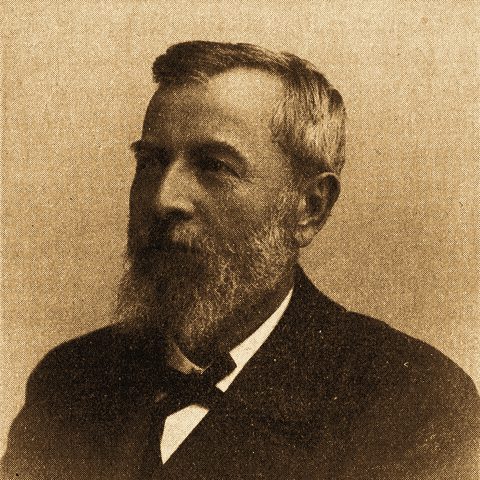
About the author
Auguste Sabatier
1839 Vallon-Pont-d'Arc – 1901 Paris · French theologian and academic
Louis Auguste Sabatier was a French Protestant theologian.
If you like Outlines of a Philosophy of Religion Based on Psychology and History
More like this


Start with chapter 2
2 chapters free right now — no account. Your place follows you to iPhone and Android.